More than I Bargained For by Julie Arduini

Now that I have a Kindle, there is yet another facet to my reading life. As a writer I read to learn. Although I’m looking at the story my focus is on the “back-end” of things such as the plot, POV, characterization, and dialogue. Reading other fiction and writing how-to books sharpen my skills.

I also read to review. I enjoy participating in Thomas Nelson’s BookSneeze program where bloggers receive a free book, read it, and both blog about it on their site and post a commercial review. I’m also a part of many Litfuse Publicity Group blog tours so I do the same thing with them as BookSneeze. Although it is relaxing and fun this form of reading feels like it is in a category of its own.

Most readers do so for the fun of it. It’s a hobby, relaxing, an escape, and sparks our imagination like nothing else. This is my favorite aspect but the more I write, the less I read for fun. My escape is fiction, mostly contemporary romance, but anything geared for women is game.  I learned something earlier this year when I picked up a couple books for escape and found something completely different:

The books made me look inward at my past and what issues I was stuffing. By the end of those reads I enjoyed them but it wasn’t an escape, it was an experience. I finished wanting to make positive change in my life.

These books rocked me to the core. The characters and their conflict was a word created mirror to reflect my heart and the issues I needed to take a look at and give to God. Where some might have found a book sounding too close to home distracting, I felt it was a little nudge from my Heavenly Father. I didn’t just read those two books; I devoured them.

What were they?

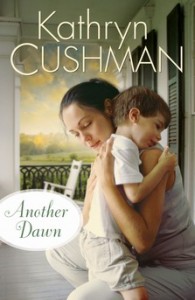
Kathryn Cushman’s Another Dawn

(From Bethany House Publishers/back cover)

What Would You Give for a Second Chance to Make Things Right?

When life gets complicated, Grace Graham runs. She’s left romantic relationships, friendships, and even her family after the death of her mother. But now her sister, Jana, is giving her once last chance: Come home and help care for their father–whom Grace still blames for her mother’s death–or never show her face in Shoal Creek, Tennessee, again.

With her son, Dylan, in tow, Grace returns home from California. But is she returning for the right reasons? And when costly decisions from the past suddenly put her son’s life and the lives of other children in town at risk, will she have the strength to stand strong and await Another Dawn?

The issue with the children at risk was a compelling one but that wasn’t what got to me. It was Grace’s recollection of her childhood and her adult choices because of them. Her walls are up and she’s made a vow never to return to her hometown. Although my circumstances weren’t that dramatic I remember making a vow when I moved 300 miles away from everything I knew and everyone I loved. My vow came from a potpourri of past experiences and current devastation.  When it came to relationships I was classic to walk away first to avoid what I thought was inevitable. Reading Another Dawn forced me to look at my vows and behaviors.

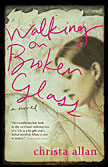
Christa Allan’s Walking on Broken Glass

(From Amazon.com)

Leah Thornton’s life, like her Southern Living home, has great curb appeal. But a paralyzing encounter with a can of frozen apple juice in the supermarket shatters the façade, forcing her to admit that all is not as it appears. When her best friend gets in Leah’s face about her refusal to deal with her life, Leah is forced to make an agonizing decision. Can she sacrifice what she wants to get what she needs? Joy, sadness, and pain converge, testing Leah’s commitment to her marriage, her motherhood, and her faith.

This book had funny dialogue but the reality that Leah has a problem and needs more help than her husband and friends can give hit so close to home I realized more than once I was holding my breath. I don’t want to give away spoilers but I know the environment she describes. I understand her roller coaster of emotions as she is forced to face her feelings. I’ve been the best friend and I’ve needed the best friend.

Did I finish those books thinking what a respite, I’m so relaxed now that I got to read? No, and that’s okay. Something even better took place in between those pages.

I received God’s love and  His direction.

How about you? Was there a book or two that you thought would be a fast read and in turn flipped your world upside down because it addressed the condition of your heart?

http://juliearduini.com

Surrendering the good, the bad, and—maybe one day—the chocolate


Posted in Julie Arduini, Uncategorized | Tagged , , , , , , , , , , , , , | 2 Comments

Crying With God by Hannah Alexander

  Okay, I hate to begin a post showing a beautiful picture of crosses at sunrise with a discussion about roadkill, but that’s how it’s going to be. So stick with me here. Many of us have tender hearts. Not, perhaps, as tender as God’s, but occasionally we grieve at the suffering of another, be it human or animal. I can get depressed driving along the road and seeing an animal of any kind lying at the side of the blacktop. I’ve teared up at the sight of a dog or cat, possum or even, on vulnerable days, a skunk. I mean, after all, they can’t help what God made them, can they? I have to admit I once cried when I spotted something dark and mangled at the side of the road ahead of me and tears burned my eyes–don’t worry, I can cry and drive at the same time. It turned out to be a lost retread tire. Not my finest moment of grieving, and I was glad  no one was with me in the car at the time, but since I’ve already spilled it to you, that doesn’t matter now, does it?

So it’s established I hate roadkill. I hate suffering of any kind. I tend to place myself in the position of the sufferer, and literally ache for them. I remember reading through the Old Testament once–can’t even remember which section I was in–but once again the Israelites had turned against God. Rejected Him. I burst into tears for Him. He had chosen these special people to love and gift, and they turned on Him. Kind of like I do when He’s doing something special in my life that doesn’t feel special. In fact, it feels kind of like pain, and loss, and possibly like being run over by a semi. I turn on Him. I rage at Him. I can’t understand why He would allow such pain if He loved me, and it doesn’t matter if He’s proven Himself to me time and again, I don’t care, because I’m in such pain I don’t have the strength to recall any other time. Yes, I learned faith the last time something like this happened, but that was then, and this feels different. It’s almost as if He hates me this time, and I just feel…you know…hated by God.

Then something happens. A prayer someone else is praying for me gets answered. Or I receive an email from a stranger who tells me God impressed upon her heart to email me and let me know there are good things ahead and He loves me. I’m halfway through realizing this is just one more of those special learning experiences when I think about how much I’ve dishonored God in my life. I’ve grieved Him. And then I cry with Him. When will I ever learn? How disappointed in me He must be, but instead of showing me that side of His heart, He shows me joy, and hope, and His own brand of love. Me, I’m still stuck back there grieving about what I’ve done to Him. My best friend. The Love of my life. My maker. I cry for Him.

Have you ever cried for God? Can you remember a time when you grieved because you know that you, or someone else–possibly the whole world–has caused Him grief? Please tell me I’m not the only one who does this.

You can contact me here, or at http://www.hannahalexander.com

Posted in Hannah Alexander, Uncategorized | Tagged , , , | 4 Comments

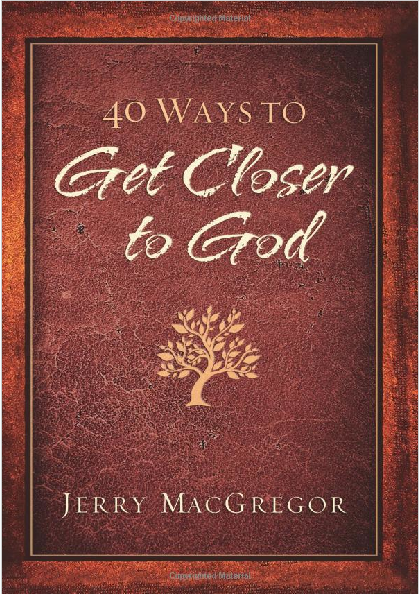
Book Review: 40 Ways to Get Closer to God by Vicki Hinze

40 Ways to Get Closer to God

Jerry MacGregor and Keri Wyatt Kent

  • Publisher: Bethany House
  • ISBN-10: 0764209183
  • ISBN-13: 978-0764209185

At some point in our lives, often when we’re in crisis, we call on God for help.  When the crisis passes, all too often we return to our normal routines and keep God distant as we did before.  Even more often, we don’t realize we’re creating that distance, we just slide back into normal and the routine—and then we wonder why we feel disconnected or as though God’s forgotten us, put us on ignore, abandoned us.  We want something.  We want more.  We want that connection.  But we haven’t a clue how to get it.

In 40 Ways to Get Closer to God, MacGregor and Wyatt-Kent offer a practical (and very doable) plan for recognizing that the something more we want is an up-close and personal relationship with God, and that yearning for a connection to our Creator in our daily lives requires action–not from Him, from us.

Readers are given an opportunity in the form of a 40-day challenge to become active in their own transformation from one who lives distant and one who works to close the gap.  While God’s love is constant and unconditional, our relationship with God is two-part:  His and ours.  It’s our part that is the focus of this insightful book, and it is in those insights we find keys to our personal spiritual advancement.

Steeped in Scripture, shared wisdom from those who have previously made this journey, and from Macgregor’s personal journey, this book issues an open invitation to any who choose to embrace it.  That invitation is to make your own personal journey.  And should you accept, at its end what you discover is a new beginning. One where you have spiritually grown and you grasp your innate need to continue to grow.  A path where you walk closer with God.

Note:  This book is practical not preachy.  It’s conversational not authoritarian or lofty; more like a chat over coffee with a good friend than an instructional guide.  The challenges inspire, make you eager to tackle them, not overwhelmed at the prospect or intimidated into doing nothing.  It’s a book you’ll read and assess, then read again and again to digest.  For in its apparent simplicity is a wealth of wisdom.

Vicki Hinze

Posted in Uncategorized, Vicki Hinze | Tagged , , , , , , , , , , , , , | Leave a comment

Weekend Writer: Relevance and the Math Business by Vicki Hinze

WARNING:  This is a no-edit zone…


Relevance and the Math Business

© 2011, Vicki Hinze


Most writers aren’t fond of math.  We’re into words.  And yet in our industry many are all about the math.  Math over content often decides what gets published, and that simple truth makes it imperative that writers start getting into the math business whether or not they’re fond of it.  Why?  Because it isn’t just publishers and agents who need to stay relevant, authors do too.


The industry is in the middle of a revolution.  Ebooks have come into their own and turned the “normal” paradigms on their ears just as a few years ago electronically tracking sales turned the selections for publication process on its ear.


There was a time when the decision on whether or not to buy a book was a subjective, gut-instinct editorial decision.  Both the author and the editor were made or broken depending on the outcome in actual sales.  Because the sales tracking took a good six months to get a firm handle on a project’s performance and even longer to know for fact, publishers took chances on authors.  Built authors over three or four books provided the author’s sales showed progression.


When the electronic reporting went active things changed.  Gut instinct was balanced with reporting and marketing decisions.  More publishers began buying by committee rather than on editorial instinct.  And now hearing that the editor loved and wanted to buy an author or a project and couldn’t get it through committee is a common refrain uttered by many across genres, across the market.


A similar thing is happening now with publishers on ebooks.  And because authors have the option of becoming publishers, publishers are put into the position of determining relevance.  For the first time, authors are asking, “What can you do for me that I can’t do for me?”


Publishers can do things that authors can’t—at least, today they do.  Tomorrow?  Who knows?  Things are changing on nearly every front with lightning speed. 


A few years ago an agent saw this coming and started an ebook arm that helped his clients get their rights/backlist up in ebook format.  I’ve spoken to a few of those authors and found none who were not happy with the way the arrangement has worked out for them.  But back then the agent took a lot of heat from other industry professionals, including other agents.   Now some of those agents who gave the visionary heat are also setting up similar programs.


What that first agent saw that the others didn’t or elected not to act on until now was that as more avenues opened for authors to become independent publishers, like publishers, agents need to stay relevant in the process or lose the income for not staying relevant to the process.


Now some will say authors, acting as their own publishers, don’t need agents.  Some will say agents are needed more than ever because agreements and licenses and secondary licenses are still there and are global and they require trained eyes and comprehension.  That a literary attorney might review and comprehend and explain but if the author isn’t trained to comprehend and implement, challenges to the author can occur.  That there are retail programs within retailing programs agents can access for their authors that aren’t accessible to authors on their own, or aren’t as readily assessable to authors on their own.  Same holds true for publishers. 


A case can be made either way—with or without an agent/publisher.  A critical consideration in the assessment should be the author’s skill level and awareness/familiarity of licenses and opportunities.  The lower the author’s skill level, the greater the author’s need for a skilled agent and/or publisher.  Another critical consideration is time.  It’s an investment. Time spent competently meeting business end requirements is time spent not writing.  Not writing produces no product.  No product equals nothing to sell. So there are different things to look at in making your personal call.


In the future, I expect that agents will become more like business managers and brokers.  Aiding and assisting in licensing but also in areas physically impacting publishing.  Coordinating a core group of associates who do specific things that need doing to take a book from manuscript to print/eformat.   People like editors, copyeditors, cover artists and those who code the work for specific formats.  Perhaps publicists and marketing professionals also because making readers aware of works is going to be the name of the game that next to content most impacts sales.  There’s that math again!


In the future, I expect that publishers will become more like marketers and publicists.  Their primary job, aside from getting the book “out there” will be making sure readers and industry pros know the work is out there.  In other words, to elevate awareness.  Why?  Again, next to content, awareness will most impact sales.  And again, there’s the math.


Authors can get the books to market in eform and in print.  But unless readers of that type work know the works are available and buys them, the works are not going to sell.  It is true that selling direct requires the author to sell far fewer copies to earn the same money as with an agent/publisher.  It is also true that in an author selling direct there are no advances and there are upfront expenditures.  Look for more retailers to develop their own programs where they do offer advances and/or to cover initial prepublication expenses.  That’s happening already and I believe it will become more widespread.  In these expectations are pros and cons that are directly relatable to the individual author and impact decisions on what the author will do and how s/he will elect to do it.  Authors and their specific situations are independent.  One size doesn’t fit all.


So an author must do a full-scale assessment of his/her specific situation and goals, and then do the math.  Not just for a body of work, but perhaps also on specific projects within the body of work.  And based on that assessment, the author then must decide what route s/he wants to take based on the specifics revealed in thorough, practical and realistic evaluation (both personal and relative to the work or body of work).


One thing I have not touched on that I probably should.  I didn’t speak to it before now because it was rumor.  But it’s happened in multiple places with multiple people now and authors should be aware of it because it can have a direct impact on them. 


Before now few authors had the luxury of publishing their own work.  They were more or less at the mercy of the publishers or they had to put a ton of money and effort into forming their own traditional publishing company.  That gave authors far fewer options and alternatives.   The author wrote, submitted, and then prayed.  A lot and often.   Much of the division of power in the strategic business alliance—whether it was agent/author or publisher/author—was weighted in the agent or publisher’s favor.


The downside for the agent:  Time is money.  Every author acquired required time.  With every submission, an agent risks his/her reputation.  The upside for the agent:  S/he has other clients, so the risk factor is diffused more so than the author’s.  The author has all his/her eggs in one basket—the agent’s.


The downside for the publisher:  It risks its reputation in taking on an author/work.  If the author/work doesn’t perform well, it reflects and impacts the publisher’s credibility and fiscal stability.  The editor who acquired non-performing author/work risks current and future employment prospects.  The publisher takes risks, putting its resources and reputation behind the author/work.  The upside for the publisher is that it has many authors and many works and that diffuses its risks.  If one project tanks and other exceeds expectations, the publisher’s version of income-averaging investing comes to its rescue and aids the health of the publisher overall. 


The author’s risks are not diffused.  If the project tanks, the author tanks and that’s that on that project and beyond.  Numbers and sell-through follow an author, so the next book becomes more difficult to sell.  Bear in mind that the author takes these risks with no idea what s/he will earn, how his/her work will be packaged, marketed or distributed.  Most authors don’t even know in what form a work will be sold. (That’s often the case for most new authors.  Those authors higher up the chain get consultation rights and input and can split and define formats and such in the contract.  But while the author has input, the final decisions are still the publisher’s, including even titles of the works.  It’s rare that this is not the case.  Publishers feel they take the lion’s share of risks so it’s fair and right that they retain the lion’s share of say.  Some are reluctant to even tell the author what the print run will be on a project.  (There’s that math again.)  I’ve never understood that beyond the obvious of a publisher not wanting to announce to its competition its numbers so therefore considers it proprietary information on that basis.  But withholding that information from the author creates challenges for the author.  Math challenges.


The author can’t budget or do the most basic math projections without specific expectations.  While more and more publishers expect the author to promote and market, the author can’t do either rationally because s/he doesn’t have essential information to make the best or wisest decisions.  That hurts both author and publisher—agent, too, for that matter.  Yet this is how things have are/were/have been. And again, this strategic alliance has benefits and risks for both publisher and author.  The publisher’s risks are more diffused.  The author’s got all her eggs and reputation and next-work potential in that one basket.


Do note that none of this, or the other tangents applicable in the author/agent or author/publisher relationship, make the relationships adversarial ones.  Far from it.  In these strategic business alliances all parties have a vested interest and a common goal:  to make each work the most successful work possible.  Each party has to do the math.


So to stay relevant or establish your relevance, should you go the traditional route for publishing your work?  Do it with or without an agent?  Do both?  Publish both?  I can’t answer that for you.  There are too many variables in every single author’s case/work(s) to make a simple deduction.  Oh, I could line up authors, say:  “You, yes.  You, no.  You do a hybrid.  You need an agent.  You don’t.”  But that’d irresponsible because it’d be based only on my subjective opinion.  It’d be arrogant and I’d certainly be wrong.  Since you and not I will live with the results, it should be your decision, not mine.  You make it.  You’ll be accountable for it and you’ll enjoy the success and failure.  Remember, we all have different definitions for success and failure.  Mine are likely different than yours.  The author’s bottom line:  Use your math, make your call. 


What I can say responsibly is this:  In today’s publishing climate, authors need to look at all options and then weigh and consider those options as they relate to the specific author and the specific project at this specific time and under the author’s specific current circumstances, and then make the call for him/herself. 


Any decision made by the author most impacts the author.  It should be based not on another’s opinion but on the author’s assessment of his/her relevance, and to determine that, s/he must do the math.


Blessings,


Vicki


Posted in Uncategorized, Vicki Hinze | Tagged , , , , , , , , , , , , , | Leave a comment

And We’re Off… by Lynette Sowell

Few things draw us into story world like a great opening. During the time before printed books were easy to purchase, before we downloaded books with the click of a button, families and groups would gather around the fire and settle down to hear the storyteller. A good storyteller could make the time pass quickly, chase the blues away, and remind listeners about the past so no one forgot it.

There are modern day storytellers who verbally recapture those times of old. You can always tell when a good story is about to begin. Something in the speaker’s tone, their voice, makes you lean forward to catch what’s next.

And so it is with books, or it should be. A good story will pull us in with the first page. For me, that happens in several ways.

As soon as possible, I find someone to root for or sympathize with. One of my favorite openings is with the book “Little Women.”

“Christmas won’t be Christmas without any presents,” grumbled Jo, lying on the rug.

“It’s so dreadful to be poor!” sighed Meg, looking down at her old dress.

“I don’t think it’s fair for some girls to have plenty of pretty things, and other girls nothing at all,” added little Amy, with an injured sniff.

“We’ve got Father and Mother and each other,” said Beth contentedly from her corner.

The four young faces on which the firelight shone brightened at the cheerful words, but darkened again as Jo said sadly, “We haven’t got Father, and shall not have him for a long time.” She didn’t say, “perhaps never,” but each silently added it, thinking of Father far away, where the fighting was.

The first time I read this book, I was about 12 years old. Imagining Christmas without presents? Horrible thought! I was immediately sympathetic for the girls from line one.

Another thing a good opening can give us is a glimpse of character. Who are we dealing with in this book? What are their personalities? Although I didn’t realize it, the first time I read Little Women, I saw a picture of each girl’s character from the first line. Jo, the improper one, lying on the rug. Meg, the lady of the group, who realizes her social status and doesn’t like it. Amy, the one concerned about image and determined to one day improve her station. And constant Beth, always finding the bright side of her situation.

A good opening will give us a sense of time–when are we? What’s going on in our characters’ lives? In the case of this classic book, not only is it Christmas time, but we have a family who’s separated. Father’s away during the Civil War, and they all know what that could mean for them.

A good opening will compel us to care, to read on.

Here’s the opening of a much more recent book, Hearts In Flight, by Patty Smith Hall:

“You’ll never catch a husband if you keep messing with that plane.”

Maggie Daniels bumped her head on the instrument panel, the memory of her mother’s words at the breakfast table faintly ringing in her ears.

The same is true here. Who’s Maggie? Why does she mess with planes? Maggie’s clearly bucking tradition of being occupied with finding a husband first. She’s also a girl whose elders’ words follow her wherever she goes.

In this Love Inspired Historical set during World War II, I saw from the git-go that Maggie’s not your typical Southern belle, and I wanted to read about her.

What’s your favorite opening from a book you’ve read recently? Why did it make you keep reading?

Posted in Honored Alumni, Lynette Sowell, Uncategorized | Tagged , , , , , , , | 1 Comment

Fighting Fires with Worship by Elizabeth Goddard

Do you ever have one of those days or weeks where everything goes wrong, or so it seems?

I recently attended the American Christian Fiction Writers (ACFW) conference and I’ve been fighting “fires” since my return. It seems like this happens every year. The better the conference, the bigger the fire. This year was a great conference, getting to see lots of old friends and meet some new ones.

I should have expected to have a few rough days upon my return but I was blind-sided. The last couple of days I’ve been stressed to the max and on the verge of tears. In my last book or two, I’ve worked to keep my heroines from crying so much. I think that’s translating over to real life—I held the tears at bay.

Hence, I woke up at 3 am and remembered I had a post due today. But that’s okay because I can share with you how I made it through. Fighting fires, making it through the tough times really is all about attitude.

At some point I flipped the scowl to a smile and clung to the Lord’s words that His peace would be with me. Then, I began the worship. I home school my boys and every morning we start the day with Youtube worship videos and we listen to Bryan on Daily Audio Bible. Bryan reads through the Bible every day and he offers a little mini-sermon. We have no excuse, do we?

Blessed Be Your Name was the song that ran through my head all day long. Worship in whatever form it takes, thinking on things that are praiseworthy and good, works against the onslaught.  I might not feel like doing these things, but I’ve discovered that doing them changes everything!

May you be blessed this day, my friend, and know that the Lord has given us the tools we need to make it through. Worshiping Him takes the focus off  our problems, showing us how small they are.

Posted in Elizabeth Goddard, Uncategorized | Tagged , , , , | 1 Comment

Storytelling: Readers and Writers by Maureen Lang

There’s plenty of evidence to suggest storytelling has been around for as long as mankind. God created us with an imagination and a desire to create . . . perhaps those two traits are the most striking resemblances we have to His image. Who knows?

Through storytelling, one person’s imagination sparks another’s, like in this painting of a seafarer telling a young Sir Walter Scott about his adventures at sea.

Boyhood of Raleigh by Millais

Can you see how interested the boys are? An engaged mind can make our heart run the gamut: from joy to sorrow, security to fear, love to hate and on and on. Through a good story, we experience life and are reminded of the universality of the human condition.

Writers are part of the reading audience, but somewhere along the way we’ve decided to take the risk and try storytelling on our own. We start reading with a more critical eye, and by that I don’t mean we look for ways to denigrate books. We simply look with a different scope, usually by looking at more than story. We look at word choices and imagery and general use of language, how another writer uses the same alphabet we’re all given. Sometimes we’re in awe of the way an accomplished author commands language, sometimes not. Usually, for better or worse, authors at least have an opinion about how we would write the same story in our own voice or from our own, perhaps unique, perspective.

There are times when I’m so caught up in the lives of the characters I fail to read with a critical eye. Perhaps it’s because my own voice is similar to the one telling the story I’m reading. More often, I’m so engaged in an expert’s creativity that I wouldn’t dare change a word. Those are the books I learn from, to try analyzing how the story or the characters were able to reach beyond the pages to touch my heart. Books like The Help, Peace Like A River, Hannah Coulter, to name a few.

I’m sometimes amazed at which books become popular—and which books don’t. Some of my best friends have written books I simply cannot put down, and yet few of them make bestseller lists. Sometimes when I pick up a book from those lists, I’m disappointed. I guess it all comes down to popular taste. My personal gauge for guessing what works is my sister. She is a reader of the most common sort, and I say that with the utmost admiration. Once she picks up a book she reads it all the way through—even if she’s disappointed in it. Her taste seems to match what’s popular, time and time again.

My own taste might be a bit narrower, and I won’t finish a book that isn’t engaging to me. Ever heard of a literary wall banger? If I’m not learning something positive from a book, I may not throw it against the wall, but I definitely put it down without a moment’s regret.

My sister, however, reads all the way to the last page. She isn’t bothered by technical things that stop me: head-hopping characters (point of view shifts), sketchy character development, convenient coincidences showing plot weaknesses. She doesn’t even notice such things—she just wants a good story. If there is an inkling of story in there, she’s good to go. It’s pure escapism, but that’s the beauty of it. She’s escaping from the real world and coming out refreshed, even if there are some things on the pages that might have been better. By focusing on what works, not on what doesn’t, she’s able to enjoy storytelling of all kinds.

And that’s the most loyal kind of reader out there, the kind storytellers love.

Something to think about: not all readers are as welcoming as my sister. On the spectrum from one end being escapist readers like my sister, mid-point readers like reviewers who look a bit more closely so they can publicly acclaim or rebuff a story, and on to writers or teachers who dissect a story, where do you fall?

Posted in Maureen Lang, Uncategorized | Tagged , , , | 2 Comments

Libraries by Camy Tang

Camy Tang here! At one point last year, I was interviewing for some part-time library positions.

Applying for the job was a no-brainer. I mean, what reader wouldn’t want to be surrounded by books for a few hours each day???

The job was also part-time, which means I could still spend time writing each day. While I would love to work in the library, writing is my favorite job.

When I interviewed, the librarian mentioned that the library has gotten busier because of the economy right now. After all, library books are free! And books are cheaper entertainment than a movie.

Did you know that for many libraries, if they don’t have the book you want but another branch has it, they’ll have it sent to your branch so you can read it? Here in California, it’s called a Hold request. You can actually do it online—you put a book on hold and the branch that has the book sends it to your branch, and when it’s available, you get an email saying it’s ready for you to pick up and check out.

Did you also know that you can suggest books that are not on their list? If you search their catalog and, say, Vicki Hinze’s latest book isn’t there, you can submit the title to the library to suggest that they purchase it. Most libraries are happy to buy a nice inexpensive paperback that someone has requested (as opposed to a more expensive hardcover book).

Some libraries will allow you to donate books and they’ll put them in their catalog, but not all libraries do that. Many libraries around here will accept donated books, but they sell it at a special table (for $1 each, so they’re a good deal) rather than adding the books to their catalog. 😦 So be sure to check with your library on their policy before donating your books, because they might not add them to the stacks.

What I also think is neat is that more libraries are allowing ebook loans. Each library has a different procedure and might use different software, but it’s usually pretty easy. Some libraries even allow people to borrow Kindle ereaders! I know I absolutely love my Nook and I really like the free ebooks offered each week by Amazon.com and BarnesandNoble.com.

So have you visited your library recently? What did you check out to read?

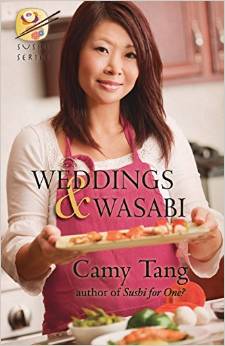
Camy Tang writes romance with a kick of wasabi. Out now is the fourth book in her Sushi series, Weddings and Wasabi. She is a staff worker for her church youth group, and leads one of the worship teams for Sunday service. On her blog, she ponders frivolous things like knitting, running, dogs, and Asiana. Visit her website to sign up for her quarterly newsletter.

Click here to find out how you can join my Street Team—it’s free and there’s lots of chances to win prizes!

Posted in Camy Tang, Uncategorized, Vicki Hinze | Tagged , , , | 2 Comments
God’s Assignments by Sarah Goebel

I am extremely humbled to have the opportunity to blog with the many great and creative authors at Christians Read.  For my first post here, I thought I would share my story about how I became a non-fiction author.

In 1983, with a past tainted from the experience of sexual, physical and emotional abuse, God awakened my spiritual eyes to reveal Himself through Jesus Christ. He gently began to lift me out of darkness and show me glimpses of His glory and Kingdom. However, for many years the influence of my past continued to bombard my thoughts, especially those concerning myself, my value and my purpose for living.

It was many years later before I really grasped that all the good, bad and ugly events I had lived, God could and would use for good (Romans 8:28-29).  I began to accept God’s sovereign love as a reality in my life. I acknowledged the price He paid to free me from Satan’s rule, and I began to understand just how valuable I was. After all, the greatest price ever paid for any item in the world, at any time in history, was paid for me. How great is His love and how valuable His life given has declared me to be! The same is true about you if you are His child. Our past mistakes, our sins and the sins done against us can all be used for the glory of God. We can live free from shame and glorify Him. He has set us free!

With this realization came power to embrace who I was in Christ, a new creature with an eternal purpose and value.

Old Things Have Passed Away

I wanted to live for His glory and help others to do the same. I began to seek God and His specific will for my life while doing my best to be faithful to whatever He set before me. I found myself ministering in biblical counseling settings time and time again; and I discovered that there were many dis-satisfied people in the Kingdom who were in a search for their perception of the abundant life of John 10:10.It is no wonder that this is the topic that God called me to address in my first writings.

It wasn’t until my late 40s to early 50s, through a series of events, that I felt God was giving me an assignment to speak and write for the purpose of encouraging and equipping others for their journey of transformation. I thought it was strange for God to set me on this path at such a late age with no prior experience in these areas. But He did. Like most others who accept God’s assignment, I was concerned about my ability; but He has led me all the way.

My first writing assignment was inspired from 1 Timothy 6:6, “Godliness with contentment is great gain.” As I pondered this Scripture God began to show me that the key to living a joy-filled, satisfied, and abundant life is summed up in this tiny verse. We all have the opportunity to learn, as did the Apostle Paul, to be content in every situation whether prospering or being abased while allowing God to change and move us from one place of glory to the next. What great news it is that we can learn contentment. What hope we have in Christ who enables us to do all things. However, we must come to a place where we trust God. Otherwise, we will continually second guess His responses to the circumstances of our lives, which only breeds dis-contentment.

Another important truth to grasp is that you and I as God’s devoted children are godly, not because we are perfect, but because God has declared it. He calls those godly who have devotion towards Him even though they are still under construction.The journey should not be one filled with anxiety resulting from failed efforts to live uprightly before Him. Freedom is realized as we learn to rest in God as we walk towards perfection. We can relax and enjoy the journey. He is sure to perfect us as we keep our focus on Christ!

I have shared these truths along with many others that have been life-freeing, life-changing principles for my own life in Experience Real Satisfaction and Experience Godliness God’s Way  both published by God’s grace in 2010. Together I refer to them as the “Abundant living Package.” Both of these books are great studies for the individual as well as for group studies. Discussion questions are included.  Early 2012, I will have another new release. I am excited God is giving me books to write. Books can be read even when I am long gone and hopefully inspire and encourage the readers to be all they can be to the glory of God!

The Key to the Abundant Life

I want to close this post with a word of encouragement. Like me, living in a fallen world with fallen people to include our own fallen natures, may have had a negative effect on your perspective of life. Are feelings of insecurity, rejection or shame holding you back from moving forward into the place God desires to take you? Do you question your value and ability to be used by God or to contribute anything of worth to impact the lives of others? I want to encourage you to take control of your thoughts and bring them in line with what the Word of God says about you (2 Corinthians 10:5). It wasn’t until I made a decision to control my thoughts that my life really changed. And remember, God doesn’t waste anything. He has a purpose in everything He allows in our lives (Romans 8:28-29). Besides, it is through the painful trials of our lives that we are able to know the comfort of God. We are told, “He comforts us whenever we suffer. That is why whenever other people suffer, we are able to comfort them by using the same comfort we have received from God” (2 Cor 1:4 GW). Your life may be a story that needs to be shared with someone in your midst.

Ask God to open your eyes today to the assignment He has for you. It may be to write or share from a platform. It may be to mentor, encourage or befriend another. Whatever it is, you are able because God will equip you for what He calls you to do.

Please feel free to visit me at http://www.sarahgoebel.com. There you will find short video teachings and one minute audio devotions. Register for the mailing list and check out my  interactive blog. I hope to see you there. Meanwhile, enjoy God, find your satisfaction in Him, and enjoy relaxing while God grows you spiritually with great fiction and non-fiction Christian reads.

Posted in Sarah Goebel, Uncategorized | 2 Comments

A Time for Everything by Yvonne Lehman

One of the questions on an interview about me and my latest book, Hearts that Survive – A Novel of the TITANIC, was, “What do you do to get away from it all?”

I laughed aloud, saying to myself, “I live away from it all.” My time is basically my own. My husband died almost ten years ago, my children are grown and gone, and I live alone. My office is upstairs and I look out across the neighborhood that is a circular loop. It’s surrounded by foliage against a backdrop of panoramicBlue Ridge Mountainsthat present a gorgeous view each day.

So, I have the seemingly-ideal life of quiet, beauty, and all the time to do as I want.

Notice, I wrote “seemingly-ideal.” I do love my freedom to choose what I do and when. However, when one lives “away from it all” there is the temptation to waste much of that precious time. And there are decisions to make about, “How do I involve myself in the mainstream of life?”

I look back to when I was a wife, mother of four children, worked outside the home after all my children were in school, planned and directed a writers conference, taught Bible Studies and Sunday School, attended church every time the doors opened, did most of the shopping, cleaning, planning activities, continued my education, read books, and… I wrote books and was being published.

At times I longed to “get away from it all.” However, now that I’m “away,” I realize how full that life was. I also realize that living alone is a full life too. Just living is a full-time job. However, I do have time to choose when and if I meet with friends, entertain, spend time with family, read, watch a movie, write.

When Vicki came up with the idea for a few authors to take turns blogging to our reader, it so appealed to me but my first thought was, do I have time for this? Of course not! But, do I want to spend my time like this? The answer is a resounding, “Yes!”

And then that fear crept in. What do I have to say that might interest others? I could answer, “Nothing,” and slink away. But I truly hope it will be worthwhile to those of you who read it. If any of you want to ask me questions about my writing life or anything else, do so.

The writer of Ecclesiastes wrote, “There is a time for everything.” Looks like this is my time to try my hand at blogging and I’m so looking forward to “getting away from all the other.” I love the idea of spending a portion of my time associating and communicating with you.

Best wishes,

Yvonne

Posted in Uncategorized, Yvonne Lehman | Tagged , | 2 Comments

He Equips the Called by Julie Arduini

I have three school based memories that for decades cemented my fear to write despite my love for it.

  • A middle school teacher who red marked a story to the point it looked like someone spilled ketchup all over it. At the bottom she wrote in the red marker that my writing was mediocre.
  • A high school teacher returned papers my mom sent in regarding an invitation I received to take a correspondence writer’s course. The teacher told me to pass on the course, it was most likely a scam. After all, my writing didn’t have potential. I wasn’t in English honors and my grammar was average. Her advice? Throw the invitation away.
  • Another high school teacher let the class know his grading methods for writing essays. Whether he was joking or not I longed to be taken seriously and learn the craft my peers in honors English were learning. He said he threw papers on the stairs and the ones at the top of the stairs received the best grades, and the papers on the bottom failed. I graduated from high school thinking my writing life had no chance.

The two academic writing experiences I only recalled in recent years when I finally surrendered to write no matter what.

  • A middle school Social Studies teacher bent down to tell me how much she enjoyed my pioneer diary. She let me know my writing style carried a lot of emotion and a mature plot, one beyond other entries from classmates. She encouraged me to keep writing.
  • I was in a class middle school newspaper setting when the teacher asked if anyone could write something last minute to honor Martin Luther King, Jr. I wrote a poem in 20 minutes and handed it in. The teacher asked to speak with me. She wondered if I wrote the poem just then. When I answered yes she let me know the poem was inspirational and moving and she never saw a student write something that fast. She challenged me to keep writing.

Unfortunately I let the top set of circumstanced dictate too many years. Even though I have a BA in Communications I pursued safe writing projects. My little stories were my secret children I didn’t dare let the public know about.

The thing is, the “stir of the pen” never stopped. By 2006 the call was so strong to write I couldn’t ignore it. I remember sitting in church and listening to the story of Abraham and Isaac. I knew the story well and felt I lived it given we nearly lost our baby daughter and had to trust God with her critical health.

This time around God gave me a new perspective on the Biblical story. He gave me a picture of my writing on the proverbial chopping block and asked if I loved Him enough to write for Him.

No matter what.

Could I dare surrender my fears of rejection to Him?
mediocre-matt Pictures, Images and Photos

That day I made a covenant with God. Since December 31, 2006 I’ve been writing full-time for Him. All those years I worried about rejection and it was only in 2010 that I received writing-related rejection and even then I laughed. There was no devastation or any other negative impact. I knew I was average against my writing peers. I also grasped I’m a called writer, not the best one.

God doesn’t call the equipped, He equips the called. That’s what keeps me writing whether it is a paragraph for a newsletter or the latest edit in my contemporary romance.

One of my favorite quotes is from John Wayne.

Courage is being scared to death but saddling up anyway.

Eleanor Roosevelt also said something that helped me when red mark memories and doomed writing career predictions consumed me.

No one intimidates you without your permission.

Whether you write or not, God has birthed something deep down inside that is meant to be used. Do you have a calling, a dream, that you’ve been fighting? Like Abraham, I challenge you to put your fears and dreams together on the block and let God have the axe. Chances are your fears will dissipate while the dream blossoms.

Let Him equip you today.


Surrendering the good, the bad, and—maybe one day—the chocolate

Photobucket image

Posted in Julie Arduini, Uncategorized | Tagged , , , , , , , , , , , , , , , , , | 4 Comments

You Need a Break by Hannah Alexander

YOU NEED A BREAK

Hannah Alexander

How long has it been since you had a vacation? How often have you worked through your vacation instead of taking a break? Have you felt guilty about taking the time off? I know I do. Why is it we feel guilty for doing anything for ourselves? Do we think God disapproves?

I have to admit, I’m not good at taking breaks. Few of us are. A couple of years ago, however, I went on a forced Sabbatical that lasted for two years, and though I continued to write on different projects during that time, I also did a lot more reading than I’d been able to do previously. Mel–my husband, and the other half of our Hannah Alexander writing team–just happened to find a few days off from work, and we took a quick trip to Tahoe, where we hiked around deep forest lakes, explored small towns, took pictures of bears and huge bear tracks while trying not to wet ourselves, and wet our feet, instead, by wading in the cold waters of Lake Tahoe.

As we learned to relax for those few days, we battled guilt by reminding ourselves that Jesus, Himself, took time away from the crowds in the wilderness, where He communed with His Father in silence and peace.

That’s why I love  hiking. I feel the sun on my face and know that little bit of warmth was meant for me. I hear the rustle of the leaves in the trees and hear music of angels. I catch the scent of clover and see deer or wild turkey skittering at the edge of the woods, and feel that God meant those moments for me. No one else is there but His creation and me. What a beautiful experience.

You may love walking along the beach, as I do, playing in the waves. You may love skiing, or snorkeling, or taking a cruise. What is it you most love to do? I urge you to find time soon to do it. Relax and enjoy. Push work and deadlines and stress from you for a time of peace and communion with God. For me, that’s what it’s all about.

.

Posted in Hannah Alexander, Uncategorized | Tagged , , , , , | 3 Comments

What Do Avid Readers and Prolific Writers Have in Common? by Kathi Macias

Avid Readers, Prolific Writers
Kathi Macias

Though not all children who are avid readers grow up to be prolific writers, there are few such writers who weren’t also lovers of words from an early age. And I am no exception.
I’ve authored/published more than thirty books of my own, plus ghostwritten/edited about 100 others. I’ve also published countless newspaper and magazine articles and stories, devotionals and poems, and I constantly get the question: How in the world do you produce so much on such a regular basis?
Though I give credit to my journalism training and experience, I always go back to my passion for words, which was evident even before I started school. My mom says I was reading the comics when I was three, and my favorite outing throughout my childhood was always a trip to the library. I read voraciously! And if I found myself without something to read, I immediately set out to write my own stories. One such story, which I wrote in the third grade, was turned into a play for the entire PTA—parents, teachers, and students. I was hooked!
I went on to write for the school newspapers and won writing contests throughout junior and senior high school, and even told my boyfriend (now husband) when we were about thirteen or fourteen that I was going to be a writer some day. To be honest, I can’t imagine being anything else.
Of course, the one thing I NEVER wanted to do was public speaking. Surprise! Little did I know that as I ventured out into the publishing world, I would begin to receive speaking invitations. Though I quickly declined, explaining that I did not do public speaking, I soon discovered that my book sales suffered because of it. Hmm… Seemed I had no choice but to get over that common fear of public speaking and just get out there and do it.
Now, amazingly, I enjoy public speaking nearly as much as I do writing, and I do both on a regular basis. But all of it goes back to my love of words and that inborn call to be a communicator. If you have ever sensed that same call—whether to writing or speaking (or maybe even something else entirely)—and you find yourself hesitant to answer, ask yourself if you have an innate love for reading. If the answer is yes, perhaps it’s time to consider the next step.

Posted in Kathi Macias, Uncategorized | Tagged , , , , , , , , | 1 Comment

What A Character… by Lynette Sowell

First, thank you, Vicki (and your cyber-elf), for setting up Christians Read. I’m excited to be part of a forum where we can talk books, books, and books. But what’s a book without characters that don’t follow us from the pages?

The USA Network’s slogan is pretty neat… Characters Welcome. Of course they put emphasis on quirky. This is why reality shows are so successful. We love vivid, real people living out slices of life (almost) without a script. Edited, of course, but you just never know what stunts people are going to pull. I believe that the characters we create as writers can leap off the page as vividly as the most memorable people we’ve known. For me, those very real characters include:

George Meister was a guy in a nursing home. My family met him when I was about twelve, when my parents decided to go visit the old folks. Our family had a friendship with him for several years. I remember him as wrinkled, gray, and round with a shelf full of books in his room. He lent me a book about the Dead Sea scrolls, not the typical preteen’s reading, but I wasn’t a typical pre-teen. We’d sit and talk about archaeology, too.

I think of my Great Uncle Enrico, who ran a restaurant for many years in South Hadley, Mass. His wife and three daughters helped him, and he always gave me a candy bar whenever I visited. I called him “The Candy Man” after I’d seen Willy Wonka and The Chocolate Factory. After Uncle Enrico died, Aunt Cecile sold the place. His funeral was one of the largest South Hadley had ever seen at that time–everyone knew Caproni’s Luncheonette, and everyone knew Uncle Enrico.

Then there’s Jocie, who decided once she retired to go to the Philippines and start an orphanage. Just like that. When I met her while she was on furlough here in the States, I realized that retirement doesn’t mean retired, and poor in the world’s eyes doesn’t mean you can’t own beautiful things. She was an older single lady who ministered to this then-single lady and show her how life is only limited by us, that God doesn’t limit our calling.

I could go on about the characters who’ve drifted through and are still in my life (hey, I married a character!), but you get the idea. We see an image of someone, perhaps even without knowing anything about eye color or hair color or height. We automatically know what kind of food they’d like, their car, what they’re afraid of, and what makes them laugh out loud.

One of my favorite book characters from childhood is Meg Murry O’Keefe from Madeleine L’Engle’s time travel series. We first see her as a fumbling adolescent with glasses and braces, not knowing her place in the world, and later as a strong confident young woman with a baby on the way, and still doing battle against evil. The memory of her character sticks with me now, years later.

Then there’s Kristin Billerbeck’s Ashley Wilkes Stockingdale. Who can forget the patent lawyer fashionista? Kristin’s readers still clamor for more of Ashley, long after the series is over. And then there’s Rachel Hauck’s Caroline Sweeney in Sweet Carolina–who gets saddled with running a restaurant while her heart’s calling her away to her dream job.

What about you? Are there characters from fiction that months or years later after you’ve closed the book, still resonate with you?

Oh, and the photo of Mr. “I Voted?” Well, that’s the character I married. We go through our life’s story laughing, and what’s not to love about that?

Posted in Honored Alumni, Lynette Sowell, Uncategorized | Tagged , | 4 Comments

What’s Your Reading Pleasure? by Elizabeth Goddard


I’m so excited to be a part of this new blog. Many thanks to Vicki Hinze who brought us all together. In this world filled with millions of blogs its hard to think of something new and fresh to say. So I dispensed with my effort to say something brilliant today and just went with my heart. I admit, I started out with something else in mind for this post, but a beloved book sitting on the shelf drew my attention and I changed direction.

I recently took a break from reading books from my large to-be-read pile, which, these days includes hundreds of books on my Kindle. I spend so much time reading for review, contests or research, or to see what’s the latest, greatest in the Christian market, that I don’t often get to read for pleasure.

That’s not to say that I haven’t enjoyed the novels I’ve read, but sometimes I’d like to read a book because I want to. Not because I have to. Can you relate?

So what did I pick for my reading pleasure? An oldie but goodie. The Song of Albion Trilogy by Stephen Lawhead—one story spread over three novels: The Paradise War, The Silver Hand, The Endless Knot. The trilogy is set around Anglo-Celtic mythology. This was my second time to read this tale, and like any fiction addict who reads a story they love, I was a little down when it ended. In fact, I prolonged reading the last half of the last book, putting that off for a few days. I didn’t want to leave the story world. Am I pathetic or what?

I love Lawhead’s lyrical prose and thought-provoking nuggets, but especially so in Song of Albion. In case you can’t tell, fantasy is my first love when it comes to fiction genres. However, I’ve strayed far from that over the last several years for reasons I’ve already mentioned.

Thankfully, Lawhead has started a new series (Bright Empires). The Skin Map released last year and I’m about to start on The Bone House, which just released this month. In the fashion only Lawhead can pull off well, the science fiction and fantasy are blended into what he likes to call imaginative fiction, if I remember correctly.

The same day I received The Bone House, I also received Steven James’s latest, The Queen. I purchased The Queen because I read The Bishop—my first experience with James. I have to say, I was impressed.

Maybe I’ll share my thoughts regarding those books next time.

So many books, too little time. So. . .what’s your reading pleasure?

Posted in Elizabeth Goddard, Uncategorized, Vicki Hinze | Tagged , , , , | 5 Comments