
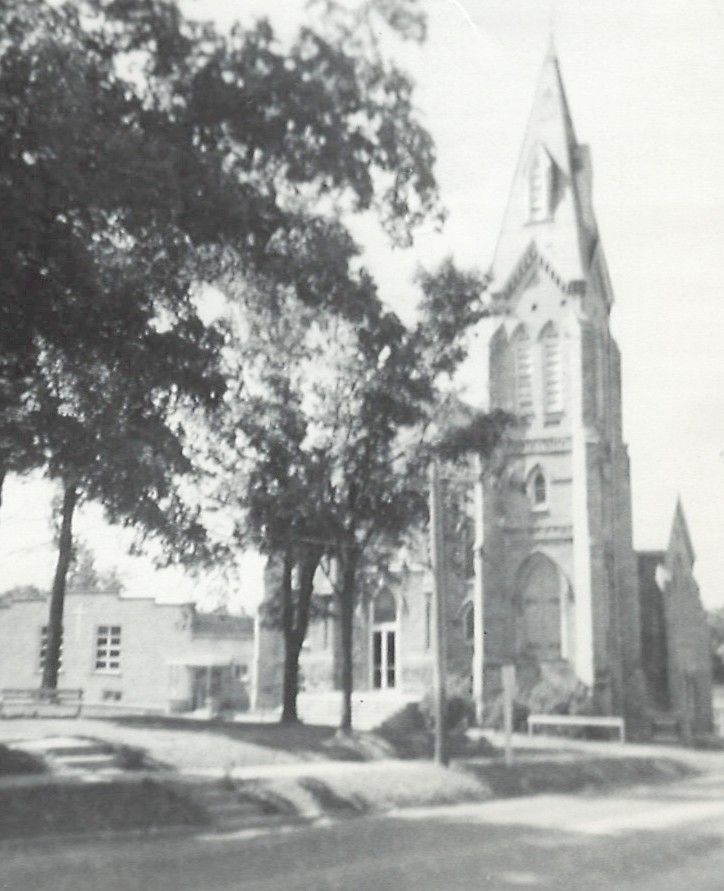
In the late Middle Ages, cities in Europe competed to build the tallest, most elaborate, most ornate, most beautiful cathedrals. These massive buildings pushed the limits of architectural knowledge, and some took over a century to build. They were decorated with gold furnishings and paintings which are still admired today. Included in these cathedrals were tall steeples, which pointed the way to heaven and reminded people of the importance of eternal things. Often the steeples included a bell tower, whose bell would call parishioners to worship in an age when there were few clocks.
These cathedrals are admired today, even though they largely stand empty. Even in their heyday, their construction represented misplaced priorities. They sucked vast amounts of money and resources from the common people, money and resources which could have been better spent elsewhere. The focus was on buildings and gold furnishings while the poor and the gospel were neglected. Cathedrals were often built, not for the glory of God, but to demonstrate the power and importance of the city where they were built. They masked a church that was often corrupt morally and theologically. The builders failed to understand that the church, the kingdom of God, consists of people, not buildings.
We do not build cathedrals today, although there are some churches which still put too much emphasis on material things and devote too many resources to buildings and elaborate furnishings. In the age of email, watches, and cell phones, bell towers are not needed to call people to worship, and steeples are often an unnecessary extravagance.
But…
Some years ago, my wife and I went on vacation and stopped in a particular city, with the intention of attending a certain church there on Sunday morning. The church building was located on a street parallel to a major highway and just a block away. We knew the address and thought we would go by and find the church the evening before. Our search took some time. We finally located it, a low building at the very back of a large lot. The front part of the lot was a gravel parking area, and the entrance was blocked off by a chain. There was only a small sign along the road. No one traveling on the major highway would ever see that church building, there was no sign there indicating its existence, and the street where the building was located was a little used side street. I don’t know what other things that church was doing to make its presence known in the community, but I concluded that the building badly needed a steeple.
That church reminded me of another church building in a rural area that I visited on another occasion. It was on land donated by a farmer and had been erected behind the farm buildings. It was accessed down a narrow lane beside the farmhouse and was totally invisible from the road. Only regular attenders would even know it was there.
Church buildings are a tool, a means to an end. They should be useful rather than elaborate. But to be useful they must be easy to find. Churches should be visible in their communities (in many ways). Jesus told His followers, “You are the light of the world. A town built on a hill cannot be hidden. Neither do people light a lamp and put it under a bowl. Instead they put it on its stand, and it gives light to everyone in the house. In the same way, let your light shine before others, that they may see your good deeds and glorify your Father in heaven” (Matthew 5:14-16 NIV). There are times when the church has to exist underground, but that should not be the case in other times. The church exists to be a light to people outside it, and it cannot be a light if it is kept hidden. A church building does not have to be elaborate, but people should at least be able to find it.





























 Christians Read