The Experience of a Lifetime by Elizabeth Goddard

Is there a scripture that you meditate on daily? Christians often have what’s called a verse or scripture of the day, the week, the month, or even a life verse. During interviews, I’m often asked, “What is your life verse?” I’ve never been one to have one verse that represents or speaks to my life in general. After all, life is so volatile and always changing. I’ve had scriptures that the Lord brings to my attention repeatedly during a season of my life until finally I “get it.”

Recently I discovered that I do have a life song and perhaps it’s for a season. That’s a new one for me. How about you?

This particular song is an old one and I can’t say I necessarily liked it when it first came out. But lately, I’ve started hearing it everywhere I go until finally, I stopped to listen. Isn’t that what we have to do sometimes to know God is talking? We have to stop and listen.

So in listening to this song, really listening, I was deeply moved. Now, every time I hear it on the radio while driving, my kiddoes offer the rolling of the eyes because they know what’s coming— tears. (I can’t help it—any kind of anointed moment brings the tears. )

One morning I brought up the song on YouTube during our devotional time before school. Then I shared with my children why I’m so moved by it. The reason I gave them was a revelatory moment for me as well–I’ve had almost a half a century to experience the truth behind the words of how much God loves us.

Each time I hear the words, I stop to think about everything God has done for me in my life. All the times He’s been there—in the miraculous big ways, and in the trivial small ways—how much He loves me. His love isn’t something that can be explained with words, though we can try, but it must be experienced.

It’s my prayer and hope that my children love Him and experience His love daily. But I hope, too, that when they have lived at least half a century, each of them will be rich in experiencing God’s love for them.

I included the video with lyrics here.


Posted in Elizabeth Goddard, Uncategorized | Tagged , , , , | 6 Comments

Translations, posted by Maureen Lang

This past week I finished a book called The Hangman’s Daughter, a translation from the original German by Oliver Potzsch. The book has been something of a sensation, at least the e-version at a discounted price, and has garnered a number of reviews, mainly positive.

Basically it’s a well-told story about a hangman in 16th century Bavaria. One of the things I love about it is the historical detail. The book gave me wonderful details about what village life was like back in those days—not to mention a plethora of information about the duties and social status (or should I say lack of social standing) of the hangman and his family. Of particular note is that the author is a descendant of a hangman, which evidently sparked his interest in exploring exactly what that meant.

For those reasons, I would recommend the book. But that’s not to say I loved the book, because I didn’t. I think part of my issue is because it was a translation. The language was so passive, and I wondered about a few word choices that sounded more modern than 16th century Bavaria. There were also point of view shifts between omniscient and various characters within the same scene. Minor details, very likely the kind most readers would either not notice or, if they did, wouldn’t let it get in the way of the entertainment value. Kind of like the reviews of a “regular” movie-goer rather than a film student, two parties who often have an entirely different experience at the very same movie.

I’ve had no such issues with books originally written in English by authors whose primary language isn’t English (Life of Pi, The Kite Runner, and Ursula Hegi books for example). Nonfiction translations have never bothered me, either, perhaps because I’m mainly looking for information rather than style. I think of The Art of War and The Communist Manifesto. (The latter two for research purposes only, lest you think I’m a militant communist!)

And of course I read the Bible almost every day. We all know the English version is a translation. 🙂 Perhaps style for this specially inspired book still works in any language.

Since I can’t read German (much to my forebears disappointment were any of them still alive) I have no idea if the original language was as passive as it turned out to be in the English version of The Hangman’s Daughter, which is my biggest disappointment with this book. It’s a shame, really, because there was so much action, which the passive voice diluted (he was running, for example, rather than the more immediate he ran).

What about you? Have you read any translated books where you feel it was the translation that got in the way, rather than the author’s storytelling ability?

Posted in Maureen Lang, Uncategorized | Tagged , , | 7 Comments

Ebooks, DRMs, and Consignment Stores by Camy Tang

Camy Tang here! I was running today and came up with this neat way to explain ebooks and DRM to people. I hope this helps some of you who are confused about the different ebook readers and types of ebook files.

Ebook files and ebook readers

So, you know there are several different ebook readers, right? Kindle, Nook, Kobo, Sony. (I’m sure there are others, but those are the ones I’m going to talk about for this article because they deal with DRM.)

Think of each ebook reader as a clothing consignment store. Each store has rules about what clothes (ebook files) they’ll accept.

The Kindle consignment store will accept .azn and .mobi ebook files, we’ll call them dresses (.azn) and skirts (.mobi).

The Nook, Kobo, and Sony consignment stores all accept .epub files, which we’ll call pants. However, Nook and Sony stores don’t accept dresses (.azn) or skirts (.mobi). Kobo, however, will accept skirts (.mobi) but not dresses (.azn).

Similarly, the Kindle consignment store doesn’t accept pants (.epub). You can’t go to the Kindle consignment store with a pair of pants (.epub), because Kindle will say they don’t accept pants.

You can’t go to a Nook consignment store with a dress (.azn) because they’ll say they don’t accept dresses.

This is why you can’t load a Kindle book you bought onto a Nook, and why you can’t load a Nookbook, or a Kobo book, or a Sony Reader book onto a Kindle.

Now, all the ereaders will accept .pdf files, which we’ll call sweaters.

DRM

DRM is a security feature attached to some .epub ebooks so that you can’t pirate them and give them away to anyone on the web (this is stealing from the author, in case you didn’t know that). (There’s DRM on .azn books, too, but since you can usually only read .azn books on a Kindle, I’m not going to include it.)

I don’t actually understand the technical stuff in how DRM works, but for this article, we’re going to say that DRM is like the designer label on a pair of pants (.epub). A non-DRM file is like a generic pair of pants with no designer label.

Now, certain consignment stores–ebook readers–will accept generic pants and also a particular designer brand of pants. However, they won’t accept other designer brands.

So, the Nook consignment store will accept generic pants (.epub) and also Nooky Couture jeans (DRM-secured .epub).

Sony consignment store will accept generic pants and also Sony Religion jeans (DRM-secured .epub).

Kobo consignment store will accept generic pants and also Kobo Klein jeans (DRM-secured .epub).

However, each store won’t accept other designer brands. You can’t take a Sony Religion jeans (DRM-secured .epub) to the Nook consignment store, because they’ll say they can’t accept it.

This is why if you buy an ebook from, say, the Sony Reader store online, you can’t load it onto your Nook.

However, if you have a generic pair of pants (.epub) that you get from some other online store, or from Google Books, you can load that onto Nook, Sony, and Kobo readers without problems because they all accept generic brands of pants (.epub).

There are programs to strip the DRM from your ebook file–like cutting off the designer label from your Nooky Couture jeans, turning it into a generic pair of pants so you can take it to another consignment store like Kobo or Sony. However, stripping the DRM is illegal, even if you legally bought the book in the first place.

Changing a file from one form to another

There is a free program called Calibre that will take your generic pair of pants (.epub) and cut it up and resew it into a skirt (.mobi) so that you can read it on your Kindle. It can actually take any ebook file that’s not DRM protected and convert it into any other ebook file you want, but most of the time, people want to convert pants (.epub) to a file they can read on their Kindle, which would be a skirt (.mobi).

Calibre will only convert generic pants (.epub), not any designer label jeans (DRM-secured .epub). So if you bought a Nooky Couture jeans (DRM-secured .epub), Calibre won’t be able to convert it to a skirt (.mobi) that you can read on your Kindle.

Calibre won’t convert files to dresses (.azn) since .azn is DRM protected. However, since both Kobo and Kindle read .mobi files (skirts), converting a file to a skirt will work just as well.

Calibre is pretty easy to use, and if you hook up your Kindle to your computer, it will also load the converted book onto your Kindle for you if you tell it to.

Well, that’s it. I hope this is an easy way for people to understand ebook readers, ebook files, and DRM.

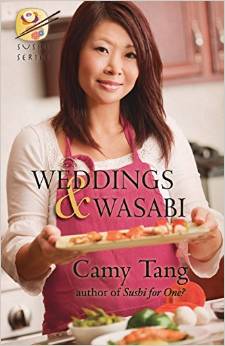
Camy Tang writes romance with a kick of wasabi. Out now is the fourth book in her Sushi series, Weddings and Wasabi. She is a staff worker for her church youth group, and leads one of the worship teams for Sunday service. On her blog, she ponders frivolous things like knitting, running, dogs, and Asiana. Visit her website to sign up for her quarterly newsletter.

Click here to find out how you can join my Street Team—it’s free and there’s lots of chances to win prizes!

Posted in Camy Tang, Uncategorized | 10 Comments

Getting Out of God’s Way–Walks in Faith by Vicki Hinze

This weekend, I had an unusual experience and I want to share it with you.


A few years ago, I wrote this odd short story, Before the White Rose.  When I started writing Christian fiction, I thought, well, this is another I won’t publish.  I have been writing for well over two decades, so I have quite a collection of unpublished works. J


Anyway, the story kept coming up, staying on my mind, prodding me.  And so I let Bell Bridge Books publish it, trusting that the nudging meant what I sensed it meant.  That God had a plan for this story and He wanted me to hear Him and listen to Him and get out of His way.  I let Bell put the story on Kindle for free for four days.  It’s there now and we’re into day three or four depending on how you count them.  Anyway, that’s not important.  What’s important is that the story shot up from being there to number 1 in contemporary fiction in 14 hours.  In 30 books, I’ve never had a project rocket like that.  Never.


That acted as confirmation—God was glad I had FINALLY gotten out of His way.


It stayed there until about 4:00 Sunday afternoon—three days later.  Now the books before it are Christian fiction, and I’m pleased as punch.  Some saw it top the list and they were so kind, and expressed their sorrow that it had fallen to third spot.  I’m thrilled.


The point isn’t about the numbers except the numbers confirm that when we listen to Him, however He communicates with us, then He does what He wants and He can do it in a huge way.  I also proves He uses somewhat unorthodox (to us) means to touch His children in ways He wants them touched.


Why do I say that?


Many who don’t ordinarily read Christian fiction are reading this story, and they’re finding comfort and hope in it.  They’re seeing His mysterious hand.  That’s a good thing.


I want to share with you a couple of comments that are public.  The entire reviews are posted on the Amazon website—in the U.S. or in the U.K.


“…Do you know someone who needs a phone call or a visit? It can make all the difference in someone’s life. If you’re looking for a meaningful read, this one will have you involved and thinking long after the final page….”  –Kathy Carmichael “KC”


This one encourages others to touch the lives and not forget those alone who need our attention.


“…Life is so difficult at times that it seems almost too painful to bear. But the other times, the wonderful ones like first kisses and weddings and new babies make those painful moments tolerable. We forget just how bad the pain was and we move on, we keep living.”

–Debra Webb “Deb”


This one speaks of hope in the face of despair.

“…It’s a touching story of three people who are hurting very badly and have given up hope, but at the same time, it fills the reader with hope over the possibilities that exist even when we see nothing but despair.”  –Skye Taylor


This one goes on to encourage people to reach out to others to heal yourself and them.


“…everything is meant to be and i suggest i came across the book for a good reason. before the white rose is incredible. i will never look at a white rose at my dads final resting place the same!”  –Terri’s Kindle


In this one, the reader has just lost her father in circumstances she saw as similar to those in the story.  She feels she came across the story for a good reason.


See what I mean?  It’s not whether or not they like the story, it’s how the story relates to them and the facets of the hand of God they feel—whether or not they tag those feelings that way.


It’s amazing to watch the way God works.  This is definitely all His doing.  And I see the complexities involved.  All the ripples on the water in all the lives in the way He uses this or any other project to communicate with His children.


I see these facets and note these things and in a way I feel very small and insignificant.  But in another way I’m humbled in the way we all feel humbled that of everyone God chose us for our specific task.  He trusted us to follow His direction and do what we did.


Some will read that and say it’s like being a glorified taxi driver.  I’m okay with that too.  It’s a privilege to drive that taxi and I’m honored to do it.  I know the glory for any and all good is His.


The point I wanted to make is that in this I’ve had it hammered home that God uses the willing in ways we might not fully understand but because we’re willing, He does what He wants done through us.  And His house is a mansion of many rooms.  He needs many because we’re all in different stages of spiritual development and we have many needs at different times.


I guess I’m feeling a little awestruck by God.  Again.  (smiling here)


So what do I hope you take away from this post?  Only this:  Some things in your faith walk are clear and easy.  Some you wonder if you’re doing the right thing.  Put it on the altar and listen to Him.  Sometimes, we’ve done what He wanted, but we need to then get out of His way.


Blessings,


Vicki

Posted in Uncategorized, Vicki Hinze | Tagged , , , , , | 8 Comments

What’s the Big Idea? by Yvonne Lehman


            Where do you get your ideas?

That question is often asked of me at writers conferences and by my readers. I can honestly say that my (and many writers) problem is getting too many ideas and not sure in what form to use them. Should I write a devotional, article, short story, novella, or novel?

Come to think of it, a writer may do all or any of the above.

Whether it’s a 250 word vignette or 100,000 word novel, there is one central idea to each piece of writing. The idea is like the Interstate of your writing. If you use that idea in a devotional you stay on the Interstate and you may have only one character, usually the first-person “I.” For example you may be writing about finding a job. A short piece can succinctly tell about fear, doubt, waiting, wondering, praying, questioning, and when all seemed in vain, the exact right job came. And you can use a scripture about God’s faithfulness. Just stay on the Interstate.

Or for novel material, you can get off the Interstate, take those side trips, have a friend with you, do some sight-seeing, find an antique, get back on the Interstate, have a wreck, get a flat tire, be stopped for speeding, miss the job interview, apologize profusely, get involved with the good-looking interviewer even if you don’t get the job, or get involved with the police officer, or be committed to a hospital and get involved with the doctor. But…the main idea still revolves around getting the job.

This may be called the theme, or purpose, or take-away value, but there is one theme that dominates just as the Interstate dominates the trip you’re taking. You may take side road that offer romance, danger, conflicts, flashbacks, trials, unexpected happiness, but the Interstate is still there, the main road.

To get back to where I get my ideas, they come from life around me. My novel, Catch of a Lifetime, came from one sentence. A friend of my daughter said, “I married him for his money, why can’t I love him for it?” I knew I had to write about a character marrying for money.

That was set in Charleston SC where my husband and I vacationed a lot, so my ideas were to have that setting as the background for a few novels (could deduct that from my taxes!)

I had missionary journeymen friends in Africa. She was a nurse, he a teacher. They loaned me their pictures and hard copy of their experiences they used in talks to churches. That was the idea for Drums of Shelomoh.

My granddaughter is on a swim team winning awards. After getting information from her I made swimming an important part of Never Say Never in which the heroine teaches the hero to swim.

Idea for Call of the Mountain came from a discussion with my daughter about abortion and our debating the pros and cons of why one would chose abortion. We expressed our beliefs about the subject.

Whiter than Snow was inspired by my having been in our blizzard of the century in 1993. My heroine was trapped. My hero was a fireman who tried to rescue the heroine. I used personal experience and interviewing my son-in-law who is a fireman.

The idea for More than a Summer’s Love came from personal experience of our family sponsoring a young girl in the Philippines through Christian Children’s Fund. The girl and my youngest daughter were named Cindy. Difference in their lifestyles was obvious and stirred my imagination and I had the American girl go to thePhilippines to meet the sponsored girl when they were in their twenties.

Something Old, Something New came from my action of visiting Ella in a retirement center, with no thought of writing about it. However, her background of having been a missionary to Korea and my observing others in the center and their many activities became the inspiration for a nursing home romance between older people.

Another idea came from my tutoring a second-grader once a week and the idea grew to a story of a teacher who tutors and a widower who is having difficulty accepting the death of his wife and dealing with an equally sad little boy.

My idea for Hearts that Survive – A Novel of the Titanic came from fascination with anything about Titanic and the 100th anniversary of its sinking beingApril 15, 2012.

After getting the idea, a next step toward coming up with a good story is to express that idea in one sentence or two, the way a TV program, book, or movie is advertised to get your attention. You can read a sentence or two and know whether or not you want to read further or see the movie.

That expressing the idea that becomes the theme is not as easy as I make it sound!

Posted in Uncategorized, Yvonne Lehman | Tagged | 3 Comments

Breast Cancer Awareness Month Book Recommendations by Yvonne Ortega

It’s National Breast Cancer Awareness Month in the USA again. Everywhere we look, we see something pink: pink balloons, pink ribbons, pink blow dryers, pink bottles of shampoo, pink candy, pink jewelry, pink clothing.

Remember that beyond that pink power is a concern for people’s lives.

I want to recommend two books to you in alphabetical order by title: Dear God, They Say It’s Cancer (Howard Books) by Janet Thompson and Finding Hope for Your Journey through Breast Cancer (Revell) by Yvonne Ortega.

Janet Thompson and Yvonne Ortega are both breast cancer survivors.

In the book, Dear God, They Say It’s Cancer, Janet Thompson offers practical advice, encouragement, and hope for anyone with a life-threatening illness. Each chapter includes: A Sister Shares—stories from breast cancer “sisters,” Mentoring Moment—lessons learned, helpful hints, encouragement, God’s Love Letter to You—paraphrased Scripture for you to personalize, Journaling Guides—encouraging prompts to help you journal your own breast cancer journey, and more. The Sanity Tools Appendix includes such items as resources and a space for appointments, contact information and other details. Janet says, “A cancer diagnosis affects the whole family, and their world starts to whirl with yours.” This book is a comprehensive, practical guide that is easy-to-read and offers wonderful spiritual encouragement to those who face cancer.

In the book, Finding Hope for Your Journey through Breast Cancer, Yvonne Ortega offers the readers sixty brief inspirational readings. Each one starts with a Scripture reading which she calls a Hope Builder and ends with a brief prayer. Yvonne knows there will be triumphs and setbacks on this journey. However, she reminds the readers that even when it looks like they are alone, God is there every step of the way. This book provides the emotional and spiritual support cancer patients yearn for. Yvonne writes from the heart, sharing her feelings and reactions in a way that will cause you to say, “She understands.” Ride the roller coaster with Yvonne as your seatmate on a courageous, vulnerable, hope-filled journey through cancer. You won’t know whether to laugh or cry—but you will know you’ve found a friend.

Yvonne Ortega October 20, 2011

Posted in Honored Alumni, Uncategorized, Yvonne Ortega | Tagged , | 4 Comments

Oh, The Places You Can Go with NaNoWriMo by Julie Arduini

Mid-October. It’s marked by the crunch of colorful leaves on the sidewalk. The smell of MacIntosh apples and autumn night air. It’s also the time of year anyone who has that novel all figured out in their head to sign up the November challenge called NaNoWriMo.

NaNoWriMo stands for National Novel Writing Month. What started as a group of wanna-be novelists from the Bay Area in 1999 through the power of blogging and social media turned to over 200,000 participants last year. These novelists sign on to write a 50,000 word novel throughout the month of November. They have to start from scratch and submit their document for word count verification by midnight Pacific time November 30. Stats from the “NaNo” website show writers penned over 2 million words and that 37,000 “won”.

How do they win? They hit the word count or go over it. Winners get a badge to display on their blog/website and of course, have bragging rights. The point is just to get the story out. All the typical writing rules and usual traditions of self-editing need to go out the window for NaNoWriMo. The plan is to write, write, write, and then write some more.

NaNoWriMo has evolved over the years and their site offers forums for ages, genres, plotting questions, research, and even cover art for those that want a design for their NaNo page and e-mail signatures. There are also regional get-togethers where people meet at places like Panera to work on their novels with other who understand the obsession. Computer gurus design word count widgets for blogs, websites, and signatures.

Are you joining?

There are also pep talks that make their way into weary writer inboxes.

Many participants are not full-time writers by day so this is their once a year time to  enjoy “thirty days and nights of literary abandon.” For some, writing is their life and NaNoWriMo gives them a tight deadline to put a story together. Published authors like Rachel Hauck and Amber Stockton use NaNoWriMo this way. Amber hopes to use this year’s NaNo to put together her latest, Stealing Hearts.

What’s an extra benefit of finishing NaNo? Some projects turn into (after several drafts, editing, and polish) a published book. Amber Stockton wrote parts, if not all, of Promises, Promises (2006), Deceptive Promises (2007), and Patterns and Progress (2008) as part of that year’s NaNoWriMo project. Linda Yezak admits Give the Lady a Ride was a “NaNo fail” because she didn’t meet the word count in time because she spent too much time in research. However, the book by the same title was published in March. Precarious Yates has a December 2 release date for her 2010 NaNoWriMo story, The Elite of the Weak, and is the first book in the Revelation Special Ops series. Her series is in the YA (Young Adult) genre. Lisa Grace has her 2009 work, The 15th Star, out as a self-published e-book in November with publishers expressing an interest. Delia Latham‘s Yesterday’s Promise was a NaNo, now White Rose Publishing, book. Traci Tyne Hilton‘s NaNo novel, Foreclosed: A Mitzy Neuhaus Mystery, sold 8,000 copies.

The drawback of NaNoWriMo is it’s easy to become obsessed. Amber Stockton gives wise advice.  “Too many put too much pressure on themselves, seizing their ability to let the words flow. And the biggest piece of advice is turn off your internal editor. The goal of NaNo is NOT to write great, but just to write. Even if you think it’s awful or needs to never again see the light of day, that’s all right. Write as much and as fast as you can without caring about content, structure, order, or polishing. There is time to edit later. Get the words down first.”

Last year was my first attempt and although I hit the goal with my contemporary romance at 50,300, I let the numbers define me. I withdrew from family and let a lot of my life slack, including quiet time with the Lord. I’ve heard from a lot of writing friends who do this each year that competitive personalities will struggle with being consumed. This year I plan to try another Adirondack based contemporary romance but put the goal on writing each day, not hitting the 50K. I also confessed I haven’t quite told my family I’m giving it a whirl in case they put me on that Intervention reality show.

There are NaNoWriMo helps out there.

My Book TherapySusan May Warren heads up the MBT gang and this year Beth Vogt is the MBT team member in charge of all MBT NaNo activities. They have a forum, resources, cheerleading, word count and other NaNo related prizes.

NaNoWriMo Cheerleaders from the Sidelines-–There are a lot of Facebook NaNoWriMo related groups out there but I recommend this one because I know it is Christian based. There are facilitators involved not in NaNoWriMo this year but understand the chaos it brings. They’re already on board cheering writers on.

NaNoWriMo Regional Groups—The list this year seems bigger than ever on the NaNo site. Most try to have weekly meetings to encourage each other on at a public place with affordable food and proper Internet connections.

NaNoWriMo Forums—Again, anything to do with the NaNoWriMo month is bound to be in the forums. There is even a forum for NaNo rebels who aren’t doing fiction or perhaps are taking the month to edit instead. The caveat is to watch your time management on the boards or you’re eating up writing time.

Other participants— Whether it’s finding a buddy through the forums or approaching friends you know that have done it before, they can be a great source of wisdom and encouragement. Julie Jarnagin, whose NaNoWriMo story Canyon Walls published earlier this year with Barbour/Heartsong Presents, advises:

“Stay up until midnight on the 31st to get a head start. You’re more excited the first day than you will be in the middle of the month. Set your daily word goal and stick to it even if your cumulative word goal puts you ahead. The extra words that build up will help later. Don’t let yourself spend too much time on the NaNoWriMo message boards. They’ll suck you in. Find a NaNoWriMo buddy and cheer each other on.”

So, now you know about NaNoWriMo. My question is, are you in? If so, where do you think this experience will take you? By the way, if you are part of it, my NaNoWriMo user name is JulieArduini. Like Facebook, you can friend each other, and you’re welcome to add me. As Delia Latham says, “Keep the coffee percolating.”

Posted in Julie Arduini, Susan May Warren, Uncategorized | Tagged , , , , , , , , , , , , , , , , , , , , | 11 Comments

It’s Storming Inside! by Hannah Alexander

We had a major storm last night, with wind that threatened to blow the windows out, rain that washed leaves from the trees, and thunder that deafened me. I’ve always enjoyed storms, but lately they just add to the stress of my life. All that wild sound and those flashes of light and wind that strikes the house echoes inside me, and I just want to cover my head and plug my ears.

Our biggest storms lately have been inside the house, with my mother’s increasing dementia. Sundowner’s syndrome is frightening and nearly impossible to manage without medication, and we ran out of medication yesterday! By the time I arrived home from shopping, Mom had half her things out on the sidewalk, determined to move back home. Not only does she not have a car, she can barely walk, can no longer drive, and she doesn’t know where “home” is when sundowner’s hits. The only thing we can do then is place her in my car and drive her around. That’s the only thing that will settle her down. That, plus the medications.

To my horror, I woke up this morning to find that Mom was still stressed with sundowner’s syndrome–she had no idea where she was, where her family was–most of them are dead now, and we can’t tell her–and she may not have known me. Sometimes it’s hard to tell. I was so tired I couldn’t be cheery with her as I typically am, because usually, in the morning, Mom is cheery and in her right mind. She may not remember anything, but she knows who she is and who I am. All I could pray this morning was “Lord, help, Lord, help.”

And He did. The chaplain from Mom’s hospice knocked on the door. I told him what was going on, and he told me she didn’t need to see any strangers so he would pray with me and leave quickly. He did. And then he reminded me that my mood affects her mood. I’m her only child, and when I’m happy, so is she. So I went back into the house and found Mom and smiled and encouraged her and offered her cocoa (her Ensure) and helped her dress. This morning’s storm settled down, and I’ve been able to function today.

Isn’t it wonderful how just a two-word prayer can be answered in seconds, is even being answered before it’s prayed? Have you ever had something like that happen to you? I’d love to hear about it.

Posted in Hannah Alexander, Uncategorized | 6 Comments

The Truth About Prayer Habits by Sarah Goebel

Whatever exercises we practice in the Christian life, they are in vain if done without the reading of Scripture and prayer. Yet sadly, most Christians go through life without an active prayer life. They worship, they go on mission trips, they serve in the church but many seldom pray. Donald Whitney in his book, Spiritual Disciplines for the Christian Life, tells about a survey done in the 1980s. “More than seventeen thousand members of a major evangelical denomination were surveyed about their prayer habits while attending seminars on prayer for spiritual awakening. Because they attended this kind of seminar, we can assume these people are above average in their interest in prayer. And yet, the surveys revealed that they pray an average of less than five minutes each day. There were two thousand pastors and wives at these same seminars. By their own admission, they pray less than seven minutes a day.”

On the other hand, can we really pray continually as we commanded in 1 Thessalonians 5:17. Yes, we can do this because Scripture is not speaking here of prayer as an activity. This is important for us to understand.  “Pray continually” speaks of relationship. My friend, Jennifer K. Dean in her book, Heart’s Cry, explains that God is calling us to live a praying life versus a prayer life.  She calls this lifestyle “living behind the veil in the presence of God throughout our days, living in Christ and Christ living through us. Prayer is in this sense living in an unbroken awareness of the presence of God as we move through our day.” It means you may be concentrating on another activity at the moment, but at the same time, you are aware of God’s presence and the need to return your attention to Him. In other words, you never really stop talking with God; you just have interruptions in your conversation. Praying continually is chatting off and on all day long as we take care of our responsibilities and enjoy the activities we are involved in as though God is our companion, traveling right along with us. The thing is – He is. We simply fail to acknowledge it.

Living a praying life does not mean, however, that we never set aside a particular time for devoted prayer. We are told in Colossians 4:2, we are to devote ourselves to prayer. When we devote ourselves to something, we make it a priority. God wants us to live with a continual awareness of His presence, communing and communicating with Him while doing life as well as to have focused dedicated times of prayer. His expectation for us to pray flows from His love for us, not from a heart to put us to task. To illustrate, when I travel, my husband expects me to call him when I arrive at my destination. I expect the same from him. We don’t put this expectation on one another as a means of control or distrust. The one traveling communicates to put the other’s mind at ease by informing them they are safe. Besides, Praise the Lord, we are still after all these years eager to hear one another’s voice when we are separated by distance. My point here is just as our expectation to phone one another flows from our love, God’s expectation for us to pray is also born out of love. When we set aside special time alone with God where our attention is all on Him, we are in a place of intimacy where God can reveal to us His most intimate secrets.

So how is your prayer life? Does it seem lifeless or alive? Do you receive direct answers to your prayers? Are you experiencing the reality of God’s continual presence in your life?

To develop a praying life lifestyle combined with special times of dedicated prayer starts with a decision to do so. God will help you once you commit to it. I would also highly recommend you read Heart’s Cry: Principles of Prayer and Live a Praying Life, both by Jennifer Kennedy Dean. Regardless where you currently are in your walk with God, I truly believe these books will set you on course for a deepened intimacy with God and a more powerful, answered prayer life.


To end this post, I want to share one exercise I have found helpful to developing a praying life relationship with our Father. Spend 5 to 10 minutes in prayer each morning upon awakening before your thoughts become clouded with the day’s plans. Thank Him for your life and day and ask Him to be Lord over it. Focus your thoughts on Him and His love, sovereignty and majesty. This should help you to remember He is with you from the time your feet hit the floor and as you go through your busy day.

How about you? I know we have many readers who walk closely with God. Do you have an exercise you could share that has helped you to live a praying life or increased your intimacy with God?

Posted in Sarah Goebel, Uncategorized | Tagged , , , , , , , , , , | 5 Comments

A Real Keeper by Lynette Sowell

The book of Ecclesiastes says: “Of making many books there is no end, and much study wearies the body.” (Ecc. 12:12b) Isn’t that the truth? I mean, yes, it’s the Truth, but just go to Barnes & Noble or your local independent bookstore and take a stroll. Now with the ebook explosion, we’re surrounded by a virtual world of books as well.

How, then, do we decide what’s a keeper? Earlier this year, my husband and I decided to convert our son’s old bedroom into an office. This involved having our contractor move our built-in bookcases from our large eat-in kitchen to the new office. (Hooray, after years of sitting at the kitchen table or working in the living room, I have an office. I still pinch myself sometimes!)

The mammoth bookshelves have plenty of room for books–three sets of shelves, stacked seven shelves high, equals 21 shelves. Whew. Are you drooling yet? If you’re a book lover, you probably are. Sorry about that. I do have a point here.

I’m not talking up my bookshelves to turn you green-eyed. Because my husband, sweetheart that he is, said, “Honey, it would really be easier if you go through all your books before we move all of them into your office. We can get rid of some of them.”

What? Get RID of some of my books? He was right, though. Some of my old friends had dust on the tops (gulp, true confession). If I hadn’t picked them up in so long, why were they on the shelf? In the end, I brought six cardboard boxes of books to the town library to donate to their used book sale. I’m sure they went to good homes. Some copies were autographed.

I had to decide…what books are keepers? For me, these are what I call “landmark” books. When I pick up the book, I can remember how it made me feel. Did I laugh? Did I cry? Did it evoke any sort of emotion in me at all? Do I remember the characters? Would I honestly read this book again? This was a hard choice to make as I sorted books into two stacks, keep and give away.

I was left with a kaleidoscope of genres–historical, contemporary, chick lit, science fiction/speculative fiction suspense, romantic suspense, cookbooks (of course), nonfiction, reference books.

How do you decide a book is a keeper? Do you have stringent requirements for what makes it into your permanent collection? Or are you quick to pass a book along?

Posted in Honored Alumni, Lynette Sowell, Uncategorized | Tagged , , | 3 Comments

You Can’t Read Just One by Elizabeth Goddard

“You can’t eat just one.”

You remember that old Lay’s potato chip commercial, right? You might eat two or three more chips, or you might grab a handful and cram them in your mouth at the same time. That’s the more likely scenario. Now, hold that thought and think about the books you’re reading. Are you reading more than one book at the same time?

An avid reader growing up (no surprise there, I’m sure) I read in a linear fashion—one book, then another.  Because I had no responsibilities to speak of as a child, I would read all day long, or all night, until I finished reading that particular story.  Then I was onto the next book.

Nowadays I find myself reading several books at the same time. You know what I mean. I have a book on the nightstand next to my bed, another in the living room.  Several in my sitting room. I’ve started on them all and plan to finish, but depending on the mood I’m in, I might switch from one to another. I’m a quarter of the way through one, halfway through another. Several started on my Kindle.

I don’t think I’m alone in this. Is that just a sign of the times? Multi-tasking? Or just one more way we’re training ourselves not to focus on one thing? Are we suffering from “cognitive overload” as this Wired Magazine article suggests?

I mentioned in my very first post that I had received The Queen by Steven James. Yes, I’m reading that one, and I’m also reading a science fiction ARC for one of my favorite scifi authors. I’m reading a romantic suspense, a historical and a women’s fiction for a friend.

At some point, I know the story will take over, and I’ll focus solely on the one book until I’m done.  Please tell me I’m not alone.

What are you reading concurrently?

Blessings!

Beth

Elizabeth Goddard is the award-winning author of seven contemporary romance novels and two novellas, including a romantic mystery, The Camera Never Lies—a 2011 Carol Award winner. Elizabeth is a member of ACFW and has served as a board member in her local RWA chapter. She is a 7th generation Texan who lives in East Texas with her husband and four children. She and her family recently spent five years in Oregon, which serves as the setting for several of her novels, including Oregon Outback, releasing with Barbour Publishing in Spring 2012. Visit her on her Facebook Author page.

Posted in Elizabeth Goddard, Uncategorized | Tagged , , , , | 6 Comments

Should a line be drawn on what we read? by Maureen Lang

As a Christian who loves to read, I’m often confronted with the choice to read a book that has the potential to offend my faith. I know there are strong opinions about what followers of Christ should let fill our minds: see Philippians 4:8 about dwelling on whatever is good, noble, pure, lovely, etc. But as part of the publishing industry I also feel responsible to read a wide variety of what’s out there. This invariably includes books that at least partially go against the stamp of “good, noble, pure or lovely.”

I’m not writing this post to define another person’s sin, cast blame, stir guilt, excuse or condone what people want to read. But I do think it’s worthy of discussion or at least taking a moment to ponder how we feel about the books we choose to read. For some, staying safely within the boundaries of Christian fiction is a wise choice. Gentle readers know their tastes and I for one am glad there are more choices than ever to meet this particular taste. The faith of a gentle reader is no less real or vital than someone who allows a wider range of reading content.

It’s a bit like drinking wine. There are some households, either by tradition or culture, where wine might be a casual part of a meal. Other households, by different traditions or culture, wouldn’t dream of allowing an alcoholic beverage inside their home. Is one wrong and the other right?

The Bible answers this for us: it’s only wrong to drink or to eat something if we’re in the company of someone who would be offended by such consumption. In other words, it’s all about love. Loving others so much we wouldn’t want to do something that offends them. The Bible doesn’t say drinking wine would offend God so long as we don’t get drunk, but we’d certainly be offending Him if we didn’t have a heart toward those we’re with.

If I’m a Christian I’ve surrendered my mind to a loving God, and my body is a temple. I want to keep myself pure in mind and body, so hasn’t this topic to do with caring for myself properly? That may be why some people neither drink wine nor read books containing “edgy” material. Would reading something that offends God be a sin?

I do think we need to ask God where He wants us to draw the line—I’m not going to draw that line for others. Personally, I don’t read erotica, excessive violence, or anything promoting the occult. While reading such books might provide an education of sorts, it’s not likely to be the kind of education I will want to employ, either in life or in the fictional lives of my characters. But would it be a sin for me to read such things? I suppose that would depend on why I’d be reading them. To understand someone who is interested in such things? Would it honestly be necessary for me to expose myself to something so far outside my comfort zone? If I saw no value in reading such things but read them anyway, it probably would be a sin—for me.

I belong to a secular book club where we often read books that, while magnificently written, include Christian characters that are judgmental, mean-spirited, narrow-minded—so many, in fact, I believe this kind of portrayal is patently cliché in secular fiction. But if I’d excused myself from reading such books I’d not only have missed out on being part of a group of young women I enjoy getting to know, I’d have missed some wonderful books, too. Books that taught me not only how lovely writing can be, but gave me a glimpse into a variety of mindsets I most likely wouldn’t have been otherwise able to explore.

So what about you? Do you have a line as far as what you won’t read? Do you put down a book that wouldn’t likely be something God would read were He to be sitting right next to you? Do you have a limit, and if so would you like to share it with us?

Posted in Maureen Lang, Uncategorized | Tagged , , | 12 Comments

BOOKS YOU READ AGAIN AND AGAIN by Camy Tang

Camy Tang here! So I’m curious, what books are “re-reads” for you? And what exactly defines a re-read book for you?

I might be in the minority, but there are very few re-reads on my bookshelf. Persuasion, Pride and Prejudice, Sense and Sensibility, and Mansfield Park by Jane Austen are my most often re-read books. I also re-read French Women Don’t Get Fat because I find it inspiring and helpful in my weight loss goals. And once in a while I’ll re-read Dragonsong and Dragonsinger by Anne McCaffrey.

Other than that … I guess there are just so many new books to read that I don’t have time for re-reading. I’m always excited to pick up the new Love Inspired Suspense novels each month, so I don’t often re-read any old ones since there are new ones just begging to be opened!

The only times I reread books are when I’m tired and want some “comfort reading.” LOL Is there such a thing? I think I just made that up. But I’m sure you all know what I’m talking about—those books that give you warm fuzzies no matter how many times you read them. You don’t have to think, you just have to wrap yourself in a familiar book like that holey-yet-warm granny square blanket your grandma crocheted for you when you were a kid and you always love.

So what books do you re-read, and why? What defines a re-read for you?

Camy Tang writes romance with a kick of wasabi. Out now is the fourth book in her Sushi series, Weddings and Wasabi. She is a staff worker for her church youth group, and leads one of the worship teams for Sunday service. On her blog, she ponders frivolous things like knitting, running, dogs, and Asiana. Visit her website to sign up for her quarterly newsletter.

Click here to find out how you can join my Street Team—it’s free and there’s lots of chances to win prizes!

Posted in Camy Tang, Uncategorized | Tagged | 8 Comments

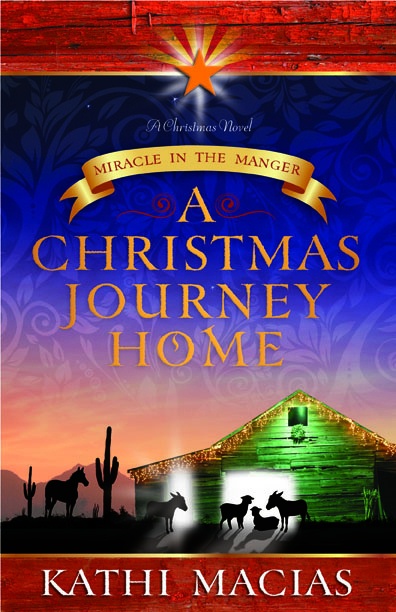
Our Responsibility as Writers by Kathi Macias

I’ve been at this “arranging words on paper” thing for many years–decades actually–so I’m not surprised when someone asks me why I write the type of books I do, as I’ve heard the question many times before. But I also know that some of them are actually asking me (without saying the words) why I write Christian books, rather than secular ones.

Okay, at the risk of stating the obvious, I have to say that I write Christian books because…well, because I’m a Christian. Therefore, I see the world through Christian eyes. My faith is not a pocket or slot in my life’s briefcase, reserved for Sunday service. It’s the whole thing, all of it, part and parcel of who I am and, most important, Who created me that way.

Now I understand that you can be a Christian (a devout one, at that) and work in the secular publishing world. (I have done that, as a matter of fact.) I don’t believe, however, that you can write from a secular worldview without being disturbed and even grieved in your spirit. As believers, we know Truth; how, then, can we deny it by using our God-given talents to teach otherwise?

Yes, I know. That’s controversial at best, and I certainly don’t mean it to be critical. As I said, a Christian can write/work in secular publishing, but let me clarify that statement. If a Christian truly feels called of God to write, for instance, for a newspaper, and that writing entails reporting the news, then by all means, shine your light in the darkness and honor God with every word you write. If you know God has called you to write clean, wholesome entertainment (books, movies, etc.) that aren’t necessarily overtly Christian, then do it with gusto. But if the writing involves promoting an ungodly lifestyle and/or way of thinking, I don’t see how a true believer can, in good conscience, accept a paycheck for such employment.

Now that I’ve opened up a real can of worms here, let’s explore this topic a bit more. I’m interested in hearing from other writers, but even more so from readers. What do you think, fellow lovers of words?

Posted in Kathi Macias, Uncategorized | Tagged , , | 6 Comments

How I Got Started by Yvonne Lehman

I was asked how I got started in writing and where I get my ideas, after 50 books. I’ll save the idea topic until another time, but would love to share how I got started.

In the 1980’s I was teaching a class of young girls, ages 17-married. Dissatisfied with teaching brotherly love to an all-white group, I suggested we invite black girls to visit our class. A deacon’s meeting was called. One deacon approved. The pastor and other deacons were against it. I was crushed. For six months I considered leaving the church. Then it dawned upon me that I wasn’t limited by a church. God and I were a majority. I rededicated my life. Soon afterwards, I saw the ad in Decision magazine about theSchoolofChristian Writing. I realized I’d been writing about things that interested me for years and throwing them in a box in a closet. But I didn’t know someone like me, quite ordinary, could be a writer. Well, maybe not exactly “ordinary.” Writers are known for our…um…eccentricity!

However, I applied to the school and was accepted. At that time, we had 3 children and no money, but we scraped together enough for me to take a train to the school. I was introduced to an entirely new, different, and exciting world and knew I had to become a writer. And of course, what would naturally follow would be fame and fortune.

The person who won the Award of Excellence from the previous year’s students said she got the call June 12 at 3:00 p.m.I wanted to win that prize the following year so badly that I wrote & wrote, prayed & prayed, and trying to show I had faith I went to the phone on June 12 at 3:00 p.m.and put my hand on it. The call didn’t come. It came on June 17. The school paid my way that year since I won the award. On the way home on the plane Bob DeVries, editor with Moody sat between me and another student. We talked his ears off until he finally told us both to send our mss and he promised to read them. He left Moody but I tracked him down (didn’t know you weren’t supposed to chase an editor). He was getting his doctorate but promised to read it after he finished his studies & thesis. While waiting I wrote a series of weekly columns for a state Baptist paper. Each week I’d have to whittle about 2000 words down to 500, which was excellent training in editing and being concise. Eventually Mr. DeVries went to Zondervan and they published my first book, Red Like Mine, about race relations.

I had only a high school education at the time, but began taking one course at a time, learning all I could about writing and literature.

I began to realize fame and fortune might be slow in coming. I was pregnant with my fourth child, Cindy, when I received the Award of Excellence. When my first book was published, she was four years old. When my books arrived, she was the only one at home. I gathered her close and showed her my picture on the back of the book.

“Do you know who that is?” I asked.

She nodded. “You.”

“Do you know who wrote this book?” I said, so excited.

She looked bored and shook her head.

I said, “Mommy did. I wrote this book.”

She stared at me.

I said, “Isn’t that wonderful?”

She shook her head.

I said, “Why not?”

She said, “I can’t read.”

She walked away.

That was the first time my balloon was burst…but not the last.

Of course I knew that wasn’t rejection, just a touch of reality. Rejections (or returns!) have come through the years, but I expected to have to learn the craft and the business of writing, just as anyone does in any profession.

Attending the Billy Graham School of Christian Writing inMinneapolis,MNchanged my life and set me in a new direction. In those early years of my writing, there was only the School and Mt. Hermon Writers Conference. I wanted to give that same kind of opportunity to other aspiring writing in my area. I tried, but couldn’t get anyone to sponsor such a conference. After 2 ½ years, Ruth McKinney, secretary to Dr. Woody Wirt, editor of Decision Magazine & dean of the school, called and asked how things were going. I told her I had given up. She told me to pray. I told her I’d prayed for 2 ½ years. She said do it again. I did. The following Sunday Ken McAnear, director ofRidgecrestsaid he would pay for incorporation. YMCA Blue Ridge Assembly said they’d give the conference a try and see if it would be successful. Dr. Wirt agreed to come as Emcee and asked editors & faculty to come.

I’ve been asked why I took on such an enormous task. The answer is, I didn’t know any better! When all those students began to come I went to my room and hid. Thank the Lord, Dr. Wirt was there to take over. I didn’t dare try to be the Emcee for many years. God was definitely in this, otherwise it would have been a miserable failure. Many wonderful people helped me. And my being director was a great example of God using a willing person, who had no experience of running a conference. There were many people out there with more ability in that area. After 17 years, I stopped having the conference because of family needs. A few years later,Ridgecrestcalled and asked if I would plan one for them. I was thrilled to be asked.

The Blue Ridge Mountains Christian Writers Conference is held atRidgecrest, in the gorgeous mountains ofWestern North Carolinanear Ashville (home of the famous Biltmore House and Gardens). If a writer is going to have a successful career, there must be training, perseverance, and work. We learn about that at the conference. We’re part of a business and not alone although writing is one-on-one between us and the computer. We’re part of a group who understands each other because we have similar goals and similar creative kind of minds. In this business, it’s almost a given that you now have to meet editors and agents at conferences.

After 25 years of directing the conference, and years of praying and thinking about it, I believed it was time to turn it over to someone else and now Alton Gansky very ably, along with his assistant Edie Melson, directs the conference. I now direct the Blue Ridge“Autumn in the Mountains” Novelist Retreat held annually at Ridgecrest. Come join us October 16-20. www.lifeway.com/novelretreat or contact me for a schedule. I’d love to meet some of you there.

I didn’t get fame, but I get joy, and I am most fortunate that God led me into writing and allowed me to provide an opportunity for other writers to learn and grow in this wonderful creative business.

Posted in Uncategorized, Yvonne Lehman | Tagged | 4 Comments