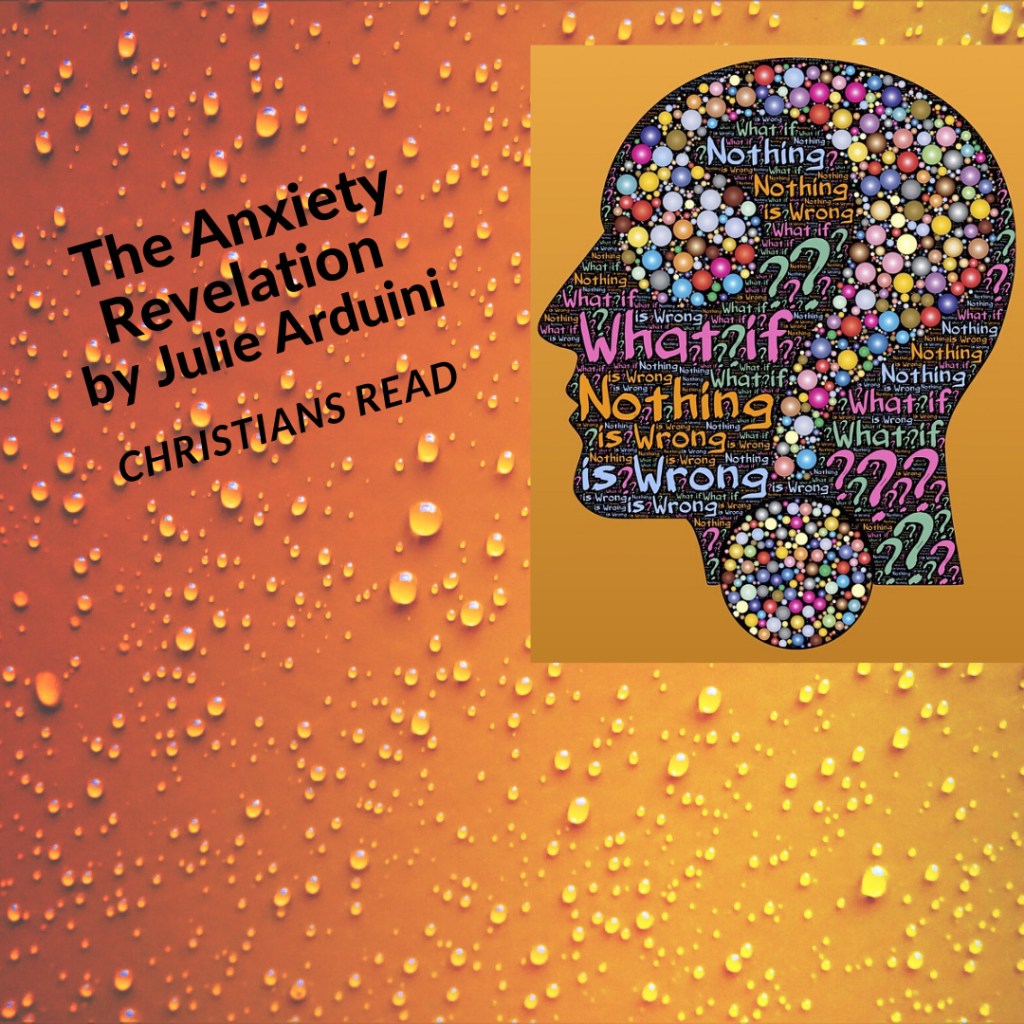
The Anxiety Revelation by Julie Arduini

There’s a good chance I’ve written on this topic before. If so, I tried to search and the computer didn’t feel like cooperating. I’m going on faith that perhaps someone needs to read what I’m sharing today.

A couple days ago my husband got out his new collapsable ladder for little jobs outside. One of them was to help me clean a window I couldn’t reach. He insisted on doing it, whistling as he set it up. He climbed on it and started to spray. Then he started to sway and in 8/10th of a second, I saw about three different ways he was going to fall and be seriously injured or worse.

The metal plates he placed across the top started to give, but thank God, he regained his balance and the plates held. As if nothing happened, he calmly explained that he most likely put the plates on wrong.

My heart didn’t settle for an hour.

When we shared the visual with the kids later it was our son who pointed my side of the story out, “That’s classic anxiety.”

It took me decades, like until very recently and I just turned 50, to realize anxiety has been intertwined into my life for as long as I can remember. Nights before art class I used to stay up thinking through the scenarios because the teacher would call me out when my project was a dud. When my electronic alarm went off and I pushed the button to get the snooze on zero, I was convinced if I didn’t land on zero the first attempt, it wasn’t going to be a good day.

As a young adult, I was diagnosed with PCOS, polycystic ovaries, and I discerned as a new Christian something wasn’t right with my hormones. Instead of anxiety, it was depression that moved in when I married. I was too ashamed to seek help and assumed this was my lot in life. It was a hard, dark time.

I’ve been on medicine for the imbalance for over ten years. I regret not seeking help sooner, and I’ve learned to be a lot more honest with how I’m feeling. Still, I completely missed the role anxiety has played.

It was when I had another hormonal upheaval that I saw a glimpse. We were attending a community event that was very busy. Parking spaces were gone and folks were parking on the side of a road, a steep incline with no railing. When my husband attempted to park, I grabbed the door handle and begged him not to park there. I was convinced we were going to drive off the road and plunge to our deaths. When he finally did park, it was still a place I envisioned danger, and it robbed me of enjoying the event, something I suggested we do as a family. Once I had a hysterectomy, I felt so great that I assumed these situations were in my rearview mirror.

Until we moved into our new house. Humidity is a trigger for my hormones and we moved during the thickest of humidity and hottest of days. The garage was full of boxes and I remember our daughter asked me a question. It wasn’t a hard question as I recall, but I looked at her and felt my heart race. My breathing accelerated so fast I panicked thinking I would never catch my breath. I was terrified. It happened twice that weekend, and only later did I understand they were panic attacks.

I like feeling like I’m in control, and that felt woefully out of control.

Here I am, present day. I praise God that when the pandemic hit, I was not in emotional distress. I felt God in control and I suppose as an introvert, I was able to thrive in the stay-at-home conditions. Yet, I have an event coming up that on the world’s scale of stressful is probably a -5. I’ve buzzed through multiple scenarios that the event fails, is miserable, a disaster, and that I will run, freeze, overreact, get sassy, or burst into tears. There isn’t one positive picture I have, and I physically get worked up when others talk about it. I want to focus on the good, but my mind jumps off the cliff.

I don’t know when anxiety is going to hit. Here’s what I do know: I’m a work in progress. God is full of grace. I’m not where I was 20 years ago. I’m not where I was 2 years ago. God uses flawed people. Heaven is perfect and depression and anxiety don’t define me now, nor will they have access to me in eternity.

—Julie Arduini

Do you relate to any of what I’ve shared above? If so, if you have a personal relationship to Jesus, your eternity carries the same promises.

Although I’m upfront about being on prescription medication, I take vitamins/supplements that I find helpful. I try to drink more water. I find when I’m dehydrated, it affects me. I made fun of it for the longest time, but I started yoga last year for my back. I found the breathing techniques were getting me through stressful times. Just today we went on a day trip that included my husband tackling traffic in Cleveland. This usually has me holding on to the door handle with eyes closed. I caught myself taking deep breaths. It is calming for me.

But the biggest helps are because of Jesus. The last couple years I’ve learned to lament and I just lay it out, as messy as it is, I get it out of me and lay it at His feet. I don’t just verbally share, I picture telling Jesus everything and presenting all the anxious thoughts at His feet.

I dig in His word. There are so many verses to help. How deeply God cares. I lean on His words and work at transforming my thoughts. Am I perfect? No, even with this event I know I haven’t given Him the situation and trusted Him in it. But that’s my next move.

Again, I feel like I’ve shared before, yet something keeps tugging on me that I was meant to write about my husband teetering on that ladder and my less than faithful reaction.

There’s no shame in struggling.

But there’s no sense in going through it alone.
Posted in Julie Arduini | Tagged , , , , , , , , , , | 2 Comments

Going home in a book…

The best thing about books is that they transport you to another realm. And in this crazy time when we can’t travel, escaping in books is one way to get through these quarantine years. Okay, so it simply feels like years, but I was grateful to be writing a book set in my home state of California. San Francisco to be exact. I didn’t write the San Francisco of today, though it’s a contemporary. I am a fourth-generation Californian, and I wrote the San Francisco that I remember. A magical place with lights and brilliant energy, but also quiet, reflective moments at the beach and crab at the wharf. A place where you didn’t have to be a billionaire to own a boat and spend the day on the Bay.

Escaping to my home base when I’ve started a new life elsewhere was truly cathartic because I chose to only remember the good things. I once met Tony Bennett at the San Francisco Fairmont. I mean, how iconic was that?

I know that living in the past is a sign of getting older. I know that I probably remember it better than it actually was, but for this time in history, going “home” was the best gift of all.

https://amzn.to/2UBBbNV

Posted in Uncategorized | 1 Comment

What’s Your Favorite Book? by Nancy J. Farrier

What do you say when someone asks what your favorite book is? Do you have an immediate list of books you can’t part with, or does your mind go blank and you mentally say, “Books? What are books?” I have to admit I’ve been in both places.

It’s interesting when someone asks about my favorite book of the Bible. There are so many answers people give because we all have different needs in our lives and different parts of the Bible address those individual needs.

Maybe you love one of the gospels because reading about Jesus being born a baby and His ministry on earth is fascinating. We can learn so much from the way Jesus interacted with people.

What about the book of Acts? Don’t you love reading about the early church and the outreach they had? Maybe you love seeing God using very flawed humans to take His all-important message to the world.

Then there are the letters in the New Testament, or the Psalms with all the beautiful wording and encouragement. Proverbs has wisdom for us. Maybe the book of Esther where she stood strong against the threat of death for her and for her people. So many good choices.

How do you choose one book that is a favorite? I simply can’t. So, when someone asks me which Bible book is my favorite, I respond, “It’s the one I’m reading at the moment.” Because each book of the Bible has something unique to offer, and I am in love with God’s word.

Invariably, someone will ask, “What about Leviticus?” Who likes the book of Leviticus with all the rules and mandates laid out for the Israelites to follow? Or, what about First or Second Chronicles with all the lists of names that are impossible to pronounce?

Your love for scripture can supersede what some consider dry or boring. With the right attitude, every book of the Bible becomes a favorite. Consider Leviticus:

Leviticus shows us that God’s love is not that of a distant God. He cared about the Israelites to the smallest detail of their lives. He told them how to set up camp so the waste would not contaminate anything. He told them how to care for their homes if disease invaded. He told them how to wash, how to be clean after handling a dead body, how to purify themselves and stay healthy physically and spiritually. He cared about every part of their lives down to the smallest detail. He cares for us the same way. What a comfort that is.

What about all those lists of names? The sons of this person and that person. They’re all dead now so what do they matter? They mattered to God. Mattered enough that He had their names recorded just for being His. You can take heart as you read those lists that God cares for you in that same way. Read each name with purpose. Understand that this person meant something to the God of creation. Each individual was special to God just as you are special to Him today. 

Reading the Bible is so important. The words bring guidance and healing. They show the way, or the path God has laid out for you. These words are life.

So, if you have a favorite book in the Bible, that is wonderful. But, take the time to read those that are not your favorites and read them with an eye to what God is doing and how much He loves His people.

How much He loves you.

“All Scripture is given by inspiration of God, and is profitable for doctrine, for reproof, for correction, for instruction in righteousness, that the man of God may be complete, thoroughly equipped for every good work.” 2 Timothy 3:16-17 (NKJV)

Posted in Nancy J. Farrier | Tagged , , | 4 Comments

The Secret to Strong Faith by Bridget A. Thomas

Over the last few weeks, I have been talking about faith. I hope you have gotten some insight out of the posts. But perhaps you still have your doubts. Maybe the Lord is asking you to take a step forward, but you are hesitant. Fear seems to keep you glued right where you are. Today I am going to share a secret with you. This secret might give you the final push you need to fully embrace faith, move ahead in obedience, and leave fear behind.

The secret to strong faith is this: Faith is not about you. It’s about God.

Too often we allow fear to hold us back because we are focusing on ourselves, our strength, and our capabilities. But here’s the key: if God asks us to do something, we are guaranteed to have Him, His strength, and His capability. There is nothing He can’t handle, so we have nothing to fear. Dr. Charles Stanley often says that our job is to be obedient, and God will take care of the rest. There will be times when what He asks us to do might seem intimidating. But we step forward anyway, because we know He’s got our backs. We have the Holy Spirit living inside of us, helping us.

When we read about the people with strong faith in the Bible, we can see this secret so clearly. In the various stories I mentioned over the last few weeks, they all had one thing in common. The people were focused on God and His strength. They did not focus on themselves and their own strength. In Hebrews 11:6 it says that it’s impossible to please God without faith. We need to have faith in Him and Him alone. Not ourselves, not our circumstances, not our strength, not anything we can see with the human eye.

However, to get to this point, there’s a second secret I want to share with you: It helps if we know deep in our hearts how amazing God is.

If we don’t really know God, then we might have a hard time trusting Him. If we don’t realize how trustworthy He is, then fear might unpack and make itself at home inside us. So one vital step to keeping our focus on the Lord is to also get to know who He really is.

Here are some of God’s characteristics. I hope this list helps you to see how glorious He is:

  • God is love (1 John 4:8)
  • God is merciful (Deuteronomy 4:31)
  • The Lord is good (Psalm 34:8; Psalm 25:7)
  • God is righteous (Psalm 11:7, Psalm 35:28)
  • The Lord is forgiving (Psalm 86:5)
  • God is faithful (Lamentations 3:23, Psalm 25:10, Psalm 33:4)
  • Jesus is the same yesterday, today, and forever (Hebrews 13:8)
  • The Lord reigns forever (Psalm 9:7)
  • He is strong and mighty (Psalm 24:8)
  • God is loving (Psalm 25:10)
  • His love is unfailing (Psalm 44:26, Psalm 48:9, Psalm 51:1)
  • The Lord is awesome (Psalm 47:2)
  • God is reliable (Psalm 59:17)
  • He is compassionate (Psalm 111:4, Psalm 116:5)
  • The Lord is great (Psalm 135:5)
  • God is trustworthy (Psalm 145:13)

God really is magnificent! How can we not trust Him when we see just how trustworthy He really is. Once we get a sense of His greatness, this helps strengthen our faith in Him, and in turn helps us to walk in strong faith. Strong faith doesn’t mean we have all the answers or all the strength we need. But we do have the Lord who IS our answer and IS our strength!

© 2020 Bridget A. Thomas

sunset love lake resort

Photo by Download a pic Donate a buck! ^ on Pexels.com

Posted in Bridget A. Thomas, Uncategorized | Tagged | 9 Comments

After The Plague

Cataclysmic historical events are often followed by massive social changes. The effects of such events are complex, varied, and unpredictable. As well, these effects interact with the effects of a host of other events and developments, so that the direct causes of change can never be determined. Consider the following.

The Black Death

The Black Death or bubonic plague arrived in Italy from Asia in October 1347. Over the next five years, the disease killed about 20 million Europeans, about a third of Europe’s population. The worldwide death toll has been estimated to have been 70 million or more. Significant outbreaks of the disease happened again and again in Europe over the next two or three centuries.

The impacts of the Black Death in Europe are particularly well documented. One of the most obvious results of the Black Death was great fear and a morbid fascination with death. One of the common themes of art in that period was the “La Danse Macabre” or “The Dance of Death”—depictions of skeletons marching toward the grave.

This focus on death in turn had various offshoots. One of these was the search for scapegoats. People feared that the plague was caused by evil people poisoning the water supply or casting spells. The “witch hunts’’ of this era are well known, but the victims included Jews, minority Christian groups, and virtually anybody who fell under suspicion. The Inquisition, a process established by Roman Catholic bishops to check on the spiritual welfare of their dioceses, became a vehicle of oppression wielded by political and religious rulers. Those suspected of evil intent were often tortured until they confessed. They routinely admitted to fantastic tales of witchcraft and black magic, with most of the details being suggested by the interrogators. There were still some practitioners of ancient pagan religions in Europe, but most of the confessions were pure fiction, made up by people who had never dabbled in witchcraft but who were willing to say anything to satisfy their torturers. The suspects were then usually executed in horrible fashion. Mobs of fearful citizens also took vengeance on suspected enemies without any pretense of due process.

But not all of the consequences were bad. Cataclysmic disasters often clear the path for reconstruction of something better. In the face of death, many Europeans became dissatisfied with the means to salvation then being offered by a corrupt Roman Catholic Church—which in practice often consisted of nothing more than performing superficial rituals or paying money. The search for certainty of salvation and a more meaningful connection to God was a significant contributor to the rapid spread of the Protestant Reformation (which in turn also led to significant reforms in the Roman Catholic Church).

There were also socio-economic consequences. The rapid decrease in population meant that marginal farmland was abandoned, so per acre crop yields increased—there was more food. The shortage of workers gave the lowest classes more leverage, leading to the breakdown of feudalism. Many serfs (essentially slaves) became freedmen and were able to negotiate better terms with the upper classes who owned the land. The poor were better off. The aftermath of the plague increased opportunities and accelerated economic growth. There was a flowering of the arts and culture. These improvements cannot be solely attributed to the plague, but the plague was one of many factors in their development.

The Spanish Flu

The Spanish flu struck in 1918-1919 and killed between 17 million and 50 million people worldwide. It was one of a series of cataclysmic events in the middle of the 20th century, and it is difficult to disentangle the separate consequences of these events. The flu struck right after World War One (1914-1918), which had killed 15-22 million people.

There was a recession after the war, and the returning soldiers had trouble finding work. Nevertheless, there was some optimism. Some Christians literally saw World War One as “the war to end all wars” and Armageddon and expected the world to transition into the millennial reign of Christ. Alcohol had been outlawed, women had been given the vote, and many expected the world to be a gentler, more civilized place. Some considered the returning soldiers, part of the victorious army in Armageddon, to be exceptionally godly men who would become church pastors and lead a crusade for moral betterment. The reality was that many of the returning soldiers were deeply traumatized, hardened, and immoral. The Roaring Twenties were an orgy of excess, secularization, and pleasure-seeking.

The greed of the 1920s resulted in the stock market crash in 1929, and the world descended into the Great Depression of the 1930s. There was massive unemployment, poverty, starvation, homelessness, sickness, and death. One anomaly was that those who still had money and a steady income could afford to buy luxury goods, since labor was cheap and prices were low. In the 1930s, there was a large increase in the number of homes with such goods as radios and refrigerators. Yet this wealth was in sharp contrast to the deepening poverty of the masses. At the same time, record heat waves caused drought, food shortages, and famine, spawning descriptive terms such as “the Dust Bowl” and “the Dirty Thirties.” To date, I have found no completely satisfactory explanation for this heat wave or why it occurred at the same as the financial collapse. Some observers saw the multiplied catastrophes as a divine punishment. One might think that the desperate situation might have led to a religious revival, but the secularization trend of the 1920s continued. Instead of a return to God, the desperate longing for solutions encouraged the rise of brutal dictatorships in Germany, Italy, Spain, the Soviet Union, Japan, and other countries.

These dictatorships led to World War Two (1939-1945), which killed another 70-85 million people. It might have been expected that this further global conflict, following the other cataclysmic events of the twentieth century, would lead to further economic decline and further secularization. Instead, the 1950s saw a massive economic upturn and increased worldwide prosperity. Reconstruction transformed Western Europe and Japan. In North America, most of the returning soldiers found jobs, married, and had children (the Baby Boom), resulting in a renewal of family life and the rise of suburbs. Secularization continued in Europe, but there was a major (and completely unexpected) rise in church attendance in North America, as well as renewed missionary outreach in the Third World. There was also a decline in European imperialism, as former colonies became independent nations.

COVID-19     

So far, the COVID-19 pandemic has not produced death tolls anywhere near those of the earlier cataclysmic events. This is partly due to improved medical knowledge and treatments and the increased ability of governments to impose lockdowns and quarantines. But is there anything we can learn from earlier history that could tell us what might happen as a result of this current pandemic?

It is clear that cataclysmic events have massive repercussions in the social, cultural, economic, ideological, and political spheres—repercussions that are complex, interconnected, and eminently unpredictable.

Yet some vague outlines of change are beginning to appear. While the death toll for COVID-19 remains relatively low so far, there has already been massive economic dislocation from which it will take a long time to recover. Many jobs have been permanently lost, and many businesses have closed or will close. International trade will remain disrupted for years. There are already indications of increased levels of fear, conspiracy theories, scapegoating, racism, and extremism. Some leaders, in both dictatorships and democracies, have taken advantage of the situation to increase their power. (The Canadian prime minister’s suspension of parliament is not an isolated event.) Whatever ultimately happens, for good or ill, is not yet known. There will undoubtedly be surprises.

It is reassuring that God has promised to work for good in all things (Romans 8:28), in all times, places, and events. And so should we.  

Posted in James R. Coggins | Tagged , , , , , , , , , , , , | 1 Comment

Give Yourself (and Everyone Else) a Break! (by Hannah Alexander)

Since this blog site has been titled ChristiansRead, I’m guessing most readers here either like to read, like to write, like to edit, or just need connections with other Christians. We are likely from a great assortment of Christian denominations, and I think many of us had decided not to allow denominationalism to separate us. I love that kind of group.

I come from a Baptist background but I have wonderful friends in every category, and have found that we can speak the same language–that of our love for Christ.

We all have the Bible in common. So there’s a verse or three that I believe we can agree on. I Corinthians 13:4 states: Love is patient, love is kind. It does not envy, it does not boast, it is not proud.

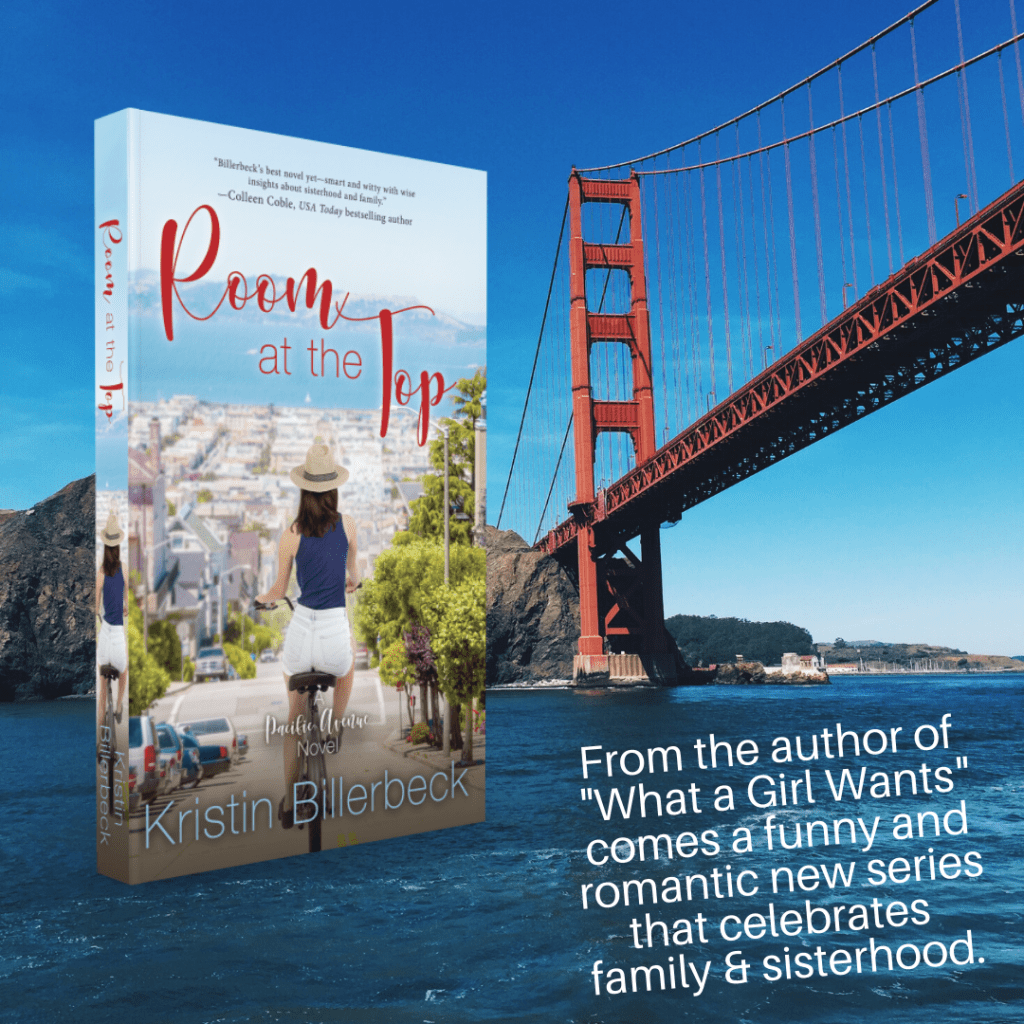
I’m focusing on envy part of the verse today. Those of us who are writers might be able to identify. For instance, I have had the great opportunity to work with Kristin Billerbeck on her soon-to-be-released novel, Room at the Top. It’s a very intelligently written book with such a smooth flow, exquisite insight, and laugh-out-loud humor that if I were to be the envious type–which I am not, of course, being the mature Christian that I am–I might have been tempted to hate her.

But that would be like the columbine in the picture above being envious of the iris. Or the onion bloom (or is that garlic? I think it’s garlic) being jealous of either. It would also be a sin because envying another writer would be disrespecting the talent God gave me specifically.

God gave us different gifts, different lives. I don’t envy the beautiful, slender, happy woman I meet at the grocery store, because envying her would mean I would want to BE her. Why would I ever want to be anyone else? Am I ready to take on the losses, the pain, the tragedies that person might have enduring in her life?

Envy has always seemed like poorly expended energy to me. Spending any time at all wishing you were someone else, or had someone else’s talents, instead of working on your own life and talents, is a waste. And if nothing else, I’m simply too lazy to do that. I have enough to worry about as I write my own stories, live my own life, manage my own joys and losses. If I spend any time wishing I was someone else, I’d lose the blessings God has in store for my life.

Is there someone you envy today? Honestly? Do you REALLY want to BE that person?


Posted in Hannah Alexander | Tagged , | 5 Comments

THE DIFFERENCE ONE LETTER CAN MAKE

What happened to George Floyd was wrong and everyone knows it.  Everyone agrees it’s unacceptable and should never happen again.  Everyone agrees the officer with eighteen complaints should have been stopped long before this incident.  But he wasn’t.  And here’s where we are.

People are emotional, and that’s a human reaction we all feel.  A man was murdered.  Other officers saw what was happening but failed to stop it.  Bystanders saw what was happening and spoke out but were threatened with Mace.  And a man who should be alive is dead and now buried.

Skip forward past the united outrage to protests, then riots, then looting and destruction.  Then to defunding the police.

Put your emotions in a box and think.  Critically, think.  When you saw the video, you were appalled.  You were outraged and disgusted.

Now step back.  Clear your mind.  And put yourself in a police uniform from anywhere else in the country.  From that same department.  Watch the video again—from inside the uniform.  What is your reaction now?

You’re appalled.  You’re outraged and disgusted.  AND you are betrayed.  Betrayed that a brother in blue would do this.  He took the same oath to serve and protect that you took.  He joined the force to do just that, to make your city or town or state or nation a safer place for families to raise their kids and walk the streets without fear of harm.  He or she gets up every morning and hits those streets, taking on the risks of not coming home to his own family because s/he believes in something bigger, something that must be preserved for people to live free:  law and order.

Watching that video from inside that uniform, and you are ashamed of the offending officer.  You know that far too many are far too emotional to remember that the actions of one are not the actions of all.  You are just as upset—even more so—than others, because you know that you will be painted with his brush, though you have done nothing wrong. 

Still standing in that uniform, you watch your mayor and governor and state legislators abandon you and your fellow officers.  They throw you under the proverbial bus, subject you to verbal and physical abuse, because they aren’t worried about you or your career or how hard you’ve worked or how many risks you’ve taken or even how many lives you’ve saved.  They are worried about their re-election.  Winning it.  That’s what most matters to them.  Long ago, while citizens slept, trusting leaders to lead as citizens would lead, the meaning of public service and public servants fell to an insatiable hunger for power and control.  There are, of course, exceptions, and you know that.  But you look around and see far too few of these leaders stand up for the people or for you.

Given no choice, you must accept that you’ve been betrayed and abandoned, and you’ve done nothing wrong.  You stand falsely accused, condemned and convicted not because of any action you took but due to your uniform and your sincere belief in law and order.  Your desire, often a lifelong desire, to serve and protect.

Someone else commits the act.  You live with the fallout.

There is good and bad in everyone, including officers.  But right now, emotion is ruling the day.  Thinking is muddied by rage, and that rage is being misplaced.   In this, you cannot blame an entire group of professional law enforcement officers for the actions of one.  Regardless of what industry or profession you work in, there are those who excel at it, and those who do not.  Those born to do what they do, and those who belong elsewhere but have not yet realized it.

An anchor on TV asked if the police were defunded, and someone broke into her house in the middle of the night, who did she call.  The answer was realizing her privilege.  How do you think that anchor is going to fare against an armed intruder?

Another responded to that same kind of question with a recommendation to sit down and talk with the perpetrator and work it out.  How do you think that home invasion is going to resolve?   Think the homeowner who has been invaded fares well?

Let’s get practical.

In Minneapolis, the day the defund talk started, they began a push for “communities policing their own.”  Citizens would get rid of the police and deal with the crime in their communities.  Untrained citizens who are not professional law enforcement officers. 

How well would citizens do the job, and how would citizens fare?  How would the city and businesses that employ them fare?   

Let’s take an unemotional look at a few situations and see what we think:

  • In NYC, the day the defund talk started, a bomb was found.  If there are no police, what citizens are going to defuse that bomb?  Dispose of it in a manner that doesn’t get them or other citizens killed, maimed or injured?

  • What if your child goes missing? What citizens have the expertise or experience to investigate and provide the best possible odds of finding your child alive and bringing them safely home?   If abducted, who looks for them—your child and the abductor?

  • You’re rushing your infant to the hospital. Your child isn’t breathing.  You see a cruiser and flag down the officer, who administers CPR and, rather than waiting for an ambulance, he rushes your child to the hospital.  Your child’s life is saved.  What citizens know what to do in this situation—and are there to do it?  In this true story, plenty were around but none acted.  The officer, on his way home from work, did.

  • Your dream has finally been realized. You have your own neighborhood grocery store.  Weeks earlier, you were being praised by all for your bravery in staying open, making sure that people had food.  Now your store has been looted and burned to the ground.  Citizens didn’t stand the line to protect the store.  The mayor didn’t protect it.  And now you learn your insurance coverage doesn’t pay in cases of civil unrest.  You’ve lost everything you’ve worked for your whole life.  How did this happen when weeks ago, people appreciated so much what you were doing for them?  Taking everything from you is how you’re repaid.  Police are trained in riot control.  To prevent looting—and they do it, if they’re not ordered to stand down, by their mayor. 

You see the point.  Imagine all the different types of challenges—school protection, assaults on the street, complex RICO cases, hostage situations and everything in between.  Citizens are simply not equipped, trained or in many cases willing and able to meet those challenges.  Why would people take those who are trained and willing out of the picture and insert those who are not?

During the recent riots, 25,000 businesses were destroyed that won’t be coming back.  For those, their dreams are dead.  They must live with having done nothing wrong, but as a result of the actions of others, are now not in a position to rebuild and start over.

Now think about the impact on that community these businesses serviced.  Drug stores—gone.  Car parts (best not breakdown!)—gone.  Grocery stores—gone.  Who lives without them? 

Some say the federal government should have stepped in faster and with a firmer footprint.  Yet they ignore the fact that we live in a republic.  The mayors and governors and state legislators run the states.  It is on them to protect and defend the citizens in their states, and if they need help, to ask for it from the federal government. 

Those watching saw the federal government offer help and mayors and governors refuse it.  We read the letters from mayors refusing to call up the national guard in sufficient numbers to protect citizens of the states they took oaths to defend and protect.  We saw the federal government, like the police, be vilified and demonized for warning those state officials that if they didn’t take appropriate steps to defend their own citizens, the federal government would.  It has been done before.  Multiple times.  That promise to step in is what finally stopped a lot of the destruction.  

To those casting blame at the president and federal authorities, it would be wise to study how your government works.  These challenges are the result of mayors and governors not executing their duties appropriately.  That’s a simple truth. 

And it’s also what makes defunding the police an emotional and, I’m sorry to say, irrational response.  Up to eighty percent of the rioters were from out of state.  They infiltrated peaceful protests with ill intentions, fake identification, and stolen license plates on their vehicles.  They were flown in, driven in on buses, and many were paid to riot and loot. 

There were pre-staged pallets of bricks, ready for grabbing to destroy property that wasn’t theirs.  There were sticks, metal pipes, concrete milkshakes (to cause head injuries to those struck, many of whom were Secret Service agents guarding the White House), tennis balls filled with concrete, weapons and Molotov cocktails and other incendiary devices and bombs.

Defund the police?  A hard push to disarm the public and now to defund the police?  How then are all citizens not placed in greater jeopardy?  Think…

Those with the training and the desire to protect citizens are defunded and no longer on the job.  Are you aware 300 NYPD officers retired last week?  That 600 spoke to their superiors about resigning or retiring and might yet do it?  That hundreds were injured in the riots, and many were hospitalized for those injuries?  They faced everything from being run down by cars to being shot in the back of the head to being stabbed in the neck.  And that doesn’t take into account the verbal abuse.

Who is going to step into their shoes?  Who is going to willingly face what they face knowing the mayors, governors, and many state legislators will abandon them?  That many of the individuals arrested will be put right back on the street to rejoin the riots?

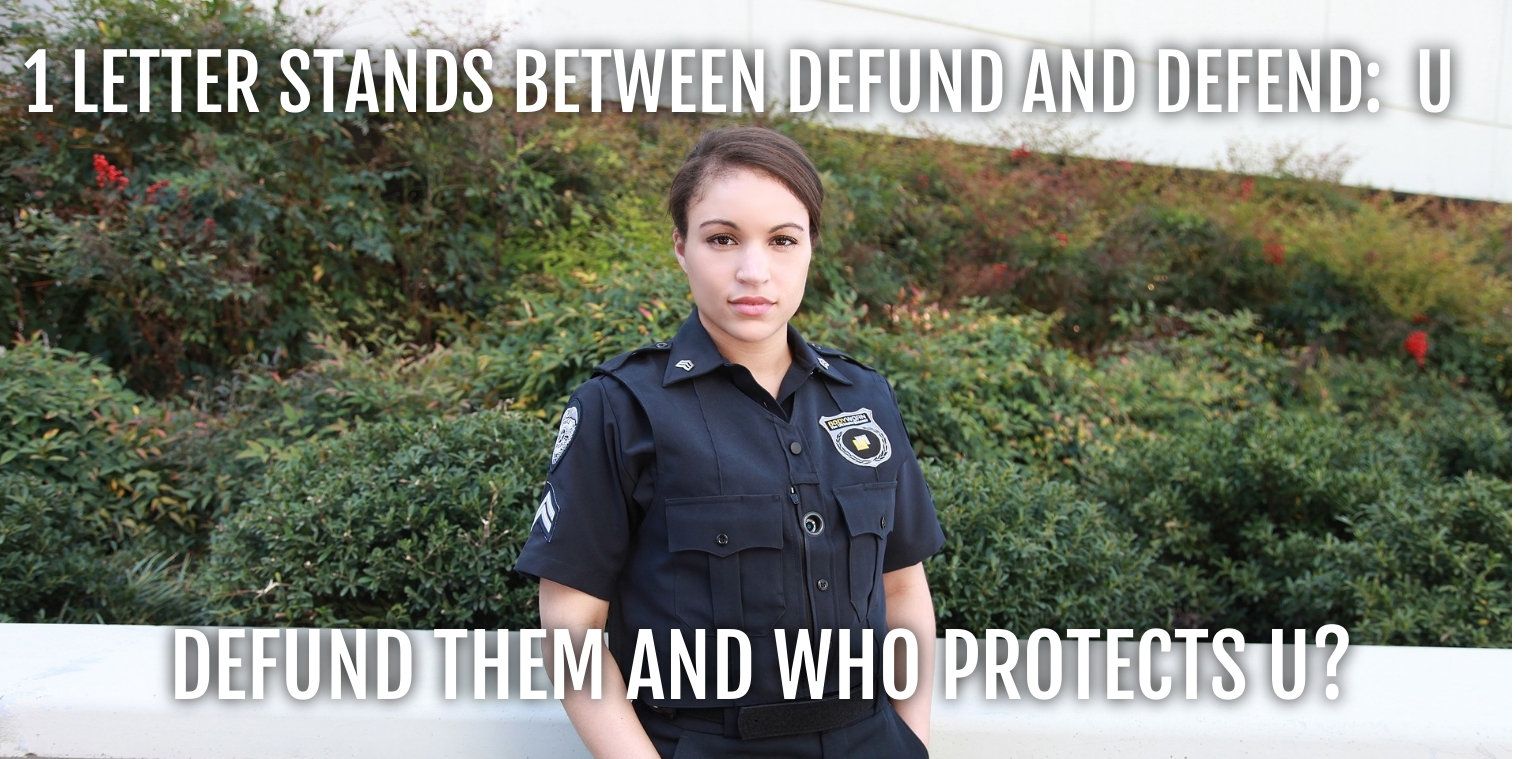
As stated in the beginning, there is one letter’s difference between DEFUND and DEFEND.  One letter, and that letter is U.

Think about it.  We all hate and resent what happened to George Floyd.  We all hate injustice and unfairness across the board.  We all want to live safe and free, to live our lives without having others kill us or our dreams as the result of something we oppose.

One last point.  Police are under intense scrutiny all the time.  Their actions are judged by many.  Internal Affairs.  Superior officers.  The mayor, the governor, watchdog groups, the people on the street.  More oversight isn’t the problem.  They’ve got tons of oversight. 

Before you paint them all with the brush of one whose actions the rest of the officers deplore, remember this:

Who ran into the buildings while citizens ran away on 9/11.

Who manned the streets during Covid pandemic to keep streets and citizens and businesses protected.

Who answered when you called 911 because someone you love was in crisis, had a medical emergency.

Who talked you through an emergency procedure that saved the life of someone needing help when you didn’t know what to do.

One. Letter. Different.  One.


U.


Posted in Uncategorized, Vicki Hinze | Tagged , , | 4 Comments

Surrendering Self by Nancy J. Farrier

I live in a small rural area. Most traffic goes right by us on the highway, but we also have a low road for the sparse local traffic. In the early mornings a few residents of the area, including my husband and me, like to walk this low road, enjoying the quiet and the exercise. 

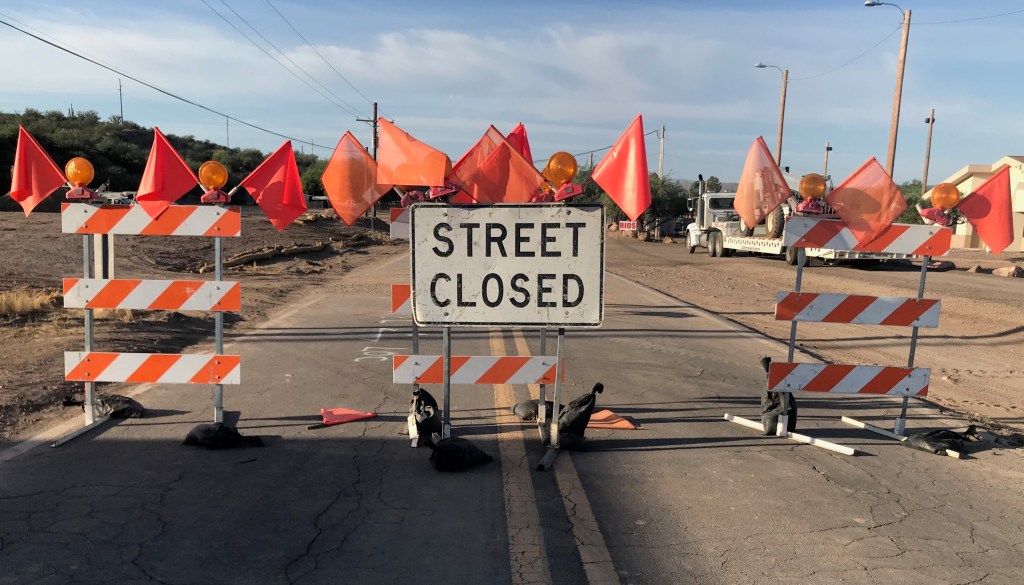
For the past few weeks, the county has been doing roadwork on our little street. They are redirecting a wash in the hope of preventing future flooding. That means the low road is closed to through traffic as they dig up the pavement, put huge pipes in the wash, and do all manner of work. 

On the weekends, the walkers are free to walk through the work area since the workers aren’t there. But, during the week when they are running their heavy equipment, it isn’t safe to walk through and we have to find another route to get in our walking time. At least, most of us do.

There are a couple who are tired of waiting for the work to be done. They ignore the signs, the heavy equipment, and the workers, and walk right through the area under construction. After all, this is their road and it’s their right to walk where they want. What’s wrong with that?

I struggle with this way of thinking. To me, it seems so self-centered. Yes, I’m tired of having my usual walk area interrupted, but there are the workers and safety concerns to put ahead of my wishes. Every time someone walks through the area, the workers have to stop or at least watch carefully to make sure no one is in the way when a piece of equipment is moving. This puts the walker and the workers in danger. 

I see a correlation between this small defiance and what our world has been going through with the pandemic. We are all tired of staying home. We are all tired of wearing masks. We are all tired of not seeing family or friends—of not being able to interact with those we love. We are tired to the point where some people are walking past those restrictions and putting themselves and others in danger.

Now, I get it. I really do. Masks are suffocating. It’s hard to breathe. Glasses steam up. It’s hard to talk and make yourself understood. On the other hand, I don’t wear a mask as a fashion statement, or for my health and safety. I wear one for the safety of those who might be immunocompromised. The same goes for staying home and avoiding crowds. I abide by this because I care about others, not myself. I know many agree in this respect.

“Greater love has no one than this,

 than to lay down one’s life for his friends.”

John 15:13 (NKJV) 

Jesus’ words to his disciples are so true. Throughout history, many have willingly laid down their lives for the good of others. But, what if He’s not talking only about a physical life, but about our rights? What if laying down my life for another means giving up my right to what I want when it means endangering those around me? What if, in doing so—in surrendering self—I am being an extension of Jesus Christ to those in my world? What if instead of demanding our rights, we think about the other person’s needs?

What if I’m becoming the hands and feet of Jesus by surrendering self in this way? And, what if we all did this—put others needs ahead of ourselves? 

Consider laying down your life today. You will bless those around you.

Posted in Nancy J. Farrier | Tagged , , , | 1 Comment

An Attitude of Strong Faith by Bridget A. Thomas

Over the past few weeks, I have been writing about faith. I hope you have been enjoying the posts as much as I have. Today I want to talk about a very important factor that plays a role in our faith – our attitude.

Let’s look at a Biblical example found in 1 Samuel 30. Prior to David becoming king, he had been living in a place called Ziklag. In this story, David and his men had been away from home. When they returned, they discovered tragedy had struck. The Amalekites “had attacked Ziklag and burned it, and had taken captive the women and everyone else in it, both young and old. They killed none of them, but carried them off as they went on their way.” (1 Samuel 30:1-2)

You can imagine how distressed David and his men were. In verse 4 it says that they “wept aloud until they had no strength left to weep.” If that wasn’t bad enough, the men then turned on David. Verse 6 tells us that “the men were talking of stoning him.”

But I want to focus on something else from that same verse. In the King James Bible, verse 6 goes on to say, “David encouraged himself in the LORD his God.” The New King James Version says, “David strengthened himself in the LORD his God.” And the NIV and NLT versions say, “David found strength in the LORD his God.”

I love this verse and I think we can learn a lot from it. When we face something difficult, we have a choice to make. Are we going to let our despair take over? Or are we going to strengthen and encourage ourselves in the Lord? Strong faith will choose the latter. Strong faith will not have a pity party, but will press forward while tapping into the power of the Holy Spirit. Grief is something we might experience for a time, but we cannot stay there forever. We have to seek the Lord and find comfort and strength in Him.

This is what David did. In this story, he and his men wound up going after the Amalekites and they recovered everything and everyone that was taken. All the women, children, and other people were recovered. I have to wonder what ending this story would have had if David had NOT encouraged himself in the Lord?

When we face trials, we too should encourage ourselves in the Lord. We should run to God and trust Him with whatever we are facing. Nothing is a surprise to Him. He can help us get through our difficulties and come out the other side with joy and peace.

© 2020 Bridget A. Thomas

Photo courtesy of Pexels.


Posted in Bridget A. Thomas | Tagged | 12 Comments

If 2020 Were a Movie by Brian Arduini

Yep, you read it right. It’s my rotation, Julie Arduini, but I’m stealing content from my oldest, Brian. He’s the one that sent me to early labor at 32 weeks, a month’s worth of bedrest, and then 20 hours of Pitocin coursing through my veins before an emergency C-Section, so…

Anyway, Brian’s on trek to be a history teacher, and he takes current events very seriously. He’s processing the first six months of 2020 and like the rest of us, the emotions are raw and the questions, many.

He created a video that I think hits it out of the park. He treated as if 2020 were a movie trailer.

You’re invited to not just view it, but share it as well.

Also, if you’re a gamer or know one, Brian is building a community over at Twitch. Go give him a follow at BriPoems. What I love about what he’s doing is beyond playing games, he’s creating a safe place. He loves to chat with visitors and encourage them. With recent events, he felt the need to start his stream with prayer. You’d think on a gaming app that would be weird, but it really comforted folks. I’m excited to see what God does with him, and these things.

Posted in Julie Arduini | Tagged , , , , , , , | 4 Comments

Creating Fictional Worlds

I finished a book this weekend. It’s a book I’ve been working on intermittently for over 5 years. Considering I used to write up to four books a year, it’s hard to get too excited about finishing one book, but I’m ecstatic!

This book is the first in a series set in my beloved San Francisco. Granted, it’s a whimsical, historical view of San Francisco. The one I grew up knowing. The series is set in modern times, but I wanted to bring in some of the fantasy life I lived back then. My cousin’s grandparents owned the Fairmont Hotels when I was growing up and as a child seeing that kind of wealth fascinated me. I didn’t want it for myself. It looked like way too much work to be responsible for that kind of wealth and the decorum that goes with it.

However, as a keen observer of people (even as a child) I did love analyzing the personalities and the adults in that opulent world. This series is called the “Pacific Avenue” series and it’s set in the Pacific Heights neighborhood of San Francisco. There is no Pacific Avenue — it’s Pacific Street that runs through this neighborhood. But this is my view of San Francisco and I took a few creative liberties.

I’ve plucked characters from the past and my memories of what “old money” means in the modern world. I wanted to dissect the theme of how one person can be a hero to some and a villain to others — so I started with a father. Five girls. Three mothers. One marriage. And I built the world around that.

I’m self-publishing this book and I can’t tell you how lovely it was to have the freedom to create the world I wanted to create — not the one that is approved. It took me long enough, but I hope that my book will encourage others to create the world they want to read and dream about!

Posted in Uncategorized | 5 Comments

Secondary Characters by Tara Randel

Last time I posted, I talked about the appeal of books set in a small town. There’s nothing like returning to the place where your characters shine and you fall in love with the locale. When I read series books, I’m happy to return to these places and experience the joys and familiarity of a particular location all over again.

There’s another reason I love books set in small towns. I get to catch with previous characters, which is always nice because we become invested in their stories. But as an author, I love to create quirky secondary characters and to me, a small town has plenty of them. Think about your favorite books and I’m sure a character or two is rooted in your memory. While with the main characters I spend a great deal of time figuring out their conflicts and what makes them tick, with secondary characters I have a ball. They say and do things my main characters wouldn’t. And they don’t shy away from who they really are.

Secondary characters can be used as a sounding board for the hero or heroine. They can also be troublemakers who push our main characters into circumstances they would normally walk away from. Or, they just add humor and color to a story.

The Meet Me At the Altar series features the Matthews brothers who have their own story lines. In each book, I featured their mother, a strong women who knows her own mind and how to manipulate her sons…in a good way. Through her interaction with her sons, she draws out emotions that they have to reflect on at some point in the book. She loves her sons, but she wants daughters-in-laws and grandbabies and never lets them forget.

Also in this series, one brother is a main character, but the other brothers feature in the books to capture a different side of each one. We see their family loyalty, but also sibling rivalry and affection as they pull the wool over each other’s eyes.

9781335889577 (405x640)

Here’s an excerpt from Always the One, the story of the oldest brother, Derrick Matthews. This scene features Jasmine Matthews and her sons.

Voices rose in celebration. His mother’s gaze caught his and with a small lift of her chin, she motioned him over. He skirted the outer rim of the crowd to find his brothers already behind the gazebo with their mother.

“I have a request,” she said as the four circled her. Derrick could have sworn he heard Dante groan.

She looked each of the grown men in the eyes. “I love you boys too much to decide who will give me away at my wedding. So I’ll leave the decision up to you.”

“Are you sure?” Derrick asked.

She cupped his cheek with her warm hand. “I’m sure.”

After winking at him, she strolled away.

Reaching into the front pocket of his jeans, Derrick withdrew a worn coin. He ran his thumb over the warm metal, the raised edges smooth after years of being handled.

“Okay, guys. What do you say we decide who gives Mom away in the Matthews’ family tradition.”

Dante rolled his eyes. “I hate this tradition.”

“Poor loser?” Derrick asked.

“No, so far I’ve been fortunate, but the anticipation is agony.”

Dylan slapped Derrick on the back. “What do you say we let those two go first.”

“Works for me.”

“Heads,” Dante called.

Deke shrugged.

With a flip of his thumb, the coin sailed into the air then landed in Derrick’s palm. He looked at it for a long time, stretching out the suspense, a grin curving his lips.

“Oh, for the love of…” Dante griped.

“No worries, little bro. Heads.”

Dante blew out a breath and turned on his heel.

“Escaping so soon?” Deke called after him.

“I’m going back to Eloise where it’s safe.”

Deke turned back to the bearer of the coin. “Heads.”

“You sure?” Derrick asked.

“Let’s keep the good luck rolling.”

Once again, Derrick made a show of letting the coin twist in the air. The wind picked it up, but after it came down, he winked at his brother. “Safe.”

“Good,” Deke replied, then narrowed his eyes. “By the way, I’m onto you.”

Derrick’s hand flew to his chest, and he projected an air of innocence. “Me?”

Shaking his head, Deke walked away but not before Derrick glimpsed a small smile.

“That just leaves us,” Derrick said to Dylan.

“Why bother? The coin is double-sided.”

“How do you know? You’ve never seen it.”

Dylan sent him a really? glance. “My point, exactly. You wield that coin to do your bidding.”

“Harsh.”

“The truth.”

“Then let me buck the system and call tails,” Derrick said.

“Magnanimous of you.”

With a chuckle, Derrick sent the coin into the air. It hovered. Dropped. Derrick eyed the metal and said, “Guess I had to lose some time.”

“Let me see,” Dylan said, reaching for the coin. Derrick snatched his hand away.

“Nope. Doesn’t work that way.”

“So you really lost?”

“You doubt me?”

“You’ve been known to cheat.”

Once again, Derrick went for hurt. “I’m wounded.”

Dylan crossed his arms over his chest. “Yet you haven’t confessed.”

Derrick shrugged.

“Fine. You win.” Dylan took a few steps back, then turned to leave. A couple of minutes later Jasmine reappeared.

“How did it turn out?”

“We decided I’d have the honor of walking you down the aisle.” He puffed out his chest. “I am the oldest, after all.”

“And this decision didn’t have anything to do with you manipulating the coin toss?”

His eyes went wide. “How…”

“You boys think you’re a step ahead of me.” She rolled her eyes. “That will be the day.”

Meet Me At the Altar(1)

I love a mother who is always in the know. Didn’t we grow up hearing about eyes in the back of a mother’s head? How she caught on to everything we did? With secondary characters we get to have fun or they help move the story in an emotional way, which is why we open books to begin with.

The next time you’re enjoying a good book, take the time to savor the secondary characters and their roles. You might just discover a whole new world hidden inside a book.

Tara Randel is an award-winning, USA Today bestselling author. Family values, a bit of mystery and of course, love and romance, are her favorite themes, because she believes love is the greatest gift of all. For more information about her books, visit Tara at www.tararandel.com. Like her on Facebook at http://www.facebook.com/TaraRandelBooks. Sign up for Tara’s Newsletter and receive a link to download a free digital book.

Posted in Tara Randel | Tagged , , , , , | Leave a comment

Be Strong and Courageous by Bridget A. Thomas

Over the last few weeks I have been writing about faith. When I think of strong faith, one person that comes to mind is Joshua. After forty long years in the desert, the time finally came for the Israelites to take over the Promised Land. Moses had died and now Joshua was left in charge. God spoke to Joshua, encouraging him on what was ahead. There were three vital pieces of information in what God said which are still key for us today.

1 – God is with us. In Joshua 1:7, God said, “…I will be with you. I will never leave you nor forsake you.” And in Joshua 1:9, God said, “…the Lord your God will be with you wherever you go.” This is true for us as well. And it is so important for us to remember, no matter what we are facing. Knowing that our Heavenly Father is by our sides makes a world of difference in how we face each day. Whether it is a good day or a not-so-good day, we can have peace in our hearts when we remember Who is walking with us.

2 – The Bible is essential. The Lord told Joshua, “Be careful to obey all the law… do not turn from it to the right or to the left, that you may be successful wherever you go. Keep this Book of the Law always on your lips; meditate on it day and night, so that you may be careful to do everything written in it. Then you will be prosperous and successful.” (Joshua 1:7-8) For us, reading our Bibles is one the single most important things we do. This is not something we should do once in awhile or when we feel like it. This is something we need to do every single day. Just like breathing. It is really THAT important.

3 – Be strong and courageous. God told Joshua three times to be strong and courageous (Joshua 1:6,7,9). If God said something three times, he probably wanted Joshua (and us) to pay attention. Whatever we are up against, we too can be strong and courageous. But having points one and two above will help us to be strong and courageous. We have to remember that God is with us and we have to spend time with Him daily. It would be difficult to be strong and courageous without those two factors.

Seeking God wholeheartedly, every single day, will point us in the right direction. This will help us to remember and walk out the three points above. I am so thankful that we have a Heavenly Father who cares for us so very much. He never leaves, and He is by our sides in whatever we are going through.

© 2020 Bridget A. Thomas

Photo courtesy of Pexels.

Posted in Bridget A. Thomas | Tagged | 10 Comments

Replacement Policy

“What do you mean my coverage has been denied?”

“I’m sorry, Mr. Grey. It’s company policy. This is the third total replacement claim you have made in—what?—a year.”

“Well…”

“Precisely. The company can’t keep covering these losses.”

“But I need the replacement. It is vital for my work.”

“That may be, but that is your problem, not ours. I do not care what business or hobbies you pursue. Those things do not really matter to me. My only concern is protecting the interests of our company.”

“Do not take me for some conjuror of cheap tricks. I am not trying to rob you.”

“Of course not, Mr. Grey, but you must admit that these losses are at the least unusual. Wizards’ staffs are supposed to be the most powerful weapon in Middle Earth, and you have managed to destroy three of them. What are you doing with them anyway that you have destroyed so many?”

“Well, there were encounters with ring wraiths and orcs and other wizards…” Gandalf explained.

“But that is precisely my point. You habitually travel in high-risk zones, and that is why the company can no longer insure you against these losses. Wizards’ staffs are not cheap, you know. They don’t grow on trees.”

“But they are made of wood. They do grow on trees.”

“Technically, yes, but there is all that expensive additional remanufacturing work on them, the application of magic spells and so on. Maybe in future you should consider getting one made of cast iron or stainless steel.”

“But that would ruin the image…”

“I am not interested in your image, Mr. Grey, only in following our company’s policies.”

“Why do you keep calling me Mr. Grey? I am Gandalf the Grey, a renowned wizard, not a man named Gandalf Grey.”

“Gandalf Grey is what is on the policy, but it doesn’t really matter. Your coverage has still been denied. This destruction of insured property has become a nasty hobbit, and it can’t be allowed to continue.”

Posted in James R. Coggins | Tagged , , , , | 2 Comments

Peace be Still… (by Hannah Alexander)

It has come to my attention that the novel I am writing at this time would work quite well as a novel dealing with the pandemic. It wasn’t begun that way, but it is about medical research. But honestly, I asked myself if it was something I’d want to read, and it is not. I don’t want to be reminded of the stress the whole world is enduring.

So instead I want to share my “whatsoever” thoughts and pictures. I hope you can see the pictures. To me they bring back memories of happier times, of tranquil days when the only worries I had were about stepping on the right part of the trail so I didn’t go hurtling into the lake, or the river, or onto my face.

Or too close to the moose.

Or into the roses.

Or anger the beavers.

I know I’ve said this before, but I have these words on a plaque to remind myself to think about things that are true, noble, right, pure, lovely, admirable, excellent, praiseworthy. This is from Philippians 4:8. It’s one of my favorite passages, and now, especially, I need these words. I hope they help you, too.


Posted in Hannah Alexander | Tagged , , | 6 Comments