The Need to Care for Others

“We love because he first loved us.” 1 John 4:19

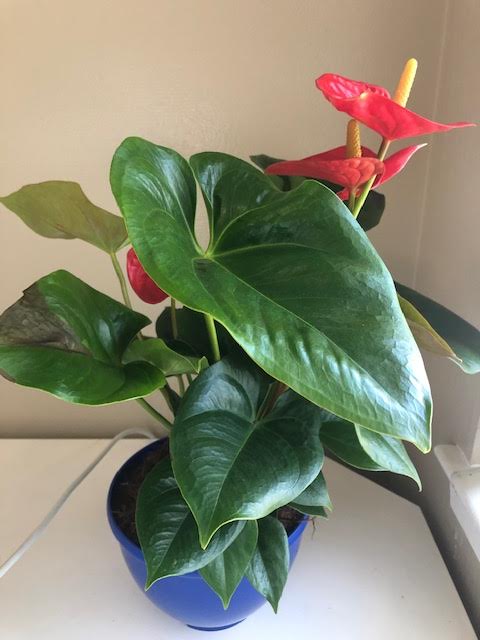
My last child is getting ready to move out into the world.  She’s big into pets and plants. ( I can keep children and pets alive, but plants?  Not so much.)  So when she leaves, I’m hoping that she takes all the plants with her so that they do not fall victim to my black thumb.

0

While we were plant shopping in Home Depot, we ran into a friend of mine who was walking her new, little dog in a doggy stroller. The dog is very skittish because it was abused before my friend acquired her so it’s even afraid of my daughter — who is a natural with all animals.  But this dog has rescued my friend.  Jane, as I’ll call her, lost her job after decades at the same company.  She has lost two siblings and both her parents and nursed them all through long, difficult deaths.  This skittish dog in the stroller has given Jane a new purpose and lease on life.  It’s given her something new to care for.

Watching my daughter care for her plants and her fish tanks, I see the same basic need to fulfill her own life by caring for others.  It’s a natural state for most of us.  We feel better when we take care of others because it makes us better humans by reflecting what Christ did for us.

Recently, I ran into an acquaintance who has been very selfish his entire life.  His needs have always come first and I’ve never known him to do anything kind that he wouldn’t get credit for.  This person looked like he’d aged a decade since I’d seen him last and it dawned on me that when we don’t care for others, ultimately, we don’t care for ourselves.  Because Jesus wants us to reflect Him and the way we do that is by sacrificing for other people.

I come from a very caring family and seeing the dichotomy between those two people this week really showed me how important it is to care.  We love because He first loved us.  As long as we’re not talking plants, I’m good with that.


Posted in Uncategorized | 2 Comments

Positively Negative by Nancy J. Farrier

Blind! I’m going to go blind.

The thought swirled through my mind in a nauseating repeat. Yesterday the ophthalmologist confirmed the diagnosis that I had glaucoma. No cure. No going back. Possible blindness.

I sailed through the first day after receiving the news. I can do this. I’ll trust God and all will be well. Today was a different story. It was a Friday. My husband left for the weekend and the emptiness of the house echoed my fear, pinging the negative possibilities back at me until I curled into a ball on the couch.

The thought of never seeing my grandson’s smile. Not seeing my beautiful kids. No more sunsets. The flowers in so many colors. The stars at night or the moon in its full glory. I couldn’t face the thought of losing all this beauty I treasured. 

My pity party was in full swing with all the bells and whistles. Cute hats. Noisemakers. Punch and cake. I had it all. All by myself.

Yet, in the midst of my whining, I kept hearing a voice. A voice I tried to ignore because this was a party for one. A superb party. But God proved more loving and persistent than my negativity. I finally settled down enough to listen to His simple question.

“What about Me?”

The party faded. Truth swept the mess away. How had I allowed my negative thoughts to take me to this self-centered place where I hadn’t even thought of God and all He could do. I may have a diagnosis of glaucoma. There may be no cure known to science. But God! God is in charge of my life. He orders my footsteps and cares for me more than I can ever realize. 

I don’t know why it’s so much easier in times of stress or trauma to think negatively instead of seeing the positive side. No matter how I try to consider God first, there are still times when I end up in one of those pity parties when I should be having a praise party. I also know I’m not alone.

In I Kings 18 and 19, Elijah comes up against the 400 prophets of Baal and sees the Lord do a great work. Amazing things happen. But in Chapter 19 when Elijah’s life is threatened, he immediately slips into negative thinking and asks the Lord to just let him die.

In Esther 4, we see that Esther learns of the edict signed by her husband, the king, that all the Jews will be put to death. Instead of acting in faith, her first reaction is fear that she will die if she approaches the king. 

In John 11, Jesus friend Lazarus dies. When Jesus comes to the house with his disciples, Martha, the sister of Lazarus, rushes out and instead of asking in faith what Jesus can do, she accuses him of not being there for Lazarus and of being the reason Lazarus is dead.

These are only a few examples from scripture. Every one of them are there to show how God ends up working in the lives of these negative thinking people. We’ve all been there, having a moment when circumstances are overwhelming and we forget what our God can do.

I find it very discouraging when I have a time of negativity, yet each time when I am reminded of Who God is and His provision for me, I am strengthened in my faith. With His help I can overcome that negative thinking and become positive about God’s sovereignty. 

Jesus, talking to his disciples says, “…In the world you will have tribulation; but be of good cheer, I have overcome the world.” John 16:33

I know that no matter where I am at, or what I am going through, God is there with me. There is nowhere I go that He can’t find me and whisper in my ear, “What about Me?”

Where can I go from Your Spirit? Or where can I flee from Your presence?

If I ascend into heaven, You are there; If I make my bed in hell, behold, You are there.

If I take the wings of the morning, And dwell in the uttermost parts of the sea,

Even there Your hand shall lead me, And Your right hand shall hold me.

If I say, “Surely the darkness shall fall on me,” Even the night shall be light about me;

Indeed, the darkness shall not hide from You, But the night shines as the day; The darkness and the light are both alike to You. Psalm 139:7-12 (NKJV)

Posted in Nancy J. Farrier | Tagged , , | Leave a comment

“Atheists for Jesus”

Opinion by Jim Denney

RichardDawkins1

Richard Dawkins in Austin, Texas, 2008; photo by Shane Pope, licensed under the Creative Commons Attribution 2.0 Generic license.

I believe that if everyone in the world would live out the Sermon on the Mount (the words of Jesus in Matthew chapters 5 through 7) 95 percent of the world’s problems would be solved.

It might surprise you to know that even super-atheist Richard Dawkins admires Jesus and his Sermon on the Mount. In The God Delusion, Dawkins wrote, “Jesus, if he existed . . . was surely one of the great ethical innovators of history. The Sermon on the Mount is way ahead of its time. His ‘turn the other cheek’ anticipated Gandhi and Martin Luther King by two thousand years.” [Richard Dawkins, The God Delusion (New York: Houghton Mifflin, 2008), 283.]

And in Science in the Soul, Dawkins suggested that atheists should wear T-shirts with the slogan “Atheists for Jesus.” He added that if Jesus were walking the Earth today, he would wear such a T-shirt because “he would be appalled at what is being done in his name by Christians ranging from the Catholic Church with its vast and ostentatious wealth to the fundamentalist religious right. . . . But of course, modesty would compel him to turn his T-shirt around: ‘Jesus for Atheists.’” [Richard Dawkins, Science in the Soul: Selected Writings of a Passionate Rationalist (New York: Random House, 2017), 279-280.]

I don’t agree with Richard Dawkins on very much, but I do agree with him on this: Jesus is for all people — weak and strong, young and old, male and female, believer and nonbeliever. The one who said “Love your enemies,” the one who forgave those who crucified him, would certainly have a heart of compassion for atheists.

Jesus would not be for atheism, of course, because atheism doesn’t square with reality and the truth about God. Jesus would want everyone to know the truth that God is real, that God is love, and that Jesus himself is the way, the truth, and the life, and the only way to God the Father (see John 14:6).

Jesus welcomes everyone. He welcomed the Samaritan woman at the well, the Roman centurion, the woman caught in adultery, the tax collector, the rich and the poor, the drunks and prostitutes. He welcomes me and he welcomes you. So yes, without question, Jesus is for atheists, too.

Of course, Jesus loves atheists too much to leave them in their atheism, just as he loves us sinners too much to leave us in our sin. So while the good news is that Jesus is for atheists, the extra-good news is that once an atheist receives what Jesus has to offer, that atheist must by definition cease to be an atheist. As the apostle Paul wrote:

“Therefore if any man be in Christ, he is a new creature: old things are passed away; behold, all things are become new” (2 Corinthians 5:17).

___________________________________

Note: Don’t miss my interviews with Christian romance writer Robin Lee Hatcher (author of Who I Am With You and An Idaho Christmas: Past and Present), and Christian science fiction writer Kerry Nietz (author of Amish Vampires in Space and Fraught). Visit my website at Writing in Overdrive. See you there!

___________________________________

battle-before-time-cover-1


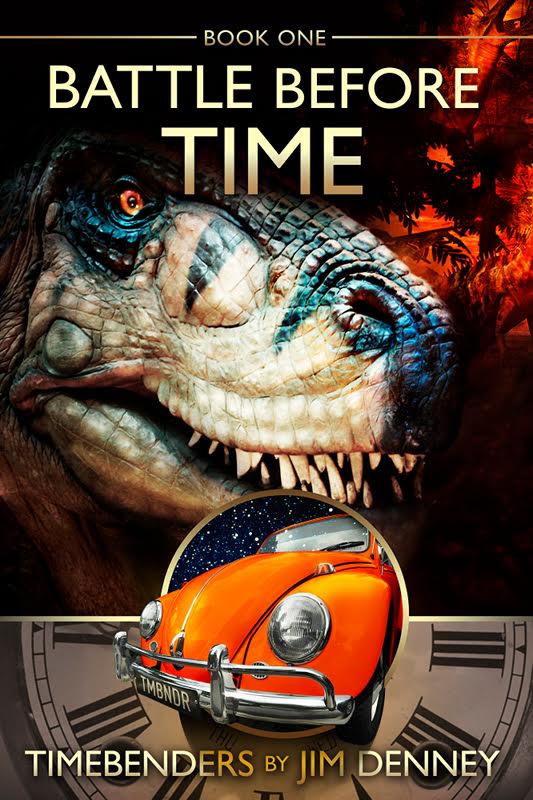
Note: Battle Before Time, the first book in my newly revised and updated Timebenders series for young readers, has been released in paperback. Click this link to learn more.

And if you’d like to learn more about how to write faster, more freely, and more brilliantly than you ever thought possible, read my book Writing In Overdrive, available in paperback and ebook editions at Amazon.com. —J.D.


Jim Denney also blogs at Writing in Overdrive and Walt’s Disneyland. 

Posted in Jim Denney, Uncategorized | Tagged , , , , , , , , | Leave a comment

From Good Friday to Easter

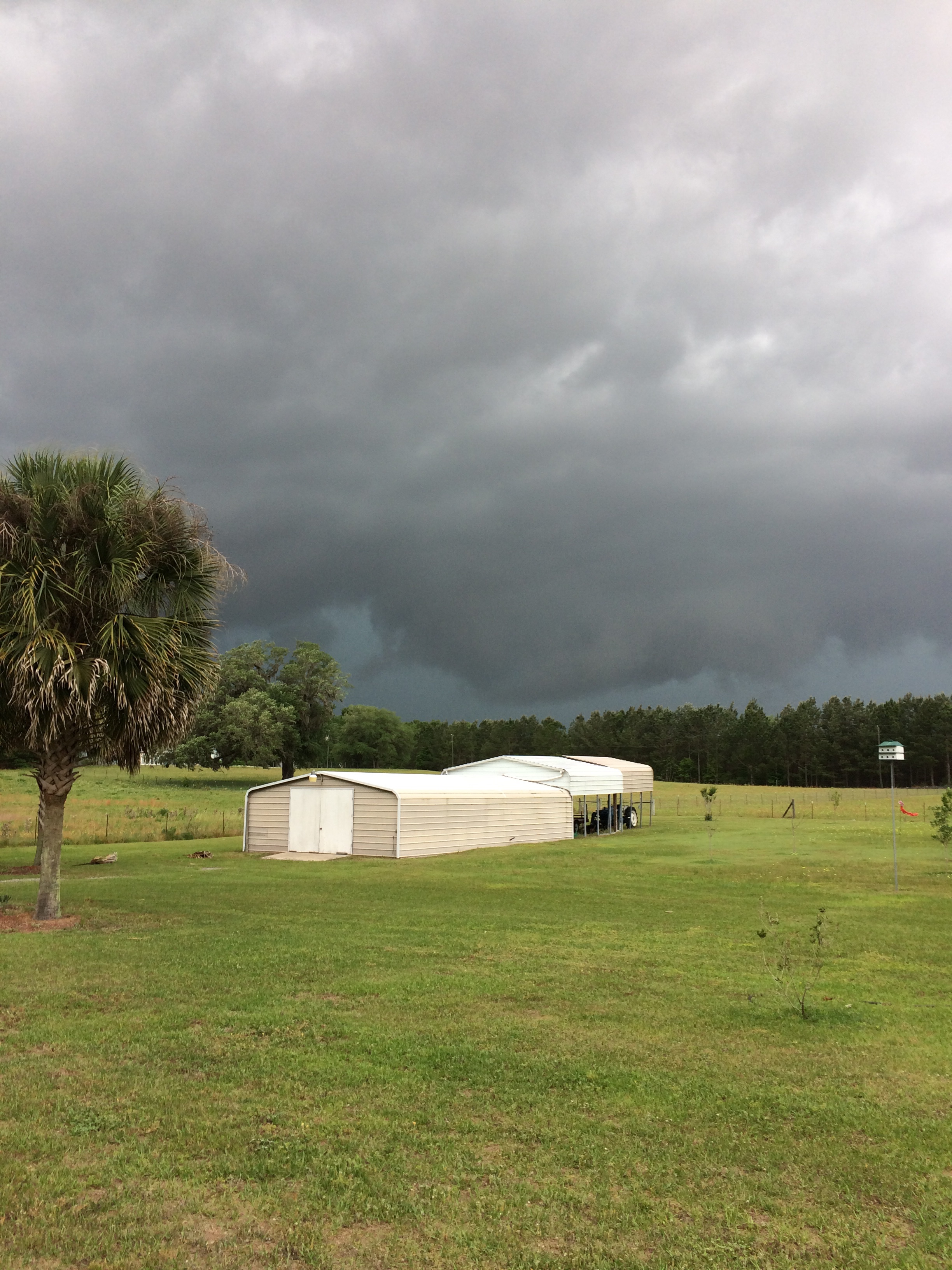
Where I live, it was ironic how the weather mirrored the Holy days we observed this past weekend. On Good Friday we had terrible storms. The clouds were a very dark gray, there were extremely strong wind gusts, an onslaught of rain, chance of tornadoes, and some of the loudest booms of thunder that I ever heard. Lightning struck one of our trees. There were pieces of bark all around the tree and some pieces were even thrown a good sixty feet or more. You can see, on both sides, the whole line where the lightning went down the tree. We received severe weather alerts on our phones and email. We were advised to stay indoors and off the roads if possible.

On Good Friday over two thousand years ago, Jesus was arrested with no cause. One of His own disciples betrayed Him. They called false witnesses to testify against Him. They put a robe and a crown of thorns on His head, while mocking Him. They demanded a murderer be set free, and that Jesus be executed. They beat Him and made Him drag His own cross. They nailed His hands and His feet to the wood. They put Him up in the air so that all could ridicule Him. His face became distorted as He took on the sin of the world. Jesus died, paying the penalty for every one of us.

On Saturday we had a very windy day. We picked up some of the debris that was caused from Friday’s storm. Meanwhile, our clothes and hair whipped around in the wind. It was a struggle to walk at times, with wind gusts reaching 19 mph. The sky changed throughout the day, blue at times, while cloudy at other times.

On Holy Saturday, over two thousand years ago, things were changing. Jesus’ friends felt as though all hope was gone. They couldn’t understand why Jesus had to die. They didn’t know what their lives would look like now. But God had a plan, which they couldn’t understand yet.

On Sunday here, the weather was beautiful. It started off cool, but warmed up in the afternoon. The skies were clear as could be, with a pretty blue shade all around. It was a peaceful and quiet day.

On Resurrection Sunday over two thousand years ago, there was rejoicing in Heaven and on earth. The stone that had been placed in front of Jesus’ tomb had been rolled away, and the tomb was empty. Jesus had risen from the grave. Death could not hold Him. He defeated sin, He defeated death, He saved the world. He who knew no sin, erased our sin. He did that for you, for me, and for every single human being. What a magnificent day!

It’s amazing how things can go from hopeless to glorious in a matter of days. From dark and dreary to bright and brilliant. Just when we think life has become meaningless, God can turn it all around. He is always working, even when we don’t see anything physically changing in our lives. Never give up hope! ✝️

Posted in Uncategorized | Leave a comment

What Do You Want to Read? (By Hannah Alexander)

Today a friend of mine was told that readers no longer read the types of novels they read a few years ago. Tastes have changed and novelists need to change their writing styles to get with the program.

I’m confused. I would consider myself a typical reader. The favorite authors I read a few years ago are still my favorite authors. Do I, as a reader, need to get with the program?

Have I missed a sea change?

I have found that my novels are still selling. Above is one I recently priced for sale at .99 and it is the first in a series (ignore what Amazon says about where it fits in the series. I’ll have to fix that.) You really can’t beat the price, and if you’ve never read my work before, it’s a pretty painless way to find out if you would like my novels.

I realize that tastes change over time, but there are also things that stay the same–I like suspense, romance, conflict, and humor. I like specific settings. If I’ve read and enjoyed a novel in the past, I will look for the writer again and again. I’ll sign up to receive announcements about when her next book is coming out. Those things don’t change.

As a novelist, I try to write what I know my readers want to read, but it’s also what I want to write. At this stage in the game, I’m not changing my writing voice and I don’t think my readers would appreciate it if I did. I’ll be changing settings soon, but I think readers will fall in love with my new home as I have.

I depend on novelists such as Vicki Hinze, Angela Hunt, James Scott Bell, Randy Ingermanson, Kristin Billerbeck, to continue writing in the style I’ve grown to trust. Oh, sure, Jim can write anything from an historical series to a zombie series, but I know what to expect in his pacing, his sense of humor, his writing style. I know his voice and I love his setting, which is typically in the area of Los Angeles, where I spent my early childhood.

I can always count on Angela Hunt for a special depth of insight, no matter where her books are set, whether in Bible times or contemporary, or anywhere in between. I know her voice and I will follow her.

Kristin Billerbeck has a style that will always make me smile and relax and keep reading.  I never miss any of her books.

So tell me, whose novels do you love to read after all these years? (I’m not reaching for compliments here, I’m asking about your interest in other authors.) Whose styles are timeless? What kinds of novels are you looking for? We novelists would really love to know.

Posted in Hannah Alexander, Uncategorized | Tagged , | 4 Comments

Walking the Bridge: Reading Across the Board by Vicki Hinze

Vicki Hinze, Walking the Bridge

Relatively often, I’m asked to read an early copy of a novel coming out, or a non-fiction book.  Some of these selections are written for the general market, some are written for the Christian, clean read, or Inspirational market. If my schedule allows, I do read, regardless of which group of readers the book is intended to reach.  Some readers understand why I do this.  Some, frankly, get upset that I can and do recommend books that contains elements they would rather not see.

While I cannot be dissuaded by others’ opinions from reading widely, I thought it might be helpful to bridge the gap in understanding why I do it.  And that is the purpose of this article.  

To me, it is noteworthy that Jesus did not set himself above or aside.  He dined with tax collectors.  He aided all who asked.  He healed those who needed healing and sought Him and His help.  If we are to be like Him, as writers and as human beings, then we must take our lead from Him and go where people are.

When we go where people are, we observe, we better understand, we grasp the nature of their issues, and then, when we can wrap our minds and arms and hearts around a challenge, we can apply His principles and offer reasoned, logical solutions. 

We want people to see the blessings of faith in our lives and to seek out the relationship with our Creator that is the root of those blessings.  I’m often asked how I can be kind to unkind people.  How I can be patient.  How I can keep my temper in check in the face of open hostility.

To be honest, at times, it’s a challenge.  I don’t always succeed, but then I’m a simple woman, not the Almighty.  I try.  Hard.  Sometimes I’m rewarded with seeing the fire go out in eyes glaring into mine, and sometimes I see respect replace anger. Oh, there are times when all my efforts fail, too.  But that’s okay.  We win sometimes, and we lose sometimes.  That’s the nature of those trying to make a difference.

We all have roles to play in life.  Roles as a spouse, a parent, a child, a sibling, a distant family member, a friend, a coworker, a neighbor.  Sometimes we’re supposed to niggle the conscience, sometimes we’re supposed to offer a hug and listen.  Our roles change as we encounter specific people with specific needs.

There are times, when approached, we relate, and we know how a similar situation turned out when we encountered it.  And times we don’t relate because we just can’t grasp anything that resembles what a specific person is going through at the time.  Those times are rarer than one initially thinks, to be honest.  Some long-forgotten incident triggers a memory and we mentally see similarities that offer us a path to aid or cue us what the other person needs at that moment.

If we insulate ourselves from life, we limit our exposure to those living it.  We also limit our knowledge base to assist others through trials. Unless we experience—even virtually through books or online encounters—then how do we grasp the challenge, understand the obstacles, or assess potential solutions?

It’s like living in a bubble.  It’s more comfortable.  It’s in many ways easier on us. But it prohibits us from gathering experience that is essential to understanding.  Isn’t that vital to compassion? To empathy? To well-reasoned and logical potential solutions?  How can we formulate even being a good listener if we don’t understand what’s being related to us?

A few months ago, I received a note from a woman who was highly critical of the people I follow on a social media network.  “As a Christian, I take offense to the company you keep…”

That’s how the note started. We’ve all had those kinds of judgmental interactions, and some can really be brutal.  Some, shall we say, are just taking a narrower view.

When you are on the receiving end of messages such as this, you can have many reactions.  From “How dare you judge me?” to “We’re on a different path, serving a different purpose.”  None of them are right or wrong, in my opinion.  Just different.

The writer expects you to change as a result of their note.  And can react in a multitude of ways when you do not.  Some who receive these types of criticisms will change their actions simply to avoid conflict, confrontation, or discomfort.  Most won’t because in their own eyestheir actions are totally logical, reasonable, and aligned with their purpose.  

They might attempt to explain.  But more often, they do not.  They simply go on their way and do what they know they should be doing because they believe what they are doing is aligned with what they should be doing and need to be doing.

So, yes, I read and recommend many kinds of books.  Many kinds of stories of human trials and the obstacles they face.  An example I’ve used often in lectures on writing books is: “We haven’t all committed murder. But many of us have written about people who have murdered.”  

It isn’t essential to actually commit the crime to grasp the motivations behind it.  For example, a victim of domestic violence endures and endures and one day can’t endure anymore.  A parent learns his or her child has been assaulted by a trusted friend or relative and is so enraged, s/he snaps.  There are many situations where those who say, “Nothing could drive me to that point,” are driven to that point.  We, as writers and human beings, need to understand the intricacies of that.  The physical and emotional nuances. The spiritual nuances. Only then can we understand the full ramifications—physical, emotional and spiritual.

I won’t insult either of us by saying it is always easy walking this bridge between the secular and faith-based.  It isn’t. Because it’s typical to not fit firmly within the strictures of either group.  The secular see your faith and, while some wish they had it, some are uneasy with it.  Others envy it, and they’re less than comfortable that it nudges them to look at their own lives and make changes that they don’t really want to make. That’s without you being judgmental or preachy.  Just being you.  In the faith-based world, your ties to the secular world and the things you say and do often bring criticism and judgements that you’re not pure enough or implications that you are in some way lacking.

Bottom line, you don’t find an easy fit with either group, so you must choose:  Do you want an easy fit, or do you want to walk the bridge, even if it’s alone, because that is home to your purpose?

There is no right or wrong answer, by the way.  We’re all on our own journey, and we’re at different points on our journey.  We all make choices, and we believe they’re the right choices for us or we’d make different choices.  Only those who most need help among us deliberately choose options in life that lead to misery.  Most want to be healthy and happy or content.  Most want a life that is better than they’ve experienced thus far, and most want better for their children than they had.  It’s our nature.

Across the board, we all do the best we can at the time.  We experience, we learn, we grow—or we choose not to experience, learn or grow. Inaction is an action, right?  A choice made.

So, yes, I read across the board, and I recommend some books that secular readers won’t approve of and some the faith-based readers won’t approve.  I differentiate them by noting the secular books are general audience and the faith-based are either inspirational or clean reads.  That’s the best I can do to cue readers what to expect.

The bottom line is I cannot ignore my purpose to appease others on either side of readers.  I would never ask another to violate their purpose in that way, and I don’t expect to have that asked of me.  On occasion, it is.  More is the pity.  But that’s out of my control.  What is in my control is to do what I know I should and must do, and that’s why I’ll continue to walk the bridge.

Posted in Vicki Hinze | Tagged , , | Leave a comment

Some Thoughts Before Easter

by Ray Stedman,
introduced by Jim Denney
from Ray Stedman on Leadership,
new from Discovery House Publishers
Jesus&Disciples

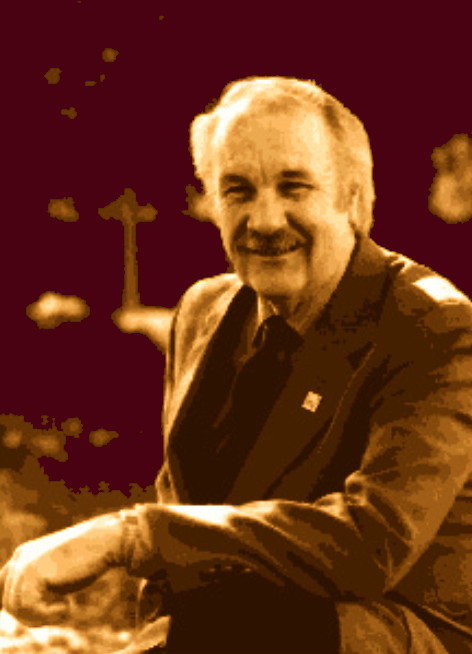
Ray StedmanRay Stedman was the pastor of Peninsula Bible Church in Palo Alto, California, for four decades, from 1950 until his retirement in 1990. I began working as Ray’s writing partner in 1992, the final year of his life. He was a faithful expositor of the Scriptures and a leader of character and integrity. For more than twenty-five years, I’ve been privileged to work with transcripts and recordings of his sermons, helping to turn them into books with the help and blessing of Ray’s widow, Elaine Stedman. As we approach Easter Sunday, the Day of Resurrection, I thought it would be helpful and inspiring to read Ray’s thoughts on the days just prior to the death of the greatest Leader who ever lived, Jesus of Nazareth. Here’s an excerpt:

Aldine-2

“Death of a Leader,” adapted from Ray Stedman on Leadership

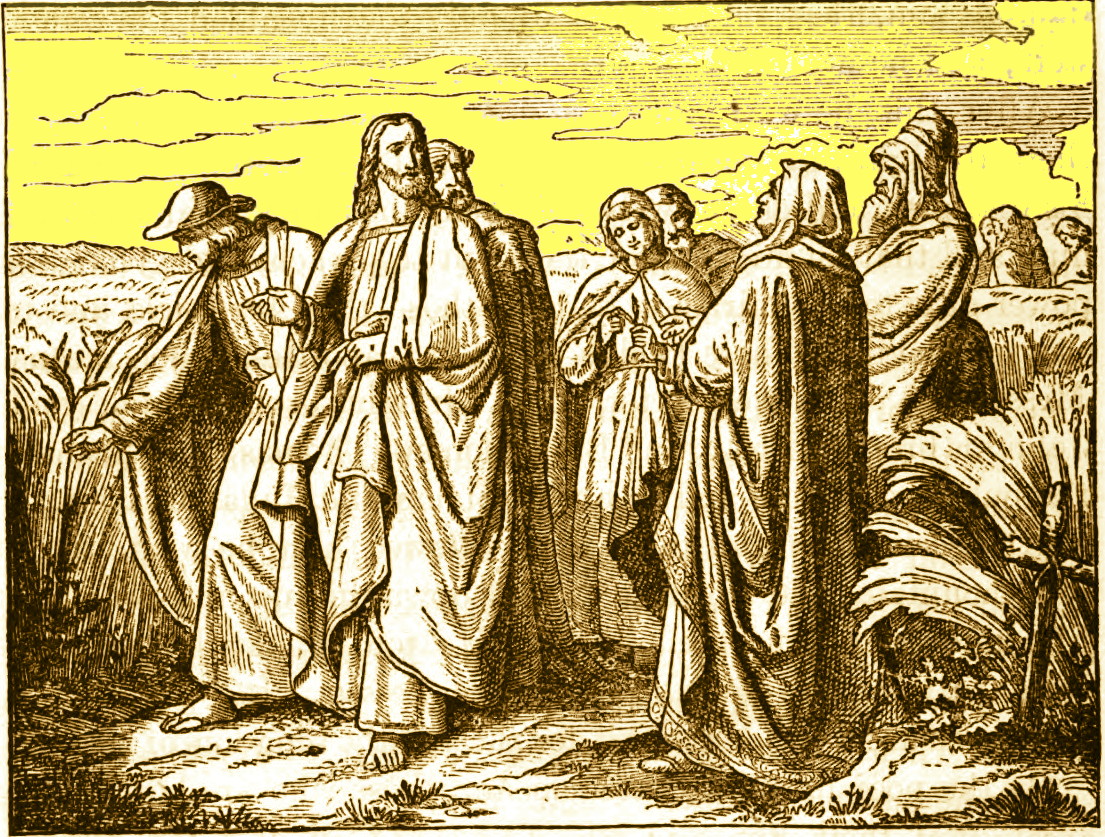
In Mark 10, Jesus and His disciples were on the road to Jerusalem, and Jesus began talking to them about death — His own fast-approaching death. They are moving into the final week before the cross. Jesus clearly foresaw all that it would entail, and he was determined to face what was to come:

They were on their way up to Jerusalem, with Jesus leading the way, and the disciples were astonished, while those who followed were afraid. Again he took the Twelve aside and told them what was going to happen to him. “We are going up to Jerusalem,” he said, “and the Son of Man will be delivered over to the chief priests and the teachers of the law. They will condemn him to death and will hand him over to the Gentiles, who will mock him and spit on him, flog him and kill him. Three days later he will rise.” (Mark 10:32-34)

Once again, Jesus told the disciples that He was about to suffer and die — and this time, He provided more details. And again, He also promised His resurrection after three days.

It’s significant that Jesus went in the lead, alone, with no one at His side. His band of disciples walked along behind him — and behind them was the multitude who always waited upon His teaching. Mark tells us that those who followed Jesus “were afraid.” Both the disciples and the crowd felt a sense of approaching crisis.
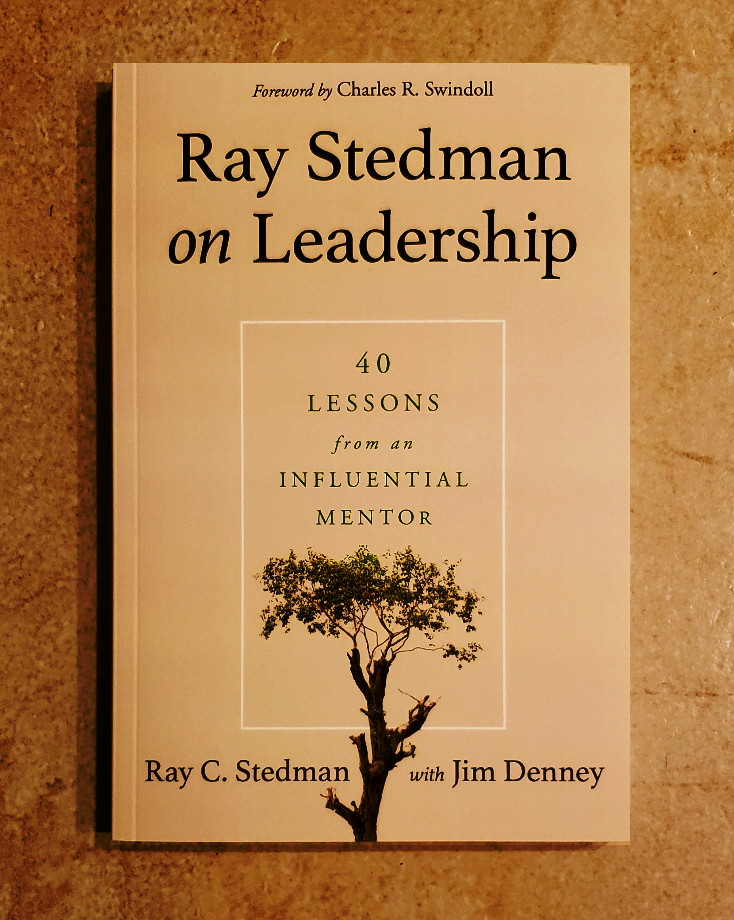
Ray Stedman on Leadership - ExtIn this prediction of His death, He included details He had never revealed before: the chief priests and teachers of the law were going to hand Him over to the Gentiles. The Roman oppressors were going to mock him, spit on Him, flog Him, and execute Him. How did Jesus know what was going to happen? He knew the Scriptures — passages like Isaiah 53 and Psalm 22 that predicted the suffering and death of the Messiah.

But even after Jesus told them plainly about His death, the disciples didn’t understand — or didn’t want to understand — what awaited Him. They didn’t understand the Old Testament passages about the suffering Messiah. They still expected Jesus to be the triumphant Messiah. With the benefit of hindsight, we understand that the Messiah had to go through the suffering of the cross before He could come into His glory. Because of their lack of understanding, two disciples stepped forward and boldly asked a favor of Jesus:

Then James and John, the sons of Zebedee, came to him. “Teacher,” they said, “we want you to do for us whatever we ask.”

“What do you want me to do for you?” he asked.

They replied, “Let one of us sit at your right and the other at your left in your glory” (Mark 10:35-37).

Though Jesus spoke of His coming death, James and John were focused on His eventual glory. They asked that Jesus give them each a place at His side. Many Bible teachers have criticized the sons of Zebedee for this request, but I don’t believe they were wrong to ask. Jesus gave them every reason to make this request.

Matthew records an earlier conversation Jesus had with the Twelve, when He said, “Truly I tell you, at the renewal of all things, when the Son of Man sits on his glorious throne, you who have followed me will also sit on twelve thrones, judging the twelve tribes of Israel” (Matthew 19:28). By faith, James and John believed that twelve thrones awaited them.

They didn’t ask for anything wrong. Jesus said to them that what they wanted was right, but they were going about it the wrong way:

“You don’t know what you are asking,” Jesus said. “Can you drink the cup I drink or be baptized with the baptism I am baptized with?”

“We can,” they answered.

Jesus said to them, “You will drink the cup I drink and be baptized with the baptism I am baptized with, but to sit at my right or left is not for me to grant. These places belong to those for whom they have been prepared” (Mark 10:38-40).

He said, in effect, “You are asking for a good thing, but you are asking in ignorance. You don’t know what you will have to go through to sit next to Me in glory.” Jesus knew the price and was ready to pay it. James and John thought they knew the price, but they had no idea what lay before them.

Jesus spoke of the cup He would drink and the baptism He would undergo. He would speak of this same cup in His prayer in the Garden of Gethsemane: “Father, if you are willing, take this cup from me; yet not my will, but yours be done” (Luke 22:42).

The cup spoke of the entire spectrum of events that would soon engulf Him — the violent suffering, the emotional and spiritual agony, the rejection, the mocking and scourging, and ultimately death on the cross. Baptism was a common image in Israelite culture; when the Israelites left Egypt they were “baptized into Moses” in the Red Sea (see 1 Corinthians 10:2). The sea opened up, the people walked between walls of water, and they were surrounded by the sea. It was a symbolic picture of passing through death and rising in resurrection.
Ray Stedman on Leadership - Interior

The Lord said to James and John, in effect, “This is the price of glory. Are you able to pay it?” In their human over-confidence, they said, “We can.”

What did Jesus mean when he said that James and John would “drink the cup I drink”? He was saying that they would suffer the reproach and anguish of martyrdom. History records that James was the first of the apostles to be martyred (he was beheaded by Herod, as recorded in Acts 22). John was the last of the apostles to die. These two brothers form a “parenthesis of martyrdom.” All the other apostles were martyred for their faith between these two brothers.

History doesn’t tell us how John died. We do know he was exiled to the island of Patmos because of his testimony for the Lord Jesus. There he suffered for the Lord’s sake, and also received the vision that forms the Book of Revelation.

Leadership is the art of accomplishing great things through other people. Jesus started with twelve ordinary men, and through His leadership, He transformed them into the foundation for a global spiritual movement, the church. He taught them and poured His life into them. With the lone exception of Judas the traitor, they all became leaders, living as He lived, teaching as He taught, leading as He led — and finally, dying as He died.

“I want to know Christ — yes, to know the power of his resurrection and participation in his sufferings, becoming like him in his death, and so, somehow, attaining to the resurrection from the dead.” —Philippians 3:10-11

Aldine-2

Note from Jim Denney: While working on Ray Stedman on Leadership, I spent many rewarding hours reading Ray’s other books—Body Life, Adventuring Through the Bible, God’s Unfinished Book, Psalms: Folk Songs of Faith, and more. From them, I distilled Ray’s most practical and penetrating leadership wisdom into forty daily readings. Each entry is followed by a set of discussion and reflection questions, making this an ideal study book for a church board or committee, home Bible study, adult Sunday school class, Christian business, mission team, or any other setting where biblical leadership plays a key role.


Ray Stedman on Leadership - ExtRay Stedman on Leadership:
40 Lessons from an Influential Mentor

by Ray Stedman with Jim Denney;
foreword by Charles R. Swindoll

available at your local Christian bookstore, at Barnes and Noble, at Amazon.com, and at Christianbook.com.
Trade paper and ebook formats.

Posted in Jim Denney, Uncategorized | Tagged , , , , , , , , , , , | 1 Comment

What’s the advantage to valley moments?

Whenever life gets rough, I try to focus on the lesson God has for me in that moment.  Sometimes, things are so uncomfortable, you have to change life, but what happens when you’re stuck for a time and God has you stuck?  Personally, I try to focus on the advantages.

My latest struggle is that I’m temporarily in a one bedroom upstairs apartment with my 18-year-old daughter.  And I recently inherited my sons’ dog.  I should mention that this dog is annoying and has some terrible traits.  For example, she was trained to bite at anyone if you try to wake someone.  My second-oldest liked to sleep in and taught her that.  Cute, right?  Not so much.

IMG_1730Now that son is in the Marines and he’s about to deploy for a long time–so the dog comes to me.  Luckily, my apartment’s owner loves dogs and was very amenable about the dog coming here.  So sweet — and see a complete advantage!
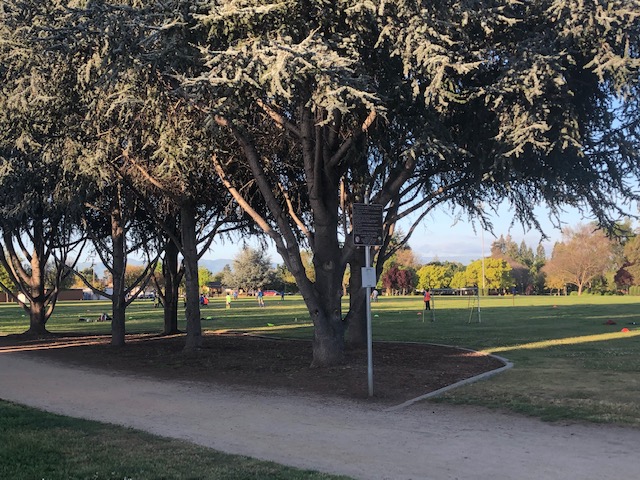

However, the apartment is upstairs and that means I have to take the dog out morning, noon and night.  Which is a pain, but I am handicapped with MS so it FORCES me to get out and walk. Even when my body doesn’t want to.  That’s an advantage!

IMG_1732

It also forces me to be social.  (I could easily be a writing hermit if it weren’t for my daily Starbucks’ visit.) So now, I go to the park and I meet up with other dog owners and I have human connection and conversation!  (Conversation aside from telling my daughter to clean our room and stop buying iTunes.)

When God has you in a holding pattern, do you try to look at the why and be grateful for the advantages?  If Mary could have a baby in a stable and Paul could write the epistles from jail, I figure I can handle a yappy dog in an apartment.  Until my son gets home.

Then, this dog is SOOO his.  I told him this dog will probably live until two days before he’s free.  (She’s already 12!)


Posted in Uncategorized | Leave a comment

Deadlines by Tara Randel

We all know what today is, the final day to file our taxes. Either you are getting money back, which means you’ve most likely sent the forms in by now, or you have to pay, which means you wait until the very last day to pay. Could I have come up with a more fitting date than today to talk about deadlines?

You don’t have to be a writer to appreciate deadlines. Having a job will always keep you busy with projects or appointment dates. If you still have children at home, you have a calendar of school, extracurricular or sports activities. Maybe you volunteer at church or with organizations in the community. Any or all of the above teach you to keep looking ahead to make sure you don’t miss a thing.

blog pic

One of the practical aspects of being a writer is that I have deadlines. It’s part of the writer’s life. If I’ve learned anything since becoming published, it’s to be flexible at different points in creating a book. Thankfully, the thought of finishing a project by a certain date doesn’t make me nervous. I like having the big picture laid out in advance so I know how to budget my time.

When I’m working on a book, there are a few different phases. The first is to come up with the story idea. Once I’ve worked out all the logistics, I begin to work on a synopsis which is sent to my editor. If the book or books go under contract, then I have firm due dates for every stage of the book. For instance, the complete manuscript for the book I’m working on right now is due on May 1. The last month is always the busiest because I finish writing the draft and then I edit, read, edit, and reread until it is in good shape to send in. You’d think that would be the end, but no. Once my editor reads the manuscript, I will have to do revisions. Now, there isn’t a deadline date on when my editor will send the manuscript back to me, but if I’ve already started another project, I’ll have to put that project aside while I work on the revisions. And once the book goes into production, I look forward to the release date.

In between the big picture of working on a book are a lot of other deadlines. If I write a blog, like this or another I participate in, I have specific dates to post. I may schedule an interview or book tour around the release date of a new book. Let me just say, I keep a weekly planner by my computer so I’m always up to date. If anything new comes in, it goes right into the planner so I’m prepared.

Life is busy for everyone and having due dates are part of the ride. If you have a particular deadline coming up, I wish you the best. As for me, it’s back to my current work in progress. Just another day in the life of a writer.

9781335510563(1) (405x640)

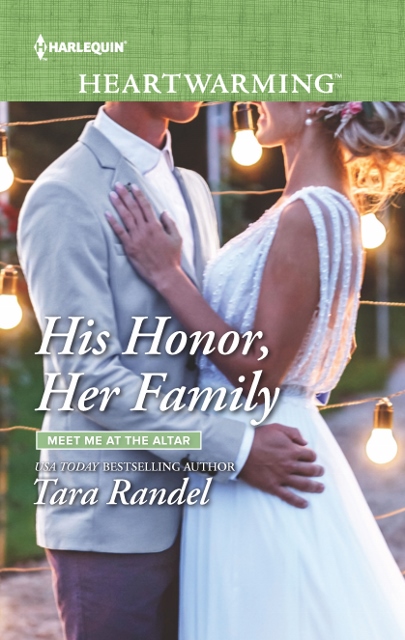
Tara Randel is an award-winning, USA Today bestselling author. Family values, a bit of mystery and of course, love and romance, are her favorite themes, because she believes love is the greatest gift of all. Look for her next Harlequin Heartwarming romance, Trusting Her Heart , available in August.  Visit Tara at www.tararandel.com. Like her on Facebook at http://www.facebook.com/TaraRandelBooks. Sign up for Tara’s Newsletter and receive a link to download a free digital book.

Posted in Tara Randel | Tagged , , , | Leave a comment

Consider the Wild Flowers

By Jim Denney

A couple of times over the past few weeks, I’ve put off writing for the day, and my wife and I have gone out to see the brilliant “super bloom” in southern California in the wake of the recent rains. So, for this week’s column, no opinions or grand thoughts of my own — just glimpses of orange poppies, yellow mustard, and purple lupine.

Oh, and these great thoughts from the Lord Himself: “Consider how the wild flowers grow. They do not labor or spin. Yet I tell you, not even Solomon in all his splendor was dressed like one of these. If that is how God clothes the grass of the field, which is here today, and tomorrow is thrown into the fire, how much more will he clothe you — you of little faith!“ (Luke 12:27-28). 

006

011  004


002

MustardChino5    MustardChino4

MustardChino2

___________________________________

Note: Don’t miss my interviews with Christian romance writer Robin Lee Hatcher (author of Who I Am With You and An Idaho Christmas: Past and Present), and Christian science fiction writer Kerry Nietz (author of Amish Vampires in Space and Fraught). Visit my website at Writing in Overdrive. See you there!

___________________________________

battle-before-time-cover-1


Note: Battle Before Time, the first book in my newly revised and updated Timebenders series for young readers, has been released in paperback. Click this link to learn more.

And if you’d like to learn more about how to write faster, more freely, and more brilliantly than you ever thought possible, read my book Writing In Overdrive, available in paperback and ebook editions at Amazon.com. —J.D.


Jim Denney also blogs at Writing in Overdrive and Walt’s Disneyland. 


Posted in Jim Denney, Uncategorized | Tagged , , , , , , , , , , | 1 Comment

A Different Spin to God’s Timing

When we think about God’s timing, usually we think about waiting. Often times there is something that we want to see in our lives, but it doesn’t happen as quickly as we would prefer. It could pertain to landing a new job, starting a family, moving to a new home, losing weight, or any other goal we have. In these cases, we might remind ourselves to trust God’s timing.


However, I have recently been seeing God’s timing in a different way. Sometimes things happen in our lives that we would prefer not to happen right now, or not to happen at all. Or perhaps we might have certain plans in mind, but they go a different way instead. In some cases, these things I am talking about could be something major. But more often, they are small inconveniences. The good news is that they can teach us something, if we are willing to learn.


1 – Trust


We can learn to trust God and His timing.


We have a friend who is neighbors with a family member. The family member adopted a small dog about a year ago or so. Long story short, our friend spent a lot of time with the pup, so the family member gave her to our friend. Sadly, our friend has recently learned that he has cancer. So we now see what a blessing it has been to have this dog come into his life. She brings him smiles and laughter, when everything else in his life seems dim. This showed me to trust God’s timing. He brought the dog into our friend’s life at just the right time.


2 – Dying to Self


We can learn to “die to self” or basically put our selfish desires on the back burner.


My husband recently invited someone to our house for dinner on the spur of the moment. Since it was a last minute thing, instead of resting that weekend as I had hoped, we had to clean up the house and do some cooking. I admit that due to lack of sleep, I felt easily frustrated. I wondered why we couldn’t have planned ahead, so that we had better time to prepare. This is when I had an “aha moment” regarding God’s timing. I knew then that instead of focusing on what I wanted, this was a chance to be a blessing to someone else. You see, the friends that we had over were going through some difficulties, so spending quality time with loved ones likely did their hearts some good.


3 – Patience


We can learn patience when God’s timing does not align with our own.


Patience seems to be something many of us have to continually work on, myself included. And I have plenty of opportunities! In this case, I don’t mean the kind of patience we need when waiting for something. Rather, it is more like the patience we need to keep ourselves from getting irritated when life doesn’t go our way. One evening this week I had plans to sit down and write, yet instead I had another learning opportunity. When I got home from work, nothing went as I had hoped. It’s not that anything bad happened, but there were numerous little things that commandeered my time. So I had to remind myself that this was a chance to practice patience. In the end, I do believe God’s timing was perfect, because when I did finally find the time to do some writing, He reminded me of key points that I needed to add. If I had written when I wanted to, those important facts might have been missed.


“Yet God has made everything beautiful for its own time. He has planted eternity in the human heart, but even so, people cannot see the whole scope of God’s work from beginning to end.” – Ecclesiastes 3:11


I am learning that God’s timing is always better than my own. Whether I want something to happen sooner, later, or not at all – God always knows what is best. And He is always working things out for our good and His glory. He can see the beginning and the end. Knowing this gives me a sense of peace. When I allow God to direct my steps, I have nothing to worry about.

(Photo by Carol Kramberger.)

Posted in Uncategorized | Leave a comment

I Heard the Scream Before it Came (by Hannah Alexander)

Monsters and snakes

You know how, when you’re not watching, something might just sneak up on you?

These are metal images of the Western Diamondback Rattler and a Gila Monster. Both are venomous, and therefore not to be messed around with. One needs to watch where one walks when in the Southwestern part of our country. But a certain someone whose name I will not mention was paying more attention to everything but the sidewalk, and when I tried to gently guide him (or maybe her) away from the scary-looking snake, I somehow inadvertently drew attention TO the snake, which looked very realistic.

Other sightseers were ambling around looking at the western town, and therefore the scream drew considerable attention when my companion nearly stepped on top of the rattler.

I laughed. Others laughed. My companion laughed, eventually, but not until ensuring that this was not, indeed, a living rattler.

How many times have we stumbled onto something dangerous when we weren’t paying attention? I mean, really, how can we be on guard 24/7? I can’t. But there are times when it is vital to be extra watchful. Maybe you don’t have a home where snakes can find a way to crawl up from beneath the house, so you don’t have to be as cautious at home. Or maybe you live in an area (Missouri) where 70% of homes have brown recluse spiders residing in dark places.

I have to be particularly watchful when hiking here in Wyoming. I’ve discovered that even in the winter, I have just to be as watchful, if not more so. Think frostbite–or freezing to death. Or falling through a 15 foot snowdrift. But snow won’t jump out and bite you. You go to it, so if you’re injured by it, you can only blame yourself.

In the summer, I’ve heard that some of the most aggressive animals here are badgers. One of them attacked a friend’s tire while she was hiding in the cab of her truck, and it waited for her to come out for over an hour. She waited it out. There are also the usual bear–grizzly and black–mountain lion, rattlesnakes, aggressive bison, moose, maybe a wolf or two. Actually, though, having hiked for decades, I found that the most aggressive animal for me was an armadillo in Missouri, which rushed my hiking buddy one day in a terrified effort to get away from us–scary, but it was not actually attacking, just doing the knee-jerk thing. Most animals have the same reaction, except for that badger, which is truly aggressive. Others will avoid humans if possible as long as we don’t crowd them and get their neck-hairs up.

Here in our town we have to be especially cautious because we don’t want to hit the hundreds of deer roaming the streets. Which concerns me because two instances within ten minutes this morning told me that the most dangerous animals around here are humanoid, not deer.

One car pulled out right in front of me, forcing me to stand on my brakes to avoid a collision. That was a half-block from the police department. Another stopped at a 4-way stop and just seemed to park there for a few minutes. Clueless drivers are some of the most dangerous animals in the world. We don’t have a lot of traffic here. Rawlins is the 12th largest town in Wyoming, and the population is around 10,000. Not a lot of traffic anywhere in the state. And yet my husband sees victims of traffic accidents on every ER shift. So many drivers are clueless. They drive the interstate when conditions are deadly, with slush-filled lanes of traffic and humongous semi trucks and RVs sliding all over the road. It only took one 30-vehicle pile-up for me to find a two-lane route to avoid that deadly interstate traffic. However, most of my friends have to face that kind of crazy traffic every time they leave the house.

How do you avoid automobile accidents, which causes more deaths by the year? Move to Wyoming and stay off interstate highways. If you don’t want to do that, you need to be on high alert at all times. Be less aggressive. Keep at least one car length per 10 mph. between you and the car in front of you. Drive as if you’re trying to keep an egg from rolling off the dash. Leave your temper at home. Avoid aggressive drivers, and remember that leaving home earlier will get you where you’re going more safely. Defensive driving really is a thing. It’s a good thing. Keep your mirrors adjusted and know what’s around you at all times. And even then, know that there are clueless drivers out there just waiting to bash your bumper.

I know I’m nagging, but I have personally experienced continuous pain for 13 years after one clueless driver rear-ended us on a highway. We were stopped for an accident ahead of us. She was driving 55-60 mph., according to the state trooper, who told us this as we were lying in the median in the rain, awaiting ambulance transfer to the trauma center.

The hospital can’t automatically fix you. They didn’t fix me. I have endured the tragic death of  4 beloved teenagers in my family–and nearly lost more–because of reckless driving. Last year someone was killed by a grizzly up near Jackson Hole, Wyoming. That had repercussions throughout the state, us being so in touch with one another. But that was one death last year. I know for a fact that far more people died from auto accidents in Wyoming than died of any and all kinds of animal attack–and man, do we EVER have the animals here!

So what do you say? Would you please, for the sake of your loved ones, keep a closer watch on other drivers? And on your own driving? Like a rattlesnake, a nasty auto accident can slip up on you and change your life forever. It will change the lives of your loved ones, as well. It can have repercussions you would not believe. Do it for those you love.


Posted in Hannah Alexander | Tagged , , , | Leave a comment

The Least of These By Nancy J. Farrier

I breathed deep, taking in the fresh desert scent as my feet crunched along the hard-packed dirt track. The rain three days ago washed everything, and the fall air brushed against me with a welcome crispness after the summer heat. The beauty and vastness of the desert never failed to calm me and make me thankful.

Something moved in the dirt ahead. Just a hint of movement. I slowed, watching for what caught my eye. And stopped. 

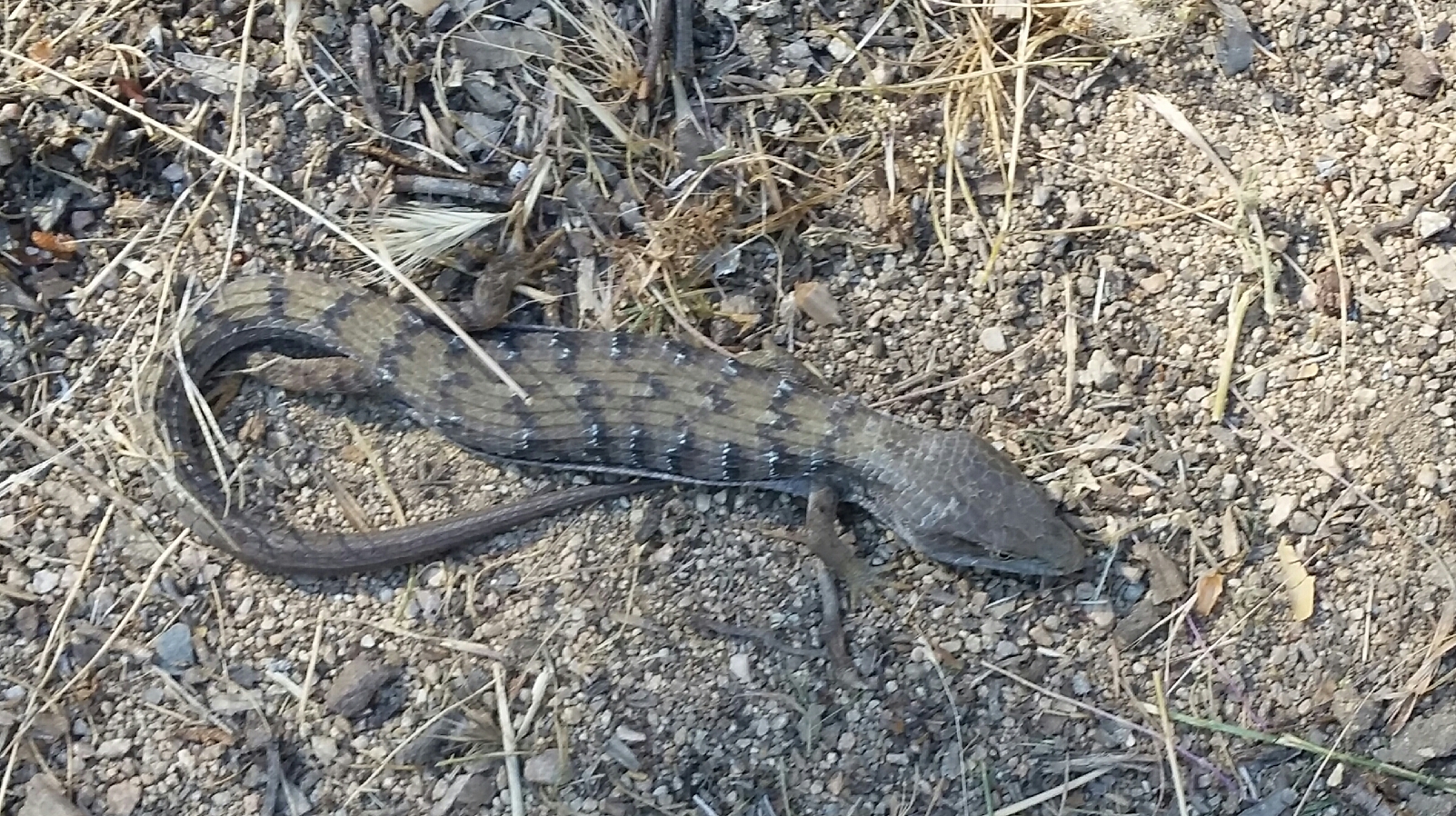
A tiny lizard peered up at me from the sand, his head tilted at an angle, his body so still only the blink of his eye let me know he was alive. I waited for him to scurry away. Lizards never stayed still long when I passed by. This one didn’t move.

I took a step closer. Another step. I could almost feel the tension in his small body, but he didn’t move. I took another step and knelt down. He was little, only about three inches from the tip of his nose to the end of his tail. He scrabbled his front feet like he wanted to run but something held him in place.

Bending down, I noted one of his back legs buried in the sand. The hard-packed sand. The poor thing must be terrified, but he couldn’t go anywhere.  He stayed frozen in place as I gently nudged his leg to see if it would come free of the dirt. It didn’t. I couldn’t pull or the fragile appendage would break.

I began to dig through the sand a couple of inches from the lizard’s leg. His wide-eyed gaze stayed glued to me. For the next several minutes I loosened the dirt, getting closer to the trapped leg. I realized by now that at least half of his leg had sunk into the roadway, probably after the heavy rain. He’d gotten stuck and the sand hardened around him. He’d been here at least two or three days. I was amazed he hadn’t been killed.

The sand crumbled bit-by-bit and finally his leg slid free and seemed intact and unbroken.  I expected him to scurry away, but he didn’t. He moved his leg. Stared up at me. Waited. 

As gently as possible I ran the tip of my finger down his head. He tilted the slightest bit toward me as if saying, “Thank you,” and moved in fits and starts to the brush at the side of the trail. I went on my way thankful for the chance to help him.

I realized, after the fact, that maybe I should have taken a picture, or done a video of him as I freed him, but my main concern had been to help this little creature who would otherwise die. I wasn’t digging in the dirt for my benefit but for his.

Over the next weeks I thought a lot about Matthew 25, where Jesus talked about “the least of these” and how when we help even the person who matters little it is the same as helping Jesus Himself. I realize a lizard is not the “least” He was referring to, but that moment started me thinking. Who is the leastthat I’m supposed to help? Who is God asking me to help that I’m walking past without noticing? Who is trapped and unable to get free on their own?

Is it the person in the parking lot struggling to load something heavy in a car by themselves? Is it the person in the pew near me sitting alone? Is it the homeless person I pass on the sidewalk? Is it the child who annoys me with their behavior that demands attention? Is it the pregnant woman with no one to help her? Is it the former serviceman who struggles to find their place in life? Is it the adolescent being forced to consider a life in trafficking? Is it the offensive person who covers up their need for a friend with brashness?

Helping someone can be as simple giving an encouraging word, or that assistance can be more complicated. Giving a smile or a word of encouragement is easy enough, but God may be asking me to consider doing more. Maybe the “least” this time is something more long term and emotionally draining. Yet, when I consider that I’m doing it for Jesus, the cost is not worth considering. 

If I will kneel down and dig in the dirt for a lizard, I will kneel down and dig in the dirt for the person Jesus asks me to help. Who is “the least of these” to me.

Who is “the least of these” to you?

Will you join me and kneel down to help? 

…Assuredly, I say to you, inasmuch as you did it to one of the least of these My brethren, you did it to Me.(Matt. 25:40 NKJV)

Posted in Nancy J. Farrier | Tagged , , , , | 3 Comments

Why Not Write?

Opinion by Jim Denney

“You have two choices in life. You either die or do something with your time. You’re going to be doing something — why not write?” —James Lee Burke

Louis Auchincloss

Author Louis Auchincloss, recipient of the 2005 National Medal of Arts, with President George W. Bush and Laura Bush. White House photo, public domain.

Louis Auchincloss had a long career as a successful lawyer, yet he managed to maintain a simultaneous career as a successful novelist. His literary output was impressive — thirty-six novels (including The Rector of Justin and House of Five Talents), plus thirteen nonfiction books. His titles topped the bestseller lists and he was awarded the 2005 National Book Award and was nominated for the Pulitzer Prize. In an interview with George Plimpton, Auchincloss said:

Lots of writers have to have whole days or nights to get ready to write; they like to be by a fire, with absolute quiet, with their slippers on and a pipe or something, and then they’re ready to go. They can’t believe you can use five minutes here, ten minutes there, fifteen minutes at another time. Yet it’s only a question of training to learn that trick. …

I can pick up in the middle of a sentence and then go on. I wrote at night; sometimes I wrote at the office and then practiced law at home. My wife and I never went away on weekends. I wouldn’t recommend that anyone else try this method, but it worked for me.

Louis Auchincloss shredded every writer’s favorite excuse for procrastinating: “If I could only find the time to write….” Successful writers don’t find time. They make time. The problem most writers have is not that they don’t have time, but that they don’t make good use of the time they do have.

Here are two ideas for making the most of your writing time:

AnneLamott

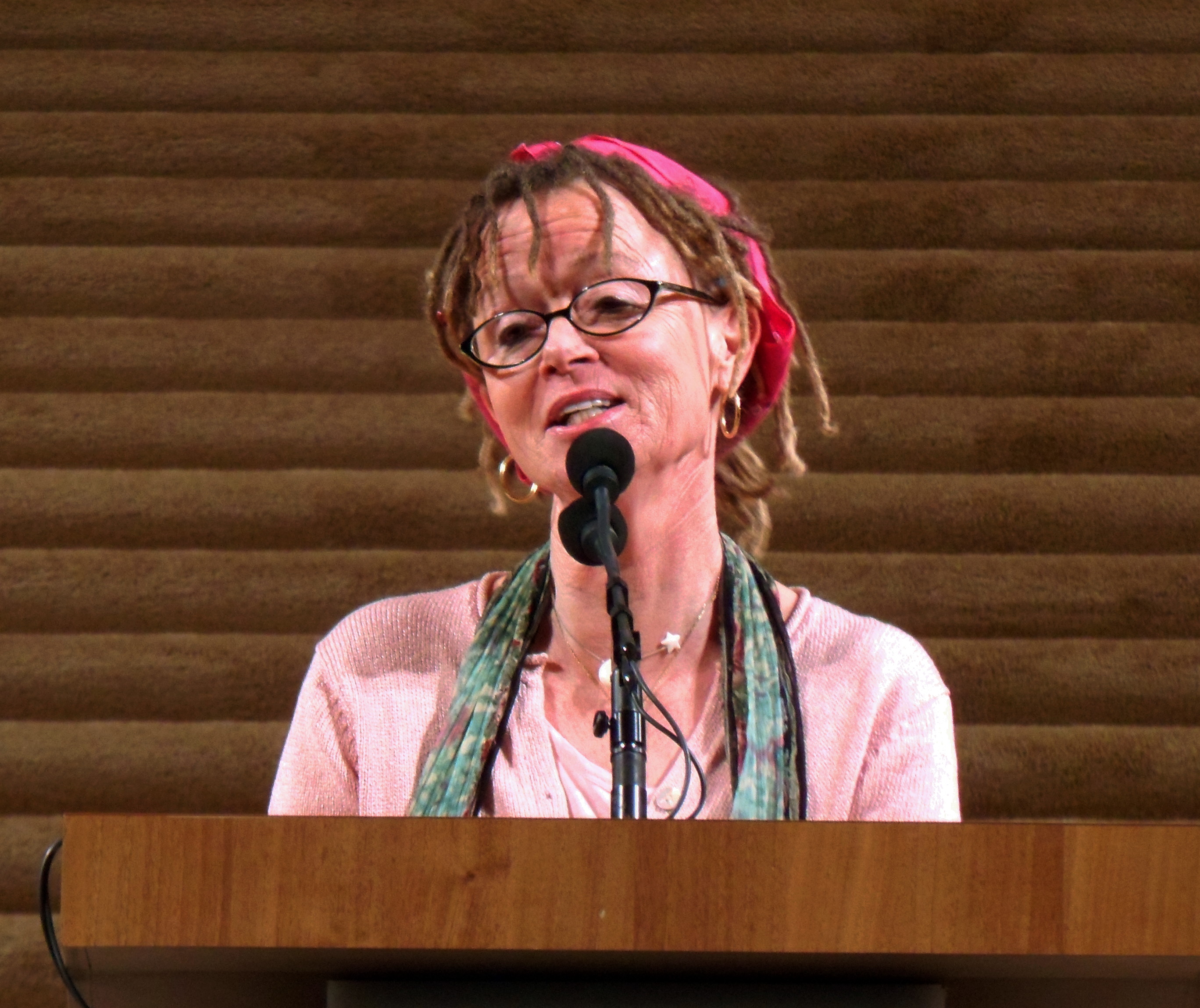
Anne Lamott in San Francisco, 2013, photo by Zboralski, licensed under the Creative Commons Attribution-Share Alike 3.0 Unported license.

Tackle your tasks “bird by bird.”

In Bird by Bird, Anne Lamott tells the story behind the intriguing title of her book on creativity. When her older brother was ten years old, he tried to write a report on birds — an assignment he’d been given three months earlier. He had spent those three months procrastinating, and the assignment was due the next day.

Frozen with panic, almost in tears, he was unable to begin. He had paper and pencils and books on birds, but the sheer size of the task had him petrified.

Lamott recalls how her father wisely sat down beside her brother, put his strong arm around the boy’s shoulder, and calmly said, “Bird by bird, buddy. Just take it bird by bird.”

Anne Lamott never forgot that advice, and it served her well throughout her writing career. “Impossible” tasks become achievable when we break them down into smaller goals, and we achieve each goal little by little, “bird by bird.”

MegWolitzer

Meg Wolitzer, photo by Avery Jensen, licensed under the Creative Commons Attribution-Share Alike 4.0 International license.

Try Meg Wolitzer’s eighty-page plan.

My friend Sibella Giorello (author of the Raleigh Harmon series) tipped me to this idea. Meg Wolitzer is a novelist and the author of The Wife, The Uncoupling, and The Interestings. In an interview with The Daily Beast, Wolitzer described her process for conceiving and writing her novels.

“I sort of follow an eighty page plan,” she said. “I write eighty pages without worrying about what I’m doing, or what anyone will think of it, or even what it is, exactly. And when I’m done with those eighty pages, I print them out and have a look at what I’ve got, as opposed to what I fantasized I’d have. Then I make drastic changes. Eighty pages is enough pages for a writer to feel she’s accomplished something, but it’s not so many pages that, if she decides to put aside the book, she’ll feel as if she’s wasted her life.”

Meg Wolitzer’s eighty-page plan is the perfect middle path for writers who don’t want to map out their novels in advance, but worry that writing purely by the seat-of-the-pants could leave them stranded and blocked. If you can write four pages a day, you can knock out eighty pages in less than three weeks. That’s a modest commitment of time, but it just might free up your creativity so that you can finally write that long-delayed bestseller.

___________________________________

Note: Don’t miss my interviews with Christian romance writer Robin Lee Hatcher (author of Who I Am With You and An Idaho Christmas: Past and Present), and Christian science fiction writer Kerry Nietz (author of Amish Vampires in Space and Fraught). Visit my website at Writing in Overdrive. See you there!

___________________________________

battle-before-time-cover-1


Note: Battle Before Time, the first book in my newly revised and updated Timebenders series for young readers, has been released in paperback. Click this link to learn more.

And if you’d like to learn more about how to write faster, more freely, and more brilliantly than you ever thought possible, read my book Writing In Overdrive, available in paperback and ebook editions at Amazon.com. —J.D.


Jim Denney also blogs at Writing in Overdrive and Walt’s Disneyland. 


Posted in Jim Denney, Uncategorized | Tagged , , , , , , , | Leave a comment

Review: The Pilgrim’s Progress Movie

One perk of writing/blogging is that publishers and agencies find me and ask if I’ll take a look/listen/watch at their product and share my thoughts. Over the years I’ve read amazing books, some not-so-amazing. I’ve enjoyed uplifting music, and watched a variety of movies.

This time around, I was able to preview the animated movie coming to theaters across the country for two days only, The Pilgrim’s Progress. Based on the classic by John Bunyon, the movie follows Christian’s journey after he finds a book Faithful leaves behind, in search of the Celestial City.

Pilgrim’s Progress is probably the only allegory I’ve been able to understand and appreciate, so I really looked forward to this movie, and it did not disappoint. I was ready for the quality to be sub-par given it isn’t a Disney/Pixar film. Guess what? The colors were beautiful. The features I saw in background images, on the characters, in the surroundings were top-notch. The imagery matches the quality you would see in any animated movie.

The story also does the book justice. I thought it beautifully depicts the journey we go through as we seek a relationship with Christ. There are those who are excited to join us, only to turn at the first hint of adversity. Our fears overwhelm us. Temptation comes at every turn. The paths that look so pretty and easy are usually full of regret. I can’t say enough about how I was able to reflect on my own faith and how accurate the movie was. It really was moving.

As of this writing, I haven’t seen the rating or age range they are hoping to reach. I will say that I would not recommend this for young children. The evil represented is scary. I tried to think if my first-grader nephew would be able to watch, and I think he could, and I think he’d understand Christian’s journey. There are humorous parts for all ages to giggle at, and we did. But definitely take their sensitivity into mind as there are demons at work and their agenda is very clear.

The Pilgrim’s Progress will be available at theaters nationwide April 18 and 20. I think watching this is a wonderful way to celebrate Easter, and I suggest getting a group together. I think you will leave the theater uplifted, inspired, and hopefully on a journey of your own.

I’d love to help you have an opportunity to celebrate this movie. Leave a comment on this post and if you are a US or Candadian citizen, you will be entered to win a copy of The Pilgrim’s Progress illustrated storybook. I’m choosing three winners for this.

Wait, I’m not done! If you live in the US, I’m also choosing three winners to receive two tickets to see The Pilgrim’s Progress. Make sure you leave a valid email in case you are chosen.

That’s six winners! Three will receive the book, three receive two tickets. Wow!

Here’s a trailer so you can see for yourself:

Purchase tickets for The Pilgrim’s Progress

Learn more about group tickets for The Pilgrim’s Progress

This is a blogger promotion from Lev3L Digital. All opinions are my own, and I was not compensated.

Posted in Julie Arduini | Tagged , , , , , , , , , , , | 8 Comments