Managing Master Manipulators

Sadly, the church has its share of manipulative people.  I’m reading the book “Under the Banner of Heaven” which is about a religious “Mormon” sociopath who killed his baby niece, his sister-in-law and his brother under the guise that he was “doing God’s will.” Years later, he still believed he’d done the work of God and had no remorse for the murders.  (I guess he missed that part of the commandments that read, “That Shall Not Kill.”)

The church is not immune to these types of people who wield Scripture as a weapon to get people to act the way they want.  Case in point, recently a young lawyer was told by a defendant that she was doing Satan’s work by being in the law.  He told her the Bible says we are to settle things amongst each other and she must have a demon in her to be in her field.  Only this defendant hadn’t settled things amongst the others — that’s why he was in court.  He wanted the other party to do his will (not God’s) and when the client didn’t comply, he went after the lawyer’s weak spot. (Questioning her very vocation!)

0As Christians, we want to do what is right, what is holy.  So we are very susceptible to someone who questions our actions.  We want to make sure that we are right with the Lord and there is no truth in their words.  Our “weakness” in wanting to appear godly can cripple us in the hands of the wrong leaders. That is why we are called to be as wise as serpents.

The wonderful thing about the Bible is everything can be tested against Scripture.  In this case, nothing in the defendant’s words showed any fruits of the spirit.  There was no love, joy, peace, patience, kindness, goodness, gentleness or self-control in the man’s words.  There were harsh accusations and vile name-calling — and because that is so out-of-the-ordinary in the church, often, these types are believed — without any corresponding evidence. People can question their own motives. Because why would anyone say this person is demonic if there wasn’t something there?

As our world gets more self-absorbed and dysfunctional, I ask that you please judge anyone on the basis of their character — not the character assassination of someone who doesn’t want to remedy the situation. Anyone with a godly motive wants someone to be restored to the church in full and will do anything to help them get there.  Good people are not interested in destroying someone’s character to “win.”

If you know someone who makes you question your motives, check yourself against Scripture and be sure you don’t get involved in destroying someone’s character on the basis of a false accusation.  After hearing this story, I read this verse:

“The thief comes only to steal and kill and destroy; I have come that they may have life, and have it to the full.” John 10:10

Anyone with a godly motive should want you to have life and have it to the full.  They shouldn’t want to destroy you under the guise of “doing God’s work.” Be wary of this kind of manipulation.  It is like yeast in the dough and it will permeate every part of the Body of Christ.


Posted in Uncategorized | Leave a comment

The Power of Shame by Vicki Hinze

Vicki Hinze, the power of shame


Merriam-Webster defines shame like this:

Shame.  (Noun.)

  • “A painful emotion caused by consciousness of guilt, shortcoming or impropriety. 
  • “The susceptibility to such emotion.”
  • “A condition of humiliating disgrace or disrepute.”
  • “Something that brings censure or reproach. Something to be regretted.”

Shame.  (Verb.)

  • “To bring shame, to disgrace.”
  • “To put to shame by outdoing.”
  • “To cause to feel shame.”
  • “To force by causing to feel guilty.”

We’ve all felt it. We’ve all induced it in others, and likely far more often in ourselves. Shame.  

Some might say there’s too much of it, and perhaps for some there is, and others could (and often do) say with the condition of things, particularly in the public square, there should be more.  They’re both right…and wrong.

We’re not one-size fits all. Haven’t ever been, won’t ever be. As much as some want to homogenize us and stuff us into a specific box to make their control of us easier, it’ll never work.  Why? Because we’re all hand-crafted originals with specific strengths and weaknesses and each of us are different levels of enlightenment.  In other words, we aren’t clones.  I’m not even sure clones could be homogenized and boxed in a one-size fits all package.

Is shame then useless? A bad thing? 

Actually, it’s like most other things:  helpful if not inappropriately used or implemented. A clear understanding of shame can spare worst hurts on future events we’ll eventually encounter.

An example.

As a child, I of course knew never to steal.  It was wrong. It was an offense to the person you steal from, to your parents, family, and in a huge way, to yourself.  In stealing you prove you can’t be trusted. You aren’t honest. You do not respect what belongs to you or to others.

My mother and I went to the grocery store.  I really wanted a piece of bubble gum.  There was a huge jar of it in bright yellow wrappers on the counter.  I asked, and my mother said no.  So, long story short, I took the gum.

Later, my mother saw me chewing the gum.  She got that face.  You know the one I mean.  The You are in deep and serious troubleface. I figured I’d get restriction for sure, but I never could have expected what she did do—and it was a thousand times worse.

She hauled me back to the store where I had to admit to the owner what I’d done, pay him for the gum, and give back the unchewed second piece I’d taken.  

The owner took the money and the returned gum.  He was sober and serious, of course, but the disappointment in his eyes is what I remember most all these years later.  He said, “I trust we won’t have to worry about you stealing again.” 

You know how you think, “I wish the floor would open and swallow me?” That was me, right then.  I was humiliated, embarrassed, mortified, and ashamed.  If disgrace could kill, I’d have been DOA that very second.

On the walk home, I took a typically immature response. I was angry with God, who was supposed to be merciful, because I didn’t die of shame and melt through the floor and escape. No, I had to live with the consequences of my actions. That took a little longer to accept—it was all on me. But I was afforded the opportunity to become well acquainted with the concept of personal responsibility when my dad got home from work and we had a kitchen table conference.  Translated: we had a deep and serious discussion about my transgression.

All these years later, I don’t recall whether or not there was restriction, though I’m supposing there was.  But boy do I remember that discussion and the disappointment in my dad that his daughter was a thief. 

I also recall apologizing to my folks and promising I wouldn’t steal again.  After that day and evening, I knew that promise would be one easy to keep. I neverwanted to experience anything like this again!

Now, some of you might think that my folks overreacted to a kid stealing a couple pieces of gum. They didn’t.  In that discussion, I had to see this event from the store owner’s eyes. Customers robbing him blind. Him trying to make a living and feed his family (who happened to live directly across the street from us)!  I had to see this from my mother’s eyes.  The humiliation she suffered in dragging a child she was raising back to a store to confess. Had she been a lousy mom? What hadn’t she done that she should have?  My dad’s eyes.  I work so hard to provide and come home to this? And my own.  Lord, I guess I had to go through all this to get the message to never touch things that don’t belong to me again.  

The lesson wasn’t easy. It was devastating.  It was all the things Merriam-Webster describes.  On steroids.  Because while I was a kid, I did know better, and I deliberately and willfully did what I wanted to do anyway.

But I learned a lot of lessons that day that have served me well in the whole of my life.  And as hard a lesson as that was, it was magnificent, too.  Many times in the intervening years, I’ve had situations arise to tempt me.  Being given too much change at the check-out.  Leaving the store and finding an item still in the cart.  Do you think even for a second, I hesitate to go back?  Not for a nanosecond.  

I learned more subtle lessons, too.  About not putting expectations on other people’s wallets. About doing things in ways that don’t injure personal pride.  About reserving judgment on other kids and other parents.  We truly don’t know what others’ lives are really like.  No matter how much we think we do.  We don’t know what lessons are being taught or learned.

The principles apply to the smallest of thing, like the chewing gum, and to the greatest things, like national immigration.

People storming our border do not respect our laws, our land, or our ownership.  That’s a problem. It’s not doing things the right way.  Doing things the right way assures us individuals are more apt to be productive citizens. In storming borders, they are not invited guests. We didn’t send for them. They are invading, forcing themselves upon us. Same principle at work.

I realize that truth won’t be popular with some, but like it or not, truth is truth.  Consider a perspective shift, see the situation through different eyes. We have been paying the countries these folks are coming from foreign aid to help them take care of their own people at home.  They take the money, keep the money, and many of the people come here anyway.  And here, they are fed, housed, and subsidized, so we’re paying for their aid a second time. Why should we pay for them twice? We reach out in good faith to aid, but twice?  That’s not sensible…or fair to the people of our own country who would benefit from a little aid but can’t get it because it’s going to uninvited guests.

Why is there no shame on that?  

I’m guessing when they were kids, their folks didn’t drag them back to the store to pay for the gum and make them give the gum back.

Yes, it was a hard, uncomfortable lesson.  But it was well worth learning…

Posted in Uncategorized, Vicki Hinze | Tagged , | 2 Comments

Where are the Grownups?

Opinion by Jim Denney

When I was a child, I thought grownups had everything figured out. I looked at the example of my parents, and I assumed that all grownups were wise, knowledgeable, and sensible. Now that I’m a grownup, I know better.

I watch the news and see the squabbling, pettiness, selfishness, dishonesty, and corruption among our so-called “leaders” and I wonder why I ever wanted to grow up. I see far more wisdom and maturity in my children and grandchildren than I see in most of the people who are running our world.

NationalDebtClock2012

The National Debt Clock one block away from Times Square in New York City, April 2012. Today the national debt stands at more than $22 trillion. (Photo by Valugi, used under the Creative Commons Attribution-Share Alike 3.0 Unported license.)

There’s a deadly axe poised over the throat of our nation. Our leaders know it. They are saying nothing and doing nothing about it. That axe is the national debt.

When Admiral Mike Mullen was Chairman of the Joint Chiefs of Staff, he repeatedly warned us that the national debt is “the greatest threat to our national security.” And former Defense Secretary James Mattis, during his 2017 confirmation hearing, agreed and added, “I consider it an abrogation of our generation’s responsibility to transfer a debt of this size to our children.”

Despite these warnings, our nation’s leaders are spending lavishly today while passing the bill to our children and grandchildren. This is generational theft, the parents stealing from their own offspring.

Both political parties are to blame. Both houses of Congress are to blame. All recent occupants of the White House are to blame. The news media are to blame. And We the People are to blame. Our leaders know that voters like to get “free stuff” from the government, and we don’t care who pays for it — even if we pass the bill to our children and grandchildren.

So our leaders battle each other for power and partisan advantage and do nothing to solve the great existential crisis of our time. Terrorists and other nations can’t destroy America — but our own leaders can. And they are. While they battle for political turf, the debt crisis threatens to collapse the world economy. Our so-called “leaders,” our “grownups,” are like children bickering over who gets to sit in the deck chairs on the Titanic.

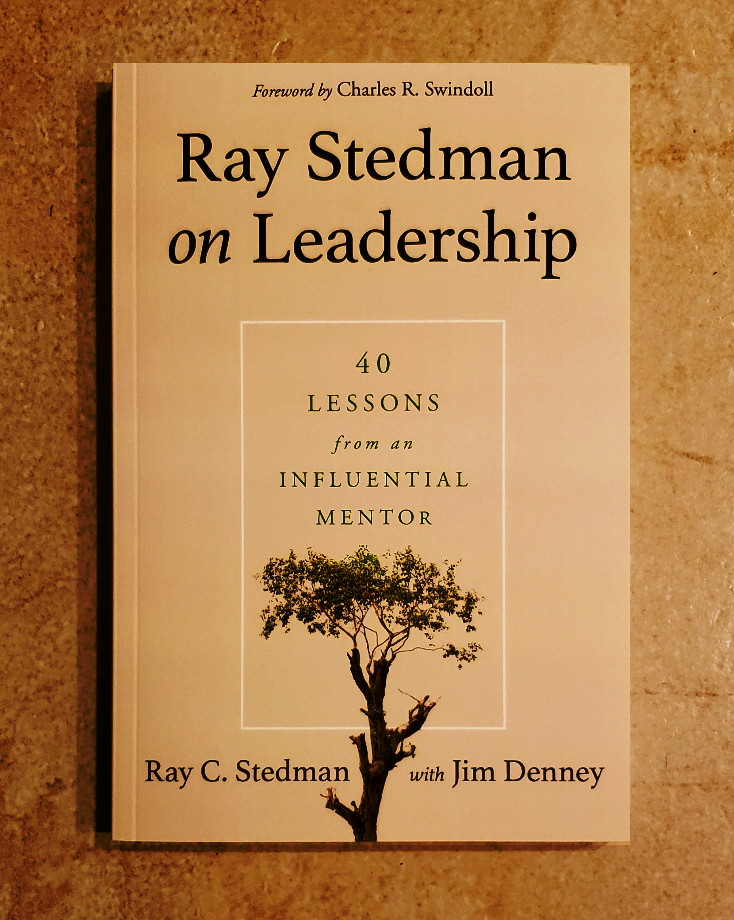
What a contrast between the “leadership” we see all around us and authentic biblical leadership as described in Ray Stedman on Leadership. Ray was the pastor of Peninsula Bible Church in California for four decades. I began working as Ray’s writing partner in 1992, the final year of his life. He was a leader of great character and integrity — and this book contains his wisest insights on leadership from a biblical perspective. For more than twenty-five years, I’ve been privileged to work with transcripts and recordings of his sermons, helping to turn them into books. I think Ray Stedman on Leadership may be my favorite among the twenty-five books I’ve worked on with Ray. Here’s an excerpt from that book:

“The Leader in Conflict” by Ray Stedman

Ray Stedman on Leadership - ExtWhen I was training for the ministry, I traveled for several months as an assistant to Dr. Harry A. Ironside, pastor of the Moody Church in Chicago. I once heard Dr. Ironside relate an experience from his early life. His mother took him to a church meeting. During the meeting, conflict erupted between two Christian men. The situation became so heated that the men nearly came to blows. One man stood and shouted, “I don’t care what you do — I insist on my rights!”

An older man, who was partially deaf, leaned forward in his chair, cupped his ear, and said, “What did you say, brother? You demand your rights, do you? Brother, if you had your rights, you’d be in hell. The Lord Jesus didn’t come to get His rights — He came to get His wrongs, and He got them.”

The angry fellow blushed and tugged at his collar. “Brother,” he said, “you’re right. I’ve been foolish and selfish. I apologize. Settle the matter as you think best.”

Soon, there was perfect agreement where there had once been bitter conflict. Why? Because a man who had initially reacted in the flesh was reminded of what it means to have the mind of Christ. That reminder changed his heart — and resolved the conflict.

Ray Stedman on Leadership - Interior

Ray Stedman on Leadership:
40 Lessons from an Influential Mentor

by Ray Stedman with Jim Denney;
foreword by Charles R. Swindoll

available at your local Christian bookstore, at Barnes and Noble, at Amazon.com, and at Christianbook.com. Trade paperback and ebook formats.

Posted in Jim Denney, Uncategorized | Tagged , , , , , , , , , , , , , | Leave a comment

Thirsting for God

In case you missed my last post, you can read it HERE. Just to recap, I recently deleted a few apps from my phone that I felt were taking up too much of my time.

There were a few things that caused me to do this. One of which was the following incident. A couple of weeks ago, my husband and I were in the post office. It was very quiet, with only one person in line ahead of us. This meant that there wasn’t a long wait. Despite the fact that there wasn’t a long wait, that one person ahead of us scrolled through his Facebook feed while standing in line. What’s worse is that he even continued to scroll when he was up at the counter! My husband and I were shocked. And I was actually quite sad seeing how the world is really getting to be too addicted to devices.

It also made me wonder if I was much better and/or could I possibly get to be that bad if I continued like I was. I often checked my phone throughout the day, feeling as though it was important to read my emails and keep up with my small social media following. I felt like my loved ones needed me to be available at all times. However, I also felt as though my phone was becoming a crutch in my life.

Another reason why I deleted the apps on my phone is because I felt they were hindering my spiritual growth. The theme I am focusing on this year is to SEEK God. The word SEEK is proactive. I have to do something to find what I am looking for. And how could I do that when I was wasting precious time on things that didn’t matter?

The Bible has tons of verses on seeking God. Here are just a few:

  • You will seek me and find me, when you seek me with all your heart. – Jeremiah 29:13
  • But seek first the kingdom of God and his righteousness, and all these things will be added to you. – Matthew 6:33
  • Ask, and it will be given to you; seek, and you will find; knock, and it will be opened to you. – Matthew 7:7
  • You have said, “Seek my face.” My heart says to you, “Your face, Lord, do I seek.” – Psalm 27:8
  • And those who know your name put their trust in you, for you, O Lord, have not forsaken those who seek you. – Psalm 9:10
  • Seek the Lord while he may be found; call upon him while he is near. – Isaiah 55:6

So what have I learned over the past two weeks since I started this journey?

  • My family and friends are doing just fine, even though I don’t respond as quickly to them on email and social media.
  • I am seeing more of the world around me. For example, I used to read in the car when my husband and I were on a somewhat lengthy drive. But now I am looking at the scenery around us.
  • I feel as though I have more mental clarity now. It’s as though a fog is beginning to lift.
  • I am more in tune with the Lord and I feel like I see and hear Him more than ever. I spend more time reading my Bible and in His presence.
  • I am more present and have more patience with my loved ones.
  • I have more time for important things on my plate, such as writing my next book.

As I continue wandering through the desert, I find God’s love in unexpected places. I know this change was something the Lord prompted. I feel it deep in my heart. And I am looking forward to what He plans on revealing to me in the weeks and months ahead!

(Photo by Nicole Kotschate.)

Posted in Uncategorized | Leave a comment

Consider it Pure Joy…

There seems to be a theory that authors — especially big-name authors — are blessed beyond measure and often the subject of envy.  I think this could be true for anyone who is successful in their field.  The truth is so much deeper.  Whenever someone achieves some kind of fame or worldly greatness, something in the rest of their life is probably falling apart.  We only see the sparkly part.

Nothing in life comes without struggle. When I was writing a book with Carrie McDonnall about her tragic circumstances in Iraq, she was just a young woman.  She’d gone to Iraq with her new groom to work as missionaries and help the country after the fall of Saddam. Her husband and everyone else in the car with her was killed.  Carrie was shot (26 times if I remember correctly) by masked men who surrounded her car.  She miraculously survived thanks to the quick work of kind Iraquis.  But no one else in the car did — including her husband David and three other missionaries.

download-1While we were writing the book, Carrie talked about going through the airport security.  Because she was so riddled with shrapnel in her body, she couldn’t go through a normal metal detector.  She said as she got a special pat-down, “You never know what people are carrying.”

That really stayed with me because it’s so true how easy it is to judge someone in a moment — when they could have the weight of the world on their hands.  Carrie looked like some young, beautiful woman going on vacation.  In fact, she was on her way to tell the harrowing story of losing her husband and friends to terror in horrifying detail.

When I worked on Carrie’s story, I was young and innocent.  I thought the world was rainbows and gumdrops, but her story changed me in such a profound way.  It forced me to face the fact that there is true evil in the world. But it also reminded me that’s why we’re here.  To be beacons of light in a fallen world.  To extend grace where there is none.  To understand others rather than judge them.

Before you look at anyone’s life in awe, remember Carrie’s words, “You never know what people are carrying.”

Struggle refines us.  It makes us better and our lights shine brighter.  If we focus on Him. But it’s never fun, is it?

“Consider it pure joy, my brothers and sisters, whenever you face trials of many kinds, because you know that the testing of your faith produces perseverance. Let perseverance finish its work so that you may be mature and complete, not lacking anything.” James 1:2-4

Posted in Uncategorized | Leave a comment

Strawberry Season by Tara Randel

It’s strawberry season here in Florida. Spring comes early and, with it, celebrations featuring the delicious red berry. We have two weeks dedicated to the Florida Strawberry Festival, which includes carnival rides, food galore and awesome musical acts. This year, the berries are so juicy and sweet, every night I have a bowl of cut-up berries, whipped cream and granola sprinkled on top. What a great way to usher in spring!

18348

Here are a few recipes to get you in the mood for spring and a way to celebrate strawberry season with us.


Strawberry Cobbler

Ingredients

1/2 cup white sugar

1 tablespoon cornstarch

1 cup water

3 cups strawberries, hulled

2 tablespoons butter, diced

1 cup all-purpose flour

1 tablespoon sugar

1 1/2 teaspoons baking powder

1/2 teaspoon salt

3 tablespoons butter

1/2 cup heavy whipping cream

Directions

  • Prep 15 m
  • Cook 35 m
  • Ready In 50 m
  1. Preheat oven to 400 degrees F (205 degrees C). Butter a 2-quart baking dish.
  2. Combine sugar, cornstarch, and water. Cook over medium heat, stirring constantly, until thick and hot. Stir in strawberries, and remove from heat. Pour mixture into the baking dish, and dot with 2 tablespoons butter.
  3. Sift together the flour, sugar, baking powder, and salt. Cut in 3 tablespoons butter. Stir in cream. Mixture should be fairly soft. Spoon on top of berries.
  4. Bake for 25 minutes in the preheated oven, or until biscuit is golden brown and filling is bubbly.


Strawberry Spinach Salad

Ingredients

For the vinaigrette:

1/4 cup fresh lime juice (just from about 4 small limes)

1 teaspoon sesame oil

1 1/2 teaspoons honey (agave nectar or maple syrup if vegan)

1 teaspoon apple cider vinegar

1/8 teaspoon ginger

pinch of salt, to taste

2 bunches fresh spinach- chopped, washed, dried

1 pint strawberries, halved

Directions

  • Prep 20 m
  • Ready In 40 m
  1. To make dressing: Add lime juice, honey, apple cider vinegar, ginger and a pinch of salt to a medium bowl. Whisk together until well combined, about 20-30 seconds. Set aside.
  2. In a salad bowl, combine the spinach and strawberries. Drizzle with dressing, toss lightly and serve.


BookSweeps Giveaway

RANDEL-BB-SweetSmallTownRomances-March-19

Have you read my novel HIS HONOR, HER FAMILY? For a limited time, you can enter to win the book plus 30 fantastic sweet small town romances from an amazing collection of authors, AND a brand new eReader – just follow me and other great romance authors on BookBub!

Join the fun here!

Happy spring everyone!

Tara Randel is an award-winning, USA Today bestselling author. Family values, a bit of mystery and of course, love and romance, are her favorite themes, because she believes love is the greatest gift of all. Look for her next Harlequin Heartwarming romance, Trusting Her Heart, available August 2019.  Visit Tara at www.tararandel.com. Like her on Facebook at http://www.facebook.com/TaraRandelBooks. Sign up for Tara’s Newsletter and receive a link to download a free digital book.

Posted in Tara Randel | Tagged , , , , , | Leave a comment

Put Off Procrastination Till Tomorrow

Opinion by Jim Denney

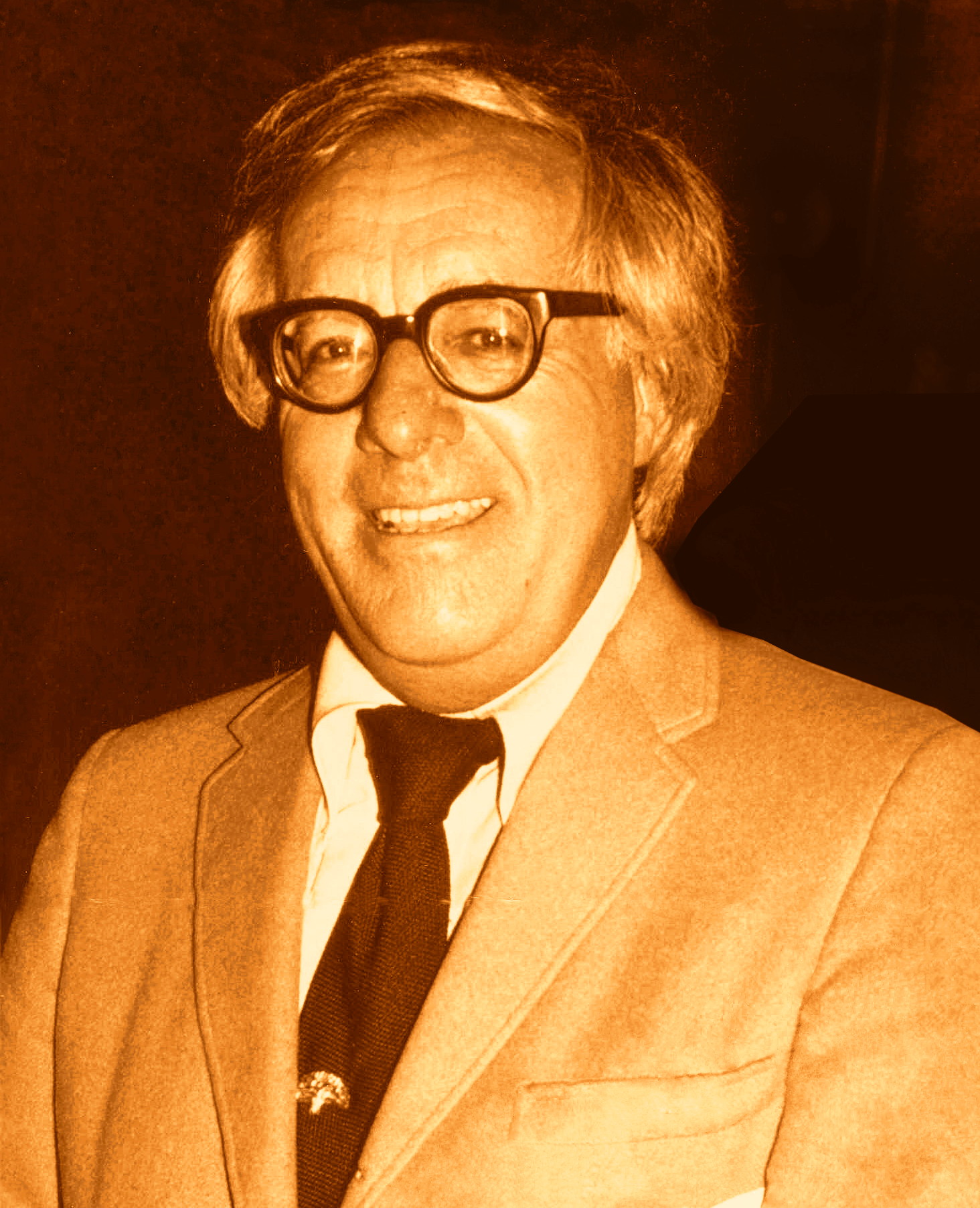
RayBradbury1975-PhotoByAlanLight-Gold

Ray Bradbury (photo: Alan Light)

In March 2007, our family went to a library event in Duarte, east of Pasadena, to hear Ray Bradbury speak. He shared his views on writing, science, and culture. He spoke about working with film director John Huston — and he even performed a dead-on impression of Huston’s deep, sepulchral voice: “Now, Ray, how would you like to write the screenplay for Moby Dick?”

I had spoken with Ray on the phone before, but this was the first time I had met him in person. After Ray’s talk, our family went up to meet him. I mentioned a book on Walt Disney I had co-written with my friend Pat Williams, the founder of the Orlando Magic. Ray recalled his interview with Pat for the Disney book.

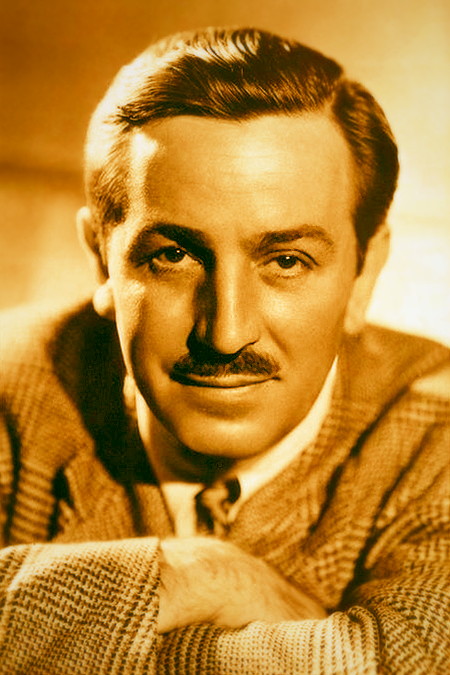
Walt1946-PublicDomain3

Walt Disney

“Oh, that’s a wonderful book,” he said. “Let me tell you how I met Walt Disney.” I already knew the story — but what a privilege to hear it from Ray himself!

“It was Christmastime,” he told me, “and I was shopping at Macy’s in Beverly Hills. I saw a man walking toward me carrying an armload of Christmas presents, and I said, ‘That’s him! That’s Walt Disney!’

“I rushed up to him and said, ‘Mr. Disney?’ He said, ‘Yes?’ I said, ‘I’m Ray Bradbury, and I love your movies.’ He said, ‘Oh, Ray Bradbury! I know your books.’ I said, ‘Oh, thank God!’ He said, ‘Why?’ I said, ‘Because I’d love to take you to lunch sometime.’ And Walt said, ‘Tomorrow?’

“Isn’t that beautiful? ‘Tomorrow?’ Not next month, not ‘someday soon’ — tomorrow. That’s the way Walt lived his life. He was spontaneous. He didn’t hesitate, he didn’t procrastinate, he seized the moment.”

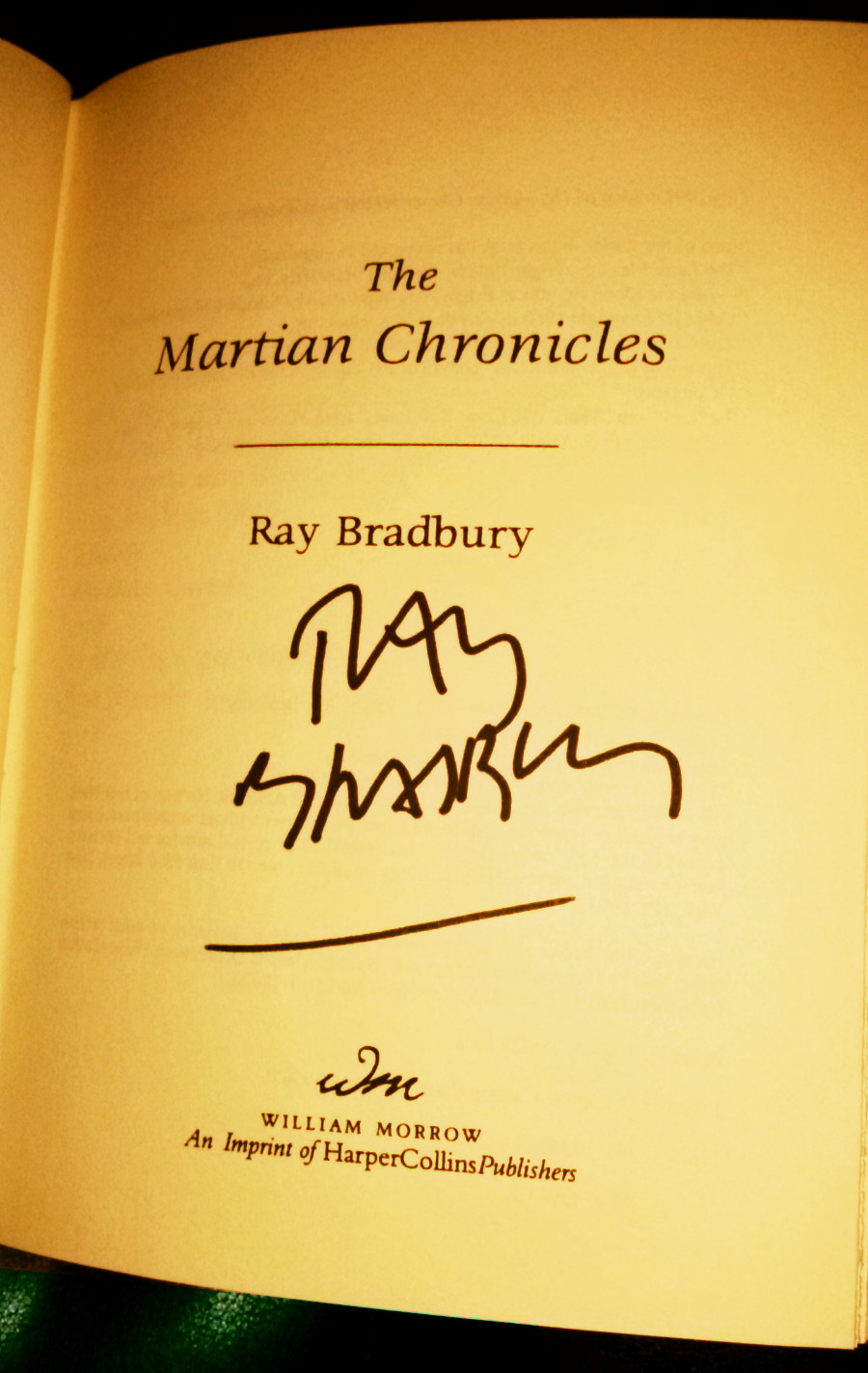
AutographedMartianChronThen Ray signed my copy of The Martian Chronicles and I was happy.

There’s great wisdom in the story Ray Bradbury told me that night. This is how you and I should live our lives and write our dreams: Don’t hesitate. Don’t procrastinate. Seize every moment. As Picasso once said, “Only put off until tomorrow what you are willing to die having left undone.”

How much of our lives do we fritter away by procrastinating? How many books, stories, essays, and songs will we leave unwritten because we failed to seize every moment of our lives?

Life is short. We haven’t a moment to lose. 

“Procrastination is something best put off until tomorrow.” —Gerald Vaughan

_________________________________________

CharacterCarvedInStone-Integrity

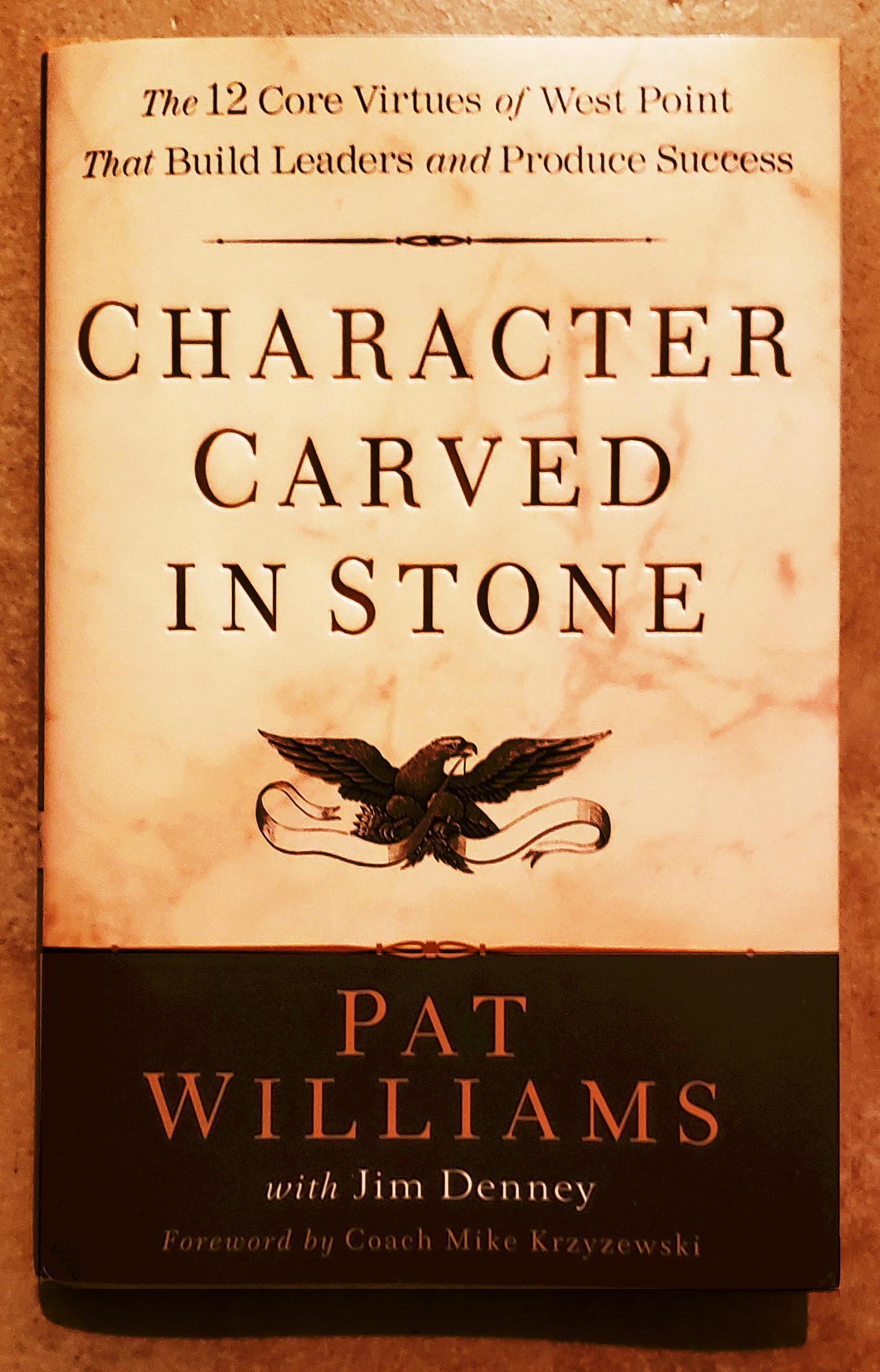
00-PatWms-CharacterCarvedInStone2Just released: My new book with Orlando Magic founder Pat Williams, Character Carved in Stone. Overlooking the Hudson River on the campus of the United States Military Academy at West Point are 12 granite benches, each inscribed with a word representing a key leadership virtue: Compassion, Courage, Dedication, Determination, Dignity, Discipline, Integrity, Loyalty, Perseverance, Responsibility, Service, and Trust. These benches remind cadets of the qualities that lead to victory and success, not just on the battlefield, but in all of life. In Character Carved in Stone, Pat Williams shows us how to develop these 12 essential virtues in ourselves, our children, our teams, our students, and our churches. Foreword by Coach Mike Krzyzewski.

_________________________________________

battle-before-time-cover-1


Note: Battle Before Time, the first book in my newly revised and updated Timebenders series for young readers, has just been released in paperback. Click this link to learn more.

And if you’d like to learn more about how to write faster, more freely, and more brilliantly than you ever thought possible, read my book Writing In Overdrive, available in paperback and ebook editions at Amazon.com. —J.D.


Jim Denney also blogs at Writing in Overdrive and Walt’s Disneyland. 

Posted in Jim Denney, Uncategorized | Tagged , , , , , , , | Leave a comment

The Power of Fiction by Kristin Billerbeck

Yesterday, on a writers’ loop, we discussed the first “real” novel that we ever connected with while in our youth.  Something beyond Dr. Suess. It’s a great question and one that can tell you so much about a person.  What books do they connect with and why?

Now there are always people who consider fiction “lies” and can’t get past that to find the lessons in other people’s experiences, but I was never one of those people. I always connected with the parables of Jesus for precisely that reason — it SHOWED me the lesson in action and what a beautiful gift.  To allow someone else to deal with life’s ugly lessons while you can learn by observing.

The first real novel that spoke to me and changed the course of my life, was basic.  So very basic.  “Pride and Prejudice” — I mean what a blasé answer from a romance writer.  But what spoke to me was that Elizabeth Bennet was smart.  She wasn’t a simpering heroine who did what was expected of her.  She had quite a snarky spunk to her. (I definitely identified with that.)

Jane Austen wrote a scathing review of the injustice for women in her era.  Only men could inherit property. That meant if you didn’t have a brother, you were in big trouble unless you could marry well.

Later, from the classics, I learned that you could attack any injustice in life through the pen.  Thomas Hardy would teach me about the Pharisees in “Tess of the D’urbervilles” and Dostoevsky would show me that we are all the prodigal son in “Crime and Punishment.”  Tolstoy would teach me that great heroines like “Anna Karenina” are supporting characters to someone coming to Christ (the narrator.)

Fiction allows authors to make great injustices in the world, right again.  While I will never be Austen or Tolstoy, I do hope that my writing corrects some of the injustices in the world and gives readers hope.  What was your first “real” book?


Posted in Kristin Writes Billerbeck, Uncategorized | Tagged , , | 2 Comments

Don’t Speak For Me by Nancy J. Farrier

I rarely speak out on any controversial issue, but there is one where I always feel targeted. The proponents of the issue act like they speak for me, but they don’t. This issue is on abortion, specifically when they talk about doing an abortion to save the life of the mother, or if something is wrong with the baby. Below are my thoughts.

Don’t speak for me—You weren’t there.

You weren’t there when I found out there was something wrong with my baby. When in the crush of fear and despair, my doctor and medical professionals assured me this could be taken care of by abortion. When they pressured me to get further testing to see just what was wrong—tests which could endanger my, child—and then I could make a more informed decision.

You weren’t there when I wept before the Lord and lifted up my baby to Him. When I never once doubted Psalm 139:13-16, that God was forming this baby in my womb and His ways are always perfect. When I never for a moment considered abortion as an option.

You weren’t there when I struggled with sickness and weakness for the whole pregnancy. When I went from being pretty athletic to pushing myself to walk two hundred yards to the mailbox. When I lost weight during the pregnancy instead of gaining. When I suffered from one infection after another, draining me physically and emotionally. When I wept, concerned that my sickness was harming my child, this gift from God.

You weren’t there when every other time I went to the doctor he had some dire news to give me. Something more that was wrong with the baby. Down’s syndrome. Kidney failure. Low birth weight. Problems with the amniotic fluid. When the doctor yelled at me—something to the effect that – “How can you expect me to save you if you won’t do what I want?” He wanted me to “terminate the pregnancy.”

You weren’t there when, at the six-month mark, the baby quit moving much at all. When I had to find child care and drive ninety minutes to the hospital two to three times a week to have them check that the baby was still alive. Then drive ninety minutes back home, often so exhausted I didn’t know how I would be able to fix supper for my husband and four children let alone do all the other necessities that come with a family.

You weren’t there when I would have to count the baby’s movements for a period of time and lie down if the count wasn’t high enough. When I would force myself to eat food I didn’t want. When I would place my hands over the baby and pray so hard, often crying, begging God for His will for my child.

You weren’t there when they decided time was close enough they would induce labor because the pregnancy was having so many problems. When I tried to argue but didn’t have the strength or the will to fight any more.

You weren’t there the night before I went to the hospital. When I fixed my favorite meal. When I watched my other children and could barely swallow anything fearing what would happen the next day. When I wondered if I would even be able to embrace these precious children again, to tell them I loved them one more time, to feel their arms around my neck. When my heart grieved as I trusted God.

You weren’t there when my husband and I drove to the hospital. When I was almost too tired to hold up my head. When I looked at him and thought this would be the last time we would ride in the car together. When I wondered how he would manage with a newborn and four children. When I knew he was strong enough, and God is faithful and trustworthy.

You weren’t there when I had no regrets about the pregnancy. When I accepted I would give my life for this child and do so gladly. My only regret—that I wouldn’t be there to hold this baby, to take care of my other children. When I loved them all more than life itself.

You weren’t there when the time came for delivery. When the birthing room was so crowded with medical equipment and medical professionals that not one more would fit through the door. When the whole room seemed to pause as my baby made an entrance into the world.

You weren’t there to see my little girl draw her first breath, fist raised in the air. To see the awe on the doctor’s face, on the other medical professionals as they all realized my daughter was perfect, small but perfect. As they wheeled their equipment out murmuring among themselves in tones of amazement.

You weren’t there to see my little girl grow into a caring, compassionate young woman. To see her off on mission trips. To see her act and sing in a college musical. To hear her in the college choir, or to hear her sing with the church worship team.

You weren’t there to see her walk forward to receive her diploma as she graduated magna cum laude with a degree in plant sciences. When she got her dream job in a prestigious garden. 

You weren’t there—So don’t speak for me.

I’ve been there and will speak for the unborn, for those you cast off as less than or as worthless. I will speak for those mothers who face this choice with bravery. Mothers who have sacrificed their lives for their child. Mothers whose babies only lived a few hours, but they treasured that time. Mothers who chose to give birth to and raise a special needs child.

Don’t speak for me.

You weren’t there.

I was.

Posted in Nancy J. Farrier | Tagged , , | 32 Comments

Leaders are Accountable to God

Ray Stedmanby Ray Stedman,
introduced by Jim Denney
from Ray Stedman on Leadership,
new from Discovery House Publishers

Ray Stedman was the pastor of Peninsula Bible Church in Palo Alto, California, for four decades, from 1950 until his retirement in 1990. I began working as Ray’s writing partner in 1992, the final year of his life. He was a faithful expositor of the Scriptures and a leader of character and integrity. For more than twenty-five years, I’ve been privileged to work with transcripts and recordings of his sermons, helping to turn them into books with the help and blessing of Ray’s widow, Elaine Stedman. I think this latest book, Ray Stedman on Leadership, may be my favorite among the twenty-five books I’ve worked on with Ray and Discovery House Publishers. Here’s an excerpt:

“Leaders are Accountable to God” from Ray Stedman on Leadership

My mentor, Dr. H. A. Ironside, told of an experience he had at a restaurant. His meal had just been set before him when a man walked up to his table and said, “Do you mind if I sit down with you?”

“Not at all,” Dr. Ironside said.

The stranger seated himself across the table and Dr. Ironside bowed his head and said a silent word of thanks to the Lord.

Ray Stedman on Leadership - Ext

The man said, “Do you have a headache?”

“No, I feel fine.”

“Is something wrong with your food?”

“No. Why do you ask?”

“I saw you with your head down and I thought there must be something wrong.”

“No, I always give thanks to God before I eat.”

“Oh,” the stranger said, “you’re one of those, are you? I never give thanks. I earn my money by the sweat of my brow and I don’t need to thank anybody. I just start right in!”

“Ah,” Dr. Ironside said, “you’re like my dog. He does that, too.”

Human beings who will not give thanks to God are like irrational animals. They lose a bit of their humanity. Even godless people have a duty to worship God. Their unbelief is no excuse, because God’s eternal power and divine character can be clearly seen in nature. Paul in Philippians 2:10 tells us that “at the name of Jesus every knee should bow, in heaven and on earth and under the earth” — and those who refuse to willingly bow the knee to Him in this life will bow to Him on the Day of Judgment.

We are all accountable to God, and leaders are doubly accountable. Hebrews 13:17 reminds us that leaders must one day give an account to God for their actions, words, and decisions as leaders. So let’s decide now to live the kind of lives we will not be ashamed to give an account for. Let us be leaders who practice godliness — God-like-ness — so that we can stand before God and hear Him say, “Well done, good and faithful servant.”

“Here is a trustworthy saying: Whoever aspires to be an overseer desires a noble task. Now the overseer is to be above reproach, faithful to his wife, temperate, self-controlled, respectable, hospitable, able to teach, not given to drunkenness, not violent but gentle, not quarrelsome, not a lover of money.” —1 Timothy 3:1-3


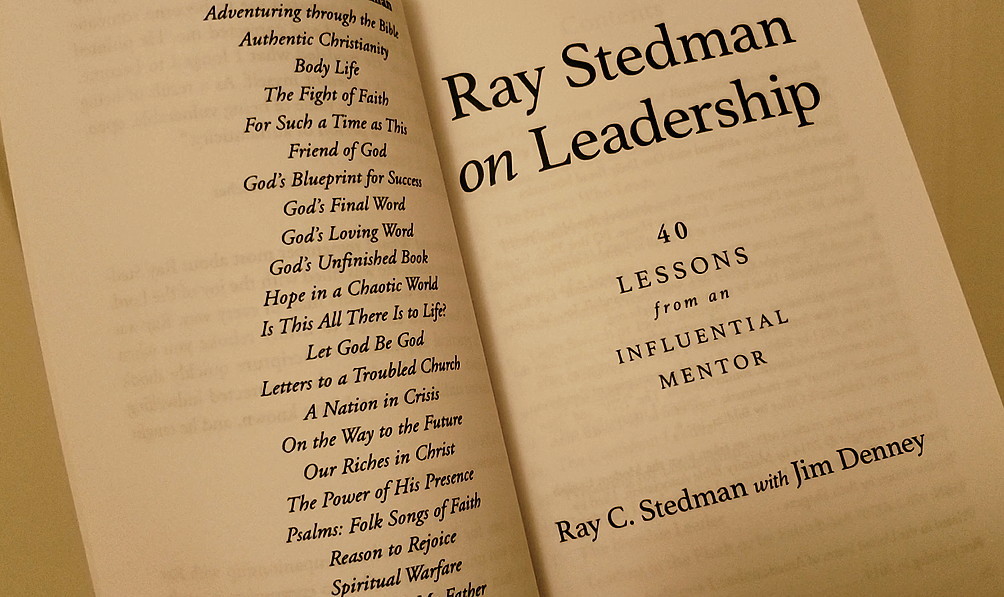
Note from Jim Denney: While working on Ray Stedman on Leadership, I spent many rewarding hours reading Ray’s other books—Body Life, Adventuring Through the Bible, God’s Unfinished Book, Psalms: Folk Songs of Faith, and more. From them, I distilled Ray’s most practical and penetrating leadership wisdom into forty daily readings. Each entry is followed by a set of discussion and reflection questions, making this an ideal study book for a church board or committee, home Bible study, adult Sunday school class, Christian business, mission team, or any other setting where biblical leadership plays a key role.


Ray Stedman on Leadership - InteriorRay Stedman on Leadership:
40 Lessons from an Influential Mentor

by Ray Stedman with Jim Denney;
foreword by Charles R. Swindoll

available at your local Christian bookstore, at Barnes and Noble, at Amazon.com, and at Christianbook.com. Trade paperback and ebook formats.

Posted in Jim Denney, Uncategorized | Tagged , , , , , , , , , , , , | Leave a comment

Fasting Can Quench Your Thirst

When we think of fasting, we usually think of food. However, fasting can be from any number of things. I recently heard about someone who did a twenty-one day fast from negativity and complaining. I also heard about another person who fasted from watching the news. Is there anything in your life that you feel is a distraction or possibly even destructive? You might consider fasting from it.

I was feeling discouraged this week because (1) I haven’t made as much progress as I would have liked on my goals for the year, and (2) I haven’t made much progress on my goals for Lent either. (See my post regarding Lent here.) I have been making some progress. Just not as much as I would like. So I made a bold move yesterday. I deleted some apps from my iPhone that tend to take up some of my time. I will be fasting from those things over the next three weeks. And I am putting it in writing here in order to hold myself accountable.

Years ago I used to love hours of peace and quiet. I could take a four hour drive, by myself, without even turning on the radio. My mother would ask me if I got bored. I told her that it was glorious – just me and God.

Then in May of 2012 I purchased my first smartphone. And everything pretty much went downhill after that. If I am just sitting and waiting, I feel the need to do something to pass the time. I will check email, social media sites, or play a game. At times I almost feel desperate as I search for anything to satisfy a deep thirst within me. However, I always walk away feeling even thirstier than before.

The truth is that God is the only one who can satisfy that deep thirst within. So I am now on a quest. Like someone wandering through the desert, I don’t want just an oasis anymore. I want The Living Water! So over the next few weeks I will be putting aside some things that I feel are holding me back. In their place, I will be seeking God. I know He will meet me in the desert. I can’t wait to see what He has in store!

(Photo by kiko costa.)

Posted in Uncategorized | 8 Comments

Be a Modern-Day Barnabas (by Hannah Alexander)

Modern Day Barnabas

What were the first words you heard when you went to work or school or exercise this morning? Did they make your day? Did they make you sad? Did they fill you with hope or discouragement?

What were the first words you spoke to another person today? What did you say to yourself in the mirror? Did you look at someone today and say, “You look really good today,” or, “You look like a truck backed over you”?

I recently gave notice on Facebook that I will no longer tolerate discouraging words. I’ve drawn a line in the sand and will not allow myself to be abused by words. You know those blanket posts that some stranger has posted, and then maybe a friend or family member of yours has picked up and shared out of guilt? You know those posts in which the original poster tells everyone that if they don’t share this post, they’re a bad person, a bad Christian, a bad American? I reject that negativity.

Yes, we do have some bad issues going on in social media right now, and in our country, in our world, in our churches.  How will my continued negativity fix that? It won’t. How will it help if I decide I want to blame someone in my life? It won’t. Remember that wonderful, short, easy-to-learn Bible verse, “A soft answer turns away wrath”? Yeah, that one. I’m claiming that as mine. I love it.

From now on, I will attempt to speak only encouraging words–okay, can’t help a bit of dry humor every so often, but other than that, only encouragement. If someone says something harsh to me, I cannot promise that I will reply with a soft answer, but I will attempt to at least walk away without responding in anger and making things worse. I will, instead, attempt to encourage others the way the man in the picture above encourages me and everyone around him.

I have never met a kinder, more encouraging man than Mel, my partner and husband and best earthly friend. He’s the Alexander half of Hannah Alexander, and though he doesn’t physically write our novels, he does everything else. He is a wonderful researcher, he is the best editor, whose grasp of English and grammar and spelling is excellent. Most importantly, he encourages. That’s his love language, and with that language, he rescued me years ago from a life of verbal abuse. He showed me that life wasn’t about fighting and winning, but about winning people over with goodness and love. What a total about-face he has made in my life! I’m still learning from him, and I hope to continue to do so for many years to come. Maybe I also teach him some things, too, but I don’t know that I can ever teach him as much as he has taught me.

Let’s learn kindness from one another, not hostility. Let’s speak words of life to one another, not harsh words that discourage and drag others down. Let’s show God’s love to others and see if the changes in our attitudes might begin a chain reaction that could become a force for good. Let’s stop this runaway train of anger and ugliness before it’s too late, and let’s replace it with hope.


Posted in Hannah Alexander | Tagged , , | 2 Comments

Seeking Truth: Practical Observations in Online Information Sharing by Vicki Hinze

I spend a lot of time researching all kinds of things.  Current events, systems, places, new technology, social mores, human behavior and activities.  All writers do. And, like with most things, exposure brings experience and enlightenment. The more you know about something, the more apt what you know is to change your perspective, your opinions, and/or your attitudes.

We seek to gain knowledge and understanding.  We seek to gain wisdom.  Bluntly put, we seek answers to find the truth.

Those objectives make it imperative that we are judicious in where we seek our information and that we view what we find through a prism of discernment.  You cannot believe everything you see, read or hear online any more than you can offline. If you seek only in echo chambers, you can trust even less that you’re getting clear-eyed and objective information.

It’s noteworthy that no human being can be totally objective.  Every human being sees a given thing—any given thing—through his own personal prism.  That prism is a compilation of his experiences, understanding, and the foundation that forms deep inside based on beliefs, values and morals.  The things taught from the cradle that we carry with us and adjust as we grow.  In other words, we view things based on what we know to be true at the time we view them. 

At some time, our truths are challenged, and we must decide whether those truths are truths or if they must change.  Knowledge can challenge. Wisdom can challenge. An intense event, physical or emotional or spiritual, can challenge.  

Our perspective is our prism, and like opinions, everybody’s got one. That’s why no human being can be totally objective.  It’s also why we must use discernment and good judgment in where we seek truth and from whom we seek it.  This is especially important online. Why?

When we interact in person, we automatically note body language, inflections in voices, tones, and other tips that cue us as to whether or not the other person is being honest, sincere and genuine, or being untruthful to sway us or our opinion.  We get intuitive nudges—where you know deep inside the person is being straight with you or if he has more twists than a pretzel.  We pick up on these things instinctively because we’ve used them all our lives, seeking approval, working out conflicts, preparing for something important to us.  Let me share a practical example:

A three-year-old wants praise and approval.  So, he reacts in a way that gains your praise and approval.  Or, if upset, in a way that won’t so he gains your attention, because that is his underlying goal.  To get your attention.  If he can’t get it by being good, (his experience at interacting with you and your reaction tells him what your response will be), he’ll toss a temper tantrum and take your bad attention, admonishing him.  Good or bad attention is better than no attention. 

Adults are typically a little more subtle, but the underlying motivation is pretty much the same.  Try good actions. If they work, great.  If not, try bad actions. Either way, you gain attention and you’ve moved the needle off the human being’s nemesis:  indifference.  

There’s been a lot of discussion lately about information sharing and getting good or bad information and how-to tell the difference.  We tend to think that everyone is like us. Their motives are good, their intentions are good, and they’re doing the best they can in a world where many have lost their way.  But that isn’t the truth.

Like in life, online there are people who do good things and people who do bad things.  Their acts are deliberate.  Sometimes mistakes are made, apologies are offered and accepted.  Other times, we discover a person or entity is a nail looking for a cross. 

Now there are times when things push our buttons and we fire off a blistering response.  This is why we should avoid responding immediately.  Sometimes we need to pause and give ourselves time for a cooler head to prevail.  The upside of pausing is that we end up having to apologize less often, we don’t regret as much of what we say, and we’re not proven wrong nearly so much. Those are substantial upsides.

For the same reason, when we receive a blistering response, we should also pause before responding. Maybe it’s deliberate, but maybe that person is having a bad day, venting, or up to their earlobes in alligators.  Perhaps what is most needed is a little grace.

We all mess up, make mistakes, vent and, because we do, we should grant grace. Why?  Because there will come a time when we mess up, make mistakes, vent, and we’re going to need it.  If we grant grace to others, we are far more apt to receive grace from others.

All of these things wrap right back around to our online information-sharing and the intense interest lately between Patriots and Pay-triots. 

In years of research, I’ve run into basically three groups of people who information-share online. Here are some common practical observations that may guide you:

GROUP ONE

These are Patriots. They share for the purpose of informing, of enlightening. They don’t want or need your money. Their objective is to share knowledge, the truths they’ve acquired. Some share so that you’ll stop making uninformed mistakes and screwing things up for everyone, including them. Some share, because they’ve figured things out, found the truth, and they want to help you (or to warn you so you) figure them out, too.  They are altruistic, their goals noble.  

These Patriots might be right or wrong. Their truths might not be all of the truth but the truth as they know it, and it well might lead you to the whole truth, a deeper truth.  Their motives and actions are constructive and apparent in their details.  What they offer might be facts and figures, emotional perspective, historical context, or spiritual perspective.  All are important and valuable. And when these Patriots make a mistake, they’re first to admit it.  They seek feedback and many straight out ask for those who have different takes or conflicting information, to share them.  They too are hungry for truth and confidence in their findings. They do not fear being wrong and welcome deeper insights.  We are blessed by many knowledgeable, discerning, and generous-spirited Patriots.   

GROUP TWO

Those, who for many of the same reasons as those in Group One, share but they doneed to worry about money. They are very good at research and are glad to do it, but they can’t not earn living expenses while doing it. These people like to have a roof over their family’s heads, and they like to eat every day, too. They work hard and willingly share. They accept donations and have patrons and they might sell t-shirts and mugs and books or other merchandise. 

They do not charge for information but ask for your support to fund their research expenses, their equipment and production expenses, their living expenses. In return, they share their insights, knowledge, wisdom and/or experience—their truth. That’s fair. None survive on air. These people take a large leap of faith that if they provide their best, you’ll provide them support. They, too, are a blessing. They, too, are Patriots.

GROUP THREE

These are those who are all about the money. They see an opportunity to bilk others hungry for information, for truth, and so they gather enough truth to convince some they have the “inside scoop” and can enlighten everyone. They have “sources” who are “connected.”  They often drop names to impress you, so you know how important they are. Often, they pad their resumes, so you deem them experts. And they often tell you how smart they are, which of course, they wouldn’t have to do if they were truly smart. You’d know it. 

These tactics to draw you in are reminiscent of high school and college sororities, aren’t they? Childhood secret clubs? The cool-people cliques?  All of these proclivities are red flags, warning you to search out the motivations of the people in this group.

Often in Group Three, you also see these red flag warnings:  Some information is free, but if you want the “scoop” information, you must be a patron or a regular donor or donate at a certain level to get to the inside group. That’s where these scoops are stored, and to get them, you must pay.  They often sell products as well as information. And if they aren’t earning what they want to earn, then they flip their views and come at people from “the other side” to get more money. This group is not motivated by principle or ethics but by money.

Some in Group Three are paid by individuals or entities to shift or shape public opinions and views. To mold your perspective. They are not emotionally invested or driven by ideals, morals or values. They’re not driven by love of country or respect for their fellow man. They’re driven by your wallet. The wallets of those paying them. And they will take whatever stance or position proves most lucrative for them. These are the Pay-triots.

If you’re devoting your time and attention to the first two, you’re spending your time well. If the last… Well, you’re adults. You don’t need me to tell you what is or is not the best investment of your time, energy and attention.

Lastly, be careful who you give your time and attention, remembering that you can’t get out of your mind what you don’t first put into it.  Guard your mind. Guard your thoughts. And listen to your own intuition.

Posted in Vicki Hinze | Tagged , , , , , , , | Leave a comment

The Leader Who Serves

Ray Stedman on Leadership - Extby Ray Stedman,
introduced by Jim Denney
from Ray Stedman on Leadership,
new from Discovery House Publishers

Ray Stedman was the pastor of Peninsula Bible Church in Palo Alto, California, for four decades, from 1950 until his retirement in 1990. I began working as Ray’s writing partner in 1992, the final year of his life. He was a faithful expositor of the Scriptures and a leader of character and integrity. Ray understood that a leader is not a boss but a servant, and he taught and followed the leadership model of Jesus the Master. For more than twenty-five years, I’ve been privileged to work with transcripts and recordings of his sermons, helping to turn them into books with the help and blessing of Ray’s widow, Elaine Stedman.

I think this latest book, Ray Stedman on Leadership, may be my favorite among the twenty-five books I’ve worked on with Ray and Discovery House Publishers. While working on this book, I spent many rewarding hours reading Ray’s other books—Body Life, Adventuring Through the Bible, God’s Unfinished Book, Psalms: Folk Songs of Faith, and more. From them, I distilled Ray’s most practical and penetrating leadership wisdom into forty daily readings. Each entry is followed by a set of discussion and reflection questions, making this an ideal study book for a church board or committee, home Bible study, adult Sunday school class, Christian business, mission team, or any other setting where biblical leadership plays a key role. Here’s an excerpt:

“The Leader Who Serves” from Ray Stedman on Leadership

I once picked up a young hitchhiker. We chatted as we drove, and at one point he told me, “My uncle died a millionaire.” I said, “No, he didn’t. Your uncle died with nothing.” The young man looked surprised and said, “Why do you say that? You don’t know my uncle. He had millions!” I said, “Who has those millions now?” The young man nodded slowly. “Oh, I see what you mean.”

Nobody dies a millionaire. We all die with nothing.

But Jesus shows us a way to be rich in this life, and in the life to come. How do we achieve these riches of Jesus? By denying ourselves, taking up our cross, and following Him. Let’s look again at his message to the crowd in Mark 8:

“Whoever wants to be my disciple must deny themselves and take up their cross and follow me. For whoever wants to save their life will lose it, but whoever loses their life for me and for the gospel will save it” (Mark 8:34-35).

Crucified

Way of the Cross, Station Twelve, Our Lady of Peace Shrine, Pine Bluffs, Wyoming. Photo by Chris Light. Used under the Creative Commons Attribution-Share Alike 4.0 International license. Image adapted by J.D.

When the people first heard Jesus speak these words, they must have wondered, What does He mean — “take up your cross”? They had seen the Roman instrument of execution before — but they didn’t know that Jesus Himself was about to be nailed to the cross and tortured to death. Jesus knew what the cross would mean, but the people who heard Him did not.

Some people mistakenly think that a hardship they’re enduring — a troublesome neighbor, a difficult boss, a financial difficulty, a physical handicap — is the “cross” they must bear. But that’s not what Jesus meant. When He spoke of the cross, He was referring to the shame and humiliation of the cross. Crucifixion was a criminal’s death, a demeaning and degrading form of death. When Jesus said we are to take up our cross, He was telling us that we are to welcome the shame and humiliation of the cross. The cross is the place where we put pride to death.

Do you resent it when people insult you, embarrass you, make fun of you, yell at you, cut you off on the freeway? That’s your pride at work. Crucify it. Do you envy what others have? Do you feel you have a right to a certain standard of living, a promotion at work, a bigger home, a better car? That’s your pride showing. Crucify it. It’s not wrong to have these things, but everything we have is a gift of God’s grace, not a right or an entitlement. To feel entitled to such things is pride. Crucify pride.

After “take up your cross,” the Lord says, “and follow Me.” To follow Jesus is to obey Him and walk in His footsteps, patterning our lives, our words, our actions after His. Disobedience is the way of this world. Obedience is the essence of following Jesus. Yes, we struggle and fail. But when we stray from the path of obedience, we pick ourselves up, confess our sins, and get back on the path of following Him.

This is what it means to be a disciple: Deny yourself, take up your cross, and follow Him. In the original Greek, these steps are stated in the present continuous tense. We are to continuously deny ourselves, continuously take up our cross, continually and persistently follow Him. This is not a once-and-for-all decision, but a program for a lifetime, and it must be repeated over and over.

Jesus gives us a new motive for living: “For whoever wants to save their life will lose it, but whoever loses their life for me and for the gospel will save it.” Who doesn’t desperately want to save his or her life? Who doesn’t want this life to matter? Who doesn’t want a life that is full, rich, and worth living? We all want that. And Jesus tells us, “If this is what you want, I’ll tell you how to acquire it: lose your life for Me and for the gospel, and you will save your life.”

In other words, deny yourself, disavow yourself, and you will find a life worth living. Hold onto your desire for comfort, entitlement, status, power, praise, money, fame, or any other worldly goal — and you will ultimately lose everything. You’ll die having wasted your one and only life.

If we live for ourselves, we will lose our lives. If we lose our lives for Him, we will save our lives for all eternity. But equally important, we will save our lives in the here and now.


Ray Stedman on Leadership - InteriorRay Stedman on Leadership:
40 Lessons from an Influential Mentor

by Ray Stedman with Jim Denney;
foreword by Charles R. Swindoll

available at your local Christian bookstore, at Barnes and Noble, at Amazon.com, and at Christianbook.com. Trade paperback and ebook formats.

Posted in Jim Denney, Uncategorized | Tagged , , , , , , , , , , , , , , | Leave a comment

CWA: Strong Women Tribe by Julie Arduini

My prayer for 2019 is that doors would open for me to encourage women to find freedom as they surrender the good, the bad, and—maybe one day—the chocolate. I’m so thankful because one amazing opportunity isn’t just in the works—it’s launched!

The Strong Women Tribe is a safe place for Christian women who serve to receive encouragement and hope within the site Christian Women Affiliate. Christian Women Affiliate is a wonderful destination full of resources and networking. It’s free to join, and once a member, you can visit here and let me know you’re interested in the Strong Women Tribe. I’ve been a member of CWA for years, and I will be facilitating the tribe.

Strong Women Tribe members can be pastor’s wives, ministry leaders and workers. It’s the women who spread the generations but are known for getting things done for the glory of God.

They are the ones other women go to for prayer support, advice, and to vent.

They may be single, married, empty nesters, have young children, work outside the home, have their own business, have a very busy ministry as a wife and mom right in the home—but this is true of all of them—they are strong women who need encouragement, too.

If you’d like to join the Strong Women Tribe, there is content already waiting for you to engage in. Articles are short by design because we understand your schedule is full. But we believe this is a place you’ll look forward to visiting often so you can get back at what you do with renewed focus and hope.

Please check it out and spread the word.
ABOUT CWA: http://www.christianwomenaffiliate.com/

INVITE TO STRONG WOMEN TRIBE: (Must be member of CWA, first. Easy to do!) https://christian-women-affiliate.mn.co/…/new-tribe-in-cwa-…

Posted in Julie Arduini | Tagged , , , , , , | Leave a comment