
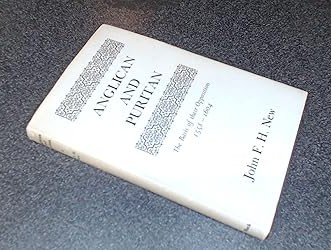
Years ago, I was accepted into the PhD program in History at the University of Waterloo. When I arrived (after a long drive from the other end of the country), the departmental secretary directed me to go to the house of Dr. John F.H. New, who was the graduate student advisor. It was late summer, and the fall classes had not yet started.
I arrived at his modest house and was invited in. After we had talked for a few minutes and he had learned more about my background and interests, he stated that he thought he should be my primary advisor, rather than one of the other professors in the department who had been recommended to me. I had never met Dr. New before and didn’t know much about him, but I accepted his advice.
It was a wise decision. Dr. New was a brilliant man who had earned his doctorate in two years at the University of Toronto, Canada’s most prestigious university. It took me six-and-a-half years. I did not know it then, but Dr. New was well suited to my learning style. Rather than give close supervision, he encouraged questioning and creative thinking in his graduate students. He did not tell me what avenues of research to pursue, but he could open up new vistas for enquiry and contemplation with a single insightful question. He was an encouraging and stimulating scholar to work with. He must have done a good job because I was eventually granted my degree.
Dr. New’s specialization was Tudor/Stuart History (the 16th and 17th centuries in England). This was an era when religious controversies were front and center in English life. The period is also known as the English Reformation.
One remarkable aspect of my education is that, although he was an expert in Puritan and Anglican theology, Dr. New was an agnostic. But, unlike many current professors, he was a true academic. He was open to discussing all ideas and viewpoints. He allowed me to maintain my own Christian perspective in studying historical events.
Although he was agnostic, Dr. New had a genuine appreciation for Christianity. “Christianity,” he said, “asks the most important questions.” He also offered this insight: “Protestants are manic-depressives. They are deeply depressed about their own sinfulness, but they are ecstatic that they have been saved by grace.” In my view, that is a pretty good synopsis of the gospel.
Looking back, I am very grateful to have known Dr. New. I am grateful for his tutoring, his questioning, his inspiration, his tolerance, and his encouragement.









































 Christians Read
My Study Bible by James R. Coggins
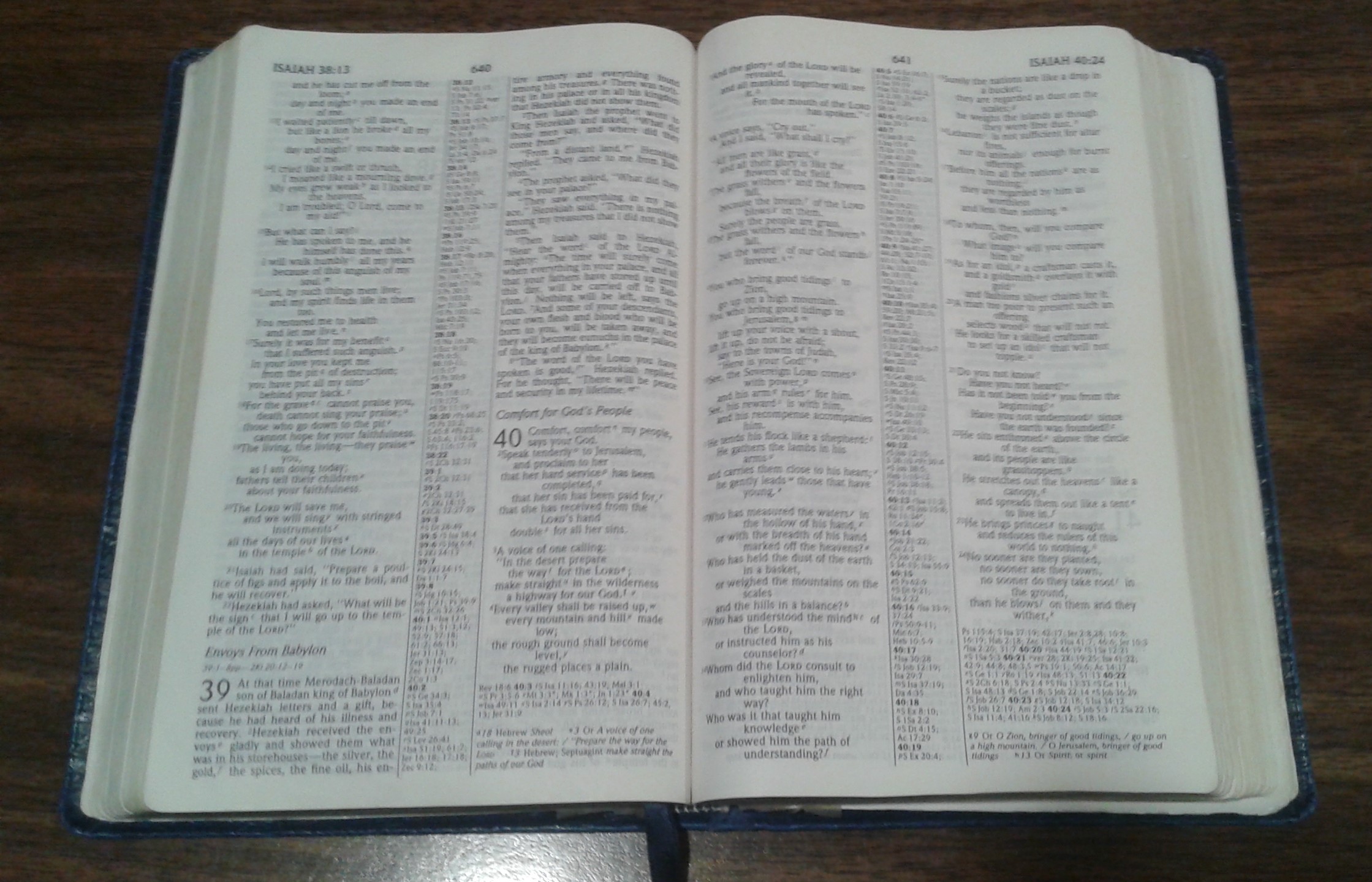
A reader recently asked: “You frequently post a photo of a Bible on your blogs. Is that your study Bible? What Bible do you use?”
The Bible usually pictured is my personal Bible, the New International Version (NIV, 1986). I grew up with the King James Bible (KJV), which was the standard in most churches. In university, I discovered the New American Standard Bible (NASB, the one pictured in this blog), which I trust as a very accurate translation. I switched to the NIV for teaching quite a few years ago, as it is more readable and was becoming the standard in many churches.
Unfortunately, in 2011, the publishers revised the NIV and made it more politically correct and less accurate. I still take my old (pre-2011) NIV Bible to my Baptist church (they use the NIV there mostly). However, in my personal study, I use Bible Gateway, which is a free online app and which allows me to use and compare many translations.
I never learned Hebrew and Greek except for a brief smattering in my one year in seminary, and therefore I rely on the work of other Bible scholars. As aids to my study, I still use the one-volume New Bible Commentary and one-volume New Bible Dictionary and Strong’s Concordance, which I picked up in that one year of seminary training at Regent College in Vancouver. The Concordance is especially useful in getting at the meaning of Greek and Hebrew words. Over the years, I have also assembled a complete set of Barclay’s New Testament commentaries. While he is unorthodox on a number of issues, Barclay’s knowledge of Greek words and ancient history is unparalleled. I wish there was something similar for the Old Testament. There are other commentaries and guides on my bookshelves which I also consult from time to time.
And, of course, I study with prayer, asking God to help me understand His Word. I often ponder, meditate, and ask questions about what a particular passage might mean and how it might be applied to my life. I write down what I am learning to help me remember and to share with other people. I do not claim to be an expert Bible scholar, but I have been a persistent inquirer. As every Christian should, I have studied the Bible consistently throughout my life and have tried to carry out its precepts. Looking back, I am blessed to think about all that God has taught me. Looking forward, I realize I have barely scratched the surface of the riches of God’s Word.
Thanks for Sharing: