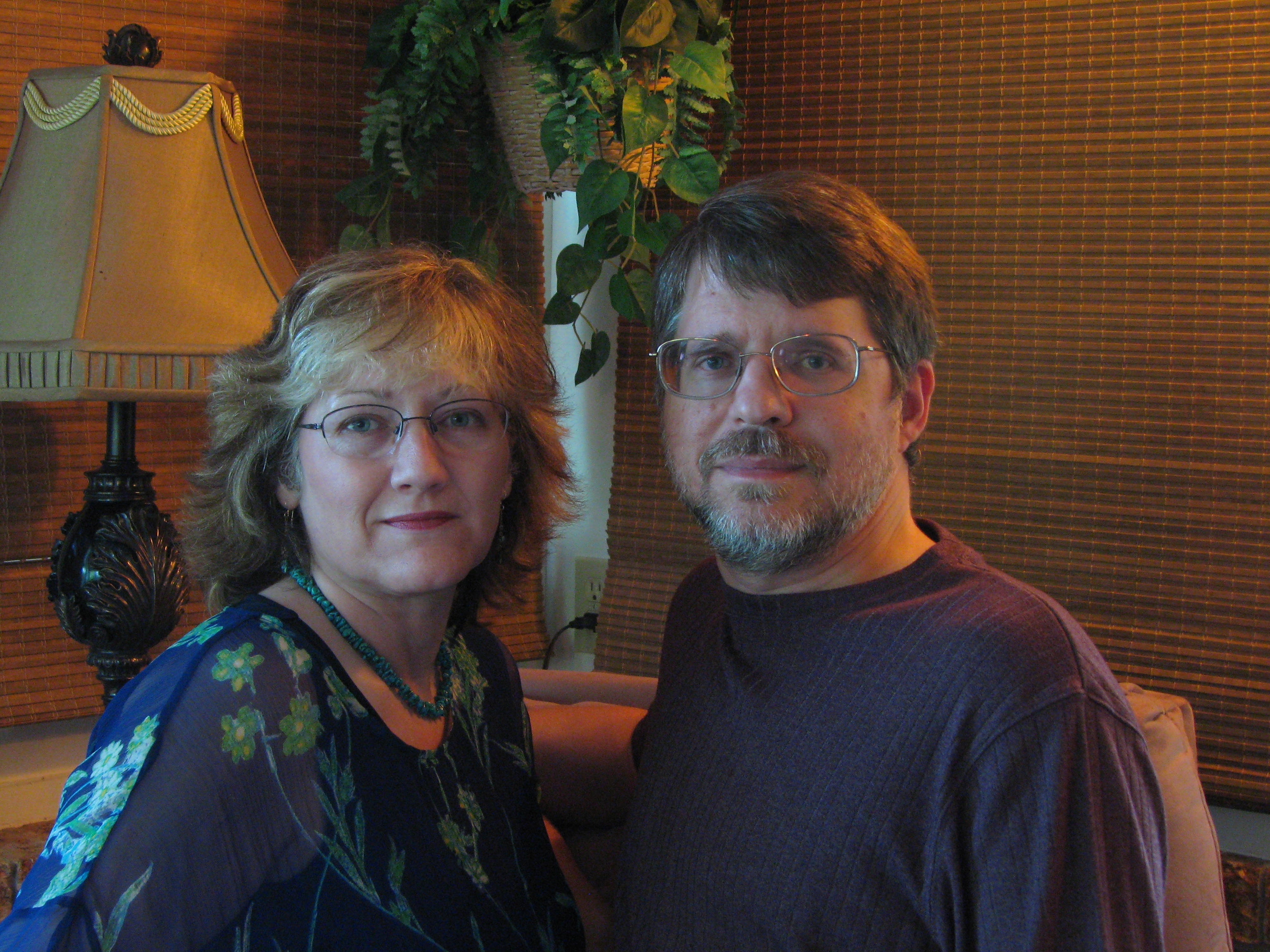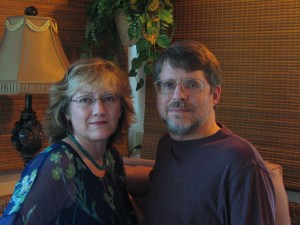
Hannah and Alexander
I’m taking a detour from my Dear Hannah posts to share some light dialogue that often takes place in our house when I’m working on a medical scene. As you know, Mel and I work together on our Hannah Alexander novels, hence the pen name. I’m the writer, he’s the medical expert, but as you can see, sometimes he’s a bit too much of an expert, and I have to get him to dumb it down for me a little.
“Honey, I need you to give me a little information about pain,” I said one day. I was hoping for some helpful information about how to treat chronic pain. I should have made myself clear.
“Pain is usually a reflex arc,” he said. “Every part of a pain response is in two parts.”
“Two parts? I feel just that one part. The pain itself, and go slowly because I’m typing this down.”
“The two parts are afferent and efferent. Afferent is affect, and efferent is effect–”
“Wait, slow down. What was it you just said?”
“The classic is you put your hand on a hot stove and you don’t know it’s hot. Pain is the afferent, or the affect. As a result of the brain feeling pain, it triggers you to pull your hand back, therefore it’s efferent–or the effect. It’s what the muscles do in response to the pain. So a reflex arc doesn’t require a higher brain function.”
“I want something that will affect the effect, then. Something to tame the pain. Simply, please.”
“If you take away the cause, you take away the pain.”
“Yes, well, that’s the problem, isn’t it? People in pain don’t always know what’s causing it, or why it continues year after year. I have friends who have three different doctors telling them three different reasons for their pain.”
“Then while they’re trying ot figure it out, they need pain blockers, which could be simple aspirin or other over-the-counter pain reliever.”
“What if those don’t work?”
“If you’re talking about narcotics, those aren’t drugs most doctors hand out like candy. Ultram is a newer pain med that works pretty well and doesn’t have as much of an abuse potential, so the docs are more likely to write a script for it. However, if someone already take narcotics for pain–”
“Isn’t there something else. Maybe topical?”
“There’s always the pain patch prescription, but that’s narcotic, too, and we’ve actually had patients take those patches and try to lick all of the medication from them and come in with an overdose. More than one died.”
“That’s tragic, but you’re talking about people you see in the ER who abuse the drugs you give them. I’m talking about all the suffering people who can’t get a doctor to listen to them because the minute they mention chronic pain, the doctor and staff automatically cry ‘drug abuser!’ and they get no help. What can they do?”
“If they can’t adequately block the pain, then they distract, such as with a TENS unit. It comes from the term trans cutaneous electrical nerve stimulation.”
“Hold it, how do you spell cuta–”
“It substitutes one pain for another, but the electrical stimulation distracts from the old pain, and if the original pain is bad enough, the electrical shock can be a huge relief, but it doesn’t typically last long after it’s taken off. Still, if utilized every day–”
“What’s longer lasting?”
“Exercise can sometimes help. Everyone should exercise every day, anyway, but particularly those in pain. Stretches and physical therapy, massage, all those have their place when treating pain.”
“It’s hard to exercise when it hurts to walk.”
“Well, then, any kind of stretching, movement of any kind, can help. A patient can’t just give up and lie in bed or it’ll get worse. For chronic pain, if it’s localized, depending on how much burning a patient can stand, there are non-narcotic patches and creams, even a roll-on liquid that has a pepper agent in it that burns the skin and sinks in deeply. The burn tends to go away if you can stand it long enough.”
“All right! Now we’re on a roll. Are you talking about capsaicin?”
“It comes in all heats, and the hotter the better as long as it doesn’t blister. It isn’t just a distraction. Some studies say it might actually release endorphins that will help with a healing process. It might not last forever, but–”
“How does a true pain patient convince a doctor that she’s in authentic pain and needs real help with it when there are so many who fake pain to get–”
“A classic example for fixing pain is to liken it to a broken bone that’s out of place. When you reset it, lining the bone up is probably as good at pain control as blasting the patient with pain medi–”
“No, honey.” I knew my time was short. He was experiencing a high of his own. His high is medicine. “Please go back to the chronic pain treat–”
“It’s the same with dislocations. It hurts when something is dislocated, and it hurts getting it back into place, but the body wants you to know about the problem with a lot of pain. You fix it, you’re better. Like a thorn in the foot. You don’t take pain meds for the thorn in the foot, you remove the thorn.”
“Okay, got it. Thanks.” Sigh. I’d gotten as much from him as I was going to. He was on a roll, and sometimes I lose him to the subject matter when he’s in his zone.
“Oh. Okay, sweetheart. Is that all you needed?” He looked disappointed. He could have continued for hours. He loves to teach medicine.
“Yeah, once I get it sorted out.”
So, if you have chronic pain, did you get all that? I’ve found that since I have a family doc I’ve gone to for years, he knows I’m not a drug seeker, but I’m one of the lucky few. He’ll work with me. If you’ve found any other great methods to help with chronic pain, please have a heart for the rest of us and share?