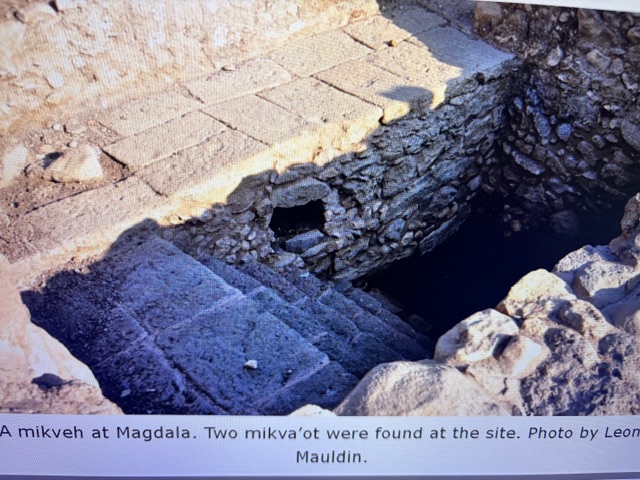
In Judaism, a mikveh (or sometimes mikvah) is a ritual bath for purification and cleansing to prepare worshippers or suppliants to enter the temple. The name means “collection of water.” The water must come from a natural source such as a lake, river, lake, ocean, or rain, and must be unmoving, not flowing. The Mishna, the Jewish code of law, defined its requirements. The structure itself had to be square and be entered by descending steps to deeper levels so the person could gradually dip to immerse him or herself for cleansing.
The immersion ritual goes far back in Jewish roots. Every major site in Israel, has mikvehs for worshippers to use before approaching the synagogue or temple sites. In the early Tent of Moses/Tabernacle times, the ceremonial cleansing was accomplished at the brazen (bronze) laver.
However, from the time of John the Baptist, the ceremony changed from cleansing in unmoving water each time people came to worship to a (usually) once-only baptism immersion in the Jordan River’s muddy but moving water instead of in Jerusalem’s religious capital. Baptism became the outward sign the of the believer’s inward forgiveness and removal of sins, confirming their new life within.
At Magdala, the early fishing village on the Sea of Galilee where Mary Magdalene lived, excavations have revealed a beautifully preserved mikveh. Excellent photos and explanations of it are found at this YouTube link https://www.facebook.com/watch/?v=2227322350983895. This photo shows more.
This photo below shows an excellent mikveh at Qumran where the Essenes lived, worshipped, created, and copied the Dead Sea Scrolls.

At the Lord’s instruction, when Moses led Israel from Egypt to the Promised Land and needed water, he was told to strike the rock once (as a sign of the Lord’s redemption for us), and water gushed out.
In II Kings, when those in the School of the Prophets found their water spring undrinkable, the Lord told Elisha to sprinkle salt in the water. That made the unusable spring become healed and drinkable.
In Bible lands where water is essential to life, the Lord provided water but also taught us to immerse in living, flowing streams representing our new life in Him rather than to remain in static, unmoving waters.
These verses in Isaiah 3:2-4a say it well. “Therefore with joy shall ye draw water out of the wells of salvation. 4And in that day shall ye say, Praise the Lord.”