
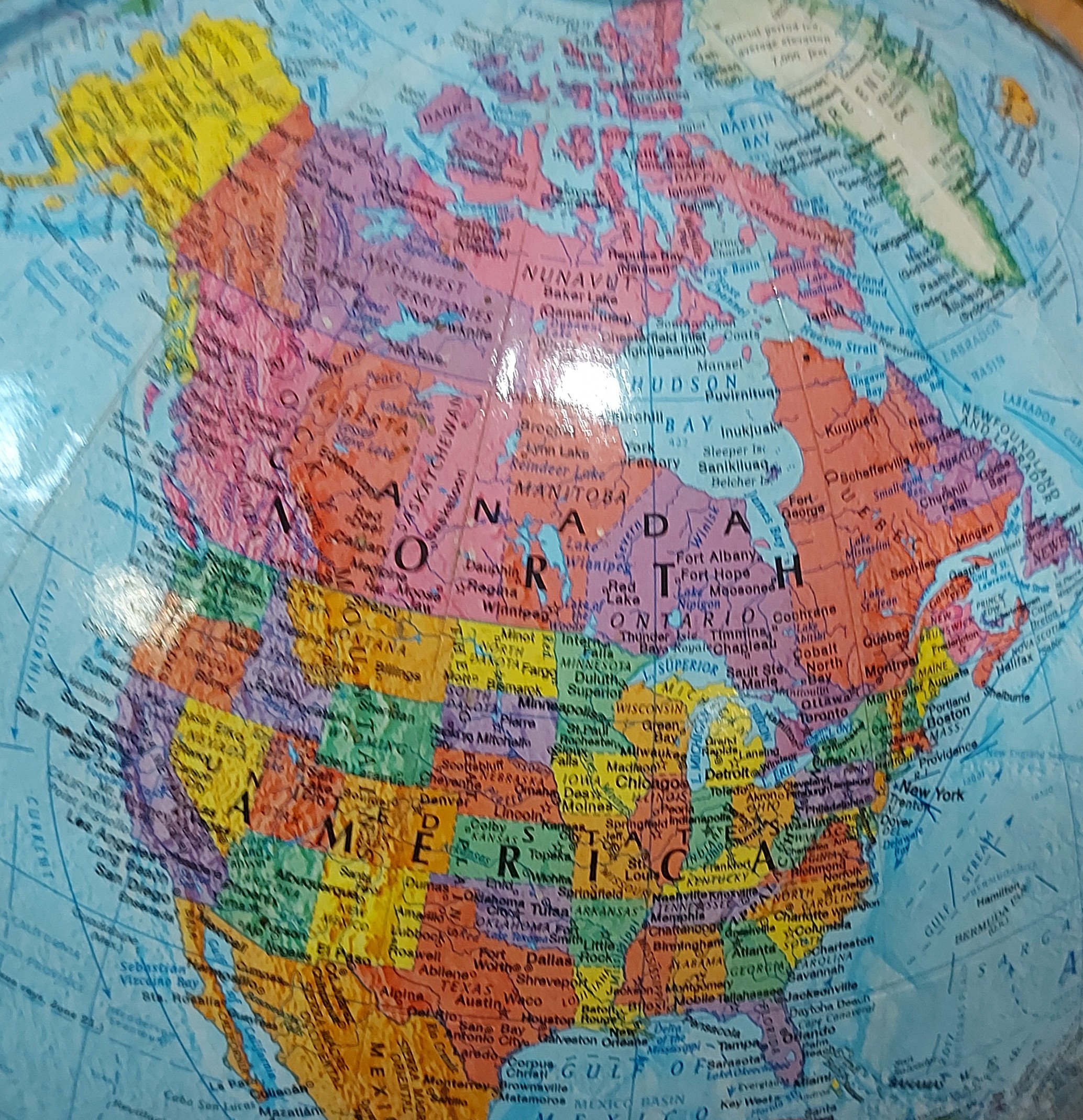
As an historian, it has not escaped my notice that two nations are celebrating their birthdays in the same week. Canada celebrates on July 1 and the United States on July 4, which is somewhat surprising since Americans generally like to be first.
The US was actually born first, in 1776, and is now 250 years old. Canada was born in 1967 and is 159 years old. You would think that at that age, Canadians and Americans should now be acting more like grownups.
The United States was born though a brutal eight-year war known as the War of Independence (by Americans) or the American Revolution (by the British). Much depends on your perspective. Canada was born through a boring and equally brutal three-year process of political meetings. The more extensive military history of the US is one reason both the Canadian armed forces and Canadian criminals still import most of their weapons from the US. In exchange, the US imports comedians from Canada (Jim Carrey, Dan Aykroyd, John Candy, Eugene Levy, Catherine O’Hara, Martin Short, Leslie Nielsen, Tom Green, Phil Hartman, Seth Rogan, Rick Moranis, Michael J. Fox, etc.), which might explain why some Americans think Canada is a joke.
The symbol of the United States is the eagle, majestic, powerful, and deadly. The Canadian symbol is the beaver, a rodent who cuts down trees, builds dams, and has a warm fur coat.
Our two nations have much in common besides their birthdays and geographic location. Both of our national anthems start with an exclamation of surprise: O (O Canada, O Say Can You See…). Both nations’ “alternative” national anthems are prayers. Americans sing “God bless America.” Canadians are less demanding in their prayers, asking only, “God Save the King.”
Many Americans believe that their nation is uniquely chosen by God to bless the world. Canadians have no such delusions. Religion plays a much larger role in American politics than Canadian politics.
Canada and the United States have much different religious histories. The early immigrants from England to the US tended to be “dissenters” from the established churches. Therefore, the United States did not have many Roman Catholic immigrants (mainly Irish and later Hispanics), and the US tended to expel Anglicans after the War of Independence (leading the remaining Anglicans to relabel themselves Episcopalians). Because of the lack of competition and the evangelical revivals of the 18th and 19th centuries, evangelicals became the largest Christian stream in the United States. Evangelicals still make up about a quarter of the American population. That does not make the US a Christian nation, but it does make evangelicals a significant voting bloc, involved in politics.
Immigration to Canada was more often sponsored by European governments. As a result, historically, the dominant religious movements in Canada were Roman Catholicism (especially in French Quebec) and mainstream Protestant denominations (such as the Anglican Church, the Presbyterian Church, and the Methodist/now United Church) in the rest of Canada. Due to fears of Roman Catholic/Protestant conflict, Canadians have generally chosen to keep religion out of politics. They have thus come closer to achieving the separation of church and state that Americans proclaim in principle. In contrast to the mainstream denominations, evangelicals have remained a small minority in Canada, only about 10-12% of the population. In recent years, Protestant and Roman Catholic church attendance has largely collapsed, and evangelicals face a society that might be nominally Christian but is largely non-religious. Because of their relatively smaller numbers, Christians in Canada often have a better understanding of the need for Christians to “live for God in a pagan country.”





























 Christians Read