Happy 4th of July!

The Fourth has always been a fun time for our family.  From the time my kids were little, we would go to their Grandma’s house in Sacramento, ride our bikes and park under the huge fireworks display in California’s capital city. It was quite a sensory overload and I’m sure we may have scarred one or two kids.

As the kids grew up, the siblings would go off together with their friends and celebrate on the top of Hunter’s Point.  It’s a scenic place that overlooks the entire Bay Area from downtown San Jose all the way to the Bay Bridge in San Francisco.  They go up there with a bunch of glow sticks and flashlights to watch the fireworks.  I loved how they made it their own holiday and carried on the family tradition.

This year my second son is deployed with the Marines.  He won’t be here for fireworks,  and shouts of “Murica!” but I’m not going to let that stop me from rolling out the hot dogs and donning my American flag clothes!  (My sons like to compete as to who can have more America wear each year.)IMG_3770

I feel so blessed to be born in America.  I can read my Bible freely and attend church without fear.  That’s the best tradition — dressing up like a flag just adds to the celebration! I hope your family has their own traditions and you enjoy your freedoms this week.


Posted in Uncategorized | 1 Comment

The Nemesis by Nancy J. Farrier

The cylindropuntia bigelovii, or teddy bear cholla, sometimes called a jumping cactus, is my nemesis on my walks. Those little segment that glow with an iridescent radiance in the early morning and look very cuddly, are in fact spiny beasts that hide and giggle with glee when they can attach themselves to your foot or leg. Well—maybe they don’t giggle audibly, but I think they do gloat a little.

Once a cholla segment touches your shoe, the spines go through like they’re swimming through butter and pierce your foot. At that point, there is no walking on until you get to a place to sit down and remove your shoe. The pain is intense enough that you stop right there and do your best to remove the critter. I carry a knife with me at all times when I’m hiking in the desert. I know other people who carry a comb to get underneath the segment and pop it out of the shoe or skin. Tweezers are helpful to have on hand too.

I have to admit—sometimes I grumble about the cholla in my shoe/foot. Or, worse, in my dog’s foot or leg. I wonder why these cacti are even out there. Imagine my surprise when I walked by a cylindorpuntia bigelovii (I love that name. lol) and there were tiny pink things among the spines. 

Watching the ground for wayward segments, I moved closer until I could see they were small flowers amid the stickers. Fairly pretty flowers. I took some pictures and went on my way pondering the lesson learned. Even my nemesis had a redeeming value. Hmmmm. There’s a point to consider.

When I read, or write, a book, the best antagonist is not just a horrible person. They usually have a redeeming trait. For instance, I recently read The Marsh King’s Daughterby Karen Dionne, a psychological suspense. The father in the story does horrific acts and is an antagonist you want to hate. But, in the midst of the story, he also has moments of tenderness, which makes him a multi-dimensional character, giving you conflicting emotions when you think about him.

In life, I have come across people who were difficult to be around for one reason or another. Seeing that tiny flower on a prickly plant reminds me that even the prickliest person has a redeeming quality or part of them. That quality may only show up for brief moments and you have to be watching to see the flash of beauty. 

Whether a prickly plant, a book character or a real person, I have now learned to watch for the beauty among the spines. I find if I’m looking for the positive instead of focusing on the negative I find those bits of redeeming value much easier. When I am honest, I realize God looked down on my prickly, spiny persona and saw something He loved. I need to do the same to others.

Posted in Nancy J. Farrier | Tagged , , , | Leave a comment

How to Turn Dreams Into Reality

by Jim Denney, adapted from
ANSWERS TO SATISFY THE SOUL:
Clear, Straight Answers to 20 of Life’s Most Perplexing Questions
In April 1914, when C. S. Lewis was fifteen-and-a-half, he went with his father and brother to the Belfast home of Joseph and Mary Greeves. Their youngest son, Arthur, was three years older than Lewis. Years earlier, a doctor had misdiagnosed Arthur with a “weak heart.” As a result, Mary Greeves coddled Arthur and made him spend most of his days in bed as a semi-invalid. 

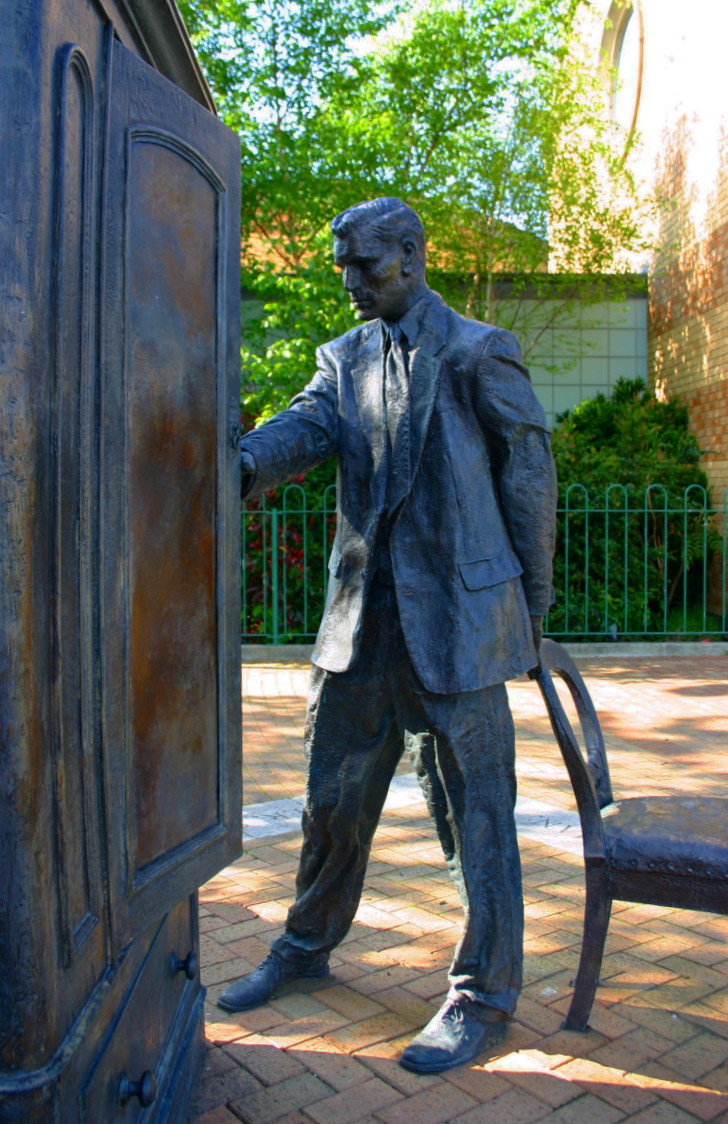
Lewis-Wardrobe

“The Searcher,” a statue in Belfast, Northern Ireland, by Ross Wilson, depicting C. S. Lewis looking into a wardrobe. Photo by “Genvessel,” used under the Creative Commons Attribution 2.0 Generic license.

Lewis went to Arthur’s room and found the young man reading. The book in Arthur’s hands was Myths of the Norsemen by Hélène Adeline Guerber—one of Lewis’s own favorites. Lewis and Arthur bonded over their shared love of Norse eddas and sagas. For the rest of his life, C. S. Lewis regarded Arthur Greeves as his closest friend, next to his brother Warren. Both dreamed of being writers, and they exchanged many letters filled with literary ideas, plans, and opinions.

Greeves and Lewis lived very different lives. Greeves was spoiled and pampered by a worrying mother. Lewis had lived a very hard life since age nine, when his mother died. That’s when his father shipped him off to the Wynyard School in Watford, England—a place Lewis remembered as a house of horrors and punishments, ruled by a brutal man who was later arrested for the cruelties he inflicted on the boys at Wynyard. Perhaps the hardships in his life motivated Lewis to focus intensely on his career goals.

Arthur dreamed of being published and shared many story ideas with Lewis, who repeatedly told him he had a great talent for writing. Yet Arthur never seemed to finish anything he started, and he never managed to get published. Again and again, Lewis coaxed Arthur to finish his stories and submit them for publication.

“You have plenty of imagination,” Lewis wrote Arthur in 1916, “and what you want is practice, practice, practice. It doesn’t matter what we write . . . so long as we write continually as well as we can. I feel that every time I write a page either of prose or of verse, with real effort, even if it’s thrown into the fire the next minute, I am so much further on.”

Three years later, when Lewis was discharged after serving in World War I, he again wrote to Arthur, urging him, “Do get on with the writing: as you said yourself, it at least needs no physical energy and I am sure you only need to stick at it.”

In time, C. S. Lewis became one of the best-loved authors of the twentieth century, famed especially for Mere Christianity and The Chronicles of Narnia. But Arthur lived his entire life without being published.

Lewis devoted himself to a focused, daily regimen of writing. Arthur wrote only when he felt “inspired.” Writing for publication is a dream for many people like Arthur. But the dream only becomes a reality if you stick to it, focus, and never give up.


Fear of the Blank Screen

Many writers, when they face the blank screen of their computer, see something baleful, glaring, and hostile, like this distorted image. To achieve your writing dreams, you have to look the blank screen in its single eye, you have to begin writing, you have to keep writing, and you have to persevere until the work is finished. Original photo by Andrew PMK, altered by Jim Denney, used under the Creative Commons Attribution-Share Alike 3.0 Unported license.

The world is full of people who dream of writing that novel or building that dream house or starting a business or launching a singing career. “Sure, I could do that,” they say, “and someday I just might.” But they never do and they never will. They keep their dreams in a shoebox, tied up with string, shoved under the bed—because they lack the courage to put their dreams to the test.

When I first decided to take the plunge into fulltime freelance writing, I knew it would mean no more regular paychecks, no employer-paid health insurance, no retirement plan, no paid vacation. I talked to a couple of other writers who had each been in the business for ten years or more, seeking their advice.

One told me, “You happened to call me just as I’m quitting the freelance life and taking a job with a publishing house. Jim, I just couldn’t take it anymore. My advice to you is this: Don’t even think of fulltime freelance writing unless you have at least a year’s worth of living expenses saved up.” 

The other writer I talked to had more than five million copies of his various books in print—and he did all his writing in his spare time. From 9 to 5, he headed up a nonprofit organization. He told me, “Don’t quit your day job. Do your writing evenings and weekends, and make sure you have a regular paycheck.” Not much encouragement there, either.

I corresponded by email with a Hugo- and Nebula-winning science fiction writer, one of the top names in the field, and he told me how the bank had repossessed his house during his first couple of years as a fulltime writer. So he couldn’t offer much encouragement—but he wished me luck.

What should I do? Should I listen to those veteran writers who advised me (with excellent justification) not to even consider such a foolish move? Or should I pursue my dream? I knew I had the discipline and experience to be a writer. I had already had a few books published while writing part-time. So I took the plunge.

And it was tough—incredibly tough. Worse than I imagined it would be. If I had it to do over again, I would do everything differently. But I survived and eventually thrived as a writer.

The key to success in writing or any other endeavor is focus. You have to focus on the work at hand, regardless of distractions and interruptions. You have to focus on moving forward, no matter what obstacles are in your way. You have to focus on your goals, despite rejections and setbacks.

Richard Hooker spent seven years writing his Korean War comedy novel M*A*S*H. It was rejected by twenty-one publishers before William Morrow & Co. published it. The book became an immediate bestseller and spun off a hugely successful movie and TV series—but it wouldn’t have happened without intense focus and dogged perseverance.

Mystery writer Donald Westlake used to paper the walls of his apartment with rejection slips. The day he sold his first story to a magazine, he celebrated by ripping those rejection slips off the wall—all 204 of them. He became one of the most successful writers in America—but he never would have gotten anywhere without an intense focus on his dreams.

So what are your dreams for the future? What is God calling you to do with your life? It might be a novel or a nonfiction book, or a new church or an after-school program for kids, or a run for public office, or a new business on the Internet. All you have to do is focus on the dream God has given you, work hard at it every day, and persevere, persevere, persevere. 

For how long?

As long is it takes for that dream to come true.

_____________________________

Answers-SoulANSWERS TO
SATISFY THE SOUL:
Clear, Straight Answers to 20 of Life’s Most Perplexing Questions
by Jim Denney 

(Kindle Edition: $2.99)

“Read this book and save yourself a lifetime of searching and wondering. The answers you seek are all right here!”
—Jack Canfield, author of Dare to Win and the Chicken Soup for the Soul series

“Grab an arm-load of Answers to Satisfy the Soul! Buy one for yourself, one to lend out, and a dozen to give as gifts. You’ve got a lot of friends who need this book!”
—Pat Williams, author of Character Carved in Stone

“If you are on a quest for success, happiness, love, meaning, or God, this book is for you. Whatever you seek in life, Answers to Satisfy the Soul will speed you on your journey.”
—John C. Maxwell, author of The 21 Irrefutable Laws of Leadership

Posted in Jim Denney, Uncategorized | Tagged , , , , , , , , | 2 Comments

Nora’s Review of… BECOMING US by Robin Jones Gunn


Becoming Us

By Robin Jones Gunn

(Book 1 – Haven Makers series)

Publisher: Multnomah

Release Date: May 7, 2019

ISBN# 978-0735290754

320 Pages

Topics:  Friendship, Sisters, Domestic Life, Infertility, relationships,


About the Book:  From the author of the best-selling Christy Miller and Sisterchicks series comes a refreshing novel that celebrates the gift of friendship.

Five young women, including beloved Gunn characters Christy Miller and Sierra Jensen, gather for a simple Christmas party and soon become unlikely best friends. Told from the viewpoint of Emily, a timid young mom going through a difficult season of life, the regular gatherings provide the much-needed community she’s longed for. As the women begin sharing their life stories in Becoming Us they are endeared to each other and find ways to challenge, encourage, and help each other become the nurturing mothers they wished they’d had when they were growing up. They see themselves as Haven Makers and unite to be remembered for what they do and not for what was done to them.


Nora’s Review:  This author brilliantly blends together fun, realistic situations with characters I instantly cared for, intermingled with a natural spiritual thread – it’s a winning combination. Emily’s family is looking for a fresh start in California. It’s a chance to make decisions without either of their families breathing down their necks. Life has thrown them for a loop. They are hurt, weary and seek a new perspective on how to do family and life. Emily and Trevor’s twelve-year-old daughter Audra loves California and quickly makes friends. Trevor works at a car dealership his family owns and Emily works at a coffee shop.


Emily gets invited to a Christian woman’s book club of sorts. She goes but is very guarded about what she shares. She doesn’t want to get close to this small group of women because she might be moving back to North Carolina if things didn’t turn around soon for Trevor at the dealership. Things weren’t going according to the plan.


This author has a gift of making readers feel part of this group who admits they struggle as they do their best to walk out being a wife, mom and Christ follower; it’s not easy. They call themselves The Daughters of Eve. Emily was amazed and refreshed to meet a group of real, ladies accepting her with open arms, filled with love and grace. She could finally breath, (not having to live up to relatives’ expectations, and dealing with their manipulative ways.) Emily was encouraged to see wisdom blossom in her friends, husband and daughter as they seek insight, healing and understanding of themselves, God and others through prayer.

Family can be complicated, messy and a struggle. I enjoyed reading about these ladies doing life together through tears, laughter, love and grace all gifts given from old dear friends one to another. Blessings and lessons are scattered throughout the novel as they usually are in this authors’ books.


Themes talked about in this novel are marriage, parenthood, family, forgiveness, hope, God’s mysterious timing and ways are so much bigger than us. I liked that this author naturally points readers closer to God in each season of life discussed. I was encouraged and inspired, by the characters just as I was when I read the SisterChick novel. I highly recommend this story for a wonderful read and one that would be great for your next book club pick with discussion questions at the end of the book.


Disclosure of Material Connection: I received a complimentary copy of this book from the Publisher/BookLook.  I was not required to write a positive review. The opinions I have expressed are my own. I am disclosing this in accordance with the Federal Trade Commission’s 16 CFR, Part 255 “Guides Concerning the Use of Endorsements and Testimonials in Advertising”


Nora St. Laurent
TBCN Where Book Fun Begins! http://www.bookfun.org
The Book Club Network blog http://www.psalm516.blogspot.com
Book Fun Magazine https://www.bookfun.org/page/past-issues-book-fun-mag


Posted in Nora St. Laurent, Uncategorized | Tagged , , | Leave a comment

Midyear Reflection

Reflection is one of my favorite things to do around the beginning of the year. I like to look back on the year that has ended to see the wonderful events that sprinkled the year. This could include accomplishments, fun things I did with my family, or blessings from God. And I also like to look at the year in front of me, deciding what I want to focus on in my spiritual walk, what goals I have, and in what areas I hope to grow.

I recently listened to an episode of The Next Right Thing podcast in which the host, Emily P. Freeman, talks about how she likes to take time for reflection at the end of every season. So at the end of May, August, November, and February, she will look over the past three months. I loved the idea of having several reflections throughout the year. This might be an opportunity to see what’s working, what’s not working, what changes you might need to make, and so on. But I decided to tweak it just a bit to do a midyear reflection instead of the seasonal reflections. And since we are already at the end of June, halfway through 2019, this is the perfect time to do just that.

I have a journal that I try to write in each day. It is mainly a gratitude journal. Each evening I like to write down at least five things that I am thankful for. Often times what I choose to jot down are events that occurred in that given day. It could be something seemingly small, but meaningful to me, such as when my husband empties the dishwasher, mows the lawn, or any other number of things that he does around the house. They are things that can easily be taken for granted, so I find that writing them down nurtures gratitude. I also might write down big events, such as my niece’s wedding which occurred last month. Keeping a gratitude journal is a helpful way for me to see the blessings that filled each day. And this is what I used when going through my Midyear Reflection.

If you don’t have a journal like this, you could look through things like emails, text messages, photos on your phone, etc. If you routinely read your Bible, you could also look through it to help you remember what you have been learning in your studies. And of course you could always use your memory to recall different events that occurred over the past several months. In the podcast I mentioned, Emily stated that her resources for her March-May reflection included her to-do lists, quotes she jotted down, photos, current events, and work / life milestones.

I actually enjoyed taking the time to look back over the things that filled my days during the first six months of this year. And I learned a few things along the way. Here are just a few things that I learned from my midyear reflection:

1 – In the day-to-day grind, it might feel like you are getting nowhere. But when you look back, you will see that you were really taking baby steps and just didn’t realize it. For example, I felt perhaps I was not changing in my spiritual walk. But looking back on the events of the past few months, I can see how I have grown in this area.

2 – When you stick with something, it pays off. In our society, we expect instant results. But that is not how God designed the world. When we plant seeds, they take months to harvest. The same is true for many things in life. When you start an exercise plan, it takes time to see results. In the same way, when you begin spending time with God, you might not feel like a new creature on day one. But over several months time, you will see that you have been transformed.

3 – When you pray, you can be certain that God hears every word. Looking back on my prayers from the past few months, I can see how God has answered me. His answer might not always look the way I imagined it would, but that doesn’t mean He didn’t answer.

4 – Some things in our lives are joyful, other things are unpleasant, and then there are things which are actually both joyful and unpleasant. That surprised me, but it’s true. There were events that occurred over the past months which brought smiles and stress, at the same time.

5 – When we are present in life and intentionally look for God everywhere, we will find Him. One example happened at a funeral we attended recently, which was held in a very old church. As we waited for the service to start, I picked up an old hymnal and opened it up to a random page. I knew God was speaking to me with the hymn that I stumbled upon. It was one that I had never heard before, but the words held a lot of meaning for me. I continued to flip through the book and came across some old hymns I recognized. And then I discovered one called Tell Me the Story of Jesus, which I had heard on a modern Christmas record by Kim Walker-Smith. Prior to flipping through this hymnal, I didn’t realize it was an old hymn.

These are just a few things that I learned from my midyear reflection. Will you join me and do a midyear reflection as well? If you decide to, then please let me know how it went. I’d love to hear about it!

Posted in Uncategorized | 10 Comments

Quick to Hear (by Hannah Alexander)

KODAK Digital Still Camera

Have you responded to someone in anger recently? I don’t know about you, but I am in constant battle with my tongue. It tries hard to get away from me, and sometimes I don’t stop it in time. Kind of the way these baby pronghorn skitter away from me when I show too much interest in them. Yep, my tongue is like that.

The word picture of a wiggly pink tongue hopping away down the road might be a funny sight, or it could be gross. Creepy, even. For me,  it’s scary. That’s because there have been too many times in my past that I have allowed my tongue to destroy a critical interaction. A person can say pretty much anything, as long as it’s not out of anger or spite, and be forgiven. Silliness can be overlooked, but when someone says a harsh word in anger, that isn’t so easily forgiven or forgotten.

Our little house church has been studying the book of James this past month. There’s a lot to dig out of this book, and we’re only on the second chapter. We ended one of our Wednesday night sessions with homework: we were to meditate on the verse, “Be quick to hear, slow to speak, and slow to anger,” which is found in James 1:19.

I have a tendency to open my mouth before engaging my brain. It’s something most of us have to work on, sometimes for our lifetimes. If we cannot contain our words of anger, we are capable of leaving a path of destruction behind us in the lives of others, and in our own lives. We can lose friends, jobs, lose our own selves in the words we let loose on others.

If you’ve read my recent posts, you know that I love the outdoors and the wildlife. So I have been learning from my experiences here.  For instance, wild horses don’t stick around if you speak too loudly–sometimes not even if you speak at all. They’re wild.

KODAK Digital Still Camera

In my quest to get as close as possible to these to beauties, I’ve had to hold my tongue, or at least speak very softly and gently. Even whisper. And I know better than to make a full frontal assault.

So I’ve wondered to myself why I can be gentle and move slowly with these wild animals, and not control myself as well when it comes to human interaction.

And you know what? When I’ve done just that–treated human beings as I would the wild horses–in most cases it works!

You see, these horses aren’t the friendliest animals. They’re curious, sure, but they don’t want close contact with a human being. Can you blame them, considering the way some people behave? Humans can treat me the same way these horses do by using their words to keep me at a distance. If I respond harshly with words of my own, it would be the same as waving my hands and shouting at these wild animals. It will offend them. Remember that a soft answer turns away wrath. The good thing about the horses is that they don’t plot revenge as a human might do.

I’m curious. Have you had the experience of controlling your tongue–sometimes in very difficult circumstances–and had the pleasant result of a better reaction from an angry person? Or have you witnessed this well-controlled behavior in others?


Posted in Hannah Alexander | Tagged , , , | 12 Comments

The Ripple Spreads Wide

Vicki HInze, The Ripple Spreads Wide, Christians Read


Define lucky. I can’t speak for all, of course, but lucky is defined differently for different people in different situations. Sometimes luck is luck, and sometimes it is the result of some pretty intense effort—though, not necessarily on the exact same thing.

You’ve likely heard me say before that your effort might not open “the” door, but it could open one that leads to “the” door. Let me give you an example. 

Before I sold my first book, I volunteered to do interviews with editors and agents for a writer group’s newsletter.  I’d done quite a few of these interviews when I did one on an editor who liked it and shared it with other editors in her office.  One of those editors said, “I like her writing.” The editor I’d interviewed told me about the conversation and suggested if I had a book to submit to that second editor I do it.  I did and submitted, and she bought the book.

Who would have thought that a non-fiction article would open “the” door?  The interviews took effort, but each one was a learning experience. I did the work, but I gained knowledge and insight from the work, too.  That was a win. That on this interview the editor liked it and showed it to the second editor—that was lucky. But unless the “unrelated” effort had been made in writing the non-fiction article, the opportunity would not have been there for the “unrelated” novel door to open. 

That’s what I mean when I say, what you do might not open “the” door, but it might open “a” door that leads to “the” door.

Then there is the impact of what you write on readers.  Often, when an author writes a story it is on a wing and a prayer that it will help someone, somewhere, in some way.  Maybe to show them a challenge that was resolved constructively. Solutions exist! Maybe to take their minds off their troubles for a while. (Don’t underestimate the value of that! Or the value of pure entertainment!)  An example.

You are in a hospital room, sitting at the bedside of someone you love. Your loved one is dying. In and out, and sleeping a lot, but you fear leaving the room for fear you won’t be there when needed.  You have a book in your hand.  For a few minutes, you escape all the grief and fear and upset in the hospital room and take respite in the story. How much is each of those minutes of respite worth?

I had such a story relayed to me by a reader. I’ve never forgotten it. And to this lucky author who wrote the story in which in that reader found a few minutes’ respite, I can tell you the value to me:  priceless.

We write our books and set them free in the world to do what they will for those they touch.  We know that not all readers will like them.  But we also know that some readers will love them. And we know that regardless of what kind of story is written, it will be a story that ends up in someone’s hands at the time when they most need it for whatever reason is significant to them.  That makes us all lucky authors.

Bear in mind that especially early on in authors’ careers, most hear “no” a lot more than they hear “yes.” They hear “revise, edit, rework, rewrite” far more often than “this is great” and frankly that no-to-yes ratio pretty much holds true throughout authors’ writing careers.  There’s always tailoring to be done. Perspective and focus shifts to be made to best suit the needs of the publisher, who isn’t typically looking at one book but how each book fits in with all the other books published. 

Some authors resent the process. Lucky ones don’t. They grasp early on that publishers spend a fortune to figure out what sells well for their publishing house, their imprints. Selling books is their job, so naturally they do all they can to craft and shape and license books that appeal to their readers. Actually, editors’ careers depend on them doing this, and doing it well.

The lucky author is one who has a gifted editor who sees the author’s vision and enhances it without writing a totally different story—their own vision of the book. It’s amazing how well this merger typically works because it is a complex creative process. The best editors have that gift—to see the vision and enhance it. They are not frustrated authors. Any author who has such a gifted editor is lucky. These are matches made in Heaven, where the best talents of the author merge with the best talents of the editor to produce the best possible book with the brightest prospects for mutual success.

Authors who have readers who invest in them are very lucky.  Readers are open about what they like and what they don’t—their preferences. But authors often don’t ask readers’ opinions, and that is a missed opportunity for “luck.” One of the best lessons learned is to ask questions and to really listen to readers’ answers. They often have outstanding feedback and they share the most amazing stories and ideas.

Now many authors complain about the time it takes to be active on social media. And it is time consumptive. No author can actively engage on all the different platforms—not and have time to write, much less have a life.  But an author can choose a platform or two that is compatible with the author and be active on it. Why do it?

First, you get to know the absolute best people.  You’ll see the best in humanity.  Is the worst there? Yes, but you are free to not engage, or to set your own terms on engagements. By interacting, you stay more current on the situations people are facing.  Many are the same and change little from generation to generation. But how people react to them changes often. 

You get to know people, and they get to know you. Sometimes you goof around with them, sometimes you share stories from your life, and they share stories and bits of their lives. Attachments grow to bonds, and investments are made by the author and the readers. There are a lot of good people out there. We hear about the jerks often, but the good people…they awe and humble you. They inspire you.

I post a lot of quotes. Have for years.  I have always loved quotes. They’re short and to the point, and others like short and to the point also.  I expected people who enjoy the things I enjoy would chat and visit.  I didn’t expect so many of them to be amazing human beings. We celebrate together, cry together and support each other. Oh, everyone runs into a jerk now and again, or someone having a rough a day who blows off some steam, but those should never dampen enthusiasm. They’re a blip on the screen compared to all the good.  

Understanding all this, I still did not expect the enthusiasm over a really short post I did where I was celebrating finishing a new book.  It went something like, “Yay—it’s finished!  The new book is done.  Color me happy!”  Something that that. Not exactly earth-shattering news, but genuine elation that a project had been completed.  That’s something an author typically celebrates alone.  Well, that little post set my phone to pinging like crazy. All kinds of people were congratulating me on finishing the book. Many took the time to include animated gifs. It was exciting to have people celebrating with me. It was humbling, and honestly, I was awestruck by their generosity of spirit. Taking time from their lives to join in on something that was important to me. 

For many, this might not seem like a big deal.  But it was huge to me. It is huge to me. Anytime anyone gives you their time, they’re sharing something significant to them. Something they can’t get back. Something precious to them.

That’s why I was humbled and awed.  And grateful. And that’s why I’m the luckiest author in the world.

I could go on for hours with stories about all the ways authors are lucky. But the bottom line is pretty simple—and very consistent. Some authors make their luck, some stumble into it, some go door-to-door seeking “the” door more than the old Kirby vacuum salesmen.  Most authors experience a combination of types of luck over the life of their career: a little of all possible kinds of luck.

I suppose I’ll close with this:  you see the value in being open to all kinds of luck.  Not just for authors, but for you, the human being living your life. Maybe you hadn’t seen how important you, your comments, your feedback, and your posts are to those who read them. And maybe you hadn’t grasped how much your interactions with others mean to them—but now you do.

I hope that’s the case. If you’ve gained insight, you’ve defined lucky.  My wish is that you apply these things to you and your life and that your bottom line is you consider yourself lucky. And since I wish (and dream) big:  I wish that you see the wisdom of investing in making others feel lucky, too.

Whatever you do, remember that the ripple spreads wide and it goes on and on…

Blessings,

Vicki


Posted in Uncategorized, Vicki Hinze | Tagged , , | 2 Comments

Why Does God Allow It?

by Jim Denney, adapted from
ANSWERS TO SATISFY THE SOUL:
Clear, Straight Answers to 20 of Life’s Most Perplexing Questions

In the 1981 movie Time Bandits, the satanic Evil Genius (played by David Warner) wreaks enormous carnage and destruction on the world. After the smoke clears and the dust settles and the Evil Genius is vanquished by the Supreme Being (Sir Ralph Richardson), it’s time to figure out the moral to the movie.

A young boy questions the Supreme Being about all the death and devastation: “You let all those people die—just to test your creation?”

“Yes, you really are a clever boy.”

“Why did they have to die?”

The Supreme Being shrugs. “You might as well say, ‘Why do we have to have evil?’”

“Yes, why do we have to have evil?”

“Ah! I think it’s something to do with free will.”

War

We live in a world in which free will runs riot. Evil people kill and maim and torture their fellow human beings, yet no bolt of lightning crashes down from heaven to stop the evildoers or punish them.

Atheists say the existence of evil proves the impossibility of God. The argument goes like this:

  1. If God exists, then meaningless pain and evil cannot exist; a good and powerful God would not allow it.
  2. We know that meaningless pain and evil do exist.
  3. Therefore, God does not exist.

Sounds logical. Yet we, being limited human beings, cannot possibly know with certainty that God doesn’t have profoundly good reasons for giving us the terrible gift of free will. Suffering that seems meaningless and pointless to us now might have meaning in the eternal scheme of things.

In People of the Lie, psychiatrist M. Scott Peck writes, “Free will is the ultimate human reality. . . . Evil is the inevitable concomitant of free will, the price we pay for our unique human power of choice.”

When we look at the history of wars, slavery, genocide, violence, and other assorted horrors, we find ourselves wishing God would revoke our terrible freedom and end all this slaughter and suffering. Wouldn’t it be better to be robots than to endure a world of such horrors? Yet God refuses to violate human freedom. He will not force us to be good, even to prevent a holocaust. 

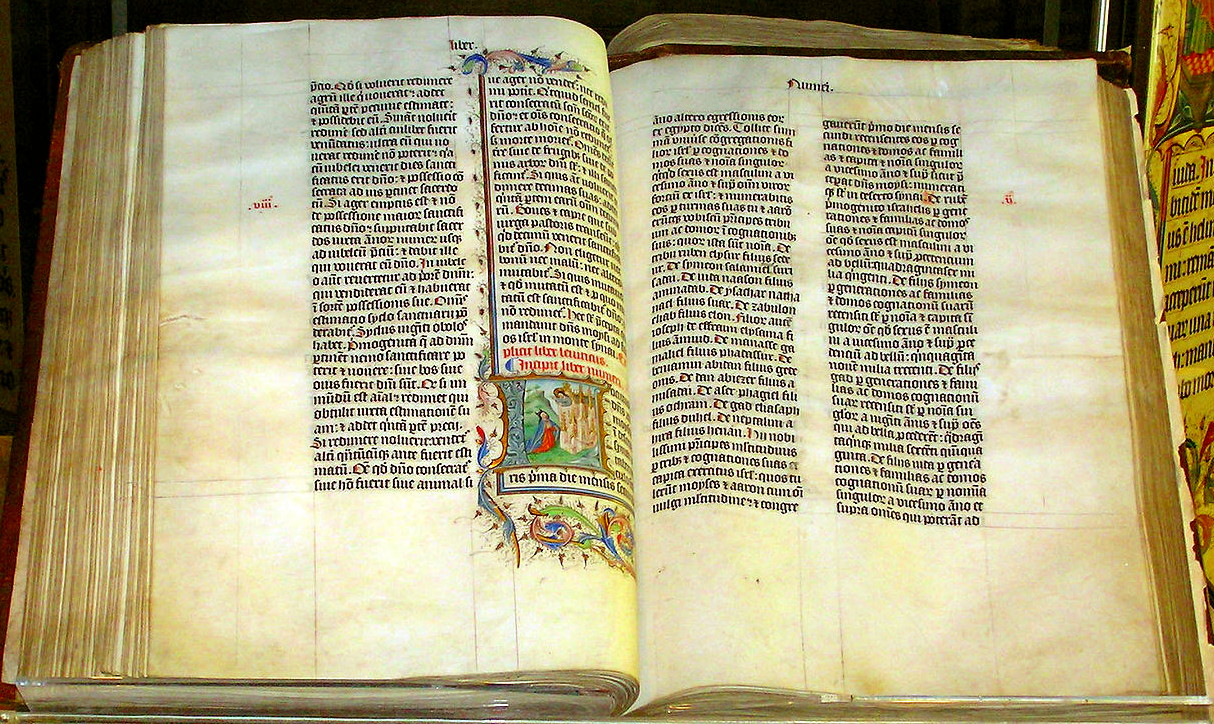
BibleInitial-Book

As Christians, we know that Jesus, God in human flesh, has entered into our suffering. He has borne our griefs and carried our sorrows. He took into Himself the very worst agony that evil men can inflict on a fellow human being. And He calls us to take up our cross and follow Him, becoming conformed to His likeness, accepting the injustice and sorrow that this world inflicts, and becoming Christlike wounded healers in a sick and dying world.

There is an old parable that underscores our responsibility as Christians:

A man goes to God in prayer and complains about all the suffering and injustice in the world. “God,” he says, “why do You allow this to go on? Why don’t You send help?”

“I did send help,” God replies. “I sent you.”

_____________________________

Answers-SoulANSWERS TO
SATISFY THE SOUL:
Clear, Straight Answers to 20 of Life’s Most Perplexing Questions
by Jim Denney 

(Kindle Edition: $2.99)

“Read this book and save yourself a lifetime of searching and wondering. The answers you seek are all right here!”
—Jack Canfield, author of Dare to Win and the Chicken Soup for the Soul series

“Grab an arm-load of Answers to Satisfy the Soul! Buy one for yourself, one to lend out, and a dozen to give as gifts. You’ve got a lot of friends who need this book!”
—Pat Williams, author of Character Carved in Stone

“If you are on a quest for success, happiness, love, meaning, or God, this book is for you. Whatever you seek in life, Answers to Satisfy the Soul will speed you on your journey.”
—John C. Maxwell, author of The 21 Irrefutable Laws of Leadership

Posted in Jim Denney, Uncategorized | Tagged , , , , , , , , , , , | Leave a comment

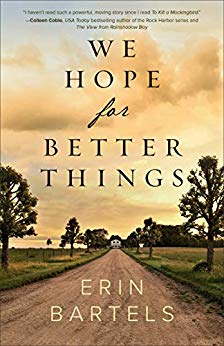
Nora’s Review of WE HOPE FOR BETTER THINGS


We Hope For Better Things

By Erin Bartel

Published by Revell

Release Date: January 2019

ISBN#978-0800735661

400 Pages

#CivilWar, 1960’s, Rascal conflict, historical fiction, Time/slip story Thought Provoking Historical


BOOK BLURB:When Detroit Free Press reporter Elizabeth Balsam meets James Rich, his strange request–that she looks up a relative she didn’t know she had in order to deliver an old camera and a box of photos–seems like it isn’t worth her time. But when she loses her job after a botched investigation, she suddenly finds herself with nothing but time.

At her great-aunt’s 150-year-old farmhouse, Elizabeth uncovers a series of mysterious items, locked doors, and hidden graves. As she searches for answers to the riddles around her, the remarkable stories of two women who lived in this very house emerge as testaments to love, resilience, and courage in the face of war, racism, and misunderstanding. And as Elizabeth soon discovers, the past is never as past as we might like to think.

REVIEW:I’m blown away by how this debut novelist Erin Bartel took on this difficult subject matter and by the way she handled it with sensitivity and respect as she showed racial tension on many sides in different time periods. It was eye-opening and touched my soul. This story as you get to know three strong women in unimaginable situations. The author takes readers through the Civil War, including the underground railroad, through the violate time period of the Civil Rights movement, showing the Riots in Detroit in 1967 and revealing parts of Martin Luther speeches to crowds. My heart hurt for the men, the women and their struggles. It’s also sad to know we still deal with them today.


This journey starts out in current time with Elizabeth Balsam a woman who has lived on the edge, doing what it takes to get the next heart-stopping story. That is until her whole world flips upside down. Which gave way to her meeting with Mr. Rich and his son Linden. They show her original never published pictures of the Detroit riots 1967. Elizabeth’s interest is peaked at maybe finding a great story in the mix, but when Mr. Rich wants her to track down a long-lost relative of hers for permission to use the pictures, she doesn’t know if it’s worth it. Was Elizabeth hoping against hope there would be a story she could run with? She has nothing better to do so she tracks down her Aunt Nora Balsam Rich and is amazed by her generosity and willingness to talk with her. Problem is the main thing Nora wants to talk about is Mary and Nathaniel Balsam and what they went through in the Civil war.


It took me several chapters to finally get the characters figures out as to who was who and what timeline they fit in (like Aunt Nora being in two-time lines messed with me. LOL!) I have to say I was a little confused as I wondered how these ladies were connected and where this all was headed. But when Nora Balsam Rich started talking about her house, how it was used in the Civil War and then how she got the house they were currently living in the 1960’s; things started to take shape for me. I got it.


Nathanial told his young pregnant wife he was enlisting in the service he would get his friend to help with the farm while he was away at war. Mary’s husband sends her a freed slave named George who helps with the farm in a tremendous way all the years Nathanial is away. Readers get an up-close and very personal look at how white people were treating freed slaves in the north. Oh, they were happy they were free, but they wanted them to live permanently somewhere else. The author even shows how the church treated Mary and her freed slaves, very sad but true to history.


I enjoyed the depth of characterization and the way the author showed the hardship created by racial discrimination issues in different timelines that could have been the end of them, but it wasn’t. I liked how the author showed how each woman faced these challenges head on and sought strength and courage from God and a few good friends. Each woman is passionate about staying the course and being true to what they believe, who they love, and what they were meant to do. No matter how hard their families, friends and society made things.


This is a remarkable, a deeply passionate, eye opening story that will touch your soul, and have you look at today’s headlines in a new light. Just like it did for Nora in the 1960’s. She really didn’t get the magnitude of the situation until she was in the thick of things. I like how this author has helped readers walk in these ladies’ shoes to grasp a bit of what they faced day in and day out. Giving you compassion and a clarity you might not have had before reading this story and meeting these three strong willed women, the men who loved them as they do far more than they ever imagined was possible.


I highly recommend this thought-provoking, time slip story for a book club pick. There is so much to talk about. This is a novel you won’t soon forget. This is a must read.


Disclosure of Material Connection: I received a complimentary copy of this book from the Publisher.  I was not required to write a positive review. The opinions I have expressed are my own. I am disclosing this in accordance with the Federal Trade Commission’s 16 CFR, Part 255 “Guides Concerning the Use of Endorsements and Testimonials in Advertising”


Nora St. Laurent

TBCN Where Book Fun Begins! http://www.bookfun.org

The Book Club Network blog http://www.psalm516.blogspot.com

Book Fun Magazine https://www.bookfun.org/page/past-issues-book-fun-mag


Posted in Nora St. Laurent, Uncategorized | Tagged | Leave a comment

I Have a Problem …

… With Books!

I am a book lover. I always have been. Even when I was a young child, I had those hard books with the gold binding. As I grew up, no matter where I went, I always had a book with me. In the fifth grade, my friends and I made our own mini library and would share our books with one another. Up until my early twenties, I was good about reading one book at a time. Now it’s a free-for-all! I start one book, but then I get so excited about another book and I will start it too. I might have five books (or more) going at any given time.

One unfortunate problem of mine is that I am a slow reader. Or at least I consider myself to be. Maybe I am just impatient and want to get to the next book on my list. Either way, this means I often listen to audio books as well. But I still have numerous audio books going at any given time as well. When I began writing this article, I had four audio books that I started and six new ones waiting in the wings.

And another problem of mine is that I don’t like a lot of clutter, so most of my actual reading is on a tablet. I know that many of you are thinking that books aren’t clutter. I know, I know! I used to have shelves and shelves of books. But due to living in four different houses in the past decade, this caused me to donate many of my books to the library.

But I still love books and when I hear about a good book, I just have to have it. So I now have well over a hundred books that I have purchased but not read yet. Yikes! So in an effort to reel in my obsession, if there is a book that I would like to read in the future, I will download a sample of the book on my tablet. A few days ago I had eleven such samples sitting on my virtual book shelf. Ah, but then the clutter issue set in, so I deleted them. However, I already have four new samples sitting on my shelf.

Please tell me – Am I the only one with this issue? Or do you agree that there are just too many good books and too little time?

Posted in Uncategorized | 4 Comments

News Reporting in Jeopardy


Media

for $200

Alex Trebek is the Canadian-born host of the TV game show Jeopardy and is reportedly a committed Christian. He has also been battling pancreatic cancer. A few weeks ago, the news on our local TV station here in British Columbia (on the Global TV network) reported that there had been “mind-boggling” progress in the fight against his disease. The report quoted Trebek as saying, his fans’ “good thoughts…could be an important part of this.”

I became curious about what the ellipsis (…) represented, what had been left out of Trebek’s statement, so I looked it up online. It turned out that what Trebek had actually said was: “I told the doctors, this has to be more than just chemo. I’ve had a couple million people out there who expressed their good thoughts, their positive energy and their prayers. The doctors said it could very well be an important part of this.”

The Global news people might have edited Trebek’s statement on their own, or they might have been following the lead of the NBC network in the US, which reported that Trebek had said, “I’ve got a couple million people out there who have expressed good thoughts… I told the doctors this has to be more than just the chemo.”

On the other hand, ABC News apparently reported the full quote.

Television news tends to present the news in brief “sound bites,” so statements are commonly shortened. But why did at least two major television networks choose to leave out “prayers” and attribute Trebek’s good results to only “good thoughts”? Did they think that “prayers” are simply the same thing as “good thoughts,” a purely human endeavor? Did they think that the idea of prayer would offend some viewers? Was it a deliberate editing choice? Or did the edit simply reflect the reporters’ secular mindset?

The difference between the two statements is truly mind-boggling. Can people’s “good thoughts” actually cure cancer? Human encouragement can have a positive effect, but it seems unlikely that it can cure cancer. Can the God who created and rules the universe cure cancer? Undoubtedly.

What is perhaps most disturbing is the likelihood that there is no great conspiracy here. The reporters most likely did not even recognize that they were imposing their own secular mindset onto other people. They should perhaps reflect that in George Orwell’s frightening novel Nineteen Eighty-Four, one of the tasks assigned to the protagonist Winston Smith was to remove all references to God from literature. When humans make the rules, only God can overrule the power of a totalitarian state.

Journalists rightly proclaim the importance of free and independent news media. But that is as much a responsibility as it is a right. It is of little benefit if the news media are free and independent but impose their own biases on what they report. It is not just totalitarian states that can threaten freedom of expression. A free and independent news media can only exist if journalists diligently pursue truth and report the news accurately, fairly, and objectively.

The struggle for objectivity is an ongoing one. There have been times and places where journalism has been even less objective than it is presently—the era of “yellow journalism” in American newspapers in the late 1800s, or perhaps the British tabloids in the 20th century.

But there have also been times when the media were more objective. Homespun philosopher Red Green, also a Canadian, recently commented, “Walter Cronkite used to tell people what had happened. He didn’t tell them what they should think about it.”

Posted in James R. Coggins | 1 Comment

What kind of reader are you?

As a writer of Chick Lit, I am so grateful that there are different kinds of readers.  Not everyone will get my humor, nor do they like first-person writing — and that’s okay, because there are plenty of people who do.  I remember, many years back, when writing “What a Girl Wants” there was a joke in the book about Deney Terrio.  My editor said to me, “I think that’s a very small audience who will get that reference.”

And she was right!  But I knew the readers who did would greatly appreciate it — and I was correct.  Sometimes, you have to listen to your instincts and create what you were meant to create.

The publishing industry is a fickle soul.  I am grateful to have stayed alive in this market for over 20 years — but now they tell me publishing is going deeper.  Readers aren’t into lighthearted romps — and the woman should save herself — a la “Frozen.”

kristin-billerbeck-lot-split-ends_1_699a96a7af0401dcfa6aefbb27c40d29

My heroines are modeled after my favorites in fiction — Scarlett O’Hara in “Gone with the Wind;” Elizabeth Bennet in “Pride and Prejudice;” Bathsheba Everdene in “Far from the Madding Crowd;” and Meggie Cleary in “The Thorn Birds.”  These aren’t wilting violent heroines.  They are strong and very forward for their respective time periods.  However, I love a heroine who can laugh at herself. Life is too hard to not take it lightly.

As a reader, I would say I love a dramedy.  A book that takes one to dark places, but allows you to rejoice in the lighthearted parts of suffering.  Because the truth is, we all have to be grateful for the light when we are in the midst of darkness. This may sound odd, but that’s why I liked Ann Rule’s true crime books — because she didn’t concentrate on the evil — she focused on the victims and how their lives were forever changed by darkness.

So I honor that publishing is going to a deeper level.  I admire writers who can do that — but I have to protect my smooshy heart and my sensitive nature.  I can’t go to that place and I’m glad there are still readers out there who want to giggle and focus on the lighter side of life.  What about you?  What kind of adventure to you like to go on when reading?

Posted in Uncategorized | 8 Comments

Cosmic Coincidence—or Calculated Design?

by Jim Denney, adapted from
ANSWERS TO SATISFY THE SOUL:
Clear, Straight Answers to 20 of Life’s Most Perplexing Questions

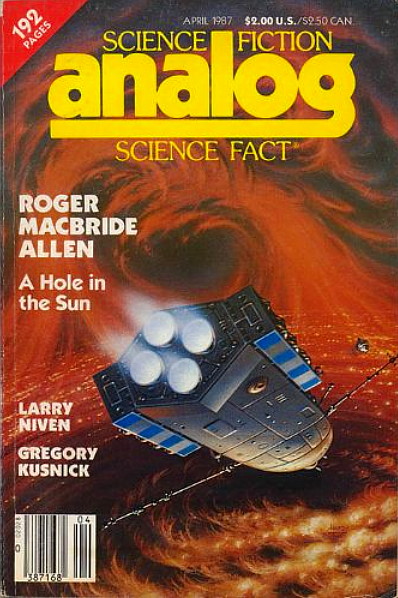
Analog-April1987Last week, I talked about the cosmic case for faith in God, which I first encountered in the April 1987 issue of Analog Science Fiction / Science Fact. In a science fact article, Richard Meisner wrote about a growing body of scientific evidence that the universe appears to be purposely designed and incredibly fine-tuned to produce life. Meisner quoted cosmologist Paul Davies: “It is hard to resist the impression that the present structure of the universe, apparently so sensitive to minor alterations in the numbers, has been rather carefully thought out.”

Carefully thought out by Whom? Well, by God, of course.

What is the scientific evidence for an intelligently fine-tuned universe? How do we know that the forces of the universe were precision-balanced to produce life?

Let me list just a few of the hundreds of “cosmic coincidences” that have produced our amazing just-so universe. Take, for example, the Big Bang.

At the moment the Big Bang began, everything that exists—matter, energy, the three dimensions of space, and the fourth dimension of time—emerged from a single geometric point, expanding at the speed of light. Scientists are amazed that the explosive violence of the creation event was as perfectly, delicately balanced as it was. Cosmologist Paul Davies wrote:

Had the Big Bang been weaker, the cosmos would have soon fallen back on itself in a big crunch. On the other hand, had it been stronger, the cosmic material would have dispersed so rapidly that galaxies would not have formed. . . . Had the explosion differed in strength at the outset by only one part in 1060, the universe we now perceive would not exist. To give some meaning to these numbers, suppose you wanted to fire a bullet at a one-inch target on the other side of the observable universe, twenty billion light-years away. Your aim would have to be accurate to that same part in 1060. . . . Channeling the explosive violence into such a regular and organized pattern of motion seems like a miracle.

If the explosive force of the Big Bang not been perfectly balanced and incredibly fine-tuned, life would be impossible—and you and I could not exist.

bigbang1

At first, the laws and constants of the universe were simply accepted as a matter of fact—no one wondered why this or that force or constant of physics was not slightly stronger or weaker than it is. Eventually, physicists began to realize (as George Greenstein observed in The Symbiotic Universe) that the “laws of nature could have been laid down only in the very instant of the creation of the universe, if not before.”

Paul Davies recalled that when he was a student, the question of where the laws of physics come from was off-limits. A scientist was supposed to simply apply those laws, not inquire into their origin. Scientists would say that there’s no reason the laws of physics are what they are—they just are. Davies concluded, “The idea that the laws exist reasonlessly is deeply anti-rational. . . . It makes a mockery of science.”

As it became clear that the laws of nature might have been different than they are—that they appeared to have been deliberately selected to produce life—scientists began to look at these forces, laws, and constants with new sense of awe. The entire universe seemed to be constructed out of an incredibly unlikely series of cosmic coincidences. Some examples:

There are four forces governing the structure and behavior of subatomic particles—the electromagnetic force, the gravitational force, the strong nuclear force and the weak nuclear force. These forces determine everything from how an electron orbits the nucleus of an atom to how stars and galaxies are formed. Each force has a specific mathematical value called a constant (because its value never varies).

The gravitational force constant is finely tuned to permit life. Slightly greater, and stars would burn too hot, too quickly, and too unevenly to produce life-giving elements. Slightly smaller, and stars would be too cool, so that nuclear fusion could not take place and there would be no life-giving elements.

spacewaves&stars

The electromagnetic force is also fine-tuned. If its constant were slightly larger or smaller, the chemical bonding required for making living things could not take place.

There is a fine-tuned balance between the gravitational and electromagnetic forces. If the constant of the ratio between these two forces were larger, there would be no stars smaller than 1.4 solar masses, and the lifetime of stars would be too short to generate life-giving elements. If the constant were smaller, there would be no stars larger than 0.8 solar masses—and again, no production of life-giving elements.

If the strong nuclear force constant were slightly larger, there would be no hydrogen in the universe and no stars. If this constant were smaller, the universe would consist of nothing but hydrogen.

If the weak force constant were larger, most of the hydrogen in the universe would have converted to helium during the Big Bang. If it were smaller, there’d be too little hydrogen converted to helium—a roadblock to the production of life-giving elements such as carbon and oxygen.

The proton-to-electron mass ratio: A proton is 1,836 times more massive than an electron; if this ratio varied slightly in either direction, molecules could not form and life could not exist. The ratio of the number of protons to the number of electrons is also finely balanced to permit the electromagnetic force to dominate the gravitational force, allowing the formation of galaxies, stars, and planets.

The unusual properties of water are also a fine-tuned condition for life. Water plays an essential role in almost every biological function. It is necessary to photosynthesis, which is the foundation of the food chain. In photosynthesis, plants use sunlight to convert carbon dioxide and water into sugar, giving off oxygen as a “waste product.”

Water is one of the few liquids that expands when it freezes. Most substances contract and become more dense when they freeze, but frozen water is actually 9 percent less dense than liquid water. This is because, at freezing temperatures, the hydrogen bonds that connect water molecules make an adjustment to keep negatively charged oxygen atoms apart. This adjustment creates the crystal lattice that enables ice to float in liquid water.

If water didn’t have this extraordinary property, ice would sink, which would cause lakes and rivers to freeze solid. If ice did not float, wrote George Greenstein, life on Earth “would be confined to a narrow strip lying close to the equator.”

Earthrise

And the list goes on and on. It’s as if hundreds of completely unrelated laws and features of nature plotted together in a vast cosmic conspiracy to produce life. As Paul Davies observes:

It is tempting to believe, therefore, that a complex universe will emerge only if the laws of physics are very close to what they are. … The laws, which enable the universe to come into being spontaneously, seem themselves to be the product of exceedingly ingenious design. If physics is the product of design, the universe must have a purpose, and the evidence of modern physics suggests strongly to me that the purpose includes us.

And physicist Fred Hoyle said: “I do not believe that any scientist who examines the evidence would fail to draw the inference that the laws of nuclear physics have been deliberately designed.”

Hubble-GalaxyClusters-PubDomain-3

Is our life-giving universe the result of an inconceivably improbable series of cosmic accidents and coincidences—or the product of a calculated, deliberate design? Which possibility is easier to believe?

Is the universe evidence—even proof—of the existence of God?

I have my own opinion. What do you think?

_____________________________

Answers-SoulANSWERS TO
SATISFY THE SOUL:
Clear, Straight Answers to 20 of Life’s Most Perplexing Questions
by Jim Denney 

(Kindle Edition: $2.99)

“Read this book and save yourself a lifetime of searching and wondering. The answers you seek are all right here!”
—Jack Canfield, author of Dare to Win and the Chicken Soup for the Soul series

“Grab an arm-load of Answers to Satisfy the Soul! Buy one for yourself, one to lend out, and a dozen to give as gifts. You’ve got a lot of friends who need this book!”
—Pat Williams, author of Character Carved in Stone

“If you are on a quest for success, happiness, love, meaning, or God, this book is for you. Whatever you seek in life, Answers to Satisfy the Soul will speed you on your journey.”
—John C. Maxwell, author of The 21 Irrefutable Laws of Leadership


Posted in Jim Denney, Uncategorized | Tagged , , , , , , , , , , , , | 3 Comments

What I Learned from My Dog

I was thinking recently how smart my dog is. Ok so maybe I am a little biased. But Tucker really is smart. I actually have two dogs. Both are smart dogs and good dogs. However, Buddy’s main goal in life is to eat. You could say food is his love language. His second goal in life is to get back rubs. In his defense, he is older than Tucker and doesn’t have as much energy. Tucker, on the other hand, loves to please his parents and to spend time with his parents. As I was analyzing Tucker’s behavior and quirks, I learned a lot of good tips from him.

1 – Put all your effort into your work.

When Tucker sees anything or anyone that does not belong in his clique (such as a neighbor in their yard, a squirrel in our yard, or a Fed Ex truck out on the road), he immediately barks at and chases the offender. He continues until his job is done and the offender has left.

“Work willingly at whatever you do, as though you were working for the Lord rather than for people.” Colossians 3:23 NLT

2 – When you’re not working, enjoy life.

Tucker loves to play. He is over two years old, but still has a lot of puppy in him. And he tries his best to bully his parents, his big brother, or anyone he can find into playing as well.

“The thief’s purpose is to steal and kill and destroy. My purpose is to give them a rich and satisfying life.”- John 10:10 NLT

3 – When you’re feeling down, seek comfort.

Tucker doesn’t like when we leave him at home alone. He gets anxious and sad. So he curls up in a comfortable place and stays there until we return. If only one parent leaves, then he might try to curl up in the lap of the parent who is still at home.

“All praise to God, the Father of our Lord Jesus Christ. God is our merciful Father and the source of all comfort. He comforts us in all our troubles so that we can comfort others. When they are troubled, we will be able to give them the same comfort God has given us.” – 2 Corinthians 1:3-4 NLT

4 – When you’re tired, rest.

Tucker gets tired around midday and again at night. When he wants to sleep, he sleeps. And he doesn’t welcome interruptions. Around lunch time I often like to give him a treat, but he would prefer I didn’t. However if he absolutely must eat the treat, then he would like for us to hand it to him right where he is so the only thing he will have to move is his jaw.

“Then Jesus said, ‘Come to me, all of you who are weary and carry heavy burdens, and I will give you rest. Take my yoke upon you. Let me teach you, because I am humble and gentle at heart, and you will find rest for your souls. For my yoke is easy to bear, and the burden I give you is light.’ “ – Matthew 11:28-30 NLT

Animals are smart. And pets in particular are a blessing. They soothe us when we don’t feel well. And they bring us joy in our daily lives. Isn’t it extraordinary how God thought of every little thing when He created the earth?

(Buddy and Tucker.)

Posted in Uncategorized | Leave a comment

Who Do We Look Up To by Julie Arduini

As I mentioned in my last post, parenting is hard. We have a teen daughter who like most teens, enjoys YouTube and the new celebrities that are arising from that medium. If you aren’t aware, there’s a lot of drama and worldly situations going on with those celebrities, so I try to stay up on the content so we can talk about positive role models, body image, values, and what’s pleasing to Jesus.

Honestly, there aren’t a lot of young people with millions of followers that receive mainstream attention for the right reasons.

But, there’s my age group, the Gen X’ers. I remember my complete devastation when the books came out from the Little House on the Prairie actors. When I was growing up, TV “Pa” was my absolute vision of perfect fatherhood. He was present, strong, nurturing, funny, hard working, churchgoing. Well, that was a character. The reality was the actor, Michael Landon, lived a very different life full of excess. Not quite the role model I thought as a child.

Now in the age of #metoo, so many stories are coming out that break my heart. Leaders from various stages allegedly taking advantage of their position to humiliate and scar others. Again, I grew up in the 70’s and 80’s. To hear the vile testimonies from victims that crossed paths with Bill Cosby, it’s sickening. Politicians. Preachers. It’s across society.

It leaves me with the question, who do we look up to? I admit I grew up naive. I thought people in the spotlight accepted a moral code that they were responsible for. Imagine my heartbreak as time and time again their humanity threw them off my pedestal, my place for idols.

And there it is.

Two things.

Humanity and idols.

As humans, we’re flawed. We are going to sin. I was wrong to look to people to fulfill perfection for me. They will let me down. The YouTubers are not going to show our daughter the absolute truths about who she is. I will let you down.

I also have no place taking humans and putting them on a fantasy shelf and worshiping them. But I did. I didn’t grow up hearing the gospel, I grew up basically in front of Family Ties and Little House. The answer now is clear.

We need to look up to Jesus, and Him alone.

Sure, we can admire how a boss communicates or how a leader is generous with their resources. But base who we are and who we want to be on Christ. He is sinless and carries all the traits we should ever want to possess. He is the King of Kings and the Lord of Lords. There’s no greater title than His.

As I prayed about what to write and I felt sad reading the allegations, I felt this message wasn’t just for me. If you struggle with who to follow, I have the answer.

Jesus.

Lift up your eyes on high And see who has created these stars, The One who leads forth their host by number, He calls them all by name; Because of the greatness of His might and the strength of His power, Not one of them is missing. Isaiah 40:26

Posted in Julie Arduini | Tagged , , , , , , , , | 2 Comments