A Lamp to Guide My Feet

Recently I have done a lot of pondering on the importance of reading our Bibles. Many Christians make this a priority, but many do not. There was a time in my life when I did not make it a priority. But now that it is a part of my daily life, I can definitely see how I have changed for the better because of it. Here are just a few reasons why reading the Bible is essential.

The Bible is one way we get to know God. When we became Christians, we entered into a relationship with the Lord. In our earthly relationships, we get to know other people by spending time with them. Let’s say you are dating someone. You wouldn’t say you are dating that person and then never actually get together with them. You want to meet up at a restaurant or a park, so you can have some face-to-face time. You want to learn about this person, their likes and dislikes, their quirks, their childhood, their character. Reading our Bible is similar in that we are spending time with God. We are learning about His character, we see the different things He has done in the past, and we get to know what’s important to Him.

The Bible also helps us in battle. The truth is that we live in a fallen world. And as Christians we are going to see adversity. Much of it, I believe, comes from the enemy who wants to bring us down. So we have to be prepared. When a young person joins the Army, he goes through training. In the beginning he has to go through boot camp, which gets him into shape quickly. But even when boot camp is over, he doesn’t cease to keep his body in shape. He doesn’t stop his target practice. He has to stay sharp and ready in case of a battle. The same is true for Christians. We have to be ready every single day. Our enemy doesn’t stop, he doesn’t take a nap, he doesn’t declare peace. So we too need to be on guard at all times, and the Bible is our weapon.

The Bible helps us make decisions. We make thousands of decisions every day. Some are seemingly not important, such as which outfit to wear. But other decisions are important and we don’t necessarily know the best route to take. The world bases their decisions off of their wants, their feelings, and what everyone else is doing. But, as Christians, we are not of this world and we shouldn’t make our decisions in the same way the world does. The Bible gives us clear guidelines on how we should live, what we should do with our money, how we should treat other people, and so on.

Based on these three points alone, it is apparent to me that the Bible should be a part of our daily lives. Reading our Bibles is a privilege and a treasure. And I am so thankful that the Lord has given us this precious gift.

Posted in Uncategorized | 2 Comments

Panfilo de Narvaez

If you were paying any attention in school, you know of Hernan Cortes, the Spanish conquistador who conquered the Aztec Empire in Mexico with only a few hundred soldiers, and Francisco Pizarro, the Spanish conquistador who conquered the Inca Empire in Peru with only a few hundred soldiers. What about Panfilo de Narvaez?

Like Cortes and Pizarro, Narvaez was a Spanish commander who had a desire to conquer an important part of the New World. He landed his army of about 400 in Florida with the goal of conquering all of the land from Florida to Texas. Members of his expedition became the first Europeans to cross the North American continent. Eight years later, there were only four naked, starving savages left in that vast area. Four naked, starving European savages, that is. Unlike Cortes and Pizarro, Narvaez did not find a fabulous city full of gold and riches to conquer. He did encounter natives, but they were bigger and stronger and had more suitable military technology and tactics than Narvaez and his companions. Those Spaniards whom the natives did not kill succumbed to disease and starvation—in a fascinating reversal of what happened elsewhere.

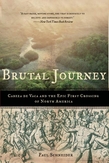
I had not heard of Narvaez either. I came across his story in an interesting book by Paul Schneider: Brutal Journey: The Epic Story of the First Crossing of North America (New York: Henry Holt & Co., 2006).

It is not surprising that Narvaez is so little known. People don’t often write books about failures.

That reminded me of another historical event. Some scholars have raised questions about the exodus of the Israelites from Egypt under Moses. They suggest that it did not happen since there is no record of it in Egypt. But most of the recorded Egyptian history that has survived is carved in stone, in monuments to commemorate rulers and their victories.  Nations don’t raise monuments to commemorate their defeats.

People don’t write books about failures. Nations don’t raise monuments to commemorate their defeats. Perhaps they should, since we learn much more from our failures than our victories.

Posted in James R. Coggins | Tagged , , , , , , , | Leave a comment

Casting out Sinners and Saints…

Right now, the church has a terrible reputation in American for being unloving and unkind to sinners.  I mean, we all fall short of the glory of God, so we don’t want to put anyone out, right?  Wrong.

In 1 Corinithians 1:6-8, we are to treat sin as a yeast that will infect the entire loaf of bread. “Your boasting is not good. Don’t you know that a little yeast leavens the whole batch of dough?  Get rid of the old yeast, so that you may be a new unleavened batch—as you really are. For Christ, our Passover lamb, has been sacrificed. Therefore let us keep the Festival, not with the old bread leavened with malice and wickedness, but with the unleavened bread of sincerity and truth.” 

This is personal for me.  I’ve seen men cheat on their wives, BRING their girlfriends to church and still the church did not confront them. I’ve seen two church employees have an affair (one a pastor) and rather than confront the sin publicly and lovingly, the pastor swept it under the rug for legal reasons.  The problem with that, besides the fact that it’s unbiblical, is other marriages started to be infected within the church.  It didn’t go away.  It spread.

My prayer for the church is that we would stop looking at the outside of people and start to judge the content of their character. When sin is present in the church, we have a moral obligation to confront our brother or sister, but we worry so much about offending, often we don’t deal and a splintered church is the result.  Especially when there are victims of these sinners within the church.

“If your brother sins against you, go and confront him privately. If he listens to you, you have won your brother over. But if he will not listen, take one or two sisters along, so that every matter may be established by the testimony of two or three witnesses. If he refuses to listen to them, tell it to the church. And if he refuses to listen even to the church, regard him as you would a pagan or a tax collector.…” Matthew 18:15-17

Why have we forgotten the last part of this Biblical advice?  Why do we ignore sin and choose “not to judge?”  The result of the above scenario is that a good woman left the faith because she was judged for her husband cheating and her “harsh words.”  The husband is still there. Divorced a second time now.

I heartily believe God cares more about a soul than he does a bad marriage to a wayward spouse.  I can testify that this woman tried desperately to keep her marriage together while her husband portrayed her as crazy and “controlling.” This friend doesn’t have anything to do with me or the church today.  I remind her of what the church did to her, that they chose to believe her cheating husband over having mercy on her.  They chose to blame her subtly for his sin.

I understand that the church is just people.  And people are flawed.  But I do wish that we would take confrontation more seriously and be more kind when someone is hurting.  I know in this day and age where it’s offensive to have a separate women and men’s room, confrontation isn’t an easy subject.  But it’s an important one. Souls are at stake.


Posted in Uncategorized | 1 Comment

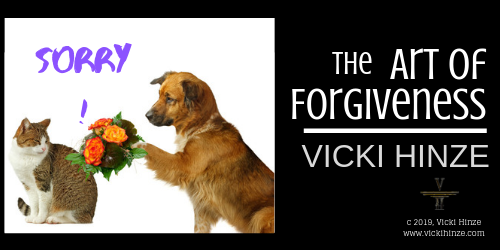
The Art of Forgiveness by Vicki Hinze


We’ve all been wronged, and we’ve all wronged.  One would think that would make the art of forgiveness easier, and yet it is something most still resist.  We tend to remember every infraction against us, but to forget every infraction we’ve committed against others.


Oh, it’s easy to forgive when someone genuinely expresses regret or sorrow at hurting us.  It’s much, much harder to forgive when that person denies having done anything which requires forgiveness.


Let’s say, for example, someone accuses you of something you didn’t do. If given the opportunity to deny doing that thing, you might resolve the difference.  But what if you aren’t given the opportunity?  What if that person severs any relationship with you, and you’re forever tainted as one who did something against them when perhaps you were trying to protect them or their interests?  Regardless, there’s no opportunity to forgive or be forgiven…or is there?


There is.  Forgive them anyway.  They won’t know it, but you will.


Let’s look at gossip.  It’s rife in our world, and it often wounds in ways we can guess and in ways we can’t begin to understand.  What if gossip is repeated and it proves untrue?  Who does it harm?  Everyone who listened and repeated the gossip.  And everyone else who heard it third and fourth-hand and repeated it—or believed it.


You see, the harm in gossip isn’t just to the subject of the gossip, but to the gossiper, and to those who listen to it.  Don’t fool yourself into thinking that if you just listen, it’s not causing harm.  It is.


The thing about forgiveness is that we’re all going to do something that hurts another.  Perhaps not intentionally, but even unintentionally, it still hurts.  And odds are high that at some time we’ll be on both ends of that kind of hurt.


We’ll be sitting in a restaurant and overhear a conversation at the next table about us being deceived by someone we love who is being dishonest with us.  We’ll be told about some unidentified person doing something foolish or dishonest—and recognize that person is us.  We might know it isn’t true, or we’re being maligned unjustly, but we still feel shamed, embarrassed, or worse.


The point is, at some time we’re going to need to extend grace and to receive grace.  If we refuse to extend grace when someone maligns us, what happens when we step over the line and need grace?


 When there’s a disagreement, often we have the chance to apologize and set things right. That’s a blessing and once it’s done, it’s over.  We don’t apologize to keep the peace.  We don’t apologize to end a disagreement for the sake of ending the disagreement.  On those things, we agree to disagree.  We disagree with respect.


When there’s a disagreement and we do not have the opportunity to explain things were taken wrong, or out of context, then the art of forgiveness isn’t lost.  It’s just different. 


You don’t have to address an infraction with another to forgive them. You forgive them on your own. Yes, even if they haven’t asked for it, or they believe it isn’t due.  


The bigger the harm to you, the harder this is to do, and there’s no way around that.  But that you forgive them anyway speaks to your character, not theirs.  It speaks to you attempting to do what is right even when only you and God know you’re making the attempt.

Sometimes forgiveness is easy.  The fonder you are of the person before the infraction, the easier it is. You have all their endearing traits to draw on to soften the upset of being maligned.  If you love that person, it’s a hundred times easier to forgive them anything. It comes in the love package, because we’re all human, and we all make mistakes.


If there is tension in the relationship before the infraction, it becomes a bit harder.  And the more emotions the infraction engages, and the more people who are involved, the more difficult forgiveness becomes.  But it is so important to forgive anyway.  Regardless of where things end up on the surface, inside you forgive.  Only by forgiveness do you reclaim your peace.


You see, inner peace is at the root of forgiveness.  Without it, you don’t have peace.  But if you can forgive the unforgivable, you can reclaim that inner peace. 


That doesn’t mean you permit someone to hurt you.  It doesn’t mean you forgive and forget.  That’s absurd.  You forgive and move on.  Some are best forgiven and kept distant—by your choice or theirs or both.  Some are best forgiven and reunited.  You know the difference by the nature of your relationship and the infractions.


The art of forgiveness isn’t to do it.  That’s a given.  For the other person and for you.  Anger, upset, pain is a heavy burden to carry.  When you forgive, you let go of it. 


You do not let go of the wisdom and insight you gained in the experience.  It hones discernment.  And that is where the real art of forgiveness is expressed. 


An example.  A former president said, “Trust but verify.”  That’s discernment.  Watch actions as well as hear words. 


We’re taught to “pray for our enemies.”  We’re also taught to forgive over and again, by those who ask. That extends to those who hurt us, whether or not they’re beloved.  So, what if someone with whom you had differences has passed on?  Are you prevented from resolving those differences?  You are not prevented from resolving them.  You do so within. 


If direct means for resolutions are not available to you, if the person is alive or dead, you aren’t prohibited from forgiving them.  Talk to them in your mind anyway.  Forgive them in prayer.  This enables you to regain your inner peace.  And remember, use discernment.  You can forgive, but not put yourself in a vulnerable situation with that person again.  Still, you forgive. 


There are as many types of forgiveness as there are situations that require forgiveness.  If you always begin with the premise that forgiveness is essential—to both parties—you’re halfway there.  Be determined and steadfast in resolving the conflict.  If you do not resolve it, it’ll become an old tape in your mind that replays over and over, even when it shouldn’t.


Remember these things: 

We all need forgiveness.  If we give it, we’re more apt to get it.

Forgiveness is the means through which we can let go of old problems and reclaim inner peace.

Forgiving doesn’t mean permitting disrespect or abuse.

Forgiving is an art aided by discernment on what is right in a given situation. Similar situations are as different as different situations, and require resolutions specific to them. One size does not fit all.


Determining what you should do to forgive and reclaim your inner peace—what is the right thing in this specific situation—that is answered in the home of discernment in forgiveness.  And for the best example of it, we need only to look at the most amazing act of forgiveness ever expressed in all of human history:  to Christ on the Cross.


There wasn’t an infraction that wasn’t committed against Him, and yet he forgave, and He prayed for forgiveness for those who harmed Him.


Discerning, and the Master of the art of forgiveness…

Posted in Uncategorized, Vicki Hinze | Tagged , , , | 3 Comments

How to Be Immortal

by Jim Denney, adapted from
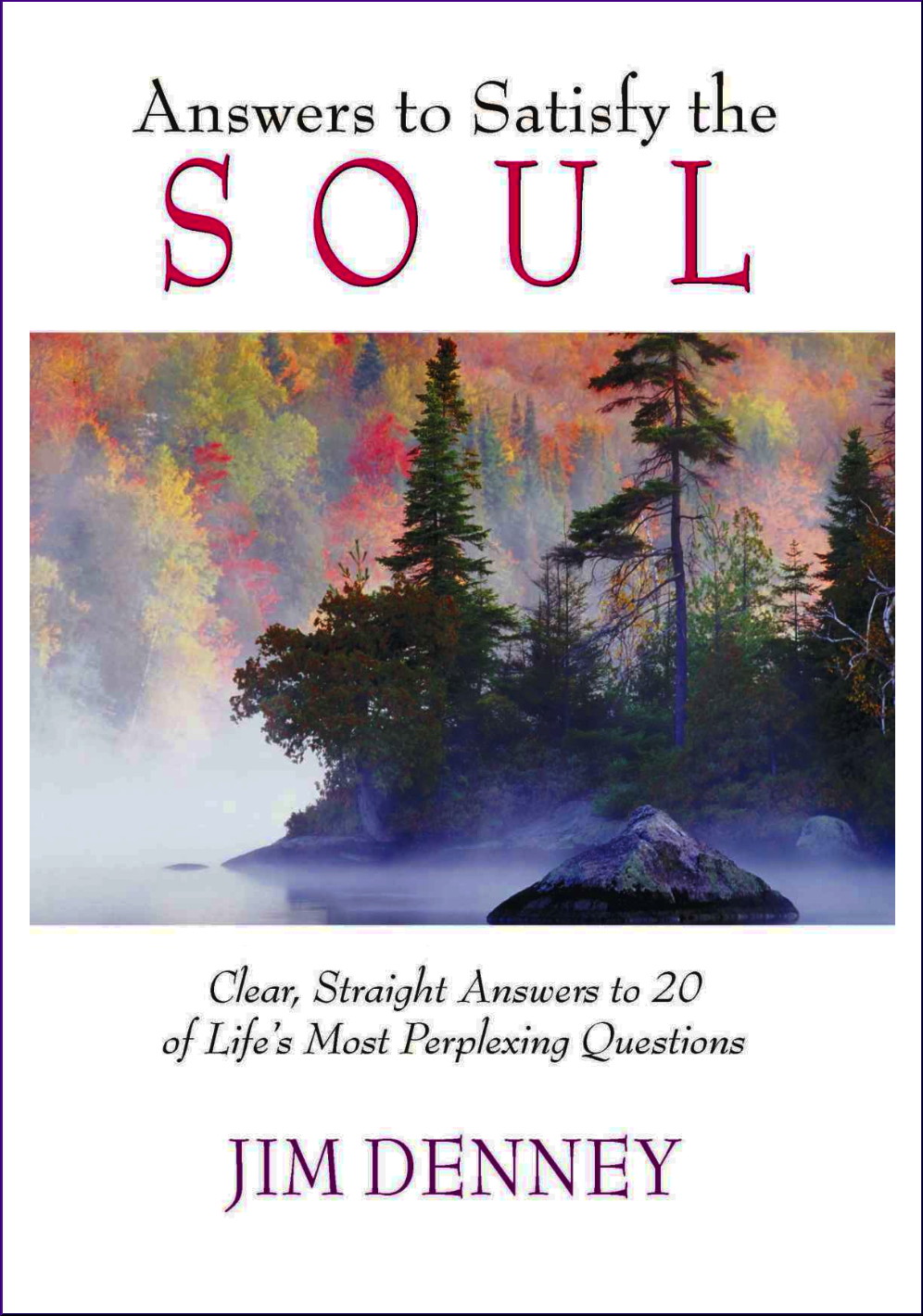
ANSWERS TO SATISFY THE SOUL:
Clear, Straight Answers to 20 of Life’s Most Perplexing Questions

“Show me, Lord, my life’s end and the number of my days; let me know how fleeting my life is. You have made my days a mere handbreadth; the span of my years is as nothing before you. Everyone is but a breath, even those who seem secure. Surely everyone goes around like a mere phantom; in vain they rush about, heaping up wealth without knowing whose it will finally be. But now, Lord, what do I look for? My hope is in you.” Psalm 39:4-7 

Fountain of Eternal Life

The Fountain of Eternal Life in downtown Cleveland, Ohio, sculpted by Marshall Fredericks, photo by Erik Drost, with enhanced color, used under the Creative Commons Attribution 2.0 Generic license.

A number of years ago, an agnostic science-fiction writer posted these observations at an Internet forum:

I have serious doubts that there’s anything more to my personality and “selfness” than a synergy between genetics, neurochemistry, and the environments and experiences to which I’ve been exposed. And my expectation concerning death is that it will be both corporeal- and ego-death—which is part of the reason I write, to be honest. Like everyone who finds existence interesting and occasionally enjoyable, I want to live forever. And I’m pretty sure than “I” won’t. The best I can do is to see that my genes live on through my children, and that my thoughts live on through my writing.

To this agnostic author, the nearest thing to immortality he could imagine consisted of creation and procreation—that is, writing and having children. I can empathize with him—but I can’t agree with him.

I love my children and I wouldn’t trade being a father for anything in the world. But from the time they were born, they have been living their own individual lives. I hope I have helped to shape their values and their character, and I have tried to give them a good start in life. But to my mind, there is no meaningful sense in which I will “live on” through my children. 

Can books make you immortal? It’s true that you can extend the shelf-life of your thoughts for decades, or even centuries, through books. Today, we can read the 2,700-year-old thoughts of Homer and the 400-year-old thoughts of Shakespeare—but what are a few centuries next to genuine immortality?

ImmortalityTramplingTime

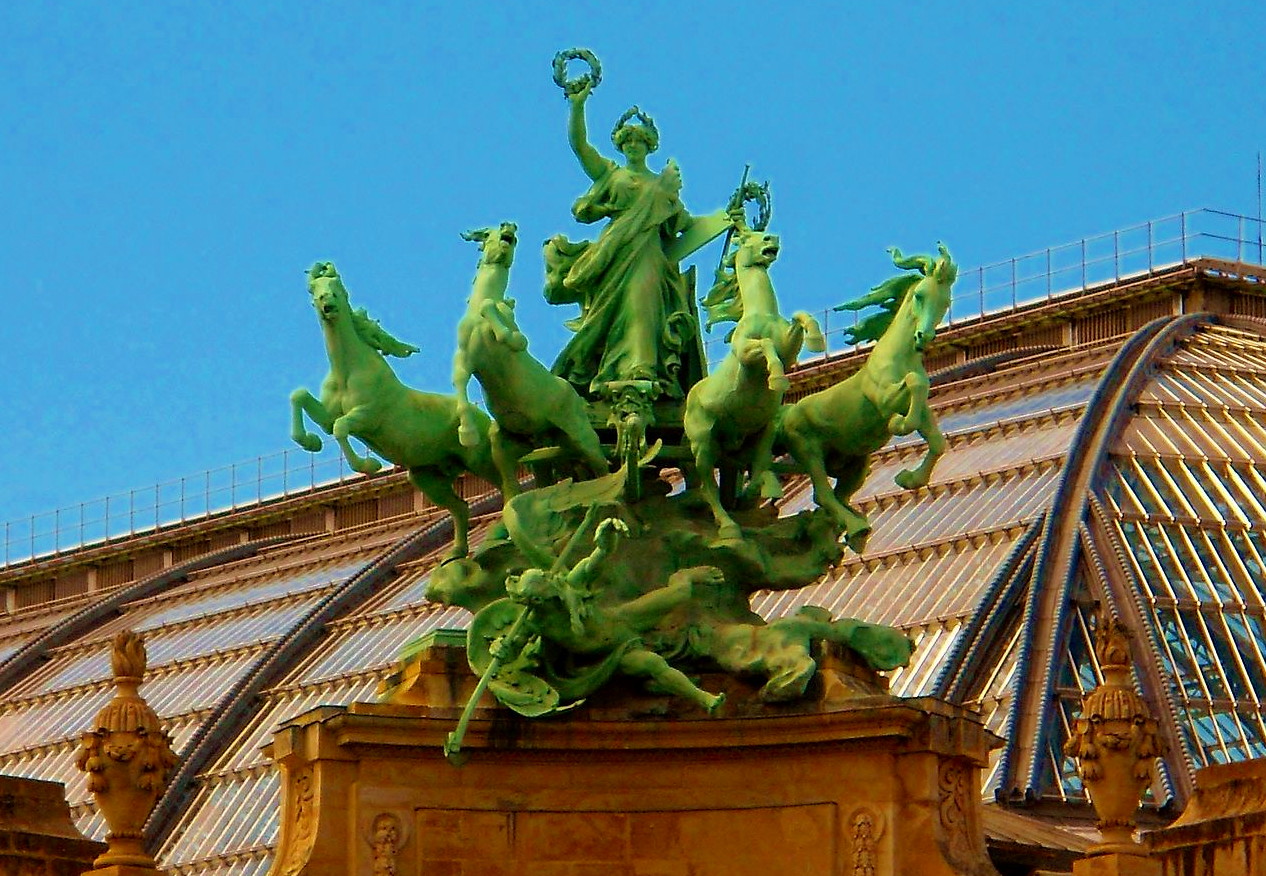
 Immortality Outstripping Time, a statue at the Grand Palais in Paris, sculpted by Georges Recipon; photo by Doods Dumaguing, with enhanced color, used under the Creative Commons Attribution 2.0 Generic license.

Paper deteriorates, bindings rot—there are few things more fragile in the world than books. Achieve immortality by writing books? No,

I write because I have been given something to say, and I have to get it said before I die, that’s all. Books don’t bestow immortality.

I have no illusions about becoming immortal through my children or through my books. Immortality, to me, does not consist of “making my mark on the world.” Achievements and fame, my name in the history books, buildings named after me—what kind of immortality is that?

The only kind of immortality that interests me is the kind where I get to live for ever and ever, even after I die. That’s the immortality I have bet my life on.  

“For God so loved the world that he gave his one and only Son, that whoever believes in him shall not perish but have eternal life.” John 3:16

_____________________________

Answers-SoulANSWERS TO
SATISFY THE SOUL:
Clear, Straight Answers to 20 of Life’s Most Perplexing Questions
by Jim Denney 

(Kindle Edition: $2.99)

“Read this book and save yourself a lifetime of searching and wondering. The answers you seek are all right here!”
—Jack Canfield, author of Dare to Win and the Chicken Soup for the Soul series

“Grab an arm-load of Answers to Satisfy the Soul! Buy one for yourself, one to lend out, and a dozen to give as gifts. You’ve got a lot of friends who need this book!”
—Pat Williams, author of Character Carved in Stone

“If you are on a quest for success, happiness, love, meaning, or God, this book is for you. Whatever you seek in life, Answers to Satisfy the Soul will speed you on your journey.”
—John C. Maxwell, author of The 21 Irrefutable Laws of Leadership

Posted in Jim Denney, Uncategorized | Tagged , , , , , , , , , , | Leave a comment

Nora’s Review of… THE PRINTED LETTER BOOKSHOP by Katherine Reay


The Printed Letter Book Shop

By Katherine Reay

Publisher:  Thomas Nelson – Harper Collins

Release Date May 14, 2019

ISBN# 978-0785222002

336 Pages


REVIEW: All bookish people will love this story. It’s fun, intriguing, has a mystery and a splash of romance. It takes place in The Printed Letter Book Shop a place I’d love to hang out in and work at. The author does a brilliant job of placing readers inside the shop as the customer and then as an employee/owner of the store.

Maddie is the founder and creator of the shop, Janet was an artist and put up inviting window and end cap displays. Claire was great at running the business end of things. Madeline (Maddie’s name sake) just inherited this special book store that the community embraced and adored. They didn’t want to see it close.

I love that the author invites the reader into this special place and the reader is also on the receiving end of book recommendations, where they describe books, give quotes from books and talk about books Maddie has recommended to the three people who run the book store, Janet, Claire and Madeline. Each list was personally handpicked by Maddie herself and given to each of them after her death by her attorney Greg Frankel.

Quote from book, Madeline says, …”I remember Aunt Maddie saying you could lose yourself in a book and, paradoxically, find yourself as well.”

Madeline was a lawyer in a prestigious firm and worked hard to hopefully make partner. She didn’t want anything to do with this book business. It was her Aunt’s thing. But Madeline’s life takes a sharp turn into an unexpected zone and she finds herself getting to know her Aunt Maddie and her family in ways she never thought possible. It changes the way she looked at her Aunt, parents and herself. She begins to question what’s important in life.

All three women realize that The Printed Letter Bookshopis more than a book store it’s a place where they can bloom and grow in friendship and in healing for themselves and the community. Things change for these three women as their friendship develops and they start to trust each other.

I had a hard time getting into this book at first because it seemed slow and it started off at a funeral. The author shows the funeral from all three women’s perspective Janet, Claire and then Madeline. It was a little confusing until I got my bearings as to who was who and how it related to the scheme of things. The author clearly labels the chapters, so you know who is talking.

At the surface I thought maybe this story was just going to be pure fluff and fun being in the book store sharing favorite books and book quotes but once I got my bearings the author takes readers deep.

I was amazed at what each character had to deal with and how natural the spiritual thread was intertwined throughout the trials, healing and forgiveness. It choked me up in parts.  The author naturally lets the light shine in the dark places. Showing that sometimes it’s harder to forgive yourself and at other times it’s harder to forgive what’s been done to you. These ladies give each other the grace to take one step at a time as they recapture their lives, their hopes, dreams, worth and loves.

I highly recommend this book as a book club pick. It’s a rich story with characters you care about and all the things we love about books. This was the first novel I’ve read by this author it won’t be the last. This books a keeper.

Disclosure of Material Connection: I received a complimentary copy of this book from the Publisher. I was not required to write a positive review. The opinions I have expressed are my own. I am disclosing this in accordance with the Federal Trade Commission’s 16 CFR, Part 255 “Guides Concerning the Use of Endorsements and Testimonials in Advertising”

Nora St. Laurent

TBCN Where Book Fun Begins! http://www.bookfun.org

The Book Club Network blog http://www.psalm516.blogspot.com

Book Fun Magazine https://www.bookfun.org/page/past-issues-book-fun-mag


Posted in Nora St. Laurent, Uncategorized | Tagged , , , | 1 Comment

Tips for a Refreshing Summer Vacation

Summertime is a popular time of year to take vacations. We look forward to our trip for many months. But even though vacations are a pleasant experience, they can be stressful as well. Here are some tips that might help make your summer vacation a refreshing trip.

Research your options before committing to a particular establishment. Most people choose hotels to stay in. Hotels are convenient because they might have free breakfast, a pool, cleaning staff, etc. However, you might also want to consider renting a house or a cabin. This will give you and your family a nice private space to enjoy one another’s company. It adds a bit of a personal touch to your vacation. Home/cabin renting is especially popular in the Smoky Mountains. And the prices are usually not much more than what you would pay for a hotel.

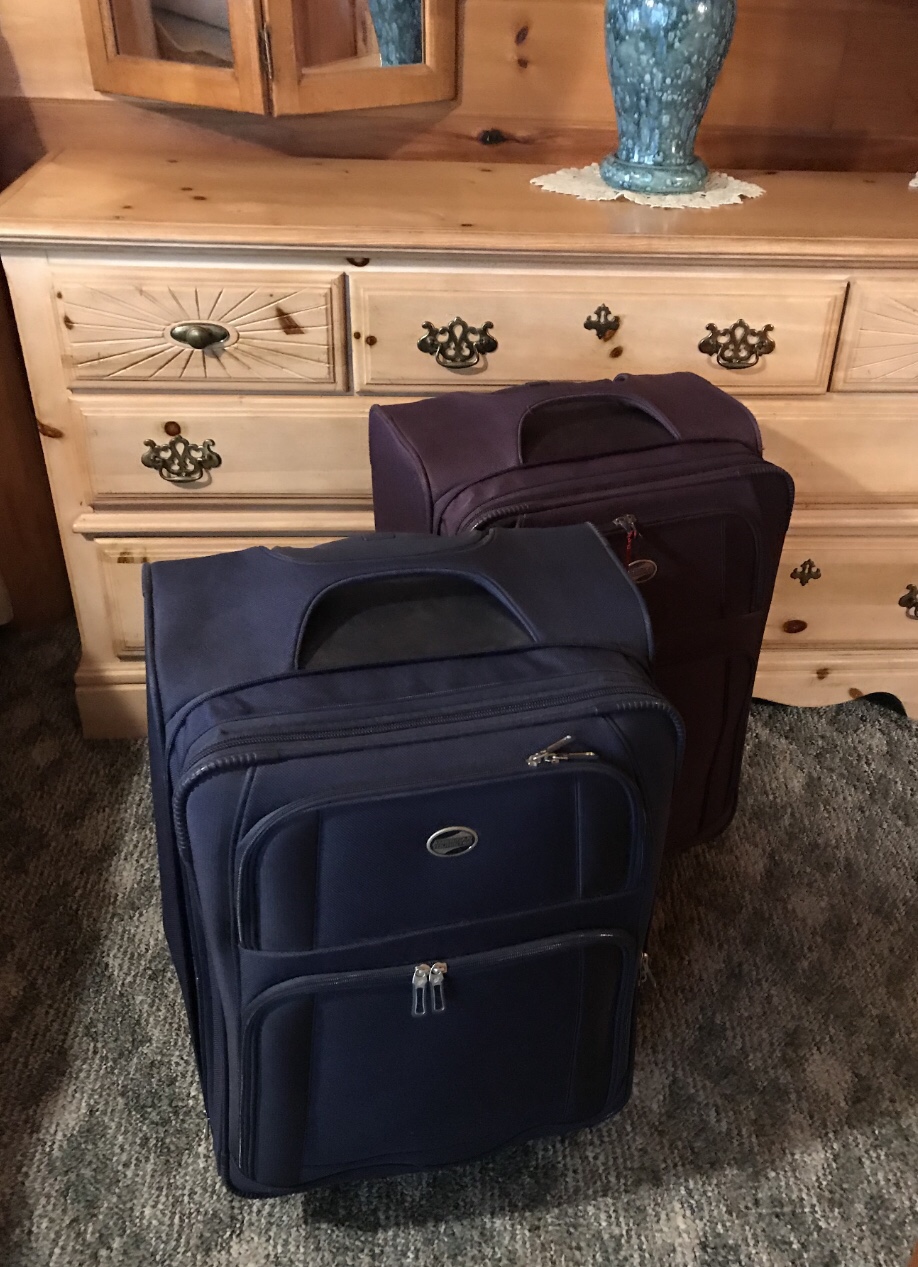
Pack your Bible. On our recent vacation I didn’t read my Bible every morning, like I normally do at home. And I could feel it! I felt a bit out of sorts. When I finally pulled my Bible out of my suitcase to read it one morning, it made a big difference in my day.

Make the drive fun. If you are driving, like we did, do something fun in the car. It keeps the drive from getting to be too boring. One idea to break up the monotony is to count the number of churches you see along the way. This is something I did on our recent trip to the mountains. It was neat to see all the different churches and I even took pictures of some. On one particular trip, it got dark along way, so we had a good time looking for lightening bugs.

When I was a child we used to play a game where one person thought of a certain item that you might find in a particular room in a house. They would say to the other people in the car something like, “I’m thinking of something that starts with a ‘B’ in the kitchen.” Then all the other players would take turns guessing what it was. Whoever figured it out first would then have a turn at stumping the group. On one particular trip my father had us all guessing for a very long time before someone finally said the word “breadbox!”

Plan regular stops to stretch your legs. It is amazing what a short walk can do to revive yourself when you have been in a vehicle for many hours.

Carry plenty of water. When you’re on the road, it can be easy to neglect important daily habits, such as drinking water. So pack water in the car to ensure you have it on hand. If you are flying, you could pack water in your suitcase or buy a case when you get there. Of course you can buy a bottle of water almost anywhere. But buying one bottle at a time will obviously cost more money.

Be flexible. Whether you are traveling with members of your household, extended family, children, and/or pets, things can get stressful. Not everyone will have the same likes or interests, which is ok. But try to respect each other’s wants and needs. My friend Lorraine recently told me about something she and her family and friends had done once on a vacation. There were four people in her group and they each picked out one activity that they wanted to do.

Work together. A coworker of mine told me about a method she used when traveling with a large group. They stayed in a large cabin and had over a dozen adults and children. They made a schedule for which adults would be responsible for cooking each meal for the group. I thought this was a fabulous idea.

Be present. We all have mobile devices that distract us. We might be tempted to check our work email, Facebook, or any other all too convenient app. But try to lay your devices down as much as possible. Be fully present and engaged with your loved ones. Let your presence be a present.

And of course, take plenty of pictures and have lots of fun! If you have any tips, please share in the comments!

Posted in Uncategorized | Leave a comment

Rejoice Always by Julie Arduini

I’m a Bible study girl. My bookshelves are full of completed studies where I’ve poured over verses and learned new insights from an unchanging God. What I love is often I can find free online studies where videos are offered for the duration of the study. Sometimes I join the online community, and sometimes I branch off and form my own

This summer I’m going solo, and the study is Max Lucado’s Anxious for Nothing. If you haven’t picked up Max’s vast collection of works, put that on your summer bucket list and get at it. He is a natural storyteller with such wisdom and grace. Whether through word or video, he has the look of someone that you’d strike up a conversation with at the coffee shop and leave knowing you met a new friend.

I picked up the book thinking anxiety is something I’ve had here and there with hormonal issues, and a loved one definitely struggles, so why not read it? It didn’t take long before I realized as I read anxiety has been a rock in my shoe that I’ve walked so long with, I didn’t even notice.

Now I’m aware, and like you, there are some what if situations just dancing around me, threatening to steal my peace. What might throw me off might not you, but here are common things:

-Finances

-Health

-Relationships

I’m painting with a broad brush, but our area idled an automotive plant that employed thousands. Now the local newspaper is shutting down There are so many people looking for work. Trying to pay their bills.

There are also people going to the doctor or visiting nursing homes. ER visits. Unexpected surgeries.

Relationships? Anxiety over whether that one is “the one.” Stress when the marriage isn’t working. Devastation over an affair. Grief learning a new normal without a spouse.

It’s a tornado of situations that kick up a lot of what if’s that keep our pharmacies in business.

I’m no different and I thought what I would share here is how present God is. How specific. Not only in the study am I reading about Philippians 4:4-6, but it’s popping up everywhere. Pastors mentioning it in sermons. Reading it in devotions. Friends drop it in their conversation.

The words for this week come from verse four. “Rejoice in the Lord always.”

Rejoice is a ten-point vocab word. You can’t be blah when it’s time to rejoice. It requires action and emotion. Intentionality. Always? That’s pretty specific as well. Not when we feel like it. Not just when the news is good. Always.

When the job is gone. The marriage is over. The word cancer is mentioned. College is off the table.

Trust me, I know it sounds cliche, and I’ve struggled . But He is faithful. Any hard thing He’s allowed only strengthened me and prepared me to help someone down the road going through the same thing.

So if you’re struggling, I hope this post encourages you. God’s got you. I promise!

I don’t think it’s too late to join the Anxious for Nothing Study. Check it out!

Posted in Julie Arduini | Tagged , , , , , , , , | 1 Comment

A Wild Ride (by Hannah Alexander)

I like to be in control when I’m in a car. All the time. When I’m riding with someone in a car and they slam their brakes too sharply or get too close to the bumper of the car ahead, I slam my imaginary brake on the passenger side. This is why I typically do the driving, because my braking foot takes a beating when I’m the passenger.

You might say, “Poor Mel.” And you would be right. When we travel, I’m usually the driver. He’s more laid back than I am, and he actually likes being the passenger. He makes life and death decisions at work, and letting me drive takes the stress away–especially if it’ll keep me from riding my imaginary brake.

I think I tend to do that with God, too. You know, grip the reins of my life too tightly and make my own decisions without waiting on God to control. If you do this, then you’ll probably understand that this kind of behavior can land you into trouble. Why do some of us have to learn this lesson the hard way?Recently, however, I received a God-breathed gift of learning to allow someone else to drive. Our pastor made this possible with a mountain-edge trail and two ATVs.

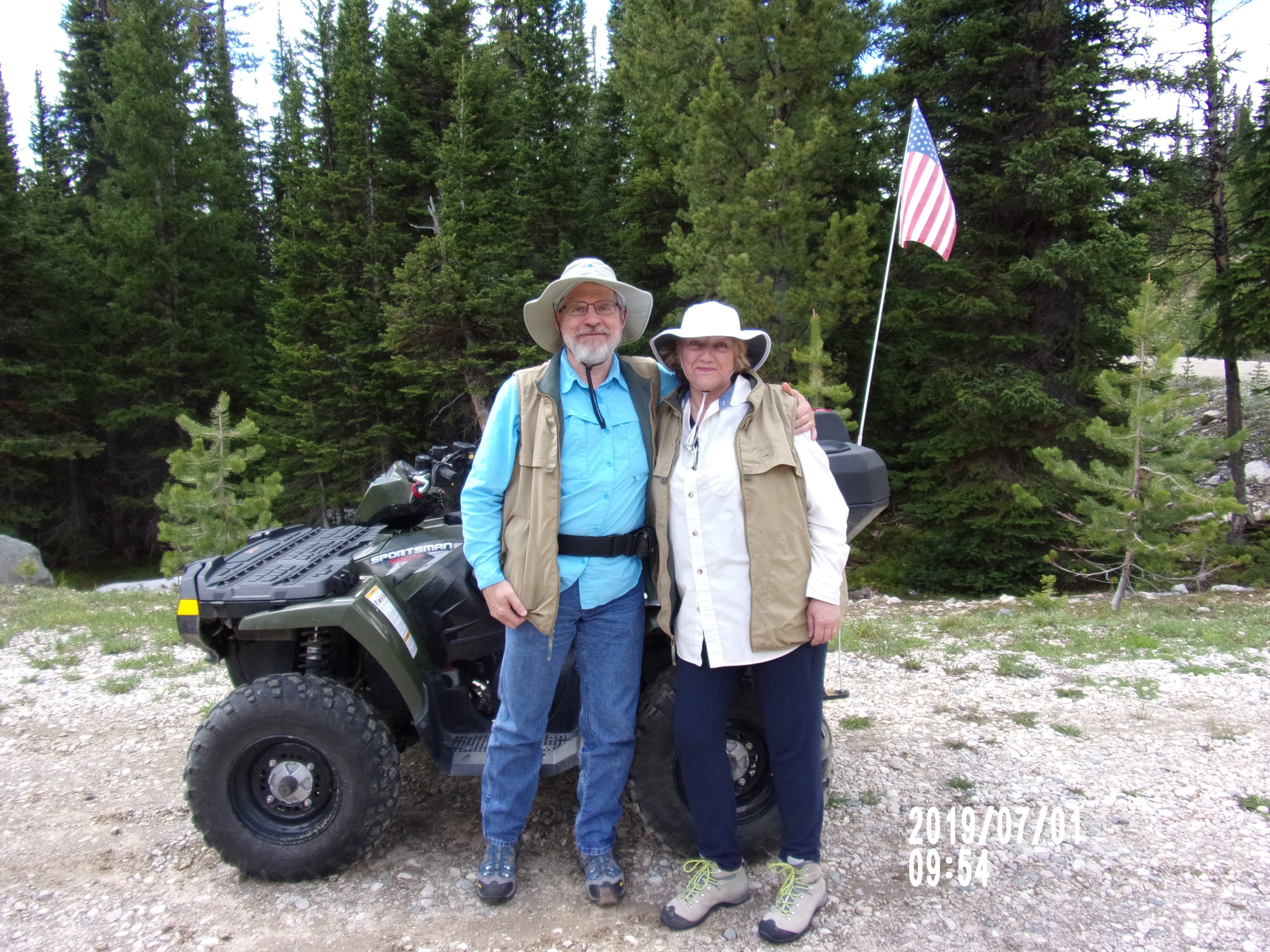
Anyone who knows me would think I could tackle a rocky ATV trail with great enthusiasm. After all, we had gone on other rides with these friends and had an amazing time, and when I’m with Mel I feel fearless. This time, however, it was scary. I mean, there was a water-engorged rushing mountain creek maybe 200 feet below a cliff-edge trail covered with rocks of man sizes, from fist-sized to tire-sized. We had to climb to the top of the mountain before we could fly down the other side through mud-and-snow-piled curves. I simply could not do it. I don’t have the strength in my shoulders to push the accelerator and hold onto the handlebars.

So following our good and trusted friends–and of course using them as guinea pigs to see if they fell off the cliff first–I latched onto Mel and begged him to drive.

Kind of like releasing my own will and doing only God’s, I trusted only in holding on tightly and at times spelling the word h-y-p-e-r-v-e-n-t-i-l-a-t-e over and over again, sometimes closing my eyes, often trying not to scream. When I realized that no one could hear me over the sound of the engines, I learned that I could even scream on occasion without alarming anyone.

It’s that way for me when I let go of my own will and allow myself to be subject to God’s, instead. It occurred to me in my panicked brain at one point that this wild ride–which some daredevil riders told us to take–was a good picture of the Christian life. We followed our pastor and his wonderful wife, and I trusted Mel’s strength and God’s grace and mercy to keep us on the trail.

After a few wrong turns–after which we were forced to turn around on a very tight trail–we found the actual trail at the top of the mountain, and the rocks disappeared and the mud began!

Oh, the joy of being on the mountain top with snow and mud flying in every direction, the pine scent and the views of other mountain tops in the distance, and no cliff beckoning our ATV to tumble down. YeeHaw!

Isn’t it like that at times in our Christian walk? God calls us to something frightening, daunting, or at least a little nerve-wracking, and we actually do His will and follow? Have you felt that rush lately? I want to do this more often!

We are attempting to do that more often out here in the wilds of Wyoming, where everyone lives a little more on the wild side. I would love to hear if you’ve taken a step you wouldn’t ordinarily have taken, and stepped more fully into God’s will, even if it was daunting. Or even if you’ve had an adventure recently that was also on the wild side.

Posted in Hannah Alexander | Tagged , , | 4 Comments

A Friendly Perspective by Tara Randel

friendshipisone-min

This past weekend was a long holiday, the perfect time to get together with family and friends. I met up with local writer friends for a long overdue lunch date. With deadlines, health issues and a full-time job, we haven’t seen each other as often as we used to. Just a few years ago we got together several times a week to work on projects. We discussed what was happening with our children, we held brainstorming sessions and enjoyed coffee breaks. We were a constant presence in each other’s lives. Although it was gradual, it felt like we grew apart overnight.

Life changes. It’s sad that we aren’t there for each other as often as we used to be. Even though the bond is still strong between us, we’ve accepted the fact that we have a more distant relationship. But when the opportunity arises to see each other, we grab it. We chat and laugh, acting as though we just saw each other yesterday. Then we promise to meet again soon, looking forward to our next visit.

On Sunday, two members of my church, who have moved away to pursue their dreams, happened to be home for the weekend. One is hoping to succeed as a professional dancer, the other is in Bible college. It was a jam-packed service as these young people filled us in on the up and downs of their experiences. These are true long-distance relationships, but it reminded me of how God keeps us connected, to old friends or with those who go off to places we might never step, in order to fulfill the desires God has placed in their hearts.

My point?

People come and go. We can see so much of what the Lord is doing in His kingdom by treasuring the relationships that have been so important to us and by seeing what others are accomplishing because they listened to the call of God. And while we might miss times spent with good friends, watching those who are working toward their goals is encouraging. It takes the sting out of missing our buddies. One thing is sure, God has a plan and we go through seasons in life with different people. I’ve learned to embrace new and old relationships, bittersweet as they may be.

In two weeks, I’ll be headed to New York City for the Romance Writers of America annual conference. I’ll be traveling with a good friend, someone who has been there for me though good times and bad. We just spent yesterday going over our schedule, trying to fit excitement into every spare minute so we can visit landmarks we’ve talked about seeing for years. Once at the conference, I’ll see fellow authors I only see at this conference, along with my agent and editor. Plus, I’ll meet people while I’m there, proving that we can always expect new friendships while still maintaining old friendships, and we become better people because of it.

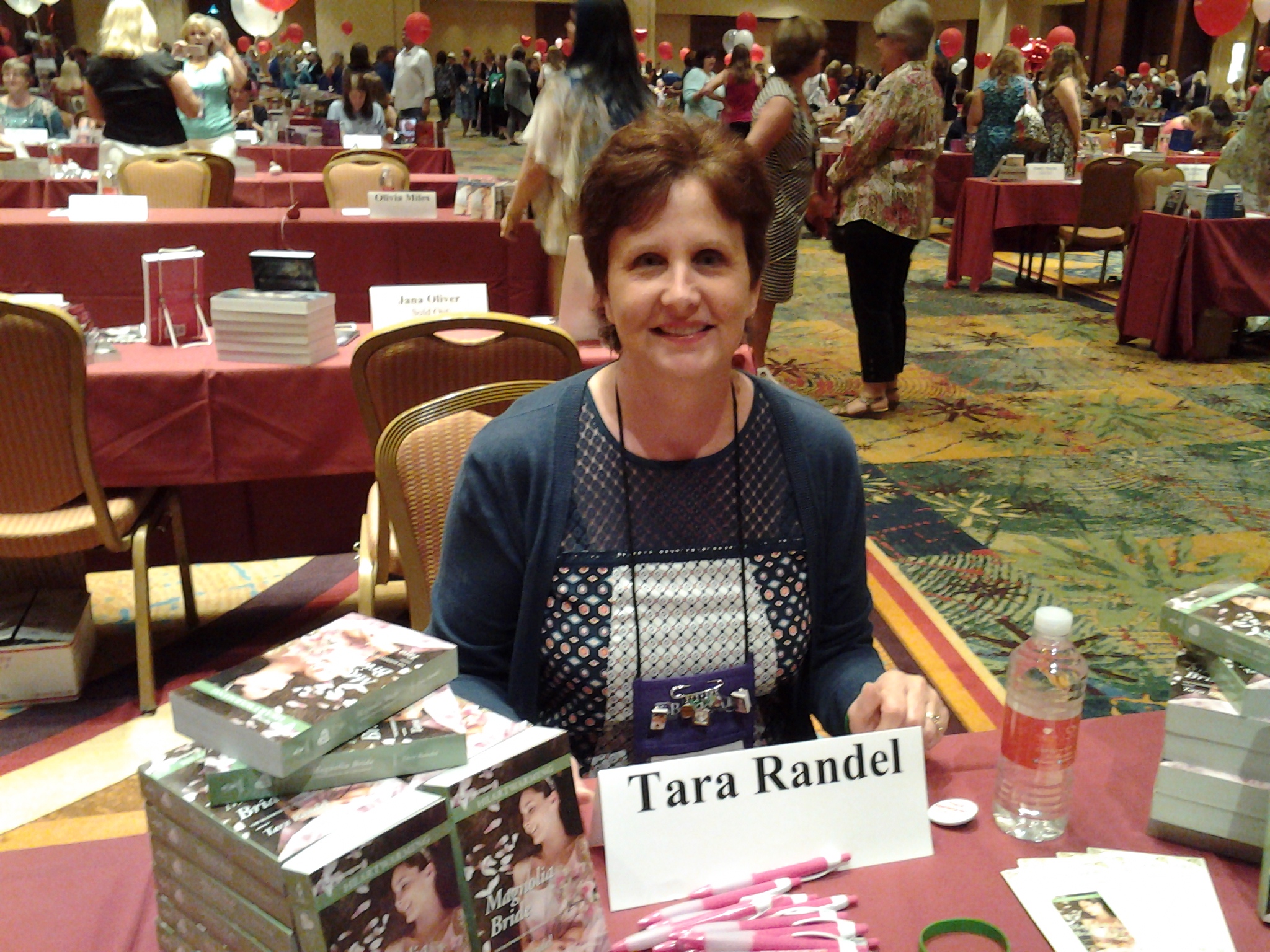
I’ll have pictures next time. This was taken at the Literacy signing at a past conference.

20140723_171425

Take the time to embrace those who have impacted your life, but be ready to meet folks who will add something totally different to how you view life. It’s a roller coaster ride, but I wouldn’t have it any other way.

Copy of Available August 2019

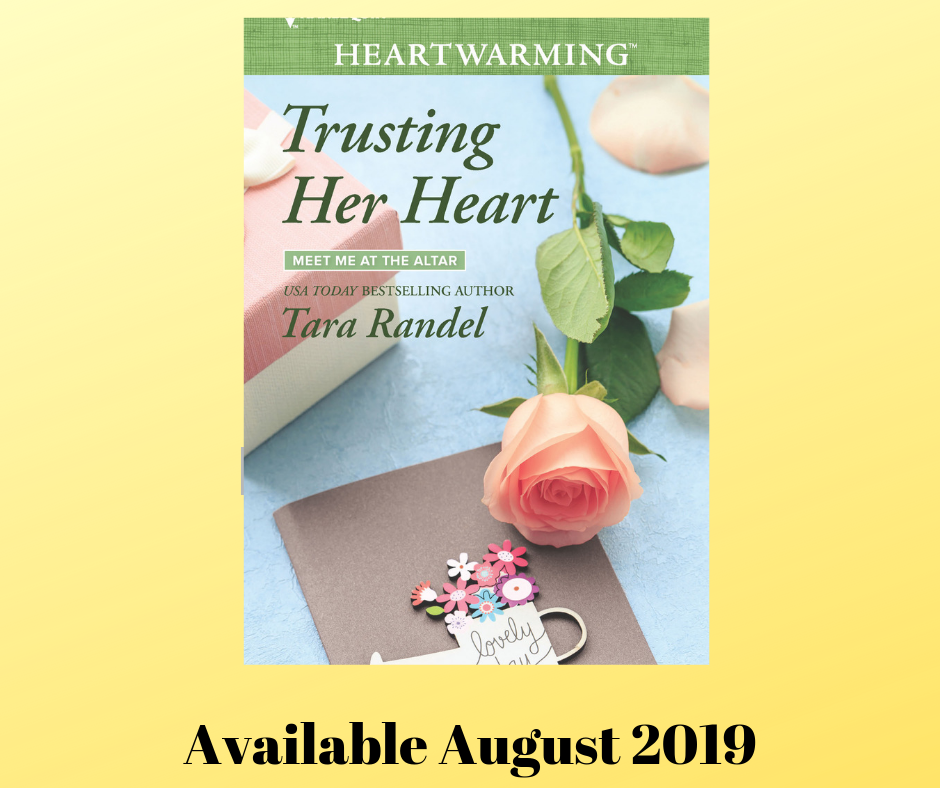
Tara Randel is an award-winning, USA Today bestselling author. Family values, a bit of mystery and of course, love and romance, are her favorite themes, because she believes love is the greatest gift of all. Look for her next Harlequin Heartwarming romance, Trusting Her Heart, available August 2019.  Visit Tara at www.tararandel.com. Like her on Facebook at http://www.facebook.com/TaraRandelBooks. Sign up for Tara’s Newsletter and receive a link to download a free digital book.

Posted in Tara Randel | Tagged , , , , , | Leave a comment

When the Pressure’s On, Stay Loose

by Jim Denney, adapted from
ANSWERS TO SATISFY THE SOUL:
Clear, Straight Answers to 20 of Life’s Most Perplexing Questions

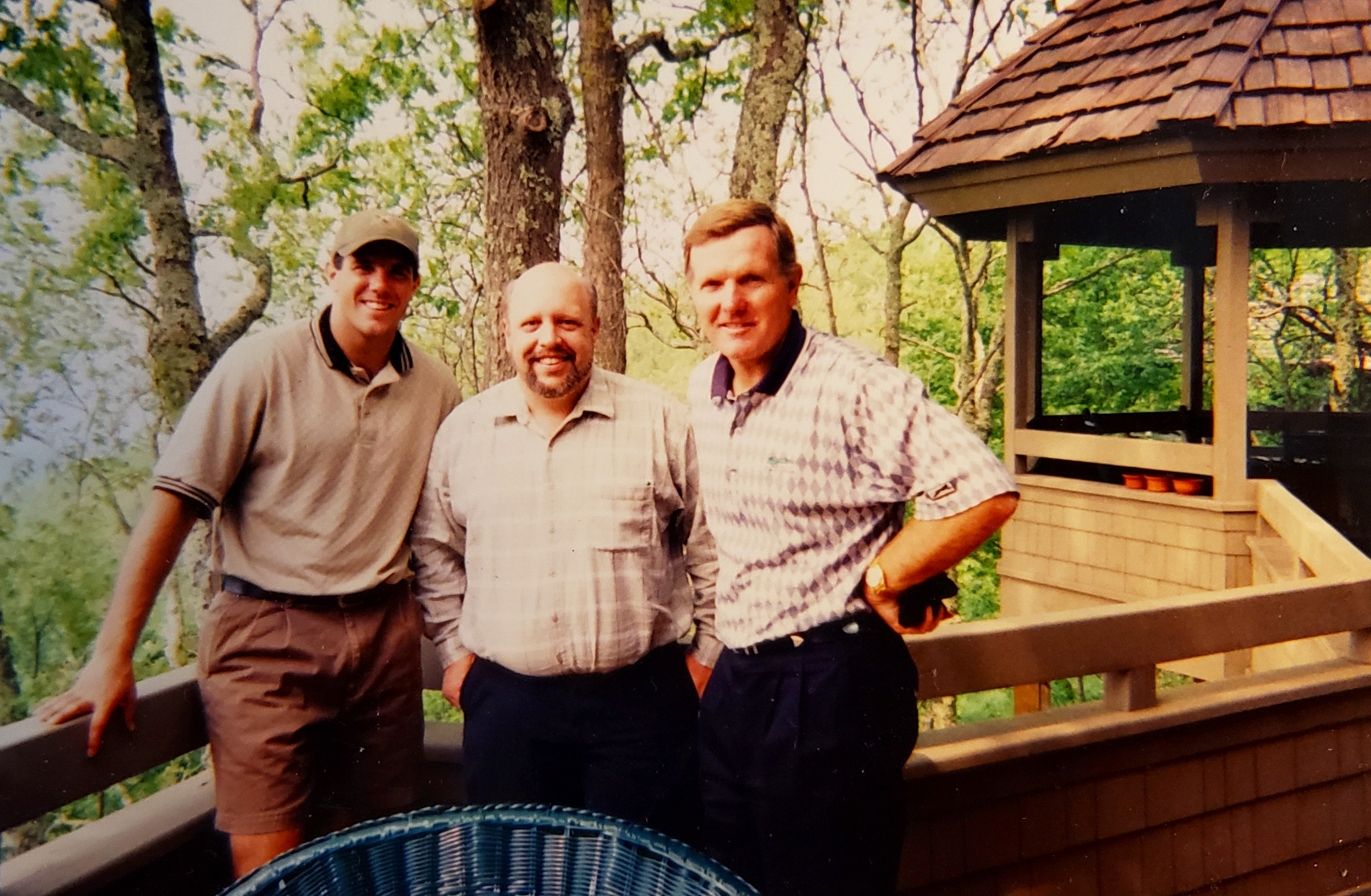
Bob Griese quarterbacked the Miami Dolphins to three consecutive Super Bowl appearances, including two victories (VII and VIII), and an undefeated season in 1972. Twenty-five years later, Bob’s son, Brian Griese, led the Michigan Wolverines to an undefeated season and a win over Washington State in the Rose Bowl. Today, Brian is a color commentator for ESPN College Football. I interviewed Bob and Brian just a few months after Brian’s Rose Bowl win. 

1999-BrianJDDBobGriese-600dpi

L to R: Brian Griese, Jim Denney, Bob Griese, in North Carolina

We sat in the study of Bob’s golf villa in the Blue Ridge Mountains of North Carolina. As we talked, Bob and Brian told me about the father-son discussion they had in a Pasadena restaurant, just a few days before the Rose Bowl.

Bob told his son that day, “There’s no pressure on you. You’ve gotten to where you want to be. Now just go out there and have fun.”

“I’m gonna have fun, Pops,” Brian replied, “but I’m also gonna win the Rose Bowl.”

“I wanted Brian to stay loose,” Bob told me. “I didn’t want him feeling a lot of extra pressure just because it was a big bowl game. I told him to approach the Rose Bowl like any other game of the season. If he did that, I knew he’d be okay. I said, ‘The Rose Bowl is just a football field like any other. It’s a hundred yards long and fifty yards wide. You don’t have to throw the ball any different than you’ve been throwing all year.’”

Brian took his old man’s advice. He stayed loose. He had fun. And despite throwing an early interception, Brian led the Wolverines to a 21-16 comeback victory over Washington State. It was Michigan’s first national title in fifty years. Brian went on to succeed the fabled John Elway as starting quarterback of the Denver Broncos.

BobGriese1967Purdue

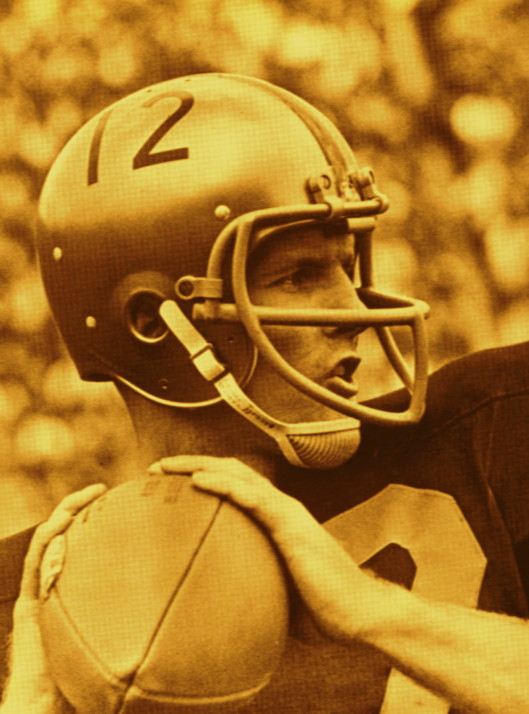
Bob Griese, quarterback, Purdue University, in 1967. Photo: public domain.

Brian always had the most fun when things were tough. “Sometimes I set up to throw,” he told me, “and all of a sudden this big lineman’s paw comes outta nowhere and rakes across my facemask. Right then, the pressure is intense and I have to make some crucial decisions. The pocket is collapsing, and the defensive line is charging—but that’s what makes it fun.

“One time we were losing to Ohio State. I subbed in after our starting quarterback was hurt. I knew the Ohio State defense was tough, but over-anxious. They were thinking, Griese is just a backup quarterback. We’ll chew him up and spit him out. I mean, they would have loved to get in there and bury me. So I thought, Fine, let’s have some fun with this.

“Anytime a defensive lineman or a linebacker blitzes, he comes at you so fast that any little move you make, man, he’s going to fly right past you—and it makes them look terrible. And it’s funny! I’d say to them, ‘Hey, you’ve got to learn to lay back, man, because you’ll never get me that way.’ And they’d say, ‘I’ll get you next time, Griese! Next time I’m coming from your back side!’ But they didn’t get me. I just kept having fun with them, and by the end of the game, we’d won it.

“There was a game against Iowa in Michigan Stadium, and I really struggled in the first half. I threw three interceptions, and Iowa got two touchdowns off those interceptions. At halftime, we were down 21 to 7. When we came out to play the second half, Coach Carr took me aside and said, ‘This team is depending on you, Brian. They’re looking to you for leadership. So have fun out there—but bring us back.’ So we went out there and had some fun. First thing we did, we went right down the field, a 67-yard, eight-play drive that ended in a touchdown. After that, I was fine. And we won the game.

“To win, you have to be confident—and confidence comes from not taking things too seriously. When I play football, I know I can play this game. I never think, What if I make a mistake? I look at it this way: It’s just a game. I’m going to go out and have fun. That takes the pressure off. Sure, you’ve gotta be serious about winning, and your teammates have to know you’re serious—but at the same time, you have to have fun in order to be cool and calm and not get rattled in the pressure situations.”

That’s great advice for any endeavor—whether in sports or writing or the performing arts or business or ministry. Yes, approach what you do with a serious desire to compete, to do your best, to excel. But don’t forget to have fun. When the pressure is on, when the pocket is collapsing and your opponent is blitzing you, don’t panic. Instead, loft a quick prayer for wisdom and boldness—then enjoy the adventure. 

If you have fun at what you do, you can’t help but succeed. True success means accepting the challenge God has called you to and joyfully living the adventure of faith.

“Do you not know that in a race all the runners run, but only one receives the prize? So run that you may obtain it.” 1 Corinthians 9:24

_____________________________

Answers-SoulANSWERS TO
SATISFY THE SOUL:
Clear, Straight Answers to 20 of Life’s Most Perplexing Questions
by Jim Denney 

(Kindle Edition: $2.99)

“Read this book and save yourself a lifetime of searching and wondering. The answers you seek are all right here!”
—Jack Canfield, author of Dare to Win and the Chicken Soup for the Soul series

“Grab an arm-load of Answers to Satisfy the Soul! Buy one for yourself, one to lend out, and a dozen to give as gifts. You’ve got a lot of friends who need this book!”
—Pat Williams, author of Character Carved in Stone

“If you are on a quest for success, happiness, love, meaning, or God, this book is for you. Whatever you seek in life, Answers to Satisfy the Soul will speed you on your journey.”
—John C. Maxwell, author of The 21 Irrefutable Laws of Leadership

Posted in Uncategorized | 2 Comments

What a Birthday–243 Years by Yvonne Lehman


What a Birthday! 243 years.

(No, not mine!) our beloved country – America!

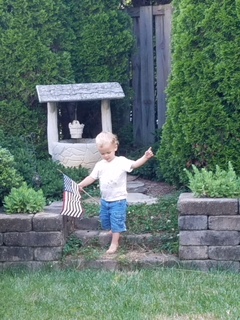
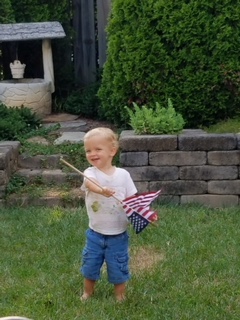
Wonderful to celebrate in the back yard with family members, eating BBQ, hot dogs, corn on the cob, slaw, watermelon and topping it off with banana splits and games – while 2-year-old Rory waves the flag.


God bless America!

He has!

Posted in Yvonne Lehman | Leave a comment

INDEPENDENCE DAY! by Vicki Hinze

Independence Day

By

Vicki Hinze

Independence Day is on the near horizon. On Monday, we’ll gather with family and friends and neighbors. We’ll picnic and grill. We’ll watch fireworks explode, maybe shoot off some ourselves, and celebrate the day off work. But do we and our kids know what exactly we’re celebrating?

Recently, I watched man-on-the-street interviews on a college campus. Asked who America fought for its independence, only one person of those asked could answer correctly. Only one.

This was admittedly shocking, but then in many institutions, the study of American history is an elective. The study of civics is elected. How can students grow to informed citizens when they have no idea about their roots, the country’s fabric, or the way the government works?

Realizing the deficiencies should concern us all. And it should set us all to thinking. Noted philosopher, Socrates, considered independence the ability “to find yourself, think for yourself.” Elbert Hubbard said, “Freedom cannot be bestowed—it must be achieved.” Both make valid points that are worth some thought this Independence Day.

In America, thanks to the efforts of our forefathers who established this nation and all who have sacrificed so it endured, everyone in America is born free. Everyone has rights that protect his or her freedom. But in everyday, practical life, whether or not one remains free is up to the individual.

Freedom and independence are Linked

One can’t be truly free while being dependent on another. Whether you rely on an individual or an entity to, say, house and clothe and feed you or to pay your dental bills, once you are reliant you are no longer self-sustaining or self-reliant or independent. You are no longer free.

Costs of Dependence

With dependence comes costs. You rely on and are subject to the terms and conditions of being reliant. There are rules you are required to follow to be given what you need.

You can do this. You can’t do that. You must fit within these perimeters. If you do fit, you get what you need. If you do not fit, you don’t. That’s not freedom.

Embracing those “requirement” rules results in an absence of freedom. And that absence, if embraced, takes people to a place where it’s like stepping on a treadmill and, once on it, one can never step off.

Perhaps that truth is the root of the saying, “There’s no such thing as a free lunch.”

An example. You collect a check from the government each month. You can’t work. If you work, you lose the check and the medical benefits that come with it.

You’re dependent, subject to the rules for getting the check, but once you step on that treadmill, you’re stuck on it with no way off. If you work, you lose what you have. If you don’t, you’re stuck where you are for the duration. It’s a lose/lose situation.

That isn’t independence or freedom. That limits you and what you’re able to do and to achieve. Freedom, on the other hand, limits us only by our imaginations and our willingness to make efforts and take risks.

How Rare is Independence?

Personal freedom and independence isn’t a new concept, but in the world, for people to be free is rare. Most citizens of the world live under heavy restrictions.


  • Only 14% of the world’s people have access to a free press
  • Only 30% have religious freedom
    •  According to Religion News, 5.3 billion people live under harsh religious restrictions. Retaining your right to choose your religion and whether or not you practice it, requires independence.
    • The majority of the world’s women live oppressed
      • Restrictions on women. In many nations/countries women do not have the same rights as men.  In many nations/countries:
        • Women can’t be educated
        • Women can’t drive
        • Women can’t go out on the street unescorted
        • Women can’t work
        • Women can’t choose their own clothes
        • Women can’t choose their own path in life
        • Women can’t choose their own spouse, or whether or not to have a spouse
  • If women step out of their designated role and rebel against the rules imposed on them, they’re beaten and/or arrested and, in cases, executed—even if/when expecting a baby.
  • In some countries, who you become and where you become it are dictated to you by others.
    • The governments decide where you live, where you or your children go to school, what jobs you may apply for, where you are assigned to work, what you are permitted to study and where, and such personal decisions as how many children you are permitted to have.


Founded on an idea, America has none of these restrictions. Its republic is and since inception has been reliant on its people to value their freedom, liberty, and independence. Americans must respect and desire freedom and independence and value personal liberty—and be willing to fight to preserve their rights.
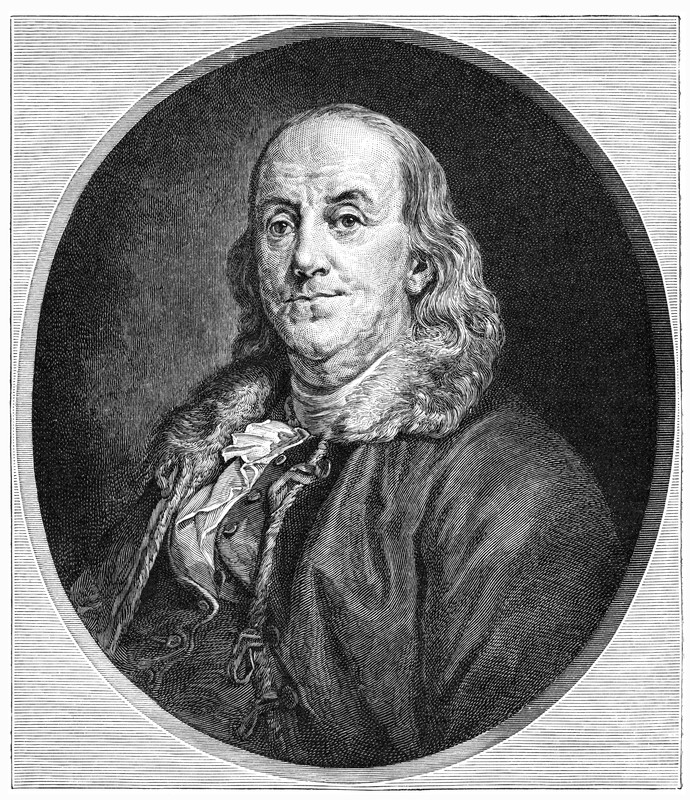
canstockphoto6890178Benjamin Franklin, a founding father and patriot, once responded to a woman named Mrs. Powel, asking what the founding fathers had created—a republic or a monarchy. “A republic,” Franklin said, “if you can keep it.”

The founders knew that independence and freedom didn’t just depend on creating that republic but also on maintaining it. Constantly guarding and protecting it. That due diligence is the responsibility of each and every individual in each and every generation.

It alone warrants American History and Civics being mandatory studies for all students. To do your due diligence, understanding the rare privilege and rights you have and knowing how your republic works is essential.

Use It or Lose It

If you enjoy choosing your life, your school, your work and want to continue to make those choices yourself, then defend your freedom and embrace your independence. Be self-reliant.

If you enjoy choosing your faith or the absence of it, defining yourself and what is important to you, deciding the kind of life you want to live and the kind of person you want to be, then take to heart the words of Steve Jobs: “Don’t let the noise of others’ opinions drown out your own inner voice.”

If you enjoy speaking your mind, voicing your opinions, expressing yourself, then defend your freedom and independence.

The Bill of Rights is the heart of individual liberty, personal freedom. To, as Socrates said, think for yourself and as Hubbard said, achieve freedom.

Freedom, like independence, isn’t a one-shot-and-you’re-done deal. Both freedom and independence must be guarded and maintained. Otherwise, those who seek power will seize both. Evidence of that reveals itself clearly in World History (which our students aren’t required to study, either).

Throughout history, when one seeks to control the masses, the first thing that must be squelched to successfully “transform” and bring everyone under One’s control is any freedom of choice. Get rid of God and substitute the government in His place. Remove the ability of people to defend themselves, to oppose being seized. Force people into relying on government, and then begin nudging the public to fall in line with One’s desires by making not falling into line painful.

High costs, hunger, restrictions; demeaning, ridiculing, demonizing—any and all that can be done to control people and their actions, behavior, conduct.

Historically, there is always a high-intensity move to control thought. This is how you should feel about this and that, and if you don’t, you’re abnormal, radical or racist. You’re … choose your own awful adjective. All of that isn’t about being fair or just or right, it’s about controlling others.

The natural inclination, for Americans especially, is to consider that type of manipulation unthinkable. It couldn’t happen here, some say. But the truth is it can, does, and is happening here. America only works if its people engage and stay engaged in its own affairs.

Many citizens of other nations have considered them losing control of their own lives unthinkable. But when we look at what actually happened to them, we see they did lose control—and many lost it by making the same mistake: They became apathetic, self-absorbed, wrapped up in their personal lives and they tuned-out on their own national interests.

Leaders seized that opportunity, seized power and control, and filled that power vacuum. Then came the nudging, which was inaccurately deemed to be misunderstandings. Surely Castro, for example, wouldn’t take away people’s private homes and businesses. But he did. And once he did, it was too late. The people had already lost too much and had nothing left with which to fight for themselves. That’s the cost of apathy and the cost of denial.

Who and Why We Are

This Independence Day, we need to remember who we are and why we are.

We need to remember that we are first and foremost Americans. Far too often, we think of ourselves as Republican, Democrat, or Independent. That’s a divide-and-conquer strategy politicians use to get elected. It is not an American First strategy.

This country was founded by those who wanted to be free to choose, free to pursue their own visions for their lives, free to worship as they desired without fear of retribution or execution. Pull out a copy of the Constitution and read it. A copy of the Bill of Rights. The Declaration of Independence. Get acquainted, reacquainted and connected.

Your independence is not something to take for granted. If you do so, know that you do so at your own peril. Look around at how women fare in most of the world today. Is that what you want for yourself? For your daughters and granddaughters?

Americans are so accustomed to exercising their own will that they’ve lost sight of the concept of not having that right or privilege. They’ve fallen to PC police in a way that would stun those who came before us. Do what I want done, the way I want it done. Think what I tell you to think or forget tolerance. I’ll shout you down, demonize you until you fear opening your mouth about anything. I’ll own you.

Is that what Americans want?

I seriously doubt it. But if they don’t want it, then they can’t do the same thing those before us did with apathy and denial and expect a different result. History will repeat itself.

Independence. Remember what it costs, and choose what it means to you.

If you fail to, you risk waking up and finding your independence and liberty and freedom is gone—a faded memory.

America, the idea, was not established for that. Founders didn’t pledge their lives, treasure and sacred honor for that. All who have sacrificed and shed blood to keep Americans free didn’t sacrifice for freedom to become a faded memory.

They did their part to establish and maintain freedom for this nation’s people. Not select people in it. Not its government. Its people.

The question on minds this Independence Day is, Will we?

 

canstockphoto23328229

Did You Know: On the Declaration of Independence

In 1776, the Second Continental Congress met in Philadelphia. On July 2nd, twelve of the thirteen colonies voted to adopt the motion put forth by Richard Henry Lee for Independence. Thomas Jefferson drafted the statement. Two more days passed with debate and revisions—86 changes—before, on July 4th, the Congress adopted the Declaration of Independence.

 

Posted in Vicki Hinze | Tagged , , , | 2 Comments

Freedom

Happy Independence Day! Today in the United States of America we celebrate the birth of our country in 1776. Although our country’s initial freedom occurred over two centuries ago, today our freedom is just as significant as it was 243 years ago. The people of this country still have many liberties that are not found across the globe. For example, we have the freedom to worship in church and we have the freedom to vote.

What is freedom? According to Merriam-Webster it means the absence of necessity, coercion, or constraint in choice or action; Liberation from slavery or restraint or from the power of another; The quality or state of being exempt or released usually from something onerous; Unrestricted use; Etc.

But when I think about freedom, I also think about Christ. For those who believe and accept Jesus into their lives, they have the ultimate freedom. Freedom from sin, freedom from death, freedom from the chains of the enemy. We were once enslaved to our flesh and sinful nature. But our old selves died on the cross with Jesus, and we became new creatures.

There are many Bible verses that talk about this freedom we possess. Here are just a few:

  • For freedom Christ has set us free; stand firm therefore, and do not submit again to a yoke of slavery. – Galatians 5:1 ESV
  • Now the Lord is the Spirit, and where the Spirit of the Lord is, there is freedom. – 2 Corinthians 3:17 ESV
  • So if the Son sets you free, you will be free indeed. – John 8:36 ESV
  • And you will know the truth, and the truth will set you free. – John 8:32 ESV
  • For you were called to freedom, brothers. Only do not use your freedom as an opportunity for the flesh, but through love serve one another. – Galatians 5:13 ESV

Reflecting on how we have been set free makes me feel like a weight has been lifted off my shoulders. What an awesome gift we have! But that’s not all. Notice above that one of the definitions of freedom was unrestricted use. As Christians we also have unrestricted access to our Father. We can call on Him at any moment of any day, and He will always answer. How amazing that we can go to Him in prayer at any given time!

No matter what country you live in, I hope you will take a moment today to thank God for your true freedom through Jesus!

Posted in Uncategorized | 2 Comments

Growing Wild

I am pleased to announce that we have gone green. Or organic. Or wild. I am not a professional gardener, so I am not sure of the precise term.

What I mean is that we have converted the big flower garden in our backyard to a wildflower garden.

For years, we tried to maintain a conventional flower garden, but we found it too expensive to keep buying new flowering plants. It seems that most of what we planted died and had to be replaced.

This was especially true of flowers labeled “annual,” which we took to mean that, once planted, they would regrow every year (since “annual” means “every year”). But this was not the case. These flowers would do alright the first year—especially if we poured some water on them from time to time. This seemed to help them grow for some reason, even though there are no nutrients in water. But, in subsequent years, they would not regrow. It became too expensive to keep buying new plants every year.

Next we tried to turn the garden into a rock garden. We scattered pebbles and even good-sized stones throughout the garden. These didn’t die, but they grew very, very slowly. In fact, the growth was imperceptible. After several years, none had grown into rocks.

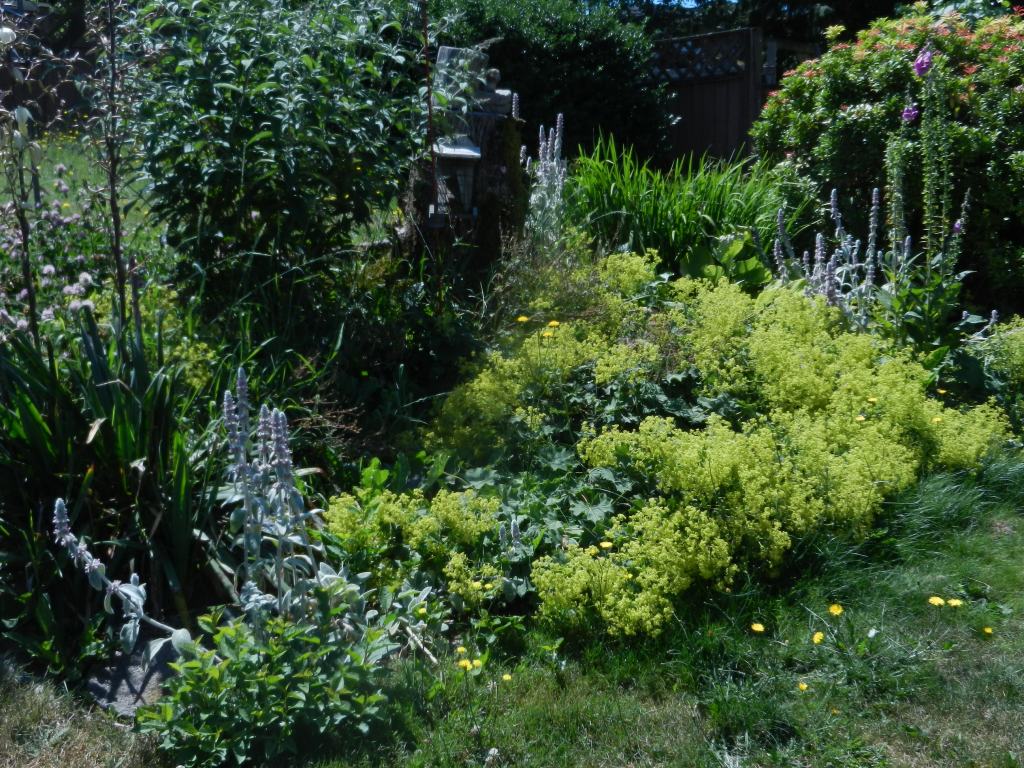
So we bought a book called An Amateur’s Guide to Wildflowers. Now, whenever a plant starts growing naturally in our garden, we pull out the Guide and try to identify it. We then put a stake into the soil beside it, identifying the species. The wildflower garden is doing extremely well. We already have flourishing beds of taraxacum officinale (dandelion), ambrosia artemisiifolia (ragweed), sonchus oleraceus (sowthistle), digitaria sanguinalis (crabgrass), rhus radicans (poison ivy), and amaranthus retroflexus (pigweed).

Posted in James R. Coggins | Tagged , , , | 2 Comments