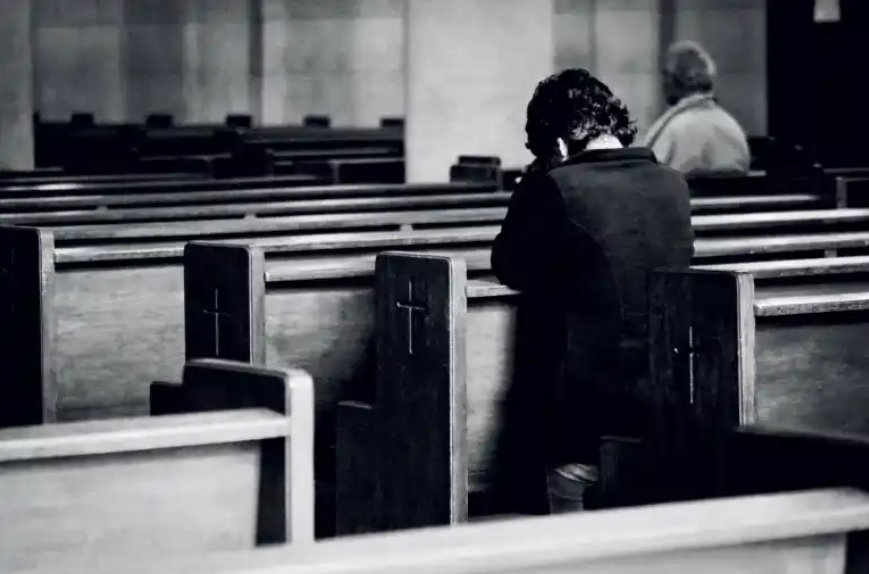
A few months ago I started a new habit. Each morning I take a moment to kneel on the floor. In that moment I tell God that I am handing my day over to Him. I tell Him that I want all my words and actions to be for His honor and glory.
Kneeling in prayer is often found in the Bible. But I don’t believe many people do this today. I realize this is difficult for some with disabilities. So don’t try it if you can’t get back up! If this is the case, then in your prayer, tell the Lord you are kneeling in your heart.
Kneeling before God is an act of reverence. We show God that we respect Him and fear Him with a godly fear. I feel the art of reverence is being lost, little by little, with each generation. For example, we all know that many people use the Lord’s name inappropriately. Too many people do not give God a second thought, let alone give Him respect. Even Christians allow their pride to get in the way and stop them from fully surrendering to our Holy God.
God is greater than everything we know and can imagine. He is the only One who is completely holy and righteous. Our best efforts are filthy rags in His sight (Isaiah 64:6). We deserve the worst punishment. But thanks to His unfailing love, we have been given the gift of salvation. He gave us life and breath. Each day He shows us mercy and grace. There are so many reasons why we should show God reverence.
If reverence is an area in which you would like to grow, simply ask God to help you. He certainly will oblige. And even just the fact that you asked will help turn your heart around. You also can make it a practice to get on your knees each morning, as I do. This practice has helped shape my days for the better. It reminds me to praise Him and to honor Him. It reminds me to do my best each day, for His glory. It reminds me to not allow minor circumstances to affect my attitude. It reminds me that my whole life belongs to Him.
I challenge you today to take some time to evaluate your heart’s posture before the Lord. Do you need a renewed sense of reverence? If so, then pray about it and take a moment to get on your knees, either physically or in your heart. And He will be faithful to meet you there.
Come, let us bow down in worship, let us kneel before the Lord our Maker. – Psalm 95:6
Back in January I distributed a survey for my newsletter readers. Honestly, I thought I knew the answers for the direction they wanted..
I send two newsletters a month, per their 2021 input. The first newsletter is about writing. The second, sent mid-month, is more of a personal update.
I asked in the 2022 survey their thoughts on the first newsletter. Did they want to hear about the writing process? Publication? Excerpts? Recipes? Giveaways?
My assumption was readers would want to know the nuts and bolts about writing. How do we create characters? Where do our story ideas come from? What does an agent do, anyway?
I assumed wrong.
Readers were pretty emphatic they wanted to learn more about my writing. They wanted to read past and current excerpts. Behind-the-scenes information. They didn’t want to read about other authors, and that really surprised me.
Recipes and giveaways have their place, but that wasn’t the top interest. That surprised me, too.
Those results were a good lesson for me. I didn’t know my readers as well as I thought, and now I’ll do my best to create content that fits their interests.
It’s a wide swing of topics, but it also reminded me of a recent post I shared on Facebook. February 28 is Rare Disease Awareness Day. Our daughter has Albrights Hereditary Osteodystrophy. This was a late diagnosis but the symptoms were there all along, but we were also dealing when she was younger with chronic asthma, and congenital hypothyroidism.
I write about this because we came across strangers who assumed quite a bit. Based on a glance they honest to goodness would approach me and lecture me. I kid you not. Offer unsolicited advice. One lady was so bold that she was physically touching me and would not let go. I finally told her she was only looking at a piece of a giant puzzle. That we had a team of specialists working with her. Even that didn’t appease her. Exasperated, I asked her if she knew Jesus as her Savior. Before she could answer I said, “Well I do, and He takes care of her. I trust trust Him. Good day.” And I ran home and sobbed.
Like me with the survey, that woman and others like her assumed they knew a situation. I ended my Rare Disease post with a challenge to be kind when you see a circumstance you think you understand, because sometimes what we encounter in kindness is more rare than the diagnosis we’re dealing with.
—Julie Arduini
The world is topsy-turvy lately. It’s easy to make assumptions. I do it. Let’s take March and surrender our assumptions. Confess we don’t know everything. Realize people need compassion and support. Then, offer it. What a way to wrap up winter and begin spring.
If you’re curious about my newsletter, you’re invited to subscribe. It’s free, and I offer some free reads as a thank you.
Mark 1:4-20 describe the ministry of John the Baptist and the beginning of the ministry of Jesus.
John the Baptist preached in the desert/wilderness near the southern end of the Jordan River, where it empties into the Dead Sea. He was preaching mainly to the people of Judea (southern Palestine) and its capital Jerusalem (1:4), but he was also on the main road that led from Galilee in northern Palestine to Jerusalem. It is interesting that John was in the wilderness, not in Jerusalem. The people who were interested in meeting God had to come out to him. No revival in history has ever started in a church headquarters.
It was also perhaps safer for John to avoid the cities, although this did not stop Herod from throwing John in prison. This was Herod Antipas, who inherited Galilee and Peraea (on the east side of the Jordan River) from his father, Herod the Great. This suggests that John was living on the east side of the river, even though he was drawing most of his followers from Judea on the west side of the river.
Jesus came down the road from Galilee and was baptized by John, but then went into the wilderness rather than continuing on to Jerusalem. Among other things, this kept Jesus out of the way when John was arrested.
Jesus centered his ministry in Galilee, in the north, although he made several trips to Jerusalem, especially for the Jewish feasts. Thus, while John prepared the way for Jesus, he did so by preaching to a somewhat different group of people. However, when Jesus went to Jerusalem to be crucified, the church of believers that resulted was first based in Jerusalem and Judea, among the people first impacted by John. The church spread rapidly in both Judea and Galilee, among people who had been prepared. Jesus, in the beginning of his earthly ministry, preached a message similar to John’s. John preached “a baptism of repentance for the forgiveness of sins” (Mark 1:4). Jesus preached: “The time has come. The kingdom of God has come near. Repent and believe the good news!” (Mark 1:15)
Modern passenger airplanes are extremely safe, with overlapping safeguards (including having a pilot and co-pilot). An airplane rarely crashes due to a single problem. Usually, in an airplane crash, one or more mechanical issues are compounded by one or more pilot errors.
“Cockpit resource management” is a training process that was developed after it was discovered that planes were crashing due to flight crews’ failure to properly respond to crises. One of the prime issues was the previous command structure in which the pilot had absolute authority to fly the plane and make decisions. Less experienced co-pilots were reluctant to challenge this authority or even make strong recommendations. When the pilot made a mistake, when the pilot misunderstood a situation, when a pilot failed to see and understand a problem, when a pilot became distracted or too narrowly focused, there was no way to correct the mistake or save the plane.
For example, one crew of three was so focused on a burnt-out landing gear light that none of them noticed that the autopilot had been turned off and the plane was descending into a swamp.
Another crew was so focused on another landing gear problem that the plane ran out of fuel and crashed into a neighborhood.
Another highly regarded pilot thought he was still heading toward the airport when he had already passed it. The much younger and less experienced co-pilot timidly suggested the truth. The pilot ignored him and flew the plane into the side of a mountain.
Another pilot insisted that the plane was lined up with the runway and ignored the co-pilot’s warning that they were badly off-course. They crashed.
Another pilot trusted his own faulty speed gauge while ignoring the co-pilot’s accurate gauge and put his plane into a fatal stall.
Cockpit Resource Management is intended to foster a less-authoritarian cockpit culture in which co-pilots are encouraged to question captains (pilots) if they have observed them making mistakes and to even take control of a plane in extreme cases. It encourages respect, teamwork, and cooperation. One key element is communication, both speaking up and listening, making clear objections, and giving clear orders. Another is delegating and dividing responsibilities. For instance, in the first example, disaster could have been averted if one pilot had focused on fixing the light (responding to the crisis) while the other flew the plane. This requires trust, and not just the others trusting the pilot to fly the plane. It also requires the pilot to trust subordinates enough to listen, really listen, to their concerns, and also to trust them to carry out delegated tasks without supervision, thus freeing the pilot to focus on his/her own tasks.
If Cockpit Resource Management is so crucial for air travel, could it also provide useful guidance in other fields?
Could prime ministers, presidents, and other political leaders benefit from learning to listen more to their subordinates (and even constituents)? Would it be better if they were able to delegate tasks more effectively rather than micromanaging? Are their subordinates able and willing to challenge leaders when they are wrong, instead of blindly supporting them and going down in flames along with them?
And what about the church? How many churches and ministry organizations have foundered because strong and autocratic leaders have been unwilling to listen to advice and warnings? Because such leaders have failed to trust their associates and followers? Because their followers have failed to warn them when they began to veer off-course?
Proverbs 11:14 (NIV) says, “For lack of guidance a nation falls, but victory is won through many advisers.” Proverbs 15:22 repeats, “Plans fail for lack of counsel, but with many advisers they succeed.”
This little guy’s name is Cody, and he loves taking walks. It’s like a new adventure for him every single day.
My husband and I walk each morning around our property. We live on seventy acres, so we have our walking trail mapped out through the pasture in front of our house, into the woods, past the stock tank near the woods, and then across the back pasture to the house.
Even though we walk the same path every day, (sometimes twice in a day), it’s like a brand-new experience every time for Cody.
He has recently discovered some abandoned gopher mounds on our property and he loves to dig in hopes of discovering one of those furry little creatures that used to live there.
Don’t worry, so far the score is the gophers 100—Cody 0. It’s a game to him, but he does it with the persistence of someone who is certainly going to achieve their goal one day, (or probably not in this case).
I think Cody is one of the best examples of how to live each day. Be persistent. Life is filled with challenges. We all have our gopher mounds where we feel as if no matter how hard we try, we can’t overcome. But if we get up each day, and approach that mound with the same determination as Cody, with God’s help, all things are possible.
In 2 Timothy 4:7–8, Paul says, I have fought a good fight, I have finished my course, I have kept the faith: Henceforth there is laid up for me a crown of righteousness, which the Lord, the righteous Judge, shall give me at that day: and not to me only, but unto all them also that love His appearing.
Continue to fight the good fight. Finish the course. Keep the faith. Like Cody, be persistent. You will get through it.
A few weeks ago, we adopted a new dog. She’s a black lab mix, according to the shelter, and a little over a year old, so still in puppy stage. She’s sweet and affectionate, enthusiastic and energetic.
I named her Aeonium after my favorite succulent, Aeonium Arboeum Zwartkop. The shiny purple-black leaves on this plant remind me of the shiny black of my dog. Because Aeonium is a mouthful, we call her Oni. (Oh-knee)
Our biggest challenge with Oni comes when we go on our morning walks. My husband and I walk two miles every morning, going through our quiet neighborhood. The homes are spread out but almost everyone has a dog or a horse that distracts Oni.
Oni arrived at our house with zero manners on leash. She would lunge to the end of the lead, trying to get to the barking dogs or whatever distracted her at the moment. We tried what little we knew to get her to obey, but were quickly discouraged. We finally hired a dog trainer we had used before. She’s come twice now to our house for lessons and is amazing. She’s shown us new techniques we wouldn’t have thought of and taught us about dog behavior and why Oni does what she does.
This was not a miracle cure, but we have had a breakthrough since the second lesson last week. Oni is doing better. Her owners are even learning too. (Ha!) We are slowly becoming more of a team as we learn how to encourage Oni to pay attention to us and not to the distress of barking dogs or snorting horses.
As we work with Oni, I am reminded of my walk as a Christian and of many others I’ve observed. So often, we want to lunge toward the challenges or intrigues of the world to check out things that are best left alone. Not all of those dogs are saying to Oni, “Come on, let’s play.” Some are clearly saying, “I want to control you and will hurt you to do so.”
Just like Oni is confused about what dogs to approach, it’s hard for us to tell what is okay to do and what is not okay, especially when we are new to the Christian life. We want to investigate every little thing that interests us and forget how damaging or dangerous some can be. We get so excited, we jump at a chance without praying first and checking to see if this is something that will be for our good or will glorify God.
We do get better as we age in the Christian life. Remembering to pray comes easier. Seeking God’s will for our every decision becomes a habit instead of an oddity. Staying within the bounds of what’s safe is clearer, even though we do at times forget or ignore those bounds.
I am reminded of Psalm 23: 4 –
“Yea, though I walk through the valley of the shadow of death,
I will fear no evil;
For You are with me;
Your rod and Your staff, they comfort me.” (NKJV)
Walking in the world is what we do every day. There are pitfalls and temptations that are difficult to see. It’s like walking through the shadow of death in that living in the world is death to our souls while living in God is life eternal. We have to be in the world physically, but must keep our focus on God and His will.
The end of the verse says, “Your rod and Your staff, they comfort me.” Very few of us are comforted by the idea of a rod. We think of beatings. We think of pain. Yet, the shepherd referred to in this passage, used the rod to scare away predators, while using the crook of the staff to hook around the neck of the sheep and pull the animal to safety. Having God there to protect us and pull us back from danger is a comfort. He’s looking out for us, making sure we are staying within the bounds of safety.
As we work with Oni, we give her treats when she walks alongside us. When she is most distracted by barking dogs and lunging at the end of her leash, we stop and wait. She’s learned when that happens to come sit in front of me and I reward her for her good sitting and behavior. Then as we walk on, she is much calmer.
God always rewards us for our good behavior and for listening to Him. When we do that, we have peace. Our lives , or our inner selves, are much calmer no matter what is happening around us. We have many little blessings that show us we are pleasing God in our walk.
While we all tend to lunge at the end of the leash when we interact with a particular trigger of ours, just as Oni does when she sees dogs. I do hope as we pray about this, we can learn to sit at God’s feet. To study what He has to say. To be convinced by His love that we are doing what’s right.
One morning I had to attend a meeting across town, so I planned to go through a drive thru for some much needed caffeine. I also planned to pay for the bill of the car in line behind me, because it is fun to anonymously bless someone.
As I turned into the parking lot, a couple of other cars hurried to be the next one in line. They thought they were getting ahead, by getting in front of me. I shook my head because I knew that they really would have benefitted to be behind me, because I would have paid for their bill.
It made me think of the Bible verse, “So those who are last will be first and the first will be last.” (Matthew 20:16)
And then I realized it is the same way with God and people. He wants to bless us and He wants the best for us. Unfortunately we tend to run ahead because we are impatient. We want what we think is the best thing. And we want it now. But God can see that we have missed out on a blessing, by not waiting for Him to work things out.
I know I personally have a bad habit in this area. I jump and think later. I know I should prayerfully seek God, His plan, and His timing first. But too often, I don’t do it. I see something shiny and I grab it.
This fast paced world we live in plays a big role in why we are this way. We have everything at our fingertips. We don’t have to wait until the weekend to go to the bookstore to buy the book we want. Instead we can download it on our tablet right now. Need something from Amazon? You can have it delivered tomorrow. Drive down any road and you will see someone who is in too big of a hurry. In our small town, my husband and I often see vehicles pass on a double yellow line, and the car they are passing isn’t going slow. We have too much on our plates and we need everything on our to-do lists done yesterday. We have too much to do at our jobs, and not enough time to do it. We run from work to home with barely enough time to throw dinner on the table before we go to bed and do it all over again the next day.
But we don’t have to fall victim to this world and its ways. And we don’t have to settle for second best. The key is to trust God and His timing. It sounds simple, but it’s not always easy. But it all comes down to a choice. Either we believe that God has our best interest in mind or we don’t.
“Wait patiently for the Lord. Be brave and courageous. Yes, wait patiently for the Lord.” – Psalm 27:14
My husband and I enjoy seeing, and taking pictures of, wildlife in the mountains – bears, deer, turkey, horses, and even coyotes at times. But one of my favorite pictures is of a bird, just sitting on a fence. I think I like it so much because he seems to have it all together. He is not worried or stressed. He is confident and at peace. (See picture below.)
We can be like that too. In fact, there is even a Bible verse about this. “Look at the birds. They don’t plant or harvest or store food in barns, for your heavenly Father feeds them. And aren’t you far more valuable to him than they are?” (Matthew 6:26)
From now let’s try to wait on God and His timing. Instead of running ahead towards something that we think we can’t live without, let’s wait and allow God to give us His very best.
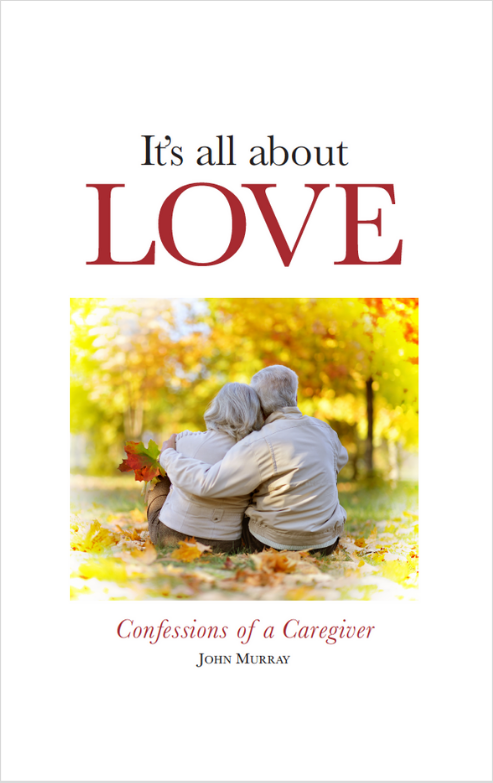
This review originated at juliearduini.com but I’m so moved by the book that I wanted to share it here. I have a giveaway, so please check it out! I can’t think of a more fitting read this Valentine’s week than It’s All About Love by John Murray.
—Julie Arduini
It’s All About Love is the true story of a husband lovingly caring for his wife through her many years of suffering with Parkinson’s disease. If you are a caregiver, you will quickly identify with the struggles and difficulties they face. If you are dealing with such issues, then this book will give you great encouragement.
What people are saying…
“It’s All About Love is a raw, honest, and breathtaking glimpse into the realities of life as a caregiver. John offers a fresh perspective through the lens of love …. If you are a caregiver or know someone who is, this book will be a healing balm to those with a hurting heart.” – Holly Guy, Coach and Writer at Wholeness Haven, VA, USA.
“John Murray, who in his own words is, “just an ordinary 82-year-old husband taking care of his 78-year-old wife” Rita, who was diagnosed with Parkinson’s in 2008. I appreciate the author’s occasional flashes of humour and his commitment to respecting Rita’s dignity. Every action she undertakes, even putting on her glasses, takes a long time. But he says, “we soon learned that time is not of the essence.” He cares for Rita because he loves her.” – Elma Schermenauer, Author
“This book is a wisdom book for lovers. Lovers whose own lives are owned by devotion to the daily care of the ones whom they love. This is a book of purest prose, easy to read because of John’s winsome writing style and hard to read because care is an indispensable and demanding gift of love. Read it and you will be thankful for John’s evident honesty. The book needed to be written.” – Dr. Ron Unruh, Author and Artist
“John describes the many facets of caring for a loved one with a progressive and debilitating illness. The author aptly conveys the feelings of overwhelm and helplessness in wanting to protect his loved one from the ravages of the disease. As you read, you will find the encouragement you need to “keep on keeping on” and know that there are others who see your heart and understand the complexities that you are dealing with.” – Deborah Harrison, MSW (retired)
“John openly acknowledges his fears, discouragements, and frustrations, but his reflections are always undergirded by a resolute trust in God’s loving and providential care. It’s All About Love is a beautiful story of marital love and faithfulness expressed in sickness and in health, for better or for worse. Canada’s aging population ensures that the Murray’s story will be experienced in many families. John’s realistic yet hope-filled study not only helps us understand the unique challenges of caregiving but will encourage those already involved to persevere, as well as help prepare those who will one day find themselves caregivers.” – David Daniels, Pastor & Freelance Writer
“John is a new friend, met on-line in connection with our shared experience of caring for a spouse with Parkinson’s. And what a friend, so sympathetic and encouraging! His courage and stickability in the face of Rita’s extreme physical disabilities will surely encourage many out of self-pity, defeat, even despair into true love and high achievement.” – Priscilla Diana Maryon Turner, MA, DPhil Oxon., ODNW, Author
“I was moved by the book, so many emotions arose. As a former 24/7 caregiver to my wife, I can readily identify with all that is written here. I believe the author’s strong faith has helped sustain him through this part of their journey together. This book will be a blessing to many, particularly those who are spousal caregivers.” – David North, M.Ed. Retired Principal
“John’s positive attitude shines through in everything he writes. His book will inspire other caregivers that their service is never meaningless or in vain, or that they are alone.” – Jennifer Friesen, Pastor to Seniors
JULIE’s REVIEW:
It’s All About Love is a small book, but don’t let that fool you. The author packs it not only with his journey as a caregiver to his beloved Rita, but with practical information all caregivers should memorize and use. Everything from planning ahead, when to know it’s time for more help, maintaining dignity for your loved one, there is so much here.
Beyond the caregiving information I wish I’d had in 2020 when that was my role, the love story the author pours out is one of the most beautiful I’ve read. This is a husband living out his vows, and I was so moved by both John and Rita. He even wrote a poem for her, and it brought me to tears. I loved, loved, loved this book.
If you aren’t a caregiver, chances are you know one or you will be. It’s All About Love is a must have for your caregiving resources. It’s also a beautiful love story to read. I can’t recommend this book enough.
There’s even a giveaway!
I was provided with an extra copy to give away. Because the author resides in Canada, I’m opening this giveaway up to anyone in NORTH AMERICA. Please leave a comment below why you would like a copy, and I’ll choose a random winner February 26.
I was provided a copy of It’s All About Love for review. I was not compensated, and all opinions are my own.
Many modern commentators deny the divinity of Jesus, arguing that He never claimed to be God. However, the book of Mark declares at the beginning, in what serves as a title, “The Beginning of the Good News about Jesus the Messiah, the Son of God” (Mark 1:1).
“Beginning” may refer to the beginning of the book, or it may refer to the idea that Jesus’ earthly ministry was only the beginning of the Kingdom of God. Acts 1:1 says that the Gospel of Luke described “all that Jesus began to do,” implying that Jesus would continue to work, through the church, as described in the book of Acts (and, by extension, through the church in subsequent centuries).
The title also makes clear that Jesus is the Messiah, tying Jesus in to all that God had revealed in the Old Testament. This is clear, first, in the name “Jesus,” which means “Yahweh saves”—Yahweh is the name by which God revealed himself in the Old Testament. The “Messiah” was the coming Savior prophesied throughout the Old Testament. Mark 1:2-3 then cites the words of “Isaiah the prophet” as an example: “I will send my messenger ahead of you, who will prepare your way—a voice of one calling in the wilderness, ‘Prepare the way for the Lord, make straight paths for him.’” This is actually a compound quote from Exodus 23:20, Malachi 3:1, and Isaiah 40:3. Mark is obviously referring to John the Baptist, but there is a sense in which not just John the Baptist but all of the Old Testament is a forerunner to Jesus.
Then the writer of Mark (presumably John Mark, reflecting the teaching of Peter) states plainly that Jesus is “the Son of God.” Now, Peter did not understand this fully at the beginning of Jesus’ ministry—Jesus only revealed this information slowly—but by the end of Jesus’ life on earth, this fact was absolutely clear. Later commentators may not like the claim, but it is one made clearly by Jesus and by His followers.
When faced with tumultuous times, we often stew, our focus scattered, and that leaves us feeling overwhelmed. We start thinking, “I am one person. What can I do?” We talk to ourselves like this until we are overwhelmed with the enormity of the challenges and we feel less and less powerful to do anything. Feelings of inadequacy abound, and a sense of helplessness that, if we continue on this path, leads to hopelessness, and so we do nothing because we don’t have a clear vision of anything we can do that will make a difference.
We’ve all been in this dark and heavy place and none of us like it. The thing is, we are not helpless nor are we hopeless. In truth, we are powerful beyond measure. Why?
Because we never stand alone. The creator stands with us. He promised to be with us always, and He is, which means we are never reliant only on ourselves and our own skills, assets, and abilities, but on our own and His!
If we stay our eyes on Him and follow His lead, He will make ways where there are none. He will walk before us, create a path to a place that we can follow.
The challenge for us is in looking at something and seeing this huge and overwhelming big picture. When we see it, we start with the negativity because it seems so big and we feel so small. This isn’t by mistake, it’s by design, and that design can be benevolent or malevolent.
If it is from God, then it is to remind us to stay our eyes on Him and rely on Him.
If it is from the enemy, it is to intimidate and frighten us into those dark places so we do nothing.
Spiritual warfare is fought in such ways. There’s an old saying that the devil’s greatest deception was in convincing people he didn’t exist. If you are being attacked, it isn’t because you’re weak. It’s because you are powerful and have the needed skills and abilities to make significant change for the better for yourself, your family, and for others. You must be stopped!
Only you can choose to stop, or to press onward and upward. Only you, exercising your free will, can decide if you will walk in the light or sink into the darkness. In making this choice, you advance spiritually or digress spiritually.
Choosing goodness and light, you choose God. And the very moment you do, God will act. Opening doors, spurring ideas to aid and assist, lighting the path. It won’t always be easy; nothing worthwhile ever is, but He is with you, taking every step with you without fail.
It’s important to understand the importance of free will in this process. God gave us free will. We make our choices and create our reality as a result of those choices. He didn’t gift us with partial free will–only when our choices aligned with His will. No, He gifted us with total free will. So even when we make less than wise choices, we bear the consequences of them so we learn that bad choices have consequences, these specific consequences, and we make fewer unwise choices and more wise ones.
God wants us to rely on Him, to stay our eyes on Him. But He won’t force us. We make the free will choice, and He rejoices by staying at our side, aiding and assisting us all the way.
We learn to trust His ways as best. Heed His warnings. Embrace His nudges.
When we do this, regardless of what happens, we are at peace with it because we know we have walked the path we were destined to walk. There’s enormous peace and power in that.
Along the way, we learn to discern. We know His voice. His ways. His peace. It gets harder and harder for the enemy to attack because we know to hit our knees first, not as a last resort. That spares us a lot of difficulties, and makes us really tough targets to be attacked.
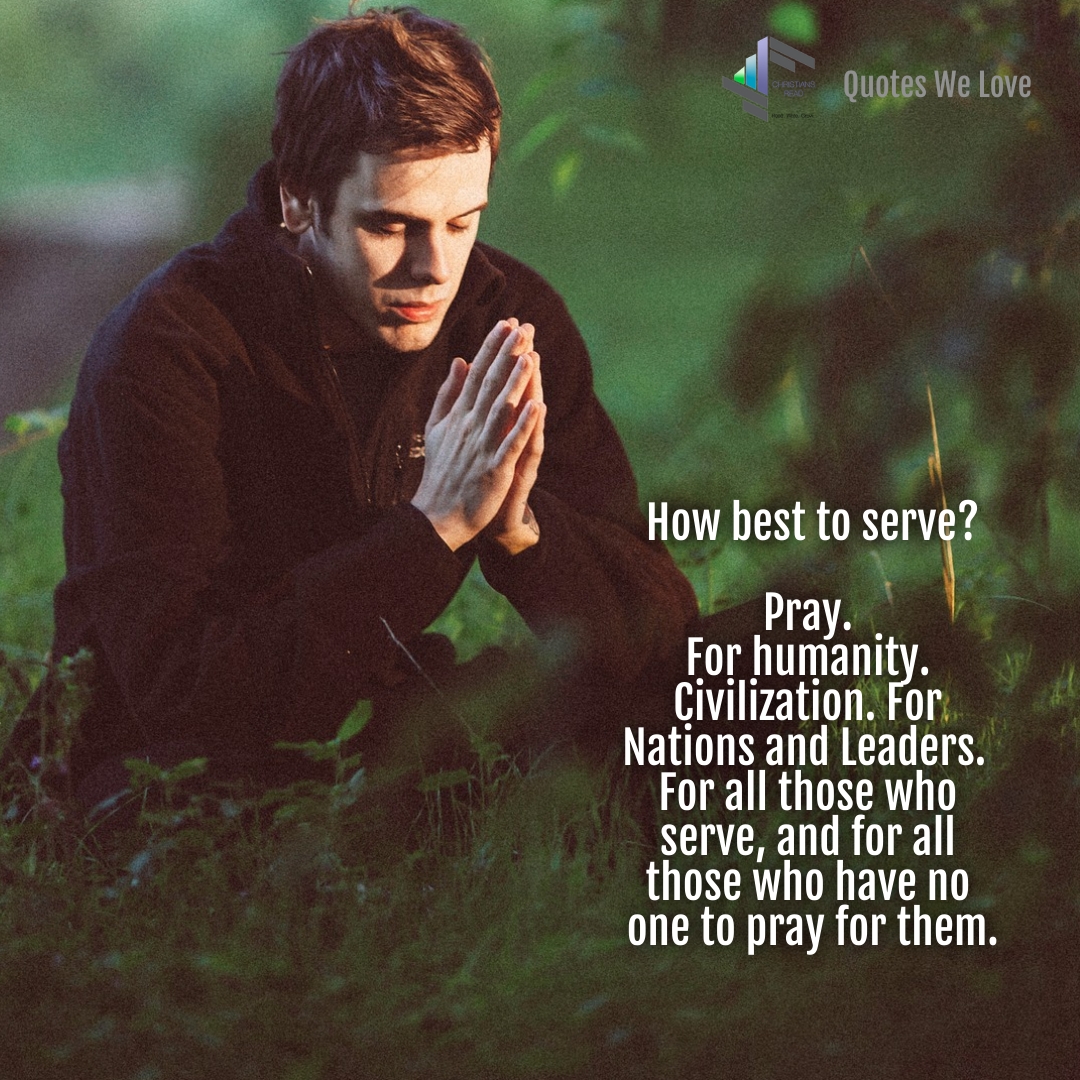
How we can best serve becomes more clear with time, but a great beginning is always in prayer. Not just for yourself. But for others. The Bible tells us to love one another and to seek wise counsel in times of uncertainty. Who is more wise than God?
We best serve by helping others, and there is no greater help to be offered than to pray, seeking the wisest counsel from the wisest counselor.
FROM THE BACK COVER: Criminal psychologist Erin Larson’s dreams of a successful career come to a screeching halt when she nearly loses her own life in a boating accident on Puget Sound and then learns that her mother tried to commit suicide. She leaves her job as a criminal psychologist to care for her mother in Montana. At least she is able to produce her podcast, which focuses on solving missing persons cold cases.
Nathan Campbell’s father was investigating such a case when he was shot, and now Nathan needs to enlist Erin’s help to solve the case. She’s good at what she does. The only problem? She’s his ex.
As the two dig deeper, it becomes clear that they, too, are being targeted–and that the answers to their questions are buried deep within the past Erin struggles to explain and longs to forget.
NORA’S REVIEW: Criminal psychologist Erin Larson and Nathan Campbell find themselves in an explosive situation as they work together to get to the bottom of a cold case Nathan’s father had been working on. All Nathan’s father had the chance to tell him was, “trust no one.” Erin finds herself in an uncomfortable situation with her mother. Why hadn’t she seen the signs of trouble? After all, it was her job to notice signs of someone who was going to commit suicide.
Elizabeth Goddard pulls out all the stops in this intriguing, edge of your seat suspense, it’s an explosive adventure that has Erin and Nathan spinning out of control, trying to pull on the correct thread in this mystery that would bring them answers and not have them chasing something down an empty rabbit hole. This author weaves a riveting, complex story that has just the right blend of mystery, suspense, and romance that had me staying up late wanting to know how this all ended up. This is a great escape and a novel that would work for your next book club pick. There is so much to discuss.
Disclosure of Material Connection: I have received a complimentary copy of this book by the publisher through NetGalley. I was not required to write a positive review. The opinions I have expressed are my own. I am disclosing this in accordance with the Federal Trade Commission’s 16 CFR, Part 255 “Guides Concerning the Use of Endorsements and Testimonials in Advertising”
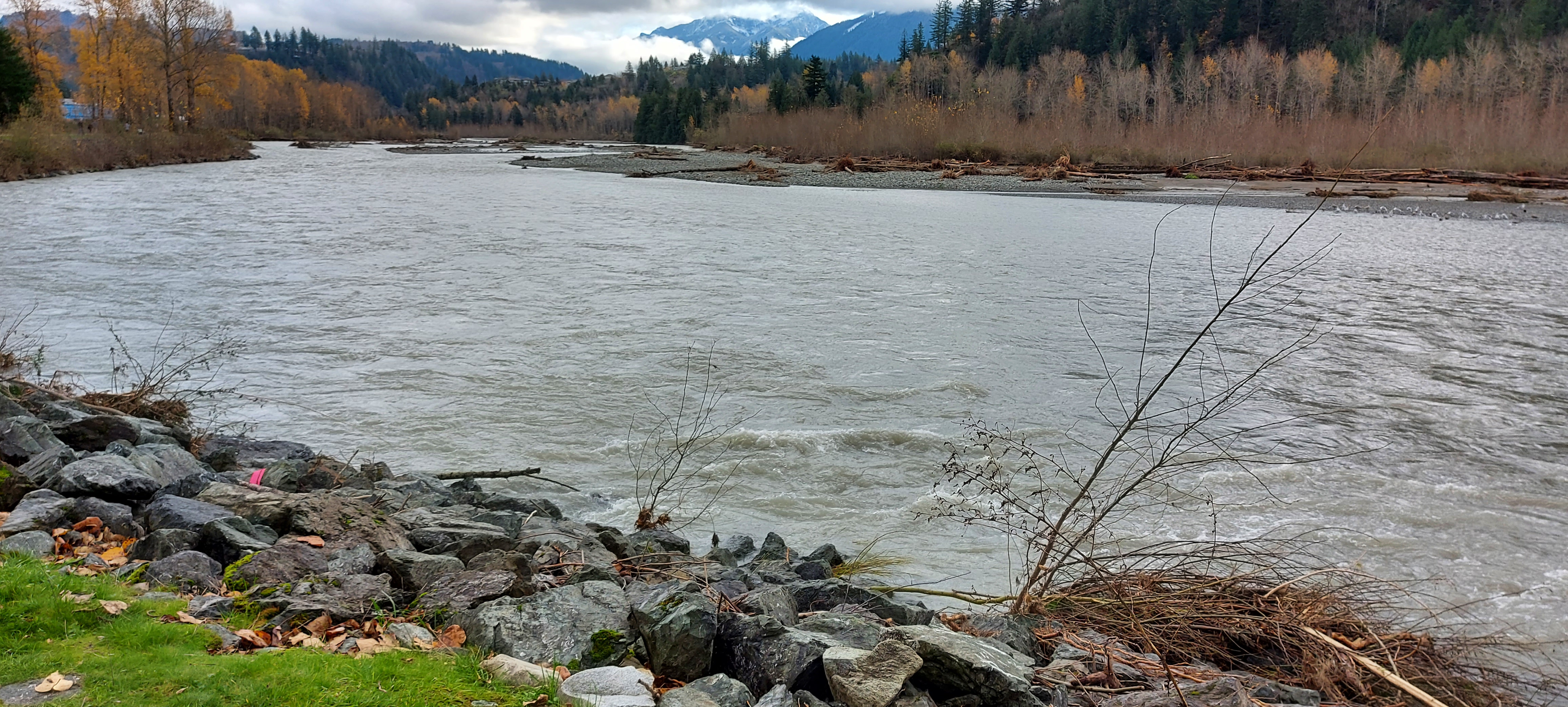
Late last year, southern British Columbia (where I live) experienced a massive rainstorm. We get a lot of rain here on the west coast of North America. Our weather includes onslaughts by “atmospheric rivers,” which used to be called “pineapple expresses,” rainstorms which have traveled northeast across the Pacific Ocean from Hawaii or even the Philippines. They bring warm, wet weather. The one we received last year was record-shattering, dumping nine to twelve inches of rain on us in a couple of days, almost twice anything we have experienced before. Our geography could not handle it. A dike broke, flooding Sumas Prairie, the source of much of our local food production. Over 400 cows, 1200 sheep, 600,000 poultry, and dozens of beehives were drowned. Plants, some of which had taken years to grow, were destroyed. As well, the three highways and the two rail lines that connect southern British Columbia to the rest of Canada (as well as some secondary highways) were shut down due to washouts and landslides. These transportation routes have not yet been completely restored, nor have the devastated farms. In discussions with Christian friends, three prominent responses stood out.
1. Compassion. In addition to prayers, there was an outpouring of practical help to those directly affected by the disaster. Christians and non-Christians, churches and other organizations, as well as governments, provided food, shelter, and clean-up and rebuilding help to the victims.
2. Gratitude. The victims were grateful for the help they received. Those of us who were inconvenienced but not directly impacted were also reminded to be grateful. It was not so much that we were grateful that we had been spared from the disaster that had hurt so many others. It was more that we were reminded of the many blessings that we have enjoyed and that we have far too often taken for granted. We have food, clothing, shelter, health, medical care, government services, jobs, community, and very much more. Disasters remind us that we are not guaranteed any of these things. We should be grateful every day for the many blessings we experience and not take them for granted.
3. Humility. When such disasters happen, we realize how helpless we are to prevent them. God is powerful enough to control the natural world. We are not. When environmentalists insist that we must act now to prevent global warming, I can almost hear God laugh (Psalm 2:4). I am not denying our God-given responsibility to care for His creation and to do what we can to reduce pollution. But any suggestion that human beings on their own can control climate change is sheer hubris. Human beings cannot even control themselves, let alone the forces of nature. The psalmist declares:
“He sends his command to the earth;
his word runs swiftly.
He spreads the snow like wool
and scatters the frost like ashes.
He hurls down his hail like pebbles.
Who can withstand his icy blast?
He sends his word and melts them;
he stirs up his breezes, and the waters flow.” (Psalm 147:15-18)
God is so faithful. He has proven this over and over to me throughout my life. Even when I didn’t really ask for His help, He steered me in the direction that was best for me.
He guided me to Him when I was 9 years old. And called me back when I wandered.
He took this small-town girl out of her comfort zone and put her into a big city where she didn’t know a lot of people, but soon found the man she was meant to be with. 38 years later, I’m still thanking Him.
He gave me the desire to write and provided the direction to make that desire happen even when I didn’t have faith in myself.
He provided a community of Christian believers to walk along beside me and my husband when we faced some of the hardest times in our lives.
He is always faithful. Always there. Always working out what is best for us even when we can’t see the path ahead through the storm.
No matter what we face, all things work together for good to them that love God. Romans 8:28.
Recently I had deadlines on two different projects overlap. That doesn’t happen very often. I’m always organized and can handle a snafu, but I have to admit, I was a bit overwhelmed. This got me thinking about the way I spend my time; personal and for work. I had to ask myself some important questions, like what do I need to put first in my life and how can I balance work and time off?
I went searching for some tips and found a few that I thought would help me prioritize the value of my time.
Start your day with a clear focus. For me, this means starting my day by spending time with the Lord. Prayer or reading and mediating on scripture are a great place to start. I might read something that will stick in my mind or read words that give me strength and purpose. As a Christian, putting the Lord first will always help me figure out how to juggle everything else in my life.
It is God who arms me with strength and keeps my way secure. Ps 18:32
Have a task list. I am not a fly-by-the-seat-of-my-pants kind of person. In my personal life I am very organized, in my writing life I plot every book before I begin the story. I keep a weekly calendar open beside my computer to glance at my schedule for the week, which gets me in the right mindset to approach each day.
Focus on high-value activities. At my age, keeping healthy is important to me. In fact, it’s high on my list. I take a class at the gym two or three times a week. Not only does this keep me in shape and is good for my body, exercise is also important for my brain. When I’m writing a book and get stuck on a scene or plot point, I go for a walk or jump on a machine at the gym. Every time, I seem to straighten out my dilemma.
This is also true in our personal connections. Spending time with family and friends keeps us healthy as well. I’m guilty of putting off going to events or having lunch with a good friend because I have a deadline. Work will always be there, but we also need quality time with the special people in our lives to remind us that we are not an island. We need people, especially those close to us.
A friend loves at all times, and a brother is born for a time of adversity. Ps 17:17
Minimize interruptions. This is essential when you work from home. I have a dedicated office. I close the door and concentrate on my word count for the day. I used to write at my dining room table, but in doing so, I was reminded that I needed to empty the dishwasher or put a load of laundry in the machine, or if I was really procrastinating, I would vacuum. Having a separate place to work has increased my productivity.
In the past year or two, more people started working from home, most likely learning that time management is vital. It’s a learning curve, for sure, but not impossible to master.
Limit multi-tasking. This is where I boxed myself in. Too much on your plate is never a good thing, yet at some point in our lives, we’ve all found ourselves in this situation. Plan ahead, if possible. I know life is never that neat and tidy, but if we can try to avoid too much of everything in our lives, we will be so much better off.
…let us throw off everything that hinders and the sin that so easily entangles. And let us run with perseverance the race marked out for us, fixing our eyes on Jesus, the pioneer and perfecter of faith. Heb 12:1b-2a
I took these points and personalized them for me, but I’m sure anyone reading this list can find one or two of these suggestions to apply to your life. Maybe you’ve already hit your tipping point and changed your lifestyle, to which I say congratulations!
As we live our lives, let us never forget the source of our strength and that Jesus loves us, even when we’ve put too much on our plate.
Tara Randel is an award-winning, USA Today bestselling author. Family values, a bit of mystery and of course, love and romance, are her favorite themes, because she believes love is the greatest gift of all. Look for her next Harlequin Heartwarming romance, HIS SMALL TOWN DREAM, available August 2022.For more information about her books, visit Tara at www.tararandel.com.Like her on Facebook at http://www.facebook.com/TaraRandelBooks. Sign up for Tara’s Newsletter and receive a link to download a free digital book.
Can you believe it is already February? It seems like we just rang in the New Year, then we blinked, and here we are already one full month into 2022. (Okay so maybe January did feel a little long?!)
Anyway, February is often associated with love, since Valentine’s Day falls in the middle of the month. You might see many people decorate their home, business, or office with red and pink hearts. And of course the stores are filled with chocolates and flowers.
But Valentine’s Day isn’t embraced by everyone. Some people despise this holiday, whether or not they have a partner to share it with. And unfortunately, I do believe many people in general pile unrealistic expectations around this day.
Well, I am here to challenge each of us, including myself, to approach this “love month” differently. What if, instead of expecting our significant other to shower us with goodies, we look around at the love our Heavenly Father pours out in our lives? What if instead of expecting candy and roses, we open our eyes to God’s goodness?
I am convinced that God blesses us so much every single day, yet we don’t always see it. We simply aren’t looking around for His goodness and so it often goes unnoticed. Will you join me on this scavenger hunt and look for little ways that God expresses His love to you, each and every day?
Did God wake you up this morning? Did God get you to work safely? Did God help you complete a project you have been working on? Did God paint a beautiful sunrise? Did God give you eyes to see and ears to hear? Did you feel God’s peace when you prayed? Did God send a friend your way with a kind word? Did a stranger pay for your coffee? Did God remind you of an errand you needed to run? Did you stumble across a Bible verse that spoke to you today?
There are tons of blessings throughout our day that display the love of our Lord. Some are big, and some are small. But they are there. We just have to open our eyes and look around!
The LORD is good to everyone. He showers compassion on all his creation. – Psalm 145:9