HAPPY THANKSGIVING

Thanksgiving is my favorite holiday. It’s a day I like to stop and take an inventory of all that I’m thankful for. As an author, I’m so thankful for readers, especially when a reader contacts me and lets me know my stories have helped them. Or, they are simply glad I write clean stories that offer hope.

As a mom and sister, I’m thankful for a great relationship with my daughter and grands. As a friend, I’m thankful for those who always have my six, as one of my heroes likes to say–they have my back.

But most of all, I’m thankful that God offered me salvation through the sacrifice of His Son. I bask in His love. He is my friend, my Lord, my Savior, and the best friend I have. He gives me the stories I tell. And he pulls me from the miry clay when I’ve stepped off the deep end.

And while I know there are those we will miss–I miss my oldest daughter and mother, but I’m thankful I know where they are. I hold them close in my memories, and I hope you do the same for those who won’t be around your table this year. I will focus on the good times.

So, here’s hoping you have a wonderful and joyful Thanksgiving.

Posted in Uncategorized | Leave a comment

As Foolish as Esau by James R. Coggins

Hebrews 12:16-17 (NIV) warns: “See that no one is sexually immoral, or is godless like Esau, who for a single meal sold his inheritance rights as the oldest son. Afterward, as you know, when he wanted to inherit this blessing, he was rejected. Even though he sought the blessing with tears, he could not change what he had done.”

The story is told in Genesis 25. Esau was tired and hungry and agreed to trade his birthright to his younger brother Jacob in exchange for a bowl of stew. Was Esau’s act in selling his birthright a sin? It was foolish certainly, but was it a sin? It was sinful for Jacob to deceive and take advantage of his brother, but was what Esau did sinful?

Esau’s story in this instance is more of a symbol than an example, more of a parallel story than an exact representation. It is a living parable. Esau traded his inheritance for a bowl of stew—a very bad bargain. Esau’s father Isaac had so many crops, flocks, herds, and servants that the Philistines envied him (Genesis 26:12-15). His wealthy operation was the equivalent to a huge ranch or farm or manufacturing company employing hundreds of workers today. It was worth tens or hundreds of millions of dollars in our money. The contrast between a bowl of stew and this inheritance is ludicrous—and that is the point. Similarly, when we trade the wonderful inheritance God has given us in Jesus—peace, love, joy, and purpose now and an eternal home in heaven with God later on—for the very fleeting pleasures of sin, we also have made a very bad bargain. It is easy for us to recognize Esau’s folly. Why do we not recognize our own? Is it because we overestimate the pleasures of sin and the length of our earthly lives? Or is it because we underestimate the blessings of the Christian life here and the unfathomable and eternal joys of heaven? Paul said elsewhere: “Our light and momentary troubles are achieving for us an eternal glory that far outweighs them all. So we fix our eyes not on what is seen, but on what is unseen, since what is seen is temporary, but what is unseen is eternal” (2 Corinthians 4:17-18).

In only one sense can Esau’s poor choice be said to be sinful. As he was the firstborn son of Isaac and the grandson of Abraham, Esau’s inheritance did not just consist of flocks and herds and material wealth. What he squandered was also God’s promised inheritance of blessing for all nations and a personal covenant relationship with God Himself (Genesis 12:3; 17:1-8). This is the same inheritance that we have in Jesus. Let us not be as foolish as Esau.

Posted in James R. Coggins | Tagged , , , , | Leave a comment

Thanksgiving Is Almost Here! by Tara Randel

I’m currently away, but I wanted to pop in and say Happy Thanksgiving. I know it’s early, but for many this is a hectic week, especially if you are hosting and cooking the big family meal. I have cooking duty, which I actually love, so it’s no hardship. I’ve already done the bulk of my shopping so I could get away for a long weekend and not worry about fighting the crowds at the store when I get back.

This is a time to be grateful for the many blessings we have. Knowing that we serve God, who loves and takes care of us. Family. Friends. Our jobs. Spending time together with the special people in our lives.

What I want to express is gratefulness for the many readers who enjoy our books and support our careers. We couldn’t do it without you! You are the reason we spend long hours at the keyboard coming up with heartfelt stories we hope will touch your hearts. The authors here write in many different genres, but we have one goal in common, for you to enjoy the book we’ve written from page one until the end.

So, in the midst of all the busyness of this week, try to take a few extra moments to catch up on the book you’re currently reading. Or perhaps start a new journey with a novel you’ve been waiting to pick up. It’s the perfect time of year to get cozy under a warm, fuzzy blanket with a cup of tea and get immersed in a new world. I know I plan on doing just that!

Posted in Tara Randel | Tagged , , , , , , , , | Leave a comment

Strays by James R. Coggins

I will not name her, but she is a woman I know well. For most of her life, she has been picking up strays.

Not cats. She’s allergic to them.

People. The kid in school who had no other friends. The awkward person with no social skills. The lonely senior with no family nearby. The immigrant with limited English. The person whose responsibilities exceed his emotional capacity.

She has other friends, of course. And colleagues who respect her. And faithful family members. But God also keeps putting strays in her path. And she keeps embracing them.

I have done it occasionally, but not nearly as consistently or as well as she has done.

Jesus taught, “When you give a luncheon or dinner, do not invite your friends, your brothers or sisters, your relatives, or your rich neighbors; if you do, they may invite you back and so you will be repaid. But when you give a banquet, invite the poor, the crippled, the lame, the blind, and you will be blessed. Although they cannot repay you, you will be repaid at the resurrection of the righteous” (Luke 14:12-14 NIV). And then Jesus told a parable about His Father preparing a banquet and filling it with “the poor, the crippled, the blind and the lame” when those originally invited refused to come (Luke 14:15-24). In other words, He said that God practiced what Jesus was preaching.

Christians all know this teaching of Jesus. But too few of us put it into practice.

Posted in James R. Coggins | Tagged , , | Leave a comment

I See Danger and God Everywhere by Mary Alford!

As a suspense author, the world around me is filled with potential. I can take the simplest of stories and make it suspenseful. It’s what I do.   

Each morning, my husband and I take a walk around our property with our dog, Cody. It’s wonderful to be out in nature and to see God’s creation. Depending on the time of day, and the season, things look different.

One of my favorite things while walking is commuting with God. Just to thank Him for His love and for creating the world we live in. While I realize that the world doesn’t always seem good, I remind myself that it wasn’t God who created the mess, but we, humans.

Another thing that my writer’s brain does while walking is to create stories from my surroundings.  

Take for instance, this picture that was taken in the woods on our property. When I look at it, I see bad guys lurking in the trees, waiting to attack.

In the darkness, danger is close by, pressing in.

It’s fun to imagine what might be happening in each of these photos, but the one thing that I see above everything else is God. He’s there in the details. With us in the good and the bad. Whether it’s portrayed in fiction or unfolding in the day-to-day life we live. The most encouraging thing to know is He is always there.

Romans 1:20 – Through all of the magnificent Creation, we can see the character and attributes of its Creator. In the strong oak trees we can see His strength. Through the majestic mountains, we can see His glory and majesty.

Until next time dear friends, God’s blessings be upon you.

Mary Alford

www.MaryAlford.net

Posted in Uncategorized | Leave a comment

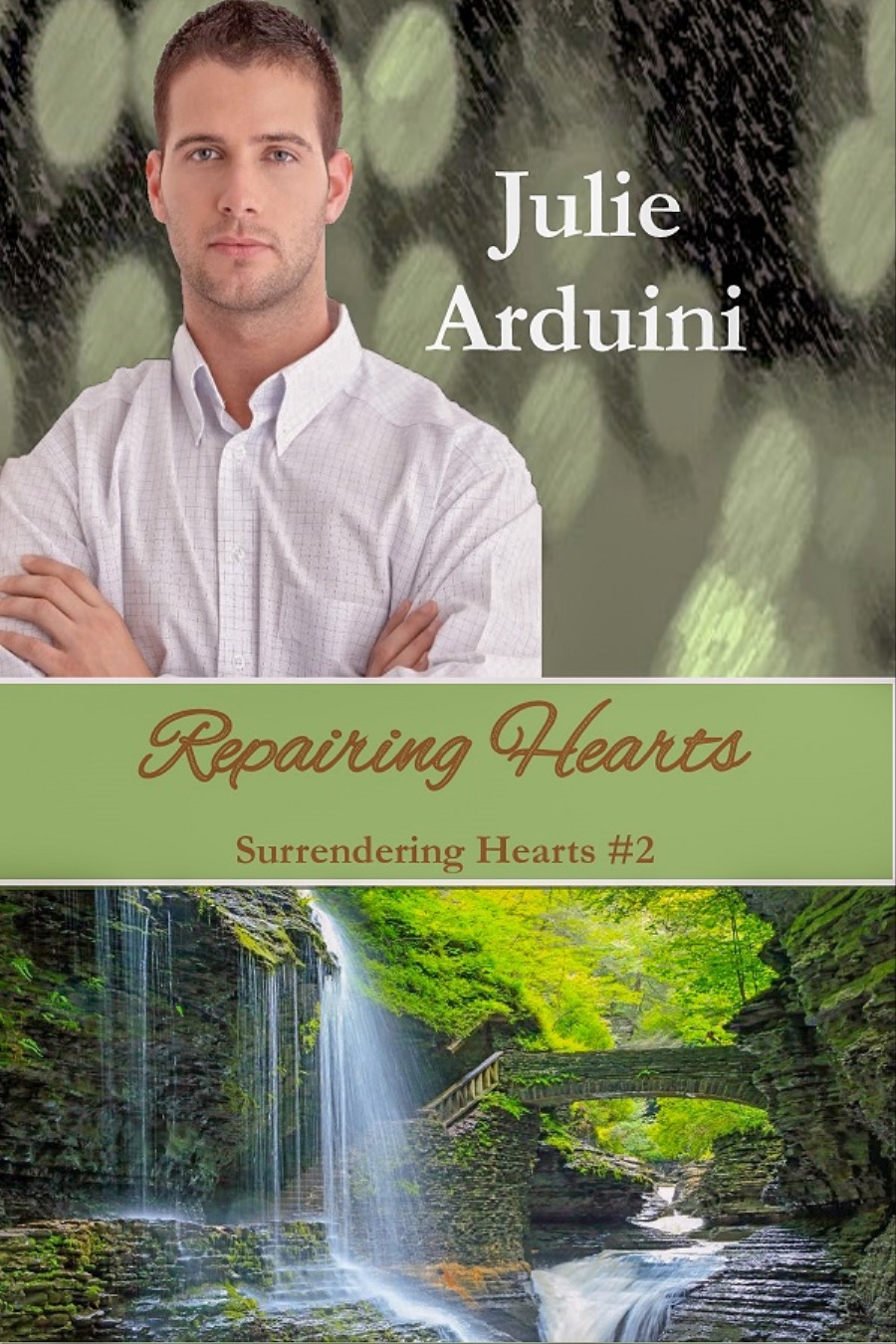
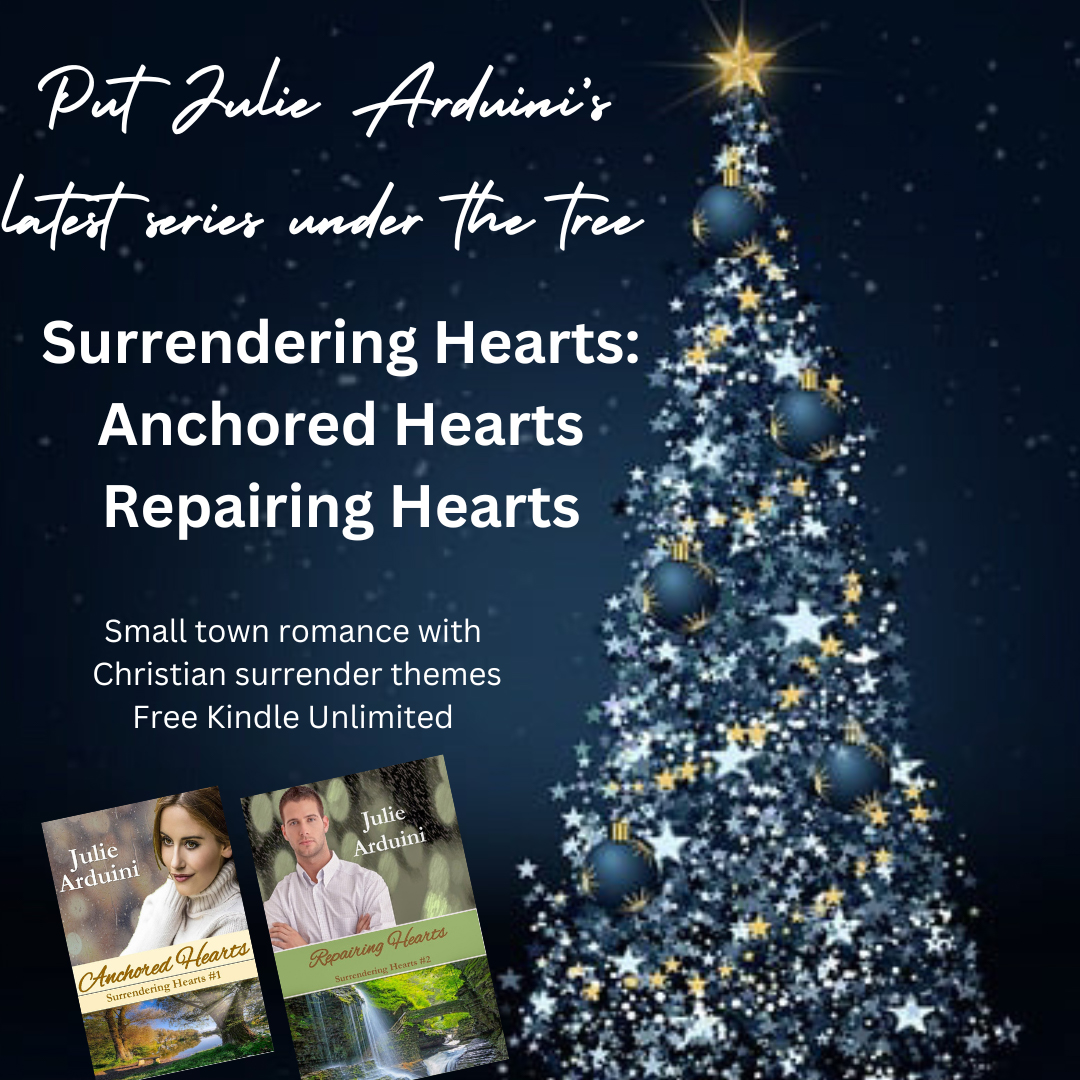
Repairing Hearts by Julie Arduini

You can tell when I have a new release around the corner.

-The house becomes cluttered

-Meals are quick and without fanfare

-I’m on the laptop all day

-I’m in a zone I call “story world” that takes me a bit to shift out of and join the real world

My family can rejoice because they get their wife/mom back because Repairing Hearts releases next week.

This is the second book of six in the Surrendering Hearts series featuring the Hart sextuplets. Each sibling discovers their own identity as they try to find a love like their parents shared. Jordyn was first in Anchored Hearts, and now it’s Ryan’s turn.

I loved writing Ryan’s story. He’s a loner who wants nothing to do with the publicity his family generates. In his haste to stay away from family drama, he bought a property that is a money pit and he doesn’t have the funds to renovate. Brother Evan pitches a reality show where Ryan is the star.

I didn’t know much about reality shows. I met with a dear friend who gave me great insight, and then I caved and watched Dance Moms, ten years after the fact. I learned so much, and I got hooked. Now I’m following the girls and the moms on social media and listening to podcasts. Yikes!

The reality show aspect gives way to plenty of conflict, and in this book, a major secret drops that changes the course of the series. I can’t wait for readers to discover it!

Authors can write all the books but it means nothing if readers don’t find, read, and review them. I hope you check out Repairing Hearts and let others know. This is a small town, reality show romance with Christian surrender themes. Anchored Hearts was about surrendering control. Repairing Hearts is about surrendering anger.

Here’s more:

What happens when a reality show creates a blight on sextuplet Ryan Hart’s life harsher than his dump of a home?

Ryan, the independent, brooding second oldest of the Hart sextuplets, can’t enjoy the solitude he craves when he agrees to star on a reality show. The plan is to discover a project manager to renovate his hole of a property. The show reveals that it’s more about Ryan’s dating life. Can he keep his guard up when everything around him is falling apart faster than the shingles on his roof?

BJ Wallace loves her quiet life in Wisconsin that she’s created far from her traumatic childhood. Everything changes when she learns she’s competing on Repairing Ryan’s Heart. As the show focuses more on Ryan than the house, BJ falls for him. Will she win the show and destroy Ryan with her secret, or sacrifice her heart to protect Ryan?

A small-town, reality show romance with family drama and a Christian thread of surrendering pride and anger.

You can KIndle pre-order now. Softcover is coming later this month.

Posted in Julie Arduini | Tagged , , , , , , , , , , , | Leave a comment

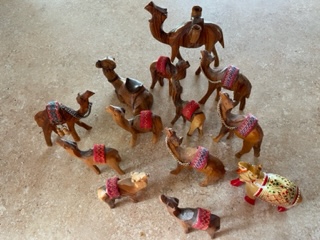
Camels help us cross deserts.

It’s not easy, riding the unlovable/lovable ungainly beasts. I’ve had college students write about camels traveling desserts (sic), which still makes me laugh.

It takes concentration riding camels because we’re continually pitched from one direction to the other and in constant danger of falling off.

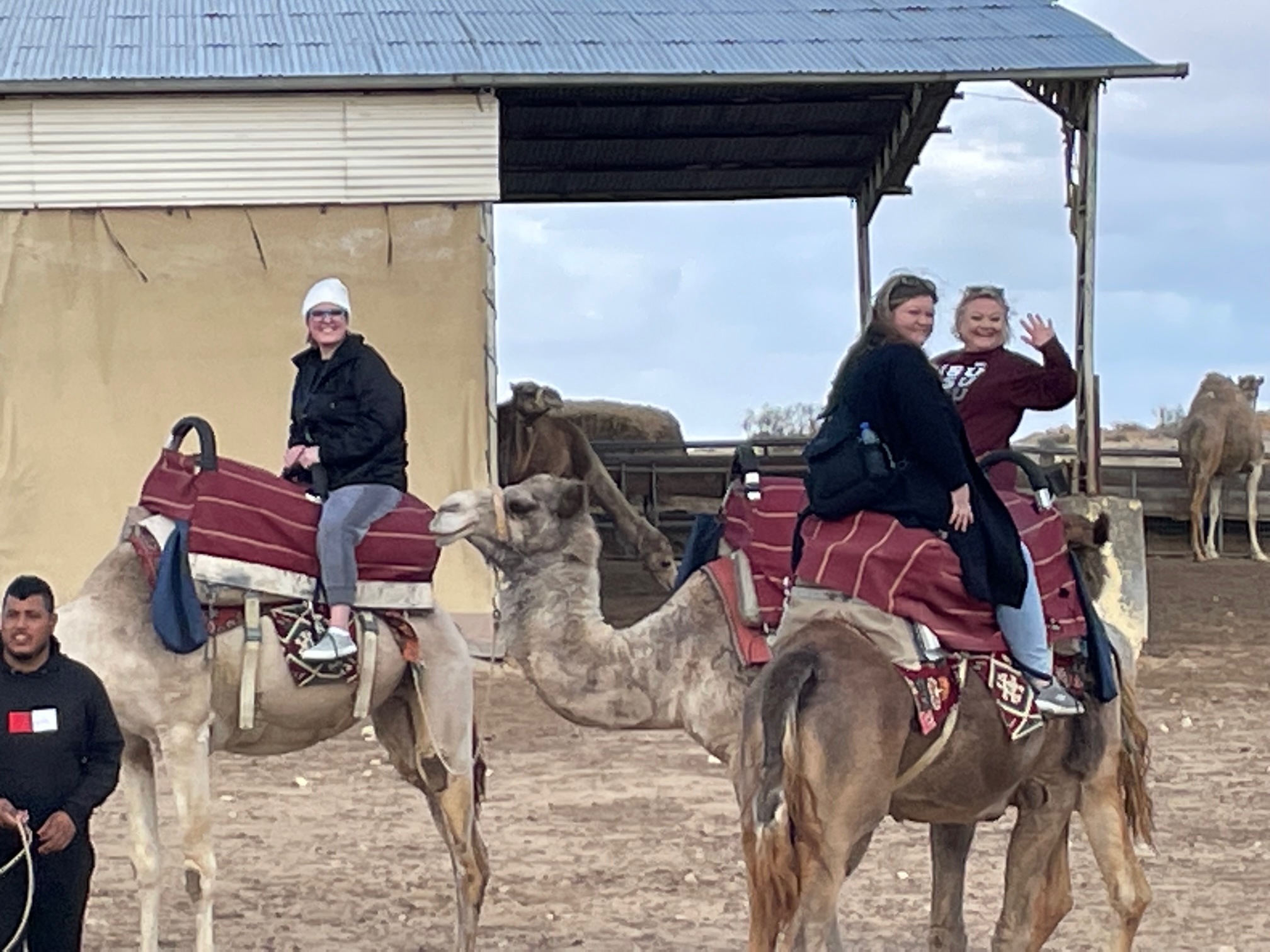
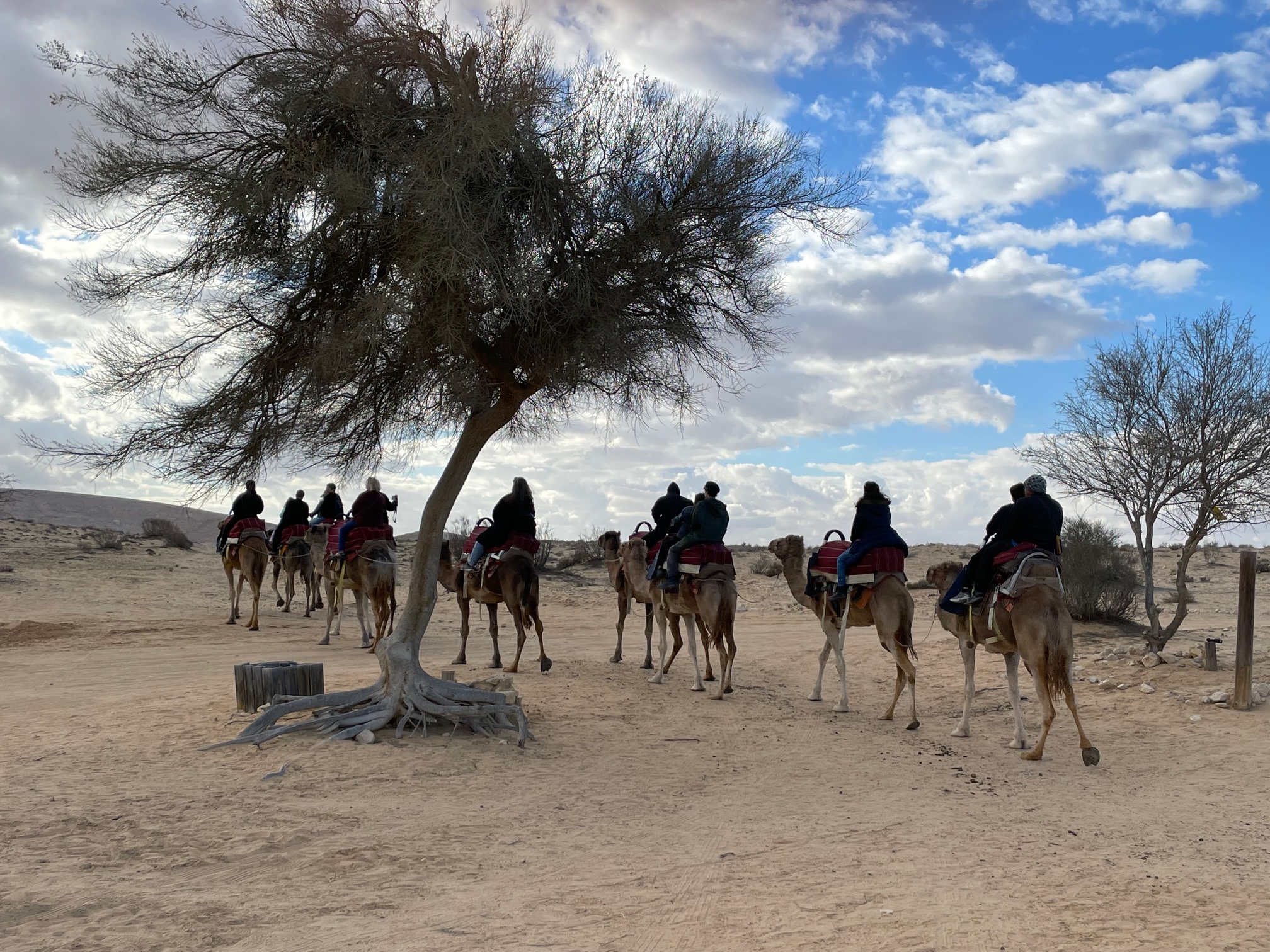
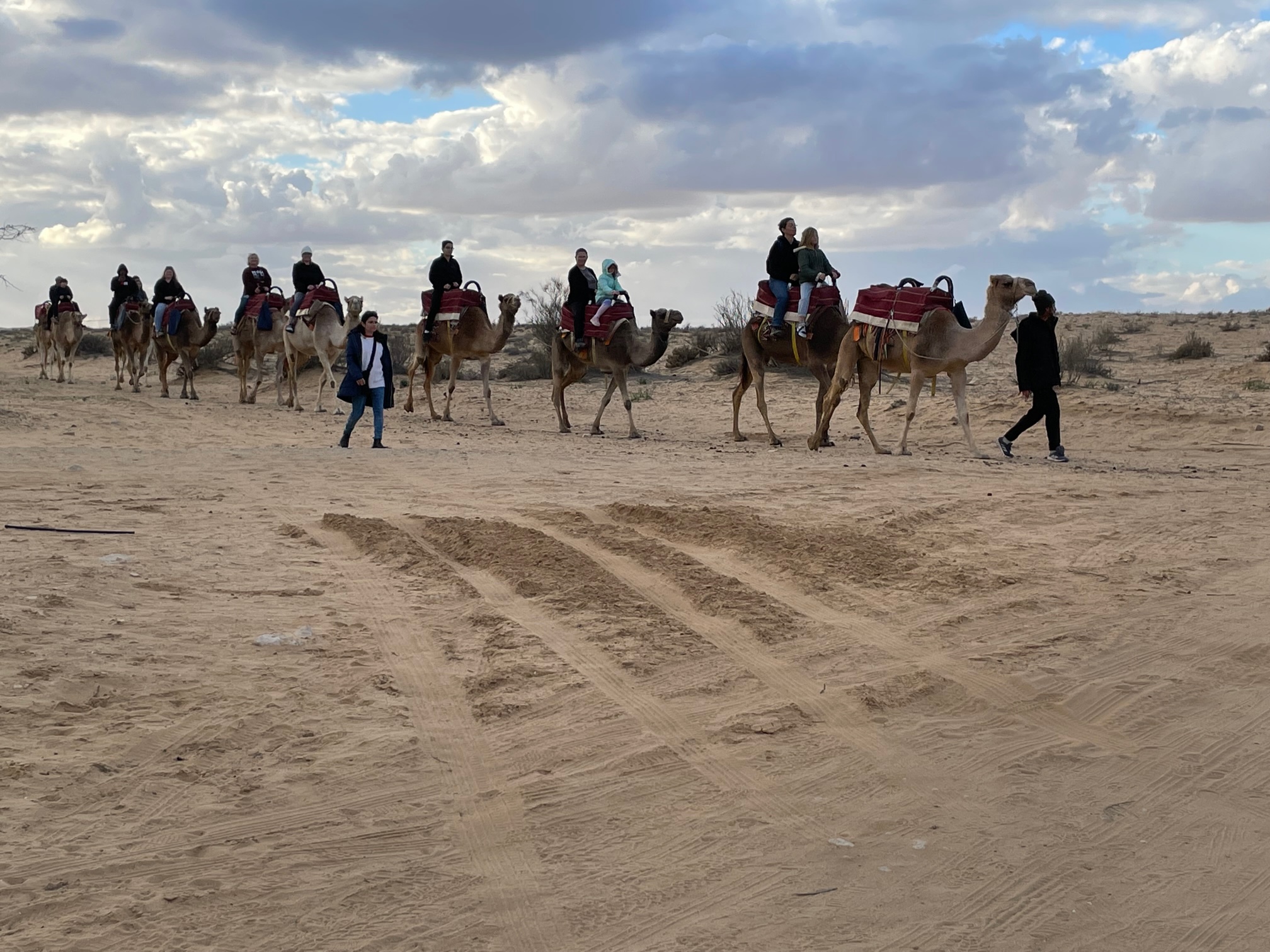
They’re called “ships of the desert” for a reason. Some people do get sea sick, and I understand why. Last January when my travel team stayed at a camel ranch in the Negev Desert, one woman chose to dismount her animal and walk back rather than complete the one-hour ride.

I’m amazed that long ago wise men from afar reached Bethlehem on camels after swaying and bumping across trackless desert sands as they were led by the patterns of the stars overhead.

Get too close to camels and they’ll spit. They try hard to keep people from mounting them for rides if they can. But if you master getting onboard, you’ve secured transportation that will help you cross impossible burning sands that few humans could master on foot. I’ve ridden one and am glad for the experience. The photo from that ride inspired the cover of my newest book, A Traveling Grandma’s Guide to Israel: Adventures, Wit, and Wisdom.

My favorite scriptures involving camels are in Genesis 24. Rachel voluntarily waters all the animals of unnamed servant who’s on a quest to find a bride for his master’s son. Google says camels “can drink 53 gallons of water in three minutes,” so Rachel’s strong arms accomplished a major task. In return, those same beasts carried her back across the desert to her bridegroom to fulfill her destiny to birth the promised son crucial to scripture’s divine plan.

Most of us occasionally need to cross deserts. When that is necessary, I believe the Lord provides some form of ornery yet capable beast of burden for us to recognize, mount, hold the reins, and thank Him while completing the journey.

Posted in Uncategorized | Tagged , , , , , , | Leave a comment

Facing Opposition by James R. Coggins

Reading Hebrews 12 recently, I was struck by one verse: “Consider him who endured such opposition from sinners, so that you will not grow weary and lose heart” (verse 3, NIV). Writing to Christians facing persecution in the Roman Empire, the writer to the Hebrews (possibly Paul) encouraged them to consider the example of Jesus. If Jesus faced opposition and persecution, then His followers should not be surprised if they too suffer opposition and persecution. Therefore, they should take heart, be courageous, and remain faithful. Earlier in Hebrews, the writer reminded his readers that in Jesus they had a Savior who was able “to empathize with our weaknesses” because He had been “tempted in every way, just as we are—yet he did not sin” (Hebrews 4:15).

But the writer was not just telling the Hebrew Christians to be encouraged. He was giving them an example to follow: “Consider Jesus.” How did Jesus respond to opposition? He simply continued on with His ministry—teaching, preaching, healing, and delivering people from demons. From time to time, He challenged those who opposed Him. At times, He miraculously avoided being harmed, as when an angry mob in Nazareth tried to throw Him off a cliff “but he walked right through the crowd and went on his way” (Luke 4:30). John 11:53-54 reports: “From that day on they plotted to take his life. Therefore Jesus no longer moved about publicly among the people of Judea.” Jesus did not seek death because it was not yet His time to die and He still had ministry to do. But he did not fear death either. In the end, He refused to deny the truth and courageously accepted death.

Posted in James R. Coggins | Tagged , , | Leave a comment

Character Revealed by Vicki Hinze

When life is easy, we gain little.  But when times are tough, how we deal with them, holds the potential for great gains.  Our character, and the character of those with whom we interact, is revealed in the same way.

It’s easy to be kind, compassionate, and patient with others when things in our life are going well.  We feel less pressure, less stress, less irritation.  So not much is revealed to us about our own character then.  We might see glimpses, but rarely big pictures.

But if we’re having a hard time and we’re tested, then our reaction reveals our character.  And then we do get far bigger picture insights than we do otherwise.

A while back, I saw a video captured by a Ring recorder on social media.  In it, a man was delivering a package to a house.  He noticed that the flagpole was down, and the American flag was on the ground.  He set the package aside, tried to straighten the flagpole but it wouldn’t stay up.  So, he removed the American flag and folded it properly, then set it on the front porch, saluted it, and then went on about his day.

A great deal about that man’s character is revealed in his actions.  In what he did when no one was watching.  He respected his flag, his country.  He saluted it.  He knew how to fold a flag properly.  And he paused, though on a tight schedule, to do so.  He didn’t make an ordeal of anything.  He just did what we knew to be the right thing to do.

That is admirable.  That is honorable.  It is worth emulating—on matters like that and on all other matters.

We know right from wrong, good from bad, and what we should do versus what we want to do.  Sometimes, we wish we didn’t, because doing the wrong, bad or what we want would be easier, cause less conflict, be more acceptable to others.  But none of those things make wrong right, bad good, or make what we know we should do lose power over what we want to do.  

So we should pause and take a lesson from the man who paused to honor the flag and respect what he’s been taught.  We should recall that our character is revealed to us in what we do when no one is looking.  

Yes, sometimes that carries costs, and yet doesn’t our willingness to pay them also reveal our character to us and to others involved?  It does.  

This brings to mind something I was told as a child:  Nothing stays hidden.  God sees and knows everything we think, say, or do.  Or that we don’t.  

Character is revealed in not acting or speaking when we know we should.  To defend someone weaker, smaller, or younger.  When we’re able to help someone in trouble, and choose not to do it.

My point is that what we do reveals our character, but what we don’t do does also.

Maybe we could benefit from remembering that.  I’m not so much thinking of what our actions or inactions reveal to others about our character, though that can be important.  I’m thinking of what acting or not acting reveals to us about who we are.  That is, in my humble opinion, always important.  Because we, and we alone, are accountable for what we do and what we leave undone.

May your choices comfort you.

Blessings,

Vicki

PS.  Sharing a Faith Zone Mini from my blog I wrote many years ago that might be of interest.  I kept a cutout of it on my mirror for the longest time. 😊

Posted in Vicki Hinze | Tagged , , | 1 Comment

The Wars of the Maccabees by James R. Coggins

After the Jews returned to Jerusalem from exile in Babylon and rebuilt the temple and the city wall under Ezra and Nehemiah, there is a gap in the biblical record of about four centuries. During this time, the Jews struggled to survive as a small, weak remnant in a hostile environment. They were trapped between two dueling successor states to Alexander the Great’s Greek Empire—the Seleucids based in Syria and the Ptolemies in Egypt. These were thoroughly “Hellenistic” empires; that is, they were not Greek by nationality but had largely adopted Greek culture. The prophet Daniel had prophesied about some of the wars that would take place (particularly in Daniel 11). Among the Seleucid kings would be one who would “exalt and magnify himself above every god” (Daniel 11:36). His armies would “desecrate the temple fortress…abolish the daily sacrifice [and] set up the abomination that causes desolation” (Daniel 11:31). While some scholars interpret this to be referring to an end-times antichrist, the usual interpretation is that this refers to Antiochus IV, who gave himself the title “Epiphanes” (“God manifest”). About 169 BC, Antiochus entered the Holy of Holies and looted the temple. Two years later, he set up an altar to the supreme Greek god Jupiter in the temple. This resulted in a rebellion of the Jews led by a family called “the Maccabees.” Their history is recounted in the extra-biblical books 1 and 2 Maccabees and the writings of the Jewish historian Josephus.

Like many Christians, I had very little knowledge about this “intertestamental period” (the time between the Old Testament and the New Testament). But I had become curious. So, when I came across a copy of a book called The Wars of the Maccabees by John D. Grainger at a charity garage sale (to help fund a Christian missionary effort), I snatched it up.

Grainger says at the beginning of his book that he will look at the wars (which were even more complex than suggested in Daniel’s prophecy) in purely secular terms. That is, he assumes the wars were simply struggles for power and not religious conflicts. He consistently describes the Maccabees as terrorists and imperialists (that is, as wanting to develop their own empire independent of other empires). Strangely, he never applies these terms to the empires (especially the Seleucids) that sought to subjugate the Jews—those empires are portrayed as legitimate governments. Grainger dismisses the Jews’ attempts to gain freedom and independence, saying that what the Jews really wanted was freedom to dominate their neighbors.

Grainger draws two interesting conclusions that may have relevance for our day. First, he says that the Jews were not unified but were roughly broken into three camps. There were devout Jews who mostly followed the Maccabees; there were Hellenistic Jews who enthusiastically accepted Greek culture and values and wanted to think and act and believe like Greeks; and in between there were Jews who were preoccupied with their own lives and didn’t care one way or the other. Therefore, Grainger argues that it was not Antiochus who set up the Jupiter idol in the temple, but Hellenistic Jews. This might be true, but the Seleucids also insisted on the right to appoint and replace the Jewish high priest (sometimes for money and sometimes for political advantage), so if it was the Hellenistic Jews who erected the Jupiter idol, they were empowered to do so by the Seleucids.

Second, Grainger asserts that it was the Maccabees who were intolerant rather than the Seleucids and Hellenists. Greeks, he argues, tolerated all religions at the same time; they were quite willing to let Jews worship their own God as long as they also worshiped the Greek gods. The Maccabees, however, insisted on worshiping only their own God, Yahweh.

It seems to me that Christians are facing the same issue in our day. The Christian church is not threatened so much by the world as by “Christians” who accept the world’s standards and want to change the church to be more in tune with the world around them. The Old Testament prophet Daniel commented on this problem, saying, “With flattery [the one who would exalt himself above every god] will corrupt those who have violated the covenant, but the people who know their God will firmly resist him” (Daniel 11:32 NIV). Daniel insisted that believers in the true God need to resist the efforts by enemy forces (and “unfaithful believers”) to make them conform to the world.

Modern Western society also strongly believes in tolerance. In fact, it insists that Christians must accept and affirm other religions and sinful lifestyles. What modern Western society will not tolerate is Christians who insist on worshiping only the true God. Jesus said that we cannot serve two masters (Matthew 6:24). Paul asked, “What agreement is there between the temple of God and idols?” (2 Corinthians 6:16). But Hellenistic thinking pervades modern Western society. Modern secularists/Greek thinkers are trying today to force others to follow their religion of “tolerance.” Erecting your idol in someone else’s temple is not tolerance. Trying to force Christians to give equal weight to other religions and accept sinful lifestyles is not tolerance.

War and More War

The wars of the Maccabees continued for more than a century. The Maccabees won some battles. They lost some battles. The Judean kingdom expanded and contracted, expanded and contracted. The Maccabees fought with and against various factions in the Seleucid and Ptolemaic kingdoms when those kingdoms were divided by civil wars. In the last century before Christ, they fought against the newly arisen Nabatean kingdom based in Petra in the desert lands to the east.

However, increasingly, the Maccabeans became what Grainger accuses them of being from the beginning. While the initial revolt was motivated by a desire to protect the temple and Jewish religion from corruption, later stages of the revolt became increasingly political and secular. The Maccabean leaders increasingly acted like the rulers of the kingdoms around them, seeking to extend their own power rather than build the kingdom of God. They hired foreign mercenaries to augment the Jewish armies. Competing claimants to the Maccabean throne fought civil wars against each other, with the Pharisees and Sadducees sometimes backing different claimants. The divisions in the kingdom eventually led to intervention by the Roman Empire as it expanded into the Middle East. A man named Antipater, “a man of great wealth and political acumen,” intervened in the Jewish civil wars. He was from Idumea, formerly Edom, the kingdom of the descendants of Esau, located to the south of Judah. The Romans later helped one of Antipater’s sons, Herod, conquer the Judean kingdom, and Herod was appointed king of Judah by the Romans.

The failure of the Maccabees to maintain political control of Judea was partly due to the strength of Judah’s external enemies. But it was also due to the inherent divisions within Jewish society. Hellenists, Pharisees, Sadducees, and power-hungry politicians all competed for power and weakened the state they were trying to establish. Like Old Testament Israel and her kings, they were not wholly committed to God and therefore lacked the power and divine blessing needed to succeed. Ultimately, they illustrated the inability of humans to build the kingdom of God by force. Only God can build His kingdom.

Christians preach only one God but should never try to force other people to worship Him (as it must be admitted they have done at certain times in history), any more than modern secularists should try to force Christians to worship their god of “tolerance.” Forced worship is never genuine, and using force in the name of religion is counter-productive.

The Conclusion

Grainger dismisses the Maccabees as terrorists who were doomed to fail because of the inherent conflict between the political and religious aims of the Jewish kingdom. He notes that the Jews continued to rebel against Rome—in 66-73 AD when Jerusalem was destroyed, in 115-117, and in 132-135. Grainger concludes, “The only way to control Judea was to destroy the Jewish community. This is the final lesson of the career of Judah Maccabee, whose methods were used eventually by the Romans against his people to destroy them.” Grainger here displays his anti-religious and ant-Jewish bias. He justifies the annihilation of the Jewish kingdom and the extermination of Jewish religion on the grounds that that religion is incompatible with Hellenistic thought. His ideal is for secular kingdoms to rule, untroubled by religious sensibilities. He never questions why the Seleucids or the Romans should claim the right to rule the Jews and their land. It is deeply concerning that he thinks the Jews deserved to be exterminated because they refused to surrender their political and religious independence.

Grainger’s analysis is thus flawed, but his volume helps to elucidate the political and religious situation in Judea when Jesus came to teach and preach and establish His kingdom.

Posted in James R. Coggins | Tagged , , , , , , , , , | Leave a comment

Unchanging by Mary Alford

It’s been said that the one thing we can count on in life is change. Things seem to change almost as quickly as a blink of an eye. Whether it’s the seasons, our jobs, where we live, or our health, most things do change. But there is one thing that remains the same. God never changes.

The same God who spoke the universe into existence is still able to speak calm over your storm. I love that!  

Psalm 102:25-27 says, Of old you laid the foundation of the earth, and the heavens are the work of your hands. They will perish, but you will remain; they will all wear out like a garment. You will change them like a robe, and they will pass away, but you are the same, and your years have no end.

The One who parted the red sea can clear a path for your dreams. All we have to do is dream big and pray. And then let Him direct or steps.

Exodus 14:21 says . . .All that night the LORD drove back the sea with a strong east wind that turned it into dry land.

And the same Jesus who stepped into human history, defeated Satan and death, and who bridged the gap between our sinful selves and God, can heal not only our hearts but our lives–no matter how messy they might be.

And one day, that same Jesus is coming back.

Revelation 1:7 says, Look, he is coming with the clouds, and every eye will see him, even those who pierced him; and all peoples on earth will mourn because of him. So shall it be! Amen.   

Until Jesus does return, rest in the assurance that the Creator of the universe never grows weary. He is in control, no matter how uncertain the things in this world may appear.  

Isaiah 40:28 Have you not known? Have you not heard? The Lord is the everlasting God, the Creator of the ends of the earth. He does not faint or grow weary; his understanding is unsearchable.    

God is unchanging and His word is firmly in place.

Forever, O Lord, your word is firmly fixed in the heavens.

Until next time, dear friends, many blessings!

Mary

http://www.MaryAlford.net

Posted in Uncategorized | Leave a comment

On My Knees by Tara Randel

There’s so much going on in the world today, not just in our everyday life, but in the bigger picture. It can be a time when we feel helpless or overwhelmed. How do we deal with the cares of the world? Through prayer.

In Matthew Chapter 6, the disciples asked Jesus to teach them how to pray.  Jesus replied,

“This, then, is how you should pray:

“‘Our Father in heaven, hallowed be your name,
your kingdom come, your will be done,
    on earth as it is in heaven.
Give us today our daily bread.
And forgive us our debts,
    as we also have forgiven our debtors.
And lead us not into temptation,
    but deliver us from the evil one.’

We know this prayer is a model of how we should approach our Father in heaven. But Jesus didn’t stop there. He continues in Matthew Chapter 6,

“Therefore I tell you, do not worry about your life, what you will eat or drink; or about your body, what you will wear. Is not life more than food, and the body more than clothes? Look at the birds of the air; they do not sow or reap or store away in barns, and yet your heavenly Father feeds them. Are you not much more valuable than they? Can any one of you by worrying add a single hour to your life?

“And why do you worry about clothes? See how the flowers of the field grow. They do not labor or spin. Yet I tell you that not even Solomon in all his splendor was dressed like one of these. If that is how God clothes the grass of the field, which is here today and tomorrow is thrown into the fire, will he not much more clothe you—you of little faith? So do not worry, saying, ‘What shall we eat?’ or ‘What shall we drink?’ or ‘What shall we wear?’ For the pagans run after all these things, and your heavenly Father knows that you need them. But seek first his kingdom and his righteousness, and all these things will be given to you as well. Therefore, do not worry about tomorrow, for tomorrow will worry about itself. Each day has enough trouble of its own.”

I often have to ask myself, why do I let things bother me, especially when I have no control over them? I can’t solve world events. I can’t tell the government how to be run in a Godly fashion. I can’t stop my family members from becoming ill. But the one thing I can do is get on my knees and talk to Jesus.

Jesus makes it clear that he expects us to come to Him. He wants us to lay our burdens at His feet. In John Chapter 14, Jesus says,

And I will do whatever you ask in my name, so that the Father may be glorified in the Son. You may ask me for anything in my name, and I will do it.

From the smallest concern to the heaviest load we carry in our heart, Jesus is there for us. My hope for today is that we remember how much Jesus loves us. That no matter what is going on in our lives, we can talk to Him. I know that when I take the time to pour out my heart in prayer, I feel so much lighter and experience a sense of peace. Then the world doesn’t seem so hopeless and dark, and I remember that God is our good God.

Tara Randel is an award-winning, USA Today bestselling author. Family values, a bit of mystery and of course, love and romance, are her favorite themes, because she believes love is the greatest gift of all. For more information about her books, visit Tara at www.tararandel.com. Like her on Facebook at http://www.facebook.com/TaraRandelBooksSign up for Tara’s Newsletter.

Posted in Tara Randel | Tagged , , , , , , , | Leave a comment

Christ, Your Living Hope by Julie Arduini

I love a good Bible study. Recently I finished Rebekah Lyon’s Building a Resilient Life: How Adversity Awakens Strength, Hope and Meaning. I knew God still had layers to lovingly unveil in my healing journey, and I loved this book covered the emotional fallout from the pandemic.

What I didn’t expect was for God to take me back to childhood. He pointed out places where I carried pain. Through the book, prayer, and sharing with a dear friend, I was able to face those things from far and recent past and find healing.

One fact jumped out at me.

Christ, a living hope.

It’s so simple I nearly missed it.

Christ. Well, right there that packs quite a punch. He’s more than a teacher as many religions box him into. He’s Messiah. Savior. King of Kings. Lord of Lords. Yet even in His royalty He is always accessible. His arms are open.

Living. When I see a crucified Jesus on a cross I think of His sacrifice. That kind of execution was for the worst of the worst. Yet there He hung, nailed, beaten, spit on, mocked, whipped, and finally dead. But wait! There’s more. On the third day, the stone was moved. Grave clothes were neatly folded.

Jesus is alive. He is living. Preach all day to me about other religions but is your god the One who fulfilled prophesy after prophesy? Does your god hold up 2,000 years later? Is your god alive? Because my Jesus checks all those boxes.

Hope. Jesus doesn’t just offer hope, HE IS HOPE. C’mon. That’s amazing. Whether it’s childhood trauma, pandemic fallout, financial woes, relationship problems, job loss, medical diagnosis, throw anything and everything going on in your life right now and leave it at His feet.

Jesus is your living Messiah who is hope.

He’s got this.

It’s on His shoulders. It should not be on yours.

He’s already resting at that place, whatever and wherever it is, while He stands behind you, and stands with you.

Do I know your issues? I do not. But if you have not considered Jesus, today is a great day to start.

If it’s become a bit lukewarm, turn that burner up. Jesus knows fire. He’ll see you through.

If you’re in a good place with your relationship with Jesus, trust Him for a better place.

No matter where you are, keep thinking on the truth.

Christ is your Living Hope.

Pinterest image

Posted in Julie Arduini | Tagged , , , , , , , , , , , | Leave a comment

Leaning on Jesus

I have a deadline in six days, a deadline I honestly thought I could not make. But God.

As of ten days before this post goes live, I have 2/3 of the story written with it looking as though I will make it on time. Like I said…But God.

I thought I’d post the memes that have kept me going. These are some of my favorite Scripture verses.

I hope you enjoyed my memes, made mostly from photos I’ve taken.

God is good. His Love endures forever!

Posted in Uncategorized | Leave a comment

Moses’ Courage by James R. Coggins

Commentators have been troubled by this New Testament statement about Moses: “By faith he left Egypt, not fearing the king’s anger” (Hebrews 11:27). The original Old Testament story says that when it became known that Moses had killed an Egyptian who was beating a Hebrew slave, “Moses was afraid and…fled from Pharaoh and went to live in Midian” (Exodus 2:14-15). It is possible that the punctuation in Hebrews 11:27 could be changed so that the verse reads, “By faith he left Egypt; not fearing the king’s anger, he persevered because he saw him who is invisible,” although most translators and commentators think that is unlikely.

It is helpful to remember that the story in Hebrews is greatly condensed. It is therefore quite possible that this verse refers to Moses’ second departure from Egypt, when he led the Hebrew slaves to freedom. This was when Moses repeatedly stared down Pharaoh’s anger (Exodus 5-12). This was when he persevered. And this was after he had encountered the invisible God at the burning bush (Exodus 3-4). The point of the story is the contrast between two competing rulers. Everyone could see Pharaoh’s army, wealth, and power. But only those who have faith, only those who have “seen” the invisible God, know that He is far more powerful than Pharaoh or any other earthly ruler. Only those with faith can dare to defy earthly kings and governments and serve the only true King.

Posted in James R. Coggins | Tagged , , , , , | Leave a comment