Fostering Relationships by Nancy J. Farrier

A few weeks ago I attended the Faith, Hope, and Love Christian Writers Conference. The was FHLCW’s first in-person conference. As President of FHLCW, I couldn’t wait to be there and see what blessings the Lord would give everyone.

The conference was small, just under seventy-five people. But, the sense of community was strong. Through the teachings, the meals, and throughout the weekend, it was so fun to watch these writers make connections and renew friendships.  Hearing the group sing the worship songs on Sunday morning was very special. It was like being there with family, and I can’t wait for next year’s conference.

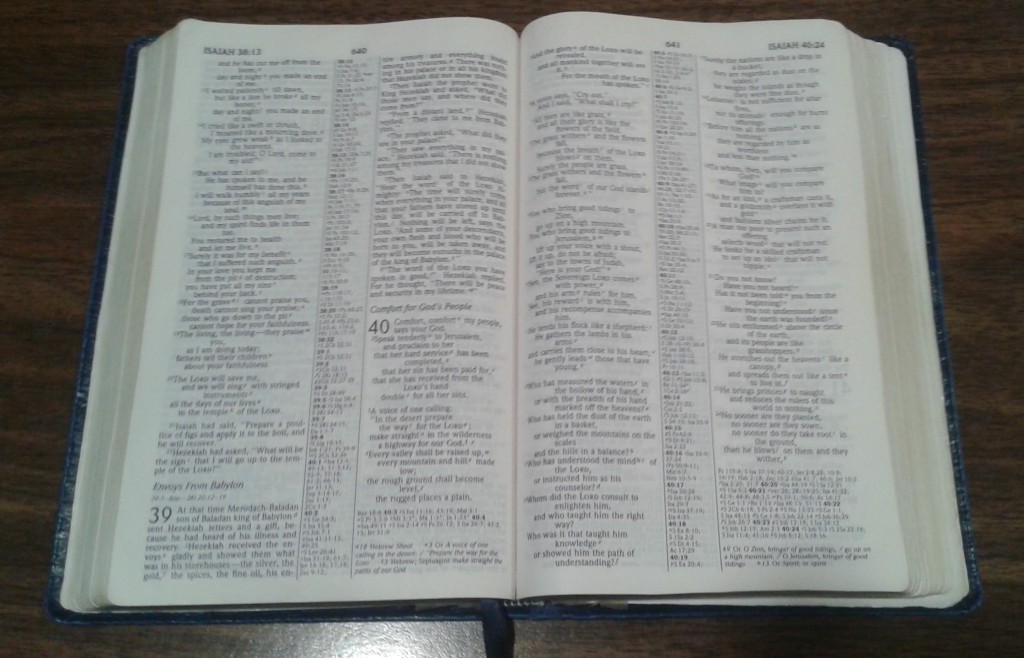
Meeting with like-minded people got me thinking about our need to gather together and draw encouragement from one another. In Hebrews 10:24-25 we read, “And let us consider one another in order to stir up love and good works, not forsaking the assembling of ourselves together, as is the manner of some, but exhorting one another…”

These verses are usually taken to mean we should be in church regularly meeting with other Christians and being lifted up in our faith. I wonder if it can also mean getting together with family, friends, or a work group. Of course, to be lifted up in our faith, we need to regularly meet with other Christians and be careful when we meet with those who don’t share out faith.

It is so very easy to fall into a rut of work, home, family, daily chores and ignore our need for like-minded people. The deficit in emotional and spiritual nourishment may not have an impact at first, but it will build up. We must work to assemble together—to try to make time for people who will lift us up just by their presence and their godly attitude.

While it’s sometimes awkward or uncomfortable to sacrifice time and meet with others, it is worth the cost. For me, putting in the work to attend that FHLCW conference meant seeing writer friends I hadn’t seen for a long time. It meant meeting writers I’d only known online, putting faces to names, and realizing how wonderful these people are. It meant being heartened in a professional capacity when the very nature of writing is a lonely one.

So I encourage you to consider your need to assemble with those in your family, your church, your Bible study, or even from work. Be lifted up by their friendship and in turn, you can lift them up too.

Posted in Nancy J. Farrier | Tagged , , | 2 Comments

Seeking Peace and Prosperity by James R. Coggins

After living in the same house for 29 years, my wife and I decided it was time to move. The children had grown up and moved out. The big yard with its fruit trees and gardens was becoming too much work. And we felt as if we were in a rut. It was time for a new challenge.

So, we downsized—from a 1600-square-foot house to a 2200-square-foot townhouse. Our new place is in a slightly smaller city 20 miles away. It is the largest, newest, most functional place we have ever lived in. We feel blessed.

The move also meant that we moved from a neighborhood to a community. We are now part of a “strata” or “homeowners’ association,” which means that we have to work together with our neighbors, the other members of the townhouse complex.

A year after we moved here, I was asked to consider joining the strata council, the elected body that runs the complex. God has a sense of humor. One of the reasons we moved was so that I would no longer have to take care of our big yard. I am now in charge of landscaping for the whole complex.

Since that first year on council, I have been re-elected twice. It is not a great honor. No one else wants the job.

Being on strata council means doing hours of unpaid work every month, often at inconvenient times. It causes a lot of stress as we deal with complex issues, complaints and criticisms, unreasonable demands, violations of the rules necessary for community living, and the weight of responsibility.

So, why do it?

For me, the answer has a history.

Several years ago, I began studying the Old Testament book of Daniel. Daniel and other Jews wer

e suddenly uprooted from their place among the people of God and taken into exile, where they were immersed in the pagan culture of the Babylonian Empire. I realized that there were lessons that could be gleaned from Daniel’s experience, lessons of crucial importance for North American Christians as we are now immersed in a pagan culture of our own. This study eventually led to the book, Living for God in a Pagan Society: What Daniel Can Teach Us (Mill Lake Books).

In the course of that study, I came across a letter written by the prophet Jeremiah in Jerusalem to Daniel and the other exiles in Babylon, telling them how to live in that pagan society. That letter seemed so important that I included a chapter on it in my book about Daniel. Among other things, Jeremiah’s letter said, “Seek the peace and prosperity of the city to which I have carried you into exile. Pray to the Lord for it, because if it prospers, you too will prosper” (Jeremiah 29:7 NIV).

Having written about this letter, I must now practice what I preached. And so, I seek the peace and prosperity of our new city by serving on the strata council.

Posted in James R. Coggins | Tagged , , , , , , , | Leave a comment

God’s Majesty Reflected In The Skies

On Saturday, parts of our country got to experience God’s majesty reflected in a partial solar eclipse that is known as the ring of fire. A ring of fire eclipse, also known as an annular eclipse, occurs when the Moon passes between the Sun and Earth, but does not completely cover the Sun’s disk. As a result, a bright ring or “annulus” of sunlight remains visible around the Moon’s silhouette. I’m reminded of Revelation 8:12: And a fourth angel sounded, and the third part of the sun was smitten, and the third part of the moon, and the third part of the stars; so as the third part of them was darkened, and the day shone not for a third part of it, and the night likewise.

Although I know what happened on Saturday wasn’t like that at all, the eclipse started when the shadows outside seemed to deepen, and it wasn’t nearly as bright outside. I can’t imagine what the outdoors would look like if a third of the stars, the moon and the sun, were no longer there!

When we went out to observe there were dozens of little crescent beams of light all around the ground.  

Although we never really could visually see the ring of fire as pictured here, those little beams of light on the ground were mysterious and another reflection of God’s majesty.

I hope you, too, were able to enjoy the ring of fire eclipse!

Psalm 19: 1 says, The heavens declare the glory of God; and the firmament sheweth his handywork.

Until next time, dear friends, many blessings!

Mary

http://www.maryalford.net   

Posted in Uncategorized | Leave a comment

Dirty Jesus by Julie Arduini

A few years ago I listened to a series by Elevation Church lead pastor, Steven Furtick. It was called “Hippy Jesus” and he walked everyone through the myths out there concerning Jesus, and the truth.

Many see Jesus as a surfer dude type with the long, flowing hair and smile. He’s got hugs and handshakes.

What most miss is Jesus came from the Middle East. He will not have lily white skin as so many pictures depict.

He also gets angry. He flipped a table. When He returns, I just finished a line by line teaching of Revelation. He will not be dainty Jesus. He is King of Kings and Lord or Lords. He will be taking care of business.

This week He also showed me He got dirty.

I’ve been praying through something that has been full of ups and many downs. It’s heartbreaking and hard, hard warfare. One outcome was desirable for those of us that have been praying. Not easy, but certainly nicer of all the options out there.

Right now, that option isn’t happening and most likely won’t. At least not the way I pictured it.

Jesus reminded me He walked dirty, dusty roads and ministered with those who were just as dirty on the inside as the out. His feet needed cleaning and His robe was a mess. But it never stopped Him from entering those dirty situations. It also never changed Him. His clothes may have been a mess, but He was not. He didn’t fall into any spiritual pit.

A dirty robe is enough to imagine, but remember His last hours before death. The loincloth was bloody. Forty lashes was fatal. Jesus received 39. The whips used had glass and stone embedded. He was beat on. Then nailed to a cross. It’s an easy sentence to read, but picture it. He was nailed to a cross.

Dirty, bloody Jesus.

All for us.

Sometimes Jesus allows us to get dirtied and bloodied in a sense because the “cleaner” option would not have brought us to desperation where Jesus is our only need. As I pray for the situation above, I sense it’s going to take a path where it’s going to get messy.

But not impossible.

Or over.

In that pit there is a hand just waiting for the call, and won’t Jesus offer that nail-scarred hand immediately to lift that Child of God out of the pit. That visual encouraged me. Do I want people I care about to suffer? No.

But sometimes that’s what it takes.

Jesus knows.

He lived the dirt, blood, and mess first.

Sometimes testimonies need to be mess-tamonies. Testimonies with a lot of junk Jesus took care of in His time.

I end this week tired, a little sad, but encouraged.

I pray this encourages you, too.

Posted in Julie Arduini | Tagged , , , , , , , , , | 1 Comment

Safe Rooms and Bomb Shelters – Where will you Abide?

The photo above is the safe room and bomb shelter at Kalia Kibbutz with its date plantation and gardens bordering the Dead Sea next to Qumran where the Dead Sea Scrolls were found.

One of the most meaningful lessons I’ve learned in Israel is about safe rooms and bomb shelters since they constantly face threats of wars and attacks. So many rockets have been fired into Israel from Gaza, Syria, or Lebanon that Israeli law requires all new building structures to include reinforced security “safe rooms,” somewhere to go to remain to outlast attacks and survive. Their name in Hebrew is “Merkhav Mugan,” literally “protected space.” I know many people who’ve used them but thankfully no one injured in such attacks.

Residential safe rooms are comfortable for short-term stays in the event rockets are launched without enough warning for people to reach public bomb shelters. Their use might be like the adage, “If you carry an umbrella, it won’t rain.”

I learned on an early viair to Israel to stay aware of the distance our daytime travel or nighttime sleeping locations were at any given time from target areas. On that trip my team and I landed in Israel two hours after the 2012 Gaza War broke out. I got up early to join our hostess hearing radio news to see where bombing and combat areas were expected for the day. We heard the broadcaster say something like, “If you are four miles from today’s target area and hear the siren, you have sixty seconds to get to your safe room. If you are two miles away, you have thirty seconds. One mile—15 seconds. If you are closer than that, just STAY in your safe room.”

We stayed alert and aware of how long it would take us to get to safety at any given moment.

And then the Lord impressed me that He is our safe room and instead of me dashing in and out, invited me to abide in the shelter of His care.

Psalm 91: 1 “He that dwelleth in the secret place of the most High shall abide under the shadow of the Almighty. I will say of the Lord, He is my refuge and my fortress: my God; in him will I trust.”

This shows missile defense from Israel’s Iron Dome shooting down incoming rockets fired from Gaza in 2012.
Posted in Uncategorized | Tagged , , , , , , | Leave a comment

Remaining Faithful by James R. Coggins

Hebrews 11 is the great chapter of faith. There we learn how Abraham and Moses and others lived faithful lives. But the Bible was not originally divided into chapters and verses. What was said in Hebrews 11 is closely connected to what was said in Hebrews 10 and what was said in Hebrews 12. Indeed Hebrews 10 and 12 spell out the lessons to be learned from the faith examples in Hebrews 11. The primary lesson is that the Christian life is hard and challenging. If we have the idea that the Christian life is going to be easy, then we will not be prepared for the challenges that come our way and will fail to remain faithful.

Here are specific ways in which we need to remain faithful:

• “Let us draw near to God with a sincere heart and with the full assurance that faith brings” (10:22).

• “Let us hold unswervingly to the hope we profess” (10:23).

• “Let us consider how we may spur one another on toward love and good deeds, not giving up meeting together, as some are in the habit of doing, but encouraging one another” (10:25).

• “Remember those earlier days…when you endured” suffering, insult, persecution, and confiscation of property and “stood side by side with those who were so treated” and those in prison (10:32-34). That is, let us remember our past faithfulness and keep doing the same things.

• “Do not throw away your confidence” (10:35).

• “Persevere” and do not “shrink back” (10:36-39).

• “Throw off everything that hinders and the sin that so easily entangles” (12:1).

• “Let us run with perseverance the race marked out for us” (12:1).

• Let us fix “our eyes on Jesus” (12:2).

• “Consider” Jesus, who also remained faithful in suffering “so that you will not grow weary and lose heart” (12:3).

• “Struggle against sin…to the point of shedding your blood” (12:4).

• “Do not make light of the Lord’s discipline, and do not lose heart when he rebukes you” (12:5).

• “Endure hardship as discipline” (12:7).

• “Strengthen your feeble arms and weak knees. ‘Make level paths for your feet,’ so that the lame may not be disabled, but rather healed” (12:12-13). Like 10:25 and 10:32-34, this assumes that we do not live the Christian life in isolation but that we do it together, supporting one another.

• “Make every effort to live in peace with everyone and to be holy” (12:14).

• “See to it that no one falls short of the grace of God” (12:15).

• See to it “that no bitter root grows up to cause trouble and defile many” (12:15).

• “See to it that no one is sexually immoral” (12:16).

• See to it that no one “is godless like Esau,” who traded his godly inheritance for something far less valuable and far more temporary (12:16).

There is a lot of repetition here, but that shows how hard it is to remain faithful and also how important it is. These chapters contain warnings that the alternative to remaining faithful is “a fearful expectation of judgment” (10:27) and destruction (10:39). There is a day of judgment coming (10:25). When that day comes, if we have not remained faithful, it will be too late to repent, too late to shed tears, too late to change what we have done. (12:17).

Posted in James R. Coggins | Tagged , | 1 Comment

When A Good Thing Becomes Too Much by Peggy Webb

I live in the Deep South and love gardening. The first thing I planted when I moved into my Mississippi cottage was wisteria—a showy flowering vine that is almost a symbol of Southern living. It grows wild in the woods all over the state, which should have been a warning sign to me. The gorgeous purple flowers hang in clusters from the trees and perfume the area with a sweet fragrance that is intoxicating in the spring. When it blooms, there is an explosion of color in the garden. Planted beside a yellow climbing Lady Banks rose (in the foreground of the first photo), the wisteria creates a spectacle that caused people to stop their cars in front of my house to look and snap pictures.  

     But wisteria is a fast-growing, climbing vine. I thought I could keep it trimmed back, but it grew too fast for me. I could travel for two weeks, and come home to find the wisteria had climbed high into the trees beyond my reach. Impossible for me to cut back without risk of falling off a ladder and breaking my neck. 

     Unlike the clematis, it does not grow on a tiny wisp of stem that never overwhelms other plants or structures. If left in the garden for years, the trunk will grow big and heavy. Slowly it begins to strangle and weigh down the trees and fences it has attached itself to. Eventually, smaller trees will break under the weight of the vine, fences will collapse, and large trees will not get enough sunlight so their own leaves can grow. 

     For all its beauty, the wisteria is also poisonous. Both the flowers and the seed pods contain toxins that will cause great distress if they are ingested.

     When my prized Golden rain tree collapsed (the entire tree!) under the weight of wisteria after a heavy rain, I should have taken steps to remove it. But, no. I was obsessed with its beauty. I could hardly wait till spring when it would put on a spectacular show. I told myself the Golden rain tree had created too much shade in the garden, and now I could plant sun-loving flowers in its place.

     Next, the wisteria managed to swing from the magnolia tree in my enclosed Angel Garden to the pecan tree across the fence. My lawn-care guy told me he was going to arrive at my cottage to cut my grass and have to hack through the wisteria with a machete to get me out of the house. Still, I love purple! I love bloom! I love fragrance!

     I couldn’t bring myself to get rid of the wisteria. Do I hear you gardeners laughing? You should be. Getting rid of wisteria is like launching a battle against an enemy who is bigger, stronger, and smarter than you. Did I mention the vine is also tenacious.? Cut it down and it will grow back in a heartbeat. Pay an arborist to cut it down then grind the stump, and there will be one small root way under the ground just waiting its chance to sprout when you’re not watching, and start growing like wildfire.

     My wisteria is mostly gone now, but it’s still launching sneak attacks and I’m still fighting back. It occurred to me that the story of my battle with wisteria is a perfect symbol for letting enjoyment of a good thing get out of hand, go too far, become an obsession that does damage. Chocolate, anyone? If one Hershey’s bar is good, then a six pack is divine. Right? Forget health and doctor’s warnings about diabetes.  You want me to serve on one more committee? It’s for a good cause, right? Forget that I already serve on seven committees in my church and community, and I have a family who is crying out for attention. 

     Good things can be sneaky. They can become an obsession. I’m trying to learn to recognize when a good thing becomes too much. 

     God is good! 

  Peggy Webb

Posted in Peggy Webb | Tagged , , | 1 Comment

Picking A Theme by Tara Randel

When setting out to write a book, there are many aspects that need to be considered. What is the story about? Who are the characters? The plot? The theme? All the components that, as an author, we sit down and consider before we even begin to type the first page in our story.

Since there are genres in fiction, the answers to these questions depend on if you are writing a romance, or a mystery or even a comedy. Or a combination of those topics. I’ve written in a few different genres, but today I want to focus on romance.

As in any genre, there are degrees to which you can tell your story. In romance, the swing is from inspirational or Christian to very steamy content. I write for the Harlequin Heartwarming line, which are wholesome romance novels. In the wholesome line, I get to focus on and spend time in the emotions of my characters. When I decided to make writing my career, I knew it would be romance and telling stories about love. And while I may not write in the Christian realm, I still focus on topics that are Christian centered. Forgiveness. Second chances. Hope. Most of all, love. The things that enhance our lives.

As I was coming up with a new proposal for my publisher, I knew I wanted the books to be about four sisters who were estranged. From book to book, they would reconnect with each other while also searching for ways to heal the trauma that had separated them. At the heart of each story, my female protagonists would have to forgive a very important person in all their lives. Could they do it? Did they want to do it? Sometimes, it is easier said than done.

But for those of us who follow Christ, we strive to be better. If that means forgiving someone who has hurt us, then we must try.

And since writing a book is never as easy as it might seem, I have to stay true to the format and include a love story that will also make my characters stretch and grow. Put them in a different place than when I first started the book.

I could have taken a different topic, like hope, and based my theme on it, but for some reason, forgiveness took center stage, and I went with it. I was able to flesh out my characters knowing this was their goal as I worked forgiveness into the plot. Sure, my characters would have to do a lot of soul searching, but isn’t that why we love to read books that tackle tough subjects? Life isn’t always easy, so I couldn’t make the conflict in my character’s lives that simple to solve.

This is why I love to write big stories. To dig in and figure out why people behave the way they do, how they can rise above the challenges to become better people, not only for themselves, but most importantly, for others. And the reward? Love. The one thing we all want in our lives.

So now I’m waiting to hear if the editors will accept my proposal. Patience, another virtue that is tough to master, is key, but in the waiting, we discover a lot about ourselves and our relationship with God. I give everything that I write to the Lord, hoping for His guidance when I address difficult topics. I want His wisdom not only in my daily life, but in the pages that I write. To me, that’s what being an author is all about.

Tara Randel is an award-winning, USA Today bestselling author. Family values, a bit of mystery and of course, love and romance, are her favorite themes, because she believes love is the greatest gift of all. For more information about her books, visit Tara at www.tararandel.com. Like her on Facebook at http://www.facebook.com/TaraRandelBooks. Sign up for Tara’s Newsletter.

Posted in Tara Randel | Tagged , , , , , , , , | Leave a comment

When You Come in Second Place by Vicki Hinze

At times, we’re perched for success.  Everything seems to be going our way, and those closest to us assure us there’s no way we won’t win our goal.  With great eagerness and a little anxiety, we shoot for our star—and miss.  By one.  Rather than the win we’d hoped for, we come in second.

To us, this feels like failure.  That’s a really good reason to give less weight to our emotional responses and more weight to our logical, critical-thinking responses.

It takes us a bit to get beyond the emotional letdown.  Some say days.  Others say months.  And the rare individual says you never get over it.  I say give it five minutes.  Rant and rail at the unfairness of life, and then let it go.  Why?  Because five minutes is all the emotional rant is worth.  Beyond that, it is stealing time away from the constructive and good that can come from second place anything.

We all work hard, we give all we’ve got to win, to succeed—as we define success.  So when we don’t, we react.  The sooner we get beyond the reaction stage and into the analytical stage—as in, why didn’t we win—the sooner we can figure out where we need to improve.

Recognizing that and accepting it is critical to our future and whether or not we ever achieve our winning/success goal.  Emotions deserve their due, of course.  But so does taking a hard look at how we can do better.  Which do you think deserves the lion’s share of your time?

The one that is over and done and will never change?

Or the one that is yet to be and can be altered to best serve us and those for whom we do what we do?

Those are the questions I ask myself, and the answers taught me to not mourn losses but to learn from them.  Each new skill is a tool that can be the key tool needed to climb to the next rung on your personal ladder.  

That ladder might be in your job, in the way you go about your work.  It might also be in how you relate to your spouse or your kids.  We logically know children are not one-size-fits-all when it comes to what works to get through to them, for them to grasp the life lesson or value of what we’re trying to get across to them.  What works for your eldest might be totally wrong for what works with your youngest. 

The same is true of us and how we process and relate to ourselves.  One of the saddest things I’ve seen in my professional life was an author sobbing her heart out because she’d submitted a book to a publisher and been rejected.  This was months after she had received the letter and she’d been so devastated that she hadn’t been able to write a word in all that time.

The first question in my mind was, “Why is she giving one editor that kind of power over her?”  The next was, “What exactly did the editor say?”

As it turns out, the editor had given her great feedback on exactly why she had rejected the book—and that is no small thing!  Obviously, if the writer had known this about her own work, she would have fixed it before submitting.  She was gifted a treasure!  But the author was so upset, she failed to grasp that, and her forward momentum crashed to a halt.

My point is, we all have much to learn about everything.  If we’re open to it, the learning can reach us more easily than if we’re resistant.  It will come, as it did with the author, but it’s up to us to recognize it, seize the good in it, and then use it.

May you always see the value in coming in second and gain what you need to propel you to your vision of success in all you do.

Blessings,

Vicki Hinze

PS. In November, my new thriller, NO ONE WAS SUPPOSED TO DIE will be released. I can’t wait!

Posted in Uncategorized, Vicki Hinze | Tagged , , , | Leave a comment

For Love of Country by James R. Coggins

The other night, my wife and I were praying for our country. (Our country is Canada, but similar issues are present in other countries.) We prayed for a restoration of truth, justice, wisdom, morality, and faith in God. And then we prayed for a restoration of love.

That last word grabbed my attention.

It occurred to me that what is profoundly lacking in our country (and in other countries) right now is love.

Our political rhetoric, on all sides of the spectrum, is filled with discussions of rights and tolerance and policies and social justice and reform. But love is rarely mentioned. Indeed, as I listen to the rhetoric, it seems to be increasingly motivated by hatred of the other side rather than by love for other people.

When love is mentioned, it is reduced to “love of country” (too often a code for support for guns and the military) or freedom to choose who to love (often a code for sexual promiscuity).

But real love? Never mentioned. Never considered.

I’m talking about agape love. Biblical love. Self-sacrificing love. Love that leads to support for policies that benefit not just me and my family and people like me but that benefit the people in our country as a whole. Love of enemies, including political enemies, no matter how misguided they may be.

US President John Kennedy famously said, “Ask not what your country can do for you. Ask what you can do for your country.” I will not get into a debate about how well he put that sentiment into practice. What disturbs me is that no one would even think to make such a statement today. We are so immersed in our political debates and culture wars that hardly anyone ever thinks to consider Jesus’ command to “love our neighbor as ourselves.” Our rhetoric is full of hate and anger and bitterness and a sense of grievance.

We desperately need a restoration of truth, justice, wisdom, morality, and faith in God. But what we need even more right now is a restoration of love. As 1 Corinthians 13 reminds us, now matter what good we try to achieve, if it is not motivated by love, our words come across as “a resounding gong or a clanging cymbal” (just noise), and we “gain nothing.” True love is patient and kind. It does not envy or boast and is not proud. It does not dishonor others, it is not self-seeking, it is not easily angered, it keeps no record of wrongs. It does not delight in evil but rejoices with the truth. It always protects, always trusts, always hopes, always perseveres. When all else fails, faith, hope, and love remain. But the greatest of these is love.

Posted in James R. Coggins | Tagged , , , , , | Leave a comment

Have You Had Your Vitamin G Today?

As I get older, I find myself taking more daily vitamins as well as trying to eat healthier. Almost as if I think I can undo the damage I did when I was younger and didn’t really watch what I ate (lol). But I do try to eat better, drink more water, exercise, and get enough sleep.

Still there are times when I feel ill-equipped for the tasks of the day.

When I look at what might be lacking in my hectic life to cause this feeling, I realize it isn’t lack of the proper diet, I’m low on the most important vitamin of all. Vitamin G. . .God!

John 4:14: But whoever drinks of the water that I will give him shall never thirst; but the water that I will give him will become in him a well of water springing up to eternal life​.—What an amazing promise!

We can do everything possible to take care of our physical and mental health, but without spending time with God, we soon find ourselves struggling. I know I do. Thankfully, there’s an easy cure for this condition.

Matthew 11:28-29: Come to me, all you who are weary and burdened, and I will give you rest. Take my yoke upon you and learn from me, for I am gentle and humble in heart, and you will find rest for your souls.

So, if you’re like me and at times you find yourself feeling overburdened by the world, the answer is simple. You need your Vitamin G.

Reach out to Jehovah Rapha—the God who heals. Get some alone time with Him and then dive into His word. Soon, you will find yourself recharged and ready for what lies ahead.    

Isaiah 40:31 But those who hope in the Lord will renew their strength. They will soar on wings like eagles; they will run and not grow weary, they will walk and not be faint. –I want that!

Until next time, dear friends, many blessings!

Mary

http://www.maryalford.net   

Posted in Uncategorized | Leave a comment

Do You Apologize for Writing Inspirational Fiction?

As a Christian author is my primary job to tell a good story, or to spread the word of God to a non-believing audience? Or can you do both? And maybe encourage other Christians as well?

My first book, Shadows of the Past, released in February of 2014 and I was a presenter at our first MidSouth Christian Writers Conference in March. A lady bought a copy and a few weeks later emailed me, telling me how much she enjoyed it. Then she told me I’d made a mistake on such and such page. I’d called a respiratory therapist a respiratory nurse.

No way! I knew there was no such thing as a respiratory nurse. I flipped to the page and there it was. Respiratory nurse.  I thanked her and went on to learn she’d been a nurse for thirty years.

Lightbulb moment! My next book was about a doctor…and I asked if she’d mind reading through the manuscript and advise me on any terms I’d misused. She agreed and she really helped me—caught several errors I’d made. After I turned the book in, I wanted to get her something since she wouldn’t accept money for helping me. I asked if she’d like a writing craft book, figuring since I met her at a writers conference, she wanted to write.

Her response:

“No thank you. After what I saw you you go through to write a book, I don’t want to be a writer. But, I know I was supposed to meet you and read this second book because the problem your heroine had is one I’ve had all my life.”

My heroine didn’t believe her mother loved her because she’d overheard her tell the heroine’s father that she’d been right about not having that second child. My heroine was that second child.

My nurse went on to say, “Seeing the way your heroine resolved that problem gave me hope that I could do the same thing. And I did. Your book changed my life. It changed my children’s’ lives. I’m a different person and no longer bitter and angry.”

I sat at my computer reading her email with tears streaming down my face. Even now, as I think about her story, I tear up. And it’s why I write Christian fiction. To show the world as well as Christians that even though we have problems, we have a Problem Solver. A Way Maker. A Promise Keeper.

So, if you write inspirational fiction keep on spreading the Word.

Posted in Uncategorized | Tagged | Leave a comment

Faith in Action by James R. Coggins

Hebrews 11 is often called the great faith chapter. It lists the deeds of many Old Testament believers. It defines faith as “confidence in what we hope for and assurance about what we do not see” (verse 1). We think of faith as something that happens in our minds and hearts. We believe in the Bible. We believe in Jesus. But the biblical definition of faith is to be so confident in our beliefs that we act on them, we risk everything for them. To be real, faith has to be acted on.

There is a tendency to focus on the positive results of faith. In the modern world, we have faith healers and promise peddlers. They tell us that if we have enough faith, we can be healed from cancer, get a new job, become rich, and have a happy family life. Hebrews 11:6 says that anyone who comes to God “must believe that he exists and that he rewards those who earnestly seek him.” There are examples in Hebrews 11 of faith being rewarded in this way. Because of his faith, Enoch did not experience death but was taken directly to heaven (verse 5). By faith, Abraham and Sarah were miraculously given a son in their old age (verses 11-12). By faith, the people of Israel passed through the Red Sea unharmed (verse 29). By faith, others conquered kingdoms, administered justice, gained what was promised, shut the mouths of lions, quenched the fury of flames, escaped the edge of the sword; became powerful, routed foreign armies, and saw their dead raised to life again (verses 33-35).

But those were the exceptions. By faith, Abel brought a more pleasing sacrifice to God and was martyred for it (verse 4). By faith, Noah spent years building an ark, barely escaped death, and had to start over from scratch afterward (verse 7). By faith, Abraham became a homeless nomad living in tents (verses 8-9), at times living in fear of powerful, violent men. We know that he finally had a son but forget that his family endured years of infertility, marital strife, and sibling rivalry. By faith, Moses “chose to be mistreated along with the people of God rather than to enjoy the fleeting pleasures of sin” (verse 25). Others were tortured, faced jeers and flogging, endured chains and imprisonment, were stoned to death, were sawed in two, were killed by the sword, wore rough sheepskins and goatskins for clothes, were destitute, persecuted, and mistreated, and wandered in deserts and mountains, living in caves and in holes in the ground (verses 35-38). Even those who experienced miraculous victories (verses 32-35) didn’t have easy lives. You don’t conquer kingdoms, become powerful in battle, and rout foreign armies without fighting a war. You don’t need to administer justice unless injustice exists. You don’t shut the mouths of lions without first being thrown into a lions’ den. You don’t quench the fury of the flames without first being thrown into the fire, escape the edge of the sword without first facing the sword, or experience resurrection without first experiencing death.

Verse 13 says that “All these people were still living by faith when they died.” To the end of their lives, they still had not received “the things promised” but only saw them from a distance. The conclusion of the chapter repeats, “These were all commended for their faith, yet none of them received what had been promised” (verse 39). Our modern idea that the Christian life is one filled with blessing and reward is not biblical. The Bible portrays the Christian life as one marked by challenges, struggles, opposition, and suffering, but also one filled with purpose, hope, love, meaning, and the presence of God. There are indeed unfathomable rewards and blessings, but many of those do not come until the next life. 

Posted in James R. Coggins | Tagged , , | Leave a comment

God’s Unfailing Love by Peggy Webb

Courage, dear heart.” –C.S. Lewis

Though feelings come and go, God’s love for us does not.” –C.S. Lewis

When I am at my weakest and most vulnerable, that’s when I learn that I am God’s child, that he will never fail me, that we are all equal in his eyes. That’s when I am most grateful to be a Christian who has unlimited access to God’s grace and his mercy, his forgiveness and his loving care, his sacrifice and his promise. 

I had to learn that lesson again the hard way this week. The blow to my head during the fall at poolside in early May continues to manifest in various ways. My ear crystals were unseated, and the result was extreme vertigo. The ENT got them back in place, but periodically the crystals come unseated again. When that happens there is no standing, sitting, bending, raising up in bed, or movement from one position to another that does not cause you to topple. No warning. No holding on. No slight dizziness or lightheadedness that can be controlled. Just complete loss of balance. Period. 

With my world spinning in a society where its citizens are worried about survival and crazed by changes we never thought we’d live to see in America, I learned that God’s love is never failing. 

Peggy Webb

Posted in Peggy Webb, Uncategorized | Tagged , , | Leave a comment

Sports as Metaphor by James R. Coggins

Dr. Coggins, you are an expert on many subjects. For instance, I understand that you have an interesting perspective on sports as metaphor?

Yes, I do. Thanks for asking. Football, for instance, is a metaphor for unjust social systems. The linemen (the working class) do all the heavy work and take all the hits, while the quarterback (and his associates, the running backs and receivers, the managerial class) tells everyone else what to do and gets all the money and glory without getting his uniform dirty. There are even rules preventing him and his associates from being hit.

What about basketball?

Basketball is a metaphor for the rat race. You work like crazy, succeed most of the time, but lose out to the other guy who gets one more lucky break, makes one more lucky shot than you do.

And soccer?

Soccer is a metaphor for the futility of modern life. Like everyone else, you run around all day exhausting yourself, and nothing ever happens. You never achieve anything. Life ends in a scoreless draw.

What about baseball?

Oh, baseball isn’t a sport. It’s just an excuse to sit outside in the sun in the summertime.

Thank you for those insights.

You’re welcome.

Posted in James R. Coggins | Tagged , , , , , , | Leave a comment