Words We Throw Around by Lynette Sowell

We’re so quick to throw “Christian” words around in the confines of our church doors. Mercy, forgiveness, love, grace. We smile and nod that there should be more of those qualities in the world. We also know that we should help spread them around. When you’re on the receiving end of mercy, forgiveness, love, and grace, it’s a precious thing.

I’ve been thinking of mercy because of the blatant lack of it in the world. We are quick to pity and have compassion for those who deserve it, but what about those people who don’t, or the ones who inconvenience us?

I went out to eat one time with some professing Christians. On a Sunday, of course, which brings out all sorts of bad behavior from “Jesus people.” I wanted to “crawl under a tile,” as my husband likes to put it, at our friends’ behavior. Nothing seemed to please them. They complained about everything and I’m sure the poor waitress was either angry or hurt by the time she was finished serving us. I’m not saying we should sit there and eat what we didn’t order, or not say anything if an order is messed up. Lots of times–no, most of the time–a lot of how people react depends on our attitude (remember mercy, forgiveness, love, and grace above?).

Think about the waitress. Say she messes up your order. Y’all, she’s probably not intentionally trying to ruin your day. Did you think for one moment that maybe her feet are killing her, or maybe her babysitter quit. Maybe she wishes she went to college, or maybe she’s trying to finish college, and this is just a job until she finishes? Maybe she thinks you look self-righteous in your Sunday best. Christians are characteristically among the worst tippers to servers.

We ought to honor servants. But while we trip over ourselves and make sure that we have a copy of our Sunday bulletin to get our 15% discount at the restaurant, we also leave our salvation in the car, along with those words we like to toss around–mercy, forgiveness, love, and grace. We leave that grace and mercy so freely given to us, and snub our server and express our impatience with someone’s who’s just doing her job. Maybe our waitress did a lousy job. But does that excuse our lack of grace? Mercy says, “I know you’re having a tough day. Here’s a good tip. Be blessed.”

Love is all about inconvenience. It is so, so easy to inconvenience ourselves for those we have warm fuzzies toward. What about someone who passes through your life and after an hour or so, you won’t see them again? Are we showing Jesus, even for an hour? Maybe if enough Christians tipped better and acted more merciful when the service is less than stellar, someone’s life could be changed. Big changes happen in small steps. And those words aren’t just mere words.

– – – – –

Lynette Sowell writes fiction for the inspirational market, from contemporary romance to mysteries. She’s always looking for the perfect recipe for a story–or a great dish–and is always up for a Texas road trip.

Posted in Honored Alumni, Lynette Sowell, Uncategorized | Tagged , , , | 2 Comments

The Best Job in the World by Elizabeth Goddard

In my writing career I’ve always juggled several deadlines at the same time. Sometimes writing more than one book at a time has been overwhelming. There are days when I wish I had a week without a deadline niggling at the back of my mind. Other days, like today, I remind myself I have the best job in the world.

I get to dream all day long.

So, today I’m praising God that He’s blessed me with this dream to write books in the first place, and He’s made that dream come true. In a way, you could say I get to live my life vicariously through my characters. Whatever I have an interest in knowing more about, or perhaps even doing but I’m unable to do, I can create characters to do these things for me.

My husband often tells me I live in another world. That’s a huge exaggeration, of course. Maybe I have one foot in each world—my story world and my real world. But that’s not so different than anyone who has a job.

Regardless, creating characters and conflict and the setting of my choice allows me to use my imagination and travel to new places without leaving my home.  This is the best job in the world.

What would your favorite job be?

What are other interesting jobs you would love to read about in a novel?

Elizabeth Goddard is the award-winning author of Oregon Outback, a four-in-one novella collection releasing from Barbour in July.  Beth has a lot of fun in this one, living life through her characters.

Posted in Elizabeth Goddard, Uncategorized | Tagged , , , , , | 2 Comments

Storytelling by Maureen Lang

Until the other day, I had no idea storytellers had national conventions. A friend of mine, a librarian, attended one and described to me what sounded similar to a writer’s conference. Workshops, speakers, opportunities to practice and improve their craft. The more outgoing among them did what the more outgoing among writers do, too. Stayed up until 4 a.m. talking to those of like mind.

Sounds like fun, doesn’t it? A community of people with a passion getting together to learn, improve, share and deepen their enjoyment of what brought them together to begin with.

I wished I could attend such a thing, or at least read survey results about the various ways they came to love books and storytelling.

Like many of us who love books, the art of storytelling became a reality to me when I was very young. My mother would read books to my sister and I, but some of my favorite stories were the ones she made up. She would sit between the two of us and weave a story between her imagination and ours. We’d sit there, enthralled. Stories of a little girl who was looking forward to Christmas, but met someone whose family didn’t have enough money to welcome the holiday. How could she help them? Or about two little girls who planted peach trees in their yard and had to wait, wait, wait until it grew. Or a fish whose mommy fish told him never to eat a worm attached to a string. All stories that taught us values: generosity, patience, obedience to rules that protected us.

It think that’s why stories having deeper meaning are among my favorites today!

I’m also reminded of the Bible . . . of how Jesus told stories for the same reason my mother did, to teach in a way that would be easy for us to understand and remember. The Bible is full of examples about real people, too, so we can turn to it for guidance in our lives today.

I’m not sure there’s anything more powerful than storytelling. I’m feeling especially blessed that I get to spend most of my days doing this very thing.

Posted in Maureen Lang, Uncategorized | 3 Comments

The Appeal of Amish Books by Vicki Hinze

The Appeal of Amish Books

@2012, Vicki Hinze


I’m a suspense writer who loves faith-affirming thrillers with a light romantic element.  But I’m also an eclectic reader.   I like something in most genres of books, though I’d not read Amish novels.  That was soon to change.


My agent got a call from an editor who expressed interest in me writing some Amish novels.  Since I hadn’t read any, I let the possibility slide.  Then came a second editor, and then a third—all wanting Amish novels.  By this time, I figured out I was getting nudged.  There was something I was supposed to do, learn, or know regarding these books.


Aware that I like variety and writing new-to-me books or blending genres that haven’t yet been blended to create new sub-genres, my agent asked if I was interested.  On this third approach, I still hadn’t read any Amish novels, so I answered him with a question.  “Who are the best writers of this type of book?”  He recommended several, gave me a list of names, and so I read them.


Then I did some research to determine what about this type of book readers loved.  At first, I thought it was the unfamiliarity.  Readers love to be armchair adventurers, and delving into a world that is so different from the one most walk in everyday holds a great deal of appeal.  Some would say charm.  I would say it elevates curiosity and holds intrigue, kind of like going around the next bend when canoeing on the river.  You never know what you’re going to run into there.


But as I read more and more of the books, I deduced that unfamiliarity is only some of the appeal of Amish novels.  I think there are two other things that make these books just as appealing, though to different types of readers.  Those two things are:


1.  Simpler times.

2.  A structured society.


The Amish are “plain” people.  They aren’t into adornment and the pace of life is slower.  Some settlements are no electricity, no computers or TV or phones (cell or landlines), and no complicated lifestyles.  They’re busy, industrious people who ban together to do what needs doing in their communities, but the harried pace of most of our lives is absent in theirs.   This slower pace, more family and community focused lifestyle appeals to many.  It seems the more harried the life, the more appealing we find this simple lifestyle.


It’s a common thing to imagine the grass being greener on the other side, isn’t it?  Often we wish for less complex, less hectic lives.  With so many single parent households—more than married couple households for the first time in our nation’s history—and the fact that many of us don’t interact much with others physically (apparent from the Internet and its conversations), we feel that separation and isolation.  Some enjoy it.  But for many of us, the absence of a sense of belonging and those family-and-community connections create a yearning in us that these books nurture and feed.


These are strong emotions inbred in us, and our reactions to them are also strong.  Historically, being a part of a community wasn’t just a yearning, it was critical to survival.  To grow food, to protect and defend against those intending harm.  The reasons for this community necessity are many, and they encompass not only physical needs that alone we are not able to fulfill but also emotional needs.  These community-and-family-centric novels do that.


Amish novels also offer readers a structured society.  For many of us, daily life is awash in confusion.  We’re nudged on what to think, told who and what we are, directed in our thoughts and actions by others who have “skin in the game.”  Be politically correct, be strong or weak, be silent or speak up.  This goes for the big questions on the direction of our country down to the little things.  Does a man open a door for a woman or not?  He doesn’t want to be rude, or to imply she’s incapable of opening the door for herself.


Simply put, the everyday ordinary is complex and confusing, and that makes a simple lifestyle with structured rules appealing.  Everyone knows the rules.  Everyone is expected to abide by them, and if they don’t, they know the consequences and that they will pay them, whether those consequences are to admit the flaw or crime publicly before the community or, if the offense is deemed worthy, being shunned.  Excommunicated, so to speak, not so much as looked at by the rest of those in the community.


To some, this sounds harsh.  To others, it appeals.  They know the rules, what’s expected of them.  This is a welcome respite from the confusion of readers’ normal, daily lives.


So those are the three main reasons I think Amish books hold such appeal to readers:  they venture into an unfamiliar world without risk, the simple lifestyle is a sharp contrast to their complex lives, and there is an absence of confusion, the structured community makes the rules clear.


Of the books I read, I most enjoyed Beverly Lewis’s The Shunning, which was book 1 in her Heritage of Lancaster County series.  I read many novels that were good, some that were excellent, but this book stood out for me personally.


What about Amish books do you like?  Have you read many of them?  What’s your favorite?


Blessings,


Vicki


VICKI HINZE

Fated to Thrill. Destined to Heal.

Latest Release:  Not This Time

Next Release:  Survive the Night

P.S.  On me writing Amish books?  I don’t know.  My fondness for nail-biting suspense might be at odds with my findings.  But I’m open to being convinced that suspense would layer in nicely.  I still haven’t decided.


Posted in Uncategorized, Vicki Hinze | Tagged , , , , , , , | 7 Comments

Preorder A Dangerous Stage, the second book in the Protection for Hire series!

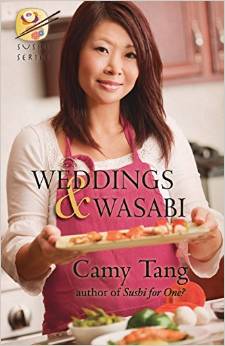
Camy here! I didn’t notice until a few days ago that book 2 in my Protection for Hire series, A Dangerous Stage, is now available for preorder!

Isn’t that cover awesome? Zondervan’s art team ROCKS!

Back cover blurb:

Tessa Lancaster worked for her uncle in the Japanese mafia until she was sent to prison for a murder she didn’t commit. Now, after finding God behind bars, she takes odd jobs as a bodyguard to keep her distance from the family business.

In A Dangerous Stage, the second book in Camy Tang’s Protection for Hire series, Tessa gets caught up in the web of lies surrounding a shady singing competition. Hired by one of the contestants, she works with Charles Britton—the lawyer who sent her to prison—to discover the dark figures manipulating the contest from behind the scenes.

Tessa’s abilities will be tested like never before as she’s forced to balance the safety of her client’s family and her deepening relationship with Charles. In the midst of the chaos, she holds on to her faith to keep her safe and bring down the shadowy organization.

Order print book:
Barnes and Nobleicon
Amazon.com
Christianbook.com
Booksamillion.com

Buy Ebook:
Nookbookicon
Kindle
Christianbook.com
Kobobooks.com link coming soon

Click here for info on book 1 in the series, Protection for Hire.

Protection for Hire series trailer

Posted in Camy Tang, Uncategorized | 2 Comments

Summer Reading

With eighteen days of school left, everyone in the household has summer in mind. Lemonade packets face front in our cupboards and the hot chocolate hibernates in the back. My husband plans to drain the pool cover and ready things for another swimming season.

Which for me, means summer reading.

It’s hard for me to write when the kids are swimming because it’s hard to see the laptop screen. I also can lose myself in the process and forget I’m outside for a reason, and it could mean life and death if I’m not paying attention. I’m also not a millionaire, so I don’t want to take the chance of a big splash fest short circuiting my laptop and my labor of love. Not my kids, my contemporary romance. 🙂


Summer reading Pictures, Images and Photos

So reading it is. My question for everyone is, do your reading habits change in the summer?

Do you read more?

Less?

Traditional books?

E-readers?

Here’s another question that’s made for good discussion with my friends. Does the quality of your reading change in the summer? For instance, when I went on vacation earlier this year, I saw a lot of what my senior citizen friends call “bodice ripper” covers. They were steamy romance looking covers that women admitted was light reading they preferred on vacation. Once home, it was back to more academic reads.

Is that true for you? Perhaps during the “school” year your reading consists of biographies and other non fiction work, but for the summer, you want some good fiction to take your mind off things, or at least take you somewhere else that you can’t afford for a real vacation.

Me? I mix it up throughout the year. When I cruised, my lounge chair was stacked with writing how-to books, intercessory prayer reads, and free fiction I downloaded for my Kindle.

I’d love to hear about your summer reading plans. Share with me a particular author or title you want to read, too.

By the way, I recommend subscribing to Empowering Christian Women. Karla does a great job letting readers know about free Christian reads for Kindle. Remember to double check the price, as that changes without notice. Keiki also has a site full of E-reader finds at Vessel Project.

Writer and Speaker

Surrendering the good, the bad, and—maybe one day—the chocolate

Facebook Twitter LinkedIn Google Plus Page pinterest

photobucket image

Posted in Julie Arduini, Uncategorized | Tagged , , , , , , , , | 4 Comments

Mommy Wars by Vicki Hinze

© 2012 , Vicki Hinze

This round in the Mommy Wars began pitting women against women.  Specifically, stay at home moms against working outside the home moms.

It received a fair amount of visibility and discussion but didn’t strike the intensity perhaps anticipated.  Why?  Because all moms know exactly what it takes to raise a child and work in or outside the home–they all do it.  So the bottom line was it was a moot point with those who actually do it.  The needs and abilities of the mother and the child and the family dictate what’s best, and moms are wise enough to know it.  Our families and their needs are not one-size-fits all.

So the debate fizzled and the wall-to-wall coverage moved on–to the next battle in the Mommy Wars.  Instead of stay-at-home versus working-outside-the-home moms, this battle was in the form a magazine cover of a three-year-old standing on a chair breastfeeding.

The debate slivered and took several shapes.  Should a child three still be breastfeeding?  Should a mother bare her breast on a national magazine cover?  Should a mother exploit her child by baring his face on a national magazine cover in an act that is (and many say, should be) an intimate bonding time between mother and child?  Is baring the face of a young child breastfeeding in a national magazine on its cover exploitation of the child?

The battle splintered into aspects and was extremely controversial.  Yet moms, being moms, have formed their own opinions and settled their own minds.  In other words, they’re not as subject to outside influences telling them what to think as others might believe.  Moms walk in this world; they know what to think on their own. Some debate-shapers and battle-planners tend to forget that.

As women and mothers and Christians, we read all kinds of things.  We comprehend.  We form opinions and we decide.  We won’t always agree on specific issues, but we do agree that we and our children deserve respect.  We want our children cared for, nurtured, loved and taught all they need to become healthy, happy and well-balanced, productive  human beings (as we define those things).

So I’m reading information on these battles in magazines, news articles, online–those with opinions with whom I agree and disagree (there’s a lot of information on both)–and all the while there is a question in my mind that isn’t being addressed.  It niggles then nags and I realize that it’s the one thing I think should be a Mommy War.  It rises to that level of importance.  So I’m sharing it:

Banning together to assure kids have parents.  Now that’s a Mommy War worth fighting.

Blessings,

Vicki Hinze

Posted in Uncategorized, Vicki Hinze | Tagged , , , , , , | 5 Comments

Living Water…Accept No Substitutes by Lynette Sowell

I don’t have to tell you that getting lost in a book is a great source of joy to readers (and writers). I feel sorry for people who never learned the skill of letting a book pull their imagination along through space and time.

However, I have had to remind myself that although I love the power of a good story, it won’t satisfy deep longings in my heart. Maybe I’m going through a dry spell, my faith is challenged yet parched. A book might, oh, provide a welcome distraction for a short period of time. I might have some good laughs and my mood might lighten for a time, but that’s simply a Band-Aid over a deeper problem.

I might just need some alone time with God, with my notebook and pen and my Bible, and try some of that liquid refreshment that soothes a parched spirit. Better than hanging out with friends or looking for that great shopping deal. After a while those things don’t nourish and refresh.

After I remind myself about finding some liquid nourishment for my spirit, I crack upone the Bible and let the words pour out. Here’s some of my favorite ones, written by King David over 2,000 years ago.

You, God, are my God,

earnestly I seek you;
I thirst for you,
my whole being longs for you,
in a dry and parched land
where there is no water.

I have seen you in the sanctuary
and beheld your power and your glory.
Because your love is better than life,
my lips will glorify you.
I will praise you as long as I live,
and in your name I will lift up my hands.
I will be fully satisfied as with the richest of foods;
with singing lips my mouth will praise you.

On my bed I remember you;
I think of you through the watches of the night.
Because you are my help,
I sing in the shadow of your wings.
I cling to you;
your right hand upholds me.

Now isn’t that refreshing, reading words written over two thousand years ago by a man who felt like he was in the desert? Yet he knew where to go, where to put his focus. Now that’s refreshing. He learned to dip into that Living Water.

Posted in Honored Alumni, Lynette Sowell, Uncategorized | Tagged | 2 Comments

Books to Movies by Elizabeth Goddard

Summer is blockbuster movie season and my family is looking forward to having something to do that keeps us out of the hot Texas sun. Plus, we’re movie buffs, owning almost as many DVDs a we do books.

Reading Jim Rubart’s post about movies in heaven, and then Mareen Lang’s about the nearly thousand page novel she tackled got me thinking about books made into movies.  One of my all-time favorite books, PILLARS OF THE EARTH by Ken Follett, is nearly a thousand words. I’ve read it twice. But that particular book should never have been made into a movie.

When I learned the book had been made into a mini-series I was ecstatic and at the same time questioned how movie-makers could depict a story spanning thirty-five years. Unfortunately, I can’t say enough about how completely disastrous the mini-series was. In fact, I shared the book with a friend and she refused to read it because she’d tried to watch the mini-series and it was terrible.

Having your book made into a flop of a movie has to be a writer’s worst nightmare. But where does the fault lay? The screenwriters who adapted the book for a movie? The director?

In the end, are there some books that should never be made into movies?

The relationship between a book and movie is story, obviously.  I wasn’t able to discover any sort of statistic on what percentage of books are made into movies, but as you can imagine, the list is extensive and includes the classics, both popular and obscure books, those simply based off the novel,  and even the reverse where a movie is turned into a book—the novelization of a movie.

Every article I read pointed to the IMDB (Internet Movie Database) as the movie authority. You can check there to see if a book has been made into a movie.  Goodreads lists over two thousand pages containing fifty books each of popular books made into movies. In this case, that includes the classics as well as newer books.

Here’s a pretty extensive list of books to movies: http://www.ocl.net/bookinfo/if/movies.shtml

I’ve never heard anyone say that the movie was better than the book, have you?

Do you think there are some books that shouldn’t be made into movies?

Elizabeth Goddard is the award-winning author of more than a dozen novels, including the romantic mystery, The Camera Never Lies—a 2011 Carol Award winner. Oregon Outback releases in July 2012.

Posted in Elizabeth Goddard, Uncategorized | Tagged , , , , , | Leave a comment

Two Faces of My Reading Life by Maureen Lang

I love escaping into a story world that will allow me to experience all kinds of adventure, challenge, love, and growth. Inspirational novels take me a level deeper and even allow me to feel all over again the astonishing love my creator has for me.

Immersing ourselves in a well-written novel is experiential, allowing us to feel things ordinary lives probably won’t provide. I’m actually grateful for that. I’m like a kid on a roller coaster, wanting to experience danger but in a strictly controlled environment. Safe at home, a solid roof over my head, the love of my life at my side, I possess all the bravery required to face nearly any character’s angst.

But I also read non-fiction. My non-fiction reading goal is a common one: the pursuit of knowledge. I’m either researching material for my novels or have come across a topic that I find fascinating and want to learn more about.

My two faces of reading demand two different methods. I’ve never in my life been tempted to take notes while reading a novel. I may admire the author’s talent, and I’ve even been known to underline effective displays of craft for future reference. But when I’m reading fiction I’m hoping to be emotionally stirred. If I learn anything other than seeing an example of fine writing—and I often do, about history or industries or places or whatever the author has nicely fit into the story—it’s a bonus.

Non-fiction, on the other hand, is all about learning. I take copious notes, and if I have the opportunity to share with someone else whatever it is I’m learning, so much the better. Facts tend to stick when I share them with others.

Perhaps there is a poll out there somewhere that breaks down the reading habits of self-professed avid readers. Do the most voracious readers tend to read more fiction than non-fiction? In my own sphere of readers, the most avid readers tend to read fiction while those who read less often gravitate mainly toward non-fiction—informational/self-help/memoirs. Often non-fiction books take longer to get through, because the information takes longer to process. Do those who favor non-fiction feel they have two faces, too, if they cross over to fiction?

(For more on this topic see our own Kathi Macias’s take on fiction vs. non-fiction, here)

Image Source: http://www.flickr.com/photos/giugiax/3466232693/

Posted in Kathi Macias, Maureen Lang, Uncategorized | Tagged , | 5 Comments

Comics-Yeah, I love ’em. You? by James L. Rubart

When people ask where my story ideas come from sometimes I say, “From too many comic books as a kid.” That response is a bit tongue in cheek, but only a bit.

I do get ideas from the comic books I devoured in my pre-teen years.  Even though there can be heavy doses of corn in comic books, the stories are also epic and contain universal themes that capture our imaginations. I see that eye roll, but they are and do.

Like The Avengers. Biggest weekend opening for a movie EVER. $200 million. Das ist big. (Yes, I’ve seen it. Yes, I loved it. )

What about you? If you’ve seen The Avengers did you like it? Did you read comics as a kid? Do you read them now?

And yes, I think reading comics counts as reading. Don’t laugh at me or the Hulk will smash you puny human.

Posted in Honored Alumni, James L. Rubart, Uncategorized | Tagged , , | Leave a comment

About Writers’ Conferences by Kathi Macias

***The faculty (including myself, fourth from left) just before a panel discussion at the AV Christian Writers’ Conference this past weekend.

I just returned from keynoting and teaching at a Christian writers’ conference. As conferences go, it was relatively small but enthusiastic and positive.

Because I speak at several writers’ conferences throughout the year and each seems to have its own unique “personality,” I’ve thought at lot about how those individual conference personalities draw and minister to attendees. Conferences vary according to size, venue, length, and focus, but each has something to offer–IF the attendee has done a little homework first in order to know what to expect.

The conference I attended this weekend was strong on the basics of writing and publishing, particularly for new writers. As a result, though it was only a Friday night/all-day Saturday conference, those who came looking for clear direction on how to get started in the writing/publishing industry probably came away feeling satisfied. If conferees were looking for something more substantial==a chance to connect with several agents and/or acquisitions editors from publishing houses–may have felt they made a wrong choice in attending.

Writers’ conferences are, for the most part, one of the most effective ways for an up-and-coming writer to spend his/her money. The larger conferences offer one of the few ways a previously unpublished writer can meet agents and publishers face to face and have their manuscripts get at least a cursory consideration. They are also a great way to expand writing relationships and networks. Local critique groups are most effective in establishing ongoing, regular communication with others of like mind, but conferences connect writers with others in the industry–a key in getting established in the publishing world.
Many Christian writers’ conferences are focused on just that–writing, at all levels, including marketing (which, yes, goes hand in hand with successful writing, particularly with books). To a smaller degree, some conferences stress an evangelical or social issues theme–i.e., the persecuted Church or human trafficking. Some offer free time for writers to break away from workshops and sessions so they can spend time alone with God and/or with other conferees, which some keep attendees racing at break-neck speed from one event to another, ensuring that everyone has the opportunity to soak up as much knowledge and information as possible. In addition, some conferences offer critiques of your existing manuscripts, while others don’t, so this is should be a major deciding factor if you have a manuscript for which you are seeking personal, professional feedback.

If you or someone you know is considering attending a writers’ conference, I can’t stress enough the importance of checking out the conference’s website first, as well as obtaining any additional, specific information possible. (Clarifying all expenses involved is also necessary, as some conferences include housing and meals in the conference fee, while others do not.) Be clear with yourself on what you’re looking to obtain from a conference, and then check around to see which conferences sound most suited to your needs.

I would love to hear from anyone who has comments or questions on writers’ conferences, whether those questions and comments are born out of previously attended conferences or whether you are considering attending one for the first time. This can be an extremely positive venture–or not. Like anything else, doing your homework first makes a huge difference.

Posted in Kathi Macias, Uncategorized | Tagged , , | 2 Comments

Being a Healthy Reader by Camy Tang

I will admit that I’m a very unhealthy reader. Why? Because I love eating while I read. It’s literally my favorite thing to do: curl up with a good book, a pot of tea, and some snack.

And I’m not talking healthy snacks. I’m talking chips, cookies, and chocolate.

I have tried healthy snacks–carrots, celery, cucumbers, bell pepper strips, dried apples and other dried fruit. But my favorites are still chips and cookies.

However, I am trying to be healthier–plus I, erm, gained some weight and no longer fit in my clothes, and I’m too lazy/cheap to buy new ones so I want to lose the pounds and keep my Victoria’s Secret jeans. 🙂

So do other people eat while they read or is it just me???

Posted in Camy Tang, Uncategorized | 3 Comments

The Line Between Fair and Foolish by Vicki Hinze

The Line Between Fair and Foolish by Vicki Hinze

 © 2012, Vicki Hinze

Sometimes in writing books for others to read, it’s hard to find the line between fair and foolish.  Actually, sometimes the line is as clear as a sunny day but most often, it’s just as murky as the muddy Mississippi after a hurricane.


We think, as writers, that we’re being too obvious, too fair, and yet when others read, their feedback is as diverse as we were mixed minded in the writing.  Some felt we were too fair, some just fair enough and some foolishly fair and our handling diminished the suspense or message in the book.


I went to an online retailer and read all the reviews on five current bestsellers.  Then I went to a second retailer and read all the reviews on the same five books there.  Afterward, I went to a third retailer and read the reviews available on those same books posted there.


The results were that some liked one thing, some another, and still others liked nothing.  The mix was evident.  And it proved what writers have always known:


Readers are diverse, and writers are and should be grateful for it.  Otherwise, we’d need one writer and one book and that’d be the end of it.  Because readers are diverse, some will love what we write, some will hate it, and unfortunately some will also be indifferent.  Loving or hating is great.  Indifference stings.


The results also prove that the line between fair and foolish is fine.  It has earned its place.  Readers of one work will not be touched, but will be deeply touched by another work.  And those readers will hate, love and be indifferent to a third, fourth and fifth work.


This convinces me that writers should never hope for all five-star reviews.  They should aspire to a mixed bag of reviews and reader feedback.  Love, hate, and indifference is evidence that the writer is walking that fine line—and doing it well.


As I write this, I’m thinking of books that touched me deeply—both positively and negatively—and I’m having to search my memory hard for those books that left me feeling indifferent.  I’m not sure if that means I’m too opinionated or normal.  Maybe it means it’s normal to be opinionated.


Or maybe it means that we write books and trust that the right people will find them at the right time when the message in the book resonates for them—when this specific book is what the reader needs to read at that moment, in his/her current circumstance.


I’ve written a lot of books and I’ve always written each book for a purpose.  Sometimes it takes a while, but always someone will write me a note or an email and say that the book was just what they needed—and then go on to disclose why it was perfect for them at that time.  That perfect reason relates to the purpose for which I wrote the book.  It’s humbling to receive notes like those.  But it’s reassuring, too.  Because the indifferent rarely write.  They might post a review, but they rarely message the reader that the book did nothing for them.  Those who love or hate the book are far more apt to write the author.  They’re more invested.


In reviewing books I didn’t care for, I discovered that they hit hot buttons inside me.  And while that wasn’t fun, it was often helpful.  It gave me the opportunity to revisit that hot button and to make choices again on it being a hot button.  To explore why it was a hot button and reevaluate.  Even though I didn’t care for the experience, it was a beneficial experience, and now I wonder if that initial negative reaction wasn’t surface clutter, because beneath it there lay a great opportunity for me.   One tied to spiritual and/or emotional growth.


Now that potential fascinated me.  So on went the reviewing books that left me indifferent.  What I discovered was that they just didn’t speak to me at the place I was standing at the time I read them.  Later, when I reread them, some of those books actually spoke to me—and my second reaction was far different from the first!


And that’s my point.  The fine line isn’t just fine, it’s also tied to time.  Sometimes the timing is right, sometimes it’s not.


Have you looked at the books that you’ve loved and hated and been indifferent to?  Why did you love or hate them?  Did you later find an indifferent work, well different?  Relevant to you in a way it hadn’t been during the first read?


After all this, I’ll tell you.  My attitude has changed.  Some books I love and feel I’ll always love.  Some I hate for now and may or may not hate later.  Some are just plain not for me but more of them are snagged in shades of gray.  And of the ones I reacted to with indifference, I’ll say, “indifferent for today” and I’ll set them aside to read again later.


Because the line between fair and foolish is thin and tied to time.


And it seems we really only know if we’ve walked the line or crossed it in hindsight.


Blessings,


Vicki


Posted in Uncategorized, Vicki Hinze | Tagged , , , , , | 1 Comment

What’s The Perfect Length?

ImageI’ve  heard it said that a well-written book is always too short and a poorly written one is always too long. Do you think that’s true?

I admit that phrase reflects the way I feel. Right now I’m reading a nearly 1,000 page tome – fiction, believe it or not. When it was recommended to me by someone who loved it, I looked forward to getting into it. But it didn’t take long to see that some of the writing was less than stellar (passive, repetitive, including more information than necessary). It was set during a favorite era, though, so I didn’t want to give up (and perhaps more importantly I didn’t want to disappoint my friend by not reading her recommendation).

Then I resorted to the same trick I used the last time I read a book of this length. Although I had the print copy, I went to the library to see if they offered the audio version—and they did. So whenever I got into the car, I listened to bits and pieces of it. At the end of the day when I do my reading I’d scan through the written book until I found where I’d left off in the car. It worked to get me through several hundred pages that way, and long enough for me to become engaged with the characters. At least enough to want to finish.

But there’s still a problem with the size of the book. It’s difficult to hold and would be far better as an e-book. I nearly drop it every time I pick it up.

Here’s what’s so amazing to me, however. As much trouble as I had getting into this book, holding it upright, switching between audio and print versions, there did come a point when I cared enough about the characters to want to finish. The length ceased being an issue for me. I’m a little over 100 pages from the ending, and I might even be sad to close the cover for the last time.

What about  you? Does length matter before you even pick up a book, or are you ready to give any book a chance? If the characters draw you in, are you ready to stick with them all the way to the end—no matter how far that may be from the beginning? Or is it something other than just the characters—the setting, the subject, the plot? Or are you like my sister, who always finishes every book she starts, even if she doesn’t like it? She absolutely must finish whatever she starts.

Posted in Uncategorized | Leave a comment