Conflict . . . only better! by Maureen Lang

Certain genres expect to use a certain kind of conflict. Romance novels aren’t so much about the happy ending (which everyone knows will happen) as the vehicle the author uses to keep the hero and heroine apart until that happy ending comes. Mysteries can plant a variety of clues along the way—red herrings and possible villains are all part of what keeps mystery-lovers returning for more. Suspense novels portray a hero or heroine narrowly escaping mental or physical danger (and likely a combination of both). We know they’ll overcome, but how? Fantasy and sci-fi novels often have good vs. evil, and coming of age novels are about an important lesson that will impact a young character’s life forevermore.

One element that makes any conflict deeper and crosses nearly every genre is when the character faces a moral dilemma. It’s inner conflict at its best! Heroes and heroines of all kind face one moral choice or another, something that should mesh with the rest of the genre. I recently watched a classic old movie portraying a hero from Poland’s upper class whose family doesn’t approve of his working-class bride—even though at this precise point in history, just before the Second World War, a woman with common sense, fortitude and working class experience is exactly what this aristocratic family will need to survive a world where class boundaries blur under a Nazi fist.

13158800Perhaps one of the best representations of a moral dilemma I’ve read lately is found in the debut novel The Light Between Oceans by M.L. Stedman. It’s the story of a man fresh from the battlefields of the First World War who takes on the challenging job of lighthouse keeper in an isolated island off of Australia. He doesn’t mind the isolation as he recovers from his war experiences, but on shore leave he falls in love, soon bringing his bride to his remote home. Unlike a Stephen King horror story, this new bride and groom fit well even in so lonely a place. Tom, the lighthouse keeper, is steadfast and meticulous in his duty, and Isabel his bride is head over heels in love with him. But after two miscarriages and a still birth, the isolation doesn’t help Isabel with her sadness.

So it seems like a miracle when a boat washes up on their island carrying a dead body and a living baby.

What could be more fitting than for them to raise the baby as their own, in place of the still born baby Isabel lost only days ago? All the facts point to this little baby as being an orphan, and Isabel knows from a friend’s experience what an awful place an orphanage can be. Having the baby wash ashore seems an answer to their prayers, and Isabel quickly takes the child to her breast and to her heart.

The precious little family thrives . . . until they eventually find out the baby’s mother is still alive . . .

This book leads the reader through a maze of choices anyone might make, choices that seem reasonable and even the best at the time. When they realize the baby’s mother has never recovered from her tragic loss, it’s obvious there is no easy answer to the dilemma—and no really right answer, either. The era and the remote setting are the perfect backdrop to this compelling story.

Although books like this aren’t always an easy read, it’s a page-turner because it’s so easy to place ourselves in the character’s shoes. In the same circumstances, we might have made the same choices—and end up with the same consequences to overcome.

That’s the sign of a successful book—one that not only entertains me with lively and likable characters, but makes me think along the way. My favorite kind of reading material!

Posted in Maureen Lang, Uncategorized | Tagged , | Leave a comment

Got Freedom? by James L. Rubart

got freedom

Do you? Have freedom?

I think it’s an essential question if you’re a follower of Jesus. Because that’s why he came–to set us free.

  • “He has sent me to proclaim freedom for the prisoners and recovery of sight for the blind, to set the oppressed free,” Luke 4:18
  • “So if the Son sets you free, you will be free indeed.” John 8:36
  • “It is for freedom that Christ has set us free.” Gal 5:1

It’s all about freedom, friends. And if you’re like me, you have some, but you want more. Much more.

WARNING: Self-serving section coming up NOW!

I’m not sure how to write the next part of this post because it could come across as self-serving, but I’m going to give it a shot (and I think I redeem myself at the end of the post.)

My latest novel, Memory’s Door (the sequel to Soul’s Gate) releases today and I think it can help bring you more of that freedom we all long for. It certainly brought me freedom writing the book. I went through a deep personal and spiritual crisis during the weeks I wrote the novel, and in a way, Memory’s Door is a record of my dealing with a number of deep regrets and leaving them behind forever.

But enough of my thoughts. Here’s what Linda of Mocha with Linda says:

“Whew! Buckle your seat belt for this one! Soul’s Gate was simply a primer for the experiences that the Warriors Riding team have in store for them in Memory’s Door. James L. Rubart has created a gripping tale that will delight lovers of supernatural fiction, yet it is so much more than just a good story. Deeply thought-provoking, this novel puts flesh onto the usually unseen war of the spiritual realm as the team must discern who the enemy is and engage that enemy in a combat unlike any other. Rubart’s brilliantly woven plot depicts how devious and calculating demonic powers are, as well as how easily a seemingly strong believer can be deluded by their wiles and how those enemies feed off the regrets and baggage within a believer’s mind and soul. I pondered this one for days after finishing it, and eagerly anticipate the series conclusion. Don’t miss this important book and series!” Mocha with Linda. 

memorydoor.indd

Allow me a moment of bluntness: I’d love you to buy a copy (or ten. You can click the cover above to go to Amazon). But if you’re not sure you want to pass up two visits to Starbucks, don’t buy it. But at least check it out from the library for free. Because free is my sincere desire for my sisters and brothers in Christ, and I believe this book could do that for you in a deep and powerful way.

Posted in Honored Alumni, James L. Rubart, Uncategorized | Tagged , , | 3 Comments

A Little Book Can Help Set the Captives Free by Kathi Macias

Abraham Lincoln said, “Slavery is founded on the selfishness of man’s nature; opposition to it on his love for justice.”

What a powerful picture of the dichotomy of man’s soul! The first epitomizes the unregenerate soul, seeking only its own glory and gratification. The second expresses the longing of the God-infused soul, longing to be like its Maker.

Sadly, many who practiced and fought to preserve the evil institution of slavery also claimed to be Christians, even misappropriating Scripture to validate their stand.

            Others, however, saw within their commitment to Christ a mandate to do everything they could to stop the detestable practice and to help their captive fellow human beings escape to freedom. Many of them paid a terrible price in the process. Not only fleeing slaves but those who helped them were beaten, thrown into prison, and in some cases, even killed. They risked their reputations, their businesses, their families, their very lives to do what they passionately believed was right, according to a correct rendering of the Scriptures.

            But it wasn’t always so. Though from the beginning of slavery in America some tried to aid in setting the captives free, the Abolitionist Movement was slow to take hold. One of the key factors in lighting the Abolitionist fires and growing the movement was a little novel, based on a true story, that pricked the conscience of many who had remained neutral on the issue.

            Uncle Tom’s Cabin (also called Life Among the Lowly) by Harriet Beecher Stowe, was published in 1852 and helped raise American awareness and consciousness to the horrific plight of the slave and the depth of the evil of such a sin in our otherwise “free” country. It achieved its end, spurring many to join the abolitionist movement and adding volunteers for the growing Underground Railroad, a secretive system set in place to help escaping slaves on their journey northward, toward freedom.

            A novel, based on real events. Isn’t that interesting? A truth-based story, used to help push an already divided nation into a bloody war, which ultimately led to the abolition of slavery in America.

            Or did it?

            When you consider that an estimated 27 million people are enslaved around the world today (and yes, that includes the United States), more than at any time in human history, I’d say we still have our work cut out for us. Those 27 million people include some held in slave labor or forced military conscription, some for the purpose of sexual slavery, and even some for the involuntary harvesting of human organs, for which there is a huge black market. Many of those 27 million people are children, some as young as two years old. Most will never make it out alive, and if they do they will be so damaged that few will ever find true healing. And no, our country is not immune to any of this. The US State Department estimates that some 100,000 to 300,000 MINORS are held in sexual slavery in America right now—today.

            Minors. That’s children! Enslaved, right here in the “land of the free.” Are you as appalled by that as I am? Do you hear Abraham Lincoln’s words echoing in your ears?

            “Slavery is founded on the selfishness of man’s nature; opposition to it on his love for justice.”

            Though our nation is not split over this issue as it was in the pre-Civil War days, the dividing line is clear: The selfishness of man’s nature vs. man’s love for justice. Is there any question where we, as Christians, should fall on this issue?

            Of course not. And I don’t believe that any of us truly wrestle with the right or wrong of this horrific crime. The problem comes when we begin to grasp the evil and enormity of it, and we become overwhelmed at the magnitude of the battle.

            And yet we can’t give up. However huge and dark the problem, we have a God who is bigger and whose Light can penetrate any depth of darkness. But we are His light-bearers in this dark world. If we don’t pick up the torch and shine that Light into the darkest, most depraved corners of our world, who will do so?

            Minors. Children. Some as young as two years old. Trapped in a life they did not ask for, desperate and dying, without hope or help. For that is the goal of their captors from the moment they are sold or kidnapped or lured into such a despicable life—to drive out all hope of escape or rescue. Once the captors have done that, they have their slaves exactly where they want them.

            But we, as believers, know the One who offers hope to all mankind—yes, even the worst of the worst, the abusers of those innocent, suffering victims. But if we are to bring that hope to bear in the midst of this hideous crime, we must be like Jesus, who as “moved by compassion.” He didn’t simply feel bad for those who suffered; He recognized their suffering and then offered the help and healing they needed.

            Can we be content to do any less? It’s true that none of us can resolve this problem by ourselves. But if we will first educate ourselves about it and then ask God what He would like us to do, He will be faithful to answer.

            Seriously, when I first began researching/writing The Freedom Series (Deliver Me From Evil; Special Delivery; The Deliverer) on this very topic, I had no idea where to start either. One of the best resources I found was the human trafficking page on the Department of Homeland Security’s website (http://www.dhs.gov/topic/human-trafficking), a great place to go to get educated about the problem. Then you might consider talking to your pastor to find out if your church (or another church or civic group in the community) is already involved in fighting this crime and helping to rescue and restore the victims. If there is, find out how you can get involved. If not, pray about getting such a ministry started. You can also check places online like International Justice Mission (http://www.ijm.org/) or the Salvation Army (http://tinyurl.com/cwrfygo), both of which are actively engaged in this fight against modern-day slavery, and offer numerous opportunities and suggestions for different levels of involvement.

            As I said, no one individual or group can solve such a huge problem alone, but each of us can do something—and together we can make a difference. As Harriet Beecher Stowe wrote Uncle Tom’s Cabin and pricked the hearts of a nation, so we who love words can also get involved in the call to action. Whether writing books, short stories, articles, letters to the editor, volunteering a few hours a month at a safe house, talking to people in our church or community, we can add our voices to those crying out on behalf of the enslaved who have no voice. By being “moved with compassion” as Jesus was, we can help set the captives free and restore hope to the hopeless.

Posted in Kathi Macias, Uncategorized | Tagged , , , , | Leave a comment

New Book Release by Tara Randel

9780373366385

I’m thrilled to announce that my new Harlequin Heartwarming release, Orange Blossom Brides, is available today! This is my first book with Harlequin, so you can image how excited I am to let everyone know. I’m also very pleased to write for the new Heartwarming line, because the tag line for the series promises wholesome, tender romances.

Writing wholesome romances is important to me. I’ve always strived to write the kind of books I enjoy sharing with my daughters and friends. Heartwarming fits the bill. These are contemporary romances; emotional stories that feature a strong connection with family and community. There is an emotional tenderness between the hero and heroine, yet the conflicts between the couple are strong and realistic to readers. As in any romance, there are hurdles for the couple to overcome, but as readers know, the journey is worth traveling to get to a satisfying ending. This has always been the type of book I love to read, and as with my past releases, love to write.

In Orange Blossom Brides, Lilli Barclay needs a groom—and she needs one now. Not for herself, of course, but for her mother’s glamorous wedding-themed benefit. Then Lilli can get back to what really matters, earning a promotion at work. Just her luck that Max Sanders, the ideal candidate, still holds a grudge against her for an incident that happened twelve years ago.

Persuading Max to volunteer will take longer than Lilli thought. Much longer. And the more time she spends with him, the further she ventures down Memory Lane. Pretty soon Lilli can’t help wondering if Max could be more than a pretend groom. He still makes her heart race. But will he ever be able to forgive the past and consider a future…with her?

I hope you have a chance to read Max and Lilli’s story. You can find it at Harlequin.com. and Amazon.com. Let me know what you think.

Posted in Tara Randel, Uncategorized | Tagged , , , , | 1 Comment

Word Pictures by Julie Arduini

I’m a visual person.

Not in the spatial relations way where you show me an unfolded box on a test and ask me to put the box together in my head and mark off the steps.

No. I’m horrible at that.

But I learn so much about life and my faith in Christ through object lessons and word pictures.

Years ago my fear of opening a tube of biscuits reminded me of Jesus’ return.

Crazy, I know.

But not knowing when that pop was coming made me aware and on guard. It’s a lesson I haven’t forgotten.

Watching my then pre school daughter open up her Dora the Explorer backback with a map inside was a lesson on God’s word. If Dora always had a map to consult to get her through life, shouldn’t I  consult my Bible?

Often when I pray I will have a visual moment that helps me draw closer to my Heavenly Father. Years ago when I struggled understanding His loving nature I saw me in a twirly gown waltzing with Jesus. He was kind, fun , and it was an intimate snapshot that really helped me.

Somethings the pictures are convicting. Not condemning, but a challenge I process long after the moment.

Take this week. The sermon was on surrender. I’m also facilitating a Bible study on Lysa TerKeurst’s Unglued. Many principles of that book crossed into the sermon. Although my life is based on surrender, there’s always something I’m holding back on.

I’m afraid.

Scared of rejection.

Not sure what’s around the corner.

And in the prayer time I saw me in one of those trust-fall exercises. The one where you have a partner who promises to catch you, but you have to take the risk to fall. As a child I absolutely refused to play that game. I didn’t trust anyone and the fear of more rejection was so strong I wouldn’t even try.

It’s still an issue for me, although not as severe.

In the picture, Jesus is my partner. He’s standing right where He needs to be to catch me.

And I move before falling, so that by my own choice, I fall flat.

Ouch.

I appreciate those visuals because I can chew on it for days and weeks, going to God with it. And this week my hands are up in surrender. I don’t want to be afraid or choose a fall, especially when Jesus is there and will catch me. I’ve been through enough to know He’s got me. Always. But just like the real lie Eve bought from the defeated one, I sometimes believe He won’t be enough. Won’t get the job done.

And I move away and fall flat on my back.

Can you relate to trust issues? 

Are you someone that responds to object lessons, word pictures or visuals?


Posted in Julie Arduini, Uncategorized | Tagged , , , , , , | Leave a comment

Clarity in Confusion by Vicki Hinze

vicki hinze. clarity in confusion


A few years ago, I had a vision challenge that required a series of surgeries.  After one, my eyes were sown shut for three days.  I had pain meds, but took the first one and got hives.  So not only did I have to deal with the aftereffects of the surgery but also with the hives.  It was not a fun time.


When you’re sitting like that, and in pain and itching like crazy, you’d think you wouldn’t be able to focus on anything.  And that was partly true.  Noises bothered me because I couldn’t see what they were.  Trying to move was nauseating and by the end of the three days I also sported some shin, elbow and shoulder bruises because I’m hardheaded and thought I could make my way here and there alone.  (I did, just not without bouncing off a few walls and clipping a few sharp edges on furniture.)  But there were other times.  Deep in the night when all was silent.  And it’s those times I want to talk about today.


In the quiet, my mind drifted and homed in on the strangest things.  I’d see glimpses of strangers.  Snippets of events.  Bottom line, when I couldn’t see at all, I saw most clearly.  At the end of those three days, I had a new series of novels!


I find that stunning—and yet it proved to me that God uses all things to prepare us for His purposes, which I find reassuring.  We don’t always feel He’s paying close attention to the details of our lives and then something happens and we know He’s been paying more than close attention, He’s been putting building blocks in place in our lives.


Well, I gained evidence of that at a recent conference.  Due to travel restrictions, it was the first I’ve attended in a while and my “talk to other writers” and “see friends I haven’t seen in a while” low-level lights were definitely on and burning brightly.  So I did something I’ve never before done:  I attended this conference with the goal of doing those two things:  talking with writers and seeing friends.  Always before I had a zillion goals, all of which had to do with the business side of the publishing business.  I wanted to have fun and enjoy myself.  I needed to do those things and I knew it.  (All work and worry and no play makes for poor creativity!)


So I went.  (Photos are here if you would like to see them.)  And I did talk writing and see friends and have fun.  But other things happened, too.  Ones I couldn’t have expected and ones that resolved questions on what I should do next in my own writing.


I’d done six Christian Suspense novels—three for Random House Multnomah and three for Love Inspired Suspense—and I wasn’t sure I was supposed to do more.  Frankly, I didn’t know what I was supposed to do next and all my prayers on it hadn’t brought answers.  I didn’t expect those answers to come in this setting.  But they did.


On day one, two different readers approached me to say the books had touched them.  On the first night, three writers approached me to say that they’d been helped in their writing by articles in both my blogs and in my articles.


It wasn’t until later that night that the significance of this penetrated my brain.  Writers appreciate feedback and when we touch lives, it’s affirmation—that’s why we do what we do.  So I fell asleep certain that what I had been doing was what I was supposed to be doing at that time.  But the way ahead of me still carried confusion and clouds.


Then comes the next morning and a totally unexpected conversation with my agent.  A publisher I’ve long admired wants me to do some specific types of Christian fiction for them.  And then I had breakfast with one of my editors—who wants more of the books I’ve been doing.  Later that day, I had lunch with another of my editors who also wants more books.  These are not Christian fiction but are clean read mystery/thrillers.


After the third unexpected meeting, I found a quiet corner and just sat and let it all this soak in.  One of the oddities was that while I’d done similar books to the ones I’d been asked to do, I’ve not done them for the Christian market.  Could I do it?  I thought back to my second real job.  It was the training ground.  The third added to it.  The fourth, more additions.  Yes, I could do it.


That’s when it hit me just how involved God’s been in all this all along.  And how clear it was that I didn’t have to struggle and drive myself insane trying to figure it all out.  All I had to do was my part in preparing and walk through the doors He opened when He opened them.


So once again, while I was wool-gathering, so to speak, not focusing intently on resolutions, my solutions came to me.  His solutions, I should say.


Interestingly enough at this conference, the writers I had longed to talk to were also confused.  And sitting alone after that third meeting, the advice they’d requested and I’d given came back to me, echoing inside my mind.  It was advice for them but it applied to me, too.  That surprised me, though it shouldn’t have.  And I sat there and whispered a heartfelt, “Thank you.”


I didn’t know what I needed.  God did.  I felt a little lost and a lot confused.  God wasn’t.  And so a new lesson was learned.  When your eyes aren’t working, you often see most clearly.  When your ears are open, you hear.  And answers come to calm confusion in the most unexpected ways and when you least expect them.  So the big message in all this is if you’re confused, pay attention.  Like me, you’ll likely discover that the answers are right before you jumping up and down trying to get your attention, and when they do, you’ll see only clarity in confusion.


Blessings,


Vicki

Posted in Uncategorized, Vicki Hinze | Tagged , , | Leave a comment

STRETCHED TO THE LIMIT? by Yvonne Lehman


DOUBLE RAINBOW


“I can’t take anymore.”
“I’m at my wit’s end.”
“I’m ready to snap.”
I’m stretched to the limit.”

Likely, we’ve all heard, said, thought, and/or felt like those statements.
Trials are common to us all. Conflict, adversities, doubt, unfulfilled goals happen in life. We have challenges that can thwart our best-laid plans. Or if we get what we want, often the dream can become a nightmare. Many conflicts in life come because of our wrong choices, someone else’s actions, natural disasters, disease, financial problems, accidents, and sometimes we don’t know the cause.

And yet…the tension in life that we don’t like is what we’re to put into the lives of our characters. Tension comes from the Latin word tendere which means to stretch. And we’re to make things tougher for our characters until there seems no way out. To stretch our characters we create tension and then raise the stakes.

You might say a stake is to a novel what a steak is to a fine dinner. Picture this: a piece of pointed wood being hammered into the ground. The stakes are the meat or heart of the story. The stakes are what captures the editor’s attention and makes the book a page-turner.

Readers love it.
Why?
The readers feel a sense of excitement and interest, not because they like seeing the character in trouble, but want to know and learn from how the characters handle their adversities.

As the character is stretched with their outer and inner conflicts and tension, so is the reader. The character learns to rely on God and lean on him and know he’s with him/her through the trial. They learn it’s okay to question and doubt God. But as the character learns to rely on God, so does the reader.

There’s a saying, “Write what you know.”
Through research we can learn a lot of things we don’t naturally know. But we know best what we’ve experienced. And as Christians we learn to know that God is with us through all kinds of adversities. We know God has been, is, will be with us through our trials. This is the message we incorporate into our characters’ lives.

That’s why we stretch our characters to the limit. So we can share with the reader what we know, learn, hope, or accept.

I find that giving my characters stressful situations, I along with them discover my own faith and explore its depth or shallowness. In a sense, writing about being stretched to the limit helps my own conviction of what I believe, and I can incorporate that faith message into the life of at least one of my characters.

Stretched to the limit?
Just know God is there with us as we go through it. By letting that take place in the life of a character is letting it take place within us as writers, and within the ones who read our stories.

We can tell the readers what we know and have learned and about God’s wonder and love that stretches over us in many ways, like a multi-colored rainbow stretches across the sky.

es.wordpress.com/2013/07/double-rainbow2.jpg?w=300″ alt=”DOUBLE RAINBOW” width=”300″ height=”225″ class=”alignnone size-medium wp-image-3075″ />“I can’t take anymore.”
“I’m at my wit’s end.”
“I’m ready to snap.”
I’m stretched to the limit.”

Likely, we’ve all heard, said, thought, and/or felt like those statements.
Trials are common to us all. Conflict, adversities, doubt, unfulfilled goals happen in life. We have challenges that can thwart our best-laid plans. Or if we get what we want, often the dream can become a nightmare. Many conflicts in life come because of our wrong choices, someone else’s actions, natural disasters, disease, financial problems, accidents, and sometimes we don’t know the cause.

And yet…the tension in life that we don’t like is what we’re to put into the lives of our characters. Tension comes from the Latin word tendere which means to stretch. And we’re to make things tougher for our characters until there seems no way out. To stretch our characters we create tension and then raise the stakes.

You might say a stake is to a novel what a steak is to a fine dinner. Picture this: a piece of pointed wood being hammered into the ground. The stakes are the meat or heart of the story. The stakes are what captures the editor’s attention and makes the book a page-turner.

Readers love it.
Why?
The readers feel a sense of excitement and interest, not because they like seeing the character in trouble, but want to know and learn from how the characters handle their adversities.

As the character is stretched with their outer and inner conflicts and tension, so is the reader. The character learns to rely on God and lean on him and know he’s with him/her through the trial. They learn it’s okay to question and doubt God. But as the character learns to rely on God, so does the reader.

There’s a saying, “Write what you know.”
Through research we can learn a lot of things we don’t naturally know. But we know best what we’ve experienced. And as Christians we learn to know that God is with us through all kinds of adversities. We know God has been, is, will be with us through our trials. This is the message we incorporate into our characters’ lives.

That’s why we stretch our characters to the limit. So we can share with the reader what we know, learn, hope, or accept.

I find that giving my characters stressful situations, I along with them discover my own faith and explore its depth or shallowness. In a sense, writing about being stretched to the limit helps my own conviction of what I believe, and I can incorporate that faith message into the life of at least one of my characters.

Stretched to the limit?
Just know God is there with us as we go through it. By letting that take place in the life of a character is letting it take place within us as writers, and within the ones who read our stories.

We can tell the readers what we know and have learned and about God’s wonder and love that stretches over us in many ways, like a multi-colored rainbow stretches across the sky.

Likely, we’ve all heard, said, thought, and/or felt like those statements.
Trials are common to us all. Conflict, adversities, doubt, unfulfilled goals happen in life. We have challenges that can thwart our best-laid plans. Or if we get what we want, often the dream can become a nightmare. Many conflicts in life come because of our wrong choices, someone else’s actions, natural disasters, disease, financial problems, accidents, and sometimes we don’t know the cause.

And yet…the tension in life that we don’t like is what we’re to put into the lives of our characters. Tension comes from the Latin word tendere which means to stretch. And we’re to make things tougher for our characters until there seems no way out. To stretch our characters we create tension and then raise the stakes.

You might say a stake is to a novel what a steak is to a fine dinner. Picture this: a piece of pointed wood being hammered into the ground. The stakes are the meat or heart of the story. The stakes are what captures the editor’s attention and makes the book a page-turner.

Readers love it.
Why?
The readers feel a sense of excitement and interest, not because they like seeing the character in trouble, but want to know and learn from how the characters handle their adversities.

As the character is stretched with their outer and inner conflicts and tension, so is the reader. The character learns to rely on God and lean on him and know he’s with him/her through the trial. They learn it’s okay to question and doubt God. But as the character learns to rely on God, so does the reader.

There’s a saying, “Write what you know.”
Through research we can learn a lot of things we don’t naturally know. But we know best what we’ve experienced. And as Christians we learn to know that God is with us through all kinds of adversities. We know God has been, is, will be with us through our trials. This is the message we incorporate into our characters’ lives.

That’s why we stretch our characters to the limit. So we can share with the reader what we know, learn, hope, or accept.

I find that giving my characters stressful situations, I along with them discover my own faith and explore its depth or shallowness. In a sense, writing about being stretched to the limit helps my own conviction of what I believe, and I can incorporate that faith message into the life of at least one of my characters.

Stretched to the limit?
Just know God is there with us as we go through it. By letting that take place in the life of a character is letting it take place within us as writers, and within the ones who read our stories.

We can tell the readers what we know and have learned and about God’s wonder and love that stretches over us in many ways, like the double multi-colored rainbows I often see stretches across the sky over the mountains where I live.


Posted in Uncategorized, Yvonne Lehman | Tagged , , , , | 1 Comment

Names!

sdsu-top-baby-names-unique-may-2003I was having breakfast in Shipshewana, Indiana when I heard the news about Britain’s newest royal. Another woman, a stranger to me, entered the communal dining room just as the television report came to an end, but she heard enough to ask us the questions others asked already: Boy, or a girl? Oh, a boy. Too bad. I would have liked the first baby under the new law to be a girl, letting her reign since she’d be the oldest.

The next question followed quickly after: What did they name him?

As of today we’re still waiting to hear what they decide to call him, but it reminded me how much thought we give to names—or at least, should. The royals have a long history to consider, knowing the world will be watching this little guy grow up and give a whole new personality to whatever name they choose.

I think authors must learn to be experts on name-choosing, especially prolific authors who create lots of characters. We might search lists of popular names by decade, such as the one posted above. We might go the ethnic route and search popular names by custom or country. I recently came across my mother’s yearbook (1930s) and chose several names for my newest project from there. Eventually it’s hard to keep coming up with names we haven’t used before.

An author has a sort of vision or hope for how certain characters will emerge in their story, and sometimes a name pops into mind that fits from conception. Other characters grow into their name. Still others demand a name change once their story is underway, because they’ve done things that just don’t fit our original vision. In real life this might mean someone could be tagged with a nickname that more closely reflects a personality than the name on their birth certificate. I’ve also changed many character names because another character name has a similar sound or even just first letter and it’s near fatal to confuse readers with names that are too alike.

When I read a book I love, the names become symbols of the character. What else could Scarlett and Rhett have been called, except Scarlett and Rhett?

Just a thought for today about how important names really are — in life, and in books!

Posted in Uncategorized | Leave a comment

Tone and Style

I once read a review of my books where the reviewer stated that my books were light reads. I took that as a complement, even though I suspect the reviewer did not mean it that way. Honestly, I write lighter stories for a reason. I feel that is where my voice is the strongest. But more importantly, in a time when no one wants to watch the news and hear bad news and worry about the latest catastrophes going on around the world, I want to give the reader a few hours of escape in light-hearted book.

Readers have plenty of choices. Romance. Suspense. Thriller. Science Fiction. Fantasy. Non-fiction. Christian or secular. As a voracious reader, I’ve probably picked up books in all those mentioned genres. And as much as I love anything with deep content, I still enjoy a chuckle and a feel-good sigh when I close the book.

We writers have a style. It is inherent to who we are. And that’s what makes such a wide choice of books for readers. What compels one writer to come up with one story line is vastly different than another. Is it a deep spiritual message? A story of redemption? Love conquering all? Humor in the midst of pain?

I’m so glad I get the opportunity not only to write books I love, but to also read and enjoy the many books written by authors who have a burning deep inside to tell their story. Whether published, an aspiring author or someone who writes for their own pleasure without following a path to publication, putting words together is an art form that is altogether satisfying and daunting. And we wouldn’t have it any other way.

A light tone or deep subject matter, it doesn’t matter. We write from the heart with the gift God has given us and connect with many different readers in the process. So that got me wondering. What do you like to read? There is no right answer. Selecting books we like is a matter of personal taste and that is fine by me. Since I’m curious by nature, I’d like to know your favorite types of books.

Posted in Uncategorized | Tagged , , , , , , | 1 Comment

Village of Jollification by Hannah Alexander

Chapman School

Chapman School


Once upon a time, over 160 years ago, a man built a mill along a creek on one of the major wagon trails from Springfield, MO into Indian Territory and Kansas Territory. The mill became a town, and because this mill provided alcohol as well as other things for the villagers, it was named the Village of Jollification for obvious reasons–hey, we’ve got Dutch, German and Polish Catholics around here, and they do know about grain products of all sorts. All these years later, their descendants are still here, and they are some of my best friends, wonderful people, the best of neighbors–yeah, my next-door neighbor is a Chapman.

Well, Village of Jollification became a mouthful, so the name of the town was eventually shortened to Jolly Mill after the Civil War destroyed the mill and the town. But our folks around here don’t give up easily, so today Jolly Mill is a privately owned park run by a private band of citizens who live in the area. If you could see the name on the building in this picture, you would see Chapman School.  This building was moved from up the road to be settled beside the restored mill along Capps Creek. The Chapmans are a tightly knit family, and I had the privilege of attending school with some of them–one of whom is now restoring a church at Jolly Mill. Some of my old high school friends and I were allowed a peek into that church by one of those very Chapmans last Saturday, when a long-time Jolly Mill resident, Elmer Batschelet, father of a dear friend, Doris, was buried in the cemetery behind that church. The first burial in the cemetery took place in 1846.

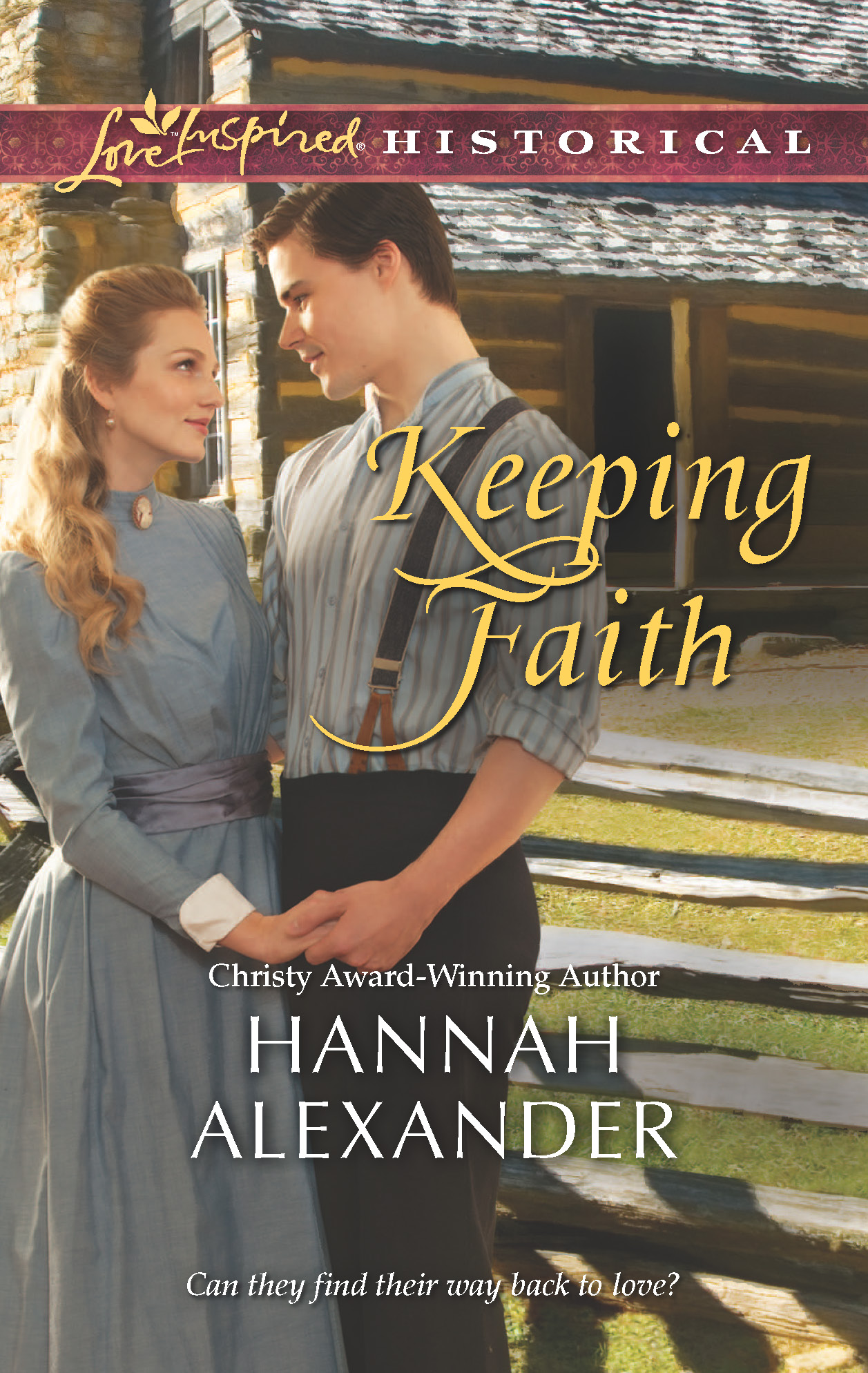
Thanks to these generous folks, I’ve been allowed to utilize Jolly Mill and some of its real-life inhabitants as a setting in my most recent series of novels. Though I write fiction, the goodness of the citizens in my make-believe Jolly Mill comes from real life–the killers in my suspense stories do not. If you wish to have a fictitious glimpse into my ideal of Jolly Mill, Eye of the Storm will show you just such a glimpse, as will Keeping Faith, my historical, to be released in September. I couldn’t have written those stories without the input and help from the locals who gave me the direction I needed. I hope someday you can visit this historic spot and see it for yourself. You’ll be in for a treat.


Posted in Hannah Alexander, Uncategorized | Tagged , , | 1 Comment

Downsizing, Anyone?

            Over the years I’ve become familiar with the term “downsizing,” not only as a word but as a reality in my own life. It started almost fourteen years ago, in 1999 when my father died and we tried to help mom sell the farm and narrow down her belongings enough that she could move in with us.

            “Oh no, you can’t give that away,” she insisted as I reached into a musty old box and pulled out a moth-eaten once-pink sweater. “My friend Rose gave me that when we were still in high school.”

            “Mom,” I argued, “that was sixty years ago, and Rose has been dead for five of them. Do you really think you’re ever going to wear this?”

            Of course she wasn’t, but that didn’t dissuade her one bit. The pink sweater stayed.

            I then began to dig through file cabinets chock full of old bank statements—some from as far back as 1947 when she and Dad first married.

            “Mom, surely you don’t need to keep these.”

            “Yes, I do,” she insisted. “Your father told me to never throw out receipts or bank statements.”

            Sigh. It was a fight to the finish, but with the help of two new storage sheds in our backyard, we finally got Mom moved in.

            And then, on August 4, 2011, she “graduated to heaven.” A few weeks later I forced myself to sort through the many items she had left behind. Those old bank statements went into the shredder, the pink sweater received a long-overdue burial in the trash can. Other items—the birthstone ring we kids gave Mom years earlier and she thought she’d lost; her favorite gravy boat; black-and-white WW II photos—became cherished mementos to be divided between myself and my brothers. Everything else? Downsized.

            I learned a lot from all that downsizing, and I now find myself applying it to my writing as I narrow down what’s REALLY important, what I REALLY need to invest time in. And all that seems natural. But what surprised me is that I recently realized how the concept of downsizing has affected my reading choices as well.

            There was a time, in my younger days, when I read anything I came across—books, magazines, newspapers, billboards, cereal boxes…you get the drift. But that has changed lately. Though I regularly read the Bible and a devotional book or two, I’ve found that I’ve become a bit pickier about how I spend my personal reading time (i.e., NOT study or research reading). It certainly isn’t because there isn’t a wealth of wonderful books to choose from, but suddenly much of what I used to enjoy reading simply doesn’t appeal to me anymore. I find myself getting a lot pickier about my reading choices, and that concerned me at first. Was I becoming snooty or judgmental?

            And then it hit me. God was just “downsizing” me in all areas of my life, helping me to prioritize my time and focus on my own “graduation to heaven” when, like my mom, I will leave all the “stuff” behind—even my books!

            Sort of puts it all in perspective, doesn’t it?

Posted in Uncategorized | Tagged , , | 1 Comment

More on Books Changing Us

I was so fascinated by Maureen’s post that I started to comment, and then decided to make it  my post for today. I’ve written a previous blog post or two about how books can change us.

Maureen’s points are all valid and true. I don’t expect to convince otherwise in this post, but I still believe books can change us and in the same way the Bible changes us—helping us in our relationships with others. Maybe it’s not obvious, but books can hold spiritual nuggets and help us into a deeper understanding of biblical concepts. That deeper understanding can then change how I view my relationships with others, that is, if I’m open to receive and learn something new. Then I must choose to make that change.

Not every book has this effect, of course, but there are many I’ve read that have been gentle reminders to me in the small things such as how to deal more gently with my children, or how to quit keeping score with my husband or friends, but rather have grace and understanding. The list is long and wide on the books that have opened my eyes to my own faults, or that have revealed a new way of looking at certain aspects of my life or those of others.

But I’ll list two books that have changed me in big ways. Redeeming Love by Francine Rivers opened my eyes to see just how much God loves me. How much He loves us. Before reading this book, I didn’t understand the infinite depth of His unfailing love. I can say today that knowing and understanding this spiritual truth revealed to me through this novel—a retelling of the story of Hosea—changed me. I never doubt God’s love, even when my heart isn’t where it should be. And that’s because of Redeeming Love—definitely an anointed novel. You might say that the Bible should have revealed this to me. Yes, that truth is there, but Redeeming Love is a retelling of this important biblical message in a way I could understand and internalize. Just like Jesus’s parables.

Another such book is Randy Ingermanson’s Retribution.  I can’t say enough about how this book explains the mystery of forgiveness. There is no other story like it, in my opinion. If you struggle with forgiving—and I think we all do whether we realize it or not—this book is a must read.

If you can then forgive like never before–you are changed forever.

Jesus told His parables to open our eyes and help us understand. Likewise, as followers of Christ we should allow Him to work and speak through us, and we should choose to grow and change as well. Just as our interactions with others change us, so can reading about interactions change us, if only in small ways.

Writing this post is a reminder to me as a Christian author how important it is that I write God’s truth as He directs into my stories.

Can you list books that have changed you?

Blessings!

Elizabeth Goddard

Award-winning author of Riptide and North Dakota Weddings. Available wherever books are sold.

north-dakota-weddings-smriptide

Posted in Elizabeth Goddard, Uncategorized | Tagged , , , , | 2 Comments

Can A Book Change You?

stack-of-booksThis past week, by coincidence, I happened to visit two different sources talking about whether or not a book can really change a person. My first, gut reaction was: Of course a book can change a person! Isn’t that the method God chose by sending us the Bible? How many lives have been changed by that book?

But what about ordinary books, not holy? Even the highest recommendation a friend can give—this book changed my life—is really only proven over a long period of time. The arguments I read recently stated it’s rare, if ever, that a book really does change anyone’s life for the long haul.

What really changes people, one argument said, was other people. Relationships. When I think back on the biggest changes in my life, I suppose this is true. Family relationships helped to mold me; marriage helped to grow me into responsibility; motherhood helped me look beyond my own needs in a new way. Discovering a medical disorder in my life also changed me, but since it was revealed within the context of motherhood, this, too, was a change brought about through relationship. If I’d learned I was a carrier for a Fragile X Syndrome but never had a child affected by this, my life wouldn’t have changed.

Underneath the relationships I can point to choices I’ve made, friendships that have endured and behavior I’ve learned that did come from what I’ve learned in the Bible. But apart from that book, I can’t name any other volume that has truly changed me.

I know many books have influenced me, particularly after reading multiple books that share some similarities. When I was first published thirty years ago, I read a lot of romance novels and ended up writing several. Later, after I rededicated my life to the foundational truths I’d learned in the Bible, I studied Christian novels to see what that market looked like. Life changed after getting published in the Christian market because it became a job to me, but this change wasn’t from one specific book.

The nonfiction books I’ve read, the devotionals, the books that explain and support the Bible have also influenced me, but in a more cumulative sense than specific.

So after mulling this a bit, I must admit I came away a little disheartened. And here I’d hoped Christian novels might change someone! Yet after examining my personal experience, which is supported by the recent claims of others, I must believe otherwise.

Why do I write, then? I’ve always said I write because I’m a reader, and I read to be entertained, and maybe learn something along the way. Is that enough?

More examination allows me to say Yes with a lot more enthusiasm than I might have earlier. We all know life isn’t easy, so if Christian novels provide a safe escape, then I’m all for that even if the escape is only temporary. If one Christian novel doesn’t change anyone, perhaps regular consumption of them will, simply by making life a little more enjoyable and in a way that honors God.

Posted in Uncategorized | 1 Comment

What It’s Like to Win a Christy by James L. Rubart

As you might know, I won a Christy (what I call the Oscars of Christian fiction)  at the end of last month in St Louis. It was surreal. Here are two reasons why:

Christy winners pic from Ty 6 '13

Christy winners ’13

I’ve dreamed of winning a Christy Award ever since I dreamed of writing novels. To be standing up there with many, many authors, agents, and editors who had helped me and inspired me was a thrill.

In 2002 I read a book that utterly captured me: Arena, by Karen Hancock. It truly is Pilgrims Progress for this age. I went on to read Karen’s Legends of the Guardian-King series and loved them too. She became one of my favorite authors.

IMG_5872

Karen Hancock and James L. Rubart

On awards night they gave out a Lifetime Achievement Christy to Karen. Yep, she was there was on stage handing out the Christys to all the winning authors. So cool to get my award from an author I’ve admired for a long time.

IMG_5876

Bad high five with Susie Warren

Also making the night special was that after six nominations, my great friend Susie Warren final won a Christy! Way to go Susie!

IMG_5889

Susie Warren, me, Tosca Lee

Okay, enough celebrating … gotta get back to writing. 

Posted in Honored Alumni, James L. Rubart, Uncategorized | Tagged , | 4 Comments

The Good Ol’ Days

This is the day after July 4 celebrations that includes plans of parades, family, cookouts, fireworks, remembering the good ol’ days of when our country was founded on principles that should make us appreciate God, country, mother, and apple pie.

We often hear that those who speak of the good ol’ days forget the hard times. We remember the good things about the beginnings of our freedom but we need to remember the patriotism, courage, fighting, willingness to give one’s life for the freedoms we enjoy. And remember that the spiritual freedom we have came at a cost. That cost was the blood of Jesus who died on the cross so we can have freedom from sin and have eternal life with him.

I often think of the separation of church and state being discussed and too often the implication is that church has no place in decisions being made.

I remember the good ol’ days when I was a child in school. I never heard of separation but got the impression that God and country were united. Each morning we pledged allegiance to the American Flag and the Christian Flag. We memorized verses of scripture and individually quoted them in front of the class. The teachers led us in The Lord’s Prayer. We all went to the auditorium for religious emphasis weeks led by Christians of various denominations. That was public school.

One of my favorite photos is my three-year-old granddaughter running through our yard, waving the American Flag. A favorite memory is when I kept my grandson and at age two I would push him in the swing hanging in the carport and taught him to sing “Jesus Loves Me.” We would go to the post office. I would stand on the sidewalk, holding him, both of us looking up at the American Flag, pledging allegiance.

At my husband’s funeral at the Veteran’s Cemetery, he was honored with a twenty-one gun salute and a folded American Flag. A Christian pastor gave the eulogy and Promise singers sang It Is Well With My Soul. Respect was shown for his life of serving God and country.

Now, granite stones, three-feet high and four-feet wide on which the Ten Commandments are engraved, sit beneath my willow tree in the corner of my front yard. A few houses down the street, a neighbor has his American Flag waving high on a pole. I’ve had to consider if someone should complain about my stones. Does he ever wonder if his flag will have to go? So far, we live in unity. Some people stop and take pictures of Ten Commandments. I’ve seen adults stop and read the words to children. It’s like an accountability partner too—if I’m going to display God’s words I’d better live the life behind them.

I don’t like separation of church and state. I pray for and long for the good ol’ days of togetherness, respect, and unity when I envisioned our nation (our state) “under God.”

Do you have memories of the good ol’ days? Let’s always have hope and prayer for the good new future!

Posted in Uncategorized | Tagged | Leave a comment