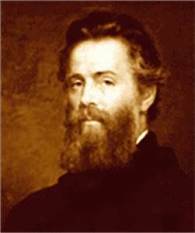
Two weeks ago, I invited you to take a journey with me to learn about Herman Melville and his epic novel, Moby Dick. We’ll have to postpone the next step in that journey because I’d forgotten I wanted to tell you about an exciting event my family participates in each January: The Central Florida Scottish Highland Games. Those Games take place this coming weekend! Three generations of Gouges/Reeses/Santiagos have been working the games for over a dozen years. Here’s part of our family picture at the Games kickoff dinner.
 No doubt you remember that those Scots were a rowdy bunch and often fought amongst themselves, as well as fighting the English. But the annual Games are a wonderful way to celebrate all the best of Scottish culture without any of the crazy stuff that makes up every people group. As for the food, oh, mercy, bring your appetite! They have authentic Scottish fare. And yes, I love haggis, a unique Scottish culinary delight, which I suspect American Scots have adapted to our more tender (squeamish?) appetites.
Here are some of the events you can observe and/or take part in: Caber tossing, Sheep dogs herding sheep, Highland dancing competition, stone-carrying competition, ax-throwing competition, archery contest, children’s activities and competitions, and Quiddich.
You can also thrill to twenty or so magnificent drum and bagpipe bands. Nothing stirs the Scottish soul quite like a bagpipe. Imagine a hundred of them piping their tunes across the moors.
Visit the Scottish clan tents and learn amazing historical information about each clan. At the Scottish Heritage Tent, you can find your own Scottish roots through our databases.
Spend a little or a lot of money with the vendors who carry Celtic and Renaissance clothes and memorabilia.
 Here’s a picture of my husband and me wearing the plaid and celebrating our Scottish heritage. On the right is a picture of my dear hubby in his U. S. Army tartan kilt and a chest full of his medals from service in Vietnam.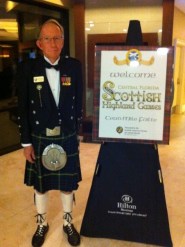
So how did we get started with our involvement in these annual Games? Some years ago, my younger son became interested in his Scottish heritage, having married a lovely lassie whose father is actually from Scotland. (Her father has that charming accent and even plays bagpipes!) Along with her daughter, they became involved with the Central Florida Scottish Highland Games, eventually pulling my husband and me into the fun. Now my daughter and grandchildren have joined the fun.
 Timothy and Heidi Gouge at the Central Florida Scottish Highland Games kickoff dinner.
I don’t have a great deal of information to go on to learn more about my Scottish heritage except that my paternal grandmother’s maiden name was MacCaskill. Like many Scottish surnames, this spelling is just one of many, but most of them seem to refer to a “sept” of the Clan MacLeod of Lewis. (There’s also a MacLeod of Harris.) Historically in Scotland, a sept was a smaller clan (family) that attached itself to a greater clan for protection and shared resources.
 Being a smaller sept didn’t mean the MacCaskills were considered inferior. One William MacCaskill led the entire MacLeod clan against a fleet at Clanranald at Eynot. No doubt he was chosen to lead because the MacCaskills were skilled seamen and sailors. In the mid-nineteenth century, a certain Angus MacAskill (note different spelling, but same family) grew to be 7 feet 9 inches tall. Naturally, he was called The Giant. At right is the MacLeod of Lewis crest.
 Below right is a picture of the Clan MacLeod family seat at Dunvegan Castle (for over 800 years), the oldest continuously inhabited castle in Great Britain. Rather romantic looking, don’t you think? Visit http://www.dunvegancastle.com/the-estate/clan-macleod/ Official site of Clan MacLeod of Lewis. Released under the GNU Free Documentation License.
 The photo below is by Neil Aitkenhead, with the attribution-share alike. I’m hoping this means it’s okay to post it. Sure would hate to be sued for a simple, non-commercial blog!
Around the United States, numerous Scottish heritage societies host Highland Games similar to ours. For a day of family fun, great food, and exciting entertainment, check out these events. You’ll be glad you did.

Do you have a Scottish connection? I’d love to hear about it in the comments below.




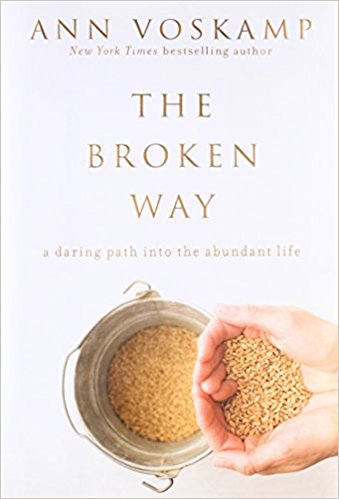 So I ordered her wonderful book:
 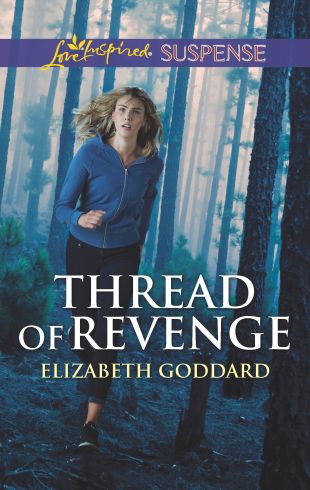 Marine biologist Sadie Strand is back in her coastal hometown to prove her best friend was murdered—but searching for evidence almost costs Sadie her life. Abducted, drugged and left for dead on a sinking boat, she’s barely rescued in time by Coast Guard Investigative Service special agent Gage Sessions, an old friend. Assigned to protect Sadie and connect three complicated cases, Gage risks his life time and again to make sure the woman he once loved survives. But although the handsome, guarded agent vows to protect her, someone will keep killing to ensure the truth never rises to the surface.
 My Class Reunion





 Still, many a subject can be studied from the comfort of one’s home or dormitory room, resulting in excellent papers and compelling novels. Anyone over the age of thirty knows this easy research wasn’t always available. As recently as 1999, when I was writing my master’s thesis on Herman Melville’s Moby Dick, I didn’t have such an easy time of it. Scouring the card catalogues, viewing the new and incomplete computer files, and perusing the stacks at Rollins College (See a picture of Rollins campus above)), I couldn’t find everything I needed to know about both the author and the book. It took a spring break trip to snowy New Bedford and Nantucket, MA, to find everything I needed in the libraries and historical societies. I also found a key piece of information in the library of Southwestern Theological Seminary in Fort Worth, TX. Not that I disliked traveling, mind you, but it was time-consuming and expensive when I needed to be doing some actual writing to complete my thesis on time.
 Fast forward twenty years, and I can easily find all that I need to know online. Well, I do have a personal library of print books that help me along, but how much easier it is to “google” a topic and quickly find resources from credible sources. Sure does save time and money, and frees me up to write my books.
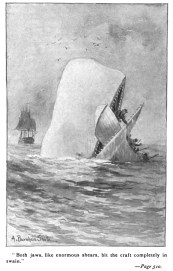 While the technology has been a boon to me as a writer, I still prefer to live in the past. What I mean by that tongue-in-cheek statement is that I love to write and read historical fiction. When planning my thesis, I asked my faculty advisor if I could write it as a novel rather than an academi
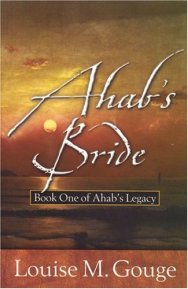 c paper. Dr. Cohen graciously permitted me to do so. Thus, Ahab’s Bride was born, a sequel to Melville’s Moby Dick. (These public domain pictures above inspired me as I wrote. At right is the cover for the first edition of Ahab’s Bride, published in 2004 by David C. Cook.)