Paint Your Wagon, or, the Attack of the Earworm by Louise M. Gouge

A Review

Original_movie_poster_for_the_film_Paint_Your_WagonI love the old musicals, especially those by the gifted composers and lyricists Alan J. Lerner and Frederick Loewe (My Fair Lady, Brigadoon, Camelot). When their musical Paint Your Wagon appeared in my television lineup the other night, I grabbed the popcorn, clicked on the channel, and looked forward to some great entertainment.

Paint Your Wagon is a 1969 film set in the 1853 California gold fields. While including some of the songs from the original 1951 Broadway play and adding a few new ones, the movie’s plot differs in numerous ways from the original. But both stories are about miners seeking gold, the hardships of the frontier, and some odd marriage arrangements.
Paint Your Wagon CastIt had been many years since I’d seen the musical, and I’d forgotten what a hodgepodge of a story it was. Not that it wasn’t entertaining. Clint Eastwood, Lee Marvin, and Jean Seberg played their parts adequately, as did the many secondary actors, including Ray Walston of My Favorite Martian and Damn Yankees and Harve Presnell of The Unsinkable Molly Brown. Eastwood and Marvin even sang their own songs to varying degrees of skill. Presnell’s rendition of “They Call the Wind Mariah” always gives me chills. Click on the title to hear this great singer at his best. Sadly, he came along as movie musicals were fading from popularity, so we didn’t get to hear him in great musical roles often enough.

Regarding the characters, as an author of historical romances, I know from my research that the folks settling the American West weren’t always clean cut, highly moral people. So, in the musical, the miners who went to California in search of gold were a mix of types, none of which seemed to possess any semblance of a moral code. No need to go into detail about some of their actions. I get what they were doing. This isn’t a Christian story. Still, the filmmakers didn’t need to make the sole “religious” character a preacher who is such a doofus that he’s ridiculed by the goldminers and generally made to look a fool. Oh, wait. This is Hollywood. They’ve been portraying Christians as all sorts of evil or clueless people for a long time.

My purpose here isn’t to rag on this movie, although I wouldn’t be the first. Esteemed professional reviewers such as Roger Ebert said: “The fact is, Paint Your Wagon doesn’t inspire a review. It doesn’t even inspire a put-down. It just lies there in my mind — a big, heavy lump (https://www.rogerebert.com/reviews/paint-your-wagon-1969). Ebert goes on to do his job and provide reasons for his disappointment in the film.

For my part, as I hinted above, I don’t expect all that much from Hollywood. Because I am a lover of the big musicals of the past, the ones listed in the first paragraph by Lerner and Loewe, plus many others such as Carousel, The Music Man, and Oklahoma!, I can watch those films over and over and come away with a happy heart. The next day, I don’t mind the “earworm” that has me singing their songs. As I’m sure you know, “an earworm…is a catchy piece of music that continually repeats through a person’s mind after it is no longer playing” (https://en.wikipedia.org/wiki/Earworm).

So, what earworm has been stuck in my brain since watching Paint Your Wagon? It’s the haunting strains of “They Call the Wind Mariah.” Sung by the incomparable Harve Presnell, it should have me at the very least feeling a bit of nostalgia for those long ago days when musicals ruled and I often danced out of the theater with a song in my heart. How is that I’ve never before noticed how completely dismal this song is?

Harve Presnell

While filled with poetic imagery, the song simply breaks my heart for its utter lack of hope. The character sings that he’s so completely lost that “not even God can’t find me.” Being a Christian who knows no one is beyond the reach of God’s love, I’m sad for anyone whose anthem is based on that philosophy. If I’d written the story, that preacher would have been a wise man who lovingly explained to that saloonkeeper how much Jesus loved him and how he could have peace now and forever. But then I’d be accused of preaching. But wouldn’t the love of God be a better message for the preacher to deliver than his muddled hellfire and brimstone (and biblically inaccurate) rantings? I guess such a message wouldn’t fit the agenda of the moviemakers.

Another line in the song actually annoys me. First of all, this character abandoned his “gal” and left her far behind him, and now he wants the wind, Mariah, to blow his love to him. I mean, really! If he were any kind of man, he’d admit his mistake, go home to that woman, and beg her to take him back. Why should she go chasing after a guy who left their happy home life because he was bitten by gold fever? He obviously loved his dreams of wealth more than he loved her.
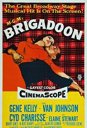
Brigadoon PosterToday, I’m writing this blog to try to get that bothersome earworm out of my mind because it still makes me sad. Maybe I need to pull out my DVD of Brigadoon so I can wake up tomorrow with its theme song, “Brigadoon,” equally as haunting and filled with beautiful poetic imagery but a much more hopeful theme, stuck in my brain. At the least, every time the “Mariah” earworm starts to bug me, I can burst forth in another of Brigadoon’s songs, such as “The Heather on the Hill” or “Almost Like Being in Love.” It’s worth a try.

As for the movie, well, I never wish ill to those who produce a such a large work of art. I’m just saying it’s not for me. And apparently not for Roger Ebert either.

Posted in Louise M. Gouge, Uncategorized | Tagged , , , , | Leave a comment

The Prodigal’s Brother by Julie Arduini

The Prodigal's BrotherJulie ArduiniChristians Read_editedSince I finished reading Esther Fleece’s No More Faking Fine, I’ve really been intentional about the power of lament. I used to feel guilty for whining to God, or being real here, mad at Him. Now I realize He knows anyway, and He can handle it. He wants our lamentations. So, I’ve been busy during my prayer time.

One of my laments of late has been relating to the Prodigal’s brother. In Luke 15, we read about the partying brother who demands his inheritance early, squanders it, and is at such a rock bottom place, he comes back, repentant, to his father. Instead of anger and a wagging finger of “I told you so,” the father gives him a party to celebrate his return.

Every time I’ve read that story, I’ve thought about someone else.

The brother.

While partying brother is spending money and participating in all kinds of debauchery, other brother is working the fields and watching his dad’s heart break over that other son every single day. When the party is over, and a new one begins, I so get why the brother is seething.

I’ve been lamenting these three words a lot.

It’s not fair.

As if the Lord needed my run-down, I reminded Him when He asked me to obey, I did. When I was tempted to do wrong, I turned away. How come the “good” brother got the shaft, and the “wild” brother got the hero’s welcome?

My pastor encouraged me with Scripture that I overlooked time and time again. “‘My son,’ the father said, ‘you are always with me, and everything I have is yours.'” (Luke 15:31)

It still took time and lamentation for me to receive this as I still struggled with the fairness of it all.

What I love about the Lord is He is as gracious to the angry brother as He is to the partying one. Angry brother was not pleasant or thankful when speaking to his father, and I haven’t been either. I’ve been on a giant, “Hey, God, let me remind You about this thing and that…” because to me, He apparently caught amnesia.

He gave me a moment, and a loving download that showed Luke 15:31 in action. I was at a public celebration. A video played showing highlights of the occasion, one I was at since the beginning. There were people who couldn’t emotionally connect to the celebration because they hadn’t been there at that time. I had the connection because I had been there, even when I thought for a time I needed to leave. Through prayer I realized I was not to leave, and I obeyed. The fruit of that obedience was being able to enjoy that event because I understood all the moments. Others were able to celebrate as well, but without the emotional connection.

When given the choice, I’d rather ditch a party and loud welcome and instead enjoy the fruit that comes with obedience. It’s a quieter, more subtle consequence, but I get it now. Both brothers had their father’s love, and both were easily accepted in His fold. But the prodigal’s brother received everything, he just forgot to focus on that as he watched the prodigal receive the welcome.

If that’s your struggle, identifying with the brother more than the prodigal, I pray my testimony encourages you. I also read a great article by Joni and Friends on this subject. May it bless you!

Posted in Julie Arduini, Uncategorized | Tagged , , , , , , , , | Leave a comment

If You Look Close Enough…


Eye of the Storm

I’ll let you in on a little secret…most authors put pieces of themselves into our characters. Whether it be the hero or heroine, if you look close enough, you can see little pieces of the author in their personalities and perhaps even bits of the town where they live or even their pets.

For instance, in Eye of The Storm, the heroine’s dog is a Boxer, Rhodesian-Ridgeback mix called Callie. She is named after my dog Callie who passed away this February, (below is a picture of the real Callie). She was a Boxer, Rhodesian-Ridgeback mix and the best dog I’ve ever had.

callie

The heroine Kate and the hero Brady share a meal together of scalloped potatoes, green salad, and elk steaks.

Now for me, I love to cook and scalloped potatoes are one of my favorite recipes to make. I’ve included my favorite recipe for scalloped potatoes that I found on Allrecipes.com below. Allrecipes.com is a wonderful sight and the recipes are simple and easy to make.

As far as elk steak, well, I never tried elk until my husband and I bought our cabin in Colorado and some of our friends invited us over to enjoy some elk steaks. They were delicious. I’ll share the recipe at the end of the post.

scalloped potatoes

Eye of The Storm takes place in a small mountain town called Soaring Eagle, Wyoming, which I confess, I patterned after the small Colorado town called Pagosa Springs, one of my favorite places to visit.

Eye of The Storm, Layers of The Truth, and Past Sins take place in the mountains, which I confess, is my favorite place to vacation. There’s just something about the mountains that helps to put life into prospective for me. I can feel God’s presence everywhere. It’s very humbling.

These are just a few of the pieces of my life that you will find my books. Believe me, there are more. All of my characters love coffee…just like me.

So the next time you pick up a book and start to read it, remember that you’re not only reading a book, you’re gaining valuable insights into the lives of your favorite authors.

These are just a few of the pieces of my life that you will find my books. Believe me, there are more. All of my characters love coffee…just like me.

So the next time you pick up a book and start to read it, remember that you’re not only reading a book, you’re gaining valuable insights into the lives of your favorite authors.

Baked Scalloped Potatoes

Ingredients

6 large peeled, cubed potatoes

1 (10.75 ounce) can condensed cream of mushroom soup

1 1/4 cups milk

1 onion, diced

1/2 teaspoon ground black pepper

Directions

1Preheat oven to 375 degrees F (190 degrees C). Grease a 2 quart casserole dish.

2Layer potatoes and onions into the casserole dish. Combine soup, milk and pepper in a bowl, then pour soup mixture over the potatoes and onions. The soup mixture should almost cover the potatoes and onion, if it does not add extra milk.

3Cover dish and bake in preheated 375 degrees F (190 degrees C) oven for 60 minutes or until the potatoes are cooked through. At 30 minutes, remove the casserole from the oven and stir once before returning the dish to the oven. Remove from oven and serve.

All the best…

Mary Alford

http://www.maryalford.net


Posted in Uncategorized | Leave a comment

Mentor or Mentee?

By Marilyn Turk

For the past year, I’ve wanted a writing mentor, someone who would advise me and help me on my writing journey. Ernest Hemingway is quoted as saying, “We are all apprentices in a craft where no one ever becomes a master.” Even though I know more about writing and am somewhat better at it than I used to be, I know I still have quite a way to go to reach a level comparable to my favorite authors, if that is at all possible.

Although I’m blessed to have critique partners, they are busy with their lives and are at about the same stage in their writing as I am. I thought perhaps a more experienced author would take me on as their mentee to help me reach the next level. I even asked a couple of authors who I believe would be good mentors for me if they would be interested. But none of them took me up on it; they’re all so busy with their own work. Thankfully, I know a lot of authors at various levels whom I can go to for any questions I have.

But an odd thing has happened to me recently. New writers have come to me for advice. These people know I’ve achieved some level of success that they are trying to attain. As a result, I’ve been asked to critique and advise them on their work.

With years of experience under my belt, I can tell those with less experience what to expect in this writing journey. I wish someone had shared that information with me years ago. Many times in the past I felt like I was a stranger in a strange land, an outcast, one that didn’t have the key to getting on the inside where all the published authors were.

A mentor is defined as “an experienced and trusted adviser.” Like other experiences in life, God didn’t allow me to learn so I could keep it to myself. He expects me to share what I know and help new writers, to reach back and pull others along.  In fact, in Hebrews 13:16, it says “Do not neglect to do good and to share what you have, for such sacrifices are pleasing to God. (ESV) How surprising to realize the last ten years I’ve spent learning the craft and writing a variety of work, from articles to short stories to devotions to novels and novellas have given me something to share so I can mentor someone else.

It is a blessing to be able to give from my own knowledge and experience. And although I consider myself a middle-schooler when it comes to gaining an education about writing, there are those who find my advice valuable.

So perhaps at this time of my life, God wants me to be the mentor and not the mentee.


Posted in Marilyn Turk, Uncategorized | Tagged , , , , , | Leave a comment

My Journey with God As I’ve Developed As a Christian Writer by Margaret Daley

My Journey with God As I’ve Developed As a Christian Writer

By Margaret Daley

In the past few years my faith has deepened. Actually it has grown quite a bit through the years I’ve written for the Christian market. God led me to write inspirational stories in the late 1990s. At first I ignored the nudge, but as the Lord so often does, he kept nudging me until I took up the challenge. And of course, he was so right. I found my writing home in the Christian market.

Depositphotos_31761533_originalSeveral times in the past years, I’ve seen God actively working in my life. First, he gave me a story I had to tell. It became the first book in The Men of the Texas Rangers Series, Saving Hope. The story is about human trafficking, and I knew it would be a difficult sale, but I didn’t give up hope selling it because it was a story the Lord gave me. I felt him totally behind me. There was someone out there who needed to read it. I have felt that way about all my books in The Men of the Texas Ranger Series. The second book, Shattered Silence, is about bullying. He has given me passion about certain social issues and the desire to tackle them in a storyWhen I ran for the president of American Christian Fiction Writers, I did because He wanted me to run. I did out of obedience, not really expecting to win. I had books contracted and I was already serving on the board as Volunteer Officer. I didn’t envision myself as the president. I hated getting up in front of large crowds and giving a speech. I did win, and He assured me He would help me with giving the speeches. And He did. He is amazing.

My most recent journey with the Lord has me working on giving control over to Him. For so many years I tried to do everything by myself. I loved the Lord, but I didn’t need Him. Or so I thought. What has come home to me is that I can’t do it alone anymore. That I can’t do it without the Lord. Even knowing that, it has still been hard to give everything to Him. Not to worry. Not to forge ahead without considering what He wants me to do. As I’ve told people, I’m a work in progress, but with the Lord on my side, I can’t go wrong.

One of my current books is Hunted, Book One in Everyday Heroes. I recently put up for pre order the second book in there Everyday Heroes Series called Obsessed. Check out at Amazon: http://littl.ink/ObsessedAm. Blurb for Hunted: Murder. On the Run. Second Chances. Luke Michaels’ relaxing camping trip ends when he witnesses a woman being thrown from a bridge. He dives into the river to save her, shocked to find her wrapped in chains. As a canine search and rescue volunteer, Luke has assisted many victims, but never a beauty whose defeated gaze ignites his primal urge to protect. When Megan Witherspoon’s killers make it clear they won’t stop, Luke fights to save her, but can he keep her alive long enough to find out who is after her? 

Buy links: Amazon, Barnes and Noble, Apple, Kobo and Google Play

Hunted Final small


Posted in Uncategorized | Leave a comment

Switchbacks (by Hannah Alexander)

This past week, Mel and I hiked a breathtakingly beautiful trail up Casper Mountain in Wyoming. One thing about Wyoming I love is that we still have mountains and lakes and rivers and trails–all kinds of beauty–but fewer people crowd these sites than you might see in Colorado. Also, if we avoid Grand Tetons and Yellowstone, we also avoid some of the more dangerous wild animals. As far as I know, there are no grizzlies in South-Central Wyoming.

The trail we hiked began with a lot of rocks. I saw other visitors walking over those rocks with their flip-flops, and I cringed at the thought of broken and sprained ankles. In a few moments we left those visitors behind and climbed up and into the forest. The few people we met there had more sensible shoes on. Also, the trail became much less steep because the builders of this trail had made switchbacks, which were covered in pine needles and made a lovely, scenic tour of the mountain. Switchbacks increase the length of your hike–or your drive, if you’re driving mountain roads–but they make the whole hike possible. There’s no way I could climb straight up a mountain.

I asked Mel how he might compare the switchbacks we were traversing to the switchbacks in life. Sometimes a switchback will take us back down in elevation for a while to avoid something too difficult to climb, such as a rocky cliff face. We can see that more easily on the trail than we can in our lives. Have you had a drastic change in your life recently? Job change? Move? Even illness? Mel and I have both experienced all these things in our lives, especially these past years. I’m just trusting that these switchbacks have kept us from something that might have dislodged us from our path completely, and the extra time it’s taken us to accomplish what we want is keeping us from dangers ahead.

We were near the top of Casper Mountain and feeling quite accomplished on our hike when clouds darkened the sky and thunder echoed. We hesitated, but then decided to continue to the top. No sooner had we started up than I felt rain on my arms. I told Mel, and we immediately pivoted, giving up our hope of reaching the top and going down another way. I don’t like to return on a trail the same way I came. I want to see new trees, new trail, new flowers and rocks. But I had just read how dangerous it was to hike in the mountains during thunder and lightning. There is also the issue of chilling, though we were close enough to the trailhead that unless we had a major, cold downpour, we were fine in our hiking vests. Nevertheless, I’ve been caught in the rain far from my car, and had my core temperature drop dangerously low. I knew the dangers firsthand.

Sometimes we have to give up a dream, or put it off for another day. It’s so frustrating, even painful, when our highest hopes are dashed. But really, if we keep reaching for that dream, we might find that the actual journey is as rewarding as seeing that dream come true. It all depends on our mindset.

What are the switchbacks in your life? I’m not talking about the avalanches–that would be the tragedies of death and horrible loss. I’m talking about being forced to face a new direction in order to continue on your journey. I’ve learned to try to welcome mine and trust that God has good reason to make me walk farther, try harder, push forward to reach the end.


Posted in Hannah Alexander | Tagged , | Leave a comment

Healthy Mindset by Tara Randel

Now that summer is right around the corner, it’s a great time of year to get outside and be active. As a writer, I spend long hours sitting in front of the computer. I do take breaks to stretch, but that doesn’t replace exercise. If you have a job that requires long periods of inactivity, here are some helpful tips.

Exercise. As I get older, I realize the importance of moving. No matter your age, keeping in shape is vital for so many reasons. Exercise helps you maintain or lose weight, increases metabolism and builds muscle mass, helping to burn more calories.

There are so many ways to be active. I go to the gym at least three times a week, but if you’re not up to that, try walking or biking around the neighborhood. You don’t have to run a marathon to be healthy, but you do need to push your boundaries.

IMG_20180404_153424401

Moving improves mobility and balance, along with your strength, flexibility and posture, which in turn will help with balance, coordination, and reducing the risk of falls.

If you sit all day, you probably find that at the end of the day you’re stiff and achy. Stretching moves certainly combats that fatigue. Pilates or yoga are a great way to work out the kinks.

The health benefits of exercise are improved sleep, boosting your mood and kick starting the brain. Whenever I’m at a point in my book where I can’t decide what direction to go next or I’m having difficulty figuring out a scene, I go the gym, jump on a piece of equipment and I’m amazed at the ideas that start flowing.

Take advantage of fresh vegetables and fruit from a local vegetable stand. Eating healthy will make you feel better and maybe even help you lose those few pounds you might have gained during the winter season. I recently went back to Weight Watchers in order to get back to my best weight. The program really works and the accountability helps with success.

If you’re already taking steps to be more healthy, good for you! Just as we readers love the journey our characters undertake when we start to read a book, we can apply that attitude to a good quality of life.

9781335633750 (405x640)

Tara Randel is an award-winning, USA Today bestselling author of sixteen novels. Family values, a bit of mystery and, of course, love and romance, are her favorite themes, because she believes love is the greatest gift of all. Look for her next Harlequin Heartwarming romance, THE LAWMAN’S SECRET VOW, available August 2018.  Visit Tara at www.tararandel.com. Like her on Facebook at http://www.facebook.com/TaraRandelBooks. Sign up for Tara’s Newsletter and receive a link to download a free digital book.

Posted in Tara Randel | Tagged , , , , , | Leave a comment

Writing is like Tennis?

tennis-racket-and-balls

By Marilyn Turk

Last weekend I watched a professional tennis tournament. As a social tennis player, I was amazed at the difference between how the professionals play and how I play I’m sure that most of the spectators shared the same thought I had, “I wish I could play like that.” But then the absurdity of that thought hit me. There are several reasons I don’t play like they do, and many of those reasons could apply to writing as well. Comparing my tennis game to the pros is like comparing my writing to that of best-selling writers. And this is why:

  • Professional tennis players weren’t born professional. They developed their skills over time. Writers too, don’t usually start out writing best sellers. Writing skills must be developed over time. Professional tennis players have been playing much longer than I have. Most best-selling writers have been writing much longer than I have too.
  • Practice, practice, practice. Professional tennis players practice every day. They know that if they want to get better, they must practice. For the same reason, writers should write every day.
  • Professional tennis players try to improve their game. They don’t just play, they try to get better at their sport. In the same way, writers need to try to improve their writing.
  • Professional tennis players listen to their coaches. If a coach tells a player what they do wrong, the player tries to correct. It. Writers have editors and critiquers who tell them what they do wrong, and how to correct their writing. Only by making the changes will a writer improve their writing.
  • A tennis player who wants to increase their ranking must stay focused on the game and not be distracted by things going on around them. Writers, too, need to shut out the distractions so they can focus on their writing.
  • Professional tennis players know their commitment means they must give up other time-consuming habits to play tennis. Writers too, must give up other things, for example, TV, that takes time away from writing.
  • Tennis players sometimes lose games, but they don’t give up. Writers get rejected, but maintaining a positive attitude is essential to progress.
  • Tennis can be lonely for these professionals who travel often, so they bond with other tennis players. Writing too, is a lonely activity, but developing relationships with other writers builds support and camaraderie.

To summarize, to be a good tennis player requires dedication totennis-happy-face the goal. Good writing also requires staying dedicated to the goals of finishing,      improving, and succeeding. If I want my writing to be as good as top writers, I must be willing to make the investment they make. If not, my writing  will never get any better, and I’ll have no excuse to say, “I wish my writing was as good as …………”

“Brothers and sisters, I do not consider myself yet to have taken hold of it. But one thing I do: Forgetting what is behind and straining toward what is ahead, I press on toward the goal to win the prize for which God has called me heavenward in Christ Jesus.” Philippians 3:13-14 NIV


Posted in Uncategorized | Leave a comment

The case for historical fiction

As a fiction author, I understand that sometimes professional historians have little use for historical novels because they think these books often have no basis in truth. But if the author has done her job, fictional stories can surreptitiously teach readers some wonderful historical facts.

When I was teaching college English and Humanities classes, I attended a faculty meeting during which our department head mentioned he was reading a fascinating book about the flu epidemic of 1918. Everyone around me groaned, but I said, “Cool. What’s the title?” I’m always on the lookout for books that contain important information about the past. One day I might write a book about WWI, and that flu epidemic must not be overlooked. Needless to say, I’m very enthusiastic when it comes to historical details.

120px-San_Antonio_Texas_AlamoI fell in love with history when I was about ten years old and my family visited the Alamo in San Antonio, Texas. There I learned about a few courageous men who stood against a vast army and inspired other Texans to fight for their independence.

At about that same age, I fell in love with fiction when I sawMary_Martin_Peter_Pan_Producers_Showcase_1956 Mary Martin play Peter Pan on black and white television in the 1950s and learned the joys of make-believe. As a teenager, I loved historical novels such as Jane Eyre, The Robe, and Tale of Two Cities. Even the movies I watched were more often historical in nature rather than contemporary: Laurence Olivier’s Pride and Prejudice, Errol Flynn in Robin Hood, and Robert Stack in John Paul Jones.

When I was an English and humanities professor, I was often dismayed by the lack of interest in and knowledge of history among my students. David McCullough, the author of many popular histories, including John Adams and 1776, said, “If we raise generation after generation of young Americans who are historically illiterate, we run a great risk. You can have amnesia as a society, which is just as dangerous as amnesia for an individual.”

Author J. M. Hochstetler says: “The results of history tests taken as part of the National Assessment of Educational Progress (Nation’s Report Card) show that our children aren’t learning some of the basics of our nation’s past. Historians, educators, and even lawmakers are very concerned. They’re afraid that our students are losing touch with the great ideals and principles that are the foundations of who we are. And they’re concerned about what the consequences of this will be for our future.”

But what can be done to remedy the problem?

We can agree that it’s vitally important to teach the truths contained in history so our children can grow up to be responsible, contributing citizens and to ensure that our nation doesn’t fall prey to the mistakes of the past. But in practical fact, how are we going to help students to realize that what happened in the past has everything to do with who they are and the life they’re living today? How can we teach them that history really belongs to them?

Everyone loves a story. When we listen to or read a story, we unconsciously lower our defenses and open our hearts to underlying universal themes such as love and hate, fear and hope, revenge and forgiveness. Well-written, carefully researched historical fiction allows readers to identify with the story’s characters and experience a world that is only outwardly different from their own—in other words, to really GET history on an intimate level and to CARE about it.

With this desire to teach history through my own fiction, my own novels, I have developed a strong conviction about presenting historical facts as accurately as I can.

130px-Cpt_John_Paul_JonesMost of us have no objection to an author telling a story set against a backdrop of actual history for the purpose of entertaining readers. However, if an author or moviemaker decides to twist historical facts to suit some other agenda, those of us who love history are prone to take exception. Above I mentioned the movie John Paul Jones, a biopic of a great American naval patriot who helped the United States win its independence from Britain.

But I must hasten to add that Hollywood has always loved to mess with history. Why tell the fascinating truth about one of America’s first great heroes when you can tangle it up with all sorts of fictional intrigues? John Paul Jones had enough going on in his life without involving him in a love triangle with Patrick Henry and the woman Henry married. And since Benjamin Franklin died in Philadelphia in 1790, he couldn’t have been at Jones’s deathbed in Paris in 1792, as the film shows. Admittedly, John Paul Jones was filmed in 1959. But have the movie makers changed any over the years?

Consider this example of a more recent movie titled, The Aryan Couple, starring Martin Landau, one of my favorite actors. According to movie reviewer Roger Moore of the Orlando Sentinel, “The Aryan Couple is the worst Holocaust movie ever.” Moore reports that the film is riddled with impossibilities for its setting, Nazi-occupied Hungary in 1944. In the story, a wealthy Jewish man has been able not only to avoid being carted off to a concentration camp, but he also still lives a lavish lifestyle in his castle in the country—that late in the war. If a young person attending this movie is interested in learning about the way people lived in WWII, what a distorted and wrong picture they will see. As Moore says, “Hollywood is forever finding new ways to tinker with history.” Unfortunately, many young people learn about history and even great fiction of the past from such films as this one.

Hester_PrynneAnother example of Hollywood gone wrong is a 1995 movie based on Nathaniel Hawthorne’s The Scarlet Letter. The heroine seemed to be taking her cues from the modern feminist movement. Someone said to me, “Well, this is just another telling of the story.” And one of my female students said, “If I’d lived back then, I’d stand up for my rights!” All I can say in response is that, in the time in which this story took place, women who acted out of line were shunned or drowned or hanged or burned as witches. That is history. Another one of my students wrote her assigned book report on The Scarlet Letter using the movie rather than actually reading the book. She had no clue that these two were substantially different, with the movie utterly distorting Hawthorne’s great story. And she was shocked to receive a failing grade. (At left, Hester Prynne, heroine of The Scarlet Letter.)

In producing a movie or writing a book, we should not change history. We shortchange our audiences, whether readers or moviegoers, students or adults, if we take today’s issues and place them in the past when such things were not possible. It’s so important to stick to historical fact. Each era of humankind has had enough issues of its own to teach succeeding generations what they need to know about the human condition. Let’s stick to reality. Let’s stick to truth about the past, as learned from trustworthy sources, so we can feel confident in the historical information we’re passing on to coming generations.

With that conviction in mind, when I set out to write any book, I commit myself to arduous and extensive research so to the best of my ability I would get it right historically. It’s always worth the journey.

So, what does a writer need to do to tell a good story? She must have characters with interesting internal and external conflicts and enough motivation to overcome them; a setting, which I define as time, place, and social environment; and of course, a plot, the storyline, the things that happen to and around the characters.

In order to turn history into fiction, I take three steps: first, develop those compelling characters my readers will identify with and care about; second, place them in real historical settings with actual events and real people, and third, start digging for the historical details that will flesh out my tale: the ideas our ancestors thought and the daily realities they dealt with. What were their philosophies, their struggles? How did they have fun? What did they eat? What kind of plumbing did they have. . .or not have? Digging out those details is like a treasure hunt to me.

I firmly believe we should use fiction to ignite interest in history and show students how interesting it can be. No one can ever know the absolute truth about every detail of history. In recent years, new information has come to light through documents and letters about the 1836 siege of the Alamo, where I got my first taste of delicious history. But nothing can change the fact that the courage of those who died that day in San Antonio inspired other Texans to fight for independence. In the April 2006 Smithsonian magazine, certainly a credible source, there are interesting questions raised about the recovery of John Paul Jones’s body. But nothing can diminish his heroic achievements in our American Revolution.

The unchangeable truth we can all agree on is that our children need to know American history and how it affects them, how their forefathers and foremothers pledged their lives, their fortunes, and their sacred honor to ensure the freedom of future generations.

If it takes a fictional story, based of course in reality and historical truths, to attract our children to the importance of the past, by all means, let those stories be told!

(All pictures are from Wiki Commons and are in the public domain.)

Posted in Uncategorized | 4 Comments

Tall Grass by Julie Arduini

farmto table_edited

We live in a development on a no outlet street cul-de-sac. It’s private, safe, and we love it. One thing that sometimes throws me off track is a neighbor. A retiree, that lawn might be mowed once, twice, yes, even three times a week.

Yeah, we don’t have time for that.

I can tell he takes pride in his yard, and I get it. He works on it and it looks good. We are a busy family where work and ministry are higher priorities. Our son does a great job with the lawn, but it isn’t an obsession for any of us.

Sometimes I get caught up in the neighbor’s priorities, or, dare I go there, I fear his reaction and/or rejection. When our once-a-week is suddenly ten days without mowing, I struggle with feeling pressured to get it done because of that neighbor.

Silly, right?

A few weeks ago my husband and son were out of town and it had been so rainy. Our grass was so tall, and the dandelions were past their prime and now a poof with long stems. As I drove by, I noticed every house around seemed void of dandelions, weeds, and tall grass. Most of the development uses landscapers, and some even call in companies to put chemicals on their lawn.

We’re from the country. Before we even moved to Ohio we never knew people actually make patterns from their mowing. We grew up just mowing to mow. Not only do I battle pressure to keep up mowing, but the fact that apparently we should be making fancy patterns out of our yard work, too.

I drove through lamenting why do I put myself through the pressure, and why do I care. Why is it everyone has great looking lawns when they are just as busy as we are?

Authenticity.

It wasn’t audible, but that is what keeps coming to mind every time I think of it. Our yard might not win any awards, but the yard is like us. Authentic. We are often due for pruning and a lot of work pulling out the weeds in our life. Although lawns, with a lot of time and money, can appear to look magazine worthy every day, it’s not quite a real representation. Those chemical companies charge to kill the weeds, and so do the landscapers that have their industrial mowers that can finish in half the time we can doing it ourselves.

My guess is like me, you’ve seen people who look on the outside completely put together. No signs of weeds or tall grass in their life. I remember meeting someone like that and I felt completely inadequate around her. What I didn’t know was her life was in chaos, and months later her marriage ended in a public way. I walked away understanding I will never look perfect or magazine ready, and that’s okay. I’m a work in progress, and what you see is what you get.

And the Lord is pleased with that.

So if you struggle to keep up with everyone else, realize they might be putting in more effort to hide their issues than you are going to the Lord with it head-on. Sure, our way may look like am unkept lawn with poofy dandelions, but everything about you, lawn included, is a real deal.

Embrace that, and not the lie that you have to have your neighbor’s perfect lawn.


Posted in Julie Arduini, Uncategorized | Tagged , , , , , , , , , , | 1 Comment

Happy National Paperclip Day!

National-Paperclip-Day-May-29

Today is National Paperclip Day!

I know, if you are like me you’re thinking, really? There really is a day for everything, isn’t there.

But did you know…

Paperclips are not just for holding papers together. There are many other things that you can do with them!

  • Replace a zipper tab
  • Unclog a spray bottle
  • Unclog a single serve coffee maker
  • Hem holder
  • Emergency hooks for broken necklaces

The Paper Clip Project

During World War II this small, universal office supply provided a visual method of protest at a time when any outward signs of objection could be dangerous, even in familiar company.

Early in the war, Norwegians were particularly persistent in their development of symbols. The paper clip represented “sticking together” for a time until the Nazis caught on and banned the wearing of paper clips.

According to a March 5, 1941, Provo, Utah newspaper article (The Daily Herald), the Norwegians switched to new symbols as quickly as the bans could be issued.
In 1998, a group of middle school students led by language arts teacher Sandra Roberts and associate principal David Smith began a project through a Holocaust education class. The voluntary after-school class, Whitwell Middle School principal Linda Hooper’s idea, would be the foundation for developing tolerance and diversity.

Inspired by the story of the protesting Norwegians and their paper clips, the students began to collect six million paper clips – one paper clip representing one Jew who perished during the Holocaust. Adults today still wrestle with how the Holocaust could occur. Imagine middle school students trying understand the magnitude of such an event on humanity.

The Paper Clip Project gained international attention and by 2001 the students collected more than 30 million paper clips. The school dedicated a Children’s Holocaust Memorial which displays an authentic German railcar filled with a portion of the paper clips.

For more information on this inspiring story, the book and film that followed visit www.oneclipatatime.org

After I read about The Paperclip Project I was both surprised and I admit I had a newfound respect for the paperclip. It just goes to show you, even the smallest of things can be used for good.

So, I hope you have a happy Paperclip Day.

All the best…

Mary Alford

http://www.maryalford.net


Posted in Uncategorized | 2 Comments

Six Feet Deep!


Cemetery

By Nancy J. Farrier

What did you think when you read that title? The first thing most people think is someone is getting buried. Six-feet-deep is synonymous with burial. Why is that?


There are several reasons. Most agree that the term dates back to the 1600’s when outbreaks of plague were misunderstood. People who died were buried six feet deep in a vain attempt to stop the disease. They didn’t understand the plague was spread by fleas and rats. There are a few other reasons for burying a body deep, but I want to look at this term another way.


A few years ago, my daughter wrote a song that we sang during worship in our church. I still find myself singing the chorus and thinking about the words and their meaning. Here is the chorus:


Bury me in Your love,

Six feet deep,

Drive me to Your core,

No release,

Bring me to the center of You

Lost in love.

©2014 Ardra Farrier


The tune is catchy and stays with you. But, why do the words six-feet-deep mean so much to me? Below, are my four reasons.


  • As I mentioned earlier, six feet deep is synonymous with death. My greatest desire is to die to self and to live for Christ. So far, I have yet to achieve that goal, but I am trying every day to be less of me and more of Him.
  • That six-foot depth was a place of safety. Wild animals wouldn’t dig that deep. Grave robbers were less likely to steal a body from a deep grave. Likewise, I need a place of safety as a Christian. A shallow faith, or a lukewarm belief affords no protection. I want to buried so deep in God and His word that I am protected completely.
  • It was thought that a grave should fit the man. The average height at the time was about six feet, so that made sense for the depth of graves. I may not be that tall, but I want to fit completely into salvation. I don’t want a hand or leg left out. lol I want every part of me to belong to Jesus. I want to be buried deep in His love.
  • Bodies were buried deep to prevent the spread of disease. In our modern culture, with the knowledge we have, we understand how disease spreads and that a deep grave didn’t prevent plague. From my Christian perspective, the spread of disease is the opposite of the thinking of those in the 1600’s. When I am buried deep in Christ, I am not the one spreading disease, but I’m protected from false teachings, harm and temptations that might lead me away from where I should be.


While thinking about being buried might be morbid, the comparisons work for me. Maybe another time, I’ll think about being Lost in love and see where that leads. As long as I’m buried in His love, I won’t mind being lost in the love of Christ.

Posted in Nancy J. Farrier | Tagged , , | 4 Comments

Do You Have Lemon Juice on Your Face?

by Jim Denney

Many aspiring writers assume that, because they’ve done a lot of reading, they know how to write. This is almost never true. Writing is a craft that must the mastered through intensive study and practice. The problem is that most beginning writers don’t realize how much they don’t know.

Novelist Charles Bukowski once said, “The problem is that bad writers tend to have the self-confidence, while the good ones tend to have self-doubt.”  He was describing a principle known as the Dunning-Kruger effect — a cognitive bias that leads incompetent people to think they have superior ability.

If you’ve ever attended a writing class or a local writers’ group, you’ve probably met a few examples of the Dunning-Kruger effect — wannabe writers whose work is atrocious on every level, yet who behave in a smug, condescending, know-it-all way toward others in the group. The problem with incompetent writers is that they lack sufficient awareness to recognize their own incompetence.

Hemingway1923PassportPhoto

Ernest Hemingway said, “We are all apprentices in a craft where no one ever becomes a master.” Photo: Hemingway’s 1923 passport photo, public domain.

The Dunning-Kruger phenomenon was identified in a series of experiments by psychologists David Dunning and Justin Kruger at Cornell University in 1999. Their research was focused on the case of a bank robber who smeared lemon juice on his face during his robberies. Why lemon juice? Well, lemon juice can be used as an invisible ink. The robber reasoned that, by smearing lemon juice on his face, he would make his face invisible to the surveillance cameras. Brilliant, eh?

Many beginning writers approach the craft in a similar way. Thinking they know it all, they publish their clumsy early efforts, fully expecting the world to applaud their brilliance — then they sulk and seethe over their non-existent sales and scathing Amazon reviews. They don’t realize they have lemon juice on their faces.

Herewith a confession: In my early writing career, I had a case of Dunning-Kruger myself. I was a young writer in my twenties, I was getting work published, and I thought I knew all I needed to know about writing. I rarely read a book on the craft of writing, and I never attended a writer’s conference or workshop. In my youthful arrogance, I didn’t know I had lemon juice on my face.

Today I have more than a 130 books to my credit (having worked with many publishers including Simon & Schuster, St. Martin’s, Thomas Nelson, Hachette, and more). I’ve been making my living as a full-time writer since 1989. But I no longer think I know it all. Not even close. In fact, I probably read thirty or more books on writing every year. Though I know so much more about writing than I did when I was in my twenties, I’m driven by a constant hunger to know more.

Hemingway understood. Shortly before his death in 1961, he told an interviewer, “We are all apprentices in a craft where no one ever becomes a master.”  If Hemingway considered himself an “apprentice” after earning the Nobel Prize for Literature, then I have all the more reason to be humble and eager to learn.

If you aspire to be a writer, I’d encourage you to study the elements of writing — character, viewpoint, milieu, plot, structure, and more. Learn the principles and technical aspects of the writing craft. Read books by great teachers of the craft. Attend writers’ conferences and workshops.

I’ve learned — the hard way — to always approach writing with the attitude of an apprentice, not a master. We writers need to stay humble — if we don’t want to get caught with lemon juice on our faces.

___________________________________

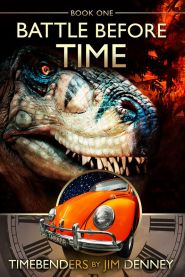
battle-before-time-cover-1


Note: Battle Before Time, the first book in my newly revised and updated Timebenders series for young readers, has just been released in paperback. Click this link to learn more.

And if you’d like to learn more about how to write faster, more freely, and more brilliantly than you ever thought possible, read my book Writing In Overdrive, available in paperback and ebook editions at Amazon.com. —J.D.


Posted in Jim Denney, Uncategorized | Tagged , , , , , , , , , | 1 Comment

A Visit to Adaland

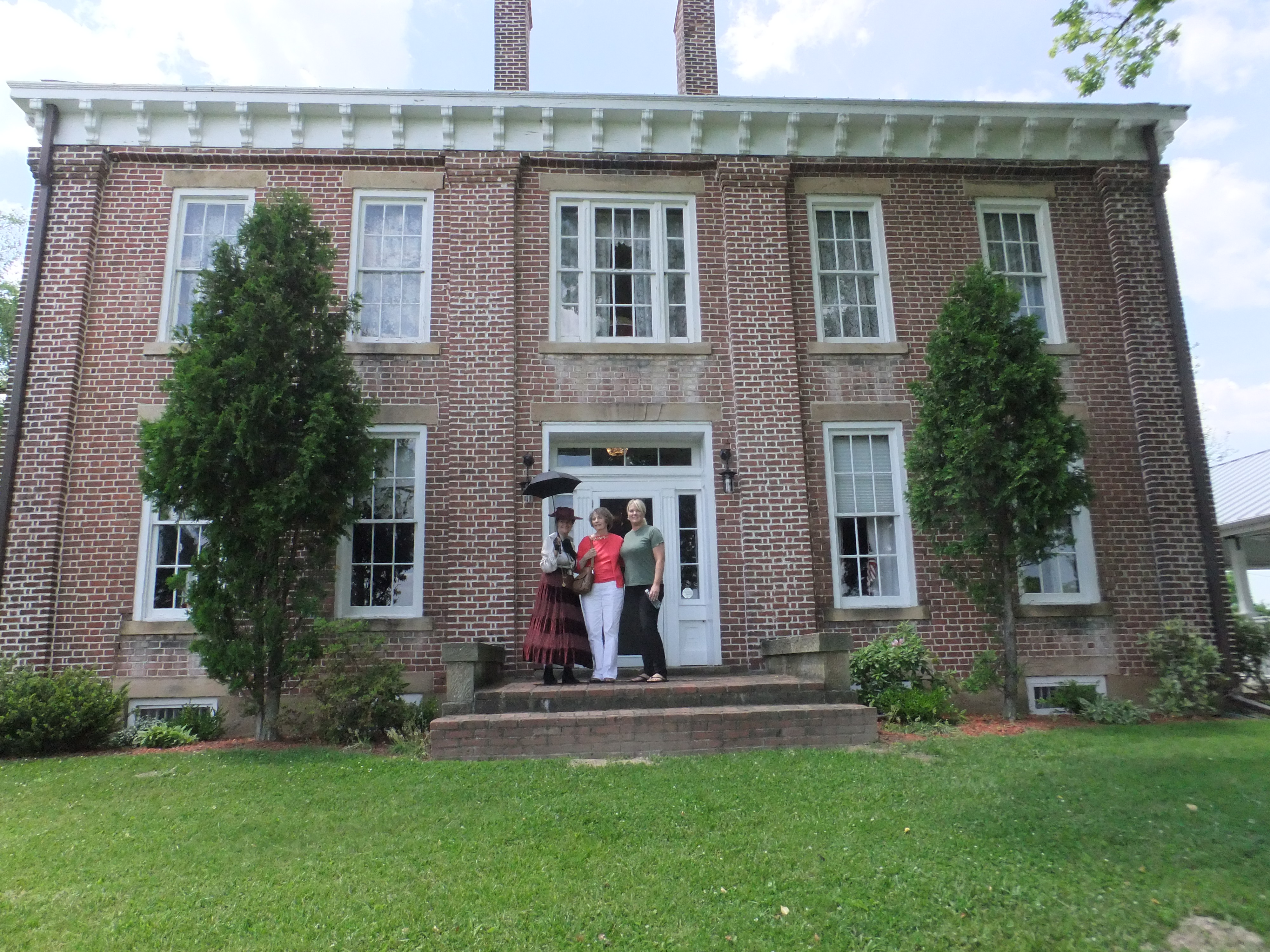
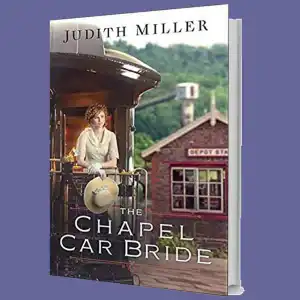
I’m taking you on another one of my ‘history tours’ that I enjoyed while I was in West Virginia doing research for my Refined by Love series and Chapel Car Bride. For many years I’d heard my sister mention the home located a short distance from Philippi, known as Adaland. In addition to tours of the house and grounds, many weddings and other social events are hosted in the mansion and on the grounds. And since one of my sister’s friends is a docent at the mansion, Adaland was on my “to be seen” list. Of course, we wanted to go when Jada would provide the tour for us and give us a little of the inside scoop.

My expectations were high, and I wasn’t disappointed. This beautiful land on Fox Grape Run lay idle until purchased by the Modisett family in 1807. Don’t you love the name, Fox Grape Run? When I was little, we visited relatives on Plum Run, but I really like the name Fox Grape Run. Here in Kansas, we have creeks instead of runs, but in West Virginia and Pennsylvania, “runs” are common usage. Sorry—I got off topic and took you down a bunny trail with me.

The original home was a log structure. It wasn’t until 1868 that construction of this Greek Revival Mansion was begun by one of the Modisett sons. Until the acreage was sold to Judge Robinson in 1920, it was known as the Modisett farm. After purchasing the home and property, the judge began renovations and renamed it for his wife, Ada Sinsel Robinson. We enjoyed a wonderful tour of the home, and Jada played the psaltery for us. I gave it a try and thought I might purchase one—then I decided it would have to wait until I had a little more time. But one of these days…

I included this ‘picture of a picture’ that hangs in the dining room of Adaland because the young couple, Phoebe Pullison and Arlie Woodford, are the great-great-grandparents of my niece. Arlie was the overseer at Adaland and he and Phoebe were the first couple to be married in the mansion.

Of course, whenever I see an old typewriter, I must include a picture. I hadn’t seen this exact model before, but I’m glad I have a computer instead of an old manual typewriter. Producing a manuscript on a manual typewriter, using carbon paper and an eraser to correct errors now seems as antiquated as driving a Model T.

A good portion of the land was eventually sold to coal companies and the mansion was even used as office space. Can you imagine that? Eventually, to preserve the historic significance of the property, the house, barn, carriage house and about twenty acres were signed over to the City of Philippi and placed on the National Register of Historic Places. Renovations have been significant and costly, but well worth the time, effort and money. Adaland is a true jewel. If you ever find yourself near Fox Grape Run—stop in and have a glass of sweet tea and listen to the magical music of a psaltery. You’ll enjoy the step back in time.

May you find joy as you rest in Him. ~Judy


Posted in Uncategorized | Tagged , | 3 Comments

Check Your Engines: An Animal Story (by Hannah Alexander)

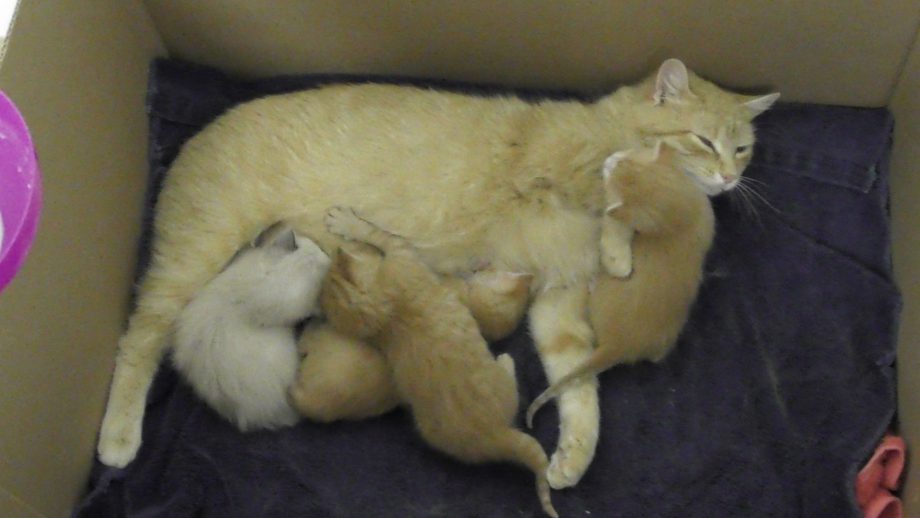
Once upon a time, fourteen years ago, I stepped onto the front porch of our house and caught a mama cat nursing three half-grown kittens. She was a pretty thing, as were her kittens. Calico and tortoiseshell. But I immediately discovered the kittens were feral. They scattered in a panic when I spoke.

The mother, however, had once been tame. She looked at me and purred, then hissed, before she ran off after her kittens.

I spent the next few weeks feeding them, luring them closer, convincing them to trust me. Then I betrayed them by setting up a live trap, since I couldn’t get them close enough to grab them.  One by one, Mel and I caught them and took them to the vet to be spayed. Despite that horror, they began to trust us. Other cats followed, many of them old and frayed, but tame. They knew to find a home and ask for help. We took them in. I couldn’t imagine how so many cats could get lost so easily. I once thought some heartless people just dumped them near our corner. But over the years I’ve discovered that there is one specific way cats, in particular, get lost.

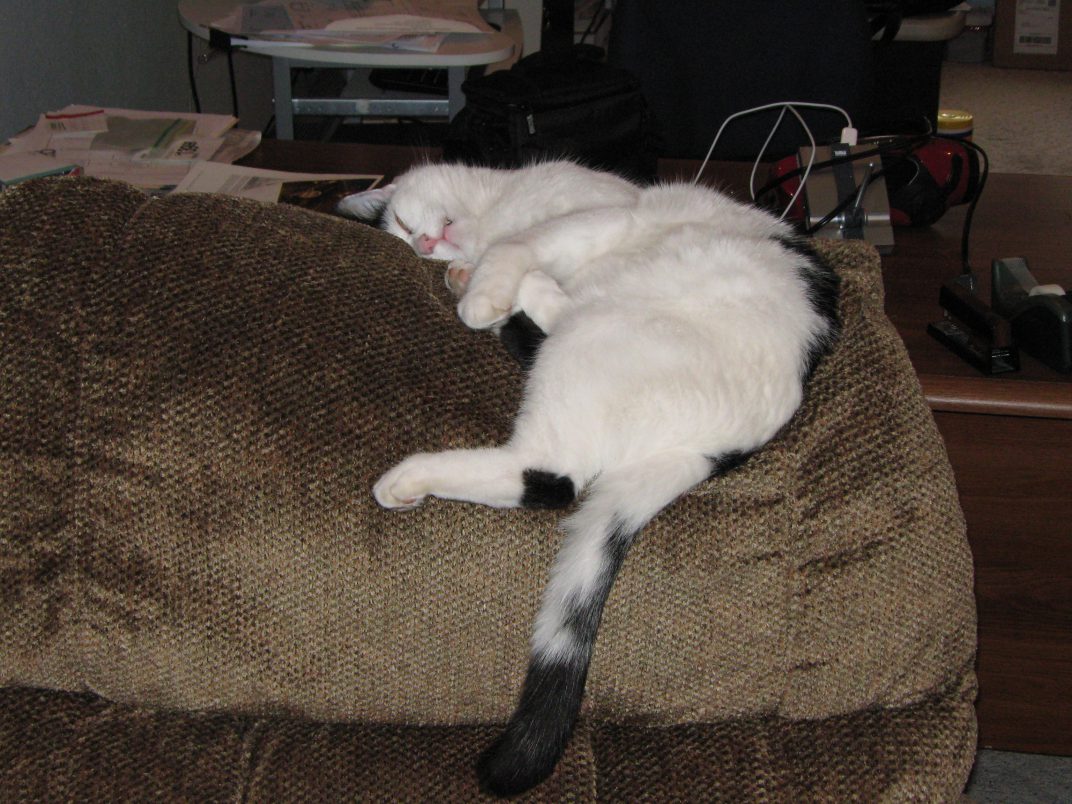
Skip forward to the present. This past weekend, Mel and I took Data (above) and Prancy (below), our rescue cats, out to a safe place in the Wyoming wilderness to see if they would enjoy it.

They did NOT. Data climbed right back through the open car door and hid. Prancy climbed into the car, but she hid under the hood, where I had to extract her from the top of the engine. (The kittens, by the way, all have good homes.)

The next day I drove back to our home in Nebraska with the cats. They hate traveling, and Data was especially vocal about it. He yeowled for two hours, as is typical. I became irate. I yeowled back. I finally found a wilderness area where I could stop and let them out because Data needed the litter box. He took off into the field and found a nice bush for privacy while Prancy just disappeared. I couldn’t find her anywhere, so I looked under the hood of the car.

There was a cat on the engine, but it was not Prancy!

Some poor little gray cat from our new home in Wyoming had climbed onto the engine for warmth sometime the night before, and ended up over a hundred miles away. Worse, he was so frightened he slid away and disappeared before I could catch him. I called and called and he never appeared. For a while I wondered if I was hallucinating. But I realized that we’d had cats hitch rides with us before. In fact, we found Data sitting on the top of a semi truck tire in a Walmart parking lot when he was a little kitten. He had obviously caught a ride the same way–under the hood or hidden somewhere under the truck. It’s a cat thing. Dogs don’t do it as far as I know. Now I have to ask all the neighbors in Wyoming if they’ve lost a cat, and confess that I unintentionally deposited their pet in the Laramie Peak Wilderness area east of the mountain pass. I can only pray that some kind soul in the homes nearby will take this little lost cat in.

From now on, before we embark on long trips, Mel and I will check under the hoods of our cars. You might never know how many little cats have sought warmth out of sight under your hood and found themselves lost in a strange and frightening world. Be kind to strays, because many of them have lost their homes and don’t understand why.


Posted in Hannah Alexander | Tagged , , , | 2 Comments