God the Creator

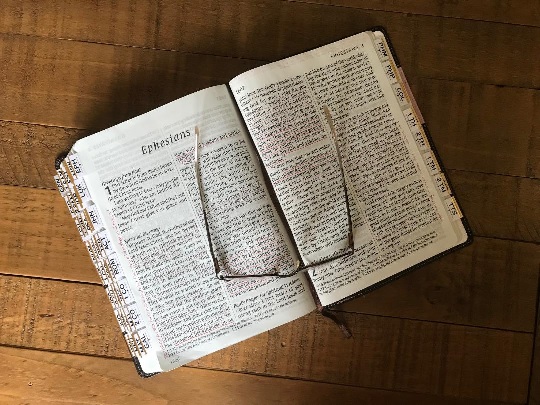
IMG_20180409_163542347

I recently started a Bible study about the names of God. I’m always fascinated by the many character traits of the names and titles of God. The names recorded in scripture carry so much significance. To study them gives us a picture of the almighty God, who is on one hand king, but also accessible to every one of us if we seek him out.

The first name I came upon is Elohim- God, the mighty creator. In the beginning, God created the heavens and earth. Genesis 1:1. Quite a way to meet our God as we begin the journey through the Bible.  The name tells of God’s creative power, but also his authority to speak words that would create a world from nothing. Then, as we continue through Genesis, we see how God fashions light from darkness, sky and waters, ground and seas, vegetation, day and night, animals and man in His image. You’ll never be able to convince me that the earth was created by accident. Not with all the intricacies we see every day in the world around us. In the beginning you laid the foundations of the earth, and the heavens are the work of your hands. Psalm 102:25

As an author, I understand creating. I come up with a story premise. From there I must flesh out the story, create a plot, characters, conflict. I take a myriad of ideas and pick out what works for the next story I will be working on. Let me tell you, this doesn’t happen overnight. It takes time to make sure every aspect of my story will work together. That’s just the beginning. After the ground work is laid, I will write the story, which takes on another layer of creativity. And after the book is written, there are revisions to make it the best version it can be. This takes months to accomplish. God created the earth, and everything in it, in six days.

There are many other outlets of creativity beyond writing. I’m sure every one of us can look at a family member or friends and see God working through them. We are made in the image of God, after all. Being creative does not only mean being an artist, look at those who research, those who plan cities and roadways, those who find ways to make life better for people around them.

I’ll leave you with this scripture. I pray you take a few minutes to ponder our wonderful creator, Elohim, as you go about your day and experience His greatness all around you.

Do you not know? Have you not heard? The Lord is the everlasting God, the creator of the ends of the earth. He will not grow tired or weary, and his understanding no one can fathom. He gives strength to the weary and increases the power of the weak. Even youths grow tired and weary, and young men stumble and fall, but those who hope in the Lord will renew their strength. They will soar on wings like eagles, they will run and not grow weary, they will walk and not be faint. Isaiah 40: 28-31

Tara Randel is an award-winning, USA Today bestselling author of sixteen novels. Family values, a bit of mystery and, of course, love and romance, are her favorite themes, because she believes love is the greatest gift of all. Look for her next Harlequin Heartwarming romance, THE LAWMAN’S SECRET VOW, available August 2018.  Visit Tara at www.tararandel.com. Like her on Facebook at http://www.facebook.com/TaraRandelBooks. Sign up for Tara’s Newsletter and receive a link to download a free digital book.

Posted in Tara Randel | Tagged , , , , , , , | Leave a comment

Do You Have a Why?

by Jim Denney

In 1969, I sat in a university lecture hall and listened as Dr. Viktor Frankl — psychiatrist, author, and Holocaust survivor — talked about living a life of meaning in a world that makes no sense. Hearing him describe how he survived the horrors of the Nazi death camps transformed my view of life.

ViktorFrankl-creditDrFranzVesely4

Viktor Frankl, photo by Dr. Franz Veseley, licensed under the Creative Commons Attribution-Share Alike 3.0 Germany license

Before the outbreak of World War II, Dr. Frankl was a psychiatrist in Austria’s largest state hospital. He treated patients who had either attempted suicide or were at risk for taking their own lives. As he interviewed severely depressed people, he discovered that the one factor that seemed to prevent suicide and heal depression was a sense of purpose.

If people had a reason for living, they could endure even the most painful circumstances. But for those without a reason to live, suicide became in inviting option. From those observations, Frankl developed an approach he called logotherapy, or meaning-centered therapy.

Dr. Frankl had nearly finished writing a book on logotherapy when he was arrested by the Nazis and sent to the Theresienstadt concentration camp. Transported by rail in a crowded, stinking cattle car, Frankl kept his precious manuscript hidden in his coat. Upon his arrival at the prison camp, he showed the manuscript to a capo — a prisoner who collaborated with the Nazis and helped guard the new prisoners. Frankl told the capo, “I must preserve this book at all costs.” The capo replied with an obscenity, then snatched the book from him and tossed it on the ground.

That book was Frankl’s life’s work, his reason for living. But at that moment, he realized that everything, including his book, would be stripped from him. How would he survive the grinding horror of the death camp? He’d have to find another reason to live.

He was eventually transferred from Theresienstadt to Auschwitz, and then to Dachau. He saw the human smoke rising from the chimneys of the camps. He lost his wife, father, mother, and brother in those camps. Many times, he came close to death — yet he managed to remain alive until the camps were liberated by the Allies. What kept him alive?

In that hushed lecture hall, my fellow students and I listened as Dr. Frankl explained, “I lived because I had a reason to live.”

He committed himself to re-writing the manuscript the capo had destroyed. Every day, he thought about his book. While digging trenches or caring for dying prisoners, he thought about his book. He’d find pencil stubs and scraps of paper, and use them to jot down notes that he hid from the Nazis. His determination to re-write his book even pulled him through a near-fatal bout of typhoid.

Dr. Frankl told us that those who survived the camps were the ones who held onto a reason for living. He quoted Nietzsche: “He who has a why to live for can bear with almost any how.”

After he and his fellow prisoners were liberated by the Allies, he re-wrote his book from scratch — and it was a much more powerful and compelling book because he poured into it all that he had suffered and learned in the death camps. He had the notes he had saved on scraps of paper, and he began writing the moment the Allied soldiers gave him pen and paper.

Dr. Frankl wrote his new manuscript quickly, and the book was published in 1946, the year after the war ended. He called it Man’s Search for Meaning, and the book has remained in print continuously since its first printing. The dream of writing that book saved Viktor Frankl’s life.

Standing before us in that lecture hall, Dr. Frankl told us that, while digging trenches in the bitter cold, he would visualize himself standing in a warm and brightly lit lecture hall, teaching the principles of logotherapy to young students. I felt a tingle down my spine as he said that, because I was one of the students in that brightly lit lecture hall. I took part in the fulfillment of the vision that kept him alive during his worst days in the death camps.

What is your vision, your calling, your purpose for living?

You and I have the highest calling and grandest purpose in the universe. We serve the Creator. We know His Son. We share the Good News wherever we go. Whatever you are going through, whatever you are struggling with, whatever you are enduring right now, remember your purpose.

You have a Why to live for, and His name is Jesus. Keep your focus on Him and on the purpose for which He has called you.


___________________________________

battle-before-time-cover-1


Note: Battle Before Time, the first book in my newly revised and updated Timebenders series for young readers, has just been released in paperback. Click this link to learn more.

And if you’d like to learn more about how to write faster, more freely, and more brilliantly than you ever thought possible, read my book Writing In Overdrive, available in paperback and ebook editions at Amazon.com. —J.D.


Posted in Jim Denney, Uncategorized | Tagged , , , , , , , | 3 Comments

The Things I’ve HEARD!!! (by Hannah Alexander)

Having lived in small communities all my adult life, I know the power of hearsay. Rumors. In fact, one of my favorite games as a kid was playing “Telephone,” when we would begin with one statement, whisper it around a circle of friends, and then hear what that statement evolved into. It was often hilarious, often confusing, and just plain fun.

Here are some of my favorite friends from high school. We played this game.

Sometimes the fun gets a little out of hand. That can happen in a church, in town, in clubs. It can actually hurt people. I recently heard several juicy tidbits of information that didn’t quite ring true. Since they affected me, I checked them out. Sure enough, without naming names, I discovered that no, old farmer Mitchell did not shoot through the window of his neighbor’s house in the middle of the night. What happened was that he shot at a fox headed toward his henhouse. That bullet didn’t even hit that house. It didn’t hit the fox, either.

I also discovered that, yes, the pastor of a certain church in town did have a relationship with a new woman in town. That woman just happened to be his sister. Nothing wrong with that. By the time word spread that the woman was his sister, the rumor had thrown a kink in the family relationships, and reverberated throughout the church.

I have heard some very shocking pieces of information lately.  I found some of them to be true, some false. For instance, the man working on landscaping grounds around the home we’re trying to sell does charge for his services, but the bill is nowhere near $45,000. Gasp. Thanking God for that!

Yes, some friends of mine were forced to sue an insurance company to make them pay for the damage done in an accident. It paid their hospital bills, however. It didn’t buy them a new house and set them up in a cushy business.

I can’t help wondering, casually, what rumors might be flying around about us. Do you? Whatever I hear that sounds outrageous, I either dismiss it as a grossly exaggerated nugget of truth, or, if it affects me, I gently dig until I get to the bottom of the rumor. I never believe much of what I hear, and sometimes I don’t even believe what I see with my own eyes. The Bible has some things to say about gossip and the people who spread it. Don’t allow yourself to be caught in that trap.

Posted in Hannah Alexander, Uncategorized | Tagged , , | 2 Comments

Character Depth

hands_love_holding_hands_together_human_caring_hands-817427.jpg!d

By Nancy J. Farrier

I sat beside my dad in his room at the nursing home and watched my mom leave with the burnt sugar cake she’d made for his birthday. We’d already done the song and candles. She wanted to share the cake with staff members before we all sat down for our dessert and time together. This was my dad’s first birthday since he’d been in the nursing home and this celebration had a bittersweet quality.


As mom disappeared through the doorway, dad leaned close to me and said, “Don’t tell your mom, but I’ve never liked that cake.”


Shocked speechless, I gawked open-mouthed for a minute before blurting, “You don’t like burnt sugar cake?” He stared at me with his bright blue eyes and his mouth twisted in a wry expression. By this time, dad rarely spoke and before long he would lose all ability for speech. One of the final things he verbalized to me stated that he’d never liked the special cake my mom made just for him all these years. Why?


The shock my dad gave me reminds me of those times I’ve read a surprising revelation by a character in a book. Or, the times I’ve written in those twists. You know what I mean–the moment when a character does something startling and you have to consider why they acted in such a way.


If the author does a good job building the character, the reader can look back at the clues and see what led up to the momentous decision. The reader has an ah-ha moment when all the little pieces click in place. What appeared to be a random action or statement, becomes a revelation that leaves the one with great satisfaction and understanding of why it all took place. There is now an added depth to that character, leaving the reader with greater appreciation of the story.


Why did my dad say he didn’t like the cake my mom baked for him? As I pondered this question, I discovered two clues. First, my dad loved pie. He always said he liked two kinds of pie—hot and cold. He ate cake, but didn’t like cake like he did pie.


Second, my dad had the greatest love for my mom. He knew the burnt sugar cake took finesse to make. (The sugar had to be cooked just right to bring out the flavor without a burned taste.) Because mom worked so hard, he ate that cake for years and never let anyone know he didn’t like the flavor. None of us had a clue because he never complained.


When I considered his surprising statement in light of his love of pie, and his love for my mom, I had a deeper understanding of my dad’s godliness and an admiration for him that I hadn’t known before. This is the type of divulgence an author needs to strive for in their books.


Posted in Nancy J. Farrier | Tagged , , | 2 Comments

A Mourning Event

The last time I blogged, I told you about my visit to the Chatillon-DeMenil Mansion in St. Louis. Two weeks after my first visit to the mansion, I returned to attend A Mourning Event. You can never be sure if these historical “reenactments” of the period and/or event will meet expectations, but this one was very well done.

Bear in mind that mourning customs and length of mourning period depended upon social status, wealth, and geographic location. So, if you’ve read some different customs or time periods, I’m not surprised. I’ve seen differing customs, as well, but the information given at this event was for a wealthy family with servants living in St. Louis, Missouri after the Civil War.

Of course, black was the color of the day. Black bunting draped the front of the house, a black wreath stood on a wire stand near the door, and the butler was, of course, dressed in black and greeted us with the somber countenance of an employee mourning the death of his beloved employer.

Deep mourning was the first stage of mourning for a woman, and it immediately followed the death of a husband, wife, or child. Mourning clothes were generally plain with little or no adornment. A widow in deep mourning would wear all black clothing and jewelry. If out in public, she wore gloves and a black veil covered her face. Hats were not to be worn for mourning. Instead, bonnets covered in crape were worn by the grieving widow. She did not speak with anyone but her family or closest friends. She did not attend parties or gatherings and would basically seclude herself from the public in general. She would stay in this deep mourning for at least a year and a day. The hankies pictured at left depict those used during different stages of mourning.

Second stage mourning followed deep mourning and lasted around 9 to 12 months. Full mourning collars and cuffs were replaced by white, veils were taken off, crape was discarded, and jewelry of a wider variety was worn. By this second year the woman could add lace. The veil was of black crape, and very long, but by the second year it could be shortened.

Half mourning was the last stage of a woman’s mourning ritual. It was during these last 6 months that the widow could include the addition of lilac, lavender, violet, mauve, and gray. She was no longer limited to just black with a touch of white. She would use black and white ornaments for evening wear, bonnets were white, lavender silk or straw. Dresses with bold prints were also acceptable fashion. The dress at right would be for half mourning and the woman is shown with an infant casket.

For specific periods of time, depending on their community mores, a widow would not leave her home and did not receive any visitors. After a respectable time, she would then send out black edged cards advising friends and family that her time of heavy mourning had passed and she could now receive visitors. In general it took about two and a half years for a woman to complete the mourning process over her deceased husband. With each stage she slowly became part of society again. The picture above is the type of stationery that would have been used by the widow.

For a man, mourning was quite different. Men were needed to take care of the family and the business, therefore he was needed to return to his occupation as soon as the deceased was buried. A male’s mourning garb was his best dark suit with a weeper (made of crape) wrapped around the hatband of his hat. A man might wear a black cockade on his lapel and possibly a black armband as well.

Once a widower’s wife was buried, he may look for a new wife soon after – especially if he had young children at home or if she died giving birth to a living child. Here’s the most unique twist—if he re-married shortly after his deceased wife was buried, his new wife would then mourn for the first wife, wearing all the mourning clothing and going through the stages as described above! Now that would be a very difficult and strange way to begin a marriage, don’t you think?

May you find joy as you explore the past. ~Judy

Posted in Uncategorized | Tagged | Leave a comment

Step Nine in our Journey

I hope you’ve been enjoying my journey to tell how I developed my Ahab’s Legacy book series. Here’s the next installment, this one about Book Three.

 Son of Perdition final coverSon of Perdition is the coming-of-age story of Timothy Jacobs, a young man determined not to be like his infamous father. But how should I develop this character? What setting should I use? I could have come up with a clever tale and then shaped history to fit my plot. But that’s against everything I believe in as a historical writer. Instead, I studied my chosen era and shaped my protagonist’s life around what really happened. (At left is the e-book cover designed by Jeff Gerke.)

Of course, the first thing I wanted to do was tell a compelling, character-driven story, one with plenty of internal and external conflicts. In this case, I’m creating the tale of a young man determined not to be like his father, whom the maritime community regards as evil. Starting out, all I knew was that Timothy would, like any good protagonist, run into many obstacles on his life journey, one of them being a major war and another being a worthy adversary.

For Timothy’s antagonist, I chose Isaiah, the son of Mr. Starbuck, Captain Ahab’s late, lamented, and godly first mate. (In Moby Dick, both Ahab and Starbuck have young sons.) And, of course, a handsome young man like Timothy must have a love interest, so I gave Isaiah a younger sister named Jemima, a fairly common name for girls on Nantucket Island during that time. Because Isaiah despises Timothy for being the son of Ahab, he creates all kinds of havoc when Timothy and Jemima fall in love. Now conflicts abound.

Next, because I had been date specific in my first two books, I chose a timeline of nine years, 1857–1865, which would include events before and during the Civil War. Timothy comes from a seafaring family: his father was a whaler, and his stepfather is a cotton importer, who also just happens to smuggle slaves out of Norfolk and into Boston, an activity based on actual historical events. Therefore, Timothy will love the sea and will seek a seafaring career. Coming as he does from a well-to-do family, he will be well-educated and will train for a position of responsibility and leadership. Thus, the next logical step for him is to receive an appointment to the United States Naval Academy in Annapolis on his way to becoming an officer in the U. S. Navy.

Beginning my story in 1857, I decided to use names of real-life faculty to interact with my fictional characters, placing these characters in situations and conversations that actually could have happened between faculty and students. I was careful not to malign anyone or have them do anything out of character. If anything, I might have gone a bit overboard in my heroic portrayals based on what I had read about these people and quotations about them from their contemporaries.

EPSON scanner imageThis brings me to the research part of my project. I started looking for books that would give me a true history of the Naval Academy. Among the many resources I found on Amazon.com, a golden jewel of information rose above all the rest: The Spirited Years: A History of the Antebellum Naval Academy, by Charles Todorich (Naval Institute Press, 1984). When I got my hands on this book, I knew heaven had opened and manna had come down. This is the definitive book on the antebellum U. S. Naval Academy, just what every author dreams of owning. It contains details of what and whom my hero would encounter, even obscure and complex details needed to reveal the daily lives and personalities of the midshipmen at the academy.

This book was Charles’s master’s thesis at the University of Maryland, meaning he did extensive and detailed research and took years to write it so he could get it right. His credentials as a naval academy graduate and his degrees in law and American history gave me confidence that I could count on his work being accurate. While writing my novel, I travelled to Annapolis with my husband and we had only two hours to search the stacks at the Academy’s Nimitz Library. No way could I ever have dug out everything I needed. Fortunately, Charles had done the work for me. I could use his book to frame the action in mine.

As a non-military person, I needed to find out what it takes to make a naval officer. I needed to know what the attitudes and ideals of the times were, how the academy personnel and students got along with the citizens of Annapolis, and what the young men did when the Civil War broke out and cherished friendships among northern and southern cadets were shattered. Charles writes about all of these in detail in The Spirited Years. These are the details that add TEXTURE and REALISM to my story.

Son of Perdition-Cover1The value of historical fiction is that it helps to make the past personal and relevant. Charles’s book has the best of both because he personalizes the midshipmen through real stories. I believe that the best fiction includes the personal human dramas of history. Since he had done all the research, all I had to do was wander through the orchard and pluck the ripe fruit from the trees. In addition, and actually most important, he gave me insights into the kind of men who stayed the course through the rigorous academy training when others were dropping out. (At left is the original print book cover.)

Here are some of the specific parts of his book I used to frame my story:

First, the actual buildings, the stage for my play. Now I knew where the midshipmen lived, studied, ate, drilled, attended class and church services, and played.

 Second, the midshipman course of study, essential to reveal the rivalry between my protagonist, Timothy Jacobs, and his antagonist, Isaiah Starbuck, each of whom was determined to be first in his class, an honor that actually went to Midshipman William T. Sampson. I certainly did not change that bit of history.

 Third, the administration and faculty, including Superintendent George S. Blake, especially his character, personality, demeanor, physical description, and how he interacted with the students. I also learned that Blake’s wife took on the responsibility of teaching the young men proper social behavior and even invited them into her home, as did many other citizens of the city.

Fourth, the interaction between the people of Annapolis and the Academy also includes the annual Winter Ball and other events in the Academy’s lively social life, which are essential to any young person’s coming-of-age. I also appropriated several actual midshipmen, such as Alfred Thayer Mahan, George Dewey, William T. Sampson, and others to interact with my characters. I took special care to include one Charles W. Flusser so that in my small way I could honor this most popular and gallant young man who died in a naval battle during the Civil War. Before reading Charles’s book, I’d never heard of this heroic patriot. Another Academy faculty member, Thomas T. Craven, developed and oversaw the summer cruises, upon which the midshipmen learned seamanship. The details of the summer cruises provided several dramatic moments in my story.

Finally, because my timeline included the Civil War, I was greatly appreciated Charles’s discussion of the arguments among the midshipmen over slavery. This is the most important historical issue I hoped to bring forward in my novel. Everyone in American knows about the Civil War. But because of some of the poorly researched or outright misleading books and movies, many young people have been confused and ill-informed about what really ignited that terrible conflict that took the lives of 600,000 of our citizens.

During his research journey, Charles uncovered first person letters and narratives that revealed the agony each young man went through in deciding what he would do once war was imminent. I incorporated his accounts into my story. For instance, he wrote a short passage in The Spirited Years describing the departure of southern midshipmen and the heartbreak it caused among close friends. Next time, I’ll post my rendering of that same scene using my fictional characters, two southerners and two northerners.

After finding The Spirited Years, I contacted Charles and we became friends. He served as my advisor and approved the final manuscript. Because of his help, it’s a project I’m very proud of.

Here’s the story:

MonongehelaTimothy Jacobs, a handsome midshipman at the U. S. Naval Academy, is determined not to sail the disastrous course that destroyed his infamous father, Captain Ahab. Certain of his own goodness compared to the man he both hates and admires, Timothy feels his good works are salvation enough. But after he is wounded during a Civil War sea battle, his all-consuming rage at God launches him on a bitter journey all too reminiscent of the father he vowed not to be like. (At right is the Monongahela, the ship Timothy served on during the Civil War.) Will Timothy learn the lessons his father ignored? Will childhood sweetheart Jemima show him the account of his father’s ill-fated voyage in time? Can Timothy accept that both he and his father have misunderstood the merciful, loving nature of God? Don’t miss this stunning conclusion to the Ahab’s Legacy Series, which began with Ahab’s Bride. “Louise M. Gouge has once again combined history, romance, and adventure to create a story as grand in sweep as the distance from the bottom of the sea to heaven on high.” Charles M. Todorich, Author the The Spirited Years: A History of the Antebellum Naval Academy

If you’ve missed any steps on this journey, please check this list of all my posts on Ahab’s Bride.

Posted in Uncategorized | Leave a comment

Happy May!

texas wildflowersToday is the first day of May, a month in which there are two major holiday. Mother’s Day on May 13th and Memorial Day on May 28th. It’s also a month were many of the states begin to thaw out from the long winter’s chill.

But here in Texas, spring is in full bloom. The wildflowers are popping up in the pastures and along the roadways. The trees are green again. New life is springing up everywhere.

This is one of my favorite times of the year. The famous Texas humidity hasn’t made an appearance yet. The days are warm and the evenings cool. Perfect.


Past Sins

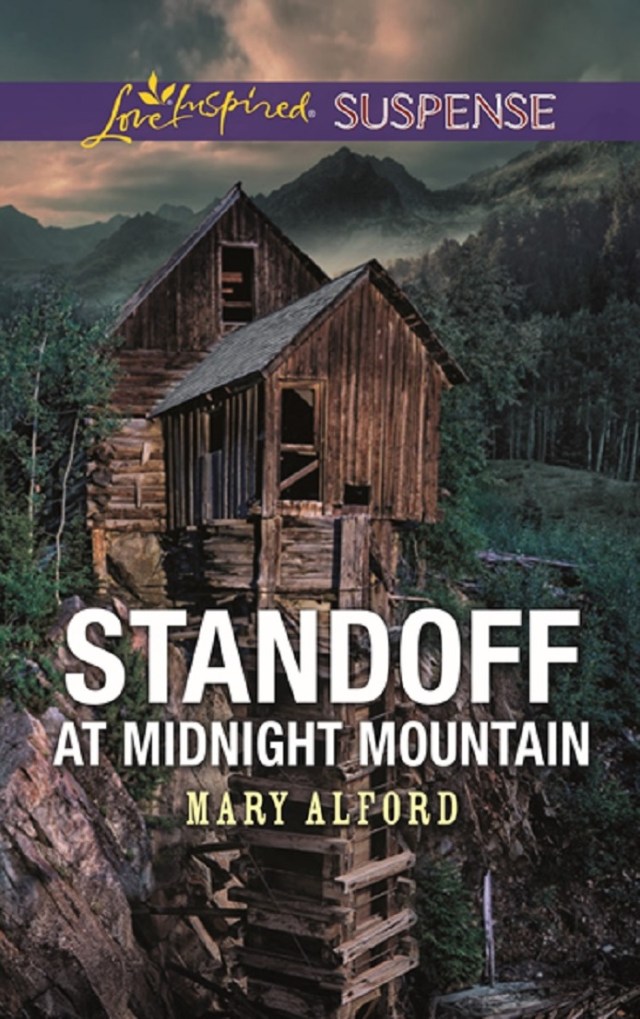
It’s the time for new beginnings and I have a brand new release out this month entitled Past Sins. This is the third book that takes place near the fictional town of Soaring Eagle, Wyoming.

In Past Sins, FBI Agent Samantha Morning Star barely survived a serial killer’s knife when the Night Slasher captured her, intent on making her his next victim. Samantha’s narrow escape still haunts her, sending her fleeing to the one place where she has always felt safe. The Durante Mountain Cheyenne Indian Reservation in Northern Wyoming. But Samantha’s past sins are all there waiting for her. The young boy she once loved and left behind is now all grown up and the chief of police for the reservation.

Chief Zack Standing Elk can’t believe it. The woman who tore his hearts to shreds is back. But Samantha isn’t the same person she once was when she left the reservation behind after her grandmother’s death, insisting that he not wait for her. Samantha is one troubled soul. It isn’t long before he realizes the reason behind the fear in her eyes, when the killer who took her hostage follows her to the Cheyenne reservation determined to claim her as his once more.

With the clock ticking on the Night Slasher’s latest victim, Zack’s past sins come back and haunt him as well. Can he find out the Slasher’s true identity before he takes another innocent life? And will he be able to stop the killer who is coming after Samantha full force?

So, wherever you are, I hope spring has made an appearance there. Happy Spring!

All the best…

Mary Alford

http://www.maryalford.net


Posted in Uncategorized | Leave a comment

What Really Matters by Vicki Hinze

Vicki Hinze, Christians Read, What Really Matters


Life throws a lot at people, and it starts immediately. As we grow and learn, it’s amazing how much we soak up like sponges and grasp. We learn what to do, what not to do. What to say and not say. What evokes a positive response and a negative response. Things that hurt and heal. Anger and soothe. Good and bad.


As we grow and progress, we get a lot of conflicting information, guidance and instruction. Opinions are plentiful and everyone has different ideas about dos and don’ts. Eventually, whether by trial and error, trial by fire, or by stumbling onto a less traumatic path, we get it. We learn to assign weight to what is important and what isn’t.


Often, especially early on, we deem everything important. But with experience and exposure, the weight we give to specific things changes.


Earlier in life much attention is on building the life we want. We get into our heads a vision of success, and we set out to manifest it. (It’s worthy of mention that our vision of success changes as we do.) Our changes might be voluntary—we decide something is or is not working for us—or involuntary. Something happens and we’re forced to change, whether or not we want to change.


The point is, that during different phases of our lives, we assign different values to what really matters. And in the latter stages, we often look back at earlier ones and wonder why we thought then that what we sought mattered. In our current circumstance, it doesn’t. But when it happened, it was—at least, to us back then. That’s a lesson to us.


We can’t view our personal history of what is really important from this new phase of our lives. We need to view our personal history of what was really important from the phase in which we experienced it. In that way, we are like our nation. We look back at history a hundred years ago, or two hundred years ago, and we cringe at some of the things we find. Things we would never consider acceptable today. But in the context of that time, we see those things were where the nation was then. Collectively, we learned, we grew, we evolved and we changed.


We do that in our personal lives, too. And just as we would be foolish to forget the lessons of our nation’s past (and doom ourselves to needing to learn those lessons again), we would be foolish to forget our personal past lessons. We endured the rough patches once. We don’t want to have to repeat them.


What really matters is that we continue to learn and grow. We never reach a phase in life where we stop learning and growing and evolving. Our priorities shift and change. What really matters to us shifts and changes, too.


As the phases advance, we place less importance on the physical, we’re more balanced on the emotional, and we focus more intently on the spiritual. We understand the circle of life and that eternity lasts far longer than the blink in time we spend as mortals. That every second of life is a gift and a treasure. That the soul is eternal and requires care as much as the physical body requires care.


Wisdom encourages us to respect all phases of our lives. To grasp early that the spiritual aspect of ourselves is the phase that will govern us long-term. While what we do in each phase of life matters and is important, it is the sum of all phases that brings us to the one that will have the greatest and most significant impact in our lives.


Because that is so, we dare not wait for that spiritual phase to incorporate the spiritual into our lives. In every phase, we should deliberately consider the physical, emotional and spiritual impact of what we say and do.


All three intertwine to become the whole that is us. All three play a vital role in who we were, are, and who we become. And all three are important. Knowing that, understanding that, is what really matters.


Posted in Vicki Hinze | Tagged , , | Leave a comment

Wildflower or Weed?


By Marilyn Turk

Am I a Weed or a Wildflower?

When I go for a walk in our neighborhood, I head for the nature trail, preferring trees and greenery to asphalt and concrete. One of the benefits of the trail is the opportunity to discover wildflowers that appear unbidden and unexpectedly in a natural habitat.

I love their intricate details and lovely colors – their presence brings me joy. And I’m reminded that mankind did not plant them there. Only our Creator placed them where he wanted them as he designed the landscape. I can imagine how, as an artist, he proudly appointed each flower its place in his piece of art. They were not accidents. They were not afterthoughts. They were no less important than any other plant or flower in the world.

A friend of mine has several acres of land. A gardener herself, she took pictures of the wildflowers on her land. Then she mowed them down, deeming their presence unwanted, relegating them to the status of less desirable weeds.

Who decided whether a flower is a weed or not? Obviously, horticulturists picked and chose certain plants to promote and others to relegate as unwanted. But what did the Master Gardener think about each plant? What was its unique purpose?

Unfortunately, man has a way of judging whether people are worthy or not as well. Some are considered flowers while others are relegated as weeds. But could a weed become worthwhile? We’ve learned that certain wildflowers are necessary to bees and bees are necessary to pollination. Without the wildflowers, the bees are disappearing. So now, gardeners are being encouraged to plant the wildflowers they once thought unimportant.

Thank God, He accepts me whether man thinks I’m a weed or a flower. Because He believed I was redeemable, no matter what others thought. No matter what I thought.

He redeemed me and made me a “lily of the field.”

“So why do you worry about clothing? Consider the lilies of the field, how they grow: they neither toil nor spin; and yet I say to you that even Solomon in all his glory was not arrayed like one of these.” Matthew 6:28-20

A weed in my garden I kept.

Single flower on weed. Isn’t it lovely?


Posted in Marilyn Turk, Uncategorized | Tagged , , , , | Leave a comment

Our Past Shapes Who We Are by Margaret Daley

Our Past Shapes Who We Are

By Margaret Daley

In Lone Star Christmas Rescuemy heroine is found passed out in Big Bend National Park by the hero, Texas Ranger Drake Jackson. “Kay” has amnesia and doesn’t know how she ended up there with a baby. Question after question overwhelms her mind. She has no idea who she is. Have you ever imagined what it would be like, not remembering anything in your past? How do you know even simple things like what you enjoy eating or your favorite color? It also makes you wonder about what kind of person you are?

Lone Star Christmas Rescue copy 2

When I develop a new character, I start by building his/her past. What a person goes through as she grows up shapes who she is. But with Kay, I couldn’t do that the same way I do for other characters. I started with a blank slate, putting myself into her shoes. I show her personality developing as she discovers who she is. It was fun as the writer to discover who my character is as she goes deeper into the story and begins to remember parts of her past. She has to learn to trust herself—and the memories coming back to her. But that doesn’t stop her from questioning what she thinks is true because it feels right. It doesn’t stop her from wondering if the memories are real.

Her past meets the present and sometimes there are clashes between the two. Amnesia can come from both physical and emotional trauma. In Kay’s case, it was more emotional. She went through a horrible ordeal, and as she remembers the past, she wants to deny it. But she has to learn to reconcile the two.

Lone Star Christmas Rescue

By Margaret Daley


A baby’s frantic cries lead Texas Ranger Drake Jackson to an injured woman in Big Bend Park, the infant by her side. But “Kay” has no idea who she is or what happened. All she seems sure of is that she’s in terrible danger. When someone comes after her—determined to snatch the child—Drake takes her and little Kaleb to his family’s ranch to protect them. But with the attackers circling closer as Christmas approaches, the guarded ranger knows they won’t be safe there for long. Vowing to uncover her identity and catch her attacker, Drake plans to give mother and child the holiday they deserve…safe by his side forever.

Buy Links: Amazon, Barnes and Noble, iBooks, Kobo, ChristianBooks, and Google Play


Posted in Uncategorized | 2 Comments

The Right Gear by Hannah Alexander

Have you moved lately? I don’t mean getting out and moving your body, but moving your household to another place. We did that this past weekend and I discovered how out-of-shape I have become. We (meaning mostly Mel) filled a ten-foot Uhaul truck with dozens of boxes filled with files, plus enough furniture to keep us operating  while living in our rental. We’re still working on our old home to get it ready for sale, but Mel has a job out of state, so we have to be in two places for a while. The rest of the furniture will have to come later, and we’ve already promised we’ll hire a professional crew to do that. I will need to hit the sidewalks, the hiking trails, even the elliptical, and get some tone back in my muscles–so yes, that kind of moving is vital, too.

This is Prancy with her babies. She was a stray who came to us far too young to be pregnant. She wasn’t equipped, and she would have died had we not given her supplemental food.

When moving, it was important for Mel and me to recognize our need for the right equipment for the move. I found that out the hard way when I drove the Uhaul on Sunday (I’m the die-hard driver in the family.) I didn’t wear the right shoes for the job and I didn’t get out and stretch enough on the five-hour drive. I’d have been fine if the Uhaul had been equipped with cruise control, but it wasn’t. That would be the right gear for me.

As soon as we reached our destination, I changed out of my walking shoes and put on my sandals. Yeah, that was a huge mistake.  They were Birkenstocks, but they still didn’t have the right padding for the amount of work I had to do. Four hours later, after pounding back and forth on the sidewalk and hard tile floor carrying boxes and moving mattresses and chairs, I didn’t realize just how bad that mistake was. The next day, yesterday? I could barely walk.

At first I thought I was just getting too old to do this stuff, but that can’t be right. I’m not THAT old! Besides, twenty years ago, Mel and I hiked several trails in Utah’s Canyonlands National Park, and after two days of hiking that hard slickrock, my knees were worse than they are today.  I’m thinking next time we move I’ll wear my hiking boots for support.

Have you ever run out of the house without a jacket or umbrella and been caught in a sudden rainstorm? Or have you ever taken a trip without directions, or even a map? I still prefer a map to GPS, because I’ve found it’s possible to cut a lot of time off my trip if I can find a shortcut on a well-drawn map. GPS just doesn’t pick up on all those secondary routes–and some of those routes hold a lot of beauty. Wise is the person who leaves the house equipped for whatever might be necessary for the day.

All these things are important for successful living, I believe. Still, one thing I have always known, and yet have taken for granted too often, is that the Bible is the most important item of preparation for any plan. When I run off half-cocked without a close connection to God’s Word–or to God through prayer–I find I lose spiritual energy halfway through the task at hand.

Oh, sure, I catch quick messages from friends and family on Facebook, reading a verse or two here and there, and we have a great pastor at church on Sundays, but I can’t just rely on someone else’s word. Reading my own Bible consistently is what I call being truly equipped. It grounds me, keeps me sane, keeps me moving in the right direction. That doesn’t mean I have to understand everything I read, because I know I never will in this lifetime, but God can speak to me through His written Word and keep me tuned to His will throughout the day.

Before you face your day, make sure you’re equipped with the right gear. Keep the Word of God in your heart as you choose the right clothing to wear, the proper protection for the weather–especially the way the weather has behaved this year–and the proper equipment for work. I don’t know why it seems some of us have to be reminded of this so often, but once again I’m determined to hide God’s Word in my heart, that I might not sin against Him.


Posted in Hannah Alexander | Tagged , | 2 Comments

Blueberry Season by Tara Randel

It’s blueberry season here in Florida. I’m crazy about the super fruit and look forward to this time of year. So when the selection in the grocery stores grew slim, I was worried I might miss out on my fresh blueberry fix.

Then I found a U-Pick farm a mere ten minutes from my house. Excited about the news, I rose early on opening day and headed over to check it out. I was given two small buckets and proceeded to find an empty row in the fifty acre property.

IMG_20180405_095708870


IMG_20180405_091407546

The day was perfect. Cool temperatures, bright sunshine and time alone. Don’t you find that sometimes you need solitude? Sure, I was picking berries along with a bunch of other people, but because I was by myself, I spent the time talking to the Lord. Quietly singing worship songs. I hadn’t expected this side benefit, but it actually ended up being the most important part of my outing. Just me and the Lord. Quality time. No pressure, no hurry to be anywhere. Two hours picking and being close to God.

IMG_20180405_094014593_HDR

On the way out, I couldn’t resist some beautiful vegetables for sale.

IMG_20180405_114947059

So my day berry picking ended up being special time with God. I highly recommend time away from the everyday routine. Too often I let writing commitments, deadlines and schedules keep me from being spontaneous.  So I say, plan a detour. You never know what might come of it!

Enjoy the beautiful spring season wherever you live!

Tara Randel is an award-winning, USA Today bestselling author of sixteen novels. Family values, a bit of mystery and, of course, love and romance, are her favorite themes, because she believes love is the greatest gift of all. Look for her Harlequin Heartwarming romance, HIS ONE AND ONLY BRIDE, available now.  Visit Tara at www.tararandel.com. Like her on Facebook at http://www.facebook.com/TaraRandelBooks. Sign up for Tara’s Newsletter and receive a link to download a free digital book.

Posted in Tara Randel | Tagged , , , , , | Leave a comment

C. S. Lewis, George MacDonald, and the Life-Changing Power of Stories

by Jim Denney

Clive Staples Lewis — “Jack” to his friends and family — was raised in the Church of Ireland. The death of his mother when he was nine years old shattered his happy childhood. By age fifteen, he turned away from the Christian faith, becoming an angry atheist and living (as he would later put it) “in a whirl of contradictions. I maintained that God did not exist. I was also very angry with God for not existing.” To his mind, the universe was nothing but “a meaningless dance of atoms.”

GeorgeMacDonald

George MacDonald (public domain)


In the fall of 1916, seventeen-year-old Jack Lewis stood on a railway platform in the village of Leatherhead, on the outskirts of London. He would soon begin his studies at Oxford and was looking for a novel to read before he would have to turn his full attention to matters of Greek, Latin, philosophy, and English literature. At the station’s bookstall, he noticed a pocket-sized hardcover — an Everyman’s Library edition of Phantastes: A Faerie Romance by George MacDonald.

The book was inexpensive — Lewis paid a single shilling for it — yet it was about to change his life.

The train pulled into the station and Lewis boarded. As the train transported Lewis past one village station after another, the book transported him into another world, an entirely different way of looking at reality. Phantastes is the story of a young man named Anodos who is magically drawn into a fairyland where he experiences otherworldly temptations and adventures. In his 1955 autobiography, Lewis recalled the effect his first reading of Phantastes had on him:

It is as if I were carried sleeping across the frontier, or as if I had died in the old country and could never remember how I came alive in the new. … All was changed. I did not yet know (and I was long in learning) the name of the new quality, the bright shadow, that rested on the travels of Anodos. I do now. It was Holiness.

Lewis also paid tribute to the impact Phantastes had on his life in his 1945 fantasy novel The Great Divorce, in which he pictures himself encountering George MacDonald in the afterlife:

“I don’t know you, Sir,” said I, taking my seat beside him.

“My name is George,” he answered. “George MacDonald.”

“Oh!” I cried. “Then you can tell me! You at least will not deceive me.” Then, supposing that these expressions of confidence needed some explanation, I tried, trembling, to tell this man all that his writings had done for me. I tried to tell how a certain frosty afternoon at Leatherhead Station when I had first bought a copy of Phantastes . . . had been to me what the first sight of Beatrice had been to Dante: Here begins the New Life. I started to confess how long that Life had delayed in the region of imagination merely: how slowly and reluctantly I had come to admit that his Christendom had more than an accidental connexion with it, how hard I had tried not to see the true name of the quality which first met me in his books is Holiness.

Lewis found something tremendously attractive in Phantastes, a quality he couldn’t quite put a name to it first. Though he was drawn to MacDonald’s imaginative tale, he pitied MacDonald for saturating his fantasy with his Christian beliefs. Lewis thought that MacDonald was a fine writer, in spite of his religious naïveté. Only years later did Lewis realize he was attracted to the imaginary world of Phantastes not in spite of MacDonald’s Christian worldview, but because of it — because of the quality of Holiness that illuminated every detail of MacDonald’s story.

Lewis later observed that, even while he was still an angry atheist, the writings of George MacDonald converted and baptized his imagination. “I know nothing that gives me such a feeling of spiritual healing, of being washed, as to read MacDonald,” Lewis wrote. Though Lewis would not convert to theism until 1929, and would not convert more specifically to Christianity until 1931, the gradual opening of his mind to the existence of God, Joy, Holiness, and the Christian faith began in 1916, when he opened a pocket edition of a fantasy novel by George MacDonald.

This incident in the life of C. S. Lewis reminds us of the life-altering power of literature in general, and fiction in particular. Whenever writers sit down to tell their tales, they should carefully weigh the impact of the words they wield. Those words have enormous power to affect the mind and emotions of the reader, and to alter the course of a reader’s life.

___________________________________

battle-before-time-cover-1


Note: Battle Before Time, the first book in my newly revised and updated Timebenders series for young readers, has just been released in paperback. Click this link to learn more.

And if you’d like to learn more about how to write faster, more freely, and more brilliantly than you ever thought possible, read my book Writing In Overdrive, available in paperback and ebook editions at Amazon.com. —J.D.

Posted in Jim Denney, Uncategorized | Tagged , , , , , , , , , | Leave a comment

Lyn Cote Asks-Have you ever heard of America’s First Self-Made Female Millionaire?

Have you ever heard of Madame C J Walker? She was the first self-made (not inherited wealth) woman millionaire in the US.

This video is just a quick dab of info. If you click the tab above, marked Women Who Made History, I have a  longer video that tells much more about this remarkable woman.

Empowering Other Women

Not only did she make a million but she empowered other women to make a living and give them self-confidence in a world and time, that told women they were inferior and without value. This is what I love about America. Even in the time of Jim Crow, an African-American woman was able to pursue her dream, make her fortune and help others. I hope this nation will never lose its economic freedom or any other.

Believe it or not–

-Madame Walker’s products are still being sold. Here’s the Facebook page. Why not drop by and LIKE it? I did.

Facebook https://www.facebook.com/pages/Madame-CJ-Walker-Hair-Care-Products/284553191557422

And here is the website about her company and her story.

http://www.madamewalker.net/

Do you know of any remarkable woman that has been overlooked? Tell me about her.–Lyn

My latest strong heroine, Christiane.


A young beauty flees the French royal court,

Christiane moves into the heart of the American rebel elite.

But one man can’t be forgotten-once her friend-now her enemy. 

Will he be destiny? http://bit.ly/2uuxeQA


Posted in Lyn Cote, Uncategorized | Tagged | Leave a comment

Step Eight in our Journey

As Mary Alford said in this past Tuesday’s post, readers find book series very appealing because they want to know what happens next to the characters they’ve come to love. With that in mind, we authors often plan ahead and include in our first book characters and situations that might occur in the next book of books in the series.Hannah Rose Original Cover

When I wrote Ahab’s Bride, I knew my heroine, Hannah Ahab, would need to move on in life after Ahab’s death. (By the way, Ahab’s Bride is the only book I’ve written without a happily-ever-after. But Ahab’s death was inevitable, and so was his loving widow’s grief.) Hannah lived a shadow of a marriage to Ahab. She spent more time wishing for him than being with him. In waiting for him to return from his whaling voyages, she was waiting for happiness. Her marriage to Ahab had only been a dream, except for the son he left her. At right is the original paperback cover.

Hannah now has this impressionable son, Timothy, to protect from his father’s ruined reputation. Once known as the best whaling captain to sail out of Nantucket, Ahab is now reviled for having destroyed his crew in his insane quest to kill Moby Dick. His widow and son are now shunned or taunted by the hardworking whaling families of their home island, a closed community that grudgingly welcomed Hannah when she was a bride. Regarded as an “Off-Islander,” she had struggled to earn her place, only to lose it because of Ahab’s actions.

If you were a mother with a six-year-old child, what would you do in these circumstances? Hannah flees the Nantucket Island and goes west to Indiana, where her father’s family welcomes her while she sorts out her choices. But she grows restless and decides to take a long overdue trip to Europe, the one Ahab promised and then failed to deliver.

During a stopover in Boston, where she spends time with old friends—friends who knew Ahab and did not judge Hannah for his actions—she finds her travel plans postponed time after time.

The first task I had in developing my plot was to study the historical era. What was happening in Boston in 1847? Many actual events of the times made it easy to frame her new life. I had great fun researching ways my heroine would be drawn back into life after her devastating loss. Where will she live? Whom will she meet? What will she read? How will these things affect the decisions she makes for herself and her son?

It all comes down to choices my heroine must make. When she was an adventure-seeking girl of eighteen, she chose to marry the exciting, dangerous, and much older Captain Ahab rather than the godly young minister who loved her. Now she is determined not to marry again because that first marriage was so troubled and not what she’d expected at all.

But, as with many widows who make such vows, suitors seem just as determined to change her mind. When a handsome naval captain from the South and a former whaling captain she’s known for years vie for her attention, what choices will she make this time? And will her choices bring Hannah happiness for herself and security for her beloved son?

In 1847, Boston was a hotbed of abolitionist activities. In Ahab’s Bride, I didn’t include this important movement, despite its origins on Nantucket Island, because I was focused on other issues. In writing Hannah Rose, I would have been remiss if I didn’t make slavery and abolition the focal point of the main conflict: Hannah’s choices.

Boston Townhouse2Where will she live? Having inherited Ahab’s great wealth, she has many options. She chooses a townhouse in the relatively new Louisburg Square (the picture at left shows a similar townhouse), only a few blocks from Louis Hayden’s house (below), where many slaves found sanctuary. She reads Frederick Douglass’s autobiography and boldly discusses it with one suitor, a slave owner. Boston Ma 01/30 /10 An exterior of the former Lewis Hayden home. The home was used as a station on the underground railroad. Globe Staff/Photo Jonathan Wiggs :Section: Travel Reporter :Slug: / OUTTAKe 0924


As more old friends enter her life, she begins to sort it all out. I enjoyed helping Hannah figure out all of her choices. Wouldn’t you like to know what she did in Boston?

Historical fiction takes us away from our daily lives to another time and place, “the good old days,” when life was simpler, morality and manners were the mainstays of social order, and everyone knew his or her place. But were those times truly better than today?

Here are a few more issues I included in Hannah Rose:

In the pre-Civil War Nineteenth Century, people faced devastating difficulties. Life expectancy was short due to disease and lack of medical knowledge, and many children never reached maturity. All over the Eastern seaboard, thousands of immigrants poured into America from Europe seeking better lives, competing with and threatening the livelihoods of lifelong residents of English descent. And our nation was faced with an impending conflict as people of conscience formed the abolitionist movement to eliminate slavery, which formed the backbone of the wealthy Southern economy.

Against this turbulent backdrop, my heroine must make decisions that will affect her son’s future and her own. No longer the naïve young woman who had married dashing, dangerous Captain Ahab, Hannah has developed a strength that often surprises her, although her friends know she has what it takes to go beyond herself and live for others.

Hannah Rose CoverThe power of a story such as this comes from the reader’s ability to live the experiences of the characters. It is my hope that readers will enjoy walking with Hannah and Timothy through their uncertain journey.

You may enjoy reading about their adventures in the award-winning Hannah Rose. At the right is the Kindle cover.

If you’ve missed any steps on this journey, please check this list of all my posts about Ahab’s Bride.

Posted in Uncategorized | Leave a comment