Thomas by James R. Coggins

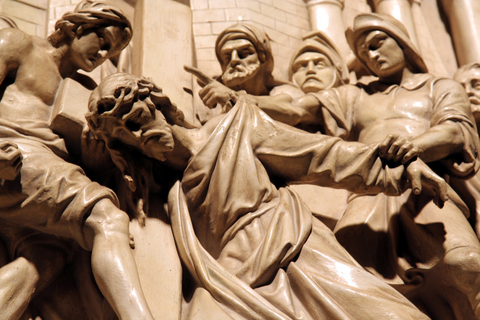
John 11:16 mentions the apostle “Thomas (also known as Didymus).” He is commonly called “Doubting Thomas,” but the Bible never calls him that. He did not believe the other apostles when they told him that Jesus had risen from the dead (John 20:25). But we should remember that those other apostles did not believe when the women told them (Luke 24:11). “Thomas” means “twin” in Aramaic, the common language in Palestine, and “Didymus” means “twin” in Greek. The name most likely indicates that he was a twin, not that he was double-minded as some have suggested.

Thomas should also not be accused of being unfaithful. In John 11, Jesus talked about returning to Judea, where some of the local Jews had threatened to stone Jesus (John 10:31-39). Thomas did not even consider the possibility that Jesus might raise Lazarus from the dead. Thomas calculated that Jesus would likely be killed. But Thomas was willing to go and die with Jesus, saying, “Let us also go, that we may die with him” (John 11:16 NIV).

In John 14, Jesus talked about His death and resurrection and the promise of heaven. Thomas received none of the comfort Jesus was offering. He heard only the part about separation from Jesus and the remoteness of heaven. He said, “Lord, we don’t know where you are going, so how can we know the way?” (John 14:5). He did not accept possibilities that he could not see.

In John 20:24-29, when the other apostles told Thomas that Jesus had been resurrected, he refused to believe it until he could see for himself.

Thomas was not unfaithful, and he did not doubt who Jesus was. But he was a fatalist and a pessimist. He found it easier to believe in death than life, easier to believe in suffering than blessing. He was ready to die with Christ but found it harder to believe that he could also live and reign with Christ. Many modern Christians are like Thomas. Sometimes God leads us down paths of suffering and testing. Sometimes He showers us with blessings and miracles. Most Christians experience both extremes at various times. We do not know what will come our way, but we should be ready for both possibilities. Like Thomas, we should be ready to faithfully suffer and die with Christ if that is our path. Unlike Thomas, we should also be ready to joyfully accept God’s blessings and thank Him for them.

Posted in James R. Coggins | Tagged , , | Leave a comment

Forgiveness Through a Child’s Eyes by Peggy Webb

One of my greatest joys is teaching Sunday School to children, ages two to six. No matter what topic I choose, I learn more than I teach. Why? Because I always come away from the lesson with an innocent child’s perspective throwing a spotlight on scripture, illuminating it in a vastly different way.  

Jesus said, “Let the little children come unto me and do not hinder them, for the Kingdom of Heaven belongs to such as these.” Matthew 19:14

Children never get bogged down in messy and complicated details. They don’t agonize over nuance and dither over meaning. They don’t race off to consult several friends in order to make up their minds. When you tell them something, they immediately see the big picture. Whole and perfect. Plain and simple. They have no trouble figuring out how a certain scripture applies to their lives or imagining a Biblical concept in a modern world.  They know. Immediately and without angst.

Last Sunday I taught forgiveness to my Sunday School angels. A big concept for a young mind. In order to teach forgiveness, we had to talk about sin.

Me, a teacher of undisclosed age: What is sin?

Boone, an adorable five-year-old: When you do something bad.

 How simple is that? I then asked the children to imagine their mom had packed their favorite cookie for school lunch.

Me, a not-so-adorable older woman: Is stealing bad?

Boone, the little Einstein: Yes.

Me: What would you do if another little boy in your class stole your cookie?

Boone: I’d be mad!

Me: Being angry is a normal reaction when someone does something bad to you. But what would you do if the little boy came over and told you he was sorry?

Boone: I’d still be mad.

Me: Jesus says we should forgive. Do you know what that means?

Boone:  God won’t like it?

Me: God tells us to stop being mad at someone who did a bad thing to us. He wants us to choose to throw our anger or our hurt away. He wants us to be nice and kind to everybody, even the one who did a bad thing to us. Let’s read what the Bible says about forgiveness.

Using the children’s Bible, I read the story of Peter asking Jesus, “Lord, how many times shall I forgive my brother who sins against me? Up to seven times?” Jesus said to him, “I do not say to you seven, but seven times seventy.”

Me: God wants you to forgive seven times seventy. That’s a big number. More than you’d want to count.

Boone: Okay. Then are we done?

Wow! What a perfectly normal human reaction. Wouldn’t we love to get by with doing the minimum God asks of us, then go back to being mad or nursing our hurt or crying in a corner? “Well, I did what the Bible said, and now I’m done. I can go back to doing what want.”

Boone’s question led to an interesting discussion about the meaning of seventy times seven. It’s such a big number, it would be silly to keep count. It’s an exaggeration of Peter’s question, making the point that our capacity to forgive should be endless. Seven, being the number that means completeness or perfection, reminds us to strive to be perfect, just as Jesus Christ was perfect. 

Five-year-old Boone nodded sagely, said, “Okay,” then hopped up from the kiddie table to ride Pete, the antique rocking horse. After the children took turns riding Pete, the five-year-olds sang “Jesus Loves Me,” while adorable two-year-old Hank, Boone’s little brother, marched around the room plucking a plastic ukelele and singing, “Dee and wi,” his version of “Deep and Wide.” 

Of such is the Kingdom of Heaven.

God is good.

Peggy

Posted in Peggy Webb | Tagged , , , | Leave a comment

New Book Release by Tara Randel

I’m excited to let you know about my newest book release, Her Surprise Hometown Match, a Harlequin Heartwarming romance. This the fourth book in the Golden Matchmakers Club series. I always have fun returning to Golden and this book will not only showcase the matchmakers at work as they try to pair Juliette and Ty together, but it will recap previous characters from the series. I don’t know about you, but I love catching up on characters’ lives, who is engaged, married or expecting. And I hope you enjoy the journey of Juliette and Ty falling in love. I had a blast writing the book.

Can she be honest…

With the rodeo cowboy?

Juliette Bishop is living a lie. And she won’t let any man get close enough to discover she’s not the hero Golden residents imagine. But rebellious former rodeo cowboy Ty Pendergrass slips under her radar…and straight into her heart. No stranger to the struggles of shedding a reputation, the daring trick rider could be her perfect match. If she has the courage to come clean with him and her hometown! 

Here is an excerpt.

A slow, unexpected grin spread over his face, changing him from merely handsome to plain out gorgeous. Juliette lost her train of thought for a second, until another car horn shook her back to reality.

“You must be new in Golden,” she said, hoping to successfully cover her reaction to the stranger. “You can’t charm me to get your way.”

His smile ramped up a notch. “You think I’m charming?”

“That’s not the point.” She crossed her arms over her chest and tapped a foot. “I’m not moving.”

He slapped his hat back on his head. “Then it looks like we’re at an impasse.”

She pressed her lips together, her eyes moving to the empty spot and the sign at the curb. Reserved for the Golden Police Chief.

Disappointed and relieved at the same time, she said, “Seems neither of us can park here.”

“Why not?”

She pointed to the sign. “It’s reserved for the police chief.”

Some of the man’s ire slipped away.

They both approached the sign, standing so close that Juliette could feel his body heat. She was enveloped by his cologne. The scent reminded her of pine trees and a touch of citrus. She hadn’t noticed this many details about a man in forever.

A preview of Golden in the fall.

This book was featured by JustRead Publicity Tours. Here is the link if you’d like to enter the tour giveaway. Today is the last day to sign up! Welcome to the Her Surprise Hometown Match Blog Tour & Giveaway! – JustRead Publicity Tours (justreadtours.com) You can also view the tour schedule and visit some of the stops on the tour.

This is the last book in the matchmaker’s series, but I don’t plan on leaving Golden any time soon. In fact, I’m working on new story proposals right now and hope to have good news about future books. In the meantime, thanks for your support!

Her Surprise Hometown Match

Amazon

Harlequin

B&N

Apple Books

Kobo

Posted in Tara Randel | Tagged , , , , , , | Leave a comment

Break the Habit!

Some folks call them routines while others call them ruts. I’m talking about habits here. People tend to fall into patterns, however much we fancy ourselves as being unique. We’re all sheep, according to the Lord, and He would know.

No offense to the Almighty, but does it make you squirmy to think of yourself as a hapless lambkin? If not, good for you. If you do find the wooly reference somewhat annoying, join my club.  Who wants to associate themselves with a dim animal who will happily toddle off to slaughter for a handful of grass? Not me.

But wait a minute. Sheep are perfectly made, perhaps not in the image and likeness of God, but they’re pleasing to Him just as they are. No fallen nature there, folks. But I forget about the perfection of God’s creation sometimes, like when I’m slapping a blood sucking mosquito. They do love me. Yet God did review what he created and deemed the heavens and the earth, the plants and trees, the sea and the sky good.

Even we humans can’t be faulted for what we haven’t heard or seen or been taught in some fashion. Right? Ignorance can be bliss in so much as God is entirely fair about not calling you out on what you had no way of knowing.

Who’s a dummy?

That said, I’ve reassessed my view about our flocking friends. Lighthouse Farm Sanctuary states that, ‘Despite the popular belief that sheep are stupid, they are actually incredibly intelligent. They have very impressive cognitive ability and just like humans, they form deep and lasting bonds with each other, they stick up for one another in fights, and they grieve when they lose a friend. They experience all of the same emotions that we do including fear, joy, boredom, anger and happiness to name a few.”

Wow. I guess being compared to a sheep isn’t all that awful, although knowing this now has me rethinking being a carnivore. I should probably refrain from getting too deep into the subject since meat is doctor recommended for yours truly. As in, ‘Never, ever become a vegetarian and absolutely not a vegan, Ann.’ If you tend toward anemia of the pernicious variety, I’d say use that excuse to keep the lamb chops coming. (They are tasty, too!)

But we humans are sheep, living in a world of daily expectation. We experience daily failures for which we are accountable thanks to free will. A doubled edged gift. Humans commit bad acts with full knowledge sometimes. Sin happens.

And yet established habit has a way of diminishing culpability. Who hasn’t wanted to stop a deeply ingrained something but found themselves doing whatever it is without even thinking. That would be me. Conscious thought is part of sin, after all. As in actively choosing what you know to be evil.

Here’s a shocker. The Harvard Business Journal indicates that ‘fully 95 percent of our behaviors are habitual, or occur in response to a strong external stimulus. Only 5 percent of our choices are consciously self-selected.’

So, what’s a body to do to keep from digging deeper into bad habits??? First is to realize that God isn’t rubbing His hands together in the anticipation of frying us. Quite the opposite. We are God’s children. Beloved children. He knows we’ll fall, so we should expect it and prepare while still trying our best. We should always ask for God’s help and guidance to be filled with his will and the grace to do it. But, like children, we should be expected to do what we can if only to grow in resolve.

Check here for practical HELP TO OVERCOME UNWANTED HABITS!

Posted in Uncategorized | Leave a comment

The Legacy of the Pen by James R. Coggins

My seven-year-old grandson was given a pen as a reward for some achievement at school. He put it into his shirt pocket because he thought it made him “look like Grandpa.”

I was flattered.

But it brought back memories. Many years ago, I was elected to the high school student council, and a picture of the council was published in the local newspaper. One of my aunts saw it and said, “That’s typical Jimmy. He has a pen in his pocket.” I hated being called Jimmy. But the pen was important. I still carry a pen in my pocket. In fact, I refuse to buy shirts that don’t have a pocket. Because I can never tell when an idea will pop into my mind and I will need to write it down before it floats away. If I don’t write it down immediately and try to recreate it later, the words don’t flow properly. A nugget of truth becomes a lump of coal.

Singer Paul Simon, who often called himself a poet, once wrote about this danger: “She faded in the night like a poem I meant to write.” Of course, if Paul Simon had waited to write down that line, it might have come out as “I lost a girlfriend once, which reminded me of the time I lost the thread of a poem I never finished writing.” It’s not the same.

And carrying a pen is easier than carrying a laptop computer (and charging cord) in my shirt pocket.

The great Canadian writer Stephen Leacock wrote, “There’s nothing to being a writer. You just jot down ideas as they occur to you. The jotting is easy. It’s the occurring that’s difficult.” Occurring is as rare and valuable as a precious stone and therefore worth seizing whenever it appears. And so I carry a pen. I am a writer.

Posted in James R. Coggins | Tagged , , , | Leave a comment

Advice for Younger Self

Do you ever wish you could go back in time and talk to your younger self? Someone asked me this recently, and it got me to thinking.

Back when I was a child, I didn’t really think much about the future or really what I wanted to be when I grew up. I lived for the moment. Having fun. Playing with neighbor kids. Life was much smaller back then.

But then I grew up and life became real. I tried out several jobs before I pursued my dream of writing and later became an author.

Through all the ups and downs, I confess I didn’t always ask God for direction as I should have. And when I look back, I can see that when I followed my own wishes, things didn’t go so well, but when I trusted God to guide me through whatever decision, I faced it might not have turned out the way I had planned, but it turned out for the best.

King Solomon was a wise man. The Book of Ecclesiastes was written toward the end of this wise king’s reign. I wonder if he wished he could go back in time and speak to his younger self?

Ecclesiastes talks about the futility of seeking happiness outside of God.

In the end, the Preacher as Solomon, refers to himself as, comes to accept that faith in God is the only way to find true happiness.

In Ecclesiastes 12: 10-14, Solomon writes:

The preacher sought to find out acceptable words: and that which was written was upright, even words of truth.

The words of the wise are as goads, and as nails fastened by the masters of assemblies, which are given from one shepherd.

And further, by these, my son, be admonished: of making many books there is no end; and much study is a weariness of the flesh.

Let us hear the conclusion of the whole matter: Fear God, and keep his commandments: for this is the whole duty of man.

For God shall bring every work into judgment, with every secret thing, whether it be good, or whether it be evil.

At the end of his life, Solomon advised his readers to focus on an eternal God instead of temporary pleasure.

He was a wise man. And although I’m not wise like Solomon, looking back at my life, I totally agree. Trusting God is the only way to find true happiness.

Many blessings,

Mary Alford

www.maryalford.net

Posted in Uncategorized | 1 Comment

Who’s in Charge by Nancy J. Farrier

Photo by Marquise Kamanke on Unsplash

Have you ever been the victim of an unfair law? On a local level? State level? National level? Have you known people who have been hurt by these laws or who stand to lose their livelihood or freedom or life? 

It doesn’t seem to matter which faction is in power, someone is at odds with the authorities. There are marches in protest. Rallies against the injustice. Different sides can’t seem to find a solution that works for everyone and the whole country, sometimes the world, ends up in unrest.

This is unsettling for all. Disturbing to our way of life. No one wants to have this constant turmoil in our country but no one has a solution.

In the book of Daniel, we read that Daniel is one of the top three government officials. He has the king’s ear. But there are others just as powerful and many who are trusted advisors that the king also listens to. And some of those officials are jealous of Daniel’s place in government and would like to get rid of him, especially when Daniel became distinguished above all the others. 

You’d think this would give Daniel protection and power. However, the advisors have those silver tongues and know how to word their request so it flatters the king and he doesn’t take time to consider the consequences. (A danger to those in power is listening to advice and not taking the time to hear all sides.)

“Then these high officials and satraps came by agreement to the king and said to him, “O King Darius, live forever! All the high officials of the kingdom, the prefects and the satraps, the counselors and the governors are agreed that the king should establish an ordinance and enforce an injunction, that whoever makes petition to any god or man for thirty days, except to you, O king, shall be cast into the den of lions.” Daniel 6:6-8 (ESV)

How many of us would have been furious about this? Might have joined a protest or organized a rally? Done a march through the city to get support? 

Remember, the king loved Daniel. I’m sure Daniel tried to talk to him but there were so many others who were convincing and complementary so the king listened to them. He signed the decree into law.

What did Daniel do? He followed his normal pattern. 

“When Daniel knew that the document had been signed, he went to his house where he had windows in his upper chamber open toward Jerusalem. He got down on his knees three times a day and prayed and gave thanks before his God, as he had done previously.” Daniel 6:10 (ESV)

It’s interesting that Daniel didn’t rail against the injustice. He didn’t tell God what He should do. I don’t believe he asked God to strike down the king and the advisors. Why? Because, he prayed and gave thanks like he normally did. Nothing new here. Just praising God for Who He is and what He’s done. 

Of course, we all know the story. Daniel was thrown in the lion’s den. The king stayed up all night concerned for his friend and trusted official. Daniel was saved. The lion’s mouths were closed by God. Daniel was released in the morning.

We can learn two important lessons from this story. First, we need to have a daily pattern of meeting with God—praising Him and acknowledging who He is. Second, we have to trust Him to take care of us. Even when the situation looks dire. When the worst that could happen is happening. Still we must trust Him. 

The next time we want to rail at injustice or complain about new laws that we don’t agree with, we should go to our place of prayer and lift up some praise. Show God that we put Him over anything that comes against us. Show Him our utter devotion and trust. Just like Daniel.

Posted in Nancy J. Farrier | Tagged , , , | Leave a comment

The Bible Translations by Julie Arduini

Each year I choose a new Bible translation as my go-to for reading on my phone. I like learning, for the most part, the different versions and how they stack up.

In my hardcover, I use NLT and Holcomb the most, but I enjoy my year challenge to see how I learn with the other translation I’ve taken on for that year.

This year I’ve taken on AMP, Amplified. Not only that, I accepted a request on my Bible app to read through with others. What I didn’t know was it was a year-long plan. And I’m reading Amplified.

It has been a challenge, I’m not going to lie!

This week I was reminded how blessed we are, using wisdom and discernment of course, to have so many translations available.

I receive a weekly email encouragement that ends with a verse in the Message translation. This week the verse is Psalm 42:7.

The encouragement talked about God’s love and how deep it is.. Intimate. Personal. And then to read the verse, WOW. Take a look.

Psalm 42:7
The Passion Translation
  My deep need calls out to the deep kindness of your love. Your waterfall of weeping sent waves of sorrow over my soul, carrying me away, cascading over me like a thundering cataract.

My romantic heart reading—“cascading over me like a thundering cataract.”

That’s some imagery, am I right?

I have had a long, frustrating week and to read of His deep love for me was just the pick-me-up I needed. Is the Message the only translation I want to read? No. I understand there are some liberties there. But wow, did God use it to help me. I still can’t get over the wording. A thundering cataract!

Yes, I still have my Bible plan where I’m slogging through Deuteronomy via the Amplified, but I love that there are many translations to learn from. Yet, of course, One true God.

How about you? Do you have a favorite translation?

Posted in Julie Arduini | Tagged , , , , , , , , | Leave a comment

Word by Word, Page by Page

I’m reading through the Bible again this year, only this time I’m doing it a bit differently. For years I used the Chronological Bible, and it helped me so much in seeing the whole picture of the Bible. I had never read the Bible from cover to cover until 2005. Now, I’d read parts of the Bible, but never took a whole year to read it from cover to cover.

In December of 2004, I was teaching abstinence in a small country school, and the teacher told me 2005 would begin her tenth year to read through the Bible. Then she challenged me to try it. I promised her I would, and she suggested using the Chronological Bible. A friend had given me one three years earlier, but I’d never opened it. January 1, 2005, that changed. And it changed my life.

Reading it daily in chronological order was like reading a story. Some of the characters were bigger than life—Abraham, Isaac, Jacob, Moses, David, Solomon…then in the New Testament, I got to know Jesus better and the apostles, and Dr. Luke. Some days I was so excited, I read more than the daily goal.

I was really sad to leave David—he had such an interesting life. A man after God’s own heart, yet he sinned greatly. There was hope for me! It was even sadder to see the Israelites move away from God. But even that was a lesson—they sinned, God forgave, they sinned again….I learned God is so patient and loving and ready to forgive when we confess (turn from our sin)—and yes, Christians sin. Every day.

But it’s more than a story. I have such a deeper relationship with Jesus and God since I started reading through the Bible each year. You might wonder if it ever gets old…no, because each day I see something in the Scripture in a way I’ve never seen before. It truly is a living, breathing book.

I’m in my eighteenth year of reading through the Bible and have worn out three chronological Bibles with daily readings. A couple of years ago, I started reading Seasons of Reflection, 365 Daily Readings. This year I take the daily readings and read them along with a commentary. It’s always interesting to see what men like Spurgeon and Chambers have to say.

And now, I want to challenge you—if you’ve never read the Bible from cover to cover, try it. And I’d like to suggest you read it chronologically–there are many chronological Bibles set up to be read daily.

I know, I can hear you now—I don’t have time! And in this fast-paced world, it is difficult to find time to spend alone with God. It will take discipline, but it will make a difference in your life. I promise, you won’t regret it.

Posted in Uncategorized | Tagged , | Leave a comment

Balance by James R. Coggins

I recently came across an online discussion criticizing evangelicals for being focused only on preaching the gospel and winning converts. Instead, those involved in the discussion said that Christians should be focused on social justice issues, feeding the hungry, visiting those in prison, and providing housing for the poor.

This is one of those occasions when it might be helpful to ask what Jesus would do. Or, more precisely, to consider what Jesus actually did. Following is a quick summary of Matthew 8-10:

In Matthew 8:1-4, after coming down from delivering the Sermon on the Mount, Jesus healed a man with leprosy.

In Matthew 8:5-13, Jesus healed a centurion’s servant and then used this to teach that the kingdom of God is also open to gentiles.

In Matthew 8:14-17, Jesus healed Peter’s mother-in-law and many others.

In Matthew 8:18-22, in answer to a question, Jesus taught about the cost of following Him.

In Matthew 8:23-27, Jesus calmed a storm on the Sea of Galilee, demonstrating to his closest followers that He is God.

In Matthew 8:28-34, Jesus delivered two men from demons, impressing a gentile town.

In Matthew 9:1-8, Jesus healed and forgave a paralyzed man, demonstrating to a crowd of Jews that He is divine.

In Matthew 9:9-13, Jesus called the tax collector Matthew (an agent of the hated Roman government) to follow Him and used the occasion to teach the Jews that He came to rescue sinners.

In Matthew 9:14-17, in answer to a question about fasting, Jesus taught that He was setting up a new kingdom, not restoring the Jewish one.

In Matthew 9:18-26, Jesus raised a girl from the dead and healed a sick woman.

In Matthew 9:27-34, Jesus healed two blind man and delivered a man from demon possession.

In Matthew 9:35-37, Jesus taught and healed and talked about the shortage of workers.

In Matthew 10, Jesus sent the Twelve out to preach and heal and gave them instructions on what they would encounter and how they should react. In other words, He told them to go out and do the things He had been doing, in spite of facing the same kind of opposition He had been facing.

Matthew 4:23 offers a summary of Jesus’ ministry: “Jesus went throughout Galilee, teaching in their synagogues, proclaiming the good news of the kingdom, and healing every disease and sickness among the people.” The question of whether Jesus’ followers should focus on preaching or on doing good works is a false one. Jesus did both, and so should His followers. The works often provided opportunities for teaching, and the teaching helped prepare the way for the works. Before healing, Jesus spoke words such as, “Shall I come and heal?” (8:7), “Why are you afraid?” (Matthew 8:26), “Your sins are forgiven” (Matthew 9:2), “Follow me” (Matthew 8:22, 9:9), and “Do you believe?” (Matthew 9:28).

The Old Testament prophets condemned the people of Israel for oppressing the poor and for being unfaithful to the one true God, often in the same sentence. Jesus both proclaimed the good news and healed the sick. The early church made a deep impact on the people of the Roman Empire both by preaching the gospel and by meeting a variety of practical needs. Early evangelicals were known both for their preaching of the gospel and for engaging in a host of social action projects, from abolishing slavery and improving working conditions to improving the treatment of animals. We should do the same.

Posted in James R. Coggins | Tagged , , , | Leave a comment

Be Thoughtful by Peggy Webb

My favorite book party, circus themed for The Language of Silence, complete with clown and red noses, stuffed animals, and candy for the children.

Mark Twain said, “Kindness is the language the deaf can hear and the blind can see.” Winston Churchill said, “To build may be to be the slow and laborious task of years. To destroy can be the thoughtless act of a single day.” My hero—my daddy—always said, “Be kind.”

My birthday is this month. In the many years I’ve lived, I have learned this true thing: It’s easy to be thoughtful when I feel good and prosperous and unhurried, but it’s much harder when I’m worried, rushed, sick or depressed. And yet, the Bible instructs me to practice thoughtfulness, no matter what my condition. To think before I act or speak.

The wise are cautious and turn away from evil, but the fool throws off restraint and is careless.”

                                         Proverbs 14:16

 Have you ever been celebrating something wonderful, the best news you’ve had in a long time, and a careless, negative remark by someone you know and trust throws a cloud over the whole day? Because I’m a musician as well as a writer, I always think of those thoughtless remarks as raining on my parade (“Don’t Rain on my Parade” from the musical Funny Girl).

Words have impact. They have lasting consequences. The spoken word cannot be unspoken. It’s carved forever in the memory of the one who hears it. 

As adults we learn how to cope with troublesome situations and careless remarks. But little children don’t have those skills. They are vulnerable. Unformed. Innocents who trust the adults around them to teach them by good example and to lift them up with encouraging words. 

I know. I teach the Littles at Sunday school in my small country church. Two-to-six-year-olds. Adorables. Babies who hug me around the knees and thank God for peanut butter and raccoons. I am ever-vigilant of what I say to them. Even if I’m tired or cranky, I walk into that Sunday school room with a smile on my face and a song on my lips. “Jesus loves me,” we sing. “If you’re happy and you know it, clap your hands.” “This little light of mine, I’m gonna let it shine.” Positive songs to fill the children up with love and confidence. To make them believe in themselves and in God who loves them unconditionally. To give them hope and fill them with joy.

This the reason I teach little children. This is the reason I write novels and play awesome arrangements of great hymns and spirituals on my piano. This is the reason I write this blog. To remind all of us to be thoughtful in all we say and do…and to spread hope.    

Be kind. Be thoughtful. God is good.

Peggy Webb

Posted in Peggy Webb | Tagged , , | Leave a comment

Proverbs 4

A Father’s Instruction

Listen, my sons, to a father’s instruction; 

pay attention and gain understanding.

Proverbs 4:1

At first glance, Proverbs 4 is about listening to your earthly father and learning wisdom from him. Another layer, though, refers to our Heavenly Father. This duality gives more depth to the Proverb and encourages us to look for lessons we’ve learned from both sources.

Wisdom can be gleaned from both, and some lessons we learn may have been engineered by our Heavenly Father to further our knowledge and understanding.

An interesting lesson I learned from my earthly father relates to how most people want to be kind and helpful. Obviously not everyone is like this, but the majority are in my experience.

My Dad was an exceptionally good salesman. He was friendly, outgoing, fun loving and very likable. I tried to pick up as much from him as I could, and, fortunately for me, he was generous with his advice. This included how he used to sell things door-to-door. He would ask people if they would please do him a kindness. When they asked how, he’d ask them to please let him tell them about the product (he was trying to sell). What intrigued me was that even if they weren’t interested in what he was selling, they would almost always hear him out. His appeal for a kindness from them created a bond.

I believe then, and still do now, that most people, when asked, want to be kind. They want to help.

Whether you’re selling something, or are in need of serious help, an appeal is often successful. This is why we so often see people begging from medians or street corners. It makes us feel good when and if we are able to provide assistance.

I was on TikTok the other day and watched part of a Steve Harvey interview featuring Carol Burnett. She was wonderful as always. She briefly talked about Jimmy Stewart and what a good man he was. His twin daughters had sent her a T-shirt featuring the advice he gave them when they were headed off to college. It read, “Always remember, be nice to people.”

His advice very much reminds me of our instructions to love one another as ourselves and what Jesus said were the two greatest commandments in Mark 12:29-31.

No wiser words were ever spoken.

Posted in Kathy Carmichael, Uncategorized | Tagged , , , , , | Leave a comment

MIRACLES EVERYWHERE by Vicki Hinze

For the last few years, along with many others, I have prayed often for our nation. It is easy to see that there is a hunger and a thirst for God in our lives.  So many are lost, lonely, desperate, and hurting. His presence and touch on us all is sorely needed.

There are those who sense that presence or touch in a myriad of ways.  But there are also those who do not.  They are starving for connection, but they have no idea exactly what connection they are seeking or longing for.  With many others, I pray for these people, too.  And for all those who have no one to pray for them—the forgotten ones.

We know our mandate is to love one another—our loved ones and strangers, our friends and enemies. After all, it is easy to pray for those who think like us, behave like us, and want the same things we want.  It is harder to pray for those who do not, and yet those are the people who most need our prayers.  Not to make them like us or to fit into the box we think we they should fit in.  But to connect and feel God’s presence and touch, to fit into the box He created them to fit in. 

We are born with a purpose.  All of us.  And with our limited perspective (even the most informed among us have limited perspective to God’s ways and plans), we often have issues identifying our own purpose much less that of others.  God’s perspective is absolute and perfect for everyone.

I know that sometimes it’s hard to love other people.  Sometimes it’s all but impossible for us to love them with our limited view.  But we can always pray for those people and ask God to touch them in their lives and guide them to the place He wants them to be, doing the things He wants them to do.

Not long ago, I was asked, “What is the most important thing anyone can do for themselves, their families, and their country?”  My answer was swift and solid.  Pray.  We fall short, leaning to our own understanding, relying on our own judgment.  We’re human.  We don’t see or hear or know all.  But God does.  So, the best we can do for another is to lean on His understanding, His wisdom, His judgment, and His loving heart. 

I am comfortable with this approach because He can be trusted to keep His word and experience teaches, He always has everyone’s best interests at heart.  God can solve the problems and challenges and issues we cannot.  But we must ask Him to do so.

God gifted us with free will.  He will not violate that.  I believe this is why before healing, Jesus asked those people what they wanted from Him.  In other words, He was making sure that healing is what they wanted and not just what He wanted for them.  He was asking them for their permission to heal them.  So that He did not violate their free will.

When I pray, I declare, decree, and receive what I’m praying for. I praise God for it.  Why do I pray this way?

To express my faith that my prayer will be uttered with no doubt of it being heard or addressed.  Jesus told us to ask anything in His name without doubt and it would be done.  The part it took me years to grasp was receiving.

When we receive, we are attesting to and affirming our free will choice.  For years, I thought I was too blessed to bother God with my issues.  He had more important things to do.  But over long periods of studies and experiences, I learned that God wants this relationship with us, and when we seek Him, we are not bothering Him or keeping Him from more important work.  He hungers for a connection and a relationship with us as much as we do for Him.  

There’s a lot of bad news in the world right now.  A lot of things that seem upside down or inside out and just plain wrong.  We do what we can, but these problems are so big that they’re beyond us.  But they are not beyond Him.

I often pray 2 Chronicles 7:14:  And if my people who are called by my name humble themselves and pray and seek my face and turn from their wicked ways, then I will hear from heaven, forgive their sin, and heal their land.

Sometimes we all feel overwhelmed and as if nothing we do makes a difference.  But prayer does make a difference.  I daresay, the most difference.

Evidence of it is in Asbury right now.  What started out as a simple prayer service on a college campus has just kept going and going.  Generation Z is awakening to God, praising Him and seeking to draw near to Him.  This service has grown to a revival and is well into its second week.  There’s no agenda, no begging news teams to cover it.  Just people gathering to minister to Jesus, to praise God.  And the impact is profound.  People are coming not just from all over the country, but from all over the world.  There are thousands there and the revival is spreading to other campuses.  One report said 20 other campuses so far, and it’s growing.

Watching the videos of what is happening there is powerful.  Hopeful.  It serves to remind us that God is everywhere, and with Him so too are miracles that restore our hope, feed our faith—and those who are starving and thirsting for God in their lives.

Asbury is praying for our nation.  While not there, I pray in agreement with them.  And I hope you are, too.  Indeed, a sign that miracles are everywhere.

Blessings,

Vicki  

Posted in Vicki Hinze | Tagged , , , , | 2 Comments

Put the Brakes on the Worry Train by Ann Malley

Let go and let God! Are you kidding me?

Do you get frazzled? Do you freak out? I do.

There’s still a consistent stream of Oh My at my house.  While I do tend to overload my schedule, I’m blessed with ADHD and anxiety. Surprise. I have a medical excuse to fret. Right? Wrong. Still, I used to roll my eyes at the ‘Let Go and Let God’ phrase that I heard for the first at a doctor’s appointment. From the nurse practitioner.

What? A medical professional giving it up to God? Letting Jesus take the wheel?

That was my reaction then, but times have changed. God changes us. Letting go and letting God take care of His business is the best advice I’ve ever received. If you or someone you love loves God and desires to please Him, please release your worries. Cast anxiety into the burning flame of God’s love and have confidence that He knows what he’s doing.

Here’s some of what He has to say:

Which of you by worrying can add one cubit to his stature? “So why do you worry about clothing? Consider the lilies of the field, how they grow: they neither toil nor spin; and yet I say to you that even Solomon in all his glory was not arrayed like one of these. Matthew 6:27-34


Therefore, do not worry about tomorrow, for tomorrow will worry about its own things. Sufficient for the day is its own trouble. Matthew 6:34

But when they deliver you up, take no thought how or what ye shall speak: for it shall be given you in that same hour what ye shall speak. Matthew 10:19

But when they shall lead you, and deliver you up, take no thought beforehand what ye shall speak, neither do ye premeditate: but whatsoever shall be given you in that hour, that speak ye: for it is not ye that speak, but the Holy Ghost. Mark 13:11

And now, my daughter, fear not; I will do to thee all that thou requirest: for all the city of my people doth know that thou art a virtuous woman. Ruth 3:11

I love Matthew 10:19 to prepare for awkward meetings. Sailing through encounters is possible if one prepares what really matters.

Bad stuff happens. Unexpected disasters. Bad weather. We forget things like keys or dates. Things spill off plates. The future holds all manner of surprises; some good and some hideous. But every encounter large or small is intended to shape the clay intended to be God’s masterpiece.

Remember the old rhyme? Jesus loves me, this I know because the bible tells me so. We take scripture to heart when it speaks of God’s love for us. That’s a comfort if ever there were and I trust His word. But if we’re to take the bible to heart and believe in all God’s word, we should reject worry outright. Worrying causes wrinkles, too, and not those joyful smile lines that are a sign of beauty whatever one’s age.


These are few of the things I tell myself. I wanted to share, since we ladies often bear burdens we shouldn’t. Because we can’t help it! That’s often the case. But:

And they that know thy name will put their trust in thee: for thou, LORD, hast not forsaken them that seek thee. Psalms 9:10

Pray God, unbind my troubled heart. Grant me the grace to trust in you. Pluck worries from my mind and replace them with your holy will. Remember me. Say the word and I shall be healed. Jesus, I trust in YOU!

Posted in Ann Malley, Uncategorized | Tagged , , | 4 Comments

Daniel’s End by James R. Coggins

Daniel chapter 5 tells the story of Belshazzar, King of Babylon, hosting a drunken party in 539 BC. In a direct challenge to the true God, he drank toasts to the Babylonian gods using the sacred goblets taken from God’s temple in Jerusalem. In response, a disembodied hand appeared and wrote on the wall of his palace a prophecy of Babylon’s destruction (the famous “writing on the wall”). When the pagan Babylonian sorcerers could not interpret the writing, at the suggestion of the queen mother, God’s prophet Daniel was called in to interpret it, which he did. In accordance with the prophecy, the city of Babylon was captured by the Persians that same night, and Belshazzar was killed.

By the time of this story, Daniel must have been an old man. He had already been in exile about sixty-six years. He was quite possibly retired. He was no longer head of the wise men or of the Babylonian civil service, and the king didn’t even seem to know who he was. His many years of faithful, competent service and his miraculous interpretations of dreams seem to have been forgotten, at least by those now in power. All he had spent his life building up in the Babylonian Empire was about to be destroyed. His friend King Nebuchadnezzar was dead, and a new king was in power whose policies he despised. No mention is made of Daniel’s three friends, Hananiah, Mishael, and Azariah (Shadrach, Meshach, and Abednego), so it is possible that they also were dead. Perhaps worst of all, as an old man, Daniel knew that it was too late for him to ever return home to Jerusalem; he was too old to make that arduous journey and begin rebuilding a devastated city.

Is this how God rewards His faithful servants? Daniel could have been a bitter, lonely old man. He could have stopped serving God. He could have stopped telling people about a God they didn’t want to believe in. He could have simply given in to tiredness and despair. But the fact is that we find Daniel remaining as faithful to God at the end of his life as he was at the beginning. He was still exercising his gifts. He was still proclaiming the message of the one true God, whether anybody listened or not. His old friends had died, but he had developed friendships with other people, possibly including the queen mother. (We don’t know if they ever talked, but she knew he was alive and still active.)

So many of God’s servants today don’t finish well. Many retire and stop serving in the church just as they have stopped working at their jobs, even though they have more time now. Some stop telling others about Jesus—they conclude that they did that when they were young and, as is the case with earning a boy scout badge, they don’t have to do it again. Or perhaps they have lost their enthusiasm for God. Tired from the battles of life, they have stopped fighting. Thinking they cannot change the downward spiral of a pagan society, they have stopped trying. Assuming they can no longer be tempted to sin, they have relaxed in their observation of the spiritual disciplines they have practiced for years. They have accepted the immorality of the young without protest. They may have become lonely and bitter and unpleasant. Some may have even deserted God altogether.

Satan does not take pity on the old and weak, or the young and foolish. We are immersed in the battle between good and evil all of our lives. There is no retirement. It is possible for us to lose our way in our last years. In a pagan society, this is the commitment all North American Christians need to make: I will remain faithful to God’s call, serving Him till the end of my life.

Excerpted from Living for God in a Pagan Society: What Daniel Can Teach Us by James R. Coggins (Mill Lake Books).

Posted in James R. Coggins | Tagged , , , , , , , | Leave a comment