Who Is Jesus? by James R. Coggins

What do we think of when we hear the name “Jesus”? How do we picture Him? The baby in the manger in Bethlehem? The rabbi walking the streets of Galilee and Judea, preaching good news and healing people?

Hebrews 1:1-4 presents a much different picture, a picture of a cosmic Jesus, a Jesus far greater than His 33 years of life on this earth in human form. First, this passage says that it was through Jesus that God “made the universe”; that is, Jesus, the Son of God, participated with God the Father in the miracle of creation. This means that He predates everything else.

Second, Hebrews says that Jesus “is the radiance of God’s glory and the exact representation of his being”; that is, Jesus shows us what God is like because He is, in fact, God.

Third, Hebrews says that Jesus sustains “all things by his powerful word”; that is, He rules and controls the universe and keeps it operating.

Fourth, Hebrews says that Jesus “provided purification for sins”; that is, He paid the penalty for all human sin by dying on the cross, something that only a sinless and all-powerful Being could do.

Fifth, Hebrews says that Jesus “sat down at the right hand of the Majesty in heaven”; that is, Jesus is on the throne in heaven ruling the universe.

Hebrews thus stresses that Jesus is God, not a mere human, and certainly greater than Jewish expectations of the Messiah.   

Posted in James R. Coggins | Tagged , , , , | 1 Comment

The Dehumanization of America by Peggy Webb

This morning I placed a call to my mail-order pharmacy, expecting to take care of business in an easy two-minute conversation with a representative. Instead, a robotic voice answered and immediately put me through a useless, time-consuming session of questions that did not relate to my problem and did nothing to solve it.

Finally, I hung up and called back, only to get caught up in the same round of robotic questions. I was never given an option to speak with an agent. Even when I asked to speak with a live person—repeatedly, in fact—I was still caught up in the insane, robotic loop that led nowhere.

If I had only needed the two prescriptions the robot had listed for me, I could have placed the order and gone about my business. But I needed a third the AI couldn’t find, although it was clearly part of my prescription list.

Three attempts and fifteen minutes later, I finally managed to get past the idiotic robot to a real person. In less than a minute, I had placed an order for my three prescriptions. I could have breathed a sigh of relief and gone about my business, but I knew the ordeal was not over. In the future, every time I call with a problem that doesn’t fit the robot’s programmed questions, I will go through the same time-wasting, blood-pressure elevating, senseless ordeal.

And not just with the online pharmacy, but with every other business who has chosen to dehumanize its customers by removing themselves and putting us in the hands of robots. Or as they like to call it, “automated customer service.” Don’t believe a word of it. There is no real service involved here.  You, the customer, have become unimportant. The big companies don’t want to waste money hiring people to offer real customer service. They want to cut corners with AI. They want to remove themselves from you and make it next-to-impossible to hear what you have to say—good or bad.

I’m no conspiracy theorist, but I often wonder if using these misnamed “automated customer services,” the intent, all along, was to dehumanize us. It certainly was not designed to provide optimum customer service and satisfaction.

There is no good mental health without human interaction, no real quality of life, no opportunities for compassion, joy, love. There is only isolation, frustration, and the hopeless feeling that you might just be alone in this world. 

Although I’m writing on a tough deadline and stretching myself to my limits every day to meet it, this morning I took the time to lodge a grievance with the mail-order pharmacy service.  Will it do any good? I doubt it. But I will never give up. I’m human.

God is still good.

Peggy Webb

Posted in Peggy Webb | Tagged | 1 Comment

TIPS FOR TIMES WHEN EVERYBODY HURTS by Vicki Hinze

In those times when it seems everybody hurts, we often find ourselves burdened. Feeling as if everyone we encounter is reaching out a hand, wanting something from us—our money, influence, expertise, time. 

We aren’t cold or indifferent—we want to help others. We consider it a duty and a privilege to do so. We know that everybody hurts, and next time, it well might be us, and we hope (and pray) someone will be there to offer us what we need.  Yet the constant barrage wears on us and we feel overwhelmed.  As if we can’t possibly do or take on one more thing—one more duty, responsibility, obligation or even hearing one more trouble of someone else’s without just collapsing.

We either give until it hurts, or it breaks. And when faced with the barrage, it is we who hurt or break and collapse. Let me share a specific example:

A few years ago, a woman did a lot of counseling. Partially in a mentor role and partially in a “people in trouble find me and want help” role. She did what she could, of course. But the flow kept coming and coming and next thing she knew, she was physically ill.

There was a relationship between the two.  She didn’t counsel and forget it or even assign the situation to its proper place, feeling confident she’d offered what she had to offer. She worried about these people and their plights. And she kept worrying. And kept worrying.

The very attribute that enabled her to listen and express empathy and constructive solutions was the very thing that was weighing on her and making her ill.  Unlike Jesus, she took everything in so deep and she held onto it, worrying. How could all that added stress and anxiety not make her ill?

There is an art to helping. An art to recognizing someone else’s pain and struggles.  We see them and we want to help “fix” what’s broken because we genuinely and truly want others to be healthy and content. We do feel for others, and we do hurt with them. But we also must recognize that their issues are their issues and ultimately only they can fix them.  That isn’t a “turn your back” or a blind eye to others comment. It’s a reality check that helpers need to keep in mind.  Here are a few more:

Tips to Remember When Trying to Help

Tip 1.  Some wounds are self-inflicted.  That doesn’t mean one shouldn’t attempt to help. It means that if the consequences of a self-inflicted wound aren’t experienced, acknowledged, and responsibility isn’t accepted, odds are high that another similar self-inflicted wound will be inflicted.  A second chance, if you will, to get what is needed to avoid the challenge in the future.

Example: Touch a hot stove and you get burned. The solution isn’t to remove the stove. The solution is to respect the stove and to learn that if you touch it when it’s hot, you will get burned. The objective is to learn to not touch a hot stove.

Why is that the better solution?  Because you can’t follow someone around through life and remove every hot stove that might be in that person’s path.

I used the stove because it’s easy to illustrate the point. You can apply it to self-inflicted challenges and see the benefit in identifying, accepting, and finding a constructive solution—usually seated within. Hard lessons we don’t have to repeat over and again give us more content time and less anxious time.

Tip 2. We can’t fix other people’s challenges.  We can listen, guide, teach, share. We can seek or refer to others who can listen, guide, teach, share, or instruct. But no matter how many people listen, guide, offer advice, share tools or coping skills, in the end, these are all only suggestions or recommendations. It is up to the person with the challenge to choose what to do to fix his or her challenge. And then to do the work required to actually fix the challenge—which might be none of the suggestions, but a new one that occurred to the person as a result of your discussions.

Tip 3. Offering help, giving help, doesn’t obligate the person to take it. It doesn’t obligate and it doesn’t mean that your suggestions or recommendations are in fact the best solution to the challenge for this person.  Remember, situations relayed are not the whole picture. They’re a snapshot of a situation that includes only what the person wants to share and chooses to share at that time. The person with the challenge has the best big-picture view. So, whatever that person ends up doing, you can acknowledge that she or he is doing what s/he feels is best in this situation.

Tip 4.  No offense, no judgment.  Often people help others and then are frosted because their advice is ignored or amended. If you’d done what I said, you wouldn’t be in this mess, and now you want me to help you again?  This happens. And while it might or might not be justified, it’s never constructive. When someone ignores your advice, you must remember that this is their life and not yours. They should do what they feel is best. Your advice is your opinion—sought because it is respected and desired. But it is not up to you to dictate what someone else does; that’s their choice. Ultimately, they’re going to live with the choices they make—and they, not you, will be responsible for those choices. Of course, they should be their own. And you should not judge them for their choices.

Listen, we learn as much from our mistakes as we do from our successes. Of course, we don’t want anyone to make mistakes that do them irreparable harm. Of course, we wish to spare others hard, painful lessons. And we can—if they choose to listen and form their own opinion and it proves sound.

We shouldn’t fool ourselves. We do what we can to help others avoid stepping in the mud puddles we’ve stepped in. Some will, some won’t; they’ll step in other mud puddles—and next time, that same person might be sharing his or her experience with us and offering us advice.

You see, we all have challenges and tough times and sometimes need help. We will all continue to have challenges and tough times. 

Fortunately, we have each other to help during these tough times. We all have the opportunity to have or to be a mentor.

Blessings,

Vicki Hinze

Posted in Vicki Hinze | Tagged , , , , , | 1 Comment

Let It Rain by James R. Coggins

I live in the province of British Columbia on the west coast of Canada, also known as “the wet coast.” The prevailing west winds off the vast Pacific Ocean bring in copious amounts of rain, especially on British Columbia’s mountain ranges, allowing great forests to grow. The rain also supports agriculture in the river valleys. Starting about October each year, heavy rains come in, lasting for up to a week at a time. There is little snow, mostly just rain, in the river valleys, but heavy snow in the mountains, which feeds the rivers and streams and lakes and reservoirs all summer. The rain can get a little monotonous. Vancouver is the province’s largest city and major port, and the Vancouver Rain Festival is said to run from January 1 to December 31. It is an exaggeration. In summer, the land heats up and a high pressure ridge forms, deflecting the low pressure systems coming in off the ocean, so summers can be dry.

Two years ago, there was a summer “heat dome” with record high temperatures that killed lawns, shrubs, crops, trees (causing many forest fires), and people (over 600). While no heat dome is expected to develop this year, our current summer has again been again hot and dry, and rainfall has been below average for more than the past year. We are facing drought and water restrictions, and forest fires have already burned through more hectares of forest this year than in any other year in our history. I have no idea if this is a permanent climate change or an aberration.

Sunshine is often considered a metaphor for blessing, and rain a metaphor for hardship. But rain (water) is necessary for life. So, while the people in Vancouver enjoy the beaches, I pray for rain. The older I get, the more I realize that God controls the weather and there is little we can do about it.

Like British Columbia, Palestine is on a west-facing coast, and it benefits from rain coming in off the Mediterranean Sea. Rain is especially heavy in spring and fall, while summers are dry. This rain supports agriculture and also nourishes forests on the mountains (the famous cedars of Lebanon). When the people of Israel entered the Promised Land over three millennia ago, it was likely cooler and wetter than it is now. (Climate changes have been occurring throughout history.) Palestine was said to be a land flowing with milk and honey. Why milk and honey? They are liquids and therefore flow. Beyond that, milk comes from goats and cows. Honey comes from bees, which depend on the flowers of trees and other plants. In other words, this was a rich land that would support both ranching and farming. And both of those depend on rain. As an agricultural society, the ancient Israelites were heavily dependent on rain—and more aware of that dependence than modern city dwellers are.

As the people of Israel were about to enter the Promised Land, Moses gave them a long exhortation. He told them that if they would “fully obey the Lord your God and carefully follow all his commands,” then God (Yahweh) would give them a long list of blessings. One of them was that “The Lord will open the heavens, the storehouse of his bounty, to send rain on your land in season and to bless all the work of your hands” (Deuteronomy 28:1,12). On the other hand, if the people of Israel did not obey God, they would receive a long list of curses. Among them would be “scorching heat and drought…The sky over your head will be bronze, the ground beneath you iron. The Lord will turn the rain of your country into dust and powder” (Deuteronomy 28:22-24). Since God controls the weather, He could easily fulfill His promises of blessings and curses, rewarding the people for their faithfulness or punishing them for their unfaithfulness.

Years later, at the dedication of the temple, King Solomon repeated this idea in a prayer: “When the heavens are shut up and there is no rain because your people have sinned against you, and when they pray toward this place and give praise to your name and turn from their sin because you have afflicted them, then hear from heaven and forgive the sin of your servants, your people Israel. Teach them the right way to live, and send rain on the land you gave your people for an inheritance” (1 Kings 8:35-36).

It turned out that the Israelites did not obey God, until finally God sent the prophet Elijah to declare: “There will be neither dew nor rain in the next few years” (1 Kings 17:1). After three-and-a-half years of brutal drought, Elijah called the nation together for a contest between him and 400 prophets of Baal, the Sidonian rain god. When Elijah’s God sent down fire from heaven and Baal could not, the Israelites returned for a time to worshipping Yahweh. Yahweh responded by sending “heavy rain” (1 Kings 18:45).

But it did not last. Later on, the prophet Jeremiah told the Jews, the last remnant of Israel, that, because of their sin, “the showers have been withheld, and no spring rains have fallen” (Jeremiah 3:3). The prophet Amos repeated the message: “I gave you empty stomachs in every city and lack of bread in every town…I also withheld rain from you…People staggered from town to town for water but did not get enough to drink, yet you have not returned to me” (Amos 4:6-8).

Even after the return from exile in Babylon, the Jews continued to be unfaithful. But God continued to promise and warn: “Test me in this and see if I will not throw open the floodgates of heaven and pour out so much blessing that there will not be room enough to store it” (Malachi 3:10).

And so, here in British Columbia, we face heat and drought, and I continue to pray for rain. Could it be because of our sin and unfaithfulness that God does not answer?

Posted in James R. Coggins | Tagged , , , , , , , | Leave a comment

Refresh My Soul!

Summer is a great time to explore God’s creation with friends and family. My husband and I, along with our granddaughter, just came back from beautiful Colorado where we made the most of every day we were there. We stayed in South Fork, Colorado, where a small piece of the National Lampoon’s 1983 movie “Vacation” starring Chevy Chase was filmed.

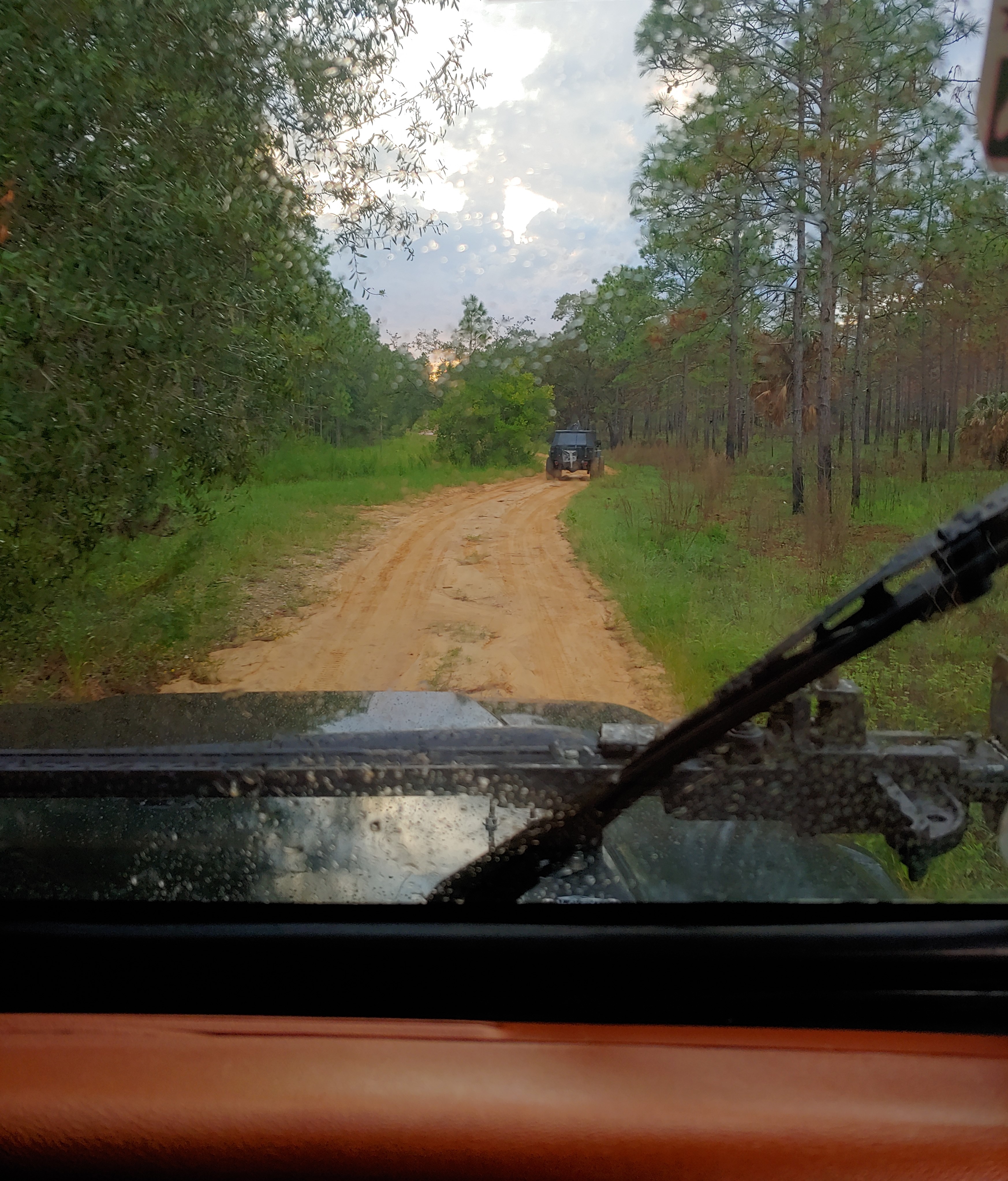
We spent an entire day four-wheeling with one of our good friends near Platoro, a tiny mountain town in the Rio Grande National Forest. Our friend packed a picnic lunch, and we dined among the chipmunks and aspen and pine trees. And enjoyed the beauty that God created. 

There was actually snow still up in the mountains, which was amazing to me coming from 100 degree weather here in Texas.  

From there, we went to Silverton, which is a small mining town near the Million Dollar Highway located between Durango and Ouray. Although I’ve been to Silverton many times, it was such an amazing trip and one I’m ready to do again soon!

I think we all have a place where we go and feel closer to God. For me, it’s the mountains. 

There’s something about them that always seems to refresh my soul and make me smile when I think about what an amazing God we have. He created mountains, and valleys–deserts and oceans–just for us.

No matter what part of our country is your special place, you can see God’s fingerprints everywhere you look. . .you just have to look.

Psalm 96:11-12 says,

Let the heavens rejoice, and let the earth be glad; let the sea roar, and the fulness thereof.

Let the field be joyful, and all that is therein: then shall all the trees of the wood rejoice.

Many blessings!

Mary

http://www.maryalford.net   

Posted in Uncategorized | Leave a comment

Beat the Summer Heat by Tara Randel

No matter which part of the country you live in, you have to admit, this has been one hot summer. And this is coming from someone who lives in Florida. I’m used to working around the rising temperatures, but I’ve had to rework my schedule this year.

If you’ve been struggling with the heat, here are a few suggestions to enjoy the rest of the summer.

Rise early. This may sound logical, but if you aren’t an early riser, it can be difficult. However, getting up early to exercise outside or to do yard work before the mid-day heat becomes unbearable is worthwhile. I normally cut the grass later in the afternoon, but this summer I’ve been out first thing in the morning. My husband and I have been hiking more than usual, so we make sure to arrive as soon as the hiking trails open. We can get a few miles in before going back to the car to blast the air conditioner. Wearing the right clothing, like moisture-wicking shirts, is surprisingly helpful. 

Drink lots of water. One of the problems with the heat is that we can easily get dehydrated. It can sneak up on you and doesn’t feel great when you experience this. I always carry a bottle of water with me, even if I’m just running errands. When doing yard work, I stop periodically to take a drink. It’s a good habit to establish anyway, so why not start now?

Take time for hobbies. If you are staying indoors, this can be a time to be involved with hobbies. I always recommend reading, but then as a lifetime reader and an author, that is my go-to. But what about needle crafts? Woodworking? Maybe start making handmade Christmas cards early. You can use this time to get caught up on paperwork or trying out new recipes. Put your imagination to use and be excited about what might happen.

Family Time. Even later in the day, when the sun is sinking, you may not want to go outside. Gather the family around the table for some fun. We used to play board games a lot when my daughters were young. Over the years we’ve gotten busy and I’ll admit, I miss that quality time together. Take an inventory of the games you’ve stored away. Find a deck of cards. Start new traditions with the younger family members. There is nothing like competition to create a fun family night.

Movie Night. This is a great time to catch up on movie watching. If you have little ones, make a tent or spread-out blankets so the kids can gather round to watch a new movie. Popcorn is always a must. I bought some of those cardboard popcorn boxes like you get at the movie theater, making the time special. Maybe throw in some ice cream. Dim the lights and get drawn into the drama or adventure of another world. Movie marathons are another great way to get everyone together.

These are just a few ways to beat the heat. Sometimes we limit ourselves with our routines and don’t venture out of our comfort zones. Before we know it, we’ll be enjoying the fall temperatures, but in the meantime, switch it up and try something new.

Tara Randel is an award-winning, USA Today bestselling author. Family values, a bit of mystery and of course, love and romance, are her favorite themes, because she believes love is the greatest gift of all. Look for her Harlequin Heartwarming romance, HER SURPRISE HOMETOWN MATCH, available now. For more information about her books, visit Tara at www.tararandel.com. Like her on Facebook at http://www.facebook.com/TaraRandelBooks. Sign up for Tara’s Newsletter.

Posted in Tara Randel | Tagged , , , , , , , | Leave a comment

Book Review by Julie Arduini

Do you sometimes feel as though your body is a problem to solve? Discover how to make it part of the solution instead. It’s now known that the emotional and relational pain we’ve lived through has a profound negative physical effect on our bodies. Alisa Keeton, popular fitness professional, proposes that the reverse is also true: What we do with our bodies can have a dramatic positive effect on our emotions, relationships, and our connection with God. In The Body Revelation, she shows us how to use our bodies as a means of healing past pain and promoting physical, emotional, and spiritual health.

Too often, people of faith are taught to ignore, avoid, or forget our bodies, but Alisa reminds us that God calls our bodies good and cares about our pain. Offering a variety of physical and spiritual practices as well as stories from her own journey, Alisa walks us through six steps for metabolizing personal pain; shows us how understanding the mind/body/soul connection can help us make healthier choices; teaches us how to achieve well-being and live for more than a number on a scale, and more!

Other features of this book include:

  • adverse childhood experiences questionnaire for helping you process past pain
  • movement calendar
  • food journal template

You can enrich your life, celebrate your body, and find holistic wellness. Journey alongside Alisa, and discover scientifically based, biblically-sound mind-body tools to forever change how you process pain so that you can experience emotional freedom, physical renewal, and spiritual transformation.

Julie’s Review:

I rarely sign on to do book reviews because I don’t have the time. It’s very rare when I post a review from my own reading time because I’m behind on reading. Writing a review before I finish a book? Unheard of.

I felt compelled to share my thoughts on Alisa Keeton’s The Body Revelation because I receive enough feedback when I share a post here to know we live in a broken world and there are readers right now who are hurting.

I raise my hand with you.

Two years past my mom’s death, God continues to peel the onion layers of my life back, and I’m discovering things now that I believe He kept from me until I was ready to process and heal.

-I became so natural at stuffing my feelings I literally held my breath sometimes

-Anxiety has been part of my life forever, yet I never realized how much so until recently

-Stomach issues recently diagnosed I believe are in part because of stress I never dealt with

At the same time, I deal with hormonal imbalance and heavier menopause symptoms than most. My weight isn’t where I’d like it to be, but I’ve reached a place where I know it’s not time for another weight loss adventure or pyramid scheme. I want healing. If that leads to a change in my pant size, hallelujah..

Enter The Body Revelation. I read the above before the actual book release and I was intrigued. Now that I’m 2/3 done reading it, I’m transforming. My pant size? I don’t think so, and that’s okay. I’m discovering and expressing feelings. I’m asking God for help. And I’m moving more. These are all changes since I’ve started reading.

What makes this book extra special is it is more than a read. Alisa includes links with each chapter for movement. While I walk my dog, I listen to the latest chapter. She has workout music that isn’t cheesy as she leads you through the chapter. It isn’t instead of reading, but in addition to reading. She also has a meditate type link, and I listen to that before bed. The information is getting to me because I’m not just reading it. I’m hearing it, and applying it.

She also has sections to metabolize and pray, and I believe they are key.

Not only that, but her podcast has a season where it aligns with the book. I am listening to that, too.

The book contains her own story, as well as stories from people you can relate to. She includes Biblical information that backs up the principles, but isn’t preachy. She also has scientific evidence that is easy to understand but doesn’t contradict Scripture.

She says in the book that the Bible states we will have trouble. Swap out trouble for trauma. Some of our trauma is a T, and some of it is a t. All of it is painful and must be dealt with.

The Body Revelation is transforming my life and I’m only 2/3 done. Are my pants smaller? I don’t think so, not yet. However, I’m recognizing things, past and present. I’m looking at the Trauma and traumas of my life and expressing feelings, asking God for help. I’m breathing more and moving. These are all since reading. I still reach for chocolate when overwhelmed, but I’m seeing that as a choice I’m making, not blindly eating. That’s a victory. With His help, I will choose Him first.

If you’re tired of living like I was, or being in pain, I HIGHLY recommend The Body Revelation. Your body will thank you.

Posted in Julie Arduini, Uncategorized | Tagged , , , , , , , , , , , , | Leave a comment

Riffing Off My Pastor’s Sermon by Patricia Bradley

I wonder if it’s Kosher to steal your pastor’s sermon for a blog post? I hope so, but if not, I’ve always been somewhat of a rebel. However, I don’t think he’d mind.

In the spring when I was six, there were numerous tornadoes in our area, and every time someone was interviewed (there was even a segment on Queen for a Day–how many of you remember that program–) about surviving the storm, the person would describe the tornado as sounding like a freight train or a big jet warming up to take off.

Well, it just so happened that I lived near the Memphis airport. Yep, every time one of those big jets fired up, it sounded like distant thunder. And to make matters worse, the older boy across the street from me discovered the sound terrified me, and he would yell, “Run! There’s a tornado coming!”

Well, my little six-year-old heart would go into overdrive and my stomach would clench even on a clear day, and off I’d run home to hide with tears streaming down my face. (I often wonder whatever happened to that kid…got into serious trouble, I’m sure…)

I wish I could tell you that I depended on Jesus to help me, but at that point, I knew little about Him. No, eventually I got a little older, and learn ed that storms didn’t generally come out of a blue sky. It was only later in life that I found Jesus and Philippians 4:6.

Philippians 4:6 is one of my go-to verses even when I’m not anxious. But how does one not be anxious with everything that’s going on in the world? Some of those reports send my heart racing like the rumble of jets did when I was six. And it’s not only world happenings–how about those personal events, and for writers, deadlines? How do you shut everything off at night and go to sleep?

For starters, I would stop watching the news. Or what passes for the news. Years ago, we found out what was happening when we tuned into a thirty-minute broadcast at 6 p.m. from one of four TV stations or caught an occasional report on the radio.

Now the news is called entertainment, and every report is sensationalized. We’re bombarded with all the terrible happenings 24/7. If we choose.

And don’t get me started on social media. I know, it’s great for keeping up with family, but there’s something much better–like sitting down around the dinner table and everyone talking about how their day went. Again, it’s a matter of what you choose.

It’s no wonder we have such a hard time going to sleep at night. So what do you do when you can’t turn your mind off at night?

I don’t know about you, but I’ve found that when negative thoughts bombard me and keep sleep at bay, running Scripture verses through my mind helps calm it down. Or, I’ll pick up my Bible and read a few psalms.

If that fails, I start with A and go through the alphabet praising God. For example, Almighty God, Blessed Savior, Christ the Lord…you get the idea. By the time I get to Z, my heart is lifted up and my mind is calm.

How about you? What ways do you suggest to stop anxiety from squeezing the breath out of you?

Posted in Patricia Bradley, Uncategorized | Tagged , | 3 Comments

Questions by James R. Coggins

John 21, the story of the resurrected Jesus appearing to His close followers on the shore of the Sea of Galilee raises a number of questions that Christians would do well to ask themselves. These questions call for self-examination. Some of these questions will be more relevant to some Christians at some times than others.

1. The disciples did not at first recognize Jesus’ presence (verses 4-7). Where might Jesus be working in my life right now that I have failed to recognize? Do I really believe Jesus is working in my life?

2. One focus of the passage is Peter’s restoration after he spectacularly denied Jesus. What failures/disloyalties/sins do I need to be restored from?

3. Jesus first provided the disciples with a miraculous catch of fish from the sea and then fed them fish and bread he had cooking on a fire on shore (verses 6-13). How is God ministering to me and supplying me with the things I need today?

4. There is nothing wrong with being a fisherman, but God had called Peter to do something else. What is it that God has called me to do? What has He called me not to do?

5. Jesus called Peter to feed other sheep. What is my responsibility to other people in my life? Is there something I should be doing to feed, supply, assist, or encourage someone else?

6. When Peter looked over His shoulder and asked about John’s fate, Jesus rebuked him. Could I be guilty of comparing myself to others, priding myself on my greater faithfulness, or envying someone else’s easier journey? For what could Jesus be rebuking me today?

7. When Jesus challenged Peter, “Do you truly love me?”, He used the word “agape” (self-sacrificing love). In this challenge, in Jesus’ prophecy of Peter’s end (like Jesus, he would be crucified), and in Jesus’ call to Peter to “follow me,” there is a suggestion that “When God calls a person, He calls that person to come and die.” What is it that I need to die to? What do I need to sacrifice, to lay down on the altar?

8. Jesus did not ask Peter whether he loved his work, his fellow disciples, or the sheep he would feed. Rather, Jesus’ fundamental question, before commissioning Peter to minister, was: Do you love Me? Jesus asks the same question of us. Do I love Jesus?

Posted in James R. Coggins | Tagged , , | Leave a comment

Prayer by Peggy Webb

I play piano for church services every Sunday evening, and I always tell the congregation the history of the song. This past Sunday, I played a song that reminded me of the power of prayer and the many ways God has cared for me because of it—”How Long Has It Been” by Mosie Lister.

Mosie was a minister, a singer (most famously with the Statesman Quartet), and a composer. Many of his songs have become gospel classics because of both the beauty of the music and the powerful message he delivers in the lyrics. 

He says he wrote the lyrics for “How Long Has It Been” in ten minutes because he was on fire with the need to tell others about prayer. He grew up in a household where the family prayed together, and he started thinking. Do families still teach their children to pray? Is prayer still important to them? Do they still understand its power? How long has it been since anybody talked to God?

These lyrics flew from his pen:

How long has it been since you talked with the Lord

And told him your heart’s hidden secrets?

How long since you prayed? How long since you stayed 

On your knees till the light shone through?

How long has it been since your mind felt at ease?

How long since your heart knew no burden?

Can you call him your friend? How long has it been

           Since you knew that he cared for you?

How long has it been since you knelt by your bed

And prayed to the Lord up in Heaven?

How long since you knew that he’d answer you

And would keep you the long night through?

How long has it been since you woke with the dawn

And felt this day is worth living?

Can you call him your friend? How long has it been

Since you knew that he cared for you?

One of the most powerful prayers I ever prayed was also simple, three little words, God protect me. I wrote about it in a recent post here. Those three words were spoken as I left the pool at the aquatic center. Forty seconds later, I slipped and fell on the apron of the pool–BUT, a small rubber mat moderated the damage the concrete would have done to my face, and doctors say the towel I had slung around my neck that day (I usually hang it over my shoulder) kept it from breaking. 

Prayer. I won’t go a single day without it.

God is good.

 Peggy Webb

Posted in Peggy Webb | Tagged , , , , | Leave a comment

Growing Pains by Nancy J. Farrier

This past weekend we were visiting our daughter, son-in-law, and newest grandson. The baby is two months old. He’s trying to move but doesn’t have the coordination to go anywhere. His arms wave, his legs bunch up, but he’s still on his stomach, head lifted, and an expression that looks like utter frustration.

I’ve always thought it’s good that babies have no memory of these early months and years of life because the difficulty of learning all the motor skills and speech skills might be depressing if they remembered. Their lack of agility might seem like they are tied down with no way to get free, as if their lack of knowledge and understanding keep them immobilized.

I am reminded of my early days as a Christian. My only knowledge of the Bible were some Bible stories I heard as a child, and many of those memories weren’t all that accurate. I didn’t know scripture or what God wanted me to do. I had the desire to tell people about my new-found beliefs but was often immobilized by my ignorance of the Christian faith.

It took time for me to study God’s word and to learn enough to feel a modicum of comfort when I tried to tell people why I believed in Jesus. I had to start with baby steps, with memorization and reading, and then I graduated to greater understanding as I read commentaries and did deeper studies.

Imagine that little baby giving up as they try to move across the floor without the coordination to make their arms and legs move properly. They never learn to sit up or crawl. They can’t feed themselves, walk, or even talk because it’s just too hard to learn.

This is not the way babies are. They struggle, and in that struggle, they grow and develop. They learn to crawl, then walk, run, and jump. They don’t give up but persevere in order to learn what they need to be the person they are supposed to be.

The same goes in our Christian walk. Sometimes it’s a struggle to understand God’s will for our lives or to plumb the depths of the Bible and share with others. It’s easier to sit in a pew once a week and let the Pastor talk about the scripture and call that good enough. However, that does little good if we don’t exercise our ability to grow in grace and knowledge by working to deepen our faith. If we only listen to a Pastor we are stunted Christians with no real depth or understanding.

Daily Bible study, prayer time, interaction with fellow Christians, and ministering to non-Christians are all part of growing from babies in Christ to become seasoned Christians. It isn’t easy, but it is necessary. 

Just like that little baby works to learn small motor skills and then goes on to develop more skills, we must start small but persist in our Christian growth. There is always something to learn, whether as a person or as a Christian. Embrace the effort and continue on. Press on every day to grow in knowledge and understanding. Become a seasoned Christian.

“…as newborn babes, desire the pure milk of the word, that you may grow thereby…” 2 Peter 2:2 (ESV)

“…but grow in the grace and knowledge of our Lord and Savior Jesus Christ.” 2 Peter 3:18 (ESV)

Posted in Nancy J. Farrier | Tagged , , , , | Leave a comment

Nora’s Review of: Cold Light of Day by Elizabeth Goddard

Cold Light of Day by Elizabeth Goddard

Published by: Revell, 352 Pages

NORA’S REVIEW: Buckle up for a grand adventure in Alaska as author Elizabeth Goddard takes readers on a memorable ride through the small town of Shadow Gap where we meet Police Chief Autumn Long and Grier. Autumn and Greer are chasing the bad guys and fighting the elements of the Alaska wilderness, including avalanches. 

 Grier couldn’t stand by and not help in the rescue. He was supposed to lie low and wait on a word from his contact, but the police chief had grabbed his attention. He could see she needed help. Grier was trained for times like these. Therefore, he could not stay hidden.

This is an exciting, adventure that showcases the beauty and dangers of the Alaskan terrain. I loved it. There is a mystery to solve, a murderer to catch, and Who was this mysterious man name Grier, who just happened to be at the right place at the time Autumn needed him?

The author keeps readers guessing until the very end. There are plenty of twists and turns to make things interesting. I enjoyed the natural spiritual thread and the splash of romance as readers wonder if this couple will ever get together. This was a fun escape and one to is book club worthy.

 Disclosure of Material Connection: I requested and received a copy of this book by the publisher. I was not required to write a positive review. The opinions I have expressed are my own. I am disclosing this in accordance with the Federal Trade Commission’s 16 CFR, Part 255 “Guides Concerning the Use of Endorsements and Testimonials in Advertising”

Nora St. Laurent

TBCN Where Book Fun Begins! 

The Book Club Network blog https://psalm516.blogspot.com/

Posted in Nora St. Laurent | Tagged , , | Leave a comment

Dare I Hope? In all things?

How many of us have fallen short of dreaming big for fear of disappointing ourselves? I’m not speaking of fame, fortune, or a power position at some Fortune 100 company. The hope I’m speaking of is that which we grasp in lieu of tears and terror during those dark nights that grind our spirits into the mud.

Sorry for being all doom and gloom, but most of those reading this post will have at least one experience of the above. When serious illness strikes, we often gird ourselves by expecting the worst so positive news will come as a joy. The loss of a job, a home, a or reputation can devastate us. During contentious times when a family splits for seemingly petty or even wholly justifiable reasons—we’ve been there, too—we shield ourselves by shunning all thought of hope.

We hide out in the shadow of the Valley of Tears, and tell ourselves that this is how life goes. Don’t think about it. Distraction is the answer because there’s zero that we can do outside lower our expectations.

When a beloved child goes his way, heading toward known danger with a full head of steam while entertaining the same invincibility that we once had, it tears flesh from bone. To see said child aided and abetted by those who were friends but are really accomplices sparks the need to fret, badmouth, pull the been-there-done-that card, and generally give up Christian principles by doing the opposite of what Christ told us we should do for a perceived enemy.

Matthew 5:43-48

You have heard that it was said, “You shall love your neighbor and hate your enemy.” But I say to you, Love your enemies and pray for those who persecute you, so that you may be sons of your Father who is in heaven.

Who is the enemy, though? Those evil influences? The older, bolder pal or family member who leads the way toward a so-called pleasure garden? Sure. There are plenty of black hats in the scenario of a wayward anyone. Yet, oftentimes we are the enemy, hating on ourselves for perceived failure. What we did or didn’t do becomes the beating stick for choices over which we, ultimately, had no control.

God is in the driver’s seat and thank God.

When we fail to acknowledge that logistical realty, we become the worst enemy of all. We miss the truth that we are the one being tested when cherished attachments are torn away. Yes, our child is facing dangers. But didn’t we? Weren’t we allowed to burn our hand on the stove now and again to reinforce the truth that actions have consequences?

Our children are not our own, precisely. We’re stewards, really, granted the privilege of nurturing particular souls who, whether we’ll have it or not, will be tested. Or do you still carry your grown children around in a snuggle sack?

My poor mother suffered immeasurably when each one of her eight children put her through trials of which I am now ashamed. The late 60’s and 70’s and 80’s provided more than wild times in the San Francisco Bay Area. Haight Ashbury calling. Love-Ins. Protests of all kinds. The Night Stalker. The Zodiac Killer. Short shorts & micro-mini skirts. Communes & the Vietnam War. I hope you’re smiling a little recalling your own exploits and God’s ultimate goodness.)

But such is life Mom would say by the time I came along. Witnessing faith and patience in action was one of many benefits to being the youngest as I watched classic movies with Mom till wee hours. Monitoring the when/where/how siblings would slip into the house was a must. And, meanwhile, I learned Mom belonged to an all girl’s ‘gang’ in the 30’s. She was a jitterbug queen who broke curfew. She dared to wear scarlet lipstick and hid in the barn from a blazingly angry, alcoholic dad.

She stole watermelons only to motorcycle through orchards with my father of equal repute. They married when she was only 16. (Amazingly she turned 18 when crossing the CA/NV border, tying the knot in Carson City after being foiled in CA for being under age.) Southern Comfort was my tea-totaling mother’s drink of choice. She even accompanied the Portuguese milkman on his rounds and was the talk of the neighborhood since she and Dad were courting. The vamp!

Was my grandmother beside herself?

Absolutely. The Swedish-speaking immigrant with barely two words of English, the same farmer’s wife who never left the house, visited the high school. Surely the principal could help with this wild child. But no. God had his plan. And none of the above was my grandmother’s fault. She was being, however. Grandma Wilhelmina (Minnie) used to turn the clock back to keep my mother from being caught being late. I’d hardly label that a grave sin as Grandmother did whatever possible to keep peace in the house.

This is how my mom understood that she was being tested by me and my siblings when her turn came. I’m in the hot seat now. We are, tasked with hoping in all things, while sadly doing the opposite and often making matters worse. (If you haven’t experienced that, good for you. Thank God!)

But hope is not putting a bag over one’s head. It’s not being in denial. Or walking around like a tranquilized zombie who fails to notice the dangers all around. Not at all. We need to do all that we can when we can. Christians are called to spread the faith by practicing what we preach.

That means leaving off the pretense that ‘we’ could have done x, y, or z to obtain a better outcome. Doing something different would have led to an entirely different set of trials. That’s the truth. The wanting isn’t nearly as sweet as the having. Who hasn’t learned that?

So, cut the self-loathing if you’re in that dark night. Advise those you love and those you don’t—yet—to do the same. God is God.

Each individual is his own closest neighbor. And if we’re to love others as we love ourself, we should focus on forgiving ourselves first. Be compassionate. Understand that you’re human, too. Our children and families belong to God. We belong to God.

So do HOPE in all things. Give up the lie of ultimate control because we all know how baffling it is to be helpless. It’s crazier still to pretend we can solve other people’s problems when we’re busy hating on our closest neighbor. And sometimes when you let go, and let God, he’ll supply what you’ve earned by way of trust. An answer to prayer that’s far more glorious than you ever hoped.

I’ve recently received a joyous answer to unceasing prayer. My petitions weren’t always spoken but experienced by way of ongoing yearning, hope, tears, desperation, & the attempt to trust God and not myself. I failed more often than not, but Mary Alford’s previous post about Failing God can help with that.

The prayers of others very dear to me, those suffering similar trials, helped tremendously. I’d dare say the prayers of others helped almost instantaneously and that has only girded my faith that God’s word IS. I am not. And…

Matthew 18: 20

“For where two or three gather in my name, there am I with them.”

Remember it, yes, but live as if these words are reality because they are despite what fear hisses to your heart. God bless and thank you one and all for your prayers and well wishes! I pray God’s will to be done for one and all, as his plans are perfection itself.

Posted in Ann Malley | Leave a comment

Imperfect Voices by James R. Coggins

I grew up in a small town with limited cultural opportunities. We didn’t have television until I was about seven. The only movie theater lasted just a short time. High school plays and band concerts were the extent of the arts on offer.

Going away to university greatly broadened my horizons. The university had a good music program, and I remember going to a Christmas concert there. A soloist sang, “I’m Just a Poor Wafaring Stranger.” It was the first time I had heard the song, and I was mesmerized. I mentioned to a friend how much I had appreciated the song, but she said she had not. I was not surprised. She was musically gifted and far more cultured than I was, and, to be fair, the singer’s voice and performance had been far from perfect. But that did not lessen my appreciation.

I was reminded of this event recently when I had a discussion with my cousin about the music we have listened to and still listen to. The conversation turned to Bob Dylan. I stated that Dylan was a great poet and songwriter and a cultural icon. He had a profound impact on the world in ways that went far beyond music. But I added that Dylan was not a very good singer. I have Dylan songs on my iPod, sung by other artists, but none sung by Dylan.

My cousin is far more knowledgeable and gifted than I am when it comes to music. He was in a rock band, after all. He agreed that Dylan’s voice can be “pretty harsh,” but added that his voice worked well on select material, including the songs “Like A Rolling Stone,” “Sweetheart Like You,” and “Knockin’ on Heaven’s Door.”

My cousin is correct, of course. A good song requires an appropriate blend of singer and song. If you are singing about heartbreak and brokenness, it helps if your voice is rough and slightly imperfect—not terrible and out of tune like my voice, but still flawed. If a singer (or a choir) sings about brokenness in a perfect, clear, and beautiful voice, then it comes across as unauthentic. If you are heartbroken and in pain, your voice should not deliver joy and beauty. Brokenness needs to be expressed by both the voice and the lyrics.

The same is probably true for authors and books. You cannot write about pain and anguish (or love and joy) if you have never experienced any. An editor once advised me, “If you want to be a great writer, live deeply.” The best singers and writers are poor, wayfaring strangers traveling a path that is hard and steep, facing sickness, toil, and danger, on the way to a perfect place.

Posted in James R. Coggins | Tagged , , , | Leave a comment

What if I Fail?

We all have a God-given purpose for our lives. We pray and ask God to reveal what He wants us to do for Him and He is faithful to let us know the purpose and equip us. But what if we fail?

I don’t doubt that God called me to write for Him any more than I doubt that I have failed Him many times.

The Bible is filled with flawed characters who all they had to do was what God asked them to do and everything would be fine. But guess what—they didn’t. They failed.

Beginning with Adam and Eve. They lived in the Garden of Eden, God’s paradise on earth. They had everything they needed. God’s only direction to Adam was don’t eat from the tree of the knowledge of good and evil. Which they did of course, and because of it, sin entered the world. Hope seemed lost. It wasn’t. God already had a plan in place to fix their mistake.

Abraham and Sarah took matters into their own hands and decided to “help” God along in His promise and look how that turned out. Yet still, God made it work and blessed Abraham.

David was a man after God’s own heart and yet he committed adultery and then murder. God forgave David and got him back on track. And from David’s line, the Messiah came.

One of Jesus’ chosen followers failed Him. Peter denied he knew Jesus and yet he later became a great apostle and served God until he was martyred.    

There are so many examples of people who failed God in the Bible and yet He made it all work out.

So, no matter what your purpose is for God, even if you’ve failed miserably in the past, don’t give up. God is in the business of fixing our mistakes and setting us back on the right track.

What an amazing God we serve.

2 Corinthians 12:9 says, And he said unto me, My grace is sufficient for thee: for my strength is made perfect in weakness.

Many blessings!

Mary

www.maryalford.net  

Posted in Uncategorized | Leave a comment