Self-Sacrificing Love by James R. Coggins

On the night he was betrayed, Jesus told His close followers that He was going away to somewhere where they could not follow: “I will be with you only a little longer…Where I am going, you cannot come” (John 13:33). Peter protested that he would go with Jesus all the way, even to death: “I will lay down my life for you” (John 13:37). I am not sure that Peter meant it literally. He probably meant that he was willing to risk death to help Jesus set up His kingdom. Peter did not realize that Jesus was going to willingly and deliberately lay down His life. Jesus then warned Peter that he would deny Jesus “three times” that same night (John 13:38). Peter proved to be braver than the other followers. He tried to defend Jesus by cutting off the ear of one of the men who arrested Jesus (John 18:10), and he followed Jesus into the high priest’s house to see what would happen and perhaps to help if he could. In trying to remain free to act, Peter did indeed deny Jesus three times. What we often overlook is that Jesus also said that Peter would “follow later” (John 13:36).

Peter was greatly discouraged by his failure. After a rooster crowed to remind him of his betrayal, “he went outside and wept bitterly” (Matthew 26:75). When Jesus’ followers returned to Galilee, Peter decided to go fishing. Did he think that his failure disqualified him from further ministry and he should go back to his previous occupation? John 21 describes what is often called Peter’s “restoration.” This took place on the shore of the Sea of Galilee, where Jesus had originally called to Peter, “Come, follow me, and I will send you out to fish for people” (Matthew 4:19, Mark 1:17). This time, Jesus took Peter aside and asked, “Do you love me more than these?” It is not clear what is meant by “these.” Was Jesus asking if Peter loved Jesus more than the trappings of his old fishing way of life? Was He asking if Peter loved Jesus more than the other followers of Jesus, as Peter had once claimed (Matthew 26:33: “Even if all fall away on account of you, I never will.”)? The Greek word for love here is agape, which means self-sacrificing love, the highest form of love. (If Jesus was speaking Aramaic, the language of Palestine, it is not clear what word He was using, but it is also true that many Jews would understand some Greek.) Peter responded that yes, he loved Jesus, but hedged his affirmation by saying that Jesus knew this. He was saying that Jesus knew better than Peter did himself what was in his heart—as Jesus had demonstrated the night before Jesus’ arrest when Peter was sure he would remain faithful and Jesus knew he would not. Peter had learned some humility and was hesitant to claim too much. In response, Jesus did not ask Peter to sacrifice himself but to do something much easier—to “feed my lambs” (John 21:15), that is, to teach and serve other followers of Jesus. Jesus asked the same thing a second time and got the same answer. Then Jesus asked a third time, three questions corresponding to the three times that Peter had denied Jesus. But this time the word Jesus used for love was phileo, brotherly affection, a much lower standard. This grieved Peter, who was unsure whether he could even claim to reach this lower standard. He felt he was again failing Jesus. But then Jesus declared that Peter would indeed remain faithful to Jesus, that he would demonstrate self-sacrificing love for Jesus, by stretching out his hands and being crucified (John 21:18). Jesus then told Peter again to “follow me.” Peter would do this, both in preaching the good news and healing (feeding and taking care of the sheep) as Jesus had done and in dying on a cross. This must have been very reassuring to Peter but sobering and terrifying at the same time. From then on, Peter would know that he would be crucified, just as Jesus had known that He would be crucified.

Posted in James R. Coggins | Tagged , , , , , | Leave a comment

The Heart of a Parent by Nancy J. Farrier

“Then [King David} was deeply moved, and went up to the chamber over the gate, and wept. And as he went, he said thus: “O my son Absalom—my son, my son Absalom—if only I had died in your place! O Absalom my son, my son!” 2 Samuel 18:33

What did David’s son, Absalom, do that caused David such great distress? If you recall, there were several events that led to this scene. Absalom killed his brother Amnon. He then committed treason against the King and tried to wrest the kingdom from him. He tried to kill King David, his father, and he slept with his father’s concubines in full view of the people. 

Yet, David mourned his son and wished he’d died in his place.

As a parent, when I read this lament of David’s for his son, Absalom, I can relate to that grief. I think most parents can. From the time our children are toddlers, they tend to have a streak of defiance, some more than others. Any parent who has faced a toddler stomping their foot or a teenager out past curfew understands the need to enact punishment while still loving that child.

We also know that David wasn’t showing favoritism to Absalom. In 2 Samuel 12:15-22, we can read the story of David’s first son by Bathsheba. Through the prophet, Nathan, God let David know his son would die. For days, David lay on the floor, fasting and pleading with God for his son’s life to no avail. David had a compassionate heart for his children.

As I read this story of Absalom, I was reminded of the story in Genesis chapter 7 when God shut Noah and his family in the ark and released the flood waters on the earth. I’ve often thought of Noah losing almost all his family, friends, and neighbors, and how hard that would be. But this time, I considered it from God’s point of view.

God lost almost all His creation. The people, the animals, all that He made was destroyed in the flood, except for those on the ark. Everything gone.

I picture God mourning like David did, weeping over the loss of those souls, even as He knew this was something that had to be done.

How can we be so sure God’s heart was broken? This is fairly easy to answer. The Bible has some clues. 

Psalm 86:15 says, “But You, O Lord, are a God full of compassion, and gracious, Longsuffering and abundant in mercy and truth.” He is a God of compassion. He doesn’t make rash judgements, but gives time for people to come to him.

1 John 4:8, “He who does not love does not know God, for God is love.” God is a God of extraordinary love. He loves us beyond what we can comprehend.

We can continue to look at the attributes of God: His grace, His mercy, His steadfastness… But, we can also see in Genesis how God felt after the flood. We see His broken heart even though mankind would always have wickedness in their heart—until that heart was replaced with a new one through Jesus.

After Noah left the ark, he built an altar and offered a sacrifice. The sweet smell of that sacrifice touched God’s heart.

“Then the Lord said in His heart, “I will never again curse the ground for man’s sake, although the imagination of man’s heart is evil from his youth; nor will I again destroy every living thing as I have done.” Genesis 8:21

Though our children may do things that hurt us, we must remember the great hurt God endured. Only through God’s love can any of us change and receive that new heart that makes us more like Him. We can take a lesson from God and from King David and become a parent who shows compassion. One who loves even when it’s hard.

Posted in Nancy J. Farrier | Tagged , , , , | Leave a comment

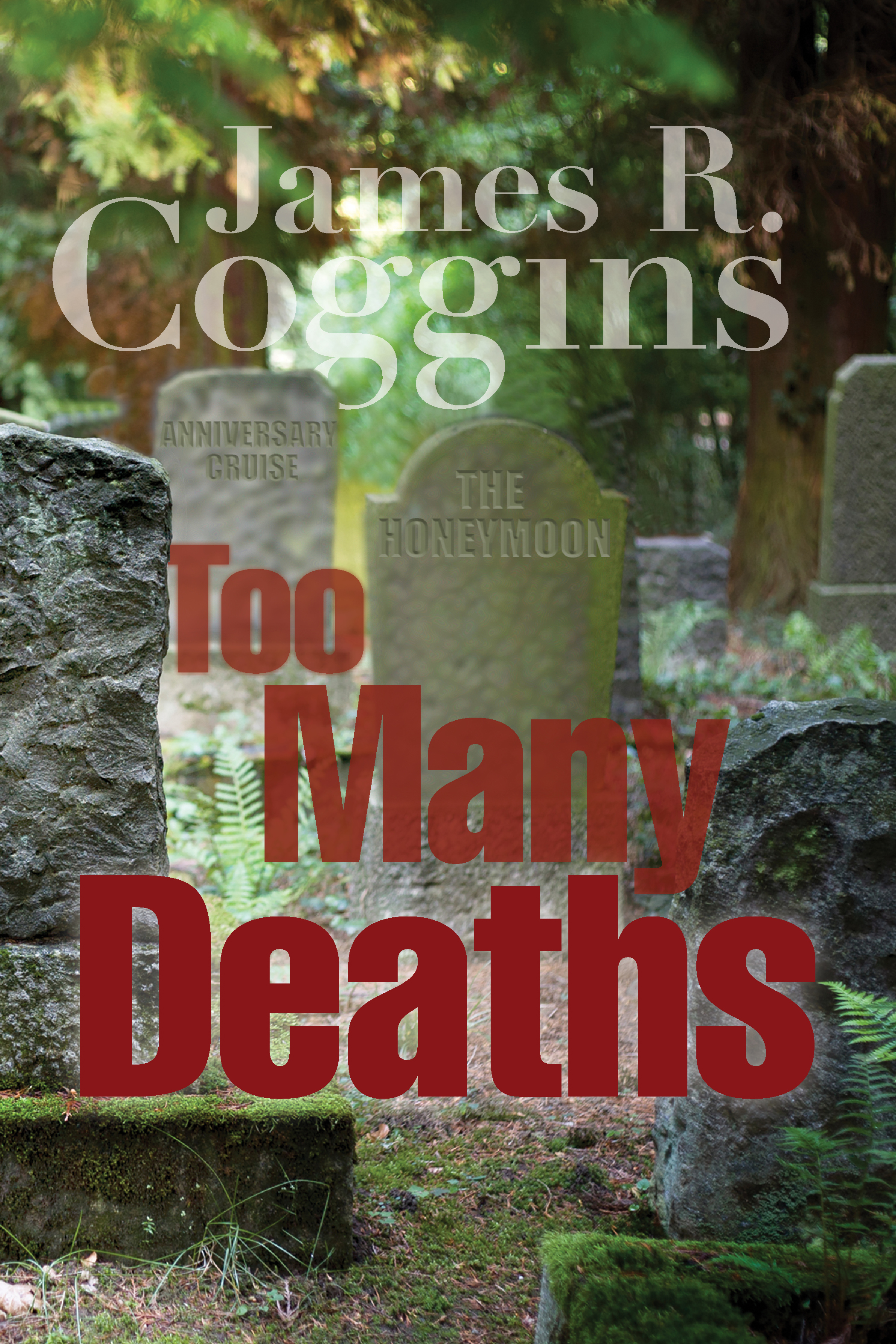
Too Many Deaths, Too Few Books by James R. Coggins

It’s another case of the shoemaker’s children going barefoot. Over the last few years, through my Mill Lake Books imprint, I have published over 30 books. But rarely any of my own. I have continued to write, of course. Writers write because they can’t not write. If they don’t write, they will explode. Which would be messy. But publishing is something else entirely. That is why, when one of my own books finally makes it into print, it is a noteworthy event. A rare gem. A long-anticipated achievement. A cause for celebration. A pleasant surprise. To me as well as others.

Therefore, I am more than pleased to announce the publication of Too Many Deaths.

I have long been an advocate of the idea that when you write something—whether it is a poem, an editorial, or a story—you should start at the beginning, and, when you get to the end, you should stop. That is, every piece of writing has its own integral coherence. The content should determine the length, not the other way around. The story itself should determine if it is 50 words, 500 words, 5,000 words, 50,000 words, or 500,000 words.

When I started writing “Too Many Deaths,” I had a pretty clear idea of where the story was going. Just not how long it would take to get there. When I was finished, I discovered it was about 100 pages—too long for a short story but too short for a novel. So, I put with it two other stories I had written which were too long to be short stories and too short to be novels: “The Honeymoon” and “Anniversary Cruise.” And together they made a book.

Here is a brief synopsis:

Looking over the scene of the grisly vehicle accident, Sergeant Troy Weston was certain of one thing—there had been too many deaths…

Walter and Miranda were enjoying their honeymoon—until circumstances forced them to undertake a perilous journey through the mountains on horseback…

John and Ruby Smyth were enjoying a cruise to celebrate their 25th wedding anniversary—until some of their fellow passengers began to go missing…

This book offers three separate but loosely connected stories. It reunites diminutive Christian magazine editor John Smyth (the under-sung hero of four previous mystery novels) and Royal Canadian Mounted Police Sergeant Troy Wesson. The two (Smyth and Wesson) had collaborated to solve murders in an earlier Coggins novel, Desolation Highway. This is scarcely surprising since their namesake, Smith and Wesson, has been involved in many murders over the years.

Too Many Deaths is distributed through Ingram and is available in bookstores and through online retailers such as Books A Million, Barnes & Noble, Amazon, and Amazon Canada.

Posted in James R. Coggins | Tagged , , , , , , , , | 1 Comment

The Tomb is Still Empty!

The Tomb is still empty!

It’s Tuesday. The Easter celebrations are over. Another work week has begun.

The tomb is still empty.

Soon, another week, another month, another year will pass.

But the tomb is still empty.

In this upcoming year you may face trials in many forms, from sickness to family issues. The loss of a job. Perhaps even the death of someone close.

Yet no matter what trials you face this year and the ones to come, the tomb is still empty.

And because it’s empty, we know that Jesus defeated death and sin. He and the Father prepared the perfect plan of salvation because He knew what would happen in the Garden of Eden before it did, and He knew we could never follow the laws given to Moses.

We could never produce the perfect sacrifice to save ourselves.

But He could. And He did.

Because of Jesus—His death, burial, and the empty tomb—salvation has come to us all, and we can shout “hosanna” like the crowds upon Jesus’s entry into Jerusalem.

Matthew 21:9

The crowds that went ahead of him and those that followed shouted, “Hosanna to the Son of David!”

“Blessed is he who comes in the name of the Lord!”

“Hosanna in the highest heaven!”

Until next time, dear friends, the tomb is still empty, and He is still risen! He is risen indeed! Hosanna!

Mary

http://www.maryalford.net

Posted in Uncategorized | Leave a comment

Good Friday Reflections by Julie Arduini

It only makes sense if P.T. Bradley so beautifully wrote about Maundy Thursday, I should share my thoughts on Good Friday.

I have a few thoughts, and one starts right from my birth. I was born on Good Friday, with tornado warnings no less. This is one of those facts I throw out when people want to know something that most wouldn’t know.

As a child, I didn’t understand Good Friday. I didn’t understand a lot about Christ’s crucifixion, but I knew He was nailed to the cross. What’s so good about that? That question followed me for years.

Fast forward and I was a fairly new believer in Christ, married, and a mom. Passion of the Christ was THE movie everyone talked about. There were so many warnings about the violence that I was scared to watch. I did watch once, and it was brutal. It wasn’t a movie you’d binge over and over. The sacrifice Jesus made was clearly on screen for all to see and hopefully believe.

A few years after that, we moved to Ohio with our family that now included our daughter. We found a church home that is not only still the same, but it is our church family. We’ve been through a lot together. One of those things was an annual performance of The Passion Play. It looked like a professional show right down to the Last Supper scene, built to replicate the famous painting as the actors held still to capture the moment.

The tradition went on long enough for my husband to play John the Baptist, ensemble soloist, and ensemble director. My son was a young boy servant when he first started, and ended up as a disciple. Our daughter was a background actor with a dream to be one of the dancers. That came true.

One year my elderly aunt attended and chose an aisle seat. The play is called The Passion Play for a reason. It was as realistic as you could get. Jesus carried the cross, and it was an agonizing journey. Several times the actor would stop, drop the cross, and it would be right near people watching the play. My aunt was right where Jesus stopped, and the drop of the cross echoed through our section. She jumped.

The lashings appeared real, and the Roman guard would stop half way through them to break the fourth wall and share facts with the audience about the brutality. It’s easy to gloss over what Jesus endured. Before He was nailed to the cross He was beaten. Spat on. Mocked. The lashes were intended to bring Him as close to death as possible. The whip was embedded with shards of bone and lead.

When the play resumed, two thieves, real actors, hung on crosses. The hammer sounds for Jesus were real. The actor playing Jesus screamed with each blow. When the cross was erected with Jesus on it, you could hear crying, every performance.

In actual crucifixions the soldiers would often break legs to speed up the death. Not in Christ’s case. He had exposed bone from whippings and beatings, and extra pain and torture from His crown of thorns. He hung for hours.

The play of course ends with the Biblical re-telling of His resurrection, ascenion, and promise of return. When the lights came on my aunt looked at me and announced she didn’t really care for it. It was too intense.

That response takes me back to my childhood question, what’s so good about Good Friday? Passion Play lets you know if you have any religious background it’s known the play will be about the last week, crucifixion and resurrection of Jesus. Of course it’s intense. Jesus lived without sin, literally perfect, on Earth and had every reason to reject what happened.

It was His Father’s love for us that brought Jesus to Golgatha.

It’s the empty tomb three days later that proved He was no ordiary man. He was Savior. Messiah. God with Us.

He took that love and sacrifice and made a way to heaven, to eternal life with Him. There is no other way but accepting that Jesus is all those things, did all those things, and we are sinners who have no hope without Him.

There it is. The Good. Was that day good for Jesus? You know the answer.

It was good for us. For you, me, and everyone we love—and those we do not.

His passion IS intense. He went to the Cross to make a way, a way we should have faced, not Him. But He did.

I don’t know about you, but being thankful seems so lame. Spending every day as long as I breathe being grateful will never cover what He’s done.

But my passion is to help advance God’s Kingdom.

Is it yours?

Have you ever considered what Jesus has done for you? Are you ready to acknowledge Him and enter into a relationship where He is part of your every day?

If so, repeat this prayer or something similar:

Jesus, thank You for everything You have done. I believe You came to Earth and lived in perfection. You were crucified without cause, and took the punishment, my punishment, to make a way for my eternity to be spent with You. You never sinned, but I have. Forgive me for my sins. (Feel free to name them). I want to spend the rest of my days on earth living for You. You are my Savior and rescuer, and You deserve all the honor, praise and glory. Amen and Amen.

Posted in Julie Arduini | Tagged , , , , , , , , , , , , , | 1 Comment

Maundy Thursday

Today is Maundy Thursday. Growing up, I never heard the term Maundy Thursday, which I find hard to understand now. Perhaps you aren’t familiar with it either.

Maundy Thursday is the Thursday before the crucifixion and the evening when Jesus shared a Passover Seder meal with his disciples. As reported by recent research into Palestinian cuisine during Jesus’ time, the meal would have consisted of a bean stew, lamb, olives, bitter herbs, a fish sauce, unleavened bread, dates and aromatized wine.

The six foods represented a different part of the Exodus story: beitzah, a roasted egg, which symbolizes sacrificial traditions and the coming of spring; maror, a bitter herb (commonly horseradish), and chazeret, lettuce, which fulfill a commandment set in the book of Numbers; zeroa, a shank bone, which calls back to the Biblical sacrifice of lambs; charoset, a mixture of apples, nuts, and spices, representing the mortar used by Hebrew slaves to build Egyptian structures; and karpas, or parsley, which incorporates the ritual’s Greek influences.

It was during this meal that He instituted the Lord’s supper or communion. It’s called Maundy Thursday because of the command Jesus gave his disciples to love one another. Maundy is a shortened form of mandatum (Latin), which means “command.”

Here are the verses from John 13:34-35: “A new command I give you: Love one another. As I have loved you, so you must love one another. 35 By this everyone will know that you are my disciples, if you love one another.”

After the meal, Jesus washed his disciples’ feet…even the feet of Judas, who would betray him in a few short hours. In Mark and Matthew, the writers tell that after Judas left, Jesus and the disciples sang songs. Traditionally, they would have sung the verses from Psalm 116 to 118. These are some of the greatest psalms of praise to God.

We know from the gospels that once they’d sung the hymns, they left the upper room and went to the Garden of Gethsemane where soldiers came and arrested him. I’m reading all four gospel accounts of Holy Week and the crucifixion and then the glorious Resurrection. Won’t you join me?

Happy Easter to all!

Posted in Uncategorized | Tagged , | 1 Comment

Peter’s Faith by James R. Coggins

Acts 19 tells the wonderful story of Peter, imprisoned by King Herod and facing death, being miraculously rescued by an angel. Peter followed the angel out of the prison, but “he had no idea that what the angel was doing was really happening; he thought he was seeing a vision” (Acts 19:9). He was a block away from the prison before he was finally convinced that that he was free. He then went to the house of John’s mother, where “many people” had gathered to pray for his release. But when a servant girl told those praying that Peter was at the door, they told her she was crazy.

We might wonder at Peter’s slowness to believe that God was rescuing him from Herod’s prison. We might also be critical of the believers who had gathered to pray for Peter’s release but who didn’t believe it when it happened.

But we have the benefit of hindsight. Peter was not short on faith. In fact, he was being very faithful to Jesus, continuing to preach the Good News even at the risk of his life. Faith is not the hope or expectation that nothing bad will happen to us. It is following Jesus no matter what happens to us.

Peter had good reason to think that God would not rescue him. He had seen Jesus willingly accept death on the cross. He had seen his good friend James killed by Herod. Furthermore, after His resurrection, Jesus had told Peter, “Very truly I tell you, when you were younger you dressed yourself and went where you wanted; but when you are old you will stretch out your hands, and someone else will dress you and lead you where you do not want to go” (John 21:18). The Gospel writer explained, “Jesus said this to indicate the kind of death by which Peter would glorify God.” In other words, Peter would be crucified just as Jesus was. Then Jesus said pointedly to Peter: “Follow me!” (John 21:19) So, Peter in prison was expecting to be crucified, and he can be excused for thinking that time had come. Jesus had said this would happen when Peter was “old,” but humans are not very good at interpreting prophecy.

Posted in James R. Coggins | Tagged , , , , , , , | Leave a comment

Finding the Meaning by Tara Randel

When I was a kid, our house was always decorated for Easter. Ceramic or stuffed chicks, bunnies, or colorful eggs. There were baskets filled with candy and goodies. Hidden egg hunts. Fingers dyed different colors after coloring hard boiled eggs. I got a new dress with matching shoes. We had a big dinner with lots of relatives invited. All the children were excited, running around on a sugar high.

What I don’t remember is Jesus being part of the conversation.

As I got older and examined my faith, I wanted more details about Jesus’ sacrifice and resurrection. What did it mean for me? For mankind? How could I build my life around the foundational truth that Jesus died for my sins. That He now sits in heaven in glory.

So, I worked at it, studying the Word and making sure that I created a lifestyle that I hoped would show the love of Jesus.

Once I had children, I really struggled with how to present commercial Easter and the real meaning of Easter. I’m sure that is a decision each family makes for what is right for them. I put the emphasis on Jesus but did allow some of the fun things we did as kids to be part of the day. My children grew up knowing who Jesus is and what he did for us. They have chosen to follow Him.

Now, my mom will ask if I’ve decorated for Easter. I don’t make an issue about it, but the answer is no. I want what Jesus did on the cross to be the focus, not some knickknacks that are cute but not the true spirit of what we celebrate, the resurrection of Jesus.

As we go through Holy Week, let us focus on Jesus’ time here on earth, the ultimate sacrifice and the glory of His resurrection. Let us walk in love and shine His light to all around us. It is to Him we give all the glory!

Have a happy Easter.

Posted in Tara Randel | Tagged , , , , , , | Leave a comment

I Have a Website by James R. Coggins

I have a website (www.coggins.ca).

It’s not new. It’s old and obsolete. Like me. I had it set up years ago as an advertising venture, hoping it might bring me writing, editing, and speaking assignments. It has. To some extent.

I put my email address on my website. I thought it might be a good idea. After all, all of those people who wanted to contact me to offer me assignments needed some way to get in touch with me.

But technology changes even if I haven’t. Over the years, the email address on my website has been harvested by robots. And then sold over and over again to people who do not want to offer me assignments. Rather than offering me opportunities to make money, they see opportunities to make money from me.

Aside from the usual offers of pornography, access to gambling sites, quack cures for bodily ailments, get-rich-quick schemes, and mail-order brides from eastern Europe, I have noticed some interesting new trends.

Quite a few emails have offered me ways to “drive thousands of new customers” to my website. For a fee, of course. Since I don’t sell anything from my website and have more work than I have time to do, I don’t see the purpose of driving customers there.

Some of the emails offer me help with my hiring processes so that I can find the right employees. I don’t have employees.

Maybe it’s the current state of the economy, but especially in the last few months, I have received emails offering me loans of hundreds of thousands of dollars so I can expand my business. Since I don’t have much of a business, I don’t see how expanding it would help. And since I am a writer, I don’t have much money and wouldn’t be able to repay the loan. Maybe those mail-order brides from eastern Europe have men friends who are experts in convincing people to repay loans.

Now here is the really puzzling development. I am now receiving emails every day offering me AI (Artificial Intelligence) programs which can relieve some of the burden from me by writing my “blogs, website content, advertising copy, ads, emails, sales copy, contracts and more.” They promise me that these robots can churn out “high-quality, engaging content,” “generate content in your unique writing style,” “generate a complete outline for your non-fiction book effortlessly, saving you valuable time and effort in the planning phase,” “rewrite and extend your content seamlessly, refining your ideas to perfection,” and “generate up to 500,000 words per month of captivating non-fiction content.”

Do these robots have any clue what my business is? I am a writer. For me, writing is not a burdensome chore. (Well, okay, sometimes it is.) For me, writing is a calling, a noble purpose, a joy. It is creative and fun and fulfilling. If a robot can do my writing for me, what am I here for?

Further, I have some advice for those people who feel obligated to write blogs and other things but see it as a chore and would be glad of a robot to do their writing for them. My advice is this: DON’T!!! If you don’t have useful ideas and innovative stories to write, don’t write! If you don’t have an insight or understanding burning in your soul that just must be expressed, leave the expressing to others who do. If you don’t have anything to say, shut up and don’t say anything. Stop cluttering up the universe with useless drivel just because you feel you have to fill some empty space. And don’t hire some mechanical device to do it for you either.  

Posted in James R. Coggins | Tagged , , , , , | Leave a comment

He Speaks!

In the timeless hymn, In the Garden, one verse says,

He speaks, and the sound of His voice,

Is so sweet the birds hush their singing.

And the melody that He gave to me,

Within my heart is ringing.

If you’ve ever listened to birds sing you know how melodic their chirps can be for the most part (not always).

So, imagine a voice so sweet, the birds quiet their songs to listen.

In Genesis we see how God spoke and the world came into existence. Was it a thunderous boom as described in some scriptures, or a quiet voice?   

In the Exodus, God’s voice was revealed through a powerful thunder. When He spoke to Moses through the burning bush, it was the same resounding voice.

Yet God whispered in Elijah’s ear in 1 Kings 19:12: “And after the earthquake a fire; but the Lord was not in the fire: and after the fire a still small voice.”

Psalms 29:3-9 says, “The voice of the LORD is over the waters… The voice of the LORD breaks cedars… The voice of the LORD strikes with flashes of lightning.” That’s an awe-inspiring picture of the power of God’s voice.

Throughout the Bible, God has spoken to His people in many ways. Today, He speaks to us through His word. Through prayer. Through songs. Through quiet medication and waiting for His answer.

In a world that is increasingly filled with noises that drag us away from His presence, God still speaks. We just have to listen.

So, take a moment today to stop and listen to the One who spoke the world into existence. Who whispers to you, “Let’s talk”.

Until next time, dear friends, many blessings!

Mary

http://www.maryalford.net  

Posted in Uncategorized | 2 Comments

54 Minutes with Julie Arduini & Friends by Julie Arduini

When our youngest was prek and early elementary age, she had a one-track mind about her birthday.

It’s in August, but the topic was year-round. It was such a mindset she forgot other people had birthdays as well. We had to ban her from talking about HER birthday so her brother would feel remembered on HIS!

I remember as I approached 50, I thought hey, this is a biggie. I wanted to really have fun with it. I made all these plans and then it was the pandemic. It was early pandemic so no one even thought of the drive-by parades celebrations. I turned 50 with a whimper.

Although I didn’t adopt my daughter’s love for the day so much it is a daily event, I decided to do something fun for each birthday in my 50’s. A favorite was attending a rage room with two of my dearest friends. We looked ridiculous in our overalls and helmet shields, but we broke a lot of stuff!

This year I wanted to do something that encourages others. The author life is lonely and it’s been especially difficult these last few years. We understand if a reader needs to purchase gas for their car or a book, we aren’t going to see a lot of purchases. I don’t know if I can solve all the world’s problems, but I thought I’d create a fun event that puts authors in touch with readers and vice versa.

54 Minutes with Julie Arduini and Friends is just that. Tomorrow night from 7-8 Eastern I’m hosting an event on my Reader Group Page featuring ten other authors. Each author, myself included, has five minutes to share whatever they want. They might post once, or as many as three times. But the challenge is they have those five minutes.

—Julie Arduini

Now if you do the math, 11 authors and five minutes equals 55 minutes. That’s what I love, I’m not a mathematician! The good news is we are only taking less than an hour of your time. And I have a feeling you will see giveaway opportunities. Trust me, you want to be there!

The authors represent all kinds of genres, so I’m pretty sure you’ll find an author worth following, hopefully more!

Here is the list of participating authors:

Julie Arduini, Jennifer Arrington, B.J. Bassett, Marie E. Bast, Kate Darroch, Bonnie Engstrom, Linda Hoover, Linda Shenton Matchett, Leagh Matthews, Terry Overton, and LoRee Peery.

I’m so excited. Chances are you love to read given the blog is called Christians Read. You are invited to join us. If you know other readers, share this with them. We’d love to see a huge gathering.

Were birthdays a big deal to you as a child?

Posted in Julie Arduini | Tagged , , , , , , , , , , , , , , , , , , | Leave a comment

White donkeys for royalty

A white donkey on the Mount of Olives.

A white royal donkey is often staked opposite the grove of ancient olive trees that is the Garden of Gethsemane on the Mount of Olives. They are called creams, have blue eyes, and are extremely rare.

Historically, that special animal was reserved  to carry royalty.  It is believed to be the donkey our Lord rode into Jerusalem on Palm Sunday as people laid down palm branches crying, “Hosanna in the highest. Welcome to the king of kings!”

Zechariah 9:9 declares, “Rejoice greatly, O daughter of Zion; shout, O daughter of Jerusalem: behold, thy King cometh unto thee: he is just, and having salvation; lowly, and riding upon an ass, and upon a colt the foal
of an ass.”

What cry of welcome would we give the Lord today? Would we gather palm branches and lay down our outer garments to honor Him and mark the road for His kingly advance into Jerusalem and its people?

Reflect on what outer clothes He might ask us to remove to lay before Him? Consider the replacement clothes He offers. What a wonderful exchange!  

Have a most blessed Palm Sunday and Easter. May their joys and celebration be yours every day, all year long!

My newest book, A Traveling Grandma’s Guide to Israel: Adventures, Wit, and Wisdom, is getting rave reviews and presents pearls and insights gleaned through my nine lengthy trips to Israel over the last forty years. It’s on Amazon in print and kindle and on Audible in Audio. Here’s the cover. All authors appreciate readers leaving Customer Reviews on Amazon and other sites. Thank you!

Posted in Uncategorized | Tagged , , , , | Leave a comment

Broken Bread by James R. Coggins

At the Last Supper, Jesus broke bread and passed it around to His followers, saying that it was a symbol of His body, which was about to be sacrificed for the sins of the world (Matthew 26:26-30). This supper was the Passover meal, in remembrance of the time when lambs were sacrificed in Egypt to protect the Israelites from the death that was inflicted on the Egyptians, an event that finally freed the Israelites from slavery. This Old Testament ritual was a symbol and prophecy of Jesus, the Lamb of God, being sacrificed for the sins of the world in the New Testament and of the freeing of human beings from slavery to sin.

But why did Jesus “break” the bread instead of cutting it with a knife? The term “breaking bread” has become so familiar to us, as a common phrase meaning to eat together, that we do not give it a second thought. This expression has come into the English language through the Bible and the observance of the Lord’s Supper in churches. We are so used to it that we take it for granted.

Factory-sliced bread was an innovation of the 20th century. Before that, loaves of bread had to be sliced or broken by the user. In Bible times, bread was baked in large, round, flat loaves. The Passover meal used “unleavened bread” (since there was no time to wait for the bread to rise as the Israelites were about to flee Egypt). It would be hard, like a cookie or cracker. Therefore, it was broken, not cut. Even the more common leavened bread would be broken when people were on the road away from home without knives or cutting boards or plates.

Breaking, of course, symbolizes the violence of Jesus’ crucifixion. Jesus broke the bread, dividing it into pieces to be distributed to His followers at the Last Supper. This meal also reminds us of another meal. Matthew 14 tells the story of Jesus feeding more than 5,000 people with only five loaves of bread and two fish: “Taking the five loaves and the two fish and looking up to heaven, he gave thanks and broke the loaves. Then he gave them to the disciples, and the disciples gave them to the people” (Matthew 14:19 NIV). In Matthew 15, Jesus did it again, feeding more than 4,000 people with seven loaves and a few fish: “Then he took the seven loaves and the fish, and when he had given thanks, he broke them and gave them to the disciples, and they in turn to the people” (Matthew 15:36). At the Last Supper, Jesus broke the bread and distributed it to His immediate followers in the upper room. But the miraculous feedings symbolize that that bread (Jesus’ body) continues to be broken and distributed by His followers beyond that upper room, multiplied to thousands and millions and even billions of people. It goes to every new Christian symbolically and miraculously in the observance of the Lord’s Supper but also spiritually, as Jesus’ forgiveness and promise of life are given to every new follower of Jesus.  

Posted in James R. Coggins | Tagged , , , , | Leave a comment

“We’re Here to Help” by James R. Coggins

Our bank was offering a new savings account with a better interest rate than the pitiful amount our current savings account was paying (far less than the inflation rate). This new account had apparently been available for two years, but our bank had not bothered to inform us of this. The bank had informed us about many other new services over those two years but not the one that might actually be useful to us.

So, we phoned our local branch to make an appointment with a financial advisor. Twice. Both times, we reached an automated answering device which said our call was important to the bank and asked us to leave a message. Both times, the automated instructions closed with “We’re here to help.”

When we still had not received an answer by the next day, we decided to go in to the bank. We approached the only teller on duty (the bank prefers customers to use the “automated teller”—ATM—and do the work ourselves). When we finally got to the head of the line, the teller told us to wait in some chairs. We sat down in front of a large poster that outlined some of the bank’s services and then said, “Talk to us today.”

After a few minutes, the teller came back and told us that there would be no one available to talk to until the branch manager returned in an hour or two.

So, we left, delayed lunch, ran some errands, and returned. We found the bank manager. He was dealing with another customer. When he was finished, he asked us what we wanted. When we explained what we wanted, he said that he didn’t have time to talk to us today and we should make an appointment. We said that we had tried that and nobody had called back. He checked his computer and said that the earliest we could make an appointment to talk to someone was later the next week, almost two weeks after we had originally tried to make an appointment. (We wondered if he had also checked our bank balance and realized that we were not among his wealthier customers.) We said that we were not willing to wait that long.

We returned home and phoned the bank’s national phone line. When we got through, we were finally able to transfer our money to the new account. It took more than half an hour to go through all the steps, including listening to a number of recorded messages outlining the bank’s policies. The agent finally told us that the money would be transferred the next day.

We waited two days and checked the account online. The money had not been transferred. So, we phoned the bank’s national line again. This time, the agent explained that the money could not be transferred until we had been informed that only the principal could be transferred but that the “accrued interest” could not be transferred. We asked why not, whether it was a bank policy or a government regulation, but the agent would not answer, just kept repeating that the accrued interest could not be transferred. We then asked that if the bank needed to inform us of this before the principal could be transferred, why hadn’t the bank informed us of this over the previous two days? The agent had no answer. We asked why the first agent hadn’t told us about the accrued interest issue and asked if he had made a mistake. The new agent refused to admit that, just kept repeating that the accrued interest couldn’t be transferred. Finally, we agreed to have the principal transferred but not the accrued interest. We were told that the accrued interest would remain in the old savings account.

The next day, we again checked the accounts online. We saw that most of the money had been transferred out of the old savings account but had not yet appeared in the new savings account.

That same day, we received an email from the bank informing us that the amount in our original savings account had fallen below $100 and that the account had no overdraft protection. The email said that we could leave the money in the account or transfer it.

We waited a few more days and checked again. We discovered that almost all of the money had been transferred to the new savings account, which would leave an even smaller amount in the old savings account. Except that there was no money left in the old savings account. We surmised that the amount had fallen so low that the bank’s computers had decided that the account was dormant and had confiscated the small amount that was left.

We checked again a few days later and discovered that the original small amount had reappeared in our old savings account.

Then we received in the mail an application form that we needed to fill out in order to transfer our money from the old account to the new account. There was another form attached that indicated that the interest rate for the new savings account would be less than we had been told and that it would be harder to transfer money in and out of that account than we had been told.

A week later, we finally managed to secure an appointment to see a financial advisor at a different branch of the bank farther away. He clarified that the interest rate in the new account would be what we had originally been told, and he was able to transfer the small amount of accrued interest in our old savings account to our checking account.

Large institutions often claim that they personally care about us, but the truth is that they are so large and bureaucratic that this is impossible. Large institutions are not people and cannot care about individual people. The claims make good advertising slogans, but they are not backed up by reality.

This makes me wonder about the claims large mega-churches make about caring for people. Can they really deliver what smaller, local churches do? 

Posted in James R. Coggins | Tagged , , , , | Leave a comment

Bad Things Happen. But There’s Hope!

We live in a fallen world. Through Adam sin entered the world bringing with it death.  

Bad things—unimaginable things—happen in the real world. Most are too painful to read about.   

Listening to the news, it’s easy to lose hope. But our story isn’t over. In fact, the Hero has already come and saved the day.

On March 31st, we celebrate what our Hero—Jesus—did for us all.

He came into a fallen world knowing what waited for him. He didn’t change His mind when greeted with ridicule and anger by those who should have known who He was.

He loved, healed, and forgave even from the cross. That’s a hero. He allowed himself to become the perfect atonement for the sin that entered the world through Adam. He died for everyone. Even those who reject and deny Him.      

As a Christian suspense author, I strive to make my stories as believable as possible while giving the hero and heroine along with the reader hope. And that hope wouldn’t be possible if it wasn’t for what Jesus did for this fallen world.

No matter how many books I write, or how many the world’s authors create, there will never be a love story like the one Jesus wrote for us when He chose us.     

John 21:25 says, Now there are also many other things that Jesus did. Were every one of them to be written, I suppose that the world itself could not contain the books that would be written.

Until next time, dear friends, many blessings!

Mary

http://www.maryalford.net  

Posted in Uncategorized | Leave a comment