Time to Read by Elizabeth Goddard

More often than not I run across people who don’t read. It’s not because they don’t have an interest in reading a good novel, it’s because they don’t have time.  Someone went so far as to say it was more about getting hooked on a book or series of books, and then getting distracted from work or life or chores or family. I’ve heard this same “excuse” several times lately from various people.

You’ve heard that we make time for things we consider important.  But it’s difficult to find time even for the important things, isn’t it? So how does one fit reading into a hectic schedule?

It’s true that you can get hooked on a book and then other things get pushed aside. There’s the other side of the equation where the important things interrupt your book world in the middle of a great scene and you have to put the book down.  A painful experience, to be sure.  I understand the mindset that if you never pick up a good book to begin with, you won’t have to feel the pain of putting it down when life interrupts.  You won’t have to worry about neglecting the more important, the more necessary things of life.

Then why put yourself through it? How important is reading for pleasure anyway?

To an addict, reading is as vital to life, to the soul, as air is to the body. Okay, maybe that’s going a little far, but once you’ve experienced where words can take you, time is no longer your master because you become a time-traveler.

Time isn’t your enemy. Time is your friend.

Posted in Elizabeth Goddard, Uncategorized | Tagged , , , , , | 4 Comments

Too Much of a Good Thing?

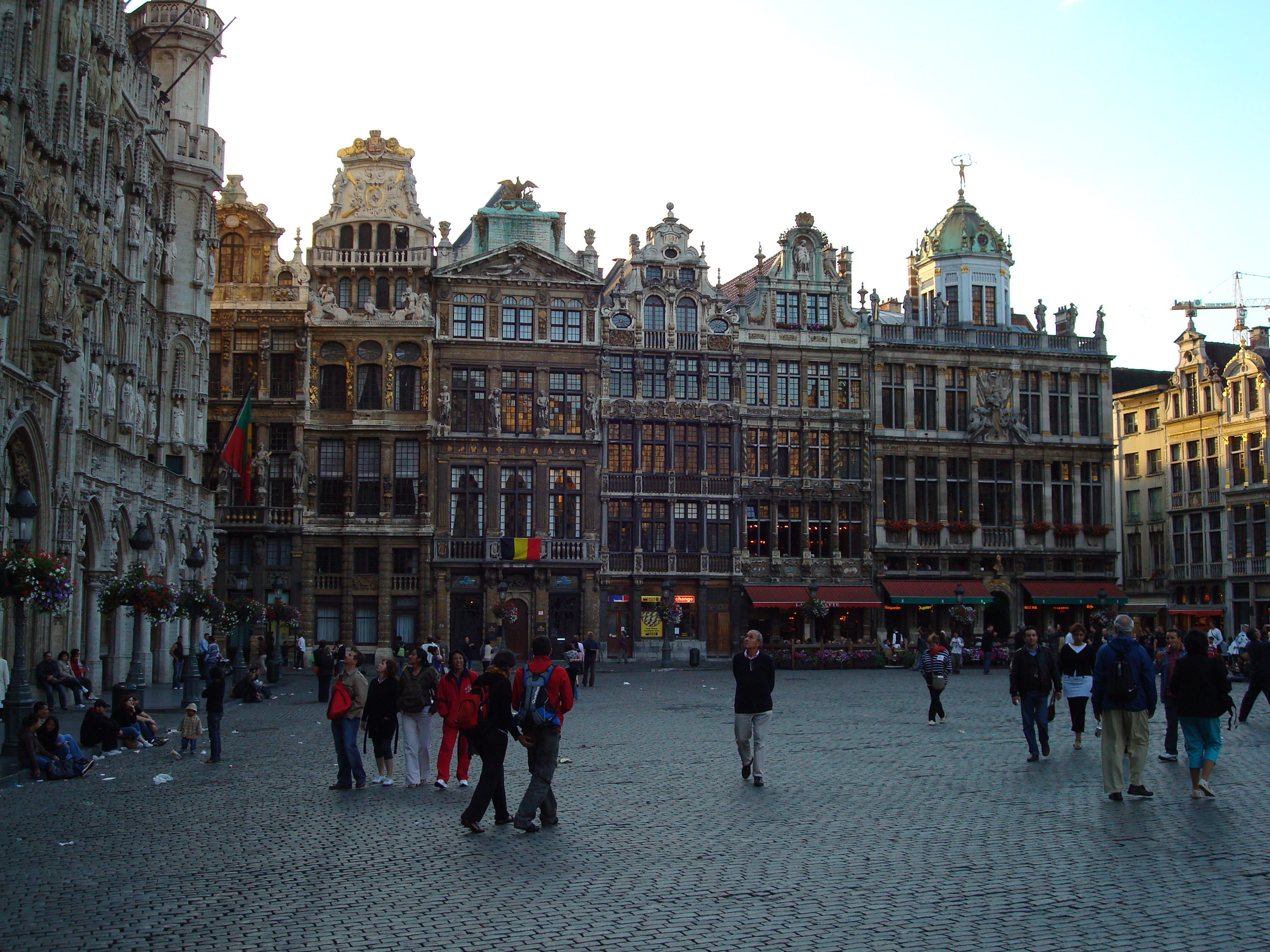
While researching a Brussels setting, I snapped a picture of the Grand Place where the Germans took up their WWI occupancy.

I love to do research. Seeing a glimpse of daily life in other eras fascinates me. I loving learning about popular entertainment, food of different days, clothing, and so on. When I read accounts of someone surmounting incredible odds or overcoming great hazard, I imagine the actual people in such situations. I wonder what they felt, what possessed them to persevere. I want to see everything through them, feel it as if I’m there. History is full of exciting adventures just waiting to be fleshed out through the eyes of characters facing—and often conquering—tremendous challenge.

I also love going to the places that play the important role of setting in my books. While it’s obvious

On a NYC research trip I stopped by Times Square for some free advertising at American Eagle Outfitters. That’s me on the billboard to the right, holding up one of my books.

such places have mostly changed from what they would have looked like in historical times, I still want to get a feel for distances, and check out any historical sites that can offer a real taste of what various aspects did look like during the era I’ve chosen to bring alive again.

But . . . you knew there was a “but” coming, right? Can an author put in too much setting? Too much historical fact? I recall the very first book I wrote for publication. This was way back in the 80s, when historical romances frequently surpassed 100,000 words. I felt so free to wander about in my stories, to develop subplots and throw in all the lovely research I’d meticulously gathered. Even with that freedom, though, I only ended up using a fraction of the material I’d uncovered. I never regret doing too much research, though—an author who knows her setting allows the voice behind the story a certain amount of confidence that’s bound to come through.

These days books are far more streamlined. In the age of sound bites and one-liners in social media, one-page digital articles (heaven forbid the reader must scroll!) we’ve moved toward shorter books and even shorter chapters. There are exceptions, but it’s risky for a publisher to invest money in longer books from unknown authors.

One exception to my shorter length theory is The Historian by Elizabeth Kostova. It’s not a new book, but it’s not that old, either—published in 2005. This book was the selection this month for the book club I belong to, a secular group that often chooses something to match the season. This book is appropriately named, because the author herself obviously loved her historical research. I would argue too much, but I’m not sure how well that argument would be received considering the phenomenal success of this book. There is only one true measure of a book’s length, reflective of a saying I truly believe: a good book is never too long.

There is a balance to be found between story and research; research needs to carry its own weight within the story, or even readers like me who love history will either get bored or worse, put the book down altogether.

What about you? Have you read a book lately where the research was appropriately balanced? Where you came away realizing you’d learned something, but never lost the entertainment value? That’s the sweet spot on this issue!

Posted in Uncategorized | Tagged | Leave a comment

This Is How Writers Do It by James L. Rubart

You’ve wondered how us authors get all our words written? Now you know.

Posted in Honored Alumni, James L. Rubart, Uncategorized | Tagged , | 1 Comment

Why do we write…or read?

As an author and also an avid reader, I suppose I could say I read and write because I love to do so–and that would be absolutely true. But there’s more to it, especially as Christians. Every now and then we get a glimpse of how God’s purposes in the midst of the books we love, and it puts things back into perspective. That’s what happened to me with the very recent release of my 2012 Christmas book, Unexpected Christmas Hero. I’m posting the story below. Will you consider joining with us in helping to reunite this family? Thank you!

***

This is the cover for my 2012 Christmas novel, Unexpected Christmas Hero, which just released from New Hope Publishers in mid-October. It is a story about a family (mother and two small children) who become homeless when their husband/father dies unexpectedly and leaves them in terrible financial straits. The family is befriended by a homeless Vietnam vet who becomes their “unexpected Christmas hero,” despite his own precarious position. I recently learned from my publisher that the man on the cover (Willard Parker) truly is homeless but graciously agreed to pose for this photo. He told the photographer that he is separated from his family and would like very much to be reunited with them (particularly his grown daughter). So I thought about all you wonderful blog followers and social networking friends and decided, Why not band together and try to make this happen for Mr. Parker? I am posting the story from the photographer below so you can see how Mr. Parker ended up on the cover. If you recognize/know Mr. Parker and/or have any information about his family, please leave a comment here with your contact information or email me at ezyrtr@ca.rr.com. Meanwhile, please pass this information along to anyone you can–via your own blogs, social networks, email loops, whatever way possible to help get the word out. Let’s make this go viral and bring this family back together!

Story from photographer/designer:

We (designer and photographer Michel Lê and spouse Christine) were Christmas vacationing in Asheville, NC.

I had Kathi’s book cover to design and needed photos of homeless people. Christine remembered seeing homeless people under some bridge in town. I grabbed my camera and off we went.

After unsuccessfully circling around for an hour, I decided to call it off and head back.

That’s when God told Christine to persevere, and to go in a different part of town. And there he was, Willard Parker, the perfect physical representation (in my opinion) of Kathi’s Unexpected Christmas Hero‘s main character. We stopped the car and asked him if he was homeless and willing to pose for a few photos, after explaining to him the book story.

Willard said yes and was very accommodating. While driving to a suitable place for the photos, Willard offered us a glimpse of his life. He lost his house a few years back. He has a daughter somewhere north (maybe Detroit?) whom he lost touch. Willard also believes in our Lord Jesus Christ.

We had a sense of great sadness in his life, that it didn’t turned out the way he hoped for. WIllard had a very humble and kind spirit. But we sensed a quiet yet powerful sparkle and desire for life. He longed to see his daughter, and we felt how hard that would be for him in his present situation. He is basically illiterate as I found out (when I asked him to read and sign the Model Release).

I wanted to buy him lunch in a restaurant but he politely declined (maybe for fear of not being “part of the crowd”). We gave him some money and left, with a heavy heart and deeply moved.

While designing the cover, I prayed that the one with him would be chosen (there were others being considered), so I could send him a few copies, that in turn he could send one to his daughter (assuming we locate her). I prayed that God would make this happen, that He would flood his daughter with new love for her dad after seeing him on a book cover, that she would be proud of him, that she would have a great desire to reunite with him, just like we long to reunite in love with our Father. I hoped and prayed for it to happen. It would be the greatest Christmas gift of all for Willard.

Then the cover with Willard was chosen and the author decided to launch a campaign to find Willard’s family and reunite them. Thank You, God! We hope/pray that many of you will join us to spread the word. Sooner or later, someone out there will recognize Williard’s picture and/or name and know how to contact his family. Thank you all for being part of this! Now let’s get to work and see what God can do!!!

Posted in Uncategorized | Tagged , , , , | 3 Comments

Read, read, and listen

I’m going to tag along with Elizabeth’s post, because her venture homeschooling and reading with her children reminded me of when my two were very young.

Some of the best memories I have of my children growing up involve our discovery of books; or rather, my joy as I rediscovered many of my favorites with them. Before they were old enough to dive into the books on their own, I read aloud to them. There’s a lot to be said for reading aloud. You can do the accents, make your voice pitch high or low, depending on the character. You learn the time to make a dramatic pause, and when exactly to stop reading for the day so the kids are ready next time. You get to experience the book together.

One of the other benefits of reading aloud is the imagination can take over instead of a newer reader trying to figure out the words on the page. The early readers might struggle with reading an “older book” for themselves, but they’re not too young to learn to listen to the pages and let their imaginations sprout.

However, when we took road trips, books on tape–and eventually CD–became our traveling companions. We traveled back and forth from Narnia as our car headed back and forth from the beach, to Tennessee and then to Colorado. In the heydey of the Left Behind saga, we listened to some of those titles too.

It’s a shame, really, that there aren’t more audiobooks in the world. While they’re not written words on printed (or digital) pages, the sound files can also transport us, especially with a good narrator that knows how to do all the voices just right.

We writers are told about the importance of reading our work aloud as we go, because the ear can pick up what the eye has missed. Maybe that’s because reading aloud reminds us about what it is to be storytellers, not just storywriters.

Is there a particular book you loved hearing read aloud, or one you wish they’d record? How many of us still read aloud to our children?

– – – – – – –

Lynette Sowell writes fiction for the inspirational market, from contemporary romance to mysteries. She’s always looking for the perfect recipe for a story–or a great dish–and is always up for a Texas road trip. You can listen in to the Flashlight Reader on Monday nights here.

Posted in Honored Alumni, Lynette Sowell, Uncategorized | Tagged , , , | 1 Comment

Recurring characters

Meet Karissa!

She was one of my high school girls in youth group at my church where me and my husband have been working for the past several years. So while I was writing my last several books, I saw her pretty much every Saturday. Even though she’s now in college, I see her in the summertime when she comes home, because she helps out at youth group.

So when I was writing Single Sashimi, book 3 in my Sushi series, and I had to come up with names of kids in the youth group, I chose Karissa’s name.

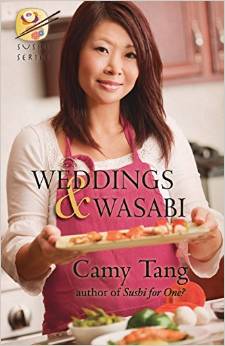
Then when I was writing Weddings and Wasabi, book 4 in my Sushi series, she showed up again.

THEN when I was writing Protection for Hire, lo and behold, she showed up again. What’s more, she had a significant role as a minor character.

So of course when writing A Dangerous Stage, the second book in my Protection for Hire series, I had to have her appear again, although not in as big a role as the first book. But I think I will bring her back again for the third book. 🙂

I’m not sure why she kept coming back as a recurring character, but I found that I really liked seeing her. And then I realized how much I liked seeing recurring minor characters in other series that I’ve read. It makes me feel like I’m stopping in to visit for tea and cookies!

What are some series and recurring characters you’ve enjoyed reading about? Or do you not enjoy recurring characters at all? Weigh in!

Posted in Camy Tang, Uncategorized | 5 Comments

If My People Pray 2012 by Julie Arduini

About six weeks ago I posted my love of political news. With the election less than a month away, I thought I’d share an update of sorts.

There is a movement called If My People Pray 2012 where Christian leaders participate in a short video praying over a topic that lines up with 2 Chronicles 7:14.

14 Then if my people who are called by my name will humble themselves and pray and seek my face and turn from their wicked ways, I will hear from heaven and will forgive their sins and restore their land. (NLT)

Leaders include Vonette Bright, Kirk Cameron, Ken Ham, Mike Huckabee, Anne Graham Lotz, and more. Topics include praying for marriage, sanctity of life, pastors, entertainers, revival, and other issues that should be on our prayer radar.

For the 40 days before the election people with a burden to pray commit to do so each day. The video features the leader that day praying. There are prayer points and a call to distribute the videos and prayer point to others through social media and e mail. In these tech savvy days there is also an app available for the iPhone, iPad, and Android.

For the United States of America, we appear divided, and that saddens me. The best course of action isn’t to stand, but to kneel.

I hope you’ll join me in praying for our nation.

Posted in Julie Arduini, Uncategorized | Tagged , , , , , , , , | 3 Comments

It’s a New Day–by Hannah Alexander


   I wish I did this every day, but when I think about it, the first thing I do when I wake up in the morning is thank God for another day. I love mornings when I wake up at just the right time without the help of an alarm clock. Being a full-time novelist without children in the home, I have this luxury. The decisions that come directly after that important prayer impacts everything that happens each day.

First of all, do I allow my email OCD to control me the whole day, or do I choose certain times during the day to address those in the outside world? Do I, instead, read some passages from the Bible and give the day to God? Even if I do this, it doesn’t mean I’m wise enough to let Him keep the day. I have a bad tendency to grab it back when things aren’t going the way I expect them to. Bad idea, I know, but still, it’s what I do.

Now that Mel and I are building that clinic in town, I’m not spending the time I need to on my writing. So even though the only income I bring to the family comes from my writing, I find myself doing anything but. Do you find yourself doing this, as well? It seems that the busy-ness of the day takes precedence over the vital business of the day. Please tell me you’ve struggled with this. It’s so easy to use the excuse that there were necessary to things to complete, but is that what I’ll tell my editor when I don’t meet deadline? Is that what I’ll tell God, Who has called me to write, when I meet Him face to face on judgment day? “Oh, sorry, Lord, I know you wanted me to write that novel, but I just had to make these decisions for the clinic first…yes, I know I could have had someone else do that, but it seemed so urgent at the time.”

Sometimes we let the day decide for us. But we can’t afford to do that anymore. What is your calling from God? Choose one or two, maybe three if you’re a superhero, and release the rest. Do what you’re called to do, exercise your spiritual gifts, and leave the other vital things for the person called by God to do them. That’s what I plan to do in the days to come. Will you join me?


Posted in Hannah Alexander, Uncategorized | Leave a comment

Reading the Bible for All Its Worth! by Sarah Goebel

You know if you have read my previous posts that I am back in school so I am mostly writing about my classes! I did consider perhaps it was too late for me to finish my degree at 58 years old; then I met a woman who finished her Master’s degree in her 80’s. I decided, “What to heck! If she can do it, I can do it too! I don’t think God is through with me yet!” So, I am working hard every day reading a lot of textbooks and my Bible. I love it, but I have to admit, I miss reading some good stories – you know the kind – those that keep you glued to the couch until you finish them. Some of those stories are found right here on this site, written by my really neat Christian brothers and sisters who write really awesome Christian fiction! I have found good Christian books balanced with reading the Bible to be the best recipe for my life. I hope you have too. Today, I want to share some things I have learned in one of my classes that help us to read the Bible for all its worth!

I think these interpretation rules can help achieve consistency in anyone’s biblical understanding. I pray you will find this to be true for you:  (1) The first rule addresses our starting point, which is what we call exegesis. Exegesis is what we do in trying to understand what was written to them back then and there. One does not have to be an expert to do the basics of exegesis. We just need to be aware of a few things. For instance, Fee and Stuart, authors of How to Read the Bible for All Its Worth, recommend that we set limits to what the text can and cannot mean today based on what it could mean when written to the original recipients. In other words, it cannot mean something to us today that the hearers then would not have understood. Remember, those that these words were originally spoken or written to didn’t try to interpret them in their present time according to a future understanding or future culture such as our western lifestyle in the twenty first century. It is we who have that task. We must look back and interpret according to their situation and culture, not according to our own.

This seems like a basic idea; yet, we all can probably think of some times we have seen poor interpretation from ignoring this rule. For example, those who do not believe that spiritual gifts are for today sometimes use 1 Corinthians 13:10: “When the perfect comes the partial will be done away” as their theological basis for refutation of the spiritual gifts. They claim that the perfect has come in the form of the written Word of God, particularly the New Testament. They say, therefore, prophecy and tongues are no longer needed. With good exegesis, however, we know that First Corinthians 13:10 could not possibly mean this to the first century Christians; because, they did not know we would have the Bible in the form we have it today. By asking the question, “Could this have meant that to the first century reader?” when we are considering an interpretation, we can prevent ourselves from building a false theology. I am not trying to tell you what to believe concerning spiritual gifts. But I am saying that if you don’t believe they are for today, hopefully this isn’t the reason; (2) The second rule: When the situation surrounding the first century recipient is comparable to ours, then God’s Word to us is the same as it was to them. That’s easy enough. On the other hand, if it is not comparable, whether it is what we want to believe or not, we must accept that most likely it needs to be interpreted in view of cultural relativity. In other words, it is vital that we correctly reconstruct the circumstance of the hearer then in our exegesis, if we are to apply this rule with biblical accuracy. These things must be done before we can then determine what the Word means to us today in our present situation.

One such place in Scripture that is interpreted differently by different denominations is First Timothy 2:11 concerning the operation of the church and women. As I have studied the passages concerning this issue this past year, I have found that the Church at Ephesus was a church in crisis! This is important to know because a church in crisis may need different instructions than one that is not. One of their challenging issues involved some very specific women who were spreading wrong teachings (1 Timothy 5:11-15; 2 Timothy 3:6-9). When considering what they may have been teaching, consider the culture of Ephesus.

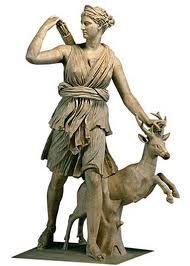
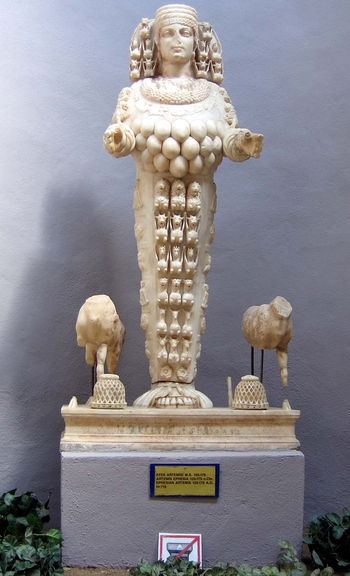
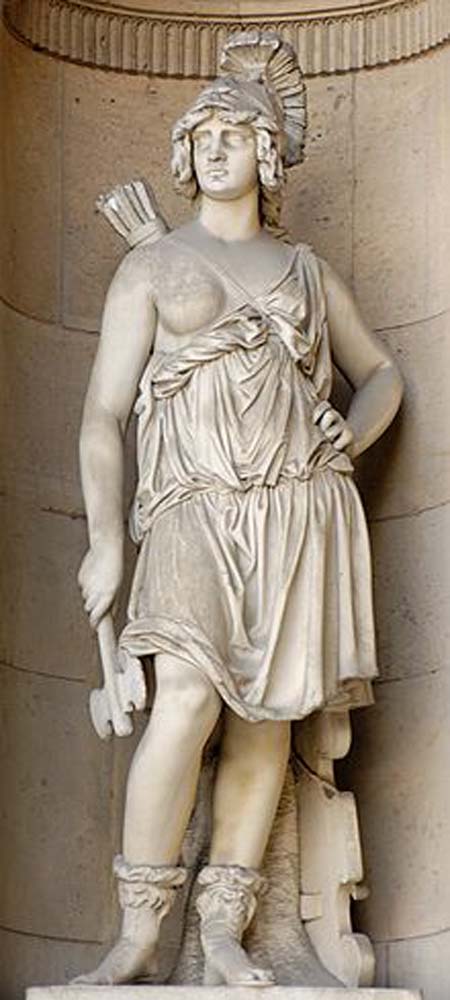
The Legend of Artemis & Amazon Warriors

Fertility Goddess Artemis

The culture was highly influenced by the goddess Artemis which encouraged women to dominate men. Her worship was fanatical and traced back to the Amazon (female warriors), of whom many in Ephesus claimed to be descended from. Having this type of knowledge about what was going on in Ephesus helps us to understand the situation, problems, and crisis Timothy was trying to handle which demanded drastic measures. It helps us to understand why Paul would write, “But I do not allow a woman to teach or exercise authority over a man, but to remain quiet” in one place and do the opposite in another. Paul was the founder of the church at Ephesus and had left Timothy there to handle the crisis. Paul was laying down some strict measures based on the situation present in Ephesus at this particular time in order to bring it out of a crisis situation. Paul wouldn’t allow a woman to teach or speak for that particular church at that particular time for that particular circumstance, and not for every church for ever.


An Amazon Warrior

An Amazon Warrior

After all, Paul writes to the church in Corinth (1 Corinthians 11) to help them sort out the issue of headdressings when women are… what?–when they are prophesying and praying in public worship services!  He didn’t command them to be silent. He gave instructions for them to pray and prophesy. One cannot pray and prophesy and keep silent! In other areas of Scripture we see women were involved in leadership roles in Paul’s ministry as well. Therefore, we must take the this Scripture and the one other used to prevent women from holding leadership roles in some churches today and consider them in light of all the Scriptures and references to women and ministry made by Paul. When we do, I believe the best conclusion is these two situations must be culturally relevant, meant for very specific situations, and not a universal mandate.

Again, I am not trying to change your doctrine about this controversial issue with this short post. However, I do hope I have heightened your sensitivity to specific problems inherent in Scripture, and helped you realize why different options exist. I share Fee and Stuart’s goal that as readers, we learn to discern between good and not-so-good interpretations and perhaps to know what makes them one or the other.

    Until next time…Happy Reading and may you be safe in our Father’s care!

Sarah

1Fee, Gordon D. and Stuart, Douglas. How to Read the Bible for All Its Worth. Grand Rapids, Michigan: Zondervan, 2003.

Posted in Sarah Goebel, Uncategorized | Tagged , , , , , , , , , , , , , , , , , | 4 Comments

WRITING AS WORSHIP

Recently I was engaged in an email discussion raised by another writer about whether our writing is worship. The general consensus was that our gifts are from God and our using them in a way that serves others is serving him. But what about worship? That got me to thinking about how I looked at it.

When I was in my 30’s, I taught in Sunday school, headed up mission programs, promoted special offerings, taught Bible studies, was in church every time the doors opened. That was good. I needed it. Was good for my family. Now, I get more depth by personal study and worship by having a faith message in my books. I have to think about the characters’ problems, and while solving them for the characters, I’m confirming my own faith, teaching myself, and giving the reader something to think about.

For example, in my current WIP my author/character’s mentor had encouraged him from childhood to always have a “good” ending when he came up with his wild “bad” stories. In his mature, successful author years they have a discussion about opposites– bad/good, evil/good and concluded good is opposite of bad. One can do “bad” things and combat that with “good.” But being/doing good is not the opposite of evil. I loved that discussion, made me think about and present to my readers what is the opposite of evil.

I love it when I stop to realize (as the discussion reminded me) that I’m not just writing stories, but I’m learning more about my own faith and imparting that to readers who need to think about the faith message. God is teaching me as I write, and in turn I’m teaching the reader. I think when we’re experiencing that, it’s worship.

Posted in Uncategorized | 3 Comments

Lifetime Readers

Maureen mentioned her non-fiction reader friends react somewhat negatively when she brings up a book she just read. Jim mentioned that he’s facing an empty-nest, but the good news is his wife is starting to read novels.

So where do lifetime readers come from?

In one of my previous posts, I talked about receiving a big box of books for my home schooling efforts.  I remember reading somewhere  that home schoolers are driven to produce readers. I know that’s true for me. Unfortunately, I’m in competition with the video gaming world, but the good news is—I think it’s working!

Life has interrupted a few times, and I had to put off reading to them. I wasn’t even sure they enjoyed our reading time, or if they were listening. But apparently all three of them have listened.  My middle son has been spouting off silly metaphors he learned from one of the books.

Imagine my pleasure when my oldest asked when we were going to read again—he really missed that particular story. I was ecstatic, too, that the kids groaned when I finished the chapter because they were anxious to hear what happened next.

Don’t get me wrong, they read a lot on their own, which I anticipate will also produce the desired results—lifetime readers.

If you’re an avid reader, never give up on your efforts to enlighten the non-readers around you.


Blessings!

Beth


Elizabeth Goddard is the award-winning author of Treacherous Skies, releasing November 27th.


Posted in Elizabeth Goddard, Uncategorized | Tagged , , , , | 2 Comments

Non-Readers, Beware! I just finished a book . . . Posted by Maureen Lang

Do you have any friends who are dedicated non-readers? I’ve had some over the years, and one of the topics that can roll their eyes the fastest is if I try starting a conversation with “I just finished this book . . . ”

They just don’t get it. The whole imagination, sit in one place, turn the pages thing. Particularly if a story doesn’t get right to action or pique their immediate interest, the non-readers I’ve known are just not willing to invest the time it takes to connect with either the characters or the story itself. Or should I say, their priorities don’t include reading and there are plenty of other demands to fill up a day.

But if a movie can be made of a book, that’s okay to talk about. They can invest two hours in something visually compelling. My non-reader friend will likely refrain from the eye-roll if I want to tell them about a really great movie I enjoyed, because that’s an option for them to check out in the future. But for me to tell them about a book they’ll never read, well forget about it.

That’s what makes the free world a better place, all the choices available to meet our varied tastes and interests. I would no more force a book on a non-reader than I would want to sit through four hours of a sporting event on television. To each, his own.

But on the other hand, isn’t it great when we find “our people”? Those fellow avid readers who understand the quickened pulse, the laughter, the nodding along as we read something we’ve connected with. When we tell another reader we just finished a book—well, that’s just the beginning of a satisfying conversation. Not a single eye-roll in sight.

Posted in Maureen Lang, Uncategorized | Tagged , | Leave a comment

Looking Down the Barrel of the Empty Nest Gun by James L. Rubart

If you’re an empty nester, or are soon to be, has your behavior changed because of this?

My oldest son, Taylor started his second year of college a few weeks back. Our younger son, Micah is buried in his junior year of high school with a number of honors and AP classes. Plus he’s ultra-social (no idea where he got that from) so Darci and I hanging out in the domicile just the two of us quite a bit these days.

  • The good news: Even after 26 years of marriage we’re still madly in love.
  • The bad: Our sons are outstanding and we love having them around. So the dwindling time together as a family is hard.
  • The good: Darci has never been a reader of fiction. Over the past five years she’s read four novels. Three of them have been mine. But now she’s decided to start reading fiction. Sorry for the pun, but she says it’s time for a new chapter in her life—which means diving into novels.

Your turn.

Has the empty nest syndrome made you read more? Or do something else you’ve never had time for? Hike? Bicycle? Take a cooking class? Travel? Read non-fiction (I’ve heard that’s what they call books that aren’t made up.)

Posted in Honored Alumni, James L. Rubart, Uncategorized | Tagged , | 2 Comments

In God We Trust: A Lesson from Light by Vicki Hinze

IN GOD WE TRUST:  A Lesson from Light

Last night, I heard a very short snippet of a sermon made in a public forum.  I didn’t know the speaker and unfortunately do not recall his name now.  But what he said touched me.


Not in the soft, gentle knowing kind of way.  No, what he said struck me like a thunderbolt.  It resonated so strong and deep that it carried the force of a physical blow that rocked me back in my seat and left me with the sensation of blown out eardrums.


You know the kind of reaction I’m talking about.  You’ve no doubt had it, too.  When something so profound, so significant bears down on you and says, “Hey you, hear this.  Know this.  Be certain of this!”


Maybe you got that feeling on being told a loved one had unexpectedly passed away.  Or when the person you loved asked you to spend the rest of your life with him/her.  Or when you were told you were going to have a baby, or that you couldn’t ever have a baby.  Or when you were told that you had a lethal disease for which there was no cure.  Or when you read—or wrote—something in a book.


I’ve experienced all those things and this was that kind of moment.  That important and significant and carried that kind of weight, only . . . more.  And still this morning it reverberates and applies itself to everything else that goes through my mind, to everything upon which I focus.


IN GOD WE TRUST.


We’ve seen the phrase a million times.  We’ve noted it being used in all kinds of context on all kinds of subjects.  And yet in his simple delivery, those words will never be viewed the same—at least, not by me.


His sermon was a short, simple one based on Genesis 1:3:  “And God said, “Let there be light,” and there was light.” (NIV)


Then he went on to speak about light and how fast it travels and has traveled without ceasing or slowing or easing, or growing weary or faltering through time and distance for a minute, hour, month, and year.


“Light is because God said, and light obeyed.”


That’s the part that knocked me to my knees.


Now the reverend or pastor or whatever this bearer of truth was, stopped there.  My mind and heart and spirit didn’t.  I had been profoundly impacted, and am still processing.  I have a feeling I will be processing for a long time to come.


Some thoughts on this that I know are significant, but not all the ways this is significant (there is much more to be learned):


Light didn’t question its purpose, its identity.


When God created Light, Light didn’t spark and fizzle or fade in and out.  God created it and—boom!—Light was and it shone.  It knew what it was and did what it did.  Light was, is, and will always be Light.  It shone then, since then, and will shine forevermore.


Light didn’t and hasn’t experienced an identity crisis.  It doesn’t wonder if it’s on the right path, fulfilling its intended purpose.  It is, and it is because God spoke it into creation and deemed it good.  Light knows what it is and whose it is, and that it is good.


That’s a powerful, powerful knowledge, and in it is a wealth of wisdom.  Light is a mentor to us, if we choose to be mentored.  Like Light, God spoke us into creation.  He fashioned us with His own hands, infused us with gifts—abilities, insights, skills or the ability to attain them—and breathed life into us, claiming us as His own.  He gave us the wisdom of His Word, revealing His character and traits which prove to us that He cannot abide evil or that which isn’t pure, and because we know that, we know that He considers us good.  We’re flawed, yes.  No surprise to Him; he created us exactly as we are.


He gifted us with free will, knowing that we would goof up and make mistakes and burden ourselves and our souls but also with His promise to be there with us every step of the way and giving us His instruction book—the Bible—revealing how we can make less of a mess with our lives by following His ways.  He was for us the ultimate trailblazer, and when we muddied things up anyway, He sacrificed His son to show us the way.  By grace, not works, we’re saved and remain His forever.


These days, as in many days gone by, remembering at all times who and whose you are isn’t popular.  Some will demonize you.  Satan will let loose with all the demons in hell to oppose you, tempt you, do any and everything to pervert and dissuade you.  Spiritual warfare is the worse warfare because the ultimate prize is your soul, your eternity.


Think about it.  We’re here in this life for such a short time.  But eternity is, well, eternity.  It lasts a lot longer.  So whatever trials we face in life pale to those of battling for our eternity.


Mixed messages and muddled directives from other human beings can manipulate or confuse or deliberately steal our eternities—but only if we neglect to take this lesson from Light.  And that lesson is:


We are the children of God.  We are and always will be children of God.  We might choose to ignore it, to rebel against it, to deny it, but we are who we are.  We are whose we are.

The closer we walk with our creator, the better able we are to endure and face constructively life’s challenges and trials.  We’ll have them, but we’ll also have the tools to cope with them.


Conversely, if we exercise our free will to walk away from God, we’re closing the proverbial toolbox.  He won’t stop us from walking the wrong path, but He’ll walk it with us, patiently waiting for us to return to Him, to call upon Him, so that He can remind us of who we are and that we’re His.


As people, as a society, as a nation, we are in a spiritual war over our purpose for our identity.  Over and again, we hear the problems.  We know them.  We live them and they manifest in our lives every day.


Over and again, we hear they’re complex, and intricate, and too big to handle.  But if we look at Light, we know that’s simply not true.  We know that anything man does is a flawed bandage and to solve the problem we must go to the root source.  That’s where the lesson from Light offers the solution.  We need only remember who and whose we are.


Embrace that, and we have the tools we need to resolve our issues no matter how complex or tangled.  Reacquainted with our instruction manual, we rediscover that He specializes in making crooked places straight.


We don’t have to struggle with identity or who we are or how to fix what’s broken.  Like Light, we just have to be who and whose we are.  In that are all the answers to all our questions.  To claim them, in God we trust.

There’s so much more, but more must wait for another day and another post.  For now, I’m holding on to the lesson in, “Light is because God said, and light obeyed.”

Blessings,


Vicki

P.S.  The first book in my new Lost, Inc. series of Love Inspired Suspense novels has been released, SURVIVE THE NIGHT.  Wanted to mention it in case that’s a type of book you enjoy. FMI visit vickihinze.com or the Lost, Inc. website.

Posted in Uncategorized, Vicki Hinze | Tagged , , , , , | 2 Comments

Change by Kristen Heitzmann

As I sit in this first cold snap and see hanging baskets with darkened, withered leaves and tiny pellets of brittle snow skittering across the balcony, I feel change coming. The geraniums are still blooming pink and unfazed. The grass is still green. Some of the trees are yellow and red. Some are bare from the wind. There is no synchrony, but rather singularity in the parts of nature as the season begins to change. Why is this one staunchly blooming while another has faded away? Like middle school kids, awkwardly entering the next phase at various rates and in unlovely ways.

It strikes me that life is a solitary path, a series of changes that may or may not coincide with anyone else’s readiness to change. I have often spoken of seasons in my life, years in which my creativity took wing through music, through art, and through writing. And within those seasons there were seasons, times of growth, times of drought, times of dormancy and rejuvenation.

Sometimes my husband claims he wants to go live where it’s always summer. I can think of many such lovely places, but then there’s a day like today when I feel the unease of change coming. When I know they’re calling for snow Saturday, and at first I think I need to cancel the mountain hike we planned for my birthday, then imagine hiking it in the snow instead. Excitement springs up. Change.

Without change, I’d grow dull. I need the dissonance that resolves. I think that’s at my core as a writer. Strife, strife, more strife, then resolution. And with that dissonant resolution comes wonder, comes beauty. I rejoice that God in his great wisdom didn’t give us a static world.

Posted in Honored Alumni, Kristen Heitzmann, Uncategorized | Leave a comment