(This post contains spoiler alerts if you haven’t yet watched The Good Wife on DVR.)
I love to discuss writing when it comes to television. When I find a well-written show, I’m a fan. I still talk about the episode of LA Law when Roz walked into the elevator while talking, not seeing it was out of order. She fell to her death, a move I never saw coming. She was a regular character with a solid storyline.
Or so I thought.
It was the same when on 30-Something they teased a major death. Well, one character had cancer. They led you to believe she was going to be the one, and it made sense. Imagine my surprise when it was another character, the beloved Gary, who died in a bicycle accident no one saw coming.
I’m probably not the average television observer because I do look at it from a writing perspective. When I turned on the TV Sunday, I settled on The Good Wife because it was supposed to be The Mentalist. I was writing and although The Good Wife isn’t a show I watch often, between commercials and the little I’ve watched, I was familiar with the storyline. About 2/3 way though, I looked up and realized something unexpected was taking place. There was no foreshadowing that I was aware of, minus the minute before the shooting.
When the credits rolled I couldn’t believe it. The show eliminated the hero.
As I read online about it, killing off Will Gardner (played by Josh Charles) was a surprise to the audience, but not to anyone connected to the show. In fact, they had known for a year Josh Charles was leaving.
Audience reaction was mixed. Some, like me, found it a bold move that allows for new storylines to jump off the page.
But a lot of fans felt betrayed. They’ve been watching in anticipation of an official pairing between the hero and heroine. Will and Alicia. They’ve tuned in week in and week out, waiting. And now all hope of that romance returning and lasting is gone. And fans are angry.
That got me thinking. How many times as a reader have I been disappointed because the ending didn’t go “my way?” Who was the writer creating for? The reader and guessing what they might want, or for them and their own plot?
The Good Wife producers knew there would be a backlash, so they even had a letter for fans. Josh Charles even admitted they talked about the ways to say goodbye to his character. The actress who played the heroine, Julianna Margulies, went through this once before when her romantic pairing on ER, George Clooney, left the series. Back then they opted for his character to move to Seattle, and when the series ended, the two characters reunited and fans were delighted. The Good Wife cast and crew even tossed out the “move to Seattle” idea, one that would have ultimately given fans hope for Will Gardner’s return and possible romance with Alicia.
But with his violent death, Will Gardner’s dead and any hope of him and Alicia is gone.
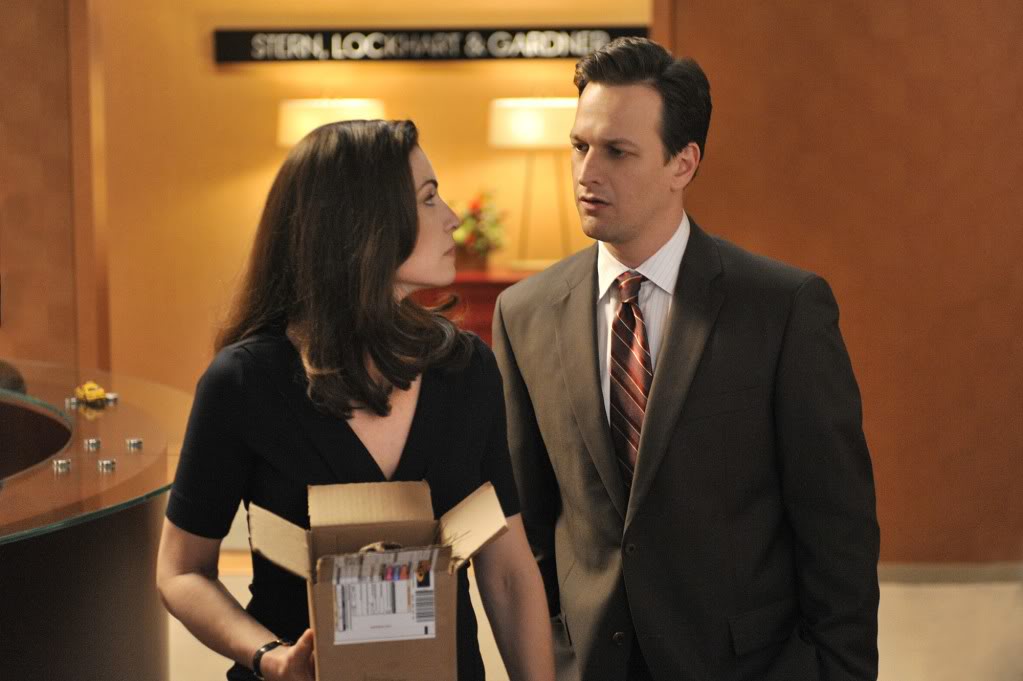
These characters won’t have a chance at love thanks to writers.
The Good Wife, courtesy CBS
And that’s real life, and the ultimate reasoning behind why the writers went the way they did. Life is messy. Sometimes the loose ends aren’t tied into a pretty bow. There are days you wake up with no indication you have hours left to live. The writers felt exploring the reality of life was a better direction to take the show than give into fan loyalty to two characters.
That makes me ask, what about you? As a reader and/or television viewer, what do you expect from writers? For them to follow their gut and plotting, or create with your happiness in mind?
Like I confessed, I come from a writer’s angle. I want to be surprised. I want that shocking moment that I don’t see coming, as long as it makes sense. I know it creates new challenges, but I find those storylines exciting and full of opportunity. When fans get their way, I think ultimately they end up disappointed and writers stifled. My example? Moonlighting, the 80’s show that paired Bruce Willis and Cybill Shepherd’s characters, and the show died a fast death.
I’d rather see a major character experience the death.
What are your thoughts?