At Mount Sinai, God made a covenant, a formal agreement, with the Israelites, the essence of which was the document we know as the “Ten Commandments” (even though the Bible never calls it that). The Hebrew word for covenant is beriyth(Exodus 19:5, 24:7, 34:28). This was essentially a renewal and elaboration of the “covenant” God had made with Abraham (Genesis 15:18, 17:2-21). In Exodus, God said that He was rescuing the Israelites from Egypt because He “remembered his covenant with Abraham, with Isaac and with Jacob” (Exodus 2:24, 6:4-5 NIV). The two stone tablets on which the covenant was written and which were placed in the ark were called the “testimony” or “witness” (eduwth). That is, they would be the evidence or proof or documentation or reminder of the covenant (Exodus 25:16,21 31:18,29, 40:20). The ark itself was called the “ark of the testimony” (Exodus 25:22, 26:33, 30:6 and many more). The word for “ark” is arown, which means literally a “box.”
In Exodus, God also told the Israelites: “Be careful not to make a treaty with those who live in the land where you are going, or they will be a snare among you” (Exodus 34:12);
“Be careful not to make a treaty with those who live in the land; for when they prostitute themselves to their gods and sacrifice to them, they will invite you and you will eat their sacrifices” Exodus 34:15); “Do not make a covenant with them or with their gods” (Exodus 23:32). The Hebrew word for “treaty” is the same as the word for “covenant” (beriyth). The Israelites were not to make a covenant with other nations or other gods because they already had a covenant with the true God, Yahweh. They could not make another covenant without breaking their covenant with Yahweh. They were to have “no other gods before me” (Exodus 20:3), which would be equivalent to “committing adultery,” which was forbidden in their covenant with God (Exodus 20:14).
As I watch snow finally melt outside my kitchen window, I sigh at the sound of confident piano practice. My grow son plays in the far side of the house. The distance lends perspective. The mellow tones make me smile deep inside because I’ve come to understand love so differently than I once did. Those early years of marriage and motherhood taught me one version of love – the kind that runs on adrenaline and determination. But now, with silver in my hair and laugh lines I’ve earned honestly, I see love’s deeper currents.
Gone are the days of preventing hurt. What say you? Don’t you care? Oh, most certainly, we mother’s care, believers care, but life happens. Trials happen and there’s a heap of hurt that’s required to take the fruit from the experience. Jobs are lost, scholarships, boyfriends, dreams, and even faith. Or so it seems. My son took the long road home, a painful one but necessary. I’m sure you can relate, no doubt.
How many times have you caught yourself attempting to fix something that must, by design, be left alone if those you love are to grow? I’ve been there too often but, when I’m able, I recall my mother’s wisdom. This high-school drop- out, mother of eight adopted the practice of not offering help and or advice. She’d remain silent unless specifically asked. Pointers were given sparingly, even then, with specifics couched in her personal experience. Having married at 16, in a different world that was pre-WWII, she saw too much. Good, bad, and pure ugliness often came by way of undue interference, even by those with the best of intentions. But just like in Fallen Angel, my very first published romantic suspense novel, we must cleave to the truth.
God draws straight with crooked lines.
That’s why love was suffering for Mom. Love meant letting life happen, most certainly by the time she reached child number 8. Yours truly. The pain of that learning exercise was mostly borne by her.
The job of patient bearing is mine now. Yours too, perhaps. God calls us to love throughout, however, amid what seems to be the darkest night, for that trail brings forth wisdom. Our Lord’s mother suffered in manifest silence. A deafening silence, outside suggesting, “Do whatever he tells you!” Silently suffering. Accepting. Waiting. Refusing to judge. And embracing unassailable confidence in He whose designs boggle our minds. That s wisdom. That is true love.
Has your son or daughter ruined their life? Chosen bad company? Married the wrong person? Have they accepted a position that will only tempt them toward that which kills? Have they filled your mother’s heart with gall? Are your grandchildren frittering away precious time that could be, in your view, better spent? If that’s not your story, I have no doubt that you’ve heard such tales and plenty of them. But true love isn’t about steering our children back to our chosen path – it’s about keeping our hearts and doors open, no matter what.
The Good Shepherd, after all, doesn’t drag the sheep home; He calls to them lovingly and waits. That call, if you will, is often the deafening sound of peaceful, abiding, loving silence in the face of utter hell. Jesus gives us our proverbial heads, watching as we strain the leash and often hurt ourselves so very badly. That’s when kids come home, though. Isn’t it? And those who have sinned more are all the more inclined to love deeply, to the core, once forgiven. Those hideous thorns that pierce us are channels for grace once the evil is removed. Not to be crass, but we’re so much tough, cheap steak that must be marinated if anyone hopes to eat it. I’m relentless with my jabbing, stabbing fork when I want the delicious teriyaki flavor to move through the meat I plan to serve my family. How about you?
Say goodbye to avoidance. Embrace the pain that tells us we’re alive and still have much to learn. Our Lord told Peter to get behind him when the latter suggested that Jesus avoid Jerusalem and subsequent crucifixion. Peter was thinking as a man, like we would if we’re honest, not as God. Those who love in this world think, act, and proceed as humans because that’s what we are. We seek to shelter ourselves and loved ones from pain. Pain, however, is the crucible of abiding wisdom. (And tasty steak!)
This doesn’t mean that we should seek pain. No. Experience has led me to believe that we are tasked with accepting all that comes from the hand of God with an open heart. We should be open to suffering, in whatever form, as it comes, as it’s necessary. The humbling pain of having to take our medication or accept certain limitations is real. So, take your meds as directed. Refrain from berating yourselves for the ongoing instinct to lend an unwanted or overly helpful hand. Be kind. Treat yourself in the exact same way you want your children to treat themselves—the way Christ treats us. Our children will be in our position soon enough; silver hair, curves shifting location on the body, and bones that communicate their various complaints with unnerving regularity.
Now, to cease and desist from causing ongoing discomfort, I’ll end this little essay. We know what we need to do. Carry that cross. Love it. Embrace it. And trod the holy road of true love which leads to the Father. There is no other course. Seasoned mothers, and fathers, must lead the way to show and not tell!
One of my favorite mentions of “I Am” in the Bible is when Moses askes God who he should tell the children of Israel sent him and God ultimately replies in Exodus 3:14, “Thus shalt thou say unto the children of Israel, I AM hath sent me unto you.”
That’s all they needed to know.
The phrase “I Am” is a profound declaration of God’s eternal and self-sufficient nature. It signifies that God is unchanging, ever-present, and independent of all creation. Throughout the Bible, this concept is reiterated numerous times, emphasizing God’s omnipotence and eternal existence.
In the Old Testament, “I Am” is referenced multiple times. In Isaiah 41:4, God declares, “I, the Lord, am the first, and with the last. I am He.”
The New Testament also echoes this powerful declaration. Jesus Christ, in the Gospel of John, makes several “I Am” statements that affirm His divinity and unity with God the Father. Some of these include “I am the bread of life” (John 6:35), “I am the light of the world” (John 8:12), and “I am the way, the truth, and the life” (John 14:6). These statements not only highlight Jesus’ divine nature but also His role as the savior and sustainer of humanity.
In total, the phrase “I Am” appears over 300 times in the Bible, each instance reinforcing the message of God’s eternal presence and unchanging nature. This profound truth serves as a cornerstone of faith for believers, reminding them of God’s unwavering love, power, and sovereignty.
Until next time dear friends, no matter what you’re going through, I hope you find rest in the great I Am.
I’ve been incredibly fortunate in having the opportunity to read Vicki Hinze’s spellbinding thriller NO ONE WAS SUPPOSED TO DIE not once but twice (so far). As an author myself, I’ve many times discussed with other authors the topic of writing the book of your heart. But this book by Ms. Hinze is the book of my heart.
She captivated my imagination from the first line, “The Chief Councilor stood alone on the tarmac.” Such a simple sentence, but it demonstrates her mastery at being able to convey a sense of desolation as well as suspense. The imagery made me think of old black and white classic movies from the 1940’s.
Next she introduced us to Mrs. Penny Crown, a widow with a teenaged daughter, whose insecurities clutched my empathy. Penny Crown is both someone I would love to know in real life and what we all think of as a true hero, without being over the top. Most of all, she is believable.
Next, a stunning tale of royalty, priceless jewelry and intrigue unfolds in unexpected and enticing ways. The plot is dense and intricate, as we would expect from Ms. Hinze, but it is also accessible, easy to follow and understand. I certainly was wrapped up in it and couldn’t wait to see where the story would lead.
I truly cared about these characters and what would happen to them, including the secondaries whose destiny was carved in stone nearly two decades earlier. And, lucky me, the book resides on my kindle so I can enjoy reading it a third, fourth or infinite times.
I was so honored by Ms. Hinze’s dedication to me. This was a story I literally nagged her to write, and let me tell you, reading it has been a true pinnacle in my book-loving life.
Check NO ONE WAS SUPPOSED TO DIE out. Read the free sample, and I bet you’ll be as swept up as I was in this book that I consider Ms. Hinze’s finest to date.
I’ve been reading the book of Ephesians lately. Paul establishes a foundation of faith in the first few chapters, then finishes the remaining chapters by illustrating how to live by using the pattern of Jesus’ teaching. When I heard the word pattern in a commentary while I was studying, it brought me back to my youth.
When I was a teen, I took sewing lessons. The sewing instructor was a good friend of my mother and my best friend’s mom. In their remodeled basement, there was an entire classroom set up. There were six sewing machine stations, and two very large and wide tables used to cut the fabric from the patterns we chose. I remember spending hours learning every step of putting together a garment, but the first step was deciding what I wanted to make, a dress, shorts or blouse, then finding a pattern in order to create that piece of clothing. There were huge books in the fabric department dedicated to all sorts of patterns. We spent hours poring over them. Once we picked the one, then came purchasing fabric and going step by step, cutting the fabric by pinning the pattern pieces to it, connecting the pieces with the threaded machine and finally, the hand finishing work to complete an outfit.
Most importantly, the pattern came with instructions. I had to know how to lay out the fabric to make all the pieces fit, and I had to know in which direction to place all the pieces.
Which brings me back to Jesus. He is the ultimate pattern of how we should live our lives. In the Word, Jesus tells us about his relationship with the Father and how we can walk in the same way, how we should interact with each other, and how the Spirit guides us to carry out these actions.
The pattern instructions were important for not only cutting the fabric but then assembling the pieces. Without the instructions, I would have no clue where to start.
Jesus lived his life as a pattern, showing us the way to live an abundant life. We are his disciples, but we need Him to show us the way we should go. John 15 is an entire chapter of Jesus laying this out.
15 “I am the true vine, and my Father is the gardener. 2 He cuts off every branch in me that bears no fruit, while every branch that does bear fruit he prunes so that it will be even more fruitful. 3 You are already clean because of the word I have spoken to you. 4 Remain in me, as I also remain in you. No branch can bear fruit by itself; it must remain in the vine. Neither can you bear fruit unless you remain in me.
5 “I am the vine; you are the branches. If you remain in me and I in you, you will bear much fruit; apart from me you can do nothing. 6 If you do not remain in me, you are like a branch that is thrown away and withers; such branches are picked up, thrown into the fire and burned. 7 If you remain in me and my words remain in you, ask whatever you wish, and it will be done for you. 8 This is to my Father’s glory, that you bear much fruit, showing yourselves to be my disciples.
9 “As the Father has loved me, so have I loved you. Now remain in my love. 10 If you keep my commands, you will remain in my love, just as I have kept my Father’s commands and remain in his love. 11 I have told you this so that my joy may be in you and that your joy may be complete. 12 My command is this: Love each other as I have loved you. 13 Greater love has no one than this: to lay down one’s life for one’s friends. 14 You are my friends if you do what I command. 15 I no longer call you servants, because a servant does not know his master’s business. Instead, I have called you friends, for everything that I learned from my Father I have made known to you. 16 You did not choose me, but I chose you and appointed you so that you might go and bear fruit—fruit that will last—and so that whatever you ask in my name the Father will give you. 17 This is my command: Love each other.
18 “If the world hates you, keep in mind that it hated me first. 19 If you belonged to the world, it would love you as its own. As it is, you do not belong to the world, but I have chosen you out of the world. That is why the world hates you. 20 Remember what I told you: ‘A servant is not greater than his master.’ If they persecuted me, they will persecute you also. If they obeyed my teaching, they will obey yours also. 21 They will treat you this way because of my name, for they do not know the one who sent me. 22 If I had not come and spoken to them, they would not be guilty of sin; but now they have no excuse for their sin. 23 Whoever hates me hates my Father as well. 24 If I had not done among them the works no one else did, they would not be guilty of sin. As it is, they have seen, and yet they have hated both me and my Father. 25 But this is to fulfill what is written in their Law: ‘They hated me without reason.’
26 “When the Advocate comes, whom I will send to you from the Father—the Spirit of truth who goes out from the Father—he will testify about me. 27 And you also must testify, for you have been with me from the beginning.
I love this beautiful picture Jesus paints. There are many other examples in the Word, but this chapter always takes my breath away.
In Ephesians, and other books written by the apostle Paul, he had a really good handle on guiding new disciples to follow Christ or helping folks who had lost their way to remember where they started. He reminded the people he was writing to that they had once lived one way, but having now found Jesus, there was a better way.
In Ephesians 4: 1-6, Paul wrote, As a prisoner for the Lord, then, I urge you to live a life worthy of the calling you have received. 2 Be completely humble and gentle; be patient, bearing with one another in love. 3 Make every effort to keep the unity of the Spirit through the bond of peace. 4 There is one body and one Spirit, just as you were called to one hope when you were called; 5 one Lord, one faith, one baptism; 6 one God and Father of all, who is over all and through all and in all.
And then he ended the chapter with, vs 32, Be kind and compassionate to one another, forgiving each other, just as in Christ God forgave you.
In the Bible, we learn how important it is to follow Jesus’ example and how we can do it. Just like I learned from the best when it came to sewing. I don’t think the instructor ever bought clothing off the rack, that’s how talented she was. Because she had a foundation and had learned to follow the instructions.
It’s a process, but one that is rewarding. Just like I never knew how the end product would turn out when I started sewing an outfit, I’m amazed daily by our loving and generous Father and by remembering how selfless it was for Jesus to come to earth and be our Savior and example. We can follow that pattern by reading the instructions, His Word, the Bible.
Tara Randel is an award-winning, USA Today bestselling author. Family values, a bit of mystery and of course, love and romance, are her favorite themes, because she believes love is the greatest gift of all. Look for her Harlequin Heartwarming romance THE SURPRISE NEXT DOOR, available May 2025.For more information about her books, visit Tara at www.tararandel.com.Like her on Facebook at http://www.facebook.com/TaraRandelBooks.
How often do we wake up either dreading the day ahead of us, or fearful of accomplishing everything we’re supposed to do?
I spotted the above Marcus Aurelius quote and felt ashamed because so often in the past months, I have awakened with anything but gratitude at the privilege of being alive. I seriously needed an attitude adjustment.
God said, “Be still and know that I am God,” I reminded myself. I also recalled His nothing will happen to me today that He and I can’t handle. I am His daughter, protected by the promises and covenants made in the Bible.
And so this morning, I invite all of us to heed His words: Be still and know that I am God.
No matter how frenetic the day might become, He is with us, and we can handle it.
It shouldn’t take the death of someone we care about to instill in us the certainty and need to be still and to recognize that life itself is a privilege. It is ours to appreciate and embrace.
So this morning, I am grateful to be alive. I look forward to what the day holds in store, confident nothing will occur that God and I can’t handle. I believe His word. I believe His promises.
As we get older, it is important that we recognize the changes that are taking place in our bodies and the risks involved in that.
When we were younger, we saw no problem with getting involved in sports. As we age, however, we realize that we have to take more precautions. Here are some simple rules to follow:
1. Avoid rigorous exercise. Just the other day, I was sitting at my desk, minding my business, and then stood up. Big mistake. I tweaked my back and for the next couple of days was in intense pain.
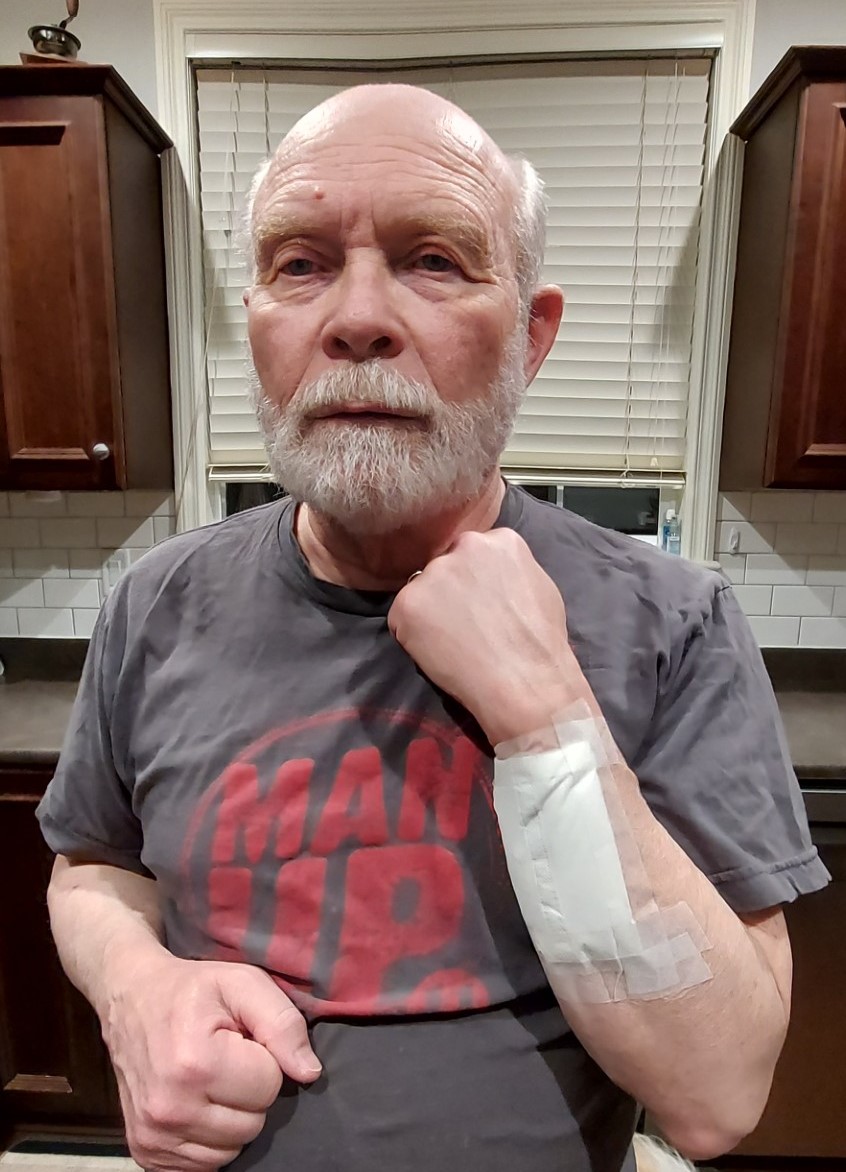
2. Don’t do anything you don’t normally do or volunteer for a job that is not your responsibility. A while after my back injury, I was helping to put away groceries, reached for something, and scraped my forearm over the corner of a box of pop cans. As we get older, our skin gets thinner and more fragile. My simple act of reaching for something tore a gash in my forearm four inches long, a quarter inch wide, and a sixteenth of an inch deep. Even worse, I am Canadian, so the gash was 100 millimeters long. Injuries like mine are another reason drinking pop is not good for your health. But that is not the lesson to be learned here. Obviously putting away groceries is women’s work, and I should have left it to the professional (my wife) to do it.
3. Don’t make sudden changes to your routine. If you are sitting, stay sitting. If you are lying down, stay lying down.
4. Learn from other people’s mistakes. Remember my example from the other day when I threw my back out. Right about then, I would have liked to throw my back out. It hurt.
5. Don’t get overly nostalgic about how great things were when you were young. The idea that it was safe to indulge in sports when you were younger is nonsense. When I was younger, I played hockey and had a tooth knocked out by a stray hockey stick. I switched to a tamer sport and broke a finger playing baseball. Actually, it was softball, which is misleading. The ball wasn’t soft. I even got a concussion playing pushball in high school gym class. There was no golden age. Vigorous exercise is dangerous at all ages.
6. Don’t listen to stupid advice. Exercise is a good thing. I didn’t tweak my back because I stood up. I tweaked my back because I had been sitting too long. You won’t be injured sitting in a chair. But you might well die of a heart attack.
7. Life is to be lived. Don’t waste your life playing it safe and doing nothing. The riskiest thing is taking no risks. Jesus said, “Whoever wants to save their life will lose it, but whoever loses their life for me and for the gospel will save it” (Mark 8:35).
8. Be useful. You were put on this earth for a purpose. Fulfill it. The machinery may be old and not have many years left, but it is better for it to wear out than rust out.
1Let not your heart be troubled: ye believe in God, believe also in me. 2In my Father’s house are many mansions: if it were not so, I would have told you. I go to prepare a place for you. 3And if I go and prepare a place for you, I will come again, and receive you unto myself; that where I am, there ye may be also. 4And whither I go ye know, and the way ye know.
I recently had the misfortune of having my house flooded out by Hurricane Helene. It has been an experience I would not care to repeat. When we bought our house, we thought it would be safe from flooding. It has been here for over fifty years without a flood, so we thought we were good. Thanks to Helene, we lost almost everything and what we didn’t lose entirely has mostly been damaged. I was thrilled when my husband was able to save a pair of new sneakers for me! We rinsed out the salt water, washed them, and allowed them to dry, dry, dry. They seemed to have shrunk at first, but now I’ve lost some (water) weight and they FIT!
I know it’s silly to make such a big deal of a small blessing, but we must count every small blessing, especially in trying times.
What’s helped me maintain my composure (and wits) is the above Bible passage from John 14. I have a room prepared for me in heaven. All of the trappings of physical life on earth are dim in comparison. They are merely belongings. Stuff. Material things. I had a relatively new recliner and I miss it daily. LOL, but I’m going to order a new one that’ll be better than the one I had – and if it gets damaged, I’ll replace it, too.
What I can’t replace are my sentimental things. I’m a hoarder–of all things sentimental. What others would have discarded along the way, I held onto it. My Mom’s dining room table. French provincial side tables from when I was a girl. The bedside tables my mom and eldest sister painted and stained (which have long since lost most of that new paint and they are more cow-colored than provincial in style). My mom’s baby bracelet. Things of little financial value but of large importance to me and my memories.
Maybe this loss was our Heavenly Father’s way of pointing me in a different direction? Had I been focused too much on earthly things? I’m not sure, but I know my focus now is squarely where the Lord would want it to be.
I’ve been fortunate in that we had some flood insurance. Not enough to repair everything, but enough to get us started. My challenge now is to find a licensed contractor to repair the drywall that’s been removed, restore the insulation and redo the floors. Then I need a whole new bathroom and most of the kitchen redone. Baby steps.
I’ve also been fortunate in friends and family. So many people have come forward to help me, both old friends and new. I landed in the hospital just about the time FEMA denied our applications for help. I’m on oxygen now and recovery has been harder this time around. My husband has heart issues, too, so neither of us were able to do what needed to be done to stop the spread of mold. A volunteer organization came here to Florida (they are out of California) and helped hundreds of families – mine included. It’s name is Team Rubicon. They were here for three days – tarping our roof, cutting away damaged drywall, removing ruined appliances like refrigerators and washers. Things my husband and I simply couldn’t do for ourselves. We are forever grateful to them.
One sister and her husband brought an RV trailer from the Dallas area for us to live in (I’m sitting typing in it where it resides on the driveway to my damaged house). We wouldn’t have known what to do, but she jumped into help. Another sister was also hit by Hurricane Helene (she’s in western North Carolina), so it struck two sisters in two states hundreds of miles apart. Even with the damage to her own home (two trees crushed her house), she came with a third sister to help me. They filled out the spreadsheet our insurance required for replacement of personal belongings and spent time with me in the hospital which I contend definitely speeded my recovery!
An electrician came out to help us and made sure we knew what to do. They replaced damaged wiring and ensured it was safe to use the power. A roofer made room in his busy schedule and came to repair our roof in record time. The list is endless. My husband and I are so grateful for these caring and loving individuals, but also to God for showing us there are still wonderful, good and loving people all around us. It just takes asking for help and they’ll be there.
Mostly I’m beholden to our Heavenly Father. He has looked after my husband and me lovingly and conscientiously.
This leads me to those who have suffered damage or destruction from the wildfires in California. At first it’s overwhelming to deal with the losses, but know God is in your corner, sending people to help, a shoulder to cry on or a stranger with donated goods or services. He has prepared a life everlasting room for you in heaven. You just have to get past this sticky patch. And with prayer and courage, you will.
My two young grandsons (ages 6 and 9) stayed with us for several days after Christmas. We played games and took walks. And, on Sunday, we took them to church with us where they loved the Sunday School program.
After church, I went to the Sunday School section to pick up the boys. I chatted with some of the people helping there, and as we left, my older grandson looked up at me and said, “Nana, I haven’t seen you smile this much.”
At first, I was taken aback. Had I been too serious and not sharing my joy with the boys? Had the stress of the holidays stolen something from me that my grandson saw? In thinking one it, I didn’t believe so. I had laughed and joked with the boys and other family members. We had plenty of fun times.
So, what did he see that was different enough he commented on my behavior? What I came up with is that at church those are my people. I’m happy to see them and to interact. I pray for them and for my church. Plus, I’d just come out of church after hearing an excellent message by our pastor.
In the New Testament, Paul often spoke of the joy he felt toward the people of the various churches. Thinking of them, praying for them, seeing their work for the Lord brought him joy.
Paul writes to the Philippians:
“I thank my God in all my remembrance of you, 4always in every prayer of mine for you all making my prayer with joy, because of your partnership in the gospel from the first day until now. And I am sure of this, that he who began a good work in you will bring it to completion at the day of Jesus Christ. It is right for me to feel this way about you all, because I hold you in my heart, for you are all partakers with me of grace, both in my imprisonment and in the defense and confirmation of the gospel.” Philippians 1:3-7
He writes in 2 Timothy 1: 3-4
“I thank God whom I serve, as did my ancestors, with a clear conscience, as I remember you constantly in my prayers night and day. 4As I remember your tears, I long to see you, that I may be filled with joy.”
It seems that joy for those in our congregation goes hand in hand with remembering them in prayer and thinking on the positive aspects of their faith. People in our church are human with faults, but they also have godly characteristics. If we focus on those, and pray for them with that joy in mind, then our countenance is changed when we see them.
My grandson’s comment caught me off guard, but as I thought about it, I believe his observance was the result of seeing that joy I have for the people. I hope I always show that smiling love or at least a light from within.
What about you? Do you find joy in being among the people when you attend church?
There is an art to life and to business. We don’t always think of either in those terms, but we should. When we remember or discover the art to life and business and work within its confines, we usually find that things flow more smoothly—which means, we experience less trauma and drama. Who among us doesn’t appreciate life and/or work with less trauma or drama?
The art of anything includes not just what we do but the way we do what we do. Or the way we do not do what we do not do. For example, someone steps on your toes. How do you react?
Some might:
1. Ignore the infraction. Typically, this isn’t a good idea because infractions nearly always cause challenges that, if ignored, become bigger problems. Still, there are those who hate upset and discord so much they’d rather deal with huge problems than to address infractions. They play ostrich, sticking their heads in the sand, until they just can’t do it anymore. Then they pay attention because they’ve exhausted all other options.
2. Proceed on as if the infraction had not been committed, seethe and stew about it, but not say a word. Some internalize their outrage but for a variety of reasons find it more palatable to pretend nothing has happened than to deal with what’s happened.
Rather than ignore, they silently seethe which magnifies the infraction to mammoth proportions. Some never realize the impact this has on their own sense of well-being, their health, or their attitude. But the impact can vary from ulcers to resentment, and however it manifests, the outcome is never good. Long-term resentment often rides shotgun to the other physical and emotional ailments.
An absence of trust certainly occurs also, and that makes for less than comfortable interactions much less relationships. The experience often colors relationships with other people as well as with the offender. One might avoid interactions to avoid a repeat of the experience.
Seething and stewing and not clearing the air causes negative feelings to fester. The more festering, the more toxic the relationship becomes. The more toxic a relationship becomes, the more apt the person is to avoid being in a position where that toxicity can happen again.
3. Acknowledge the infraction to oneself and others but not address it with the offender who committed the infraction. In this case, bad goes to worse. One doesn’t ignore or pretend; one complains to others who are not the offender.
Not addressing the problem with the offender but discussing it with others is, bluntly put, gossiping, and whether you’re sharing or hearing gossip shared, the result is negative.
Think of it like you would a secret. A secret is a burden to bear. If I tell you a secret, then you must carry it—whether or not you want to carry it. And you must carry it knowing that if I’d gossip to you, it’s likely I’d gossip about you. If you listen to gossip, you’re likely to gossip about me, too. I can’t know that you wouldn’t, but I would know that if I offended you, even unintentionally, you might never tell me, just hold it against me.
Do you see how this resolution complicates your other relationships and solves nothing?
The reason is simple. It’s a breach of trust. In this case, the trust is in giving another the benefit of doubt, of seeking peaceful conflict resolution, in being fair to others, and in being honest. The person you gossip with must wonder if you had an issue with them, would you have the courtesy to tell them? Or would you tell everyone else but them? That definitely undermines trust with that person—and with whomever they choose to share what you tell him or her, which colors those persons perception of you and your trustworthiness also.
4. Confront the offender, insisting s/he acknowledge the infraction and your awareness of it. While you want to clear the air, you don’t want to nuke it. Put someone on the defensive and you’ve opened a whole new can of worms that you’ll be sorting through every time you deal with that person.
While there is benefit in talking to the offender and letting them know you’re aware (and not clueless), confrontation isn’t the path to peaceful conflict resolution. When you make someone—even someone who might deserve it for their actions—feel badly, the odds are strong that you won’t have productive interactions with them in this current situation or in future situations. We tend to avoid those who make us feel badly about ourselves, and to shun those who flaunt our sins to us or to others.
5. Confront the offender and insist that s/he correct any challenges created and make restitution for the infraction. Again, watch the confrontation aspect of this. You want the offender in a receptive mood and not a defensive mood. And we all know you get better results when you inform and ask than when you insist or demand. There’s something about demands that immediately raise our hackles. That isn’t a friendly environment for conflict resolution or for resolving anything.
The problem with all these responses—any of which might be just the ticket in a specific situation with specific individuals—is that none of them actually address the issue of a solution. Resolving the challenge or the conflicts created by it. And that is what we want in an end result: a solution. So let’s look at that.
How you react in a given situation to a given individual largely depends on your relationship with that offender. If s/he is someone you know and like, you’re more apt to be gentle, less offended by a wrong, and more forgiving. The more you like the person, the more leeway you tend to give them. The easier it is for you to tag a “wrong” as an “innocent mistake.”
You might still confront the offender, but it generally isn’t a heated confrontation. You don’t go in loaded for bear with guns blazing. You go in and communicate the offense and give the offender the opportunity to explain and to correct the challenges on his or her own.
In other words, you appeal to rather than accuse the offender. You relate an awareness of the infraction, inform him/her of challenges created, and give him or her a chance to offer solutions. You might suggest solutions and request input on the strongest course of action to solve the challenges. Do you see how that removes the heat from the person and places the heat on a workable solution to resolve the challenge?
That’s a graceful exit. And at some point in time, we all need a graceful exit because we’re all human and we all mess up and create challenges for ourselves and others.
It is important to right wrongs and correct challenges generated by infractions before they blossom into mammoth problems. Once a challenge is identified, switch focus to the solution. Beating the problem to death doesn’t solve it. Solutions do.
When you seek solutions and provide a graceful exit, you set the foundation for building trust and good relationships that extend beyond the current challenge.
If you treat the person with dignity and grace now, then going forward, that person knows from experience to expect dignity and grace from you and usually s/he extends those same things to you. There’s no doubt you’re not out to fry him or her. You’re fair and reasonable. You’re not interested in revenge or getting a pound of his or her flesh for messing up. You just want to fix the problems.
Giving someone a graceful exit often costs you nothing. But it generates a lot of good will. The other person doesn’t have to feel defensive or inferior. Doesn’t have to resent being on the hot-seat or called down. S/he expects to be held responsible and accountable for his/her actions. But s/he also has the right to expect to be treated with dignity.
A little dignity and respect go a long way in forging and maintaining bonds.
Difficult situations find us all. When we can see beyond any upset and grasp the benefits of giving others a graceful exit, we see that the provision serves as a moment of grace for us, too.
That makes graceful exits a win/win situation.
And win/win situations are the proverbial signposts of the best possible outcomes.
Wind is something I am not fond of, especially if I’m outdoors. In the winter, it freezes me to death and in the spring, tornadic wind destroys. But this week, I learned something interesting about wind from my pastor, so I’ll riff off his sermon.
Back in 1991 eight non-scientists, four men and four women, joined 3,800 species of plants and animals when the doors of Biosphere 2 closed behind them in an airtight, three-acre miniature world. The experimental building was located in Oracle, Arizona and was supposed to be a replica of Earth, which is Biosphere 1. It was a giant terrarium, a closed, sealed-off environment that could sustain human life. Supposedly. The sun and electricity were the only aids not created within the sphere…kind of like the garden of Eden. Except it wasn’t made by God. (You can read an article written by one of the men here)
From the get-go, there were problems, and one of them was the trees that grew huge in the almost perfect environment. Sounds good, right? Unfortunately, no because suddenly the trees began collapsing on themselves and dying.
Photograph by Noah Sheldon Pinterest
Why would this happen? It turns out the rich nutrients caused the trees to grow quickly but the lack of wind caused a deficiency of stress wood. Stress wood is created when the wind bends the trees back and forth. The bending back and forth creates a denser, stronger wood concentrated at the base of the tree. This enables the tree to stand stronger and turn toward the sunlight. So wind is good for trees. Without this core strength, the trees couldn’t uphold their weight. You can read more about it here.
How do we apply that to our lives? My pastor referenced Joseph and Daniel, both who went through much stress in their young lives. Joseph’s brothers sold him into slavery to the Egyptians, and Daniel was taken into slavery by Nebuchadnezzar. Early on, both could have whined and cried about their circumstances, but both chose a different path.
Joseph could have chosen to go along with Potiphar’s wife…Daniel could have chosen to eat the king’s food and assimilate into the Babylon culture. But both chose to be honorable and to bloom where they were planted.
I write Christian fiction to show characters who have flaws and who don’t always choose the right path. Trials (like wind) buffet them and they turned to the One True God. Eventually. Actually, my characters are a lot like me. Flawed because I sometimes choose the wrong path, but always desiring to follow Jesus who guides me back to the right one. He has been with me through some strong trials and like trees who endure strong wind, He has helped me build that strong core.
Learn from the Biosphere 2 project. Claim the words in the first chapter of James about trials and lean into Jesus.
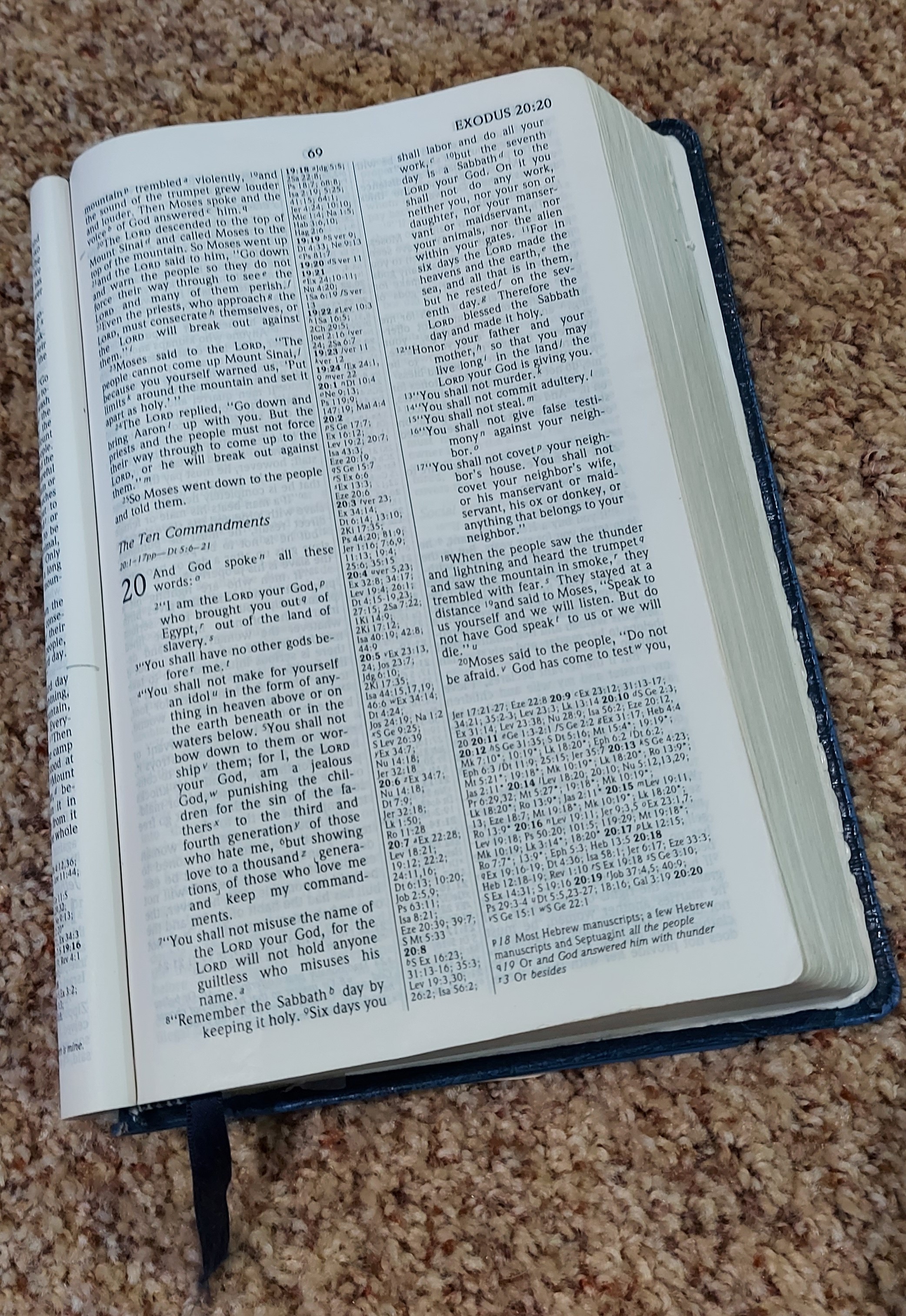
The fifth of the “Ten Commandments” (Exodus 20:12: “Honor your father and your mother, so that you may live long in the land the Lord your God is giving you) is affirmed in the New Testament. In Mark 7, Jesus criticized the Pharisees and teachers of the law for finding a way around this commandment. “Honoring” parents has many aspects, but one aspect is making sure their physical needs are met as they age. But the Pharisees and teachers allowed people to make a donation to “God” (in actuality, to the priests and temple worship) in place of providing for their parents. The reality is that many of the people who took advantage of this loophole probably had other money they could have used to support their parents; there is no indication they were required to donate all of their available cash. This show of honoring God in fact dishonored God by disobeying His commandment.
And yet Jesus and His disciples did not make this one commandment absolute but balanced it against other requirements of God. When the “rich young ruler” came to Jesus in Mark 10 and asked what he needed to do to please God and receive eternal life, Jesus listed this commandment along with several others among the Ten Commandments. The ruler said he kept these commandments, but Jesus pointed out that this man’s real problem was that, while he was keeping the letter of the law, his primary devotion was to money. This, in turn, led to a discussion with Jesus’ disciples about how hard it is for rich people to give up their possessions in order of follow Jesus. The Twelve asserted that they had given up everything to follow Jesus. Jesus responded that those who had given up “home or brothers or sisters or mother or father or children or fields for me and the gospel” (Mark 10:29) would be rewarded. Is there a contradiction here? Jesus condemned the Pharisees for not caring for their parents in order to contribute to the temple but here commended His followers for abandoning their parents and other family members to follow Jesus. The difference is that the Pharisees were refusing to give to their parents, while the emphasis in Mark 10 is that Jesus’ followers were giving up the opportunity to receive from their parents.
God still commands us to honor our parents, but this command is not absolute. In Mark 10:7, Jesus had noted (in another context) that “a man will leave his father and mother and be united to his wife.” The command to honor parents does not take precedence over the command for husbands to honor their wives. The context of this is that Jesus was condemning those who abandoned their wives. Men should not abandon their responsibilities to their wives or to their parents.
We should also recall that Jesus told His followers to “seek first” the kingdom of God, with the promise that “all these things will be given to you as well” (Matthew 6:33). Jesus also said that the greatest commandment was to love God and the second was to love our “neighbor” (Matthew 22:34-40). Love of God should take precedence over love of human beings. This is illustrated by Jesus’ attitude in Mark 3. Jesus’ mother and brothers had decided that He was crazy (because he was claiming to be the Messiah) and wanted to take control of Him and stop Him from continuing His ministry. Jesus refused to even see His family members, saying, “Whoever does God’s will is my brother and sister and mother” (Mark 3:35). Jesus stated this principle even more forcefully in Luke 14. Jesus wanted to correct those who thought they could receive Jesus’ blessings without it costing them something: He said “If anyone comes to me and does not hate father and mother, wife and children, brothers and sisters—yes, even their own life—such a person cannot be my disciple. And whoever does not carry their cross and follow me cannot be my disciple” (Luke 14:26-27). Again, the emphasis was not on Christians refusing to give to their parents but on Christians giving up the right to receive from their parents. There is also the idea here that if our family demands that we stop following Jesus, then we must disobey our family; the situation is not God telling us not to love our families but our families telling us not to love God. The fact is that if we don’t put God first, we won’t have anything which we can give to other people.
It is important to emphasize that while Jesus was teaching that loving God should take precedence over loving people, this in no way negates the command to honor mother and father. The church that Jesus founded often made a point of meeting the needs of elderly people who were not being cared for by their children (Acts 6:1 and 1 Timothy 5:3-16). Jesus Himself did not abandon His own parents. When He was dying on the cross, Jesus made a point of commanding His friend John to fulfill Jesus’ filial responsibility to His mother Mary (John 19:25-27).
Finally, in Ephesians 6, the Apostle Paul told Christian children to honor their parents and obey them “in the Lord” (that is unless the parents interfered with the children’s primary responsibility to obey God). Paul also balanced the command to children with a command to fathers to not exasperate their children but to “bring them up in the training and instruction of the Lord” (Ephesians 6:4). Even in the Old Testament, the command to honor parents was not absolute but was predicated on the understanding that parents would teach their children to follow God (Deuteronomy 6:1-9).
Perseverance is a virtue that is often tested in our daily lives. I know I’ve been struggling lately with multiple book deadlines that have dominated most of my time.
At times, perseverance can feel as if you’re climbing a mountain. As my husband is fond of saying when faced with difficult situations.
Whether we face personal struggles, professional challenges, or spiritual trials, the ability to endure and remain steadfast is crucial for our growth and success. The Bible has many verses that encourage us to persevere, reminding us that our faith in God can help us overcome any obstacle.
Perseverance is more than just enduring hardships; it is about maintaining a positive attitude and unwavering faith in the face of adversity. The Apostle Paul, in his letter to the Romans, wrote, “Not only so, but we also glory in our sufferings, because we know that suffering produces perseverance; perseverance, character; and character, hope” (Romans 5:3-4). This passage highlights the transformative power of perseverance, showing how it can lead to the development of strong character and unshakeable hope.
The Bible provides many verses that encourage, inspire, and strengthen us in difficult times:
James 1:12: “Blessed is the one who perseveres under trial because, having stood the test, that person will receive the crown of life that the Lord has promised to those who love him.”
Galatians 6:9: “Let us not become weary in doing good, for at the proper time we will reap a harvest if we do not give up.”
Hebrews 10:36: “You need to persevere so that when you have done the will of God, you will receive what he has promised.”
2 Timothy 4:7: “I have fought the good fight, I have finished the race, I have kept the faith.”
Ways to develop and strengthen perseverance over time:
Stay connected to God: Regular prayer and reading the Bible can help you stay rooted in your faith and draw strength from God’s word.
Set realistic goals: Break down your challenges into manageable tasks and focus on one step at a time.
Surround yourself with support: Seek encouragement from friends, family, and your church community. Sharing your struggles and victories can provide motivation and accountability.
Maintain a positive attitude: Focus on the progress you have made rather than the obstacles ahead. Celebrate small victories and remind yourself of God’s promises.
Reflect on past experiences: Remember times when you have overcome challenges and how God has been faithful. Let these memories fuel your determination to persevere.
Until next time, dear friends, may we all find the strength to persevere and stand firm in our faith. May God’s word guide and inspire us, and may we always remember that with Him, all things are possible.
At times, we’re all caught between what we can do and what we should do. All too often, it’s hard to tell the difference.
It is an instinctive thing, wanting to help those who need it. Whether it is our spouse, our child, a friend, or some stranger we encounter who needs a lift.
It’s especially hard when it’s our child. We want better for them than we had. We want to smooth their path in life because we know tough times are ahead for them—they are ahead for everyone; it’s part of life.
We want to be good parents, a positive influence, and we want our kids to rely on us when they need help. But we don’t want to cripple them into thinking they aren’t capable of helping themselves or that they can’t resolve their own troubles. In other words, to make them so reliant on us to resolve difficulties that they fear even attempting to solve them on their own. We don’t want to raise them to be afraid to make a decision.
Many years ago, my parents offered advice that I think was helpful in this regard.
Give your kids responsibility on a level you believe they can handle. Tell them to expect to make mistakes, and when they do, correct the error as soon as possible, apologize to any harmed by it and try to make it right, forgive themselves, and learn from the experience.
I had no trouble with any of that right up and until I hit “forgive yourself and learn from the experience.”
When I erred, I easily admitted it and tried to make it right, including apologies. But forgiving myself… that was a challenge. I thought I should be wiser, smarter, more attuned and surefooted. I should have thought of the potential outcomes for others and myself.
Fortunately, my parents were there to offer reassurance. You’ve not been in this situation before, how could you know the outcome. My response was always the same: “I could have thought about it.”
That was true. I might have been wrong, but at least I would have been able to tell myself that I thought about it. How my decision would impact another. How it would impact me. That would have eased the road to forgiveness. After all, at times we’re all wrong. At times, we all make mistakes. So I added, think about how my decision could potentially impact others, to my consider list.
When these situations occurred, my folks inevitably asked, “What did you learn from this?”
Generally, I knew all too well how to answer that, though sometimes I recall wishing I had no idea. Depending on my answer, they’d encourage ways to do better next time.
They were great teachers, really. And that encouragement always included steering me to things I could have done that would have created a better outcome.
I had no idea then how valuable these little events were. My parents were filling my toolbox with constructive solutions. They were honing my judgment, and my confidence in my judgment.
Before too long, I found myself going to them with events before I took action, seeking their advice and suggestions. There I acquired more tools and my judgment got more honing, and I got more confident in it.
The older I got the more I cherished these memories, and the more aware I became that they’d been training me all my life.
Once, I asked my mother why they had pushed personal responsibility on me so hard at such a young age. Her response humbled me.
“We wanted to be here when you scraped your knees, and to help you avoid scraping your nose.”
It isn’t hard to visualize that. Without their training, the mistakes I’ve made would have been far worse. But thanks to them and their determination to give their child all they could to prepare her for the life ahead, they weren’t.
The gifts in that—in doing what they should versus what they could—set a sturdy foundation for which I am eternally grateful.
When it came to raising my own children, I tried to carry on their tradition. I’m sure I didn’t do so with the skill they did, but I know I did it with love.
I’ve often heard “because I can.” But I’ve gained a whole new respect for “because I should.”
Blessings,
Vicki
PS. I should add, they gave me a license to fail also. My dad used to say, “If you’re not failing, you’re not trying hard enough. You’re just taking up space.”
For what it’s worth, I’ve failed a lot. But I have also enjoyed many successes I likely would never have attempted without that license to fail.
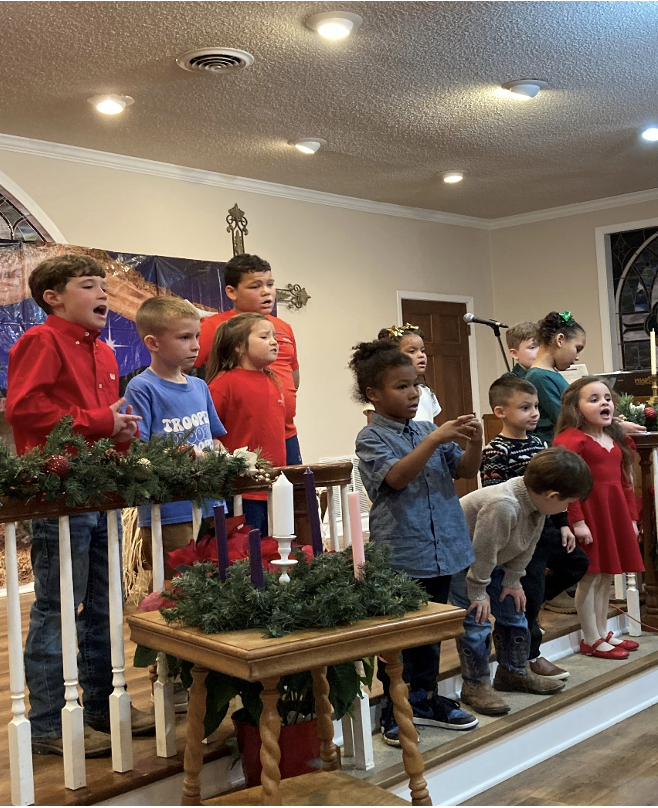
At our little country on a cold Sunday night before Christmas, our small group of children did a pageant that surely ranked right up there with The Best Christmas Pageant Ever. The donkey got into a fight with the sheep, Joseph rocked out with an imaginary electric guitar to “Go Tell It on the Mountain; the star got sleepy and yawned during the whole song; Mary and the Littlest Angel belted the song in a style worthy of Broadway, and baby Jesus stole the show by hamming it up from the manger.
But they sang with such fervor and joy, this is surely what David meant when he wrote in Psalm 8: 1: “Through the praise of children and infants, You have established a stronghold against your enemies.”
I play piano for night services, and I chose Alfred Burt’s beautiful “Star Carol” for the prelude followed by Tom Fettke’s amazing “The Majesty and Glory of Your Name.” I also sang the second song while I played. Fettke used Psalm 8 as inspiration. In part, the lyrics say, “Little children praise you perfectly, and so would we, and so would we.”
This modest little pageant in a small country church illustrated those lyrics. The faith of children is a beautiful thing to see… and to use as inspiration for our own spiritual journey.
“Truly I tell you, unless you change and become like little children you will never enter the Kingdom of heaven. Whoever becomes humble like this child is the greatest in the Kingdom of heaven. Whoever welcomes one such little child in my name, welcomes me.”
Matthew 18:2-5
—–
Peggy Webb, a native Mississippian, is an award winning, bestselling author with more than 100 novels in multiple genres. She is the mother of two, the grandmother of four, and an active participant in her church and her community. See her book list and follow her on Amazon.













































 Christians Read