Quick to Hear (by Hannah Alexander)

KODAK Digital Still Camera

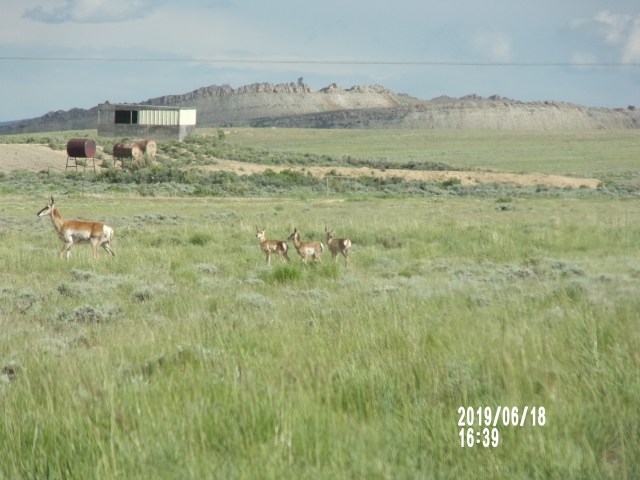
Have you responded to someone in anger recently? I don’t know about you, but I am in constant battle with my tongue. It tries hard to get away from me, and sometimes I don’t stop it in time. Kind of the way these baby pronghorn skitter away from me when I show too much interest in them. Yep, my tongue is like that.

The word picture of a wiggly pink tongue hopping away down the road might be a funny sight, or it could be gross. Creepy, even. For me,  it’s scary. That’s because there have been too many times in my past that I have allowed my tongue to destroy a critical interaction. A person can say pretty much anything, as long as it’s not out of anger or spite, and be forgiven. Silliness can be overlooked, but when someone says a harsh word in anger, that isn’t so easily forgiven or forgotten.

Our little house church has been studying the book of James this past month. There’s a lot to dig out of this book, and we’re only on the second chapter. We ended one of our Wednesday night sessions with homework: we were to meditate on the verse, “Be quick to hear, slow to speak, and slow to anger,” which is found in James 1:19.

I have a tendency to open my mouth before engaging my brain. It’s something most of us have to work on, sometimes for our lifetimes. If we cannot contain our words of anger, we are capable of leaving a path of destruction behind us in the lives of others, and in our own lives. We can lose friends, jobs, lose our own selves in the words we let loose on others.

If you’ve read my recent posts, you know that I love the outdoors and the wildlife. So I have been learning from my experiences here.  For instance, wild horses don’t stick around if you speak too loudly–sometimes not even if you speak at all. They’re wild.

KODAK Digital Still Camera

In my quest to get as close as possible to these to beauties, I’ve had to hold my tongue, or at least speak very softly and gently. Even whisper. And I know better than to make a full frontal assault.

So I’ve wondered to myself why I can be gentle and move slowly with these wild animals, and not control myself as well when it comes to human interaction.

And you know what? When I’ve done just that–treated human beings as I would the wild horses–in most cases it works!

You see, these horses aren’t the friendliest animals. They’re curious, sure, but they don’t want close contact with a human being. Can you blame them, considering the way some people behave? Humans can treat me the same way these horses do by using their words to keep me at a distance. If I respond harshly with words of my own, it would be the same as waving my hands and shouting at these wild animals. It will offend them. Remember that a soft answer turns away wrath. The good thing about the horses is that they don’t plot revenge as a human might do.

I’m curious. Have you had the experience of controlling your tongue–sometimes in very difficult circumstances–and had the pleasant result of a better reaction from an angry person? Or have you witnessed this well-controlled behavior in others?


Posted in Hannah Alexander | Tagged , , , | 12 Comments

The Ripple Spreads Wide

Vicki HInze, The Ripple Spreads Wide, Christians Read


Define lucky. I can’t speak for all, of course, but lucky is defined differently for different people in different situations. Sometimes luck is luck, and sometimes it is the result of some pretty intense effort—though, not necessarily on the exact same thing.

You’ve likely heard me say before that your effort might not open “the” door, but it could open one that leads to “the” door. Let me give you an example. 

Before I sold my first book, I volunteered to do interviews with editors and agents for a writer group’s newsletter.  I’d done quite a few of these interviews when I did one on an editor who liked it and shared it with other editors in her office.  One of those editors said, “I like her writing.” The editor I’d interviewed told me about the conversation and suggested if I had a book to submit to that second editor I do it.  I did and submitted, and she bought the book.

Who would have thought that a non-fiction article would open “the” door?  The interviews took effort, but each one was a learning experience. I did the work, but I gained knowledge and insight from the work, too.  That was a win. That on this interview the editor liked it and showed it to the second editor—that was lucky. But unless the “unrelated” effort had been made in writing the non-fiction article, the opportunity would not have been there for the “unrelated” novel door to open. 

That’s what I mean when I say, what you do might not open “the” door, but it might open “a” door that leads to “the” door.

Then there is the impact of what you write on readers.  Often, when an author writes a story it is on a wing and a prayer that it will help someone, somewhere, in some way.  Maybe to show them a challenge that was resolved constructively. Solutions exist! Maybe to take their minds off their troubles for a while. (Don’t underestimate the value of that! Or the value of pure entertainment!)  An example.

You are in a hospital room, sitting at the bedside of someone you love. Your loved one is dying. In and out, and sleeping a lot, but you fear leaving the room for fear you won’t be there when needed.  You have a book in your hand.  For a few minutes, you escape all the grief and fear and upset in the hospital room and take respite in the story. How much is each of those minutes of respite worth?

I had such a story relayed to me by a reader. I’ve never forgotten it. And to this lucky author who wrote the story in which in that reader found a few minutes’ respite, I can tell you the value to me:  priceless.

We write our books and set them free in the world to do what they will for those they touch.  We know that not all readers will like them.  But we also know that some readers will love them. And we know that regardless of what kind of story is written, it will be a story that ends up in someone’s hands at the time when they most need it for whatever reason is significant to them.  That makes us all lucky authors.

Bear in mind that especially early on in authors’ careers, most hear “no” a lot more than they hear “yes.” They hear “revise, edit, rework, rewrite” far more often than “this is great” and frankly that no-to-yes ratio pretty much holds true throughout authors’ writing careers.  There’s always tailoring to be done. Perspective and focus shifts to be made to best suit the needs of the publisher, who isn’t typically looking at one book but how each book fits in with all the other books published. 

Some authors resent the process. Lucky ones don’t. They grasp early on that publishers spend a fortune to figure out what sells well for their publishing house, their imprints. Selling books is their job, so naturally they do all they can to craft and shape and license books that appeal to their readers. Actually, editors’ careers depend on them doing this, and doing it well.

The lucky author is one who has a gifted editor who sees the author’s vision and enhances it without writing a totally different story—their own vision of the book. It’s amazing how well this merger typically works because it is a complex creative process. The best editors have that gift—to see the vision and enhance it. They are not frustrated authors. Any author who has such a gifted editor is lucky. These are matches made in Heaven, where the best talents of the author merge with the best talents of the editor to produce the best possible book with the brightest prospects for mutual success.

Authors who have readers who invest in them are very lucky.  Readers are open about what they like and what they don’t—their preferences. But authors often don’t ask readers’ opinions, and that is a missed opportunity for “luck.” One of the best lessons learned is to ask questions and to really listen to readers’ answers. They often have outstanding feedback and they share the most amazing stories and ideas.

Now many authors complain about the time it takes to be active on social media. And it is time consumptive. No author can actively engage on all the different platforms—not and have time to write, much less have a life.  But an author can choose a platform or two that is compatible with the author and be active on it. Why do it?

First, you get to know the absolute best people.  You’ll see the best in humanity.  Is the worst there? Yes, but you are free to not engage, or to set your own terms on engagements. By interacting, you stay more current on the situations people are facing.  Many are the same and change little from generation to generation. But how people react to them changes often. 

You get to know people, and they get to know you. Sometimes you goof around with them, sometimes you share stories from your life, and they share stories and bits of their lives. Attachments grow to bonds, and investments are made by the author and the readers. There are a lot of good people out there. We hear about the jerks often, but the good people…they awe and humble you. They inspire you.

I post a lot of quotes. Have for years.  I have always loved quotes. They’re short and to the point, and others like short and to the point also.  I expected people who enjoy the things I enjoy would chat and visit.  I didn’t expect so many of them to be amazing human beings. We celebrate together, cry together and support each other. Oh, everyone runs into a jerk now and again, or someone having a rough a day who blows off some steam, but those should never dampen enthusiasm. They’re a blip on the screen compared to all the good.  

Understanding all this, I still did not expect the enthusiasm over a really short post I did where I was celebrating finishing a new book.  It went something like, “Yay—it’s finished!  The new book is done.  Color me happy!”  Something that that. Not exactly earth-shattering news, but genuine elation that a project had been completed.  That’s something an author typically celebrates alone.  Well, that little post set my phone to pinging like crazy. All kinds of people were congratulating me on finishing the book. Many took the time to include animated gifs. It was exciting to have people celebrating with me. It was humbling, and honestly, I was awestruck by their generosity of spirit. Taking time from their lives to join in on something that was important to me. 

For many, this might not seem like a big deal.  But it was huge to me. It is huge to me. Anytime anyone gives you their time, they’re sharing something significant to them. Something they can’t get back. Something precious to them.

That’s why I was humbled and awed.  And grateful. And that’s why I’m the luckiest author in the world.

I could go on for hours with stories about all the ways authors are lucky. But the bottom line is pretty simple—and very consistent. Some authors make their luck, some stumble into it, some go door-to-door seeking “the” door more than the old Kirby vacuum salesmen.  Most authors experience a combination of types of luck over the life of their career: a little of all possible kinds of luck.

I suppose I’ll close with this:  you see the value in being open to all kinds of luck.  Not just for authors, but for you, the human being living your life. Maybe you hadn’t seen how important you, your comments, your feedback, and your posts are to those who read them. And maybe you hadn’t grasped how much your interactions with others mean to them—but now you do.

I hope that’s the case. If you’ve gained insight, you’ve defined lucky.  My wish is that you apply these things to you and your life and that your bottom line is you consider yourself lucky. And since I wish (and dream) big:  I wish that you see the wisdom of investing in making others feel lucky, too.

Whatever you do, remember that the ripple spreads wide and it goes on and on…

Blessings,

Vicki


Posted in Uncategorized, Vicki Hinze | Tagged , , | 2 Comments

Why Does God Allow It?

by Jim Denney, adapted from
ANSWERS TO SATISFY THE SOUL:
Clear, Straight Answers to 20 of Life’s Most Perplexing Questions
In the 1981 movie Time Bandits, the satanic Evil Genius (played by David Warner) wreaks enormous carnage and destruction on the world. After the smoke clears and the dust settles and the Evil Genius is vanquished by the Supreme Being (Sir Ralph Richardson), it’s time to figure out the moral to the movie.

A young boy questions the Supreme Being about all the death and devastation: “You let all those people die—just to test your creation?”

“Yes, you really are a clever boy.”

“Why did they have to die?”

The Supreme Being shrugs. “You might as well say, ‘Why do we have to have evil?’”

“Yes, why do we have to have evil?”

“Ah! I think it’s something to do with free will.”

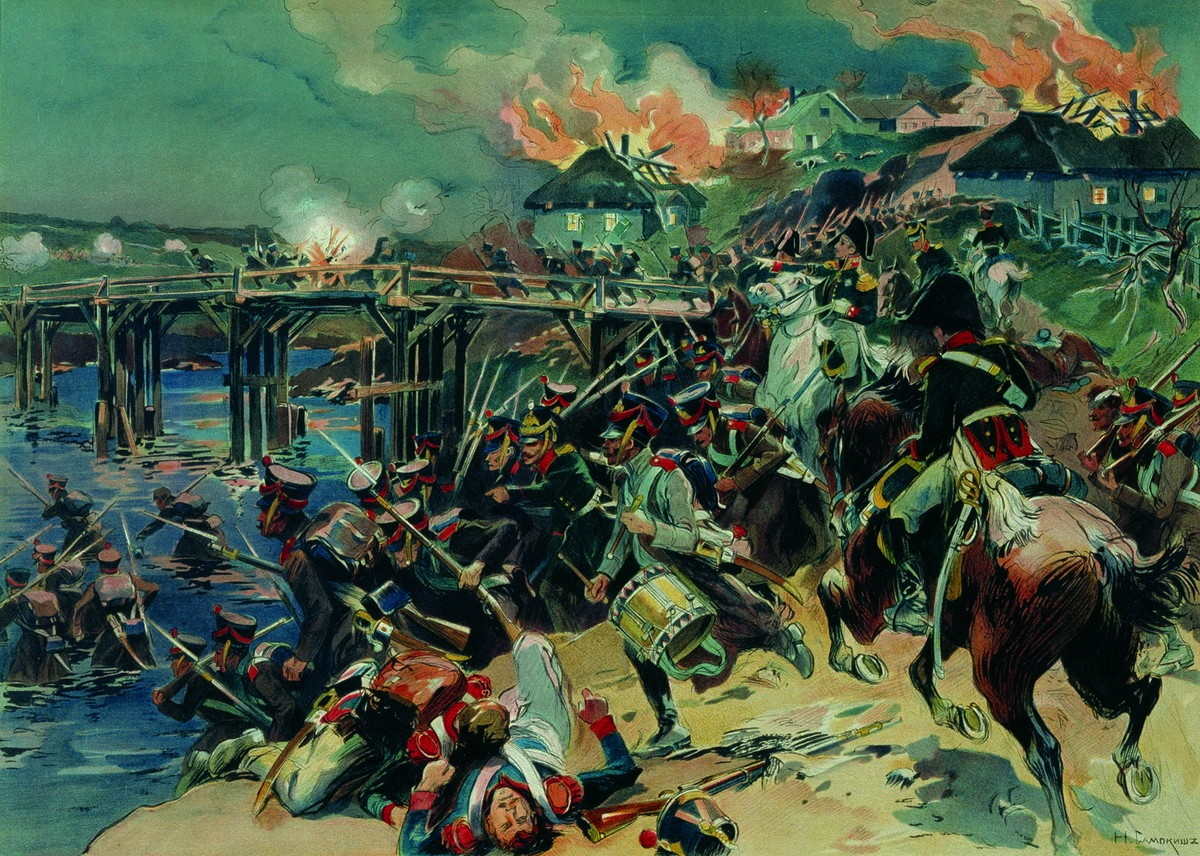
War

We live in a world in which free will runs riot. Evil people kill and maim and torture their fellow human beings, yet no bolt of lightning crashes down from heaven to stop the evildoers or punish them.

Atheists say the existence of evil proves the impossibility of God. The argument goes like this:

  1. If God exists, then meaningless pain and evil cannot exist; a good and powerful God would not allow it.
  2. We know that meaningless pain and evil do exist.
  3. Therefore, God does not exist.

Sounds logical. Yet we, being limited human beings, cannot possibly know with certainty that God doesn’t have profoundly good reasons for giving us the terrible gift of free will. Suffering that seems meaningless and pointless to us now might have meaning in the eternal scheme of things.

In People of the Lie, psychiatrist M. Scott Peck writes, “Free will is the ultimate human reality. . . . Evil is the inevitable concomitant of free will, the price we pay for our unique human power of choice.”

When we look at the history of wars, slavery, genocide, violence, and other assorted horrors, we find ourselves wishing God would revoke our terrible freedom and end all this slaughter and suffering. Wouldn’t it be better to be robots than to endure a world of such horrors? Yet God refuses to violate human freedom. He will not force us to be good, even to prevent a holocaust. 

BibleInitial-Book

As Christians, we know that Jesus, God in human flesh, has entered into our suffering. He has borne our griefs and carried our sorrows. He took into Himself the very worst agony that evil men can inflict on a fellow human being. And He calls us to take up our cross and follow Him, becoming conformed to His likeness, accepting the injustice and sorrow that this world inflicts, and becoming Christlike wounded healers in a sick and dying world.

There is an old parable that underscores our responsibility as Christians:

A man goes to God in prayer and complains about all the suffering and injustice in the world. “God,” he says, “why do You allow this to go on? Why don’t You send help?”

“I did send help,” God replies. “I sent you.”

_____________________________

Answers-SoulANSWERS TO
SATISFY THE SOUL:
Clear, Straight Answers to 20 of Life’s Most Perplexing Questions
by Jim Denney 

(Kindle Edition: $2.99)

“Read this book and save yourself a lifetime of searching and wondering. The answers you seek are all right here!”
Jack Canfield, author of Dare to Win and the Chicken Soup for the Soul series

“Grab an arm-load of Answers to Satisfy the Soul! Buy one for yourself, one to lend out, and a dozen to give as gifts. You’ve got a lot of friends who need this book!”
Pat Williams, author of Character Carved in Stone

“If you are on a quest for success, happiness, love, meaning, or God, this book is for you. Whatever you seek in life, Answers to Satisfy the Soul will speed you on your journey.”
John C. Maxwell, author of The 21 Irrefutable Laws of Leadership

Posted in Jim Denney, Uncategorized | Tagged , , , , , , , , , , , | Leave a comment

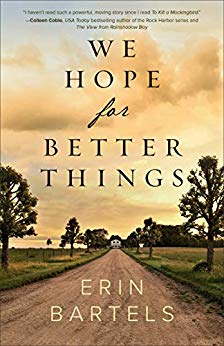
Nora’s Review of WE HOPE FOR BETTER THINGS


We Hope For Better Things

By Erin Bartel

Published by Revell

Release Date: January 2019

ISBN#978-0800735661

400 Pages

#CivilWar, 1960’s, Rascal conflict, historical fiction, Time/slip story Thought Provoking Historical


BOOK BLURB:When Detroit Free Press reporter Elizabeth Balsam meets James Rich, his strange request–that she looks up a relative she didn’t know she had in order to deliver an old camera and a box of photos–seems like it isn’t worth her time. But when she loses her job after a botched investigation, she suddenly finds herself with nothing but time.

At her great-aunt’s 150-year-old farmhouse, Elizabeth uncovers a series of mysterious items, locked doors, and hidden graves. As she searches for answers to the riddles around her, the remarkable stories of two women who lived in this very house emerge as testaments to love, resilience, and courage in the face of war, racism, and misunderstanding. And as Elizabeth soon discovers, the past is never as past as we might like to think.

REVIEW:I’m blown away by how this debut novelist Erin Bartel took on this difficult subject matter and by the way she handled it with sensitivity and respect as she showed racial tension on many sides in different time periods. It was eye-opening and touched my soul. This story as you get to know three strong women in unimaginable situations. The author takes readers through the Civil War, including the underground railroad, through the violate time period of the Civil Rights movement, showing the Riots in Detroit in 1967 and revealing parts of Martin Luther speeches to crowds. My heart hurt for the men, the women and their struggles. It’s also sad to know we still deal with them today.


This journey starts out in current time with Elizabeth Balsam a woman who has lived on the edge, doing what it takes to get the next heart-stopping story. That is until her whole world flips upside down. Which gave way to her meeting with Mr. Rich and his son Linden. They show her original never published pictures of the Detroit riots 1967. Elizabeth’s interest is peaked at maybe finding a great story in the mix, but when Mr. Rich wants her to track down a long-lost relative of hers for permission to use the pictures, she doesn’t know if it’s worth it. Was Elizabeth hoping against hope there would be a story she could run with? She has nothing better to do so she tracks down her Aunt Nora Balsam Rich and is amazed by her generosity and willingness to talk with her. Problem is the main thing Nora wants to talk about is Mary and Nathaniel Balsam and what they went through in the Civil war.


It took me several chapters to finally get the characters figures out as to who was who and what timeline they fit in (like Aunt Nora being in two-time lines messed with me. LOL!) I have to say I was a little confused as I wondered how these ladies were connected and where this all was headed. But when Nora Balsam Rich started talking about her house, how it was used in the Civil War and then how she got the house they were currently living in the 1960’s; things started to take shape for me. I got it.


Nathanial told his young pregnant wife he was enlisting in the service he would get his friend to help with the farm while he was away at war. Mary’s husband sends her a freed slave named George who helps with the farm in a tremendous way all the years Nathanial is away. Readers get an up-close and very personal look at how white people were treating freed slaves in the north. Oh, they were happy they were free, but they wanted them to live permanently somewhere else. The author even shows how the church treated Mary and her freed slaves, very sad but true to history.


I enjoyed the depth of characterization and the way the author showed the hardship created by racial discrimination issues in different timelines that could have been the end of them, but it wasn’t. I liked how the author showed how each woman faced these challenges head on and sought strength and courage from God and a few good friends. Each woman is passionate about staying the course and being true to what they believe, who they love, and what they were meant to do. No matter how hard their families, friends and society made things.


This is a remarkable, a deeply passionate, eye opening story that will touch your soul, and have you look at today’s headlines in a new light. Just like it did for Nora in the 1960’s. She really didn’t get the magnitude of the situation until she was in the thick of things. I like how this author has helped readers walk in these ladies’ shoes to grasp a bit of what they faced day in and day out. Giving you compassion and a clarity you might not have had before reading this story and meeting these three strong willed women, the men who loved them as they do far more than they ever imagined was possible.


I highly recommend this thought-provoking, time slip story for a book club pick. There is so much to talk about. This is a novel you won’t soon forget. This is a must read.


Disclosure of Material Connection: I received a complimentary copy of this book from the Publisher.  I was not required to write a positive review. The opinions I have expressed are my own. I am disclosing this in accordance with the Federal Trade Commission’s 16 CFR, Part 255 “Guides Concerning the Use of Endorsements and Testimonials in Advertising”


Nora St. Laurent

TBCN Where Book Fun Begins! http://www.bookfun.org

The Book Club Network blog http://www.psalm516.blogspot.com

Book Fun Magazine https://www.bookfun.org/page/past-issues-book-fun-mag


Posted in Nora St. Laurent, Uncategorized | Tagged | Leave a comment

I Have a Problem …

… With Books!

I am a book lover. I always have been. Even when I was a young child, I had those hard books with the gold binding. As I grew up, no matter where I went, I always had a book with me. In the fifth grade, my friends and I made our own mini library and would share our books with one another. Up until my early twenties, I was good about reading one book at a time. Now it’s a free-for-all! I start one book, but then I get so excited about another book and I will start it too. I might have five books (or more) going at any given time.

One unfortunate problem of mine is that I am a slow reader. Or at least I consider myself to be. Maybe I am just impatient and want to get to the next book on my list. Either way, this means I often listen to audio books as well. But I still have numerous audio books going at any given time as well. When I began writing this article, I had four audio books that I started and six new ones waiting in the wings.

And another problem of mine is that I don’t like a lot of clutter, so most of my actual reading is on a tablet. I know that many of you are thinking that books aren’t clutter. I know, I know! I used to have shelves and shelves of books. But due to living in four different houses in the past decade, this caused me to donate many of my books to the library.

But I still love books and when I hear about a good book, I just have to have it. So I now have well over a hundred books that I have purchased but not read yet. Yikes! So in an effort to reel in my obsession, if there is a book that I would like to read in the future, I will download a sample of the book on my tablet. A few days ago I had eleven such samples sitting on my virtual book shelf. Ah, but then the clutter issue set in, so I deleted them. However, I already have four new samples sitting on my shelf.

Please tell me – Am I the only one with this issue? Or do you agree that there are just too many good books and too little time?

Posted in Uncategorized | 4 Comments

News Reporting in Jeopardy


Media

for $200

Alex Trebek is the Canadian-born host of the TV game show Jeopardy and is reportedly a committed Christian. He has also been battling pancreatic cancer. A few weeks ago, the news on our local TV station here in British Columbia (on the Global TV network) reported that there had been “mind-boggling” progress in the fight against his disease. The report quoted Trebek as saying, his fans’ “good thoughts…could be an important part of this.”

I became curious about what the ellipsis (…) represented, what had been left out of Trebek’s statement, so I looked it up online. It turned out that what Trebek had actually said was: “I told the doctors, this has to be more than just chemo. I’ve had a couple million people out there who expressed their good thoughts, their positive energy and their prayers. The doctors said it could very well be an important part of this.”

The Global news people might have edited Trebek’s statement on their own, or they might have been following the lead of the NBC network in the US, which reported that Trebek had said, “I’ve got a couple million people out there who have expressed good thoughts… I told the doctors this has to be more than just the chemo.”

On the other hand, ABC News apparently reported the full quote.

Television news tends to present the news in brief “sound bites,” so statements are commonly shortened. But why did at least two major television networks choose to leave out “prayers” and attribute Trebek’s good results to only “good thoughts”? Did they think that “prayers” are simply the same thing as “good thoughts,” a purely human endeavor? Did they think that the idea of prayer would offend some viewers? Was it a deliberate editing choice? Or did the edit simply reflect the reporters’ secular mindset?

The difference between the two statements is truly mind-boggling. Can people’s “good thoughts” actually cure cancer? Human encouragement can have a positive effect, but it seems unlikely that it can cure cancer. Can the God who created and rules the universe cure cancer? Undoubtedly.

What is perhaps most disturbing is the likelihood that there is no great conspiracy here. The reporters most likely did not even recognize that they were imposing their own secular mindset onto other people. They should perhaps reflect that in George Orwell’s frightening novel Nineteen Eighty-Four, one of the tasks assigned to the protagonist Winston Smith was to remove all references to God from literature. When humans make the rules, only God can overrule the power of a totalitarian state.

Journalists rightly proclaim the importance of free and independent news media. But that is as much a responsibility as it is a right. It is of little benefit if the news media are free and independent but impose their own biases on what they report. It is not just totalitarian states that can threaten freedom of expression. A free and independent news media can only exist if journalists diligently pursue truth and report the news accurately, fairly, and objectively.

The struggle for objectivity is an ongoing one. There have been times and places where journalism has been even less objective than it is presently—the era of “yellow journalism” in American newspapers in the late 1800s, or perhaps the British tabloids in the 20th century.

But there have also been times when the media were more objective. Homespun philosopher Red Green, also a Canadian, recently commented, “Walter Cronkite used to tell people what had happened. He didn’t tell them what they should think about it.”

Posted in James R. Coggins | 1 Comment

What kind of reader are you?

As a writer of Chick Lit, I am so grateful that there are different kinds of readers.  Not everyone will get my humor, nor do they like first-person writing — and that’s okay, because there are plenty of people who do.  I remember, many years back, when writing “What a Girl Wants” there was a joke in the book about Deney Terrio.  My editor said to me, “I think that’s a very small audience who will get that reference.”

And she was right!  But I knew the readers who did would greatly appreciate it — and I was correct.  Sometimes, you have to listen to your instincts and create what you were meant to create.

The publishing industry is a fickle soul.  I am grateful to have stayed alive in this market for over 20 years — but now they tell me publishing is going deeper.  Readers aren’t into lighthearted romps — and the woman should save herself — a la “Frozen.”

kristin-billerbeck-lot-split-ends_1_699a96a7af0401dcfa6aefbb27c40d29

My heroines are modeled after my favorites in fiction — Scarlett O’Hara in “Gone with the Wind;” Elizabeth Bennet in “Pride and Prejudice;” Bathsheba Everdene in “Far from the Madding Crowd;” and Meggie Cleary in “The Thorn Birds.”  These aren’t wilting violent heroines.  They are strong and very forward for their respective time periods.  However, I love a heroine who can laugh at herself. Life is too hard to not take it lightly.

As a reader, I would say I love a dramedy.  A book that takes one to dark places, but allows you to rejoice in the lighthearted parts of suffering.  Because the truth is, we all have to be grateful for the light when we are in the midst of darkness. This may sound odd, but that’s why I liked Ann Rule’s true crime books — because she didn’t concentrate on the evil — she focused on the victims and how their lives were forever changed by darkness.

So I honor that publishing is going to a deeper level.  I admire writers who can do that — but I have to protect my smooshy heart and my sensitive nature.  I can’t go to that place and I’m glad there are still readers out there who want to giggle and focus on the lighter side of life.  What about you?  What kind of adventure to you like to go on when reading?

Posted in Uncategorized | 8 Comments

Cosmic Coincidence—or Calculated Design?

by Jim Denney, adapted from
ANSWERS TO SATISFY THE SOUL:
Clear, Straight Answers to 20 of Life’s Most Perplexing Questions

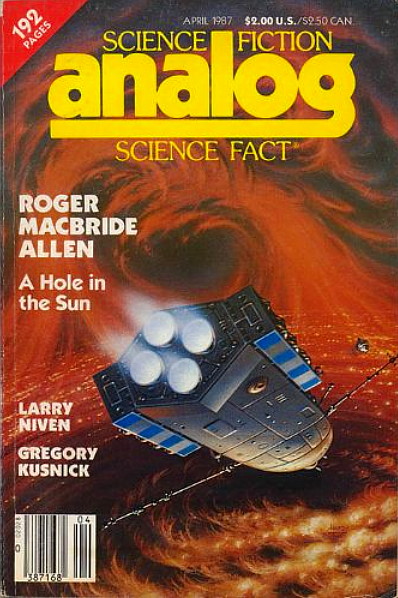
Analog-April1987Last week, I talked about the cosmic case for faith in God, which I first encountered in the April 1987 issue of Analog Science Fiction / Science Fact. In a science fact article, Richard Meisner wrote about a growing body of scientific evidence that the universe appears to be purposely designed and incredibly fine-tuned to produce life. Meisner quoted cosmologist Paul Davies: “It is hard to resist the impression that the present structure of the universe, apparently so sensitive to minor alterations in the numbers, has been rather carefully thought out.”

Carefully thought out by Whom? Well, by God, of course.

What is the scientific evidence for an intelligently fine-tuned universe? How do we know that the forces of the universe were precision-balanced to produce life?

Let me list just a few of the hundreds of “cosmic coincidences” that have produced our amazing just-so universe. Take, for example, the Big Bang.

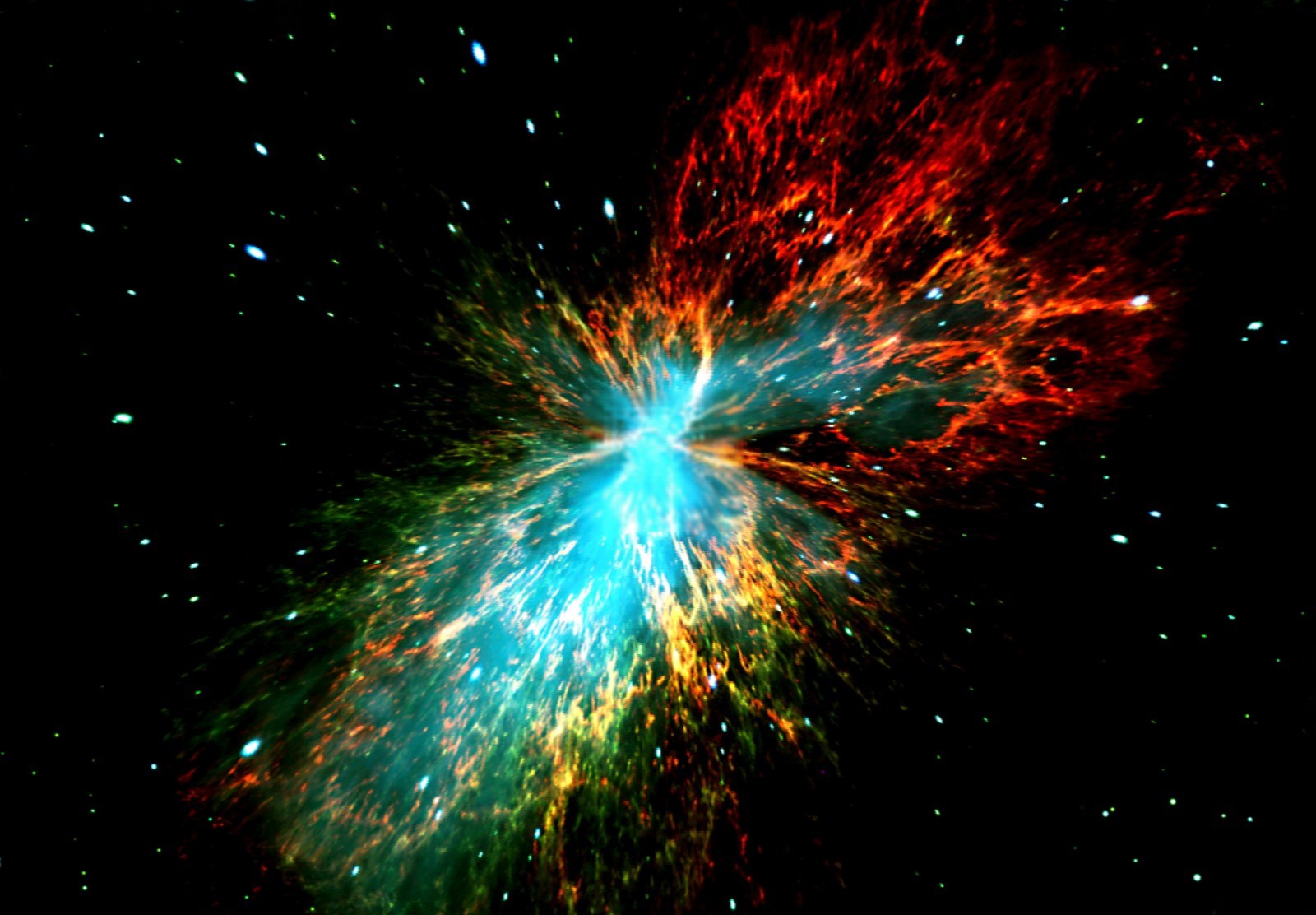
At the moment the Big Bang began, everything that exists—matter, energy, the three dimensions of space, and the fourth dimension of time—emerged from a single geometric point, expanding at the speed of light. Scientists are amazed that the explosive violence of the creation event was as perfectly, delicately balanced as it was. Cosmologist Paul Davies wrote:

Had the Big Bang been weaker, the cosmos would have soon fallen back on itself in a big crunch. On the other hand, had it been stronger, the cosmic material would have dispersed so rapidly that galaxies would not have formed. . . . Had the explosion differed in strength at the outset by only one part in 1060, the universe we now perceive would not exist. To give some meaning to these numbers, suppose you wanted to fire a bullet at a one-inch target on the other side of the observable universe, twenty billion light-years away. Your aim would have to be accurate to that same part in 1060. . . . Channeling the explosive violence into such a regular and organized pattern of motion seems like a miracle.

If the explosive force of the Big Bang not been perfectly balanced and incredibly fine-tuned, life would be impossible—and you and I could not exist.
bigbang1

At first, the laws and constants of the universe were simply accepted as a matter of fact—no one wondered why this or that force or constant of physics was not slightly stronger or weaker than it is. Eventually, physicists began to realize (as George Greenstein observed in The Symbiotic Universe) that the “laws of nature could have been laid down only in the very instant of the creation of the universe, if not before.”

Paul Davies recalled that when he was a student, the question of where the laws of physics come from was off-limits. A scientist was supposed to simply apply those laws, not inquire into their origin. Scientists would say that there’s no reason the laws of physics are what they are—they just are. Davies concluded, “The idea that the laws exist reasonlessly is deeply anti-rational. . . . It makes a mockery of science.”

As it became clear that the laws of nature might have been different than they are—that they appeared to have been deliberately selected to produce life—scientists began to look at these forces, laws, and constants with new sense of awe. The entire universe seemed to be constructed out of an incredibly unlikely series of cosmic coincidences. Some examples:

There are four forces governing the structure and behavior of subatomic particles—the electromagnetic force, the gravitational force, the strong nuclear force and the weak nuclear force. These forces determine everything from how an electron orbits the nucleus of an atom to how stars and galaxies are formed. Each force has a specific mathematical value called a constant (because its value never varies).

The gravitational force constant is finely tuned to permit life. Slightly greater, and stars would burn too hot, too quickly, and too unevenly to produce life-giving elements. Slightly smaller, and stars would be too cool, so that nuclear fusion could not take place and there would be no life-giving elements.
spacewaves&stars

The electromagnetic force is also fine-tuned. If its constant were slightly larger or smaller, the chemical bonding required for making living things could not take place.

There is a fine-tuned balance between the gravitational and electromagnetic forces. If the constant of the ratio between these two forces were larger, there would be no stars smaller than 1.4 solar masses, and the lifetime of stars would be too short to generate life-giving elements. If the constant were smaller, there would be no stars larger than 0.8 solar masses—and again, no production of life-giving elements.

If the strong nuclear force constant were slightly larger, there would be no hydrogen in the universe and no stars. If this constant were smaller, the universe would consist of nothing but hydrogen.

If the weak force constant were larger, most of the hydrogen in the universe would have converted to helium during the Big Bang. If it were smaller, there’d be too little hydrogen converted to helium—a roadblock to the production of life-giving elements such as carbon and oxygen.

The proton-to-electron mass ratio: A proton is 1,836 times more massive than an electron; if this ratio varied slightly in either direction, molecules could not form and life could not exist. The ratio of the number of protons to the number of electrons is also finely balanced to permit the electromagnetic force to dominate the gravitational force, allowing the formation of galaxies, stars, and planets.

The unusual properties of water are also a fine-tuned condition for life. Water plays an essential role in almost every biological function. It is necessary to photosynthesis, which is the foundation of the food chain. In photosynthesis, plants use sunlight to convert carbon dioxide and water into sugar, giving off oxygen as a “waste product.”

Water is one of the few liquids that expands when it freezes. Most substances contract and become more dense when they freeze, but frozen water is actually 9 percent less dense than liquid water. This is because, at freezing temperatures, the hydrogen bonds that connect water molecules make an adjustment to keep negatively charged oxygen atoms apart. This adjustment creates the crystal lattice that enables ice to float in liquid water.

If water didn’t have this extraordinary property, ice would sink, which would cause lakes and rivers to freeze solid. If ice did not float, wrote George Greenstein, life on Earth “would be confined to a narrow strip lying close to the equator.”

Earthrise

And the list goes on and on. It’s as if hundreds of completely unrelated laws and features of nature plotted together in a vast cosmic conspiracy to produce life. As Paul Davies observes:

It is tempting to believe, therefore, that a complex universe will emerge only if the laws of physics are very close to what they are. … The laws, which enable the universe to come into being spontaneously, seem themselves to be the product of exceedingly ingenious design. If physics is the product of design, the universe must have a purpose, and the evidence of modern physics suggests strongly to me that the purpose includes us.

And physicist Fred Hoyle said: “I do not believe that any scientist who examines the evidence would fail to draw the inference that the laws of nuclear physics have been deliberately designed.”

Hubble-GalaxyClusters-PubDomain-3

Is our life-giving universe the result of an inconceivably improbable series of cosmic accidents and coincidences—or the product of a calculated, deliberate design? Which possibility is easier to believe?

Is the universe evidence—even proof—of the existence of God?

I have my own opinion. What do you think?

_____________________________

Answers-SoulANSWERS TO
SATISFY THE SOUL:
Clear, Straight Answers to 20 of Life’s Most Perplexing Questions
by Jim Denney 

(Kindle Edition: $2.99)

“Read this book and save yourself a lifetime of searching and wondering. The answers you seek are all right here!”
Jack Canfield, author of Dare to Win and the Chicken Soup for the Soul series

“Grab an arm-load of Answers to Satisfy the Soul! Buy one for yourself, one to lend out, and a dozen to give as gifts. You’ve got a lot of friends who need this book!”
Pat Williams, author of Character Carved in Stone

“If you are on a quest for success, happiness, love, meaning, or God, this book is for you. Whatever you seek in life, Answers to Satisfy the Soul will speed you on your journey.”
John C. Maxwell, author of The 21 Irrefutable Laws of Leadership

Posted in Jim Denney, Uncategorized | Tagged , , , , , , , , , , , , | 2 Comments

What I Learned from My Dog

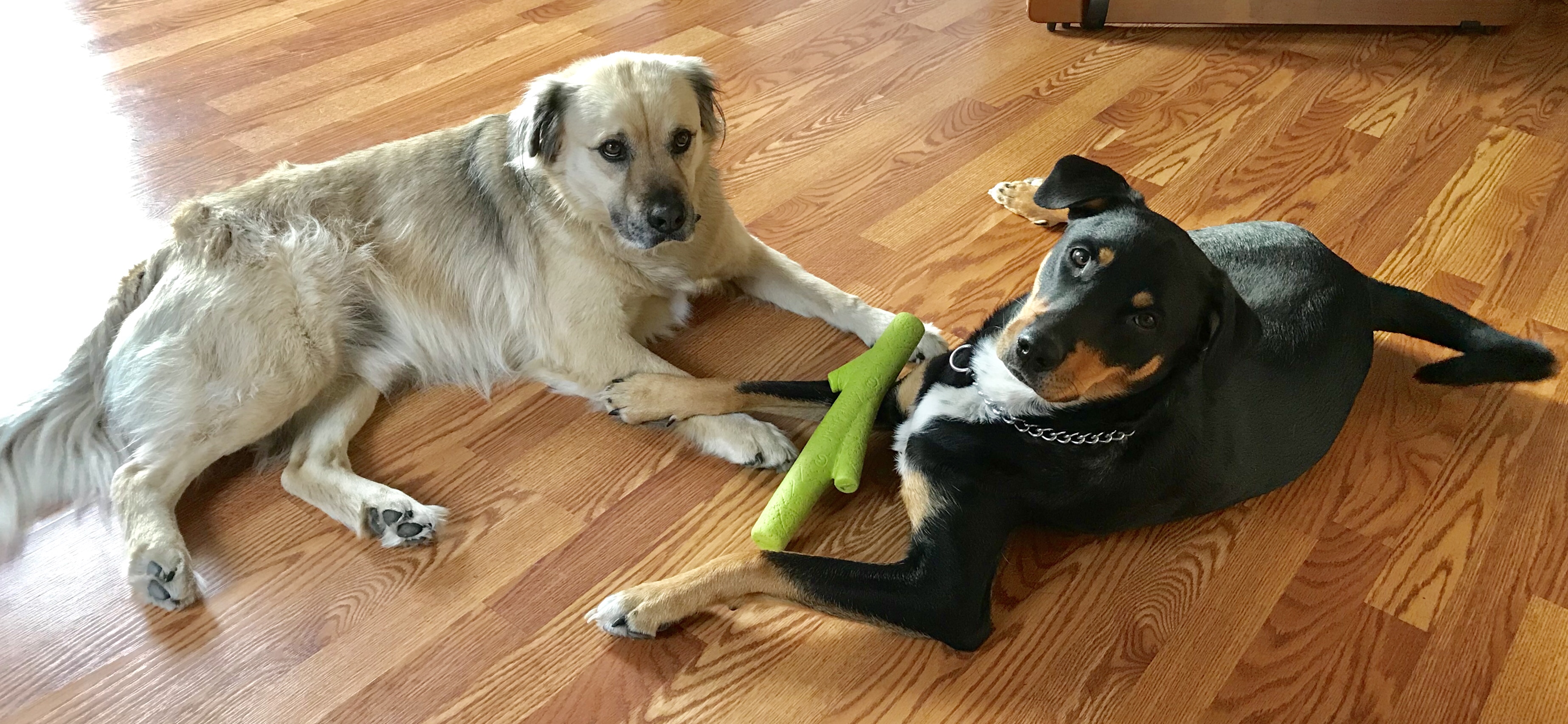
I was thinking recently how smart my dog is. Ok so maybe I am a little biased. But Tucker really is smart. I actually have two dogs. Both are smart dogs and good dogs. However, Buddy’s main goal in life is to eat. You could say food is his love language. His second goal in life is to get back rubs. In his defense, he is older than Tucker and doesn’t have as much energy. Tucker, on the other hand, loves to please his parents and to spend time with his parents. As I was analyzing Tucker’s behavior and quirks, I learned a lot of good tips from him.

1 – Put all your effort into your work.

When Tucker sees anything or anyone that does not belong in his clique (such as a neighbor in their yard, a squirrel in our yard, or a Fed Ex truck out on the road), he immediately barks at and chases the offender. He continues until his job is done and the offender has left.

“Work willingly at whatever you do, as though you were working for the Lord rather than for people.” Colossians 3:23 NLT

2 – When you’re not working, enjoy life.

Tucker loves to play. He is over two years old, but still has a lot of puppy in him. And he tries his best to bully his parents, his big brother, or anyone he can find into playing as well.

“The thief’s purpose is to steal and kill and destroy. My purpose is to give them a rich and satisfying life.”- John 10:10 NLT

3 – When you’re feeling down, seek comfort.

Tucker doesn’t like when we leave him at home alone. He gets anxious and sad. So he curls up in a comfortable place and stays there until we return. If only one parent leaves, then he might try to curl up in the lap of the parent who is still at home.

“All praise to God, the Father of our Lord Jesus Christ. God is our merciful Father and the source of all comfort. He comforts us in all our troubles so that we can comfort others. When they are troubled, we will be able to give them the same comfort God has given us.” – 2 Corinthians 1:3-4 NLT

4 – When you’re tired, rest.

Tucker gets tired around midday and again at night. When he wants to sleep, he sleeps. And he doesn’t welcome interruptions. Around lunch time I often like to give him a treat, but he would prefer I didn’t. However if he absolutely must eat the treat, then he would like for us to hand it to him right where he is so the only thing he will have to move is his jaw.

“Then Jesus said, ‘Come to me, all of you who are weary and carry heavy burdens, and I will give you rest. Take my yoke upon you. Let me teach you, because I am humble and gentle at heart, and you will find rest for your souls. For my yoke is easy to bear, and the burden I give you is light.’ “ – Matthew 11:28-30 NLT

Animals are smart. And pets in particular are a blessing. They soothe us when we don’t feel well. And they bring us joy in our daily lives. Isn’t it extraordinary how God thought of every little thing when He created the earth?

(Buddy and Tucker.)

Posted in Uncategorized | Leave a comment

Who Do We Look Up To by Julie Arduini

As I mentioned in my last post, parenting is hard. We have a teen daughter who like most teens, enjoys YouTube and the new celebrities that are arising from that medium. If you aren’t aware, there’s a lot of drama and worldly situations going on with those celebrities, so I try to stay up on the content so we can talk about positive role models, body image, values, and what’s pleasing to Jesus.

Honestly, there aren’t a lot of young people with millions of followers that receive mainstream attention for the right reasons.

But, there’s my age group, the Gen X’ers. I remember my complete devastation when the books came out from the Little House on the Prairie actors. When I was growing up, TV “Pa” was my absolute vision of perfect fatherhood. He was present, strong, nurturing, funny, hard working, churchgoing. Well, that was a character. The reality was the actor, Michael Landon, lived a very different life full of excess. Not quite the role model I thought as a child.

Now in the age of #metoo, so many stories are coming out that break my heart. Leaders from various stages allegedly taking advantage of their position to humiliate and scar others. Again, I grew up in the 70’s and 80’s. To hear the vile testimonies from victims that crossed paths with Bill Cosby, it’s sickening. Politicians. Preachers. It’s across society.

It leaves me with the question, who do we look up to? I admit I grew up naive. I thought people in the spotlight accepted a moral code that they were responsible for. Imagine my heartbreak as time and time again their humanity threw them off my pedestal, my place for idols.

And there it is.

Two things.

Humanity and idols.

As humans, we’re flawed. We are going to sin. I was wrong to look to people to fulfill perfection for me. They will let me down. The YouTubers are not going to show our daughter the absolute truths about who she is. I will let you down.

I also have no place taking humans and putting them on a fantasy shelf and worshiping them. But I did. I didn’t grow up hearing the gospel, I grew up basically in front of Family Ties and Little House. The answer now is clear.

We need to look up to Jesus, and Him alone.

Sure, we can admire how a boss communicates or how a leader is generous with their resources. But base who we are and who we want to be on Christ. He is sinless and carries all the traits we should ever want to possess. He is the King of Kings and the Lord of Lords. There’s no greater title than His.

As I prayed about what to write and I felt sad reading the allegations, I felt this message wasn’t just for me. If you struggle with who to follow, I have the answer.

Jesus.

Lift up your eyes on high And see who has created these stars, The One who leads forth their host by number, He calls them all by name; Because of the greatness of His might and the strength of His power, Not one of them is missing. Isaiah 40:26

Posted in Julie Arduini | Tagged , , , , , , , , | 2 Comments

Wide Open Spaces (by Hannah Alexander)

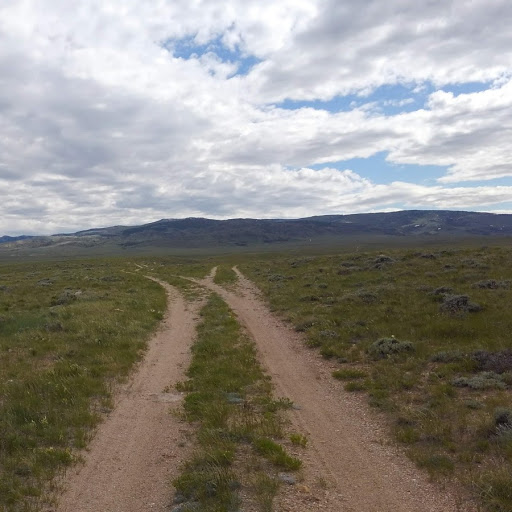
If you don’t live in Wyoming, let me introduce you to one amazing highway. If you do live in Wyoming, you probably know what I’m talking about.

KIMG0616

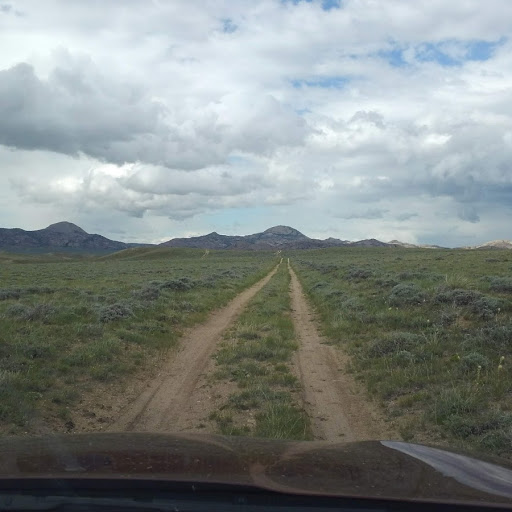
This highway is called a two-track, and it’s quite honestly the style of highway that I love the very most because it takes us into some of the most fascinating and fun places I’ve ever seen. I first learned the term “two-track” by reading C.J. Box novels, which are all set in this sparsely populated state. These two-track highways criss-cross the Wyoming desert in very close proximity to one another, so that if the weather washes out one road, someone with an ATV, or with an all-wheel-drive, tricked-out Subaru with all-terrain truck tires, can switch lanes and take another track…and get lost. Being only a year in to this adventure, we try to keep a close eye on where we are relative to mountain ranges so we can find our way out of the desert maze.

KIMG0618

Above is an onramp to a Wyoming highway. This particular desert road runs between two mountain ranges–Green Mountain and Granite Mountain Range. Green Mountain is covered in evergreens and still dotted with drifts of snow. Granite Mountain Range is covered in…well…big rocks. Huge difference.

Two days ago Mel and I drove up to the Green Mountain Range to the winter gate, parked, and hiked on up the mountain. We hadn’t intended to drive so far from home–almost an hour–but the wind was so fierce, and I wanted to hike so badly, that we drove to the place most protected from the wind, where the trees and canyons would redirect the worst of the gusts. The place was empty of humans. We found evidence of elk tracks, some deer, the typical pronghorn (antelope,) which  is everywhere in our part of Wyoming. When we reached the end of our exploration I told Mel (knowing God would hear) that I hoped to see every wild animal that existed in our area.

Almost immediately, we heard an interesting cry-whine from above us in the mountain. We knew to be on the lookout for bear, mountain lion, moose, elk, coyote, and other larger animals.

I gasped. “Honey, did you hear that?”

“Yes. Not sure what it is.”

By this time I was winded and fighting the elevation, but was a sound we’d never heard before…except maybe on a nature documentary. Not a bear. Not a coyote. But we weren’t sure what it was at first.

I wanted to leave the trail and walk in that direction and investigate. Thankfully, Mel is the safety conscious adult in the family; he ambled away from the sounds and toward the road that would take us to the car. He knows far too well that when he’s with me, I’m fearless.

Before we were out of earshot, we heard yet another animal expression of what sounded like frustration. As if one of the hidden animals wanted to check us out and the wiser one disagreed. Sort of like us.

On the road we studied tracks, a habit I developed decades ago when hiking. We saw canine paw prints. Or were they? The claws were very prominent, but the tracks were too big for coyote, and whatever they were walked in too straight a line to be dogs. There were two or three sets. These tracks continued for several hundred feet before disappearing into the forest. We did find some other “evidence” that was not made by dog and was too big to be coyote. Mel and I both grew up on farms, and we knew coyote and dog tracks. This was different. Bear, perhaps? But the sounds we’d heard weren’t bear, and these weren’t bear tracks. Mountain lions don’t typically move in packs.

Instead of driving back home, we found another two-track–this one in the desert and quite challenging as winter had disintegrated much of the road to deep gullies and rocks. We were rewarded for our efforts by the beautiful vision of wild horses on the mountain above us. But there was another car there with visitors awe-struck by their find, so we drove on and found our own tiny herd of horses to ogle. We discovered, to our delight, that they were just as enchanted with us, and curious. They wouldn’t get too close, but just as they topped a hill and disappeared, they would then peer back over the rise to study us.

Exciting and fun!

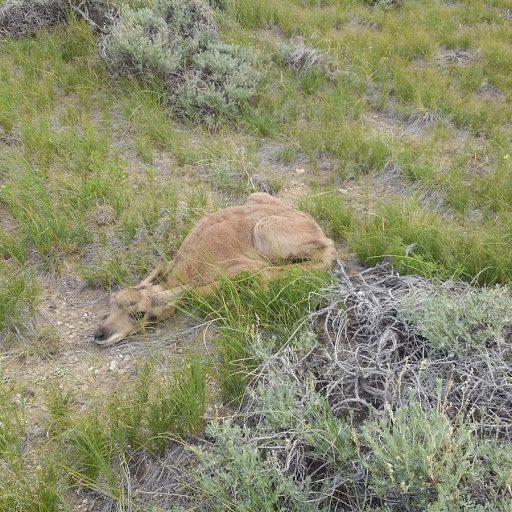
But it was getting later in the afternoon by then, and we weren’t sure how it would take us to find our way back out to the paved highway (those are few and far between in Wyoming.) I found another two-track that seemed to head back to civilization, and took it. Suddenly, a female pronghorn (antelope) jumped up from the sage with her teensy reddish baby under her, wobbling as it tried to keep up. And then just as we expected to see mama race off and lead baby away from us, the baby disappeared. Mother raced away alone.

I knew something was up, but I wasn’t sure what. After all, last week, on a drive to one of the few scattered towns in Wyoming, we were treated to a show of a mama pronghorn attacking a coyote, right there beside the road in front of God and everybody. So we figured that if she would attack a coyote, she might very well attack us.

Mel grabbed his camera and, paying close attention to my directions and watching carefully for mama to return, he scurried up the hill in search of the baby. He finally found it. This sweetheart was clinging to the ground and frozen as if dead–though we knew it wasn’t. Mel thought it was a rock at first, but no, it was a newborn pronghorn following protocol, as newborns are taught to hide.

KIMG0615

Mel rushed back to the car after taking the picture, and then of course I had to see. Who knew when I would next have this opportunity? I looked, fell in love, checked for mama, looked again, and ran back to the car. We got away in a hurry so as not to disrupt the natural flow of life. Multiple pronghorn bucks and does attended us the rest of the way to the paved highway while I wondered how many other babies were nestled in amongst the sage bushes. We passed a cattle drive alongside the paved road on our way home. We see those a lot around here–cowboys on horses working a huge herd of cattle with their newborn calves.

Once we got home, I researched the tracks and scat we’d found and the noises we’d heard, and spoke to a local friend who is knowledgable. We’d been within speaking distance of a pack of wolves in those mountains.  I hadn’t realized wolves were so prevalent this far south in Wyoming, but apparently I was wrong.  I want to go back today and check out those prints again. I want to wait until evening and listen to them howl. But I don’t want to consider the reason those wolves are there.

It’s the cycle of life, wolves searching for food, newborns hiding, cattle dropping their young in the briefly-green desert.

My request to God was granted. I knew it would be in one way or another. Here in Wyoming I’m amazed by the overly generous grace of God, the beauty of His creation despite the curse on the earth brought by man’s first sin.

Someday the lion will not harm the lamb, the wolves will not hunt the baby animals, the pronghorn won’t have to battle coyote for their babies. Someday we won’t have to carry bear spray and protection from a charging animals. I cannot imagine how much more wonderful someday will be!


Posted in Hannah Alexander, Uncategorized | Tagged , , , , , , | 2 Comments

The Reason for My Convictions by Nancy J. Farrier

A few weeks ago, I blogged about my experience with a difficult pregnancy and the pressure to have an abortion. You can read that blog post here. I keep thinking about the reason I stood strong against tremendous pressure, and I wanted to share that part of my story with you today.

Summer 1972 – A few months prior to the Roe vs. Wade decision

Denver, Colorado

I remember standing at the stove in our teensy apartment, cooking chili and getting ready for dinner. My husband was home from Lowry Air Force Base where he attended school before we shipped to another base. We had been married less than a year. I was pregnant for the second time—the first ended in a miscarriage. We were so excited and looking forward to having this baby.

As I stirred the chili cramps hit, doubling me over. The suddenness took my breath away. I dropped the spoon to the floor scattering droplets of sauce and meat everywhere. Then the bleeding started. Not a little, but a lot. A scary amount.

Because my husband was in the Air Force we had to go to the hospital on the nearby Army base. It was a huge building, and I was whisked into a room. I don’t recall much about the next few hours. Examinations. Intense pain. A doctor who epitomized every bad joke about Army doctors. Cold. Cruel. Uncaring. An intern who showed me kindness.

I woke up before dawn the next morning and found myself in a ward. My bed was closest to the door, but the room seemed to extend forever in the other direction with bed after bed facing a long section of windows. I was so groggy I couldn’t focus on anything. The doctor came in with some other men, who must have been in training. The doctor didn’t say a word to me but threw the sheet off of me and discussed what he’d done as all the men stared at my nakedness. All I could think was their clinical talk meant the death of my baby. The baby I wanted so much. I tried to remain stoic and strong in the face of my grief and humiliation.

After they left, I drifted back to sleep but woke again to hear voices. Two of the women in the beds close to mine were standing at the bank of windows looking out at the city as the early morning light brightened the room. They were so close I couldn’t help but overhear their conversation.

At this time, the Army hospital in Denver was one of the few places in the country where abortion was legal. These two women had come to the hospital to end their pregnancies. They chatted in light-hearted tones about how they had all the children they wanted and this was such a relief to not have more. They talked about how much easier life would be without the an extra to worry about.

I began to cry. I tried to hide my tears and sobs in my pillow. I wanted my baby so much and these women threw theirs away like yesterday’s trash. They didn’t care about the life of that child. In fact, they didn’t refer to them as babies. Not once. 

But the child of mine that died that night was a baby. For the first time in my life, I had to fill out a death certificate for a baby I wouldn’t get to hold. My heart ached and I wept again as I penciled in answers in those blanks. Not quite nineteen, I was unprepared for this harsh life lesson.

As I pressed my face to the pillow and sobbed, one of the women who had been rejoicing the end of her pregnancy came over to see if she could do anything for me. I know I was rude as I told her not to touch me. I do feel bad about that. Knowing what I do now I realize those women weren’t as carefree over their decision as they sounded. But, at the time, their attitude caused me more pain than I thought I could endure.

Prior to my experience in that hospital, I had no real convictions about abortion. After that night and the following morning, I knew abortion meant killing babies. Bottom line. The baby died.

At this time, I was not a Christian. A few years later, when I became a Christian, I understood another reason why abortion is wrong. Killing is not something we should do. Giving and taking life are in God’s hands, not ours. Children are a gift from Him. (Ps. 127:3)

After the death of my first husband, I remarried. My second husband planned for us to have three children. Two years after our third was born, I got pregnant again. Our fourth was a surprise. Two years later, I became pregnant again. This pregnancy, I joked, was a shock. 

Did I ever consider ending either of those pregnancies because we already had enough children? No. Not once. Did we have to make sacrifices because of our larger family? Yes, many times. Not once did I regret that. I can’t imagine what would bring me to the point of killing my baby simply because I had enough children.

As I write this, I am thinking of those women who made that choice to end the life of their child. I may not understand why, but the fact is that many have had abortions. Studies have been done on the negative mental health aspects that come from killing your child. I want you to understand that I forgive those women. They did not truly understand the enormity of what they were doing. If I were to meet them today, I would encourage them to ask forgiveness and to forgive themselves. 

What I experienced was beyond difficult. That wouldn’t be my last miscarriage. But the lesson I learned helped to prepare me to be strong when I needed to be. I am thankful for that.

For [God} formed my inward parts; You covered me in my mother’s womb. I will praise You, for I am fearfully and wonderfully made; marvelous are Your works. And that my soul knows very well. Ps. 139:13,14 

Posted in Nancy J. Farrier | Tagged , , | 4 Comments

A Cosmic Case for Faith?

by Jim Denney, adapted from
ANSWERS TO SATISFY THE SOUL:
Clear, Straight Answers to 20 of Life’s Most Perplexing Questions

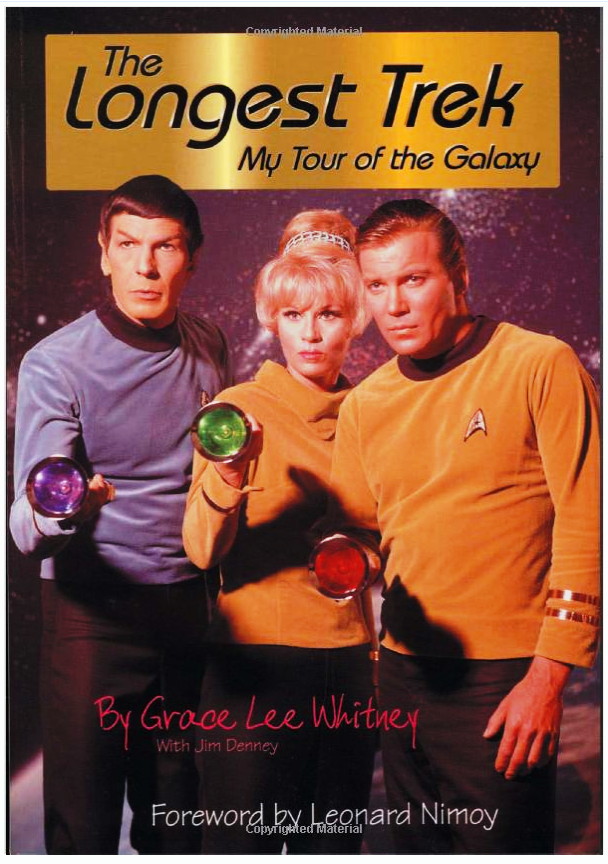
LongestTrek

I got to know Grace Lee Whitney when I worked with her on her Star Trek memoir, The Longest Trek.

Gene Roddenberry, the creator of Star Trek, was a confirmed atheist.

I never met him, but my good friend, actress Grace Lee Whitney (author of The Longest Trek), knew him well. She had worked with Roddenberry on two TV series, The Lieutenant (with Gary Lockwood and Robert Vaughn) and Star Trek (with William Shatner and Leonard Nimoy).

Grace told me, “I had many philosophical conversations with Gene in the studio commissary or in his office in 1966, as Star Trek was moving into production. We talked a lot about the show—but we also talked about politics and social issues, about equality between the sexes, and about religion. I was a Jewish atheist at the time—I loved the traditions of Judaism but I had no faith in God.”

Midway through the first season of Star Trek, Grace was sexually assaulted by a studio executive and subsequently fired from the series. That attack and the firing sent her into a tailspin of alcoholism, drug addiction, and sex addiction that nearly killed her. She was rescued by a Twelve Step recovery program. To keep her sobriety, she had to rely on a Power greater than herself. In time, the Power she relied on was Jesus Christ.

GeneRoddenberryAustinTXCopyr1976LarryDMoore

Gene Roddenberry in Austin, Texas, 1976. Photo: Larry D. Moore, CC BY-SA 3.0Wikimedia Commons.

Gene Roddenberry, by contrast, remained an atheist until his death in October 1991. In an interview with The Humanist, published shortly before his death, he recalled:

In my early teens, I decided to listen to the sermon. I guess I was around 14 and emerging as a personality. I had never really paid much attention to the sermon before. I was more interested in the deacon’s daughter and what we might be doing between services.

I listened to the sermon, and I remember complete astonishment because what they were talking about were things that were just crazy. . . . I guess from that time it was clear to me that religion was largely nonsense—largely magical, superstitious things. In my own teen life, I just couldn’t see any point in adopting something based on magic, which was obviously phony and superstitious.

Gene Roddenberry saw belief in God as illogical and unscientific. Atheism, he believed, was the only enlightened, scientific world view. At the time of his death, Roddenberry had already been proven wrong. But he didn’t know it.

In the mid-1980s, I went through an internal crisis of belief. I was troubled by doubts about God, yet I also believed in following the teachings of Jesus of Nazareth (such as the Sermon on the Mount). I decided to claim the promise Jesus made in John 8:31-32: “If you hold to my teaching, you are really my disciples. Then you will know the truth, and the truth will set you free.” I wanted to know the truth, so I prayed to the God I doubted and I asked him to reveal the truth to me—wherever the evidence might lead, whatever the truth might be.

Weeks or months later, a magazine arrived in my mailbox, the April 1987 issue of Analog Science Fiction / Science Fact. It featured a nonfiction article by Richard Meisner, “Universe—the Ultimate Artifact?” The title intrigued me, and I started reading. I was amazed by what I read. Was this the answer to the prayer I’d been praying?

Hubble-GalaxyClusters-PubDomain-2

A year or so later, I bought a book with an intriguing title, though I didn’t know what the book was about: The Symbiotic Universe by astrophysicist George Greenstein. It was a detailed discussion of the scientific evidence I had first discovered in Richard Meisner’s article in Analog. Around that time, a friend lent me a copy of God and the New Physics by physicist Paul Davies—more information on the same subject.

What were Meisner, Greenstein, and Davies talking about? According to the scientific evidence, the universe appears to be an artifact—an object designed by an intelligent entity for an intelligent purpose. Meisner went on to quote several distinguished scientists—and what they said made them sound more like theologians than scientists.

Astronomer Sir Fred Hoyle: “A commonsense interpretation of the facts suggests that a superintellect has monkeyed with physics, as well as chemistry and biology, and that there are no blind forces worth speaking about in nature.”

Paul Davies: “It is hard to resist the impression that the present structure of the universe, apparently so sensitive to minor alterations in the numbers, has been rather carefully thought out.”

Richard Meisner: “One may feel inclined to apply the word ‘God’ in this context. This is justifiable, although I tend to avoid the word simply because I’ve found almost without exception that it triggers an immediate positive or negative emotional response in the listener—most inconducive to good scientific thinking.”

What made George Greenstein’s book so compelling was that he spent more than 200 pages laying out the case that the universe was designed by God—yet Greenstein himself was an atheist. The more he examined the evidence for God in the universe, the more he felt “an intense revulsion, and at times it was almost physical in nature. I would positively squirm with discomfort. The very thought that the fitness of the cosmos for life might be a mystery requiring solution struck me as ludicrous, absurd. I found it difficult to entertain the notion without grimacing in disgust.”

Pondering the evidence, Greenstein said, “the thought insistently arises that some supernatural agency—or, rather, Agency—must be involved. Is it possible that suddenly, without intending to, we have stumbled upon scientific proof of the existence of a Supreme Being? Was it God who stepped in and so providentially crafted the cosmos for our benefit?”

Then he answered his own question: “It is a matter of taste how one deals with [the scientific evidence for God]. . . . Those who wish are free to accept it, and I have no way to prove them wrong. But I know where I stand. . . . I reject it utterly. I will have nothing to do with it.”

Hubble-GalaxyClusters-PubDomain-3

Having rejected God as an explanation for the cosmic evidence, Greenstein offers his own explanation for the evidence: The universe mysteriously “bootstrapped” itself into existence. In other words, the universe needs intelligent life in order to become “real,” and intelligent life needs a universe in which to live. So, according to Greenstein, the universe and life mutually brought each other into existence. How does that work? Greenstein is a bit vague on the details.

It saddens me that Gene Roddenberry died thinking that belief in God is nothing but unscientific superstition. He apparently never knew about the persuasive, scientific case for God. The evidence is so strong and convincing it made George Greenstein, an atheist scientist, “squirm with discomfort” and “grimace in disgust.”

To me, that evidence was an answer to a prayer I prayed—a prayer in which I asked to know the truth about God’s existence. What is the evidence that Richard Meisner, George Greenstein, Paul Davies and other astonished scientists were writing about?

More on that in weeks to come.

_____________________________

Answers-SoulANSWERS TO
SATISFY THE SOUL:
Clear, Straight Answers to 20 of Life’s Most Perplexing Questions
by Jim Denney 

(Kindle Edition: $2.99)

“Read this book and save yourself a lifetime of searching and wondering. The answers you seek are all right here!”
Jack Canfield, author of Dare to Win and the Chicken Soup for the Soul series

“Grab an arm-load of Answers to Satisfy the Soul! Buy one for yourself, one to lend out, and a dozen to give as gifts. You’ve got a lot of friends who need this book!”
Pat Williams, author of Character Carved in Stone

“If you are on a quest for success, happiness, love, meaning, or God, this book is for you. Whatever you seek in life, Answers to Satisfy the Soul will speed you on your journey.”
John C. Maxwell, author of The 21 Irrefutable Laws of Leadership
Posted in Jim Denney, Uncategorized | Tagged , , , , , , , , , , , , , , , , | 1 Comment

God is in Everything

I was recently talking to a friend about one of his mother-in-law‘s favorite sayings. “God was in that,” she will say when something good happens. But my friend asked, “Isn’t God in everything?” My friend has a good point. After all, we can see in the Bible that God allowed Satan to test Job.

When something we don’t like occurs, we might blame God or we might question why God didn’t stop it. But we can’t see the whole picture. God can see the beginning and the end. Something that is uncomfortable, might have a purpose.

I often enjoy listening to Dr. Charles Stanley’s radio program. He recently mentioned that when we are faced with adversity, we should (1) Look at it as though it is from God and (2) Ask God what He wants us to learn from the trial we are going through.

This can be difficult for us to do because initially we might feel blindsided by the adversity. Also, we just want to find a quick, easy, and painless way out of the adversity. Most of us aren’t going to rub our hands together with excitement about walking through a difficult season, all for the sake of learning something.

No matter what difficulty you are facing, the Bible does make a bold promise. “And we know that God causes all things to work together for the good of those who love God and are called according to His purpose for them.” – Romans 8:28. God can and will use whatever you are facing for good.

One example that my friend and I discussed in the same conversation that I mentioned above comes from the movie “I Can Only Imagine.” (If you haven’t seen the movie, please do!) Bart Millard, the leader singer of Mercy Me, went through a lot of pain in his life. I am not saying that those things were from God. But I do believe God used them for good.

I am sure we can all look back on trials in our lives and see the hand of God, if we try to have an open mind. Unfortunately, I do know some people who have become too bitter in life and therefore they don’t even want to see how God has been in everything. Basically it comes down to trust. Either we trust God or we don’t. I choose to trust Him. How about you?

Posted in Uncategorized | Leave a comment

Boom and Busted

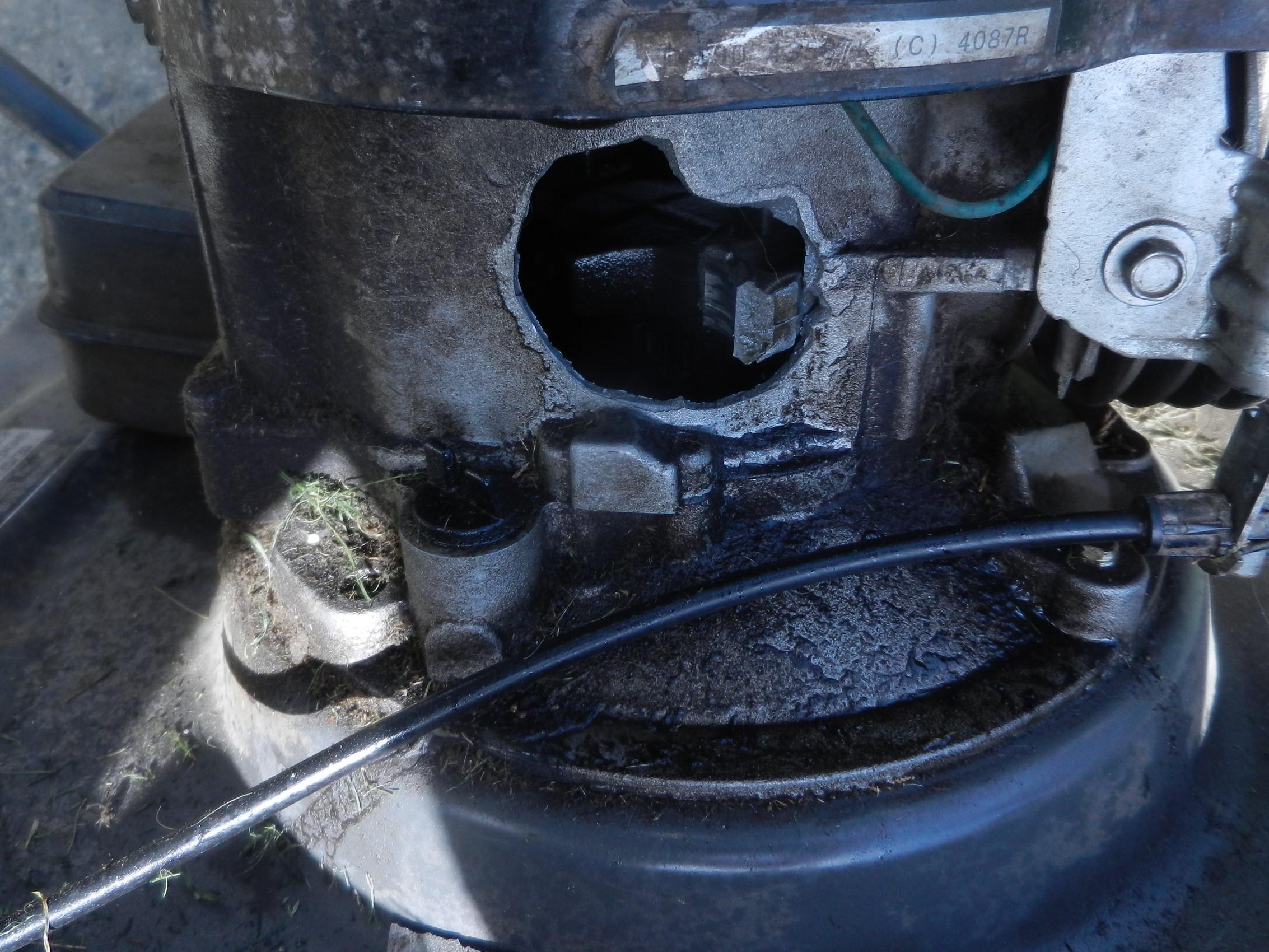
A couple pf weeks ago, my son-in-law was mowing our lawn when our lawn mower suddenly stopped working, for no discernible reason. I was puzzled, so I sent the attached picture to my brother, who is much more mechanically inclined than I am. (I am a writer and not much good for anything else.)

DSCN6012 (2)

Along with the photo, I sent my brother the following message:

     I don’t know a lot about motors. Since you know more about these things than I do, can you answer some questions:

  1. Is there supposed to be a hole like this in the side of the motor?
  2. Could this be why the mower stopped working?
  3. Can it be fixed?

My brother answered:

  1. Yes.
  2. No.
  3. Yes.
  4. No.

I was still confused. So I wrote my brother again:

     I asked you three questions, but you gave me four answers. Please elucidate.

My brother answered:

  1. Yes, you know very little about motors.
  2. No, there is not supposed to be a hole.
  3. Yes, this is why the motor stopped.
  4. No, this cannot be fixed.

Then he added:

     Many companies have full-time employees who do nothing but answer silly questions like the ones you asked.

I didn’t find these answers very satisfactory. I decided to seek another opinion, one that would at least be less insulting. So, I asked some of my writer friends the same questions. Two of them provided the same answer to the last question:

     Yes. Use duct tape.

Good friends. Good writers. Like me, sadly, not much good for anything else.


Posted in James R. Coggins | Tagged , , | 3 Comments