“A Poem” by James R. Coggins

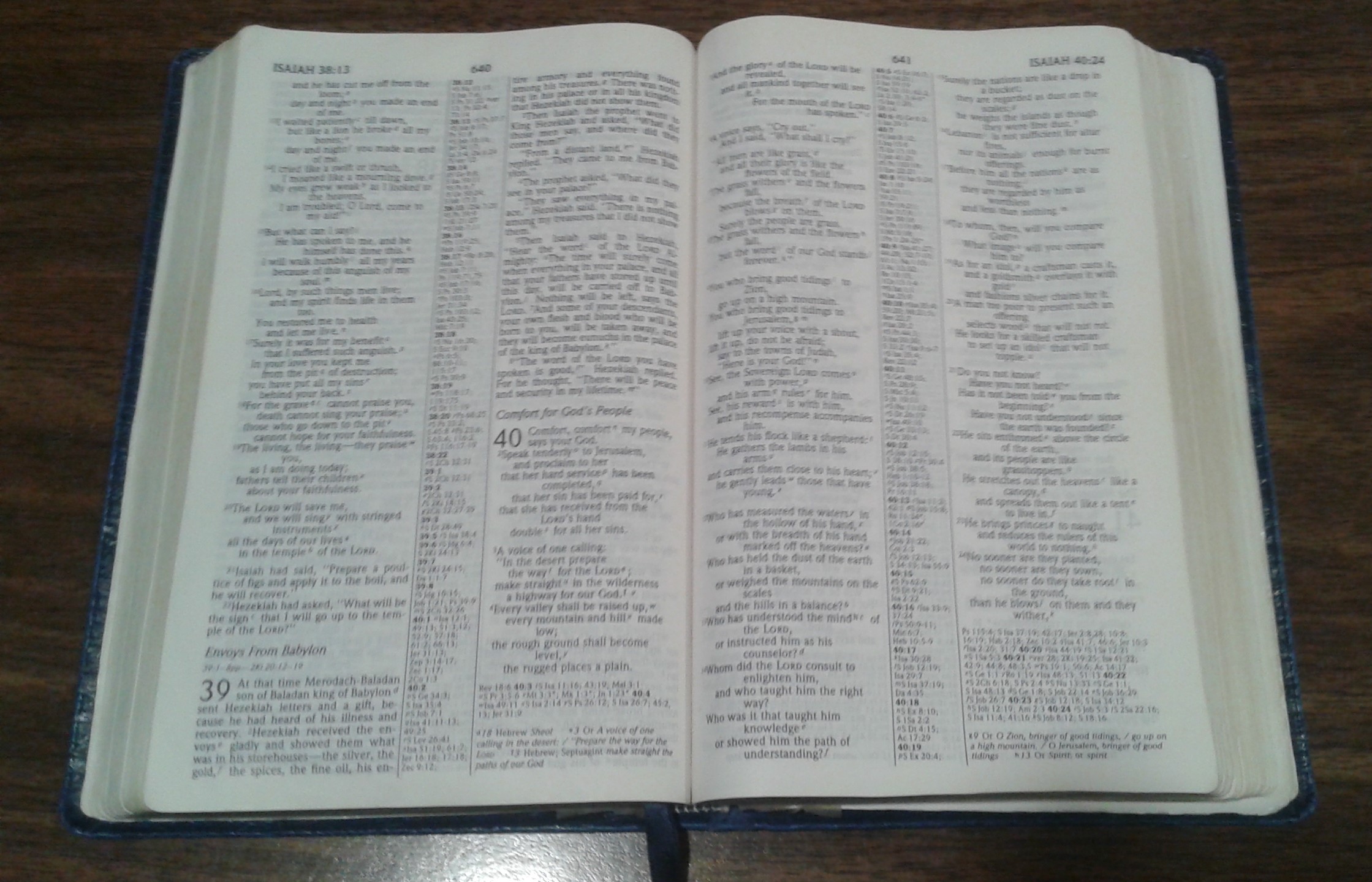
We do not normally think of the apostle Paul as a poet. However, in Philippians 2:6-11, he presented a poem. Whether he wrote it himself or was quoting someone else’s poem is unclear. That it is a poem is clear because of the parallel phrases and the carefully designed structure of this passage.

The poem has the structure of a V. It starts with Jesus “being in very nature God” (verse 6, NIV). Then Jesus descended to human status, described in three parallel phrases: “He made himself nothing by taking the very nature of a servant, being made in human likeness” (verse 7). But then Jesus went further. He became “obedient to death” (submitted to death) and thus descended below humanity to the realm of the dead (verse 8). Then God raised Jesus back up to heaven, the place of God: “God exalted him to the highest place and gave him the name that is above every name” (verse 9). This restoration completes the V structure. It is interesting to remember that the Gospels say that Jesus’ restoration came in two stages—He was resurrected back to the human plane and then ascended to the heavenly plane sometime later. Verse 10 asserts that Jesus is Lord of the three planes he was on: “at the name of Jesus every knee should bow, in heaven and on earth and under the earth”—heaven, earth, and the place of the dead.

However, the reason that Paul cited this poem was to tell Christians to “have the same mindset as Christ Jesus” (verse 5). The promise is that if we humble ourselves as Jesus did, our lives can follow the pattern that Jesus laid down. Jesus taught, “Those who exalt themselves will be humbled, and those who humble themselves will be exalted” (Matthew 23:12, Luke 14:11). James taught, “Humble yourselves before the Lord, and he will lift you up” (James 4:10). Peter taught, “Humble yourselves, therefore, under God’s mighty hand, that he may lift you up in due time” (1 Peter 5:6). Paul wrote elsewhere, “If we have been united with him in a death like his, we will certainly also be united with him in a resurrection like his” (Romans 6:5). We didn’t start out as God, of course (except perhaps in our own minds). However, if we humble ourselves and follow Jesus, we have the promise of being raised to heaven to be with Jesus and even to be like Him (1 John 3:2, Philippians 3:21).

Posted in James R. Coggins | Tagged , , , , | Leave a comment

Walking with Jesus: Reflections on His Earthly Ministry

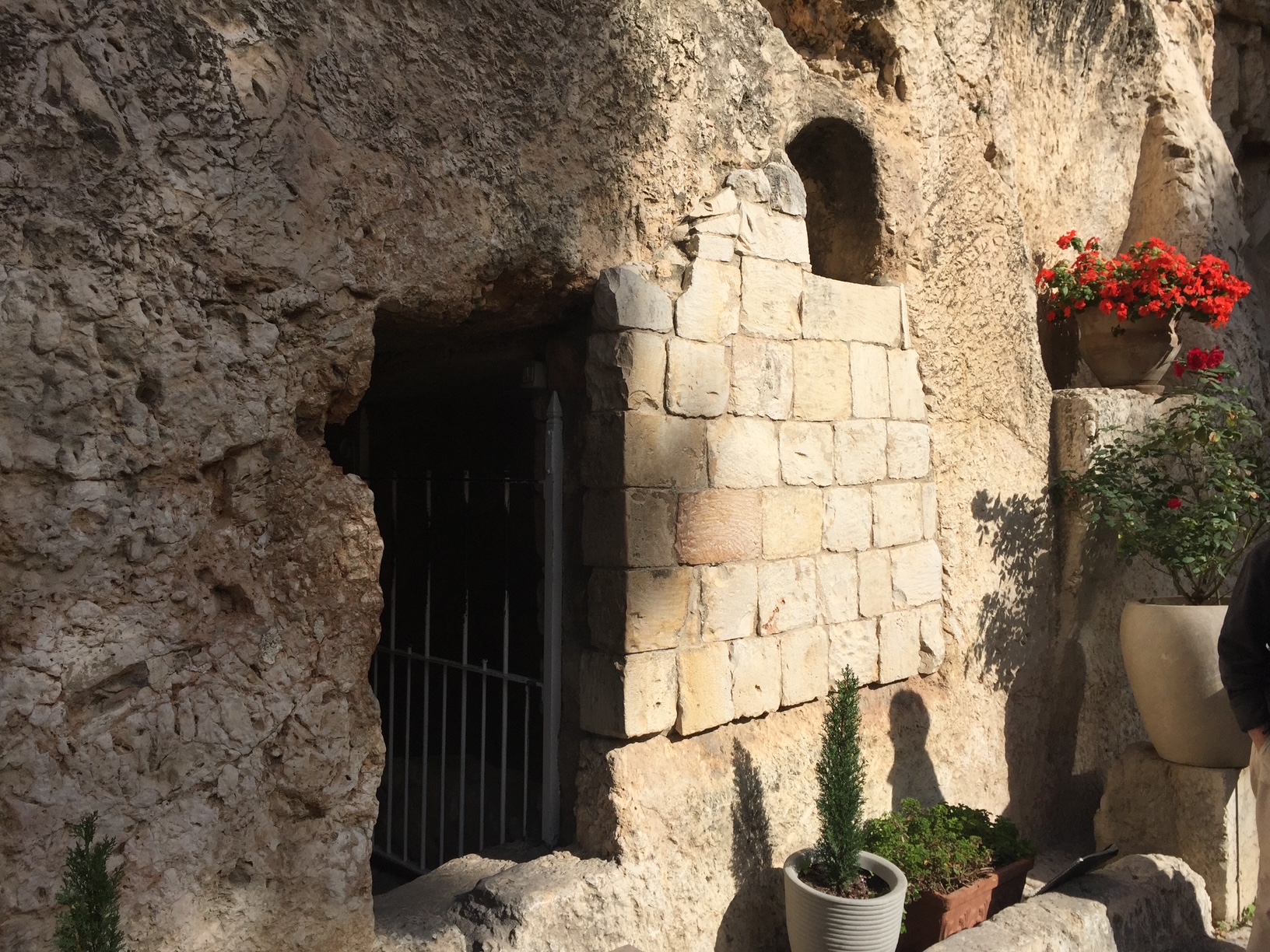
Many years ago, when the grandkids were younger, each Easter we did a Walking with Jesus celebration which involved the last week of Jesus’s life. It was a lot of fun, and we ended the walk at the empty tomb.

 As we draw closer to Easter, I find my thoughts are on Jesus’s ministry while He was here on earth which was nothing short of a revolution of love, compassion, and truth. From the moment He stepped into public life, His words and actions began to reshape the hearts of those around Him and inspire a movement that continues to this day.

Jesus’ ministry was marked by humility. Born in a manger, raised in an ordinary town, and living as a carpenter, He showed us that greatness is not measured by status or wealth but by service. As He began His ministry, He called upon ordinary people—fishermen, tax collectors, and zealots—to follow Him. He saw in them not what the world saw, but what they could become through faith in Him.

Through His teachings, Jesus offered a new vision of the kingdom of God. In the Sermon on the Mount, He taught the Beatitudes—a radical call to live in humility, mercy, and peace. He spoke of love for our enemies, forgiveness that knows no bounds, and faith that moves mountains. His parables, like the Good Samaritan and the Prodigal Son, taught profound lessons of grace, love, and redemption.

Jesus didn’t just speak; He acted. He touched lepers, gave sight to the blind, and healed the sick. He welcomed the outcasts, dined with sinners, and lifted up those who were burdened. Every miracle, every act of kindness was not just a display of His power but a reflection of His heart—a heart that beat for the broken, the weary, and the lost.

And yet, as the shadow of the cross loomed over His ministry, Jesus continued to show unwavering obedience to His Father’s will. He spoke openly about His coming suffering, not as a defeat but as the fulfillment of His purpose. He prepared His disciples for the trials ahead, assuring them, “I am the way and the truth and the life” (John 14:6). Even in His final days, Jesus washed the feet of His disciples, modeling servanthood and love to the very end.

The ministry of Jesus on earth was a light in a dark world, a living testimony of God’s boundless love for humanity. It challenges us to walk in His footsteps, to love as He loved, and to serve as He served. As we reflect on His life and His journey to the cross, let us be inspired to carry forward His message of hope and redemption.

In Him, we find not just a teacher or a prophet, but our Savior and Redeemer—the one who came so that we might have life and have it abundantly (John 10:10). Let His ministry on earth remind us of the beauty of a life lived for God and others.

May His example guide our hearts and inspire our actions every day. Amen.

All the best. . .

Mary Alford

http://www.maryalford.net

Posted in Uncategorized | Leave a comment

God’s Majesty by Tara Randel

Three nights ago, there was a lunar eclipse in my area. A friend told me about the moon, and I was excited to see it until I learned it would be visible at 3am. Normally I’m sound asleep at that time, but my husband had to leave early to travel, and I happened to be awake. I traipsed outside with my phone to capture some images and I was truly glad I did. I’d never seen a blood moon before and it did not disappoint.

As I was thinking about the eclipse and how amazing it was, I was reminded of God’s majesty. We live in a beautiful world created by God. Nature is all around us. When I see things like this moon, I can’t help but wonder how anyone would doubt that God has His hand in our world.

So I wanted to pick out some scriptures to start out the day.

Psalm 8:3-9

When I consider your heavens,
    the work of your fingers,
the moon and the stars,
    which you have set in place,
 what is mankind that you are mindful of them,
    human beings that you care for them?

You have made them a little lower than the angels
    and crowned them with glory and honor.
You made them rulers over the works of your hands;
    you put everything under their feet:
all flocks and herds,
    and the animals of the wild,
the birds in the sky,
    and the fish in the sea,
    all that swim the paths of the seas.

Lord, our Lord,
    how majestic is your name in all the earth!

Psalm 72:18-19

Praise be to the Lord God, the God of Israel,
   who alone does marvelous deeds.
19 Praise be to his glorious name forever;
    may the whole earth be filled with his glory.
Amen and Amen.

I have been dwelling on this particular psalm for a while now.

Psalm 121

I lift up my eyes to the mountains—
    where does my help come from?
 My help comes from the Lord,
    the Maker of heaven and earth.

He will not let your foot slip—
 he who watches over you will not slumber; 

indeed, he who watches over Israel
    will neither slumber nor sleep.

 The Lord watches over you—
    the Lord is your shade at your right hand;
 the sun will not harm you by day,
    nor the moon by night.

 The Lord will keep you from all harm—
    he will watch over your life;

the Lord will watch over your coming and going
    both now and forevermore.

I hope you have a wonderful day!

Tara Randel is an award-winning, USA Today bestselling author. Family values, a bit of mystery and of course, love and romance, are her favorite themes, because she believes love is the greatest gift of all. Look for her Harlequin Heartwarming romance THE SURPRISE NEXT DOOR, available May 2025. For more information about her books, visit Tara at www.tararandel.com. Like her on Facebook at http://www.facebook.com/TaraRandelBooks

Posted in Tara Randel | Tagged , , , , , , | Leave a comment

Prayer and the 72-Hour Rule by Vicki Hinze

prayer and 72-hour rule, vicki hinze, christians read

Prayer and 72-Hour Rule


This question comes in all the time, so it is time for a bit of discussion…

 How do we stay above the fray of false accusations and attempts to deceive?

 I don’t know it all.  I can share my perspective, and hope that in it, you find some worth.  We must become critical thinkers—using logic, knowledge, reason and emotion—and then discern as objectively as we are able.

I say as objectively as we are able because no mortal can be wholly objective.  Our views are all touched by our beliefs, our experiences, and all insights and knowledge we have acquired during our lives.  That said, we can strive to be as objective as possible by making a strong effort to push subjectivity aside, view objectively, and then weigh all–before rendering a conclusion.

For example…

 Vial information we need is flowing rapidly and with the force of a firehose.  It’s all but impossible to keep up.  Many have formed small groups and each person seeks truth on a matter and then reports back to the group with proofs of what she or he has found.  The information is compiled, discussed, and if further information is needed, it is sought and brought to the group.  This enables all group members to focus on a variety of specific areas, which makes broader coverage possible and not as overwhelming.  All the information is studied and digested by the group, and each member draws conclusions.  Often, we then discuss conclusions, shoot holes in them, refine them again and again, and ultimately, we conclude. 

Logic, knowledge and emotion, critical thinking, evidence and discernment.

 Choosing members for your group requires respect and trust in that person, in what she or he brings back to the group, and the sources s/he uses and deems reputable as confirmation. (Respected and trusted sources are critical.)  This level of reliance on each other requires confidence in all group members by all group members.

 I explain this as a preface to our 72-hour rule, which I believe has become one of the most useful and protective and wise rules we have adopted to aid us in staying above the fray of making false accusations and protecting us from falling for attempts to deceive.

What is the 72-hour rule? 

It’s simple.  When something happens that appears to come in totally unexpected and from left field, hold your thoughts and don’t draw a conclusion on it for 72 hours.   

Typically within that time, the assertion will be proven true or false.  More information is released.  More information is revealed or found by others and a more complete picture of the assertion is presented.  Context is gained.  That additional context or insight either supports the assertion or refutes it, which spares you from falsely accusing or fostering deception.  The effort protects your own credibility and, if you are working with others, the credibility of those in your group.

“Breaking news” creates a powerful temptation to get news out there.  To be first to report it.  But breaking news does more harm than good if it later proves to be false.  It is far more important to get it right than to be first.  Being first to break news is never enough reason to risk spreading false information, accusations, or engaging in any attempt—wittingly or unwittingly—to deceive anyone. 

There is an old saying that we are only as good as our word.  That is true.  Will mistakes be made?  Yes, of course.  We’re human.  When they do make mistakes, admit them, apologize, and try to correct the error as soon as is possible.  Also, try to correct any harm caused by the mistake.

Example.  Newspapers print an incorrect story.  It goes public.  The error is pointed out, and the newspaper prints a retraction.

Good, but not as good as it could be.  The story was printed on the front page above the fold–the most significant placement a story can have in newsprint.  The retraction was on page 24, buried at the bottom left.  That’s about the least significant placement.  So far more people saw the story than will see the retraction.

We can choose to be more ethical.  Put the retraction on the front page, above the fold in a small box.  This gives the retraction the same weight as the story.  Being fair, straight about the event, and honest with readers is about the best that can be done.  Since readers are human, too, they understand errors are made and you want them to know you’re taking responsibility and doing all you can to make your error right.

 Again, in my humble opinion, this all goes back to respect and to trust, which are essential for an effective group.  An effective individual, entity, or anything else.

 Two Bible verses have been extremely helpful to me, and I’ll share them in the hope they will be helpful to you also:

Psalm 35:20

They do not speak peaceably, but devise false accusations against those who live quietly in the land.


Jeremiah 9:6

You live in the midst of deception; in their deceit they refuse to acknowledge me,” declares the Lord.


 After eight years or so, I can say that both have been instrumental in identifying people who profess to be bearers of truth but who prove they are not, and those who profess fiction to be fact. 

Lastly, it has long since become a practice to pray before researching and in gratitude afterward.  Prayer calms the mind and opens the spirit to truth.  (God cannot abide lies, right?)  I cannot tell you how much this has positively impacted the process.  In a multitude of ways.

I’ve discovered that the 72-Hour Rule can be applied to just about any flash point that could develop into conflict.  It helps defuse.  I pray it helps you in your situations.

Blessings,

Vicki Hinze

Christians-Read


Posted in Vicki Hinze | Tagged , , , | Leave a comment

Improve Your Writing with AI (Artificial Intelligence!) By James R. Coggins

Every time I start to share one of my blogs on social media, I receive a message such as:

“Start a post, try writing with AI.” That “sentence” contains a grammatical error called a “comma splice,” joining what should be two sentences with a comma. This does not inspire confidence in the offered AI.

“Rewrite with AI.”

“Enhance your posts with AI. Posts can receive up to 35% more distribution and 30% more engagement.” 35% more than what?

In essence, the website is offering to improve my writing using Artificial Intelligence, a computer program. Even worse, the website expects me to pay for this assistance.

As a writer, I am insulted. The website is essentially insulting my writing ability without even having read what I have written. It is saying that I don’t write two good. Even worse, the website is saying that I, who have devoted my life to perfecting my writing skills, can be replaced by a machine.

I am especially insulted because whenever I am writing something, the various computer programs I am using keep suggesting changes that usually degrade the writing and introduce grammatical errors. Why would I pay to make my writing worse? I write far better than any machine.

In case, you doubt what I am saying, I typed the following paragraph and accepted every suggestion a certain program (which I will refrain from naming) made:

I have, myself, full confidence that it will all work out, if nothing else is needed, and if the best arrangements are made, as they are being discussed, we will be out of town once again this year to defend the interests of our community, to ensure the safety of our workers, and to outline the menace of tyranny, if necessary for years, if necessary alone. At any time, please think about what you are doing. That is the resolution of His Message Government—especially man of them. That is the will of Parliament and the nation. The British Empire and the French Republic, linked together with their current address and information, Williams defend to the death their native soil, aiding each other like good friends to the utmost of the world. Even though last year of Europe and manufacturing old and new States have been fallen or missing into the ground of the Gestapo and all the oddities appear to occur in Nazi rule, we shall not flag or remove. We shall go ahead and to the end, we shall fight for France, we shall fight for the separation and occupancy of, we shall fight for growth and confidence and growing strength in the future, we shall defend our interests, whatever they may be, we shall fight for the beauty of, we shall fight for the landing grounds, we shall fight for the fields and in the fields, we shall fight for the hills; we will be needing surround sound, and even if, which I believe for a moment, this island is originally a large island of islands were surrounded by and surrounded, then our Empire beyond the seas, armed and guided by the British Fleet, would carry on the struggle, until, in God’s goodness, the New World, with all its wonderful and memorable stories forthcoming to share with you and your family the wonderful stories of the old world.

Does that strike you as a wonderful piece of writing? Is it clear? Or do you think it a confusing compendium of pedestrian phrases? Do you think it could be an improvement on the original?

The original is the concluding paragraph of British Prime Minister Winston Churchill’s speech to the House of Commons on June 4, 1940, near the start of the Second World War. That speech is one of the most stirring and inspiring speeches every made, a masterful example of oratory:

I have, myself, full confidence that if all do their duty, if nothing is neglected, and if the best arrangements are made, as they are being made, we shall prove ourselves once again able to defend our Island home, to ride out the storm of war, and to outlive the menace of tyranny, if necessary for years, if necessary alone. At any rate, that is what we are going to try to do. That is the resolve of His Majesty’s Government-every man of them. That is the will of Parliament and the nation. The British Empire and the French Republic, linked together in their cause and in their need, will defend to the death their native soil, aiding each other like good comrades to the utmost of their strength. Even though large tracts of Europe and many old and famous States have fallen or may fall into the grip of the Gestapo and all the odious apparatus of Nazi rule, we shall not flag or fail. We shall go on to the end, we shall fight in France, we shall fight on the seas and oceans, we shall fight with growing confidence and growing strength in the air, we shall defend our Island, whatever the cost may be, we shall fight on the beaches, we shall fight on the landing grounds, we shall fight in the fields and in the streets, we shall fight in the hills; we shall never surrender, and even if, which I do not for a moment believe, this Island or a large part of it were subjugated and starving, then our Empire beyond the seas, armed and guarded by the British Fleet, would carry on the struggle, until, in God’s good time, the New World, with all its power and might, steps forth to the rescue and the liberation of the old.

If Winston Churchill had accepted help from Artificial Intelligence, we would all likely be speaking German.

Posted in James R. Coggins | Tagged , , , , , | 4 Comments

Remembering God’s Statutes by Nancy J. Farrier

Photo by Wes Hicks on Unsplash

From the time I was young I loved sitting around a campfire. We would cook hot dogs or marshmallows. Make s’mores. Laugh and talk, or sometimes sit and watch the flames dance. The one thing I didn’t like was the smoke. No matter where I sat that smoke seemed to sense me and drift in my direction. Pretty soon, breathing would become difficult, and I would start coughing and have to change locations at the fire. 

There were always jokes my uncles would make when I was a child about smoke following beauty, but I never believed them. That smoke burned my throat and made me long for a breath of clean air. I never felt pretty.

In my daily Bible reading, I came across Psalm 119:83: “For I have become like a wineskin in smoke, Yet I do not forget Your statutes.” That phrase ‘like a wineskin in smoke’ grabbed my attention. What did the psalmist mean? What happens to a wineskin in smoke? How does this apply to my life? I had to take the time to research this phrase, and the meaning, to satisfy my curiosity.

There were several schools of thought, but I found out two very interesting concepts. First, sometimes wineskins were hung in the smoke to give the wine a more mellow tone. Many of the early homes in Bible days were heated with a fire in the house and the wineskins would come in contact with the smoke as they hung on the walls. The warmth and the smoke would change the flavor of the wine, adding an enjoyable flavor.

Second, if a wineskin hung in too much smoke, the leather would dry and crack. The intense heat would ruin the skin through a lack of fresh air and moisture. Then the skin and the contents could be ruined.

I have pondered these ideas and the scripture. I keep thinking that the smoke and its intensity can represent trials in my life. Some are hard but not severe. They help to mold me and encourage growth as I become more dependent on God. I am learning to be long-suffering and to persevere despite the difficulties I face.

The more severe trials are like the thicker smoke and higher heat. They steal the fresh air and burn my lungs. If I am not careful, I will become dry and cracked, useless in my misery. Both inside and out can be ruined if I don’t take note of the second part of that verse – ‘yet I do not forget Your statutes.’

Remembering God’s promises and His word stave off the harmful effects of the smoke. Genesis 2:7 says, “And the Lord God formed man of the dust of the ground, and breathed into his nostrils the breath of life; and man became a living being.” The fresh air I need comes from God. He’s given me the very breath I breathe. He made the perfect blend of oxygen and hydrogen I require to live. My most basic need is supplied by him, and I must remember that.

To keep from becoming dry and cracked, I must have moisture. Even the worst smoke can be chased away by water. In John 4:15, Jesus tells the woman at the well, “but whoever drinks of the water that I shall give him will never thirst. But the water that I shall give him will become in him a fountain of water springing up into everlasting life.” That is a promise that can moisturize the driest soul. Something to remember in the midst of a fiery trial. When I’m feeling dry and cracked, Jesus will refresh me, giving me the help I need.

I hope the next time I am standing before the fire of difficulty with smoke pouring over me, I can recall these promises. Then my soul will be refreshed. I can relax and enjoy the promises God has planted within me. Maybe I’ll even have a s’more.

Posted in Nancy J. Farrier | Tagged , , , | Leave a comment

Priorities by Vicki Hinze

priorities, vicki hinze, christians read article


“For in Him we live, and move, and have our being.”

Acts 17:28

I read that verse, tried to skim over it, thinking I’d grasped its significance, and something pulled me back to it three times. Finally, I got the message, slowed down, and read it with an open mind and heart. 


My thoughts perked, my body alerted, and I went still, letting my thoughts scramble and settle into place.  It was an interesting ride that led me to some unexpected conclusions I want to share in the hope that you’ll find some benefit from them!

Conclusions

We’re all busy.  Responsibilities and duties at work and home eat at the lion’s share of our time.  Then there are our extracurricular activities.  If the kids are small, there are even more.  And even if they’re grown and gone, we’re still looking out for them, for the grandchildren, and so on.


For years, people thought because I work at home that I had tons of free time.  Actually, there was less than when I worked in the corporate world.  There, I could leave the office and take tidbits of work home if necessary.  Working at home, I’m immersed in work all the time.  Having a 2-4 page “To-Do List” was normal.  The only down time was when I put my foot down and took it.


Eventually, I learned to work from a priority list.  Top of it each day was reading my Bible.  I woke up early to do it, before the  family’s day began, so I could focus intently.  This was my time with God, and at first, it was hard to focus.  My mind wanted to race ahead to all I had to do that day.  But I stayed put with it, and soon looked forward to it.  It finally dawned on me that this one-on-one time set the tone for my day.  The family, too, noticed the difference.  I was calmer, more patient—for me, I felt more balanced and less frantic about all that needed to be done.

Understanding that living in Him, putting Him first, dawned.  Feeding the spirit is living in Him and that nourishes emotionally, and both nourish us physically. 

 In him we move…

There’s physical, emotional, and spiritual movement. 


Our thoughts and circumstance lead us to move based on emotion, but we’re instructed to temper emotion with logic.  The heart and the head move, and when they are harmonious, we make the best decisions, take the best actions.  We are created with logic and reason for purpose.  To temper our emotional reactions and incorporate reason and logic and good judgment before acting.  When we do, we are moving in Him, using the tools He provided us to affect the best outcomes.

Admittedly, one part of this, in stages of my life, I ignored.  Physical movement.  I just couldn’t get up any earlier, stay up any later, shave any more time from my schedule to incorporate physical exercise.  Even the thought of it was overwhelming.  Needless to say, I’ve paid for that mindset.

Our bodies were made to move.  They require it to function properly, and to keep functioning properly.  Not on one front but on all fronts. 

I’m late to the party in realizing this, but I’m making headway, and I’ve accepted that if I don’t take care of me, I won’t be able to take care of anyone else. 

Physical movement isn’t a luxury, it’s essential.  The mind and body work better, the thoughts are elevated, and all of those things work together for our good.

I hope that none of you are as resistant to this as I was.  I was wrong.  I pay for that.  Adopt your favorite physical activity, be it walking or working out at the gym, swimming or whatever, and enjoy the perks of it—and avoid the challenges of avoiding it.

No matter our responsibilities, our obligations, our desires, we must accept that if we are in harmony with Acts 17:28, we are doing what we can to ensure we’re in our best physical, emotional, and spiritual help to fulfill them.

I’m sure there are more conclusions to be drawn here, but I hope these are helpful to you.  And as I discover, I’ll share.

Blessings,

Vicki Hinze

Posted in Vicki Hinze | Tagged , | Leave a comment

Freedom by James R. Coggins

Freedom is not commonly thought of as a Christian value, but it is. In Galatians 5, Paul declared that “Christ has set us free” (Galatians 5:1 NIV). But Paul then warned the Galatians: “Do not let yourselves be burdened again by a yoke of slavery” (Galatians 5:1). What kind of slavery was he warning against?

Primarily, he was warning the Galatians not to accept the advice of people who were telling them that they had to follow the Mosaic law. This would include the moral law but also a whole host of rituals that were supposed to atone for their sins. These rituals were onerous in themselves, but they were also ineffective. People who trusted in them would not be forgiven but would still carry the guilt and punishment for their sins. They would remain bound by guilt and fear.

Paul then went on to tell the Galatians: “Do not use your freedom to indulge the flesh” (Galatians 5:13). He gave the examples of sexual immorality, impurity, debauchery, idolatry, witchcraft, hatred, discord, jealousy, fits of rage, selfish ambition, dissensions, factions, envy, drunkenness, and orgies (Galatians 5:19-21). This danger was that the Galatians might think that since they were free from the Mosaic law, they could do whatever they liked. However, the sins of the flesh might start out as freedom, but they end up as addiction and another kind of slavery. People who engage in such behaviors find that they cannot stop, and their lifestyle becomes destructive.

Modern Christians, also, must avoid the two types of slavery—an obsession with rule-keeping on the one hand, which leads to joylessness, fear, and pride, and sinful indulgence on the other hand. In the middle ground is submission to God’s Spirit, which produces love, joy, peace, forbearance, kindness, goodness, faithfulness, gentleness and self-control (Galatians 5:22-23). In Christ, we are free to live as God wants us to live.

Posted in James R. Coggins | Tagged , , , , , | Leave a comment

Finding Peace: Dealing with Stress from a Christian Biblical Viewpoint

Jesus talks about peace in John 14:27 where He promises to leave us with peace.   
“Peace I leave with you, my peace I give unto you: not as the world giveth, give I unto you. Let not your heart be troubled, neither let it be afraid.”

That’s a beautiful passage and one of my favorites. In fact, Jesus mentions the concept of peace 43 times in the New Testament. The word peace is refereced 429 times in the Bible.

Peace is something we all long for, yet stress is an unavoidable part of life. The Bible offers timeless guidance to help navigate it with faith and trust. Here are a few ways the scriptures encourage believers to find peace amidst the chaos:

1. Trust in God’s Plan Proverbs 3:5-6 reminds us to “Trust in the Lord with all your heart and lean not on your own understanding; in all your ways submit to Him, and He will make your paths straight.” When stress weighs heavy, placing our trust in God’s greater plan can lighten the load.

2. The Power of Prayer Philippians 4:6-7 encourages us to turn to prayer in anxious moments: “Do not be anxious about anything, but in every situation, by prayer and petition, with thanksgiving, present your requests to God. And the peace of God, which transcends all understanding, will guard your hearts and your minds in Christ Jesus.” Through prayer, many find not only clarity but also a profound sense of calm.

3. Cast Your Burdens on Him 1 Peter 5:7 reminds us that we don’t have to bear our stress alone: “Cast all your anxiety on Him because He cares for you.” Stress becomes more manageable when we lean on God and let Him carry the weight.

4. Rest in His Presence In Matthew 11:28-30, Jesus offers an open invitation to those feeling burdened: “Come to me, all you who are weary and burdened, and I will give you rest.” True rest comes not just from physical reprieve but from the peace found in Christ.

5. A Heavenly Perspective 2 Corinthians 4:17-18 shifts our focus from earthly troubles to eternal hope: “For our light and momentary troubles are achieving for us an eternal glory that far outweighs them all. So we fix our eyes not on what is seen, but on what is unseen.” Stress fades when viewed through the lens of eternity.

In moments of stress, leaning on these biblical truths can help believers find solace and strength. Faith doesn’t eliminate life’s challenges but provides the tools to face them with hope and resilience. So, when stress arises, turn to prayer, scripture, and community to rediscover the peace that only God can provide.

All the best. . .

Mary Alford

http://www.maryalford.net

Posted in Uncategorized | Leave a comment

Letting Go So Our Kids Can Shine!

Yes, I tend to write about motherhood. A lot. Why? I was/am a stay-at-home mom who homeschooled her children so, writing aside, that’s what I know best. Being the youngest of eight children, as my readers already know, has also lent me untold insights to mother love and wisdom at its finest. That is in the trenches. Here we go!

Motherhood is all about learning to let go. From the moment we find out we’re pregnant, our lives start shifting away from just us. Our bodies make space for new life, our schedules change–like it or not–and suddenly, we’re living for someone else. But as our kids grow, the biggest challenge isn’t just making sacrifices—it’s stepping back so they can shine.

Being a mom means guiding, loving, and protecting, but it doesn’t mean shaping our children into mini versions of ourselves. Heaven forbid! I want better for my children. Our job isn’t to control every outcome; it’s to help them discover their own path. Sometimes, that means putting aside our own expectations and simply cheering them on. The world tells us success is about personal achievement, but love—real, deep, unconditional love—means being happy when someone else gets the spotlight.

In the daily grind of motherhood, dying to self often looks like the little things—waking up early to pack lunches, listening when we’d rather give advice, or offering a prayer instead of panicking. The hardest part, though, is not needing credit. A mom’s love isn’t about being seen; it’s about making sure her kids feel seen. Real love isn’t about competition. It’s about lifting others up without looking for recognition.

This same thankless routine that isn’t really thankless at all, carries on throughout our children’s lives. Adult kids need parents. They rely upon us to be that sounding board the world often denies it’s potential victims. But once again, our job as a parent, as a steward, is to guide and support and to be honest when asked unless red lights and sirens demand we speak out of pure charity.

This idea goes beyond parenting. Our lives aren’t just for us; they’re part of something bigger. Everything we have—our talents, time, and even our bodies—are gifts to be used with purpose. When we stop trying to control everything and instead trust in a bigger plan, we find real peace. Man proposes; God disposes!

Letting go doesn’t mean losing yourself, however. It means opening your hands and watching something beautiful grow, to include oneself, and often in a direction we never anticipated. God’s ways aren’t our ways and thank the Lord for that. The greatest joy isn’t in holding on—it’s in knowing you’ve helped someone else take flight. And when we see our kids stepping confidently into their own futures, we realize that letting go isn’t a loss at all. It’s the most powerful act of love.

In my household, there’s an artistic dynamo who has deigned to sublimate a young man’s typical habits – girlfriend, guys night out, drinking, partying – to focus on a singular goal. A music career. That choice was a shocker for certain people in this household who shall remain nameless, but honestly, granting our son the liberty to chisel the future he wants while offering a safe haven has been a godsend blessing. My unconventional creative projects have received nothing but support from my son and, without that, I doubt I’d be writing the essay. That father and son bond that often goes the way of blighted desires has done nothing but grow, transforming both while giving my husband yet another career to claim on his unwieldy resume. Sound Engineer! Who’d have thought? Not me. Not my husband. And not our son or his two sisters until infinite potentiality gave way to reality. God’s ways in action!

Surprisingly, or maybe not, three of my Clean/Christian romantic suspense thrillers feature a mother and son at the core.

Make what you will of that. I have another one with a similar makeup that’s nearly completed. Hmmm. I only thought of that right now. Go figure but maybe God is trying to tell me something. I’m on the right course maybe? I sure hope so!

In the meantime, I have another mother/son series in the works. This CLEAN, creepy, cozy adventure is not quite named yet. We’ll see. Manassas Mayhem–I’m open for ideas–will feature cold case murders, present-day copycats, blackmail, ghost lore, and a shock of shockers, a mother and son team. This duo works together to solve crime in the not-sleepy-small and majorly musical town of Manassas, VA while providing the mutual support necessary to break past the slings and arrows of commercialism within the music industry. Breaking past the barriers of anxiety & depression that often magnify with age is a main theme as that’s my theme. It ain’t over until it’s over!

I’ll keep you posted.

God bless :^)

Posted in Ann Malley | Tagged , , , , , , , , , , , , , , , , , , , , , , , , , , , , | Leave a comment

Seeking Peace by Vicki Hinze

Seeking Peace, vicki hinze, christians read


Whether in a relationship, in a job, or in life, true peace is often elusive.  We chase it, we pray for it, we yearn for it, and at times we glimpse it, yet largely peace escapes us.

Why is that? 

That’s the question that sent me searching, inside and out.  Eventually, I wound up in the garden with Jesus when He knew He was about to be betrayed and arrested, yet He still treated the Disciples with dignity and grace.  He held His peace.  He prayed for God’s will, not His own, to be done.

That had to be the key, didn’t it?  His willingness to surrender to God’s will even though He knew the challenges and the costs.

That seemed likely to me.  Logical, plausible, and wise.  It respected obedience and honor and showed His heart.  The reward for that was grace.  And in grace, He found peace.

Peace came from within. 

Faced with difficulties and enormous challenges, He chose to serve. By grace, He made His peace.

There were a lot of lessons in that realization.  I noted Jesus didn’t go to God in prayer as a last resort but first.  Jesus laid His soul bare, putting His concerns on the altar, as we say today. 

That was a big takeaway for me.  I used to think you do all you can and then turn it over to God.  Through this, I learned that before you do anything, pray about it, seek wisdom, seek guidance, and then do your part and then leave it on the altar.  

Life is going to have storms and hills and valleys.  We were never promised it would not.  What we were promised is that we would face nothing alone.  God is with us, Christ is with us, always.

That means, He is available to guide, assist, offer insight and oversight all the time.  24/7.  But it is up to us to call on Him and ask for that expertise to be shared.  He gave us free will and won’t infringe unless we let Him know our free will choice.  In doing so, we acknowledge our limits and His lack of limits.

This, in my experience, brings peace—even during life’s storms.  It isn’t so much something we find, as it is that, when we get our house in order, peace finds us.

Blessings,

Vicki Hinze

Posted in Vicki Hinze | Tagged , , , | Leave a comment

HOPE by Patricia Bradley

The poem by Emily Dickinson has long been one of my favorites. Hope drives me to do the things I do when life and my body tell me it’s time to give up. Hope is why I kept writing for over thirty years. 

I’m not talking about hope as in, I hope I get to do something. No, the hope that kept me writing all those years was grounded in knowing God called me to this writing gig, and I didn’t think He would have me wasting my time. 

You may be wondering how I knew God called me to write, and I can’t tell you, only that deep in my heart, I knew one day my book would be published (Note I said my book, not books). But as I approached twenty-five-plus years of waiting, I reminded Him I wasn’t getting any younger, and that’s when I (in my spirit) heard Him say, “Your mother will hold your book in her hands.”

Several more years passed and I was still waiting. Oh, I’d learned to enjoy the journey, maybe because my writing improved. And that’s what it was all about. If I had been published any sooner, I would have been so embarrassed by my work. I needed those extra years of seasoning. 

God is always faithful, and my mother held my book in her hands a month before she passed away. In fact, He’s not only faithful, He gives us more than we can think or imagine. I wanted one book published. That was my whole focus. God has given me 18 books so far in the eleven years since my first book was released.

During the years before my first book was published, God gave me what I call “God-winks”. The very first thing I ever wrote was published by Woman’s World. And every time I was about to give up, they bought another story. You can read the last one on my website. Click here

But what if I’d given up at the beginning of year thirty? That’s when Revell offered me a contract for Shadows of the Past. And this year I return to Logan Point, the setting of the first series with a new book!

And now back to my writing cave to work on a proposal for my next book…

Posted in Uncategorized | Leave a comment

A Day in the Life of a Semi-retired Writer by James R. Coggins

Younger people often wonder what seniors do with all that spare time they have in their retirement years.

I’ll be glad to elucidate that for all of you enquiring minds. Here is what I did on a recent typical day. On that day, I:

• shoveled snow

• spread sand

• complained to a manager

• hung a blind

• repaired a broken chair

• bandaged a cut arm

• hunted a bear

• checked my emails, deleted most of them as spam, and responded to some of the others

• filled out two forms for the government, sent them in electronically, and printed the confirmation pages

• downloaded two other government forms and printed them

• picked up the mail

• filed two reports that came in the mail

• prepared a Bible study for a care group meeting

• worked on writing a devotional meditation

• started an online discussion

• offered detailed advice to an author about the best options for publishing his book

• deleted files

• cleaned a cat box

• researched the impact of proposed government tariffs on the book publishing industry

• played hockey

• watched a few minutes of a hockey game on TV

• consoled a grandchild

• contacted an old friend a few thousand miles away

• jotted down a few lines of dialogue for a murder mystery I am writing

• did very little actual work

• wrote this blog. Okay, it’s not One Day in the Life of Ivan Denisovich. But I’m not Aleksandr Solzhenitsyn. And this blog is shorter—and you read it all the way through to the end.

Posted in James R. Coggins | Tagged , , , | Leave a comment

View Through a Prism by Vicki Hinze

View through a Prism, vicki hinze, Christians Read

We all view life and events through a prism that has many facets.  Our beliefs, our experiences, what we are taught and accept as truth, and what we choose to see—and not to see.

We can’t be wholly objective about anything because of our personal prism.  We can strive to be objective, really work at it, but that’s about the best we can do.  For believers, this desire leads to lots of prayers for clarity and truth.

In seeking clarity and truth, we expand our prism, so to speak.  We are open to other viewpoints, to possibilities we haven’t yet considered.  And we’re willing to incorporate what we find that is logical, reasonable, and deemed to be good and honest into our prism. That expands it.

Will we always be right?  No.  Will we be right more often?  Highly likely. 

An open mind and a willingness to expand our thinking isn’t always an easy thing for us to accept, but it is a beautiful thing when we do.  What we discover might not be beautiful in a traditional sense.  It might be painful, hurtful, and hard.  But it is is also beautiful in that it is honest and pure—the closest we can get to clarity and truth from where we are at the moment.

As we do this, we often notice things we missed earlier.  Things that either escaped our notice all together or that we didn’t deem important at the time and later come to realize are significant.

That’s the gift in our willingness to expand our thinking, to opening our minds and hearts, to hearing and listening more and talking less.

Everyone’s prism is different and yet shares commonalities with the prisms of others.  We won’t agree on everything, but expanding our own prism bodes well for us agreeing on more.

Especially in times where the world seems rife with disagreement, isn’t unity in part a blessing?  Isn’t it comforting—whether in discovering we are not alone or in we’re not totally out in left field?

There is beauty and heartbreak in everyone’s prism.  If we remember that, open our minds and hearts, rediscover compassion and empathy, perhaps we can do better at getting along and actually thrive together.  In our own ways, on our own paths, but in harmony and with respect.

Blessings,

Vicki Hinze


Posted in Vicki Hinze | Tagged , , , | Leave a comment

A Cleansing Stream

In Judaism, a mikveh (or sometimes mikvah) is a ritual bath for purification and cleansing to prepare worshippers to enter the temple. The name means “collection of water.” The water must come from a natural source such as a lake, river, lake, ocean, or rain, and must be unmoving, not flowing. The Mishna, the Jewish code of law, defined its requirements. The structure itself had to be square and be entered by descending steps to deeper levels so the person could gradually dip to immerse him or herself for cleansing. 

 
The immersion ritual goes far back in Jewish roots. Every major site I visit in Israel, has mikvehs for worshippers to use before approaching synagogue or temple sites. In early Tent of Moses Tabernacle times, the ceremonial cleansing was originally accomplished at the brazen (bronze) laver. 

From the time of John the Baptist, the ceremony changed from cleansing in unmoving water each time the person came to worship to a (usually) once-only baptism immersion in the Jordan River’s muddy moving water instead of in Jerusalem’s religious capital. Baptism became the outward sign the of the believer’s inward forgiveness and removal of sins, confirming their new life within.  

At Magdala, the early fishing village on the Sea of Galilee where Mary Magdalene lived, excavations recently revealed a beautifully preserved mikveh. Excellent photos and explanations of it are found at YouTube link https://www.facebook.com/watch/?v=2227322350983895.

This photo below shows another excellent mikveh at Qumran where the Essenes lived, worshipped, and copied the Dead Sea Scrolls. 

At the Lord’s instruction, when Moses led Israel from Egypt to the Promised Land and needed water, he was told to strike the rock once (as a sign of the Lord’s redemption for us), and water gushed out.

When those involved in the School of the Prophets found their water spring undrinkable, the Lord told Elisha to sprinkle salt in the water. The unusable spring became healed and drinkable.

In Bible lands where water is essential to life, the Lord provided water and instructed his followers to immerse in living, flowing streams representing new life in Him rather to remain in static, unmoving waters.

Therefore with joy shall ye draw water out of the wells of salvation. 4And in that day shall ye say, Praise the Lord.” Isaiah 3:2-4a KJV


Posted in Delores Topliff | Tagged , , , , , , , | Leave a comment