The Fat Man That Never Came Back by Elizabeth Goddard


Did the title grab your attention? Did it make you want to read more of this post? If so, then it had the desired effect.  I’m currently teaching my youngest son to read. He wasn’t interested in reading this morning, that is, until I read him the title of the next story in his reading book. Then he was anxious to know why the fat man never came back.

Where does the love of reading come from? I can’t ever remember a time that I didn’t love to read, but I do recall being curious about a book when my elementary school classmates passed it around, talking about how good it was. Of course, I made sure to check out that book as soon as it became available in the school library.  My mother was an avid reader, so she served as an example to me, and I had ample books on her bookshelves from which to choose, often spending entire summers doing nothing but reading, and sometimes reading the same books twice.

Now as a home schooling mom, I’ve seen firsthand that the love of reading doesn’t necessarily come naturally, even when my children have me as their example—a person who not only loves to read (has too many books to count on numerous shelves) but writes as well.

My children also have their love of video games fighting for their attention, but in my limited experience, I’ve learned that finding a story that interests them can ignite their love of reading.

The good news is that it only takes one.

In my daughter’s case, she claimed to hate reading until the day she read a long historical novel I’d given her as part of her school work and it so captivated her that she read all day until she finished the four hundred plus page novel. She begged me to get the next book in the series. I was more than happy to, considering I saw that fire—the love of reading—was stirred in her, and it has continued to burn. Now, some five years later, she has her own bookshelves full of books she loves, and enjoys writing, too.

Stirring that love in my boys has been more difficult. When I think back to my high school English classes, I remember many of the books we were required to read appealed to very few. Of course, that wasn’t the purpose behind reading them.  Lord of the Flies and The Scarlet Letter are two that I remember. I read them because I was already an avid reader, but those who hadn’t found the love of reading struggled.

My twelve-year-old son hated reading until this year when a book he was required to read for school, The Fugitive King, hooked him, and now he says literature is his favorite subject.

According to John Scieszka (author of The Stinky Cheese Man and Fairly Stupid Tales) “A lot of boys aren’t too crazy about reading. . .Boys often have to read books they don’t really like. They don’t get to choose what they want to read.. .” Mr. Scieszka has a website devoted to guys reading with a list of books he recommends: http://www.guysread.com/

With so many different things vying for our attention these days—internet, movies and video games, to name a few—it’s never been more important to spread the love of reading. The circles I “travel” in are mostly filled with readers—but not all of them. I’m always encouraged when I hook a friend on reading, especially Christian fiction. But never more than when I see the love of reading ignite in a child’s eyes—starting that love affair early opens a whole new world filled with endless opportunities.

Blessings!

Beth


Posted in Elizabeth Goddard, Uncategorized | Tagged , , , | 3 Comments

Word Games, Posted by Maureen Lang

I think I’ve been in love with words since I was a child. I once aspired to read through the dictionary in its entirety, but never made it all the way through, at least not consecutively—I often just read randomly to enjoy words I’d never heard before.

This past week, my husband heard a commercial on the television that used the word “ginormous.” It’s the holiday season, and evidently the advertised sale was so big neither gigantic nor enormous would suffice to describe it, so they used “ginormous.”

His first reaction was to laugh at the made-up feel of the word. But when I mentioned I’d heard ginormous had officially been added to the English dictionary, he said, “That’s stupidiculous.” Meaning, of course, neither stupid nor ridiculous could quite define his opinion of such an addition.

So all weekend he was making up new words. When I complained about having cleaned up something for the umpteenth time he offered his support by saying “Now that’s frusappointing.” Meaning he saw my frustration and disappointment that the same task had to be done again (cleaning up after our disabled son because there was little hope of the task being removed from our list of regular duties). Thanks for smiling me out of it, honey.

When asked about something he didn’t have much of an opinion on, he said he had total lackapathy about it. Starting to get used to his new form of language, I guessed he meant lackadaisical plus apathy.

It’s been a fun game, reminding me of how we began a more traditional game of speaking pig latin several years ago. That one was so successful even our dog understands it! Another game we played was to give each other strikes if we used a cliche. That one lasted for years.

For a teacher and a writer, word games are something we both enjoy. I guess that’s part of the reason we’re soul mates.

What about you? Do you like word games? Want to play the latest? As an avid reader, are you curious about the game? That might make you scrutinious. Scrutiny plus curious. Do you like languages, and grammar? Perhaps that makes you a grammaquist: grammarian plus linguist.

Have some fun and try making up your own new word. It’s unbelastically fun (unbelievably fantastic). No real rules or scorekeeping, just combine two words to make up a new one. Have fun!

Posted in Maureen Lang, Uncategorized | Tagged , | 4 Comments

Ebook Readers and My Parents by Camy Tang

Camy here! I was talking to my mom the other day about ebook readers, because my aunty has just bought an iPad which she wants to use for two main purposes: to play games and to read books.

My aunty said that the hardcover books she likes to read are too heavy for her, and so she wanted the iPad. She didn’t want just an ebook reader because she also wants to play games, and she liked playing games on my mom’s iPad.

Mom and I started talking about reading books on devices like the Nook, Kindle, and the iPad. I personally like reading books best on my Nook because of several reasons:

The Nook Touch is extremely lightweight
I can adjust the fonts to be as large as I need them to be
There are hundreds of books in my Nook for me to choose from, depending on my mood.

My mom likes her iPad because the screen is larger and like me she enjoys making the fonts larger. It’s not as light as the Nook, but she can also play games on the iPad with the larger screen.

This got us to talking about how most “older” readers like my mom and aunty’s age theoretically should like ebook readers over paperback or hardcover books, for the simple fact that they can adjust the font size to be as large as they need it to be. Also, for the iPad at least, the screen is larger, although you have a heaver device with the larger screen.

Mom, however, lamented the fact that most of her friends are very computer-phobic, and even though you don’t need a computer to use a Nook or Kindle, her friends shy away from technology.

That made me kind of sad, because I can see how an ebook reader would allow older people to still enjoy books that they might have a hard time reading because the font is too small. The Nook and Kindle are both very easy to use, also. The iPad is a bit more difficult to use and you need a computer, but it was easy enough for my mom to learn to use it once I set up her wireless connection for her.

I think that as more people get ebook readers and as their non-tech-savvy friends see them using them and get to play around with the devices for themselves, then more people will start getting ebook readers, especially people who are older. I think we will see this happening in the coming years.

I think there will always be paperback and hardcover books, because people will always love them. But as readers get older and the font size and weight of the books make more of a difference to them, I think they might start looking into ebook readers for themselves. What do you think?

On a purely self-promotional note, I noticed that the ebook copy of my December release, Protection for Hire, got pushed back a week on Christianbook.com, but it should be available today! You can also get the Kindle, Nookbook, and Kobo versions right now. I hope you enjoy it!

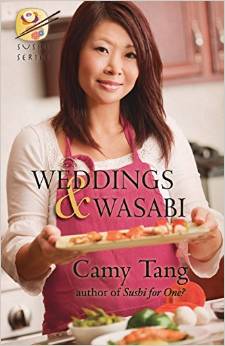
Camy Tang writes romance with a kick of wasabi. Out now is the first book in her new series, Protection for Hire, which is a cross between Stephanie Plum and The Joy Luck Club. She is a staff worker for her church youth group, and leads one of the worship teams for Sunday service. On her blog, she ponders frivolous things like knitting, running, dogs, and Asiana. Visit her website to sign up for her quarterly newsletter.

Click here to find out how you can join my Street Team—it’s free and there’s lots of chances to win prizes!

Posted in Camy Tang, Uncategorized | Tagged | 8 Comments

Sometimes a Book Is Not Just a Book: Lessons Learned by Vicki Hinze

A few weeks ago, I read and reviewed a book I enjoyed very much.  It was THE CHAIR written by James L. Rubart.  A copy of the review follows:


SOMETIMES A CHAIR IS NOT JUST A CHAIR, November 25, 2011
By Vicki Hinze
Corin Roscoe, an antiques store owner, is a man fighting fears relatable to us all: ones with family, with friends, with God. His days are haunted with harsh realities and his nights by dreams of horrific incidents endured. He reaches many crossroads in this book: does he hang onto fear or face it? Hang onto guilt or seek forgiveness? Deny the truth or accept it? And when life offers him a choice between the easy road or the high road–when the easy road will spare him further struggles–which does he choose?

Life is tough, the conflicts are easily imagined as our own, and the choices we make either lead us into deeper trouble or shine a light on a path of redemption and restoration. The choice, as Corin learns, is ours to make. Over and again throughout our lives.

James L. Rubart plays fair with the reader, portrays a realistic view of anti-faith and expresses an intriguing, thought-provoking glimpse at God’s mysterious ways of redemption. Sometimes a chair is not just a chair. Sometimes it’s a path to discovery, forgiveness, healing, and restoration.


That’s the review.  What I didn’t know then and couldn’t have known then is that thoughts of the story would linger with me.  They are still, which is why I’m writing this post on this book today.  I’ve read at least three other books since then, but something in this one resonated.  I’d missed something important.

With that thought in mind, I sat down in a quiet room and got still.  Then I thought about the story not from the prospective of the story, but from a writer’s perspective.  Intent came to mind, and stayed.  More specifically, the writer’s intent, or purpose in writing the book.

I realized then what I’d failed to translate, and it’s significant.  Just as a chair isn’t always “just” a chair in the novel, for those of us who read, sometimes books aren’t just books.  Particularly if it’s one written for purpose.

The intent of sharing something significant is a worthy purpose for a writer, and when that purpose focuses on faith it’s all the more important.  I firmly believe that a reader can’t get out of a book something that a writer doesn’t first put in a book.  And so the logical deduction then becomes a matter of what we write.

For a purpose writer, a book is never just a book.  While it might not hold the mystical aspects of the chair in the novel, if the work is faith-based, faith-centered, then in a very real way, it holds the mystical aspects of a relationship with God.

That doesn’t mean, as Rubart demonstrated aptly, that a book has to be over the top religious.  It doesn’t mean that a book has to be peopled with characters who are all Christians or who lack doubts and never suffer spiritual crises.  We all suffer them.

We might write books that aren’t classified as Christian fiction.  We might write books peppered with language and activity that we don’t consider fitting for believers.  But if those are the only people we touch, then aren’t we attempting to heal those who are not sick?  And if that’s the case, then who’s tending to the ill?

Isn’t that like giving a book to a man who cannot read?  I’m not advocating that we should veer away from Christians in Christian fiction.  I’m saying that there is a purpose and a place for books with Christian characters and also characters who are not Christians–the non-believers, the doubters, the people in spiritual crisis who need help but who are so lost they don’t even know what they need.  There is purpose in those books, and let’s be honest, those who might benefit from them aren’t apt to be ones cruising through the inspirational section in a bookstore.

A book can be more than a book.  It can be a beacon that lights a dark path and shows another the way out of the darkness.  As well as adventures and all the typical reasons we read, aren’t we at times trying to make sense of something in our own corner of the world?  And if we write with purpose, frankly and honestly, then aren’t we giving our best to infuse that book with the purpose for which we’re writing it?  And by doing so, aren’t we giving our best to put some specific purpose in it that a reader can get out?

Years ago, I was asked why I invested so much time in new writers?  Teaching, mentoring, encouraging.  The answer was because I didn’t have that when I started and I know how much it would have meant to me.  Instead, I learned hard knocks, until finally a mentor came along and others followed.  I realized later that I get more from teaching and mentoring than I ever give.  And now–continuing to think aloud here–I see the same is true in the books.

As in James L. Rubart’s novel where a chair is not just a chair, a book written for spiritual purpose is not just a book.  When writing it, we feel it takes all–everything we have and then some.  But after it’s done, often a good while after, we see that it gave more than it took.  To the author who wrote it, and to the readers who connect with it.

Not all readers will connect to any one book.  We’d all have to be on the same spiritual journey and at the same juncture at the same time for that to happen.  But those who need what the book has to offer will get it.  To them, the book will not be just a book, but a doorway to spiritual exploration or resolution.

Grasping this, I feel both intimidated and blessed.  Well, almost intimidated.  Okay, I don’t feel intimidated, but I would be if I didn’t know for fact that what God wants in a book, He’ll put in it.  Writing with purpose assures it.  So I guess I’m actually feeling grateful and blessed.

Jim, I’m glad your book wasn’t just a book.  It made me think, as you can see, and while I wouldn’t swear this post reads coherent to anyone else, it makes perfect sense to me.

Blessings,

Vicki


Posted in Honored Alumni, James L. Rubart, Uncategorized, Vicki Hinze | Tagged , , , , , , | 9 Comments

A Time to Let Go by Yvonne Lehman

A student asked me if a writer has the luxury to say, “I’m done? It always seems that something needs fixing.”

I responded that, yes, there is a time when a writer must say, “I’m all done.” And a lot depends on what you’re referring to when you see something that needs fixing. If there are glaring things you know are wrong, then you haven’t finished, but need to continue rewriting. I know one of my weaknesses is describing the setting. So I study how others do it, get brochures that describe the places I’m writing about and then use my own words to describe the setting and I’ve received compliments about my settings.

I could tell myself I should travel to those places and experience the setting myself and not finish the book until I do. That would be wrong. I could say I’m not done because I haven’t experienced it first-hand, but that’s self-defeating. We can only use the amount of skill we have, and the research we’ve done. We grow as writers, just as we grow and learn (or should) in every area of our lives and even on our deathbeds we can say, “I’m not done improving.”

We need to have confidence in what we know and what we can do at a particular time. I look back at my first book and can’t read it now because I see glaring errors, or see how the guidelines of writing have changed. Part of that is because I didn’t know enough about life or the craft of writing. So, we’re never done.

That’s sort of how it is with raising children. We do our best. But it’s after our children are grown and gone that we look back and say, “I could have done it better,” but I had to learn as I went along. That’s how it is with writing. We can only give out as much as we have and can probably say it’s not as good as someone else. But we shouldn’t be competing with someone else. Just do the best we can at the given time.

If we always say, I need more education, more experience, more maturity, etc. then we’ll never finish anything. Being objective enough to realize something isn’t perfect is fine. But, as I said in the beginning of this, if you know of glaring craft, character, plot errors then of course you should fix them. Just a general feeling of not being perfect is simply common to creative people. In writing, we’re showing our “insides” to the world and we want it to look good. But, we’re human beings with flaws and limitations, therefore our work may exhibit that. But as long as we’re trying to improve we are accomplishing, even if an editor might “return” the material we submit.

In most areas of our lives, there is a time to fix, or try to fix, and a time to let go.

See, I might have done better simply to write, “There’s a time to fix and there’s a time to let go.”

Yvonne’s latest novel, Hearts that Survive – A Novel of the Titanic, is up for pre-order on Amazon. It will be released March 1, in time for the anniversary of the ship’s sinking April 2012. Here’s a picture of her on the Grand Staircase at the  Titanic Display Museum in Pigeon Forge, TN.

Posted in Uncategorized, Yvonne Lehman | 1 Comment

A Christmas Journey Home Review by Yvonne Ortega

A Christmas Journey Home by Kathi Macias is not a warm fuzzy novel. Kathi Macias is a master at writing novels that make the readers think and question the depth of their beliefs. In this novel, she doesn’t disappoint her loyal followers.

Isabella, a pregnant woman in Mexico, lost her family to gang violence. She fears the same thing could happen to her and her husband, Francisco.

isabella’s grandfather provides the money for Isabella and Francisco to pay a “coyote” to guide them illegally across the border to the USA.

Meanwhile, Miriam Nelson in Arizona is furious with God because her border patrol agent husband, David, was killed in a skirmish with drug smugglers. Miriam is bitter and wants revenge for the death of her husband.

The desperate situations Isabella and her husband face leave Isabella overwhelmed with fear and wondering if God will take care of them and the child she carries.

Kathi Macias does not condone illegal immigrants. She does make the readers see both sides of the issue and causes them to laugh one minute and cry the next.

Kathi demonstrates the power of prayer and holds the attention of the readers from the beginning to the miracle meeting of Isabella and Miriam on Christmas Eve.

This is a must read and will make a fabulous Christmas present or stocking stuffer. Include tissue with the gift.

Yvonne Ortega  www.yvonneortega.com


Posted in Honored Alumni, Kathi Macias, Uncategorized, Yvonne Ortega | Tagged , , , , , , , , , | 3 Comments

A Pleasant Surprise: Rejection

I enjoyed a lot of nice surprises this month. My sister delivered a beautiful baby boy the day before Thanksgiving, erasing the memory our family held for years where that day was always the day our baby nearly died. Talk about redemption. He is a keeper and I’m thankful I had the opportunity to take a quick trip to my hometown to meet him.

Another pleasant happening was the thankful series I mentioned in my last post. There were so many new guest bloggers this year and the topics were inspiring. I looked at the stats and over 24,000 people took a peek. One day I had an open spot so I decided to share my own story, and the theme definitely drew attention. After all, not everyone can say they are thankful when they say they are thankful for rejection.

You read it right, I’m thankful when I experience rejection.

That doesn’t mean I enjoy it or look forward to it, but I’ve finally reached the place that I understand it isn’t just part of life, it’s necessary and an opportunity for me to grow. A few years ago I read Becoming Lovers: From Disciple of Christ to the Bride of Christ and I believe it was in those pages Joy Chickonoski talked about rejection meaning promotion.
Photobucket

Yep, you read that right, too. Rejection means promotion.

That took me a long time to understand. Not so long ago I went through a season of personal rejection that if it were possible, could have turned me inside out because it felt so brutal. It was consistent and one of the most painful times of my life. But when it started I clung to the Lord and asked for His help. I relied on His strength and became a true picture of the person being carried in the “Footprints in the Sand” poem. The more I surrendered my hurt and fears, the stronger I became. I received step-by-step direction on how to lovingly respond that I believe was Holy Spirit led. When that season reached the apex I was able to deliver truth with a peace that absolutely passed any definition man could have. I knew whatever happened next, it would be okay.

Fast forward and everyone involved in that season is better for that rejection. It was a valley experience that refined me. Since then I’ve faced writing rejection and things of that nature that I feared for decades. After thriving past that true rejection, the other kinds didn’t seem that daunting anymore. If anything, I licked my wounds, laughed, and moved on.

Photobucket image

I read a lot and I interact with a lot of people in different circles. As Thanksgiving and Christmas approach I’m observing so many people battling rejection. Perhaps it is marriage related and custody or perhaps in-law issues. Family wounds with parents or siblings. The unemployment rate is a big factor this year to families across the country and although most of the time a layoff or job loss isn’t personal, it sure feels that way. Friendships or relationships that are barely hanging on or ended. Rejection is the understudy in a play praying the lead gets sick so they can take over.

But it doesn’t have to be that way. When I write things I’ve either recently come through it or am going through it right now. If you can relate to rejection, are you able to embrace it?

Turns out from reading the feedback, few thought about being thankful for such a thing. If you’re unemployed, can you be thankful for that “no thanks” on the job hunt? Perhaps it’s a no because something even better is ahead. Are you thankful for relationship troubles? Who knows, that adversity could be a refining fire to change your life for the better. Writers—rejection is part of the process. Are you thankful for it?

Try it. You just might find a pleasant surprise through your thankfulness.


http://www.juliearduini.com

Surrendering the good, the bad, and—maybe one day—the chocolate

Contact Me LinkedIn Blog RSS Facebook Page goodreads Google Plus Twitter

Posted in Julie Arduini, Uncategorized | Tagged , , , , , , , , , , | 2 Comments

Do We Fear Our Rescuer? by Hannah Alexander

Our pastor preached a fascinating sermon the other day, and pointed out something I had never considered. We all know that the first time the disciples got into trouble on the Sea of Galilee, Jesus was already with them on the boat, and they were frightened of the storm. They knew their rescuer was right there, so they woke Him up as they were freaking about the storm.


The second time they freaked, however, wasn’t because of the storm, but because of the very Rescuer who had saved them from the storm before. They’d seen him feed thousands, heal many, bring people back from the dead, but when they saw Him walking across the water they thought he was a ghost, and I can just imagine that no storm had frightened them as badly as Christ, Himself, did when they saw him on those waves.


Now, I’ve had some times in my life when circumstances have given me such angst that I made myself sick worrying about them. Not only have financial woes given me fits, but painful relationships, strange noises in the house, the house alarm going off, coming across strangers on the hiking trail, medical crises, automobile accidents, my mother’s dementia, and of course manuscript deadlines. I could name so many more.


But I’ve looked back on those times and discovered that those worries weren’t for nothing. The financial woes have, indeed, placed us into deep debt, but they have also kept us from spending money on things we don’t need, and once those debts are paid–when we’re in our seventies–we’ll have enough income to keep us going. I think God’s hand was in that. I also believe God’s hand was in the medical trials–showing me the fragility of life, and that I am NOT all powerful. Painful relationships have shown me that God is the true One with Whom I need my relationship. He is the One who will not fail me. I’ve learned so much through the trials God allows in my life, things that frightened and hurt me so badly at the time, but which I can look back on now and use in my novels, when counseling others, when trying to understand the fears of others.


I’d love to hear from you about something God sent your way–like Jesus over the stormy sea–that frightened you at the time, but that turned out to be an incident that increased your faith.


Blessings to you from Hannah Alexander

Posted in Hannah Alexander, Uncategorized | Tagged , , , , | 4 Comments

POP: A Journey in the Light by Sarah Goebel

I do hope everyone had a wonderful Thanksgiving holiday and I pray the heart of Thanksgiving continues with us all each day throughout the year ahead.

I want to share a book with you that we recently published through our small publishing company (www.onassignmentpublishing.com). It is a real-time personal testimony of God’s miraculous power, and presence and a case study on the power of prayer. The author, Dick Bowley, examples to us how to live with an attitude of Thanksgiving even in the midst of our worst life challenges.


While there are many books on the market testifying of the power of prayer and God’s faithfulness, most were written after the battle was a memory and the victory was in hand. Not so with this one. Dick Bowley shares in POP: A Journey in the Light thoughts and daily activities written in his journal while in the midst of adversity, trusting God for His answer and fighting for his life.  Whether facing a life-threatening situation or other challenge that appears in the natural to have you beat, or looking for a book that will impart spiritual knowledge and inspiration, this book is for you. You will be encouraged and strengthened like never before as you read this real-time, amazing true story of God’s sustaining power and faithfulness found in prayer while in the darkness of adversity.

I highly recommend this book for every Christian who desires to grow in their faith. It is also a great read for those in the health profession as it gives a day-to-day insight into one faith-filled patient’s perspective during his battle for life. This book can be purchased on Amazon.com and will soon be available at his author website, http://www.popthebook.com.

Posted in Sarah Goebel, Uncategorized | Tagged , , , , , | 1 Comment

Reinventing Tradition by Lynette Sowell

I had something pithy and profound to share, but in my early Black Friday haze, it’s forgotten. One thing that I’ve been thinking about during this season of Thanks-giving is how our traditions have morphed over the years into something else…the meaning of Thanksgiving can get lost in the pre-holiday grocery shopping hysteria and meal planning. We need to figure out family logistics–Whose home will be invaded? Who made what last year? We can’t have a proper Thanksgiving if we don’t have: A. Turkey; B. Stuffing; C. Some type of potato/starch; D. Cranberry Sauce; and E. Pumpkin pie and other desserts. We must also eat the equivalent of two days’ worth of calories, and the men will zonk out in front of the football games and the women take out the shopping papers. That’s Thanksgiving, right?

I’ve often tried to imagine what the first Thanksgiving was like back in 1621. I picture a group of people, tight-knit by this time after all they’ve been through–a long sea voyage, disease, a harsh winter, near starvation, followed by the hard work of a growing season.  Finally, a glimmer of hope after they bring in a harvest. The coming winter will be no less harrowing than the last, but this time they’re better prepared. They sit down to have a celebratory meal, and some guests show up. It’s the locals, who’ve been instrumental in their survival. These survivors owe a great debt of gratitude to the natives. So they sit down and food brings them together. They say a “thank you” to God and Providence for being here, one year later. Perhaps they think of those they’ve lost. Their party lasted for three days, according to the account of Edward Winslow, in a letter he wrote in December 1621.

“Our corn did prove well, and God be praised, we had a good increase of Indian corn, and our barley indifferent good, but our peas not worth the gathering, for we feared they were too late sown.  They came up very well, and blossomed, but the sun parched them in the blossom.  Our harvest being gotten in, our governor sent four men on fowling, that so we might after a special manner rejoice together after we had gathered the fruit of our labors.  They four in one day killed as much fowl as, with a little help beside, served the company almost a week.  At which time, amongst other recreations, we exercised our arms, many of the Indians coming amongst us, and among the rest their greatest king Massasoit, with some ninety men, whom for three days we entertained and feasted, and they went out and killed five deer, which they brought to the plantation and bestowed on our governor, and upon the captain and others.  And although it be not always so plentiful as it was at this time with us, yet by the goodness of God, we are so far from want that we often wish you partakers of our plenty.” ~ Edward Winslow  (bold added by me)

So feast away on what you can find. It needn’t be turkey. As you enjoy your leftovers, resist the pull of media to turn Thanksgiving into another shopping holiday. Yes, I love a good shopping deal, but that’s not Thanksgiving and not Christmas for me. I will not heap stress upon stress on myself in the next four weeks because of the pressure to make a proper holiday season. Who’s with me?

– – – – –

Lynette Sowell writes fiction for the inspirational market, from contemporary romance to mysteries. She’s always looking for the perfect recipe for a story–or a great dish–and is always up for a Texas road trip.

Posted in Honored Alumni, Lynette Sowell, Uncategorized | Tagged , , | 1 Comment

Time for Thanksgiving by Elizabeth Goddard

This morning I discovered all my “brilliant” thoughts on Thanksgiving were deleted. Not sure how that happened. This being Thanksgiving Day, I can’t begin to put the time and thought into a replacement post. I’ve learned my lesson, though. Next time I’ll be sure to save my posts in another document, just in case.

I spent the week perusing various blogs and Facebook, reading posts regarding what people are thankful for.  Friends, family, distant relatives and people I don’t know personally have written about what they are personally thankful for.

What am I thankful for?

Every breath, every moment.

You’ve heard the saying, the older you get the faster time flies. . .

My son was only eight years old when he first commented that time went by faster for that year, than the year before. I was in my twenties, maybe thirties, before I noticed that time seemed to pass more quickly the older I get.

Is it a matter of age? Or is time literally moving faster in this age or generation, if you will, in one of those  time-space continuum theories  sort of ways that non-physicists can’t begin to comprehend?

My life used to be measured from one holiday to the next like Christmas or birthdays. I hadn’t yet recovered from the Christmas fallout–gifts for four children, friends and loved-ones, decorations and baking expenditures–before I was facing the next Christmas. Now I measure my life in deadlines. A blessing for which I’m grateful.

But as the busyness of life takes over, I’ve noticed that my life is passing me by. I’ve become more resolute in making sure I savor every moment with my loved ones–my children, husband, parents, and friends, with the Lord, though I’m already in eternity with Him.

That’s why Thanksgiving is such an important day–we’re forced to stop and smell the roses (to be cliche), or to take the time to consider our blessings and to treasure our family because time is passing quickly and there is nothing like the present.

May you enjoy today with your family and friends and savor every breath, every moment.

Teach us to number our days aright, that we may gain a heart of wisdom. Psalm 90:12.

Blessings!

Beth

Posted in Elizabeth Goddard, Uncategorized | Tagged , , | 2 Comments

Reading Seasons I’m Thankful For by Maureen Lang

I’ve loved reading nearly all my life. Although I can’t really recall when or why I started reading, I do recall several milestones along my reading journey.

When I was very young—perhaps first or second grade, I wanted my mother to order books for me from school. I don’t recall the Scholastic program being in place that many years ago, and if it was it wasn’t offered every month as it is now. My recollection is that it was offered only at the end of the school year, to encourage kids to read over the summer months. One of the first books I remember asking my mom to order was “A Cat Named Blue.” Evidently it’s long out of print, because a quick online search produced no results. I guess my first taste in book selection was neither best selling nor classic, however for some reason my memory of that book had never faded.

Some time after that I received my first Nancy Drew book for Christmas. For years I looked forward to one or another of the Nancy Drew mystery series being wrapped up under the tree waiting for me. Still, I never did receive the entire collection. I did, however, know someone who had a special shelf in her bedroom devoted entirely to every single title in the series. One of my daughter’s favorite stories from my own childhood is how I rode my bike to Kathleen’s house once a week to borrow the next couple of Nancy Drews. One time I was so eager to read that while I steered my bike with one hand, I held the book open with the other so I could read—only to run straight into a parked car. I went flying one way, and poor Nancy Drew the other. Neither of us was hurt, if you don’t count my bruised ego over having done such a stupid thing.

Not too long after that I happened to go to a garage sale in my neighborhood where a woman was selling a whole box of Harlequin Romances. (Back then they were all sweet.) I remember she sold them for 10 cents each, and I had a quarter so I bought two, then went home and read one of them right away. I was so enchanted I went back the next day with a dollar and bought ten. After that all I wanted to do was read. I even recall inviting friends over but not to play a game or to talk. I just wanted to read, so I told them to make sure to bring a book. Not exactly interactive, so I guess it was no surprise I wasn’t the most popular girl in my class.

When I turned sixteen or seventeen my oldest sister introduced me to a new kind of romance. I confess at this time neither I, nor my sister, were particularly devout. Back then bodice rippers were being published for the first time—Kathleen Woodiwiss and Rosemary Rogers, among the first. These were romances, too, but definitely not sweet.

It wasn’t until many years later that I discovered Francine Rivers’ Redeeming Love, my introduction to romantic Christian fiction. It was then I directed my passion for reading (and writing) in a way that that honored God.

Each of these reading discoveries played a part in my growth as a reader and as a writer. I’ve read all kinds of books in between, from classics to secular best sellers to nonfiction research books—many of which have colored my writing in one way or another. But the books I mentioned above are the foundation of my writing passion, and so during this week of Thanksgiving I thought I’d reminisce a bit on such things that not only helped pave the way for me to write what I write, but still inspire fond memories.

What about you? Can you track your reading journey?

Posted in Maureen Lang, Uncategorized | Tagged , , | 3 Comments

TV Shows and Protection for Hire by Camy Tang

Camy here! I will admit to loving certain television shows, although I’ve been trying to limit my TV consumption.

Among my favorite series right now are Nikita (the newly remade series) and Covert Affairs, and one of my all-time favorite series was Alias, all three of which star kick-butt heroines.

What’s more, when I came up with the idea for my December release, Protection for Hire, I had just come off of a marathon of watching the original Nikita series (starring Peta Wilson) on DVD, thanks to Netflix, AND watching the Dark Angel series (starring Jessica Alba) on DVD, which I had bought. Both series star yet more kick-butt heroines, so I was feeling a bit feisty, to say the least.

I think that’s what influenced me the most when I was coming up with my heroine, Tessa. Her uncle is the head of the San Francisco Japanese mafia, and while she wasn’t “officially” mafia, she did “odd jobs” for him. She could take care of herself, to say the least, much like Nikita and Max (from Dark Angel). (And can you see the influence of The Sopranos, too?)

Then Tessa went to prison–for a crime she didn’t commit–and she found Jesus in jail. When Protection for Hire opens, Tessa has gotten out of prison and is trying to convince her mafia boss uncle that no, she really doesn’t want to continue breaking people’s kneecaps for him.

Except no one wants to hire an ex-convict, much less the niece of a mafia boss, and so in order to be able to move out of her (psycho) mother’s house, she agrees to work as a bodyguard for a Southern belle heiress whose husband just happens to be trying to kill her. The problem is that the heiress’s lawyer is Charles Britton, who had been instrumental in putting Tessa away for maximum time behind bars.

Can you see the sparks flying yet???

When I was telling my husband about my story idea for Protection for Hire, he gave me a dry look and said, “Why don’t you name her ‘Nikita Max Annie Sydney Bristow’?” (For those of you who don’t know, those are the heroines of Nikita, Dark Angel, Covert Affairs, and Alias in order. My husband thinks he is just sooooooo clever.)

So alas, television has not only rotted my brain, it influenced my next story heroine’s character.

Protection for Hire releases December 1st (officially). I hope you all enjoy it!

Camy Tang writes romance with a kick of wasabi. Out now is the first book in her new series, Protection for Hire, which is a cross between Stephanie Plum and The Joy Luck Club. She is a staff worker for her church youth group, and leads one of the worship teams for Sunday service. On her blog, she ponders frivolous things like knitting, running, dogs, and Asiana. Visit her website to sign up for her quarterly newsletter.

Click here to find out how you can join my Street Team—it’s free and there’s lots of chances to win prizes!

Posted in Camy Tang, Uncategorized | Tagged | 8 Comments

THE MEANING OF THANKSGIVING by Vicki Hinze

What does Thanksgiving really mean?
In these times of confusion and strife, to reacquaint ourselves with the truth, we should return to those who established it…

“Whereas it is the duty of all Nations to acknowledge the providence of almighty God, to obey his will, to be grateful for his benefits, and humbly to implore his protection and favor – and Whereas both Houses of Congress have by their joint Committee requested me “to recommend to the People of the United States a day of public thanksgiving and prayer to be observed by acknowledging with grateful hearts the many signal favors of Almighty God, especially by affording them an opportunity peaceably to establish a form of government for their safety and happiness.

“Now therefore I do recommend and assign Thursday the 26th day of November next to be devoted by the People of these States to the service of that great and glorious Being, who is the beneficent Author of all the good that was, that is, or that will be – That we may then all unite in rendering unto him our sincere and humble thanks – for his kind care and protection of the People of this country previous to their becoming a Nation – for the signal and manifold mercies, and the favorable interpositions of his providence, which we experienced in the course and conclusion of the late war –for the great degree of tranquility, union, and plenty, which we have since enjoyed – for the peaceable and rational manner in which we have been enabled to establish constitutions of government for our safety and happiness, and particularly the national One now lately instituted, for the civil and religious liberty with which we are blessed, and the means we have of acquiring and diffusing useful knowledge; and in general for all the great and various favors which he hath been pleased to confer upon us.

“And also that we may then unite in most humbly offering our prayers and supplications to the great Lord and Ruler of Nations and beseech him to pardon our national and other transgressions – to enable us all, whether in public or private stations, to perform our several and relative duties properly and punctually – to render our national government a blessing to all the People, by constantly being a government of wise, just, and constitutional laws, discreetly and faithfully executed and obeyed – to protect and guide all Sovereigns and Nations (especially such as have shewn kindness unto us) and to bless them with good government, peace, and concord – To promote the knowledge and practice of true religion and virtue, and the increase of science among them and Us – and generally to grant unto all mankind such a degree of temporal prosperity as he alone knows to be best.

“Given under my hand at the City of New York the third day of October in the year of our Lord 1789.

“G.O. WASHINGTON.”

May the traditional spirit of Thanksgiving be a blessing to you and yours.  And in these times that try souls and make us weary, may we remember to hold fast to an attitude of gratitude.  For all our flaws and challenges,  ours is an exceptional nation.  We lose our way at times, and we forget who we are.  But my special Thanksgiving prayer is that we recall who we are and most importantly, whose we are.

Blessings,

Vicki

(in for Kathi Macias today)

————————————————

Vicki Hinze just finished NOT THIS TIME, which will be released in February.

FMI visit http://www.vickihinze.com.

Posted in Kathi Macias, Uncategorized, Vicki Hinze | Tagged , , , , , , , | 2 Comments

The God Man Uses

      I already have my Christmas tree up and decorated, anticipating the season. As I ponder the activities and make lists of what I must do, my thoughts return to another time and other lists.

     While attending a writers conference at The Cove (Billy Graham Training Center) a friend and I stepped inside the bookstore and a title caught my eye. “Oh.” I laughed and my friend turned to me.

            I pointed to a book titled The Man God Uses by Henry Blackaby and said, “I read that as The God Man Uses.

            The laugh I expected from her didn’t sound. Her eyes grew wide and her mouth opened. I thought surely my word-reversing eyesight wasn’t so surprising. After all, she’d been around me long enough to know that my words could come out backwards—like Malapropisms. Why couldn’t eyes transpose words as well (or as badly) as the tongue can do with speech?

            Her words sounded like a hoarse whisper. “That’s…good.”

            I stared at her, then the title again, and her meaning became clear.

            “Yes.” My attention returned to her. My writer’s mind, or perhaps just my human mind, began to whirl with the ways that mankind, particularly I, have used God.

            “Get your pen and paper,” she said and grinned as I dug into my purse.

            While she perused the shelves I went to the trashcan where a flat surface surrounded the open center. Confessions of ways I have used God flew across the page like caged birds when the door is opened.

            A line of poetry crossed my mind. “How do I love thee? Let me count the ways.”

            My thoughts did a reversal. “How do I use God? Let me count the way.”

            How often my prayers were like a give-me list as if He’s no more than a Santa Claus who should dole out presents of health, wealth, and happiness.

Was my transposed title a trick of my eyes, or a treat of the Holy Spirit to bring me into a greater awareness of my failures so that God could grow my faith?

I’m reminded of the scripture: He will give you all you need from day to day if you live for him and make the Kingdom of God your primary concern. – Matthew6:33(NLT)

Oh, I still have my lists of what I want the Lord to do for me and mine. But He reminds me too of how I should pray. That I might not try to use his name and power to glorify myself, but to be used by him for his glory.

I still make my lists of what I need (or want) to do at this season, but try to keep uppermost in my mind that Jesus is the reason for the season.

Would love to read your thoughts on your own preparation for this glorious season.


Posted in Uncategorized | 4 Comments