
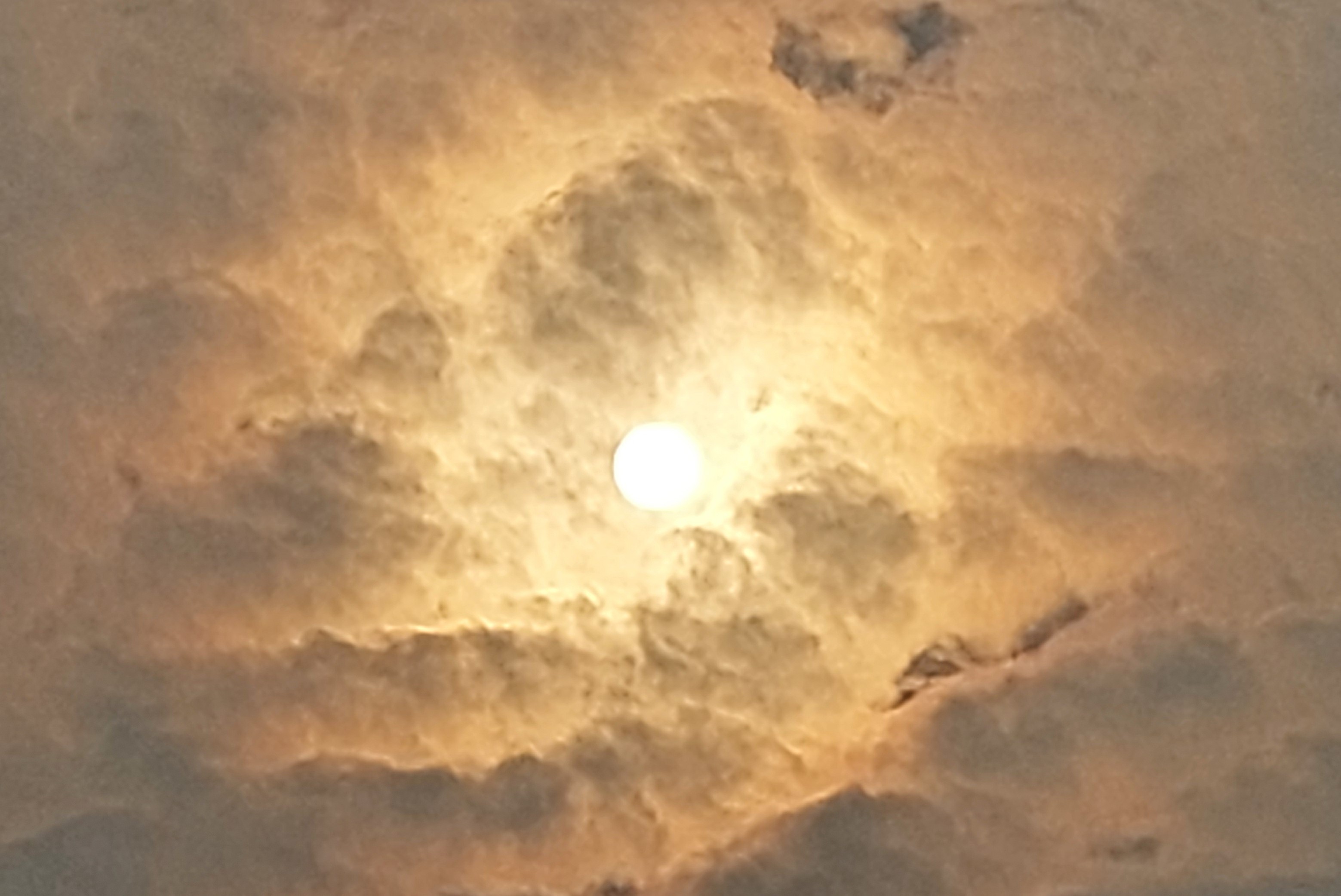
Right at the beginning of creation, God said, “Let there be light,” and there was light. God “saw that the light was good, and he separated the light from the darkness” (Genesis 1:3-4 NIV). This was before God created the sun, moon, and stars (Genesis 1:14-18). This means that before the earth was formed, God’s universe was fundamentally moral rather than physical. Light is good, and darkness is evil. Light represents truth and morality, while darkness represents ignorance and sin.
Light gives clarity and knowledge, while darkness brings confusion and chaos. You can’t see in the dark and don’t know what is going on. Jesus said, “Whoever walks in the dark does not know where they are going” (John 12:35). In the same verse, Jesus warned people to accept Him while they had the opportunity: “You are going to have the light just a little while longer. Walk while you have the light, before darkness overtakes you.”
Darkness is also depressing. People are more depressed in winter, when days are shorter and days are darker because of cloud. This type of depression is called Seasonally Affected Disorder (SAD). It is treated by “light therapy”— bright light that simulates sunlight. It is no accident that December, the darkest month, is when people put up Christmas lights, to cheer everyone up.
Darkness also represents sin and evil. It is no accident that most crimes are committed at night when they can be kept hidden. John explained: “People loved darkness instead of light because their deeds were evil. Everyone who does evil hates the light, and will not come into the light for fear that their deeds will be exposed” (John 3:19-20). Jesus pointed out to those who came to arrest and crucify Him that they had avoided doing so during the day but did so at night since “This is your hour—when darkness reigns” (Luke 22:53). But God sees what is done in the darkness and will expose it and punish or reward depending on what is done: “There is nothing concealed that will not be disclosed, or hidden that will not be made known” (Matthew 10:26); “Judge nothing before the appointed time; wait until the Lord comes. He will bring to light what is hidden in darkness and will expose the motives of the heart. At that time each will receive their praise from God” (1 Corinthians 4:5).
Darkness is negative, not something in itself, but just the absence of light. Therefore, it is not something to be attacked itself; instead, it needs to be replaced by light. Dark deeds need to be exposed. Bad deeds need to be replaced by good deeds. Someone once said, “It is better to light a candle than to curse the darkness”; that is, it is better to do even one small positive thing than to focus on criticizing negative things.
It is important to know that God brings light to dark places and to people in the dark:
“Christ Jesus came into the world to save sinners” (1 Timothy 1:15). “Jesus said, ‘It is not the healthy who need a doctor, but the sick…For I have not come to call the righteous, but sinners” (Matthew 9:12-13). The Old Testament prophet Isaiah said that Jesus would come as light: “The people walking in darkness have seen a great light; on those living in the land of deep darkness a light has dawned” (Isaiah 8:2). Both Matthew and Luke quoted this prophecy, saying that Jesus was fulfilling it (Matthew 4:16, Luke 1:79). The apostle John said that Jesus “was with God in the beginning. Through him all things were made; without him nothing was made that has been made” (John 1:2-3). This means that it was Jesus who said, “Let there be light” in the first place. John went on to say of Jesus, “In him was life, and that life was the light of all mankind. The light shines in the darkness, and the darkness has not overcome it” (John 1:4-5). Jesus spoke even more plainly: “I am the light of the world. Whoever follows me will never walk in darkness, but will have the light of life” (John 8:12) and “I have come into the world as a light, so that no one who believes in me should stay in darkness” (John 12:46).
Those who reject God remain in darkness. The Bible says that those who reject God will be thrown out “into the darkness” (Matthew 8:12, 22:13, 25:30). Therefore, there is a big gap between darkness and light, a huge difference between darkness and light, like two separate kingdoms. Jesus came to bring people out of darkness into light, but those who refuse to accept Him remain in the darkness. Paul described this in Colossians 1:12-14, saying that Christians should give “joyful thanks to the Father, who has qualified you to share in the inheritance of his holy people in the kingdom of light. For he has rescued us from the dominion of darkness and brought us into the kingdom of the Son he loves, in whom we have redemption, the forgiveness of sins.” Paul told King Agrippa that Jesus had commissioned him to preach to gentiles (non-Jews) “to open their eyes and turn them from darkness to light, and from the power of Satan to God, so that they may receive forgiveness of sins and a place among those who are sanctified by faith in me” (Acts 26:18). Paul, in Romans 13:12, taught that it is up to us to choose the light: “The night is nearly over; the day is almost here. So let us put aside the deeds of darkness and put on the armor of light.” Paul also warned: “Do not be yoked together with unbelievers. For what do righteousness and wickedness have in common? Or what fellowship can light have with darkness?” (2 Corinthians 6:14) and “For you were once darkness, but now you are light in the Lord. Live as children of light (for the fruit of the light consists in all goodness, righteousness and truth) and find out what pleases the Lord. Have nothing to do with the fruitless deeds of darkness, but rather expose them” (Ephesians 5:8-11).
Jesus is the light of the world, but He also said to His followers: “You are the light of the world. A town built on a hill cannot be hidden. Neither do people light a lamp and put it under a bowl. Instead they put it on its stand, and it gives light to everyone in the house. In the same way, let your light shine before others, that they may see your good deeds and glorify your Father in heaven” (Matthew 5:14-16). We are to let our light shine, but it is important to remember that we do not have the light in ourselves but we only reflect the light of Jesus, just as the moon does not have any light of its own but only reflects the light of the sun. This is stated in 2 Corinthians 4:6: “For God, who said, ‘Let light shine out of darkness,’ made his light shine in our hearts to give us the light of the knowledge of God’s glory displayed in the face of Christ.” When Moses came down from Mount Sinai after meeting with God, “his face was radiant because he had spoken with the Lord.” The other Israelites were somewhat afraid of him because of the glow, and so he would put a veil over his face after being with God (Exodus 34:29-35). The New Testament says this is a metaphor for how Christians reflect the light of Jesus: “We all, who with unveiled faces contemplate [reflect] the Lord’s glory, are being transformed into his image with ever-increasing glory, which comes from the Lord, who is the Spirit” (2 Corinthians 3:18)
Sometimes, when are here on earth, we have to endure a time of darkness (not just nighttime, but a time when there is evil, confusion, and depression). There is a famous poem that addressed this:
And I said to the man who stood at the gate of the year:
“Give me a light that I may tread safely into the unknown”.
And he replied:
“Go out into the darkness and put your hand into the Hand of God.
That shall be to you better than light and safer than a known way.”
– Minnie Louise Haskins, “The Gate of the Year”
This poem became popular during the early dark days of the Second World War, a very dark time. Sometimes we are in darkness, and then we have to believe that the God of light is still with us and guiding us and protecting us even when we cannot see. Then we are to believe that we are safe in the arms of God, for “God is light; in him there is no darkness at all” (1 John 1:5). We can also look forward to the day when we will live with God in heaven: We are told that the city of God will “not need the sun or the moon to shine on it, for the glory of God gives it light, and the Lamb is its lamp…On no day will its gates ever be shut, for there will be no night there” (Revelation 21:23-25).





























 Christians Read
This was spot-on, James. Thank you for the reminder.
LikeLike