
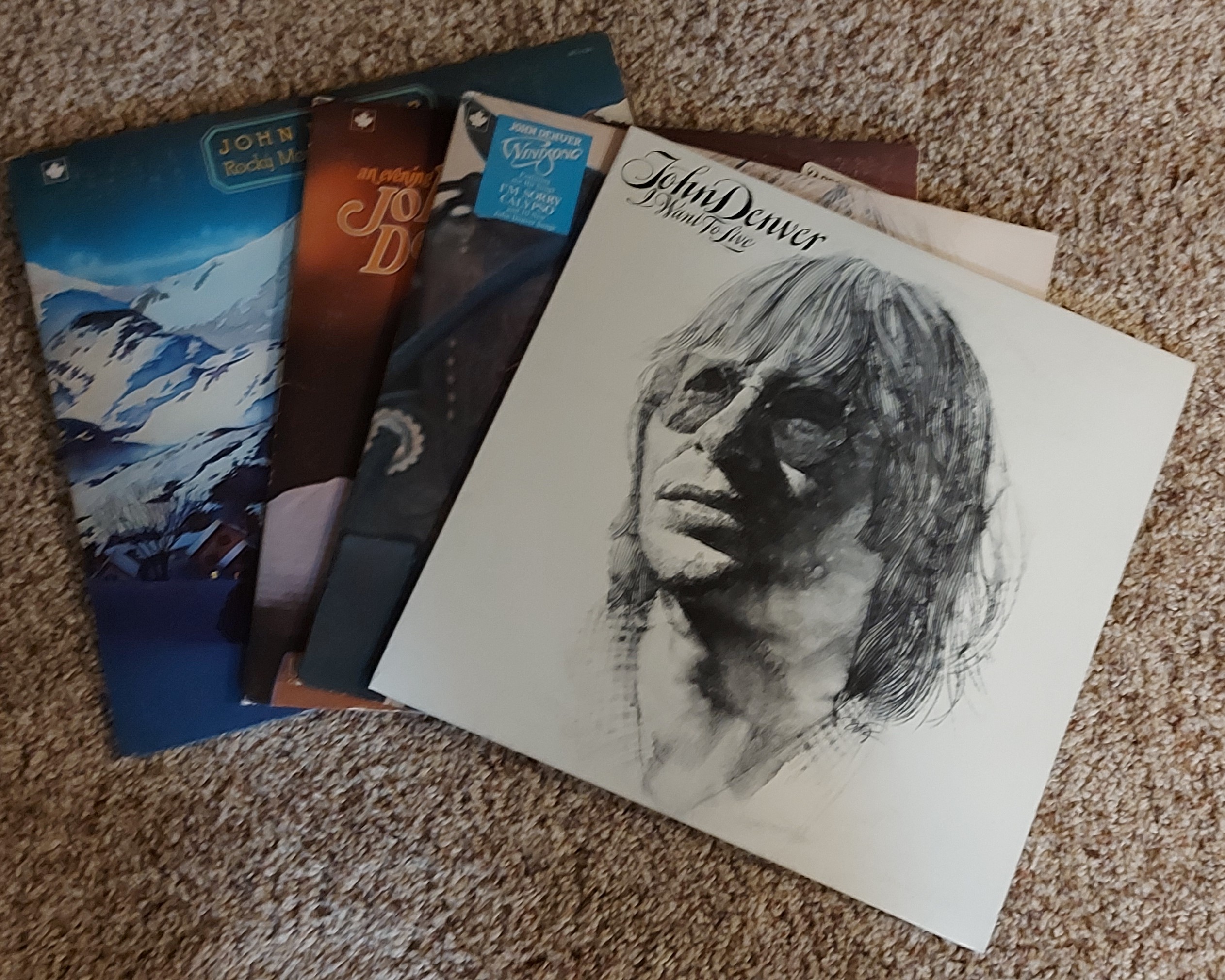
“You can talk to God and listen to the casual reply,” John Denver sang in the song “Rocky Mountain High.” What did he mean by that?
Denver was an American singer and songwriter who died in a solo plane crash in 1997. His songs chronicle a spiritual journey, a journey not uncommon for people of my generation.
“Rocky Mountain High,” released in 1972, describes a spiritual awakening when Denver first came to the Colorado mountains, where he later established a home in the ski resort of Aspen. Describing his own experience in the third person, it begins: “He was born in the summer of his 27th year, coming home to a place he’d never been before. He left everything behind him, you might say he was born again, you might say he found the key for every door.” “Born again” is a Christian metaphor, describing what happens when a person becomes a Christian. But Denver meant something else by the term. The Colorado mountains were where he developed a strong love of nature, a love that became for him a type of religion.
The song contains other semi-religious imagery: “His life is full of wonder” and “Now he walks in quiet solitude the forests and the streams, seeking grace in every step he takes.” Grace, of course, is a blessing of God, but for Denver it is a blessing bestowed by nature.
Denver is thus a pantheist. He is in the line of 19th-century “Romantic” poets, who saw God in nature but not God behind nature. It is a line that also includes many modern environmentalists—it is notable that Denver also wrote “Calypso,” a tribute song to environmentalist Jacques-Yves Cousteau.
“Rocky Mountain High” also contains the lines: “And they say that he got crazy once and he tried to touch the sun, and he lost a friend, but kept the memory.” I am not sure at all what he meant by that. It might refer to a personal relationship that we know nothing about. However, for me, it is a good metaphor for Denver’s spiritual journey. Icarus was a figure in Greek mythology who flew too close to the sun (Arrogantly trying to rise too far? Trying to reach the realm of the gods?) and perished. It is clear that Denver had left behind whatever Christian faith there was in his background (most people in that era had some Christian influence in their family history). Although Jesus was no longer his friend, he “kept the memory”—that is, while not a Christian, Denver retained an interest in spirituality, an awareness of God, a conviction that there is a divine presence of some sort.
In “To the Wild Country,” Denver expressed his search: “There are times I fear I lose myself, I don’t know who I am.” He found the answer to his search and his salvation when the “spirit” of the wild country called to him: “To the mountains, I can rest there; to the rivers, I will be strong; to the forests, I’ll find peace there; to the wild country, where I belong.”
Perhaps the clearest expression of Denver’s pantheism came in the song “The Flower that Shattered the Stone.” That song begins, “Earth is our mother,” and goes on to talk of “Our father above us whose sigh is the wind.” Many animist and other religions speak of “Mother Earth.” Christians believe in “Our Father above us whose sigh is the wind,” wind and breath being biblical images of God’s Holy Spirit, but it is unlikely Denver had anything that specific in mind. The line “Like a bright star in Heaven that lights our way home” can be taken literally since mariners and other travellers have used stars as a guide, but it could also be understood by Christians (and some others, possibly including Denver) as referring to the guidance of God in heaven (see 2 Peter 1:19 and Revelation 22:16, for instance). Denver’s pantheism comes out in the line “In the infinite beauty we’re all joined in one.”
The most evocative lines in “The Flower that Shattered the Stone” are: “I reach out before me and look to the sky. Did I hear someone whisper? Did something pass by?” That is the crux of the matter, isn’t it, the key question? Is God a “something,” a vague life force (as celebrated in the Star Wars movies) that is present in everything, or is God a “Someone,” a personal God who created everything and gives everything purpose? Christians believe in the latter; Denver believed in the former.
There is no evidence Denver ever lost his faith in his religion. But after his marriage broke up, he was restless. Looking at his life from the outside, it would seem that he not only never found God, but he also struggled to find himself.
I liked John Denver and admire his songwriting and singing gifts, and I am sad for him.





























 Christians Read
I love the positivity and depth in your writing! It’s clear you’re passionate about what you do, and it makes all the difference.
LikeLike
Thank you. That is high praise from someone who is herself a gifted writer.
LikeLike
There’s lot of Christian music on his Christmas album
LikeLike
That is true, however, he did not prefer to sing Away In A Manger, and his producers urged him to record it. If you listen closely, he drops the D off of the word Lord and sings “little Lor Jesus” to avoid calling Jesus Lord. Also in his song A Baby Just Like You, he sings “a Savior king was born,” he does not say “the Savior king was born.”
LikeLike
That is true, however, he did not prefer to sing Away In A Manger, and his producers urged him to record it. If you listen closely, he drops the D off of the word Lord and sings “little Lor Jesus.” Also in his song, A Baby Just Like You, he sings “a Savior king was born,” he does not say “the Savior king was born.”
LikeLike
His ex-wife, Annie, said that “Annie’s Song” was written as a love song for her but became like a prayer for him. Given the fact that the name of the song is the only part that gives it any definition, it would not be surprising that it was meditative and somewhat spiritual to him.
LikeLike
Interesting. A prayer to God to fill us again? Of course, John Denver often seemed to see Nature/the natural world as his god and not recognize the Creator behind creation. But we can listen to it as a prayer to God. From now on, I won’t listen to that song with the same ears.
LikeLike
In his autobiography, Denver talks about his dissatisfaction with Christianity. He discloses some details of his involvement with a church in Texas and being a member of the choir. I believe he also makes reference to a discussion with a Sunday school teacher who he said didn’t try to understand his questions or help him. It was after that Denver left Texas for California. Also, if you listen to his song “Joseph & Joe,” Joseph refers to a pastor or priest he knew, and Joe refers to Joe Henry, who he wrote some songs with. He says in the song how his paths are not crossing with Joseph and that Joe’s vision is much greater than his own. It’s too bad Joseph had less influence on him than Joe. If Denver had accepted Christ and had become a Christian recording artist, he would have been wholeheartedly accepted and loved with an all new life and successful second career. I’m afraid we won’t see him in heaven. A pastor who knew Denver’s father ran into John in an airport a few months before Denver died. He tried talking with John about accepting Jesus and John refused. Only God and John Denver know what happened, how the story ends.
LikeLike
Perhaps you should have a listen to some of the songs on the I Want to Live Album. Singing Skies and Dancing Waters is a conversation between John and God. I would, if I were you, be careful when saying someone will Not be seen in Heaven since God is our only Judge and the author of our faith, the only source of Grace. Maybe you should listen to Peace, a poem and song you can hear his faith. Try to remember that God is Love. Be love, not judgment, gossip and speculation. John would probably laugh if he read your commentary. There is only One who knows the true heart of any man.
LikeLike