
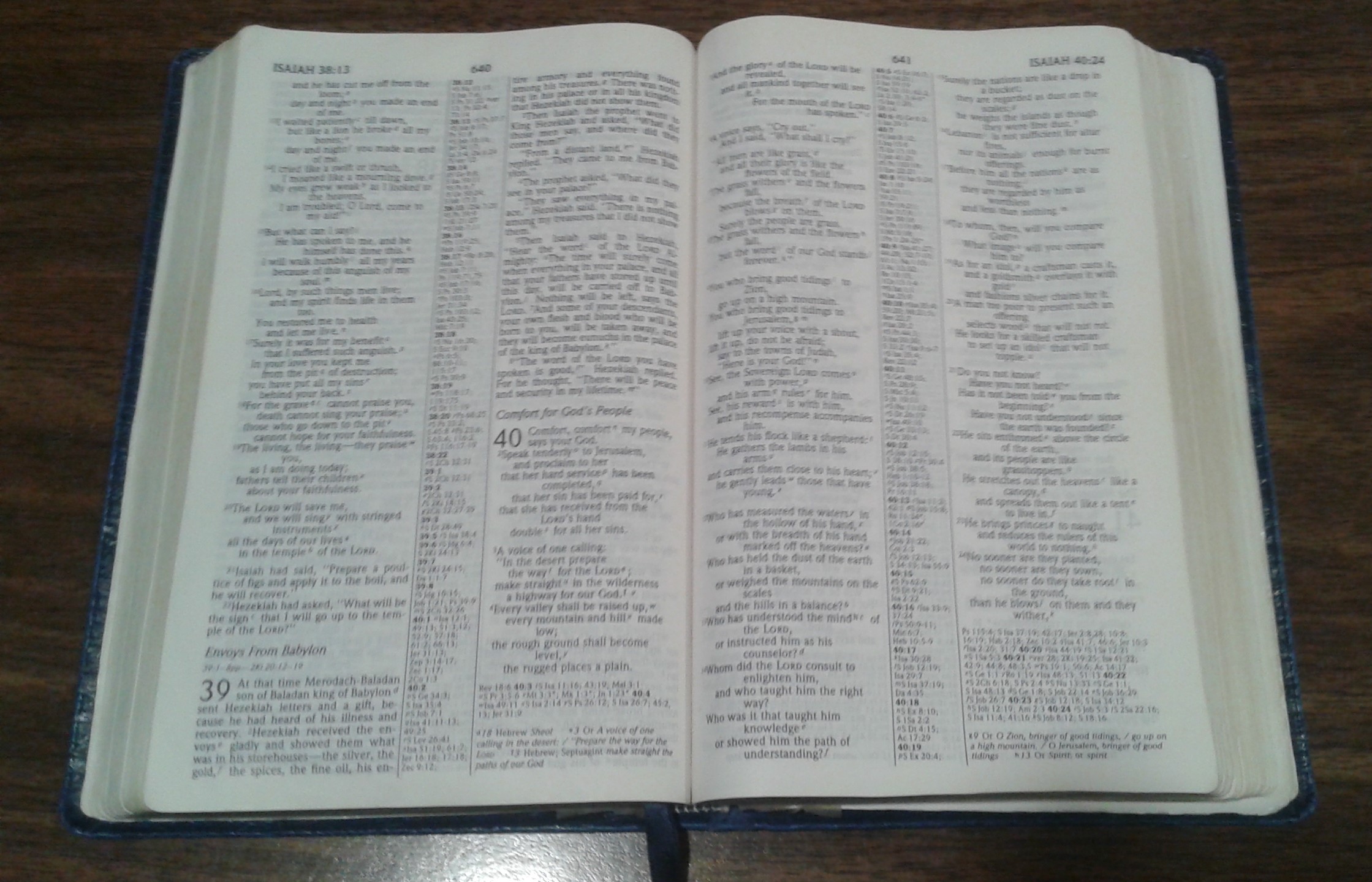
In James 1:18-27, the apostle addresses the topic of “words.” Verse 18 (NIV) says that God “chose to give us birth through the word of truth, that we might be a kind of firstfruits of all he created.” There is an echo here of Genesis 1, where God spoke the universe into existence. John 1 equates God speaking in creation with the Word, Jesus. However, more than creation is in mind here. Human beings were the culmination, not the “firstfruits” of creation. More directly, this verse is about being born again (John 3:3) through Jesus. This regeneration of human beings is the firstfruits/beginning of the restoration of all of creation. Just as the universe was created by the word of God (God spoke the universe into existence), so creation is being restored by the Word of God (Jesus is the Word of God, who brings the dead back to life).
James goes on to say, in verses 19-21, that we should be “quick to listen, slow to speak.” Human beings like to talk, but their words do not have the power or purity of God’s Word. When we become angry, then bitter and hurtful words pour out of us. Therefore, we should speak much less than we do. Instead, we should listen to God’s Word. We should humbly accept what God has said and welcome God’s Word (Jesus) to live in us. It is only accepting God’s Word that can save us.
In verses 22-25, James explains more fully what it means to listen to God’s Word. He does so by offering a metaphor or word picture. He talks about a man looking in a mirror and then immediately forgetting what he looks like. I understand this. I look in the mirror and see an old man, then walk away and still think of myself as a young man able to do the things I used to do. But James’s analogy does not mean that we see ourselves in the Word of God. Well, God’s Word does tell us that we are sinful and weak. But that is not the point James is making. The illustration is about forgetting. He says that some people look at the Word of God and then immediately forget it and live as if they had never read it. James then uses a peculiar phrase: “the perfect law that gives freedom.” It is not clear whether he is talking about the Old Testament law (as a good Jew) or the New Testament Good News. We do not think of law as giving freedom. We see law as restricting what we do. So, how does the law, God’s Word, give us freedom? Law keeps us from doing what we want to do. God’s Word, on the other hand, gives us the freedom to do what we should do, what God wants us to do. It empowers us to do good. In telling us not to covet, it frees us from envy and bitterness. In telling us to forgive, it allows us to experience forgiveness. Obeying God’s law frees us from all kinds of addictions and the bondage of sin. But there is more here. James later (James 2:12) uses the same phrase, and there he is clearly referring to the new covenant in Jesus, which brings forgiveness and freedom from sin and its penalties. James is contrasting the law (the Old Testament) with “the law that gives freedom” (the New Testament or new covenant in Jesus).
Verses 26-27 again tell us to shut up (to “keep a tight rein” on our tongues) and submit to God’s Word. Being quiet keeps us from sinning with our words, keeps us from blaspheming, lying, and hurting others with our words. It also keeps us from boasting. If we “consider ourselves religious,” we might boast about our righteousness—a boast that is undercut by our actions. Christians have done immeasurable harm by loudly proclaiming our faith and then failing to live up to it. James tells us to stop boasting and start doing. Our actions will proclaim the truth of God’s Word more loudly than our words ever could. Once again here, the Bible cuts through our narrow prejudices. Some Christians focus on maintaining their personal morality (keeping themselves “from being polluted by the world”). Other Christians say it is more important to be involved in social action, in doing good to other people (“looking after orphans and widows in their distress”). James says to do both.
God’s Word brings about creation, restoration, and life. Too often, our words are destructive. We need more of God’s Word and less of our words.





























Wow! What excellent thoughts! I studied James recently, but you have brought more to bear on this ‘little’ book! Thank you!
LikeLike