RANDOM THOUGHTS OF NOT ENOUGH by Vicki Hinze

vicki hinze, Random Thoughts of Not Enough

I’m in a “random thoughts” kind of mood this morning, and I hope you’ll indulge me so we can discover where this leads together.

I’ve been thinking about helping others and when it is good and when it is not.  About wanting to help more but not feeling confident of being positioned to do so. In this case, I’m talking about helping other writers.  But with health issues of late, I’ve hesitated.  I don’t want to commit and not be able to follow through.

That’s one thought of not having enough or being enough to help.  But there are many different types of helping.  We want to be charitable and share with others—it’s our nature.  We want others to be charitable and share with us.  Many times, we and they think about it, but then we pause.

In the space that pause occupies, doubt floods in.  What if I get sick again and can’t do it?  (A few others are:  What if the air-conditioner breaks?  The car goes kaput.  I am going to need new tires soon.  What if utilities go up again?  With the way groceries have been skyrocketing, I’m sure to need that money myself to cover expenses.)

And so, though our compassion is touched, we decide against sharing.  Not based on anything that is, but on what could happen.  Or might happen.

Preparing for what’s ahead and for the unexpected is not a bad thing.  We’re supposed to prepare.  Being mindful so we don’t overcommit and disappoint others by not doing what we said we would do is, too.  It’s all part of the Adulthood obligations and responsibilities package.  But if we take that to the extreme, then what is really ruling us?

Fear.

The fear of not having enough, not being enough.  The fear of insufficiency to meet our obligations.  When you get to the bottom of the emotional heap, it’s a fear of lack.

No one wants to have any need and not be able to fill it.  No one wants to explain to the family that there just isn’t enough food or money to meet the family’s needs. Of course, we work to set aside for rainy days.  That’s not the point I’m making here.

The point I’m making is that, especially early on, in the struggling years (where we are trying to put together a home, get settled in a career, handle transportation, and all the daily stuff of life), we get into a mindset that uses that fear of lack to discipline ourselves to set aside for rainy days and to be prudent in our purchases and not waste money.  That same discipline is used to warn us to not make promises we can’t keep.  To not agree to do things and then not do them.

There are some who are trying to do the responsible things but life interrupts.  Every time their heads get just enough above water to be at a point where they can afford to put time or money aside, or stock the pantry with a little more than is now needed, or to take on a volunteer job they would really love to do, something happens and the dream of volunteering or feeding into a nest egg for that rainy day slips right off the radar.

When this happens, some get upset.  Others take it in stride.  In life, there are always plenty of both challenges and upsets.  The thing is, whether upset or taking it in stride, the people are still without a volunteer and the individual is still without a rainy-day fund.

For example, a person terrified of getting a flat tire before payday because there’s no extra money to fix a flat.

Another person, a single mom, works two jobs.  To be certain to have  enough money to feed her kids, she skipped breakfast, having only 2 meals per day.  When Covid hit, she feared a lockdown and began skipping breakfast and lunch.  Her kids ate, but mom, relying on one meal per day, got sick.  No, not from Covid.  From not eating what her body needed to function properly while overworking it.

That is what we don’t want to do.  To believe so strongly in the lack, we fail to see beyond it.  We believe we will be short on time, rent, money, or food.  We convince ourselves we’re being responsible, and sometimes we pay steeper consequences for that.

We internally worry and panic and forget that not even a sparrow falls without God’s knowledge.  That he brought water from a rock in the desert and food (manna) from heaven to feed the people.

We forget that ours is the God of Abundance.  That doing for another does not take away from us.  Giving does not diminish but expands.  We forget that when we see no way forward, God makes the crooked places straight and opens doors unknown or once closed to us.

Certainly, we understand that there are times when one must focus on family needs, and one should.  We also understand there are times to focus beyond the family.  To those outside our innermost circle.  To those who are unable to tend to their needs themselves.  Not unwilling, but unable.

Winnowing down the stories running through my mind to the heart of it is this:  Saving only to watch your bank account grow is elevating the fear of lack to new heights.  Some don’t realize that’s what they’re doing.  Some do realize it and justify it.  Often, they’ve struggled before, and don’t want to struggle again.  Everyone can understand that, too.

I think faith comes into this as well.  You trust God or you don’t.  You do what you can and have faith that if it isn’t enough, then God will step in for the rest.  In His way, in His time.  That isn’t farfetched.  He is a God of abundance, He loves us, and He wants great things for us.

We ask, He answers.  Sometimes He says yes, sometimes He says no.  We trust His answer is the right answer for us at this moment in time.

Two verses come to mind.  The first is Haggai 1:6:

“You have sown much, and bring in little; You eat, but do not have enough; You drink, but you are not filled with drink; You clothe yourselves, but no one is warm; And he who earns wages, Earns wages to put into a bag with holes.”


That struck me as profound.  We try so hard, and yet we struggle and struggle and at best in hard times, we feel we’re treading water.  We do not feel content.

Few struggling feels content, though through Peter, when he was in prison, we see he was content no matter where he was, no matter what conditions were there.  Why?  Because he was walking in alignment with God, and he trusted God to bring him through his challenges.  To be there with him.  And He was.

The last line really snagged my attention: “Earns wages to put into a bag with holes.”

That strikes me as a warning not to hang onto money for the sake of hanging onto it.  When you are blessed with enough to meet your needs and your rainy day, look around to what you can do for one struggling.  Mow a lawn, pick up a few extra items at the grocery, offer to babysit a couple hours.  Make an extra casserole and drop it over so a tired or healing person doesn’t have to cook that night.  Imagine yourself in the other person’s position.  What would you want?  What would it mean to you for someone to offer or help you?

These acts of kindness, of compassion, are what I think of when reading the passage about adding your rewards to the storehouse of heaven, not in a bag with holes.

The holes are in us.  The lack of fulfillment in our lives. But walking in alignment with God, we invest in others.  That’s expressing love, and love fills empty voids.  Better filled with love than with doubt, right?

The second verse is from Malachi 3:10:

“Bring all the tithes into the storehouse, That there may be food in My house, And try Me now in this,” Says the Lord of hosts, “If I will not open for you the windows of heaven And pour out for you such blessing That there will not be room enough to receive it.”

That’s a firm commitment on common-sense sharing, in my humble opinion.  Yes, take care of your family needs, and include in those your tithes (first fruits belong to God, remember?).  Then with what is left, save some for your rainy-day fund and share some, storing your rewards in heaven.

It isn’t how much you share that matters.  It is the act of sharing itself.  The love you show in thinking beyond yourself.  In noticing another’s struggles and caring enough to do what you can to assist them, whether it is your time, your effort, or your money.  Jesus charged us to love one another.  He declared it the most significant thing next to loving God.

One thing is certain.  With the promise in Malachi above, we cannot outgive God.  A situation presents itself and we’re asked to assist in a way that seems huge or is huge to us, but it carries subtle certainties of a spiritual nature.  We know on some level that this hard thing we’re being asked to do carries shades of obedience, of charity, of love.  And so we make the call to answer or not.  If we do, the human aided might disappoint us, but the God who witnessed the act will never disappoint.

I think that might be a little disjointed but it got us where we needed to go.  At least, I hope so.  Thank you for your indulgence and for making this journey with me.  (My mind can be a messy place.  It’s an occupational hazard.)  I appreciate you!

Blessings,

Vicki Hinze

P.S.  Heads up to my fiction readers:  My Breakdown novel, SO MANY SECRETS, is on sale for $2.99 this weekend.  And DEEP FREEZE, my StormWatch series novel, is on sale all of April for $2.99.  This is for the eBook versions.
Posted in Vicki Hinze | Tagged , , , | 1 Comment

Part Two: The Modern World and Christian Churches by James R. Coggins

In an earlier blog, I wrote about the great movements that shaped Western civilization and thus the modern world—the Renaissance and Enlightenment with their emphasis on reason, science, and the pre-eminence of humanity, on the one hand, and the Romantic movement, with its emphasis on emotion and nature.

In this blog, I will explore some of the parallels and interconnections between these great movements and Christian churches.

In the Middle Ages (400-1500), the Roman Catholic Church dominated the religious life of Western Europe. That church experienced considerable development and considerable diversity throughout that period. It was far different from the early church and even quite different from the Roman Catholic Church today. Like the society around it, the medieval church often abounded in ignorance (even some priests were illiterate) and superstition. There was a great reliance on magic, ritual, relics, and prayers to saints.

The Protestant Reformation began in 1517 shortly after the Renaissance rediscovery of ancient Greek and Roman culture with its emphasis on reason, science, and human realism. The Reformation was both a child of the Renaissance and sometimes a protest against it. Martin Luther’s emphasis on sola scriptura (the Bible alone) is, after all, an emphasis on a book and the study of that book, which requires education. As Renaissance humanists sought to rediscover the ancient Greek and Roman classics, so Protestant Reformers sought out ancient copies of the Bible to find the most accurate Hebrew and Greek texts (instead of relying on the Latin translation of those texts) and to translate them accurately into modern languages. It is no accident that when Martin Luther famously took his stand against the Roman Catholic Church, he stated that he would not change his mind “unless I am convinced by the testimony of the Scriptures and by clear reason.” Protestant Reformers often used reason to discredit medieval belief in the power of relics to perform miracles and other superstitious beliefs. They stated that the Lord’s Supper was a simple reminder of Jesus’ death on the cross, rather than a supernatural event in which bread and wine transformed into the actual body and blood of Jesus. Protestantism produced notable Bible scholars. It is also no accident that many of the early scientists were devout Protestants. The connections between the Renaissance and the Protestant Reformation are profound.

Many Christians believe that the division between Roman Catholics and Protestants in the Reformation of the 1500s was the last major development in Western church history. But history does not stand still.

The emphasis on reason in Protestant churches continued to grow. Not only did Protestants discredit the power of relics, rituals, and prayers to saints, but many came to believe that miracles, supernatural interventions of God, no longer take place. They began to doubt whether God is active at all in human history. The early Protestants used study and reason to find the most accurate copy of the Bible. Later Protestants in the 1800s used the same approach to analyze the Bible itself. Their “higher criticism” broke the Bible down into fragments until there was nothing left but dust, which quicky blew away. Dispensing with the Bible and God, they clung to reason and its children, psychology and sociology. These “mainstream” Protestant churches (Anglican, Lutheran, United, etc.) are now in great decline, demonstrating that a religion solely based on reason is a dead end.

But that was not the end. The evangelical revivals, occurring about the same time as the rise of the Enlightenment, preserved trust in the Bible. Evangelicals are often considered Protestants (that is, non-Roman Catholics), but the differences between Protestantism and evangelicalism are as great as the differences between Protestantism and Roman Catholicism. (For instance, the difference between infant baptism and believer’s baptism is profound.)

And even that was not the end. There are also parallels and connections between the Romantic movement and church history. The charismatic/Pentecostal movement has echoes of Romanticism with its emphasis on experience and feeling rather than reason. While evangelicals stress, “The Bible says…”, charismatics say, “I think” or “I believe” or “I feel”—often disguised as “God told me…” or “the Holy Spirit says…” or “I dreamed…”

Of course, I have been writing about broad movements, not individuals. The Protestant and evangelical emphasis on the Bible is not solely about reason and the mind. When Martin Luther’s study of the Bible led him to understand that he was sinner saved by faith alone, it brought about a profound and heartfelt transformation of his life. John Wesley launched the evangelical movement when he was listening to the reading of one of Luther’s commentaries and felt his heart “strangely warmed.” Evangelical revivals, with repentant sinners falling on their knees in an alter call, are hardly examples of the triumph of reason. They are a product of both teaching (reason) and conviction/commitment (emotion).

I believe in the Bible. It is the record of God’s interaction with human beings and His revelation of His character and His will. It is to be studied with care and reason, but we must go beyond that. That study must lead to a heartfelt commitment to follow the Jesus of the Bible. Jesus said that the first and greatest commandment is to “Love the Lord your God with all your heart and with all your soul and with all your mind” (Matthew 22:37 NIV). 

Posted in James R. Coggins | Tagged , , , , , | Leave a comment

Guarding Our Words: A Sinner’s Reflection on Girl Talk, Gossip, and Un-Godly Bloodletting!

I’m going to DIVE IN because there’s just no other way. I’ve written and rewritten this column too many times already but, honestly, as a Christian, a sinner, a woman with her sins constantly set before her, I’m spent.

As writers, we know, better than most. Words hold power. We use words every day to communicate the deepest of human needs, heartaches, joys, fears, and fantastical imaginings. Our choice of words teach adults and children’s alike about who we are as men, women, human beings, etc. etc. etc. The right words at the right time can promote, inspire, entertain, empower, save a life, encourage struggling families, and move our Father in Heaven to have mercy when we need it most. We ALL need God’s mercy. But have you ever caught yourself slipping into a conversation that starts harmless and ends with tearing someone down? It happens so easily—maybe it’s a complaint about a friend, frustration with a coworker, or a whispered “prayer request” that’s really just gossip in disguise.

Worse still is the raging scandal of Christians tearing down everyone and anyone tasked with cleaning up the family mess in Washington D.C. and beyond. You’ve seen the memes all over Facebook. Individuals, with their pitifully narrow views and lacking global perspective, pretend that this or that politician isn’t Christian enough. Yet anyone who has ever had to retrench—that’s regency era speak for tightening one’s belt—will understand. Saying no to one’s children, accustomed to a certain level of comfort or feeling good about themselves is hard. It’s impossible for some. 

No, you can’t have all your friends come over every weekend. We cannot feed them all. We cannot afford to pay for your college, dear, or supply your back-to-school wardrobe. You can’t give your grandmother’s heart meds away. She needs them. You’ll have to get a part-time job. Maybe two. A small wedding is better than no wedding. Stop buying the brand name. Generic will do if we can get it. We may have to do without. Get teased about it? So sorry. Needs must, or the whole fort goes down. 

Others often criticize the person responsible for these impossibly hard calls, calling them unfeeling, cruel, blind, and heartless. Those in their own household hate him or her on. (The Crash of ’29 saw many a suicide because those who thought they were untouchably wealthy lost everything. That can happen again if we as a people ignore the reality of bloated spending and the pretext of charity that directly undermines our country’s ability to help its own.) The ankle biters in the house who are the biggest spenders of other people’s hard earned money are the loudest. They shout compassion while asserting that robbing Peter to pay Paul is holy. The Judas claims that he’s only concerned about the plight of the poor when, in truth, he’s stealing from all the people. Judas is snatching the gospel away from everyone by pretending that one may do evil that good may come of it. 

I’m sorry for rambling, but this Christian sinner is grievously scandalized by her brothers and sisters in Christ. I’d kindly ask all the would-be saints who are judging the one tasked with driving the bus to give it a rest. May we focus on the purity of intention? The wants and desires that we glimpse in the bathroom mirror when brushing our teeth are often the most accurate. What are you looking to achieve? To appear holy? To appear charitable? Okay, but at what cost? Being unChristian and vicious with another whom we do not know? Are we crying compassion because we truly grasp the whole situation or because we like to ‘feel’ good and check that box that says, I’m-a-good-Christian, but he or she could’t be!

There’s plenty of self-interest in being charitable. Don’t believe me? Matthew 6:1 “Take care not to practice your righteousness in the sight of people, to be noticed by them; otherwise you have no reward with your Father who is in heaven.” 

The sacrifice asked by God is to step away from ones’ unchecked zeal in my experience. That goes out to the one crying, “We are told to judge the fruits!” Are we acting to please God in God’s time by our precipitous, out-of-context judging? Or are we pushing for perceived ‘virtue’ out of human respect and the unfounded notion that “we” will fix things? Are Christian engaging in such public displays of “Crucify him!” misusing the gospel to preach their own message? Are these zealots missing the point that even a politician is the least of our brothers. 

Our Lord himself said that we would always have the poor with us. Not because poverty is desirable, but more likely because all people need the daily opportunity to be truly charitable, not alleviated from the exercise. That said, what is poverty? Is it the lack of material goods? Or is poverty the Christian who, claiming faith in God, sets that faith aside to manage the how and when and why of making things holy in the manner he sees fit?

Consider this. The greater sacrifice can be that of prayer instead of dropping that cash we’ve been told will satisfy our obligation. Forgive us our trespasses as we give those who trespass against us. Praying these words, the Lord’s Prayer, is asking God to forgive us in the manner that we forgive others. We also ask the Lord to lead us not into temptation and yet we see Christians inviting temptation by judging with unjust judgment. They are judging by appearances, not just judgement. 

Okay. Rant over. I had to get that off my chest and I’m so glad to have had the opportunity. James 1: 26 And if any man think himself to be religious, not bridling his tongue, but deceiving his own heart, this man’s religion is vain.  27 Religion clean and undefiled before God and the Father, is this: to visit the fatherless and widows in their tribulation: and to keep one’s self unspotted from this world.

Let’s speak love, not hate, even for those we consider an enemy.  Let’s attempt to imitate Christ instead of killing him, the truth, with the nails of unchecked, human zeal. Luke 23: 34 And Jesus said: Father, forgive them, for they know not what they do. 

Posted in Uncategorized | Leave a comment

Where do you recharge?

As a suspense author, I’m a huge fan of setting my stories in the mountains for multiple reasons.

Not only are the mountains breathtaking, but they are one of the places where I see God’s majesty displayed everywhere. Mountains make a great setting for suspense. Whether it’s for hiding the villain, or creating a surprise attack, they allow me to spread my suspense wings, and act as silent witnesses to the story unfolding around them.

There’s something awe-inspiring about standing before a towering mountain. Whether it’s the rolling Appalachians, the rugged Rockies, or the peaks of the Alps, mountains remind us of the power and majesty of our Creator. Throughout Scripture, God used mountains as places of revelation, refuge, and transformation. Today, they continue to inspire and call us to deeper faith.

Mountains Often Played a Significant Role in God’s Plan!

  • Mount Sinai – The place where Moses met with God and received the Ten Commandments (Exodus 19-20).
  • Mount Carmel – Where Elijah called down fire from heaven to prove that the Lord is God (1 Kings 18).
  • The Mount of Transfiguration – Where Jesus was revealed in His glory before Peter, James, and John (Matthew 17:1-9).
  • The Mount of Olives – A place where Jesus prayed and taught, and from which He ascended to heaven (Acts 1:9-12).

In each case, the mountains were a meeting place between God and His people—a place where hearts were changed and faith was strengthened.

Spiritual Lessons of the Mountains

Mountains are not just physical landmarks; they are spiritual symbols that can teach us valuable lessons:

  1. A Call to Seek God – Climbing a mountain takes effort. Likewise, drawing close to God requires perseverance and faith (James 4:8).
  2. A Place of Perspective – The higher we go, the more we see. Spending time with God lifts our perspective above earthly troubles (Colossians 3:2).
  3. A Symbol of God’s Strength – Just as mountains stand firm through storms, God is our unshakable refuge (Psalm 125:1-2).
  4. A Reminder of Our Smallness and God’s Greatness – Standing before a mountain reminds us of our dependence on God (Isaiah 55:8-9).

Climbing Our Spiritual Mountains

Just as hikers prepare for a physical climb, we must prepare for our spiritual journey. Through prayer, Scripture, and community, we strengthen our faith and find courage to face life’s challenges. And just like Moses and Elijah, we, too, can meet with God in the quiet places—whether on a literal mountaintop or in the stillness of our hearts.

The next time you see a mountain, let it remind you of God’s majesty, faithfulness, and call to draw nearer to Him.

“I lift up my eyes to the mountains—where does my help come from? My help comes from the Lord, the Maker of heaven and earth.” – Psalm 121:1-2

All the best. . .

Mary Alford

http://www.maryalford.net

Posted in Uncategorized | Leave a comment

Walking Another’s Path by Vicki Hinze

walking another's path, vicki hinze, christians read

Walking Another’s Path by Vicki Hinze


One of the hardest things a parent can experience is watching their child go through life, and—boom!—you see trouble ahead unless they change paths. If the child is young, you guide them, counsel them, direct them away from danger or pain. 


But the older the child becomes, the more independent s/he becomes.  The sphere of influence broadens to friends, teachers, and others and the less influence you, the parent, have.  You may not even know there is a problem until it goes so far that the consequences are huge.  Teens and adult children are notorious for this for a multitude of reasons.


Of course, when we are aware, we attempt to guide and offer counsel and learned wisdom anyway.  Of course, we do.  When we can.  But there are times when we cannot.  When we’re kept in the dark, or our counsel is unwanted. 


I have a friend going through such a situation now.  The actions of another directly impact her in ways unimagined, and yet she cannot say anything.  Cannot do anything…except love the other person through it and offer what support she can.


That sounds like small solace to her, but it is not.  It’s huge.  This is, after all, another’s path and no one understands all of that path as well, including the unspoken nuances and histories and triggers on it.


When someone comes to us with an issue, we want to solve it.  We want to help because we hate seeing another hurt.  The closer we are to that person, the more we hate seeing them struggle through a difficulty.  At these times, we all find it hard to remember that there is good in pain and hurt.  That sometimes we must endure the pain and hurt to gain insight and knowledge we need to avoid suffering greater pain or hurt later. 


This battle within can put our minds and hearts at war with each other.  It typically does.  Yet, as we mature, we learn that we need that insight and knowledge more than we need protection from pain and hurt.  It isn’t easy, or fun, or pleasant.  Still, we learn and grow and we’re better prepared for future challenges. 


I guess the points hitting me over the head are:


  1. We can’t assume we know best the steps another should take on their path when they have the best and most complete picture of their path.


  1. We can’t be sure that even the best advice and the most well-intentioned advice is the right advice for another in their situation, right now.


  1. As an outsider, we don’t know all the nuances or intricacies on any situation with anyone except our own. Often, we don’t know all of those about ourselves.


  1. Small hurts and pains teach us constructive coping skills for tougher challenges.


  1. We can’t walk another’s path. We can support them, love them, and pray for them, but we cannot walk their path.  We must walk our own.


  1. We can listen, we can care, we can support.  We cannot fix things for others.


  1. If another wants our opinion, they will ask for it.


  1. We can offer help in tangible ways we can, but it’s up to the other person to accept it—and should they choose not to, we must respect and accept that, understanding that they best grasp their situation and what is right for them.


 I’m working through this as I write, and the thread I’m seeing is one of respect.  Respect for the other person’s path.  Respect for their place on it. And respect for them. 


If we offer that—respect—then I think we’ve offered them the best of us, and what they most need.


After all, we must each walk our own path and, at its end, each of us is responsible for our own journey.


Blessings,


Vicki Hinze


Posted in Vicki Hinze | Tagged , , , | Leave a comment

AI…It’s Not Going Away

How many times have you started a text, email, or a letter and a message pops up from AI wanting to help you? Bugs me to no end. I’m a writer. I don’t need AI’s help. Or do I?

If I’m honest, I do sometimes. I definitely need it for spellcheck. Then there are times when what I’ve written isn’t quite right, and if I click on the “corrections” AI wants to make, the sentence sounds better. However, if I worry the sentence around in my head, I will come to the same place AI wants to take me…except AI is a lot quicker. What’s wrong with that?

Nothing…Maybe…if you do it occasionally, but that’s like eating only one M&M. Using AI can become addictive. It’s so easy to rely on AI that we often don’t want to put in the hard work of getting it right on our own. Then again, what happens when we don’t use our muscles? They atrophy, that’s what, and the brain is a muscle. If you don’t use it, as the cliche goes, you’ll lose it. I really worry about the children growing up now. Public school students already can’t read or write cursive. At some point, we are going to have people who can’t read the Constitution.

How about the moral implications? Is there anything wrong with writers inputting their story concepts and characters into programs like ChatGPT, Sudowrite, and NovelAI, and others and having it spit out a book? Where do we draw the line?

Personally, I view AI as a tool writers can use much like the computer. Sort of. I’ve used it when searching for a title for the project I’m working on. I’ve created character images to put in the character section of my writing program, and I’ve used it to find names for those characters. And I definitely use it for spellcheck, but I would never use it to create a story. One reason is that the story would be flat. AI cannot create an emotionally rounded character because AI has no soul. It can’t write emotions it will never feel.

Writers must decide how much AI they want to use because like the title says, it isn’t going away. So how do you feel about AI? Is it a gift to writers or something we need to run away from? Or does it fall somewhere in between?

Posted in Uncategorized | 2 Comments

The Making of the Modern World (Part One) by James R. Coggins

It is indisputable that the modern world has been dominated by Western civilization, based in Europe and North America. English, itself an amalgam of European languages, is the established norm for international communication, used by air traffic controllers all over the world, for instance. But what is the character of Western civilization? What are the central philosophies behind modern civilization?

Medieval Europe, between 400 and 1500 AD is generally characterized as an age of poverty, ignorance, and superstition. There is some truth to this, although it is an exaggeration, even a caricature.

This changed with the Renaissance, which promoted literacy and culture, supported by growing economic wealth. The Renaissance began in the 1300s in Italy and spread to the rest of Europe. It drew on ancient Greek and Roman philosophers and scientists and stressed reason and the centrality of human beings. (Especially in northern Europe, the movement was called “humanism.”)

The Renaissance movement was reinforced by the Enlightenment in the 1600s and 1700s, which elevated human reason even farther and refined the scientific method.

And that is the foundation of Western civilization. Reason and science led to technological, business, and organizational advances which allowed Europeans to spread their power and influence around the world and gain tremendous wealth and prosperity. Western civilization has also spread education, science, modern medicine, democracy, and human rights. The modern world is based on reason and science.

But, of course, that is not all there is to the story. History does not just flow in one direction. Historical movements often produce counter-movements.

An often overlooked component of the modern world is the Romantic movement, which flourished in the late 1700s and the first half of the 1800s. It was not romance in the sense of love between man and woman but love between man and nature. It was especially propagated through English romantic poets such as William Wordsworth. Scientists approached nature as something to be studied and analyzed and categorized by human reason. Romantics did not approach nature with the mind but with the heart and soul. In contrast to what they saw in the Industrial Revolution (using reason and science to extract wealth from nature, a practical application of the Enlightenment), Romantics wanted to commune with nature. They saw nature as nourishing the human soul. It was a religion in which Nature herself became god. Nature had no Creator but was self-created. (There are overtones in this in the idea of evolution.)

One aspect of Romanticism was “the myth of the noble savage.” Europeans went around the world to bring enlightenment, civilization, education, science, and modern medicine to Indigenous people. Romantics thought that it should be the other way around. Since Native peoples were closer to nature (they lived in the natural world rather than in structures designed by humans), they must be wiser, nobler, purer, and more moral than Europeans. There was some truth to this idea (Inuit knew how better to survive in the Arctic than European explorers, for instance). But the myth was more often developed and promoted by European Romantics who stayed in Europe rather than the explorers who encountered Indigenous people. As philosopher Thomas Hobbes observed, life in a state of nature is often “solitary, poor, nasty, brutish, and short.” Indigenous people often lived in fear of the spirits who lived in nature and resorted to magic to fight disease, famine, and other problems. All races and nations have strengths and weaknesses, and it is folly to proclaim that one is superior to others.

Like the Enlightenment, the Romantic movement continues to have an impact today.

The modern Environmental movement is often misunderstood. It is seen as the culmination of science and reason. In fact, its roots lie as much in the Romantic movement as in the Enlightenment. That is why so many of its pronouncements and policies are unreasonable. Protecting every tree as sacred will mean that we will have no shelters in which to live. Environmentalists want to replace gasoline-powered cars, which destroy the earth with carbon pollution, with electric cars, which destroy the earth with lithium mining. Environmentalists believe that switching to a green economy will magically lower costs and create jobs. It is an emotional enterprise, not a logically thought-through enterprise. This is not to say that protecting the environment is not a good idea or that there is not some science behind it. But the passionate commitment to environmentalism, often amounting to a religious fervor, has more to do with the heart than the mind.

The environmental movement even has a form of the myth of the noble savage, suggesting that Native people have superior wisdom when it comes to preserving the natural habitat and fighting forest fires.

The Romantic movement also has echoes in homeopathic, naturopathic, and “natural” remedies, often passed down from “ancient wisdom,” and even in the preference for organic foods.

The two movements, the Enlightenment and Romanticism, the appeal to the mind and the heart, continue to propel Western civilization. It might be noted that both of these foundational movements are secular. It is sometimes suggested that Western civilization is Christian in nature. It is true that Christianity has played a significant role in Europe and North America. It has influenced and been influenced by these two powerful secular movements and interacted with them in various ways. But to a considerable extent Christianity has remained apart from the mainstream. Even while many Western leaders claimed an affiliation with Christianity, their actions often said otherwise. While many people in the West have claimed to be Christians, most were nominal Christians rather than truly committed to Jesus. As Jesus said, many are called but few chosen. Christianity is an important current running through the history of Western civilization, but it has generally been a minor current, with fewer committed adherents than the other two movements.   

Next Blog: Part Two: The Modern World and Christian Churches

Posted in James R. Coggins | Tagged , , , , , , | Leave a comment

A God of Second Chances by Vicki Hinze


second chances, vicki hinze
christians read

The Bible is full of cases where God proved He was the God of second chances.  He created us, knows our every wound and scar, and all that leads us to make mistakes.  It is by forgiveness and grace that He gave us a way to accept responsibility for our errors, to repent, and make amends:

1 John 1:9

If we confess our sins, he is faithful and just and will forgive us our sins and purify us from all unrighteousness.


The Bible does not need us.  But we do need it.  I firmly and steadfastly believe that.  It is an instruction book, the place we can look back through history and see how problems similar to ours were dealt with and the final results.  Was the Word shared with us an attempt to help us through our trials and tribulations?  A means to help us avoid making the same errors that have been made over and again?

I believe so, just as I believe it was shared to reassure us that hope doesn’t die with an error.  There is a path back to serenity and peace.  That too is revealed to us through biblical events.

When we mess up and need a second chance it’s worth remembering that we all do mess up and need second chances.

It is also worth remembering that God did not set tasks to perfect people.  Look to Moses, Job, to King David.  All those men and many more had a past.  All made mistakes and yet they were not abandoned nor forgotten.  They were shown the error of their ways, and the path back to God.  And they all went on to perform essential missions–essential to their people and in their time that had profound impact on themselves and many others.

Jesus instructed us to be perfect.  That was not a “be perfect or you’re out” order.  It was a motivational remark meant to inspire you to try to be perfect.  He knew you were human.  That you would err and falter.  But He also knew that if you aspired to perfection, you would err, falter and fail less often.  Inspired, you would progress further on your life’s journey, your life’s purpose, with you spending less time off the rails and more time on the right track.

Our country’s founders knew this, and understood the importance of values, morals and ethics in people and in a self-reliant society.  They understood the importance of faith in God, and several of them wrote about it so that we too would understand and benefit from their legacies.

This legacy of knowledge is evidenced in many ways, but one of my favorite (being an author and a descendent) is something I learned as a child in school.  The first book printed in this country was the Bible.  That printing was paid for by Congress.  The purpose?  To distribute copies to all schools to assure that every student had access to the Bible to read it.

That depicts the significance they placed on it.  While we each determine what significance we place on it, we can benefit from shared wisdom.  

Morals, values and ethics are essential to the functioning of a republic.  For a republic to survive, the people had to take in those traits and adopt them as their own. They provide a benchmark of decorum for civil society.

 These many years later, we understand that, and the importance of soul survival.

 Unfortunately, we have also seen many displays of what happens when these critical traits and faith itself are suppressed or ignored.  It isn’t pretty, or healthy, or in my opinion, in our collective best interests.

Fortunately for me, and those who share that belief, we can go to our instruction book, the Bible, and find what we need:

Proverbs 11:3

The integrity of the upright guides them, but the unfaithful are destroyed by their duplicity.


That one verse tells us to remain hopeful, faithful, and encouraged because if we adopt and maintain integrity, we will be guided, and those who are unfaithful will be destroyed by their own duplicity.

 Ours is the God of Second Chances.

 It is up to us to take them.

Blessings,

Vicki Hinze


Posted in Vicki Hinze | Tagged , , , , | Leave a comment

Bible instruction for destroying idols

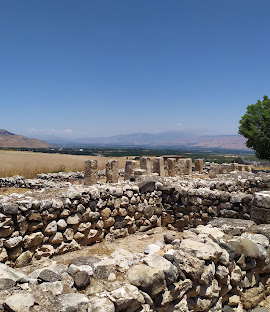
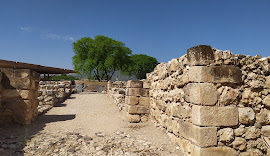
In 1984, on my first of nine lengthy trips to Israel, I was eager to study Bible Archaeology to teach my Bible College students and friends. An English visitor who was boarding in the same Israeli home insisted I visit a dig ten miles north of the Sea of Galilee. I hopped on a bus and went to Tel Hazor, northern Israel’s largest archaeological site. It’s upper hilltop defense area covers 30 acres. Its lower populated city area includes 175 more.

Joshua conquered its Canaanite king, Jabin, and his confederate kings in a major victory. Scripture tells us Joshua  burned the city and put its inhabitants to the sword, but the Canaanites reconquered and rebuilt. Hazor returned to Israel’s control under Kings David and Solomon. Solomon rebuilt and fortified it, Megiddo, and Gezer as three treasure city strongholds protected by his complicated signature triple entrance gates safeguarding them from enemy invasion. I loved exploring despite getting heat stroke.

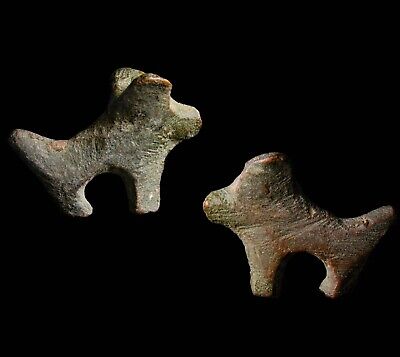
Back at my accommodation, my new English friend, Anne, gifted me the three inch pottery reclining calf she had found at the site for my students to see. It was cleverly made in more lifelike proportion than the nearest similar photo I can find to share below. It was red clay with painted streaks of black, red, and white paint added.

After I flew home, Anne wrote and asked me to destroy the object as she feared it had been used in pagan worship. I hesitated. At least 1200 years old, this hand-made item gave a glimpse into ancient times. However, when I prayed, I heard the question, “Why would you save something involved in pagan worship?” First my history-loving brain trotted out obvious historical reasons, and then the Lord asked, “What was it devoted to?” That settled it. I wrote Anne and her husband that I would destroy it. But how?

Exodus 32:20 KJV and other verses give instruction, “And he took the calf which they had made, and burnt it in the fire, and ground it to powder, and strawed it upon the water, and made the children of Israel drink of it.” One student wanted to help. First we burned the object in my wood stove. I sifted the ashes but couldn’t find the rascal. Had it disintegrated? Made of baked clay, it glowed like an ember and avoided detection until I finally found it. We used a hammer to smash it into powder, walked to a nearby stream, sang a song as we cast the bits into flowing water, and each drank a tiny portion as the Bible says.

That experience was an object lesson. If we don’t have literal pagan idols, we can parallel that process to be free of problem areas in the same ways. Parallel the process by committing them to the Lord for His fire to consume and accept them as happened to many Old Testament sacrifices. Next, let the hammer of God’s word smash them as written in Jeremiah 23:29 “A message from me is like a fire that burns things. It is like a hammer that breaks a rock into pieces.” And then let His living waters carry them away.

I’ve loved my 40 years of trips to Israel and continue learning from connections there. Best of all, scriptures from long ago are vitally applicable to our lives now. I’ve shared my travel lessons in A Traveling Grandma’s Guide to Israel: Adventures, Wit, and Wisdom and tucked in recipes. It’s on Amazon in print, Kindle, and Audible or contact me to order signed copies. Have fun applying this redemption process in all ways the Lord directs.

Posted in Delores Topliff, Uncategorized | Tagged , , , , , | Leave a comment

“A Poem” by James R. Coggins

We do not normally think of the apostle Paul as a poet. However, in Philippians 2:6-11, he presented a poem. Whether he wrote it himself or was quoting someone else’s poem is unclear. That it is a poem is clear because of the parallel phrases and the carefully designed structure of this passage.

The poem has the structure of a V. It starts with Jesus “being in very nature God” (verse 6, NIV). Then Jesus descended to human status, described in three parallel phrases: “He made himself nothing by taking the very nature of a servant, being made in human likeness” (verse 7). But then Jesus went further. He became “obedient to death” (submitted to death) and thus descended below humanity to the realm of the dead (verse 8). Then God raised Jesus back up to heaven, the place of God: “God exalted him to the highest place and gave him the name that is above every name” (verse 9). This restoration completes the V structure. It is interesting to remember that the Gospels say that Jesus’ restoration came in two stages—He was resurrected back to the human plane and then ascended to the heavenly plane sometime later. Verse 10 asserts that Jesus is Lord of the three planes he was on: “at the name of Jesus every knee should bow, in heaven and on earth and under the earth”—heaven, earth, and the place of the dead.

However, the reason that Paul cited this poem was to tell Christians to “have the same mindset as Christ Jesus” (verse 5). The promise is that if we humble ourselves as Jesus did, our lives can follow the pattern that Jesus laid down. Jesus taught, “Those who exalt themselves will be humbled, and those who humble themselves will be exalted” (Matthew 23:12, Luke 14:11). James taught, “Humble yourselves before the Lord, and he will lift you up” (James 4:10). Peter taught, “Humble yourselves, therefore, under God’s mighty hand, that he may lift you up in due time” (1 Peter 5:6). Paul wrote elsewhere, “If we have been united with him in a death like his, we will certainly also be united with him in a resurrection like his” (Romans 6:5). We didn’t start out as God, of course (except perhaps in our own minds). However, if we humble ourselves and follow Jesus, we have the promise of being raised to heaven to be with Jesus and even to be like Him (1 John 3:2, Philippians 3:21).

Posted in James R. Coggins | Tagged , , , , | Leave a comment

Walking with Jesus: Reflections on His Earthly Ministry

Many years ago, when the grandkids were younger, each Easter we did a Walking with Jesus celebration which involved the last week of Jesus’s life. It was a lot of fun, and we ended the walk at the empty tomb.

 As we draw closer to Easter, I find my thoughts are on Jesus’s ministry while He was here on earth which was nothing short of a revolution of love, compassion, and truth. From the moment He stepped into public life, His words and actions began to reshape the hearts of those around Him and inspire a movement that continues to this day.

Jesus’ ministry was marked by humility. Born in a manger, raised in an ordinary town, and living as a carpenter, He showed us that greatness is not measured by status or wealth but by service. As He began His ministry, He called upon ordinary people—fishermen, tax collectors, and zealots—to follow Him. He saw in them not what the world saw, but what they could become through faith in Him.

Through His teachings, Jesus offered a new vision of the kingdom of God. In the Sermon on the Mount, He taught the Beatitudes—a radical call to live in humility, mercy, and peace. He spoke of love for our enemies, forgiveness that knows no bounds, and faith that moves mountains. His parables, like the Good Samaritan and the Prodigal Son, taught profound lessons of grace, love, and redemption.

Jesus didn’t just speak; He acted. He touched lepers, gave sight to the blind, and healed the sick. He welcomed the outcasts, dined with sinners, and lifted up those who were burdened. Every miracle, every act of kindness was not just a display of His power but a reflection of His heart—a heart that beat for the broken, the weary, and the lost.

And yet, as the shadow of the cross loomed over His ministry, Jesus continued to show unwavering obedience to His Father’s will. He spoke openly about His coming suffering, not as a defeat but as the fulfillment of His purpose. He prepared His disciples for the trials ahead, assuring them, “I am the way and the truth and the life” (John 14:6). Even in His final days, Jesus washed the feet of His disciples, modeling servanthood and love to the very end.

The ministry of Jesus on earth was a light in a dark world, a living testimony of God’s boundless love for humanity. It challenges us to walk in His footsteps, to love as He loved, and to serve as He served. As we reflect on His life and His journey to the cross, let us be inspired to carry forward His message of hope and redemption.

In Him, we find not just a teacher or a prophet, but our Savior and Redeemer—the one who came so that we might have life and have it abundantly (John 10:10). Let His ministry on earth remind us of the beauty of a life lived for God and others.

May His example guide our hearts and inspire our actions every day. Amen.

All the best. . .

Mary Alford

http://www.maryalford.net

Posted in Uncategorized | Leave a comment

God’s Majesty by Tara Randel

Three nights ago, there was a lunar eclipse in my area. A friend told me about the moon, and I was excited to see it until I learned it would be visible at 3am. Normally I’m sound asleep at that time, but my husband had to leave early to travel, and I happened to be awake. I traipsed outside with my phone to capture some images and I was truly glad I did. I’d never seen a blood moon before and it did not disappoint.

As I was thinking about the eclipse and how amazing it was, I was reminded of God’s majesty. We live in a beautiful world created by God. Nature is all around us. When I see things like this moon, I can’t help but wonder how anyone would doubt that God has His hand in our world.

So I wanted to pick out some scriptures to start out the day.

Psalm 8:3-9

When I consider your heavens,
    the work of your fingers,
the moon and the stars,
    which you have set in place,
 what is mankind that you are mindful of them,
    human beings that you care for them?

You have made them a little lower than the angels
    and crowned them with glory and honor.
You made them rulers over the works of your hands;
    you put everything under their feet:
all flocks and herds,
    and the animals of the wild,
the birds in the sky,
    and the fish in the sea,
    all that swim the paths of the seas.

Lord, our Lord,
    how majestic is your name in all the earth!

Psalm 72:18-19

Praise be to the Lord God, the God of Israel,
   who alone does marvelous deeds.
19 Praise be to his glorious name forever;
    may the whole earth be filled with his glory.
Amen and Amen.

I have been dwelling on this particular psalm for a while now.

Psalm 121

I lift up my eyes to the mountains—
    where does my help come from?
 My help comes from the Lord,
    the Maker of heaven and earth.

He will not let your foot slip—
 he who watches over you will not slumber; 

indeed, he who watches over Israel
    will neither slumber nor sleep.

 The Lord watches over you—
    the Lord is your shade at your right hand;
 the sun will not harm you by day,
    nor the moon by night.

 The Lord will keep you from all harm—
    he will watch over your life;

the Lord will watch over your coming and going
    both now and forevermore.

I hope you have a wonderful day!

Tara Randel is an award-winning, USA Today bestselling author. Family values, a bit of mystery and of course, love and romance, are her favorite themes, because she believes love is the greatest gift of all. Look for her Harlequin Heartwarming romance THE SURPRISE NEXT DOOR, available May 2025. For more information about her books, visit Tara at www.tararandel.com. Like her on Facebook at http://www.facebook.com/TaraRandelBooks

Posted in Tara Randel | Tagged , , , , , , | Leave a comment

Prayer and the 72-Hour Rule by Vicki Hinze

prayer and 72-hour rule, vicki hinze, christians read

Prayer and 72-Hour Rule


This question comes in all the time, so it is time for a bit of discussion…

 How do we stay above the fray of false accusations and attempts to deceive?

 I don’t know it all.  I can share my perspective, and hope that in it, you find some worth.  We must become critical thinkers—using logic, knowledge, reason and emotion—and then discern as objectively as we are able.

I say as objectively as we are able because no mortal can be wholly objective.  Our views are all touched by our beliefs, our experiences, and all insights and knowledge we have acquired during our lives.  That said, we can strive to be as objective as possible by making a strong effort to push subjectivity aside, view objectively, and then weigh all–before rendering a conclusion.

For example…

 Vial information we need is flowing rapidly and with the force of a firehose.  It’s all but impossible to keep up.  Many have formed small groups and each person seeks truth on a matter and then reports back to the group with proofs of what she or he has found.  The information is compiled, discussed, and if further information is needed, it is sought and brought to the group.  This enables all group members to focus on a variety of specific areas, which makes broader coverage possible and not as overwhelming.  All the information is studied and digested by the group, and each member draws conclusions.  Often, we then discuss conclusions, shoot holes in them, refine them again and again, and ultimately, we conclude. 

Logic, knowledge and emotion, critical thinking, evidence and discernment.

 Choosing members for your group requires respect and trust in that person, in what she or he brings back to the group, and the sources s/he uses and deems reputable as confirmation. (Respected and trusted sources are critical.)  This level of reliance on each other requires confidence in all group members by all group members.

 I explain this as a preface to our 72-hour rule, which I believe has become one of the most useful and protective and wise rules we have adopted to aid us in staying above the fray of making false accusations and protecting us from falling for attempts to deceive.

What is the 72-hour rule? 

It’s simple.  When something happens that appears to come in totally unexpected and from left field, hold your thoughts and don’t draw a conclusion on it for 72 hours.   

Typically within that time, the assertion will be proven true or false.  More information is released.  More information is revealed or found by others and a more complete picture of the assertion is presented.  Context is gained.  That additional context or insight either supports the assertion or refutes it, which spares you from falsely accusing or fostering deception.  The effort protects your own credibility and, if you are working with others, the credibility of those in your group.

“Breaking news” creates a powerful temptation to get news out there.  To be first to report it.  But breaking news does more harm than good if it later proves to be false.  It is far more important to get it right than to be first.  Being first to break news is never enough reason to risk spreading false information, accusations, or engaging in any attempt—wittingly or unwittingly—to deceive anyone. 

There is an old saying that we are only as good as our word.  That is true.  Will mistakes be made?  Yes, of course.  We’re human.  When they do make mistakes, admit them, apologize, and try to correct the error as soon as is possible.  Also, try to correct any harm caused by the mistake.

Example.  Newspapers print an incorrect story.  It goes public.  The error is pointed out, and the newspaper prints a retraction.

Good, but not as good as it could be.  The story was printed on the front page above the fold–the most significant placement a story can have in newsprint.  The retraction was on page 24, buried at the bottom left.  That’s about the least significant placement.  So far more people saw the story than will see the retraction.

We can choose to be more ethical.  Put the retraction on the front page, above the fold in a small box.  This gives the retraction the same weight as the story.  Being fair, straight about the event, and honest with readers is about the best that can be done.  Since readers are human, too, they understand errors are made and you want them to know you’re taking responsibility and doing all you can to make your error right.

 Again, in my humble opinion, this all goes back to respect and to trust, which are essential for an effective group.  An effective individual, entity, or anything else.

 Two Bible verses have been extremely helpful to me, and I’ll share them in the hope they will be helpful to you also:

Psalm 35:20

They do not speak peaceably, but devise false accusations against those who live quietly in the land.


Jeremiah 9:6

You live in the midst of deception; in their deceit they refuse to acknowledge me,” declares the Lord.


 After eight years or so, I can say that both have been instrumental in identifying people who profess to be bearers of truth but who prove they are not, and those who profess fiction to be fact. 

Lastly, it has long since become a practice to pray before researching and in gratitude afterward.  Prayer calms the mind and opens the spirit to truth.  (God cannot abide lies, right?)  I cannot tell you how much this has positively impacted the process.  In a multitude of ways.

I’ve discovered that the 72-Hour Rule can be applied to just about any flash point that could develop into conflict.  It helps defuse.  I pray it helps you in your situations.

Blessings,

Vicki Hinze

Christians-Read


Posted in Vicki Hinze | Tagged , , , | Leave a comment

Improve Your Writing with AI (Artificial Intelligence!) By James R. Coggins

Every time I start to share one of my blogs on social media, I receive a message such as:

“Start a post, try writing with AI.” That “sentence” contains a grammatical error called a “comma splice,” joining what should be two sentences with a comma. This does not inspire confidence in the offered AI.

“Rewrite with AI.”

“Enhance your posts with AI. Posts can receive up to 35% more distribution and 30% more engagement.” 35% more than what?

In essence, the website is offering to improve my writing using Artificial Intelligence, a computer program. Even worse, the website expects me to pay for this assistance.

As a writer, I am insulted. The website is essentially insulting my writing ability without even having read what I have written. It is saying that I don’t write two good. Even worse, the website is saying that I, who have devoted my life to perfecting my writing skills, can be replaced by a machine.

I am especially insulted because whenever I am writing something, the various computer programs I am using keep suggesting changes that usually degrade the writing and introduce grammatical errors. Why would I pay to make my writing worse? I write far better than any machine.

In case, you doubt what I am saying, I typed the following paragraph and accepted every suggestion a certain program (which I will refrain from naming) made:

I have, myself, full confidence that it will all work out, if nothing else is needed, and if the best arrangements are made, as they are being discussed, we will be out of town once again this year to defend the interests of our community, to ensure the safety of our workers, and to outline the menace of tyranny, if necessary for years, if necessary alone. At any time, please think about what you are doing. That is the resolution of His Message Government—especially man of them. That is the will of Parliament and the nation. The British Empire and the French Republic, linked together with their current address and information, Williams defend to the death their native soil, aiding each other like good friends to the utmost of the world. Even though last year of Europe and manufacturing old and new States have been fallen or missing into the ground of the Gestapo and all the oddities appear to occur in Nazi rule, we shall not flag or remove. We shall go ahead and to the end, we shall fight for France, we shall fight for the separation and occupancy of, we shall fight for growth and confidence and growing strength in the future, we shall defend our interests, whatever they may be, we shall fight for the beauty of, we shall fight for the landing grounds, we shall fight for the fields and in the fields, we shall fight for the hills; we will be needing surround sound, and even if, which I believe for a moment, this island is originally a large island of islands were surrounded by and surrounded, then our Empire beyond the seas, armed and guided by the British Fleet, would carry on the struggle, until, in God’s goodness, the New World, with all its wonderful and memorable stories forthcoming to share with you and your family the wonderful stories of the old world.

Does that strike you as a wonderful piece of writing? Is it clear? Or do you think it a confusing compendium of pedestrian phrases? Do you think it could be an improvement on the original?

The original is the concluding paragraph of British Prime Minister Winston Churchill’s speech to the House of Commons on June 4, 1940, near the start of the Second World War. That speech is one of the most stirring and inspiring speeches every made, a masterful example of oratory:

I have, myself, full confidence that if all do their duty, if nothing is neglected, and if the best arrangements are made, as they are being made, we shall prove ourselves once again able to defend our Island home, to ride out the storm of war, and to outlive the menace of tyranny, if necessary for years, if necessary alone. At any rate, that is what we are going to try to do. That is the resolve of His Majesty’s Government-every man of them. That is the will of Parliament and the nation. The British Empire and the French Republic, linked together in their cause and in their need, will defend to the death their native soil, aiding each other like good comrades to the utmost of their strength. Even though large tracts of Europe and many old and famous States have fallen or may fall into the grip of the Gestapo and all the odious apparatus of Nazi rule, we shall not flag or fail. We shall go on to the end, we shall fight in France, we shall fight on the seas and oceans, we shall fight with growing confidence and growing strength in the air, we shall defend our Island, whatever the cost may be, we shall fight on the beaches, we shall fight on the landing grounds, we shall fight in the fields and in the streets, we shall fight in the hills; we shall never surrender, and even if, which I do not for a moment believe, this Island or a large part of it were subjugated and starving, then our Empire beyond the seas, armed and guarded by the British Fleet, would carry on the struggle, until, in God’s good time, the New World, with all its power and might, steps forth to the rescue and the liberation of the old.

If Winston Churchill had accepted help from Artificial Intelligence, we would all likely be speaking German.

Posted in James R. Coggins | Tagged , , , , , | 4 Comments

Remembering God’s Statutes by Nancy J. Farrier

Photo by Wes Hicks on Unsplash

From the time I was young I loved sitting around a campfire. We would cook hot dogs or marshmallows. Make s’mores. Laugh and talk, or sometimes sit and watch the flames dance. The one thing I didn’t like was the smoke. No matter where I sat that smoke seemed to sense me and drift in my direction. Pretty soon, breathing would become difficult, and I would start coughing and have to change locations at the fire. 

There were always jokes my uncles would make when I was a child about smoke following beauty, but I never believed them. That smoke burned my throat and made me long for a breath of clean air. I never felt pretty.

In my daily Bible reading, I came across Psalm 119:83: “For I have become like a wineskin in smoke, Yet I do not forget Your statutes.” That phrase ‘like a wineskin in smoke’ grabbed my attention. What did the psalmist mean? What happens to a wineskin in smoke? How does this apply to my life? I had to take the time to research this phrase, and the meaning, to satisfy my curiosity.

There were several schools of thought, but I found out two very interesting concepts. First, sometimes wineskins were hung in the smoke to give the wine a more mellow tone. Many of the early homes in Bible days were heated with a fire in the house and the wineskins would come in contact with the smoke as they hung on the walls. The warmth and the smoke would change the flavor of the wine, adding an enjoyable flavor.

Second, if a wineskin hung in too much smoke, the leather would dry and crack. The intense heat would ruin the skin through a lack of fresh air and moisture. Then the skin and the contents could be ruined.

I have pondered these ideas and the scripture. I keep thinking that the smoke and its intensity can represent trials in my life. Some are hard but not severe. They help to mold me and encourage growth as I become more dependent on God. I am learning to be long-suffering and to persevere despite the difficulties I face.

The more severe trials are like the thicker smoke and higher heat. They steal the fresh air and burn my lungs. If I am not careful, I will become dry and cracked, useless in my misery. Both inside and out can be ruined if I don’t take note of the second part of that verse – ‘yet I do not forget Your statutes.’

Remembering God’s promises and His word stave off the harmful effects of the smoke. Genesis 2:7 says, “And the Lord God formed man of the dust of the ground, and breathed into his nostrils the breath of life; and man became a living being.” The fresh air I need comes from God. He’s given me the very breath I breathe. He made the perfect blend of oxygen and hydrogen I require to live. My most basic need is supplied by him, and I must remember that.

To keep from becoming dry and cracked, I must have moisture. Even the worst smoke can be chased away by water. In John 4:15, Jesus tells the woman at the well, “but whoever drinks of the water that I shall give him will never thirst. But the water that I shall give him will become in him a fountain of water springing up into everlasting life.” That is a promise that can moisturize the driest soul. Something to remember in the midst of a fiery trial. When I’m feeling dry and cracked, Jesus will refresh me, giving me the help I need.

I hope the next time I am standing before the fire of difficulty with smoke pouring over me, I can recall these promises. Then my soul will be refreshed. I can relax and enjoy the promises God has planted within me. Maybe I’ll even have a s’more.

Posted in Nancy J. Farrier | Tagged , , , | Leave a comment