Working for God by Nancy J. Farrier

Photo by Andrew Neel on Unsplash

I was reading in Jeremiah the other day and stopped when I read this verse: “Cursed is he who does the work of the Lord with slackness…” (Jeremiah 48:10) That partial verse caught my attention and I had to pause to consider what God was saying to me—to us.

I realized God was chastising the Israelites for their behavior, but being cursed for their negligence in their work for God startled me. What does that mean for us? If we’re lax in completing what God has called us to do, is the punishment as harsh? Does a curse even have power over our lives, given Jesus’ grace extended to us?

Ephesians 2:10 says, “For we are his workmanship, created in Christ Jesus for good works, which God prepared beforehand, that we should walk in them.” From this verse we know that God has a work, or works, He’s prepared for us to do. If God went to that trouble, doesn’t it make sense that He expects us to carry through that? His desire is for us to follow Him and to complete what He’s given us to do.

We all have a calling on our life, something God has assigned us. Every calling is different, just like every person is different. Just like we are all parts of the body of Christ, but we each have different jobs to fulfill. 

It’s important to seek God’s will and to find out what He has for you to do. We can’t look around and decide we like what Mary or Joe is doing and choose that as our calling. Instead, we have to spend time with God, asking Him what His will is for our lives.

We must never grow weary in doing our work. Weariness promotes neglect. We must maintain the freshness of our job or calling by our attitude toward serving. There are always discouragements, but those can be overcome by a positive attitude and knowing God called us to this role.

I find it sad that the Israelites lost sight of God and the work He’d called them to do. Perhaps, they lost focus on who they were working for. We must not do that. I know I will put more emphasis on this, knowing how important it is to God. I hope you do too.

“Whatever you do, work heartily, as for the Lord and not for men,knowing that from the Lord you will receive the inheritance as your reward. You are serving the Lord Christ.” Colossians 3:23-24

Posted in Nancy J. Farrier | Tagged , , , | Leave a comment

Thoughts and Prayers by James R. Coggins

When something bad happens, public figures often say, “Our thoughts and prayers are with the victims and their families.” It sounds good, but do these public figures actually pray—or is it just thoughts they are sending?

The reality is that thoughts alone do no good. They have no power. If people act on the thoughts by offering expressions of sympathy, flowers, money if it is needed, a hug, or even a consoling presence, those actions can be helpful. But thoughts alone do nothing.

I suspect the word “thoughts” has come into common use through those who have no religious faith. They might say, “thoughts and prayers,” but they don’t really pray, and they assume that thoughts are the secular equivalent of prayers. The probably assume that prayers are just thoughts expressed by the religious. They might (or might not) assume that thoughts, like prayers, have some magical or psychic power to travel through space and achieve something, although they likely have no idea how that might work.

Jesus criticized “pagans” (those who do not believe in Jesus) who keep “babbling” (Matthew 6:7), who keep repeating words or rituals in the hope that the words or rituals might have some magic power to achieve something on their own.

True prayer is much different. As Jesus explained in what is now known as “The Lord’s Prayer” (Matthew 6:9-13), prayer is an appeal to “our Father in heaven,” that is, to the all-powerful God who actually has power to do something about the problem. Further, He is our Father, who loves us and wants to help us. And He is the “hallowed,” or holy, God, who establishes eternal moral principles such as truth and love; in other words, we cannot come to such a God while we are committed to being immoral and expect Him to hear us. Finally, He is the King (Matthew 6:10: “Your kingdom come, your will be done, on earth as it is in heaven”). He is the one who has the final say, who decides what will be done or not done. We cannot go to such a God and demand that He do what we say. He is the one who is in charge.

There is a huge difference between “thoughts” and “prayers.” When we pray, we need to know who we are praying to. If we don’t direct our prayers anywhere in particular, they are just “thoughts.” But if we pray to the God who has the power to change things, the God who loves us, the God who is holy, and the God who has the authority to make the ultimate decision, then that is different. Such a God can make a huge difference in the situation of the people we are praying for—unlike mere thoughts—but what He does is ultimately up to Him.

Posted in James R. Coggins | Tagged , , , | 1 Comment

In the Little Things

The other day, I was standing in line at the grocery store behind a woman whose toddler was having a full-blown meltdown over a pack of fruit snacks. The mom looked exhausted, the cashier looked sympathetic, and I’ll admit—I was silently hoping the line would move faster.

Then the little boy suddenly stopped crying, looked at his mom, and whispered, “I love you.” Just like that, everything shifted. Her tired smile, his tiny hand gripping hers… it was such a simple moment, but it stopped me in mine.

It made me think about how much life is really made up of small, ordinary moments like that—ones we usually rush past. The quiet cup of coffee before the house wakes up. The neighbor who waves from across the street. The text from a friend that arrives at just the right time.

I’m realizing more and more that God often shows up right there—in the unnoticed spaces, in the things we call ordinary. Not always with fireworks or grand gestures, but with a whisper, a smile, or even a toddler’s “I love you.”

So I’ve been asking myself: What moments am I rushing past? What little gifts from God am I overlooking because I’m too busy looking for something bigger?

What about you?

May your week hold quiet reminders of grace in unexpected places.

Warmly,

Mary

http://www.maryalford.net

Posted in Uncategorized | Leave a comment

Are You Proud of Your Country? by James R. Coggins

Are you proud of your country?

I am a Canadian, and this question came up in the midst of an upwelling of patriotic fervor in Canada. The fervor is a response to insults, threats, and tariffs directed at our country from the American president. Polls show that, as a result, an increased number of Canadians are proud of their country.

Am I proud of my country? I decided it was the wrong question to ask.

I had just been studying through the Bible book of Jeremiah, preparing a series of devotional meditations. Was Jeremiah proud of his country? His country was the nation that God had chosen to model His laws and to be the guardian and proclaimer of God’s revelation. But Jeremiah was not proud of his country. Judah at that period was characterized by poor leadership, religious confusion, and crime. Kings, prophets, priests, and other leaders were corrupt (Jeremiah 2:26). The kings were erecting idols in Jerusalem and even God’s temple, as the prophets and priests cheered them on. The poor were being oppressed, and there was so much crime and violence that it was reported that Jerusalem was filled with blood (2 Kings 21:16, 24:4).

Was Jeremiah proud of his country? Jeremiah was aware that Judah was no worse than many of its neighbors and maybe slightly better. But it was hardly a nation to be proud of. Jeremiah knew that God would soon punish the nation for its sinfulness.

Jeremiah was not proud of his country. But he loved his nation deeply. He begged the nation to repent and avoid the coming judgment. He has been called “the weeping prophet” because he lamented how far his nation had fallen. He faithfully remained in a dying society, prayed for his nation, and offered guidance right to the bitter end.

Jeremiah loved his country, grieved over it, prayed for it, and sought to make it better, and that is what Christians should do.

Should we be proud of our country? Let’s look at the question from another angle. Should we be proud of ourselves? Should I be proud of myself? I celebrate my achievements, of course, and I recognize my strengths and gifts. But I am also well aware of my weaknesses, failures, and sins.

We should not be proud of our country. Pride is the worst of the Seven Deadly Sins. Pride leads us to destruction (Proverbs 16:18). Jesus denounced the Pharisee who thanked God that he was better than other men (Luke 18:9-14).

The New Testament teaches us: “Do not think of yourself more highly than you ought, but rather think of yourself with sober judgment” (Romans 12:3), and that is what we should do. That teaching applies both to ourselves and to our nation. We might think that ours is the greatest nation on earth, but it might be helpful to ask what people outside our nation think. We might be surprised by the answers. The poet Robbie Burns wrote, “Oh, would some Power the gift give us to see ourselves as others see us!” He suggested it would save us from much unjustified pride and foolishness.

We should look at our nation and assess it realistically. We should certainly celebrate its strengths. But we should also recognize its sins, failures, and weaknesses. We should mourn its failures. We should pray for its redemption. We should obey its laws (1 Peter 2:13-14) unless they command us to break God’s higher law (Acts 5:29). We should seek the good of the country where we live (Jeremiah 29:7). And we should love our country, which is one element in loving our neighbor—and sometimes even one element in loving our enemies. Even when we are appalled at the condition of our nation, we should never give in to hating it. We should continue to love it.

Posted in James R. Coggins | Tagged , , , , , , , , , , , | Leave a comment

Saul/Paul: What’s in a Name? by James R. Coggins

Acts 9 describes how Saul was converted from being a devout Jew who persecuted Christians to being a Christian himself. A little later, when Saul, along with Barnabas, started out on his first missionary journey, Acts 13:9 says, “Then Saul, who was also called Paul…” Throughout the rest of the Bible, the man is called Paul. So, “Paul” is his usual name in the Bible.

Many Jews in those days had a Jewish name, which was used by their Jewish friends and family, and a Greek or Latin name, which was used by everyone else. This is because most people in the Roman Empire, especially the eastern Roman Empire, spoke Greek, and many people also understood Latin, the language of Rome. As a Roman citizen (Acts 16:35-39, 22:22-39), Paul probably spoke all three languages. Similarly, many people around the world today speak English even if that is not the language they grew up with. Chinese people in Canada often have two names, a Chinese name, which many of us English speakers cannot pronounce, and an English name. Before Acts 13, Saul mostly lived among Jewish people. After Acts 13, Paul mostly traveled among Greek-speaking people. God had called him to preach mainly to gentiles, that is, people who were not Jews.

The name “Saul” was an old Hebrew name (Shauwl) originally meaning “asked.” It suggests that Saul’s birth was an answer to prayer. The first king of Israel was also named Saul.

The name “Paul” comes from a Latin name (Paulos) originally meaning “little.” People in Rome spoke Latin, but many of the people that Rome conquered and incorporated into their Roman Empire spoke Greek. The Roman authorities would issue decrees in Latin but also in Greek so that people in the rest of the Empire could understand them. When Jesus was crucified, “Pilate had a notice prepared and fastened to the cross. It read: “JESUS OF NAZARETH, THE KING OF THE JEWS…the sign was written in Aramaic, Latin, and Greek” (John 19:19-20). Aramaic was the language that the Jews spoke in those days, Latin was the official language of the Roman Empire, and Greek was the common language that most people in the Empire used to communicate with each other.

Saul probably chose to use the Latin name “Paul” because the names sound similar. As well, Saul in the Old Testament was a king, but “Paul” means “little.” Before becoming a Christian, Saul thought he was pretty great. He was proud of himself. After he became a Christian, Saul realized that he was small and insignificant compared to the greatness of Jesus. Calling himself “Paul” was a recognition that he had been humbled by Jesus and submitted to Him. In Philippians 3:7-9, Paul wrote: “But whatever were gains to me I now consider loss for the sake of Christ. What is more, I consider everything a loss because of the surpassing worth of knowing Christ Jesus my Lord, for whose sake I have lost all things. I consider them garbage, that I may gain Christ and be found in him.”

Posted in James R. Coggins | Tagged , , , , , | Leave a comment

“Let Revival Begin—In Us First”

“Will You not revive us again, that Your people may rejoice in You?” – Psalm 85:6

This Sunday, our church begins its annual revival services.

We’ve been praying. Planning. Preparing.

But real revival? It doesn’t begin with a schedule. It begins with a stirring.

A church revival isn’t just about a series of meetings—it’s about hearts being realigned with the heart of God. It’s a sacred space where we pause from the noise of everyday life and make room for the Holy Spirit to move freely in our congregation… and in us. Revival is meant to awaken what’s grown dormant, convict what’s gone unnoticed, and reignite the fire that once burned brightly for Christ.

It’s not about hype. It’s about holiness.

As Christian readers, we often gravitate toward stories of transformation—of light overcoming darkness, of redemption breaking through ruin. That’s what revival is at its core. A fresh encounter with the God who still heals, still speaks, still saves.

Revival isn’t limited to the sanctuary. It can begin in the quiet of your morning prayer. In the conviction stirred during worship. In the moment you open your Bible, desperate for more than surface-level faith.

Maybe you’re there right now.

Longing for more than going through the motions.

Needing a fresh touch. A rekindled joy. A reason to hope again.

Let this be your invitation.

As our church gathers this week to seek the Lord, I’m praying revival won’t be something we attend—but something we carry. That what happens inside the church walls would overflow into our homes, our neighborhoods, our relationships, and even the books we read and the stories we tell.

Because revival isn’t meant to be contained.

It’s meant to spread.

And it starts with one surrendered heart—yours. Mine.

So whether you’re attending a revival at your church or simply longing for one in your spirit, remember: God still revives. He still restores. And He still responds to a heart fully His.

Let revival begin. In the church. In the nation. But first… in us.

All the best. . .

Mary

http://www.maryalford.net

Posted in Uncategorized | Leave a comment

My Study Bible by James R. Coggins

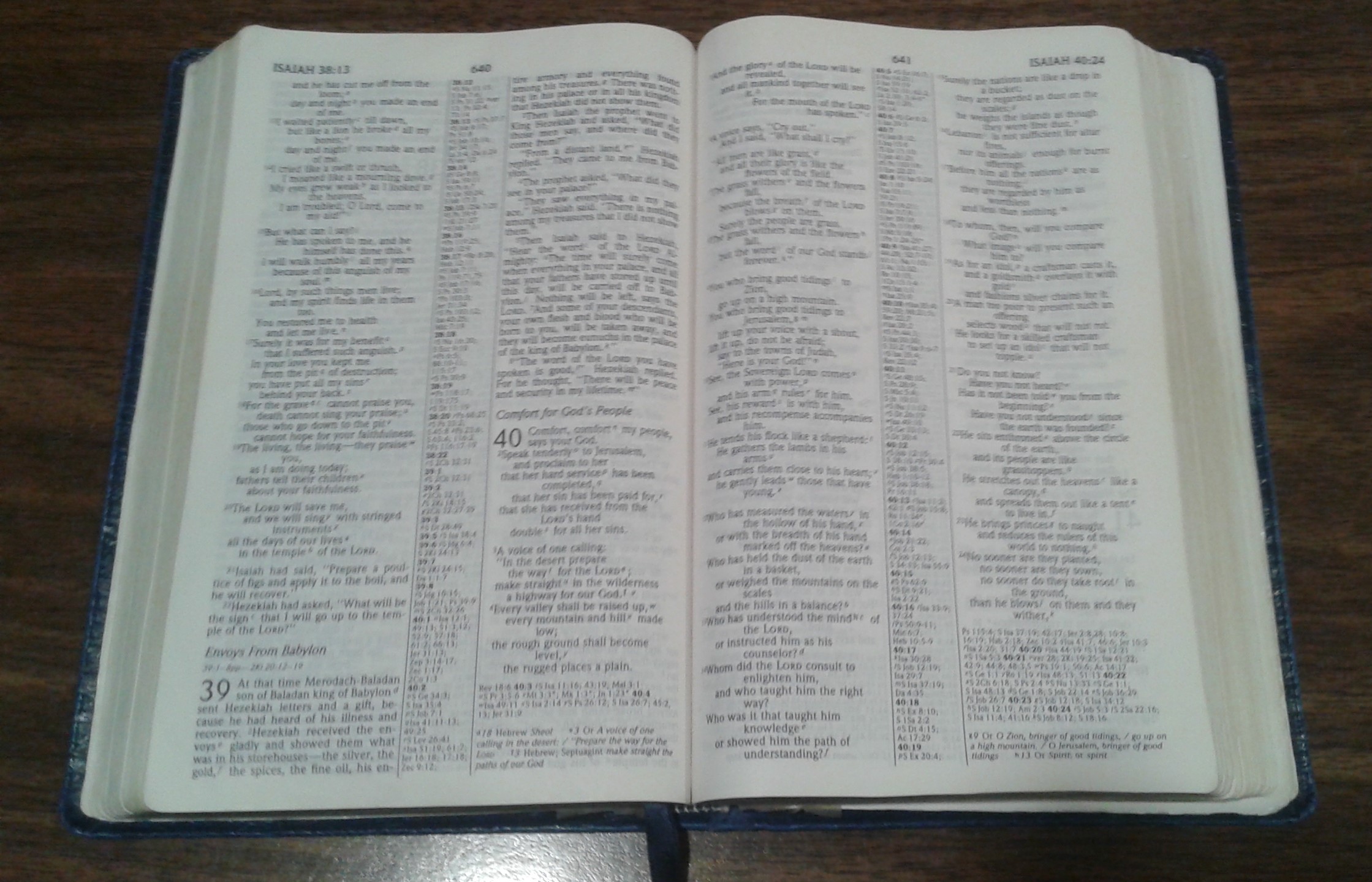
A reader recently asked: “You frequently post a photo of a Bible on your blogs. Is that your study Bible? What Bible do you use?”

The Bible usually pictured is my personal Bible, the New International Version (NIV, 1986). I grew up with the King James Bible (KJV), which was the standard in most churches. In university, I discovered the New American Standard Bible (NASB, the one pictured in this blog), which I trust as a very accurate translation. I switched to the NIV for teaching quite a few years ago, as it is more readable and was becoming the standard in many churches.

Unfortunately, in 2011, the publishers revised the NIV and made it more politically correct and less accurate. I still take my old (pre-2011) NIV Bible to my Baptist church (they use the NIV there mostly). However, in my personal study, I use Bible Gateway, which is a free online app and which allows me to use and compare many translations.

I never learned Hebrew and Greek except for a brief smattering in my one year in seminary, and therefore I rely on the work of other Bible scholars. As aids to my study, I still use the one-volume New Bible Commentary and one-volume New Bible Dictionary and Strong’s Concordance, which I picked up in that one year of seminary training at Regent College in Vancouver. The Concordance is especially useful in getting at the meaning of Greek and Hebrew words. Over the years, I have also assembled a complete set of Barclay’s New Testament commentaries. While he is unorthodox on a number of issues, Barclay’s knowledge of Greek words and ancient history is unparalleled. I wish there was something similar for the Old Testament. There are other commentaries and guides on my bookshelves which I also consult from time to time.

And, of course, I study with prayer, asking God to help me understand His Word. I often ponder, meditate, and ask questions about what a particular passage might mean and how it might be applied to my life. I write down what I am learning to help me remember and to share with other people. I do not claim to be an expert Bible scholar, but I have been a persistent inquirer. As every Christian should, I have studied the Bible consistently throughout my life and have tried to carry out its precepts. Looking back, I am blessed to think about all that God has taught me. Looking forward, I realize I have barely scratched the surface of the riches of God’s Word.

Posted in James R. Coggins | Tagged , , , , , , , , , , , | 4 Comments

Why Don’t Christians Read Their Bibles? by James R. Coggins

Why don’t Christians read their Bibles more? In a recent sermon, our pastor offered several reasons: People are too busy. The Bible is hard to understand. Reading the Bible is sometimes boring. And so on. The pastor then offered some solutions or counters to those reasons, in the hope that members of the congregation would read the Bible more regularly.

I have continued to ponder that sermon. It was a good sermon and will no doubt produce some good results. However, it struck me that the reason I don’t read my Bible more (and why I find it hard to study the Bible) is not any of the reasons the pastor gave. For me, while I do read the Bible, I think the biggest obstacle is the tremendous emotional and spiritual effort required. When I read, “The Lord is my shepherd, I lack nothing” (Psalm 23:1), I am comforted. But when I read, “Love your neighbor as yourself” (Matthew 22:39) or “The heart is deceitful above all things and beyond cure. Who can understand it?” (Jeremiah 17:9) or “In your struggle against sin, you have not yet resisted to the point of shedding your blood” (Hebrews 12:4) or any number of similar verses—well, that requires deep soul-searching and perhaps seeing things that I don’t necessarily want to admit are there.

Hebrews 4:12 tells us “For the word of God is alive and active. Sharper than any double-edged sword, it penetrates even to dividing soul and spirit, joints and marrow; it judges the thoughts and attitudes of the heart.” Such surgery can be painful, but it is necessary for life and health.

Posted in James R. Coggins | Tagged , , , , | Leave a comment

When God Puts You on Hold… and You’re Still Listening to the Elevator Music

We’ve all been there. Spiritually speaking, I mean.

You pray. You wait. You refresh the page of your life like you’re waiting for Amazon to update your delivery status, only to see those dreaded words:
Pending.

You double-check to make sure your prayer got through.
Yes, Lord. It’s me again. Requesting peace, direction, and maybe a small miracle on aisle five.
…Hello?

Cue the heavenly elevator music.

If you’re like me, your brain immediately starts spiraling:
— Maybe I prayed wrong.
— Maybe I’m supposed to do something first.

— Or maybe… I’ve been put on Divine Hold.

I’ve learned something important during those frustrating, slightly awkward seasons where it feels like God’s gone quiet: sometimes He puts us on hold to grow us—not ghost us.

And let’s be real: I’m not exactly patient. I want microwave answers. Meanwhile, God’s working on a slow-cooker timeline. He’s marinating my character while I’m asking, “Are we there yet?” every 10 minutes like a spiritual backseat toddler.

But here’s the thing—during the “hold” moments, He’s still there. Just quiet. And not in a passive-aggressive “silent treatment” kind of way. He’s present. Patient. Preparing. Listening.

And sometimes?
He’s teaching me to stop trying to download answers at high speed and start trusting the One who already knows the outcome.

So if you’re in a waiting season today, and all you can hear is the spiritual version of elevator jazz… take heart.

God hasn’t hung up.
You haven’t lost signal.
You’re not being ignored.
You’re being refined.

And maybe—just maybe—when the line clicks back on, you’ll realize He was guiding you the whole time. (Also, you’ll have a fantastic story to tell… and a renewed appreciation for spiritual hold music.)

Blessings (and happy reading!),

Mary

Posted in Uncategorized | Leave a comment

Hiking Part 2 by Tara Randel

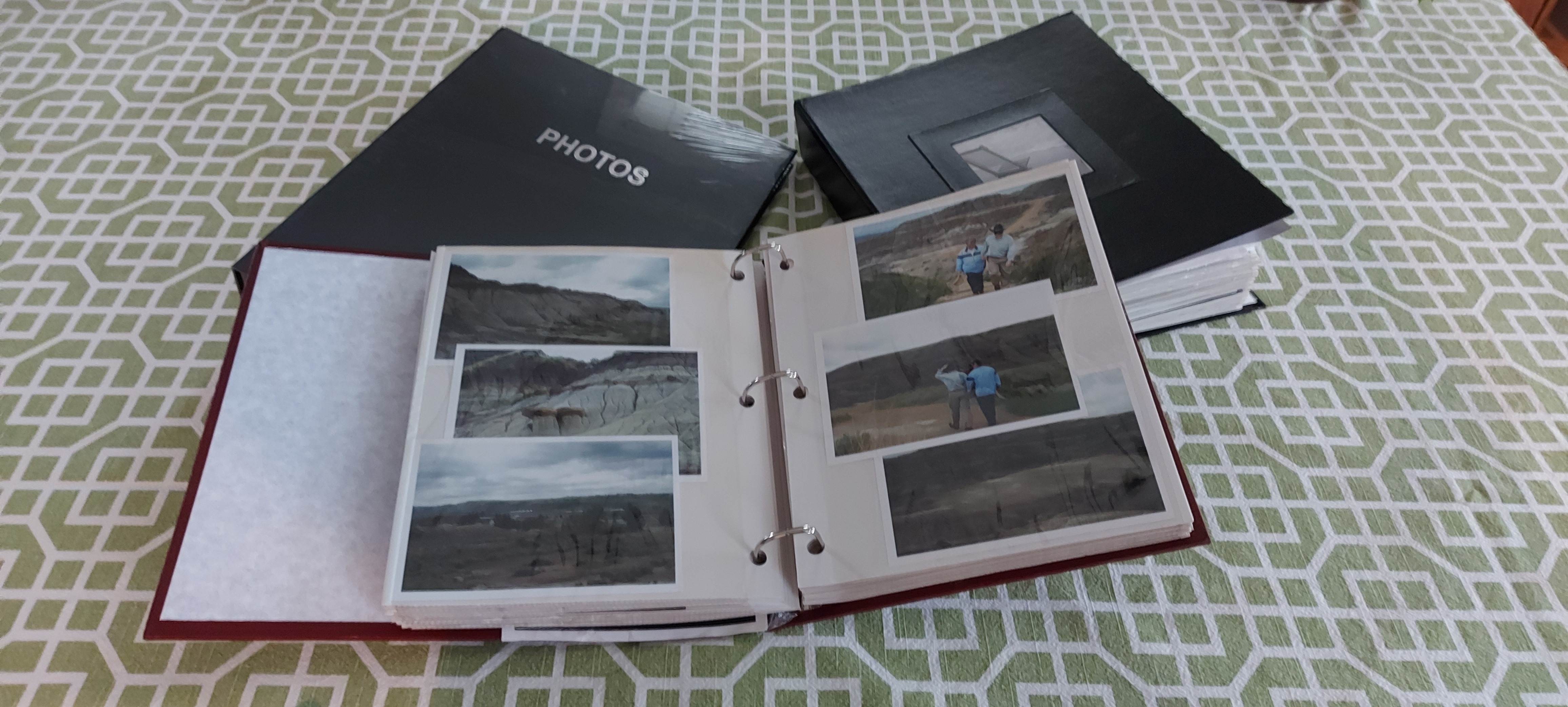
In a previous post, I wrote about a hiking trip to the Great Smoky Mountains. In that post, I talked about the long climb to the summit at 6593 feet. But a few days before, we took more a leisurely hike on a trail to Grotto Falls.

This trail wasn’t quite as strenuous as the other, but just as beautiful. And the surprise at the end was worth the trek.

As you can see, Trillium Gap Trail was nowhere as long as our next journey to the summit of Mt. Le Conte.

We enjoyed beautiful scenery along the way.

And like I said, the treat at the end was worth the hike!

I always wanted to walk under a waterfall.

I hope you are having an amazing summer. Enjoy the outdoors!

Tara Randel is an award-winning, USA Today bestselling author. Family values, a bit of mystery and of course, love and romance, are her favorite themes, because she believes love is the greatest gift of all. Look for her Harlequin Heartwarming romance THE SURPRISE NEXT DOOR, available now. For more information about her books, visit Tara at www.tararandel.com. Like her on Facebook at http://www.facebook.com/TaraRandelBooks

Posted in Tara Randel | Tagged , , , , , , , , | 3 Comments

Byzantine Mosaics – From the Many, One.

It’s a long story, but I’ve hosted European friends here in North America, and enjoyed staying in their homes. Two of them decided that the next time I visited Spain, we should tour Bologna, Ravenna, and Venice by plane and train. That was a fabulous trip.

To me, the most outstanding highlight was the eight Ravenna 5th and 6th century A.D. Christian monuments including churches, baptisteries, and a mausoleum that are collectively a UNESCO World Heritage Site. These are especially renowned for stunning and well-preserved mosaics. YouTube offers coverage. My photos don’t do them justice, but the Byzantine mosaics’ intricate artistry delivers a spiritual lesson.

The most famous are inside the Basilica of San Vitale shown below.

The mosaics are literally thousands of small pieces of glass, stone, or ceramic combined in different images and patterns, including some with gold leaf, silver, and precious stones, to make one elaborate picture. The many pieces became one, just asJesus prayed that his followers might “all be one.”

Similarly, the Lord combines our many varied individual traits into His masterful multi-dimensional design with all the members fitly framed together.

Romans 12:4-5 says, “For as we have many members in one body, and all members have not the same office: So we, being many, are one body in Christ, and every one members one of another.”

Romans 12:4-5 says, “For as we have many members in one body, and all members have not the same office: So we, being many, are one body in Christ, and every one members one of another.”

The Lord builds His family from different tribes, nations, tongues, and backgrounds. We are multiple shapes, colors, and sizes. But our Savior is a master craftsman who has had perfect designs in mind since the very beginning of time as He constructs our personal families, church bodies, international organizations, and more..

We may be mortared in right next to contrasting colors, materials, or textures, but we can trust Him to complete His inspired design.

Viewing Byzantine mosaic that have survived fifteen hundred years inspires me to believe that He is arranging believers together to prepare His bride for the wonderful final event that completes church history.

The Lord builds His family from many different tribes, nations, tongues, and backgrounds. We are multiple shapes, colors, and sizes. But our Savior is a master craftsman who has had perfect designs in mind since the very beginning of time as He constructs our personal families, church bodies, international organizations, and more..

We may be mortared in next to vividly contrasting colors, materials, or textures, but we can trust Him to complete His inspired design.

Viewing Byzantine mosaic that have survived fifteen hundred years inspires me to believe that He is arranging believers together now to prepare His bride for the wonderful final event that completes all of church history.

Posted in Uncategorized | Tagged , , , , | Leave a comment

How I Write by James R. Coggins

I have always written by inspiration. I don’t mean that literally, in the biblical sense. But the thing is, unless I am interested in something, unless I think I have something worth saying, I won’t make the effort to write it.

Now, I don’t just sit around waiting for inspiration to strike. I read, learn, observe, think, question, wonder, and ponder (the secular version of meditate), and when ideas coalesce in my mind, I write them down. The process is the same whether I am writing a biblical meditation, a blog, a letter, a novel, or a research essay. (In the last case, I will often start with a question and then do a lot (a lot!) of reading and learning before I write.)

But what has changed is the technique or the medium. When I first started writing, I used a pen or a pencil on paper. When I had an idea, I would start scribbling on any piece of paper that was handy—a church bulletin, an envelope, a napkin, or the blank back side of anything typewritten or printed. I used to keep a supply of “good one side” paper in my office, my briefcase, and my pockets. I chose this medium because I could write (okay, scribble) faster than I could type, and it was not convenient to carry around a typewriter or computer or even wait until one was available. I wanted to preserve the ideas while they were fresh. I found that if I waited, they would often fade. The ideas might remain, but the right wording and phrasing would be lost.

Eventually, once it had been invented, I learned to use a computer. This transition required considerable adjustment. Trying to remember the commands to add bold or italics or hyphens or dashes and so on distracted me from the ideas I was trying to write down. However, as I became more skilled in computer use, I found there were some advantages. I could type faster on a computer than a typewriter. And, on a computer I didn’t have to worry about spelling or other mistakes—I knew I could go back and fix those later. I could focus on getting the ideas down. Due to my life situation, I was often in my office or somewhere close to a computer. Of course, computers are great for editing. With a computer, I could make changes and even move words and sentences and paragraphs.

Nowadays, I use a combination of media. I still carry a pen and paper and scribble down ideas whenever they come. I also write on my computer. I have also developed ways of writing in my head. Ideas often come when I am quiet, such as when I am in bed and trying to sleep. When that happens, I have learned to be able to draft a blog or a biblical meditation or a scene from a novel or a short story in my head. I go over and over the draft in my head, committing it to memory and sometimes making edits and other changes. Then, the next day, I can go to my computer and type up the draft.

I still write by inspiration, although methods evolve. I am grateful for the methods open to me. Much more efficient than chiseling ideas into stone or clay.

Posted in James R. Coggins | Tagged , , , , | Leave a comment

Glory in What? By Nancy J. Farrier

Photo by Alex Shute on Unsplash

Almost every time I go in a store, I am struck by the abundance of the offerings there. As you walk through the doors of a grocery store, there are tables full of breads, cookies, pastries, and all manner of things we don’t need in our diet, but there they are ready to entice us. And we indulge.

Not only are we assaulted in the physical sense by these temptations, but as a country we are inundated with the ideal that we are mighty—both in the might of our physical protection and the strength of our educated minds. Here is the USA we tend to think ourselves above others.

It is sad to see the divisions in our country, but perhaps we’ve taken out eyes off of what is important. Maybe we’re so fixated on ourselves, we’ve lost sight of what God wants for us.

Let not the wise man glory in his wisdom, Let not the mighty man glory in his might, Nor let the rich man glory in his riches…” Jerimiah 9:23

Have we become complacent in indulging ourselves to the point that we glory in the wrong things? Do we glory in the wisdom that comes from empty education? (By that I mean learned intelligence that doesn’t include God.) Do we glory in our might without seeing the danger in how easily we can be defeated? Do we glory in our riches and ability to purchase whatever we want on a whim?

Jeremiah 9:24 says, ““But let him who glories glory in this, That he understands and knows Me, That I am the Lord, exercising lovingkindness, judgement , and righteousness in the earth. For in these I delight,” says the Lord.”

Instead of putting wealth, might, and worldly wisdom on a pedestal, we are to glory in God and who He is. God’s lovingkindness in the face of our indulgences is humbling. His judgement and righteousness are perfect. We should depend on Him and not the might or wisdom or riches of our nation.

The next time you go to a store, take notice when you walk in the doors. Look at all the offerings that are set out to entice when you don’t need them. Consider what you glory in. Is it in the ability to indulge yourself or do you glory in the Lord and his lovingkindness, judgement, and righteousness.

Lord, may we always glory in You.

Posted in Nancy J. Farrier | Tagged , , , | Leave a comment

The Power of Faith by James R. Coggins

In Galatians 3:1-5 (NIV), the apostle Paul issued a very strongly worded rebuke to the Galatian Christians: “You foolish Galatians! Who has bewitched you? Before your very eyes Jesus Christ was clearly portrayed as crucified. I would like to learn just one thing from you: Did you receive the Spirit by the works of the law, or by believing what you heard? Are you so foolish? After beginning by means of the Spirit, are you now trying to finish by means of the flesh? Have you experienced so much in vain—if it really was in vain? So again I ask, does God give you his Spirit and work miracles among you by the works of the law, or by your believing what you heard?”

Paul was explaining that Christians are saved by having faith in Jesus and not by obeying the law. To prove his case, he offered an interesting argument. He went back to how the Galatians first came to the Christian faith. Paul and Barnabas evangelized in the Galatian towns of Antioch, Iconium, Lystra, and Derbe on their first missionary journey (Acts 13-14). They faced considerable persecution (largely from Jewish leaders), but they won numerous converts among both Jews and gentiles. In Antioch, the new converts “were filled with joy and with the Holy Spirit” (Acts 13:52). In Iconium, God enabled Paul and Barnabas to “perform signs and wonders” (Acts 14:3). In Lystra, the crowds were so impressed by the healing of a lame man, that they thought Paul and Barnabas must be gods (Acts 14:8-13). Now Jews were trying to convince the Jewish and gentile Christians in Galatia that they needed to follow the law of Moses, including being circumcised. Paul therefore asked them to think about their experience. He reminded them that the Jews and the gentile converts to Judaism had been following the law before. But they had not been filled with the Holy Spirit because of this. Nor had God been performing signs and wonders, including miraculous healings, among them. It was only when they placed their faith in Jesus that they were filled with the Holy Spirit and God confirmed their faith with signs and wonders. So, Paul concluded, this demonstrated that people are saved by having faith in Jesus, not by following the law. God had shown them clearly that having faith in Jesus was the proper way to follow Him.

Posted in James R. Coggins | Tagged , , , , | Leave a comment

The Day My Characters Stopped Cooperating — and What God Taught Me About Letting Go

You know that feeling when you think you have everything under control…and then your plans unravel faster than yarn in a kitten’s paws?

That was me writing Framed in Amish Country.

I sat down, armed with coffee and an outline that would make any Type A proud. Those of you who know my writing process will understand this is not normal for me. I’m usually a pantser writer.

Anyway, my main characters Paige and Elijah were supposed to follow my carefully crafted path of danger, second chances, and sweet Amish settings. But somewhere around chapter ten, they started ignoring my plot points entirely. Paige refused to hide in the barn like I’d planned, and Elijah decided to reveal secrets I wasn’t ready to write yet.

I actually found myself talking out loud to my laptop—“This is NOT what I wrote in the outline!”—as if my characters would apologize and obediently return to the plan. They did not!

But here’s the funny, beautiful truth: as I let go of controlling every moment, the story got better. Deeper. More real. The characters’ struggles felt truer, the faith themes more heartfelt, and the suspense sharper than anything I could’ve forced.

In the process, I realized I do the same thing with God. I come to Him with a script for how my life should go—then get frustrated when the plot twists come. But He’s the ultimate Author. His story for me is richer, more layered, and yes, often wilder than anything I’d dare to write.

So, if you’re feeling like your plans have veered off course, take it from a writer whose characters went rogue: sometimes, the unexpected turns bring the best chapters.

Have you ever had a time when God rewrote your plans—and you were grateful He did?

Blessings (and happy reading!),

Mary

Posted in Uncategorized | Leave a comment