A Worldly Pursuit of God? By James R. Coggins

If the duty of human beings is to know God, we know we must spend much time in prayer, contemplation, and Bible study. In order to devote their full time to this pursuit, some have become monks. On the other hand, some of us feel deeply troubled that we spend only a few minutes a day trying to know God. We regret that we cannot spend more time doing this, but we secretly fear that a life devoted entirely to prayer and study would be boring.

There is another way—going out into the world that God has created, associating with other people, and working as He intended us to (Genesis 2:15). This will lead us into challenges, suffering, and pain. These things must not be seen as a hindrance to our quest for God (although they can be) but as a help. They may indeed show us our weakness and need and drive us to spend more time seeking God through prayer and Bible study. This is the mystery of the incarnation. God has entered our world through Jesus Christ. He is the God of history, the One who teaches us through our experiences as well as our prayer times. James taught that trials lead to perseverance and wisdom (James 1:2-3) and that blessings teach us about the goodness of God (James 1:17). Jesus did not chide His followers for being shepherds or fishermen. He used these experiences to develop parables which taught them about God. Why would God place us in a world where work has to be done if He wanted us only to pray? The two areas of devotion must work together. If, when we spend some time in prayer and contemplation, we cannot see God’s hand in our past experiences, then indeed we are limiting our quest for God to just a few minutes a day.

Posted in James R. Coggins | Tagged , , , , , | Leave a comment

God’s Creation by Tara Randel

I’ll be the first to admit that when I get in the writing zone, I don’t pay much attention to the world around me. But in the last few months, I’ve had some extra time to be outdoors. When my husband and I hike in the woods or I am around beautiful blooming flowers, the natural beauty that God has created always touches me deep in my spirit.

There are so many magnificent places that God has created, so many scenic views that we can take for granted.

My husband is getting ready for a big mountain hike this summer. As we’ve been out walking, here are a few of my favorite views.

Here are lovely pictures from right outside my doors.

A selection of flowers or wildlife I find in random places.

No matter where I go, no matter what part of the country or the world I travel, I can’t help but be amazed at what God has done. Since we’re starting the summer travel season, more, now than ever, we have a chance to really appreciate the world around us. God is amazing and the proof is where we live and walk every day.

On a different note, I’m happy to announce that I just signed a four-book deal with Harlequin in the Heartwarming line. I’m so excited to continue with new stories and characters I’ve created in my fictitious mountain town of Golden, Georgia.

I’ve been blessed that God has given me the talent and passion to write books that I hope bring laughter, hope, and joy to readers. Book 1 is finished so on the Book 2 this week!

Tara Randel is an award-winning, USA Today bestselling author. Family values, a bit of mystery and of course, love and romance, are her favorite themes, because she believes love is the greatest gift of all. For more information about her books, visit Tara at www.tararandel.com. Like her on Facebook at http://www.facebook.com/TaraRandelBooksSign up for Tara’s Newsletter.

Posted in Tara Randel | Tagged , , , , , , | Leave a comment

What Would You Do? by James R. Coggins

What would you do if you knew that the world would end tomorrow?

Someone wiser and more famous than I am once responded, “I would plant a tree.”

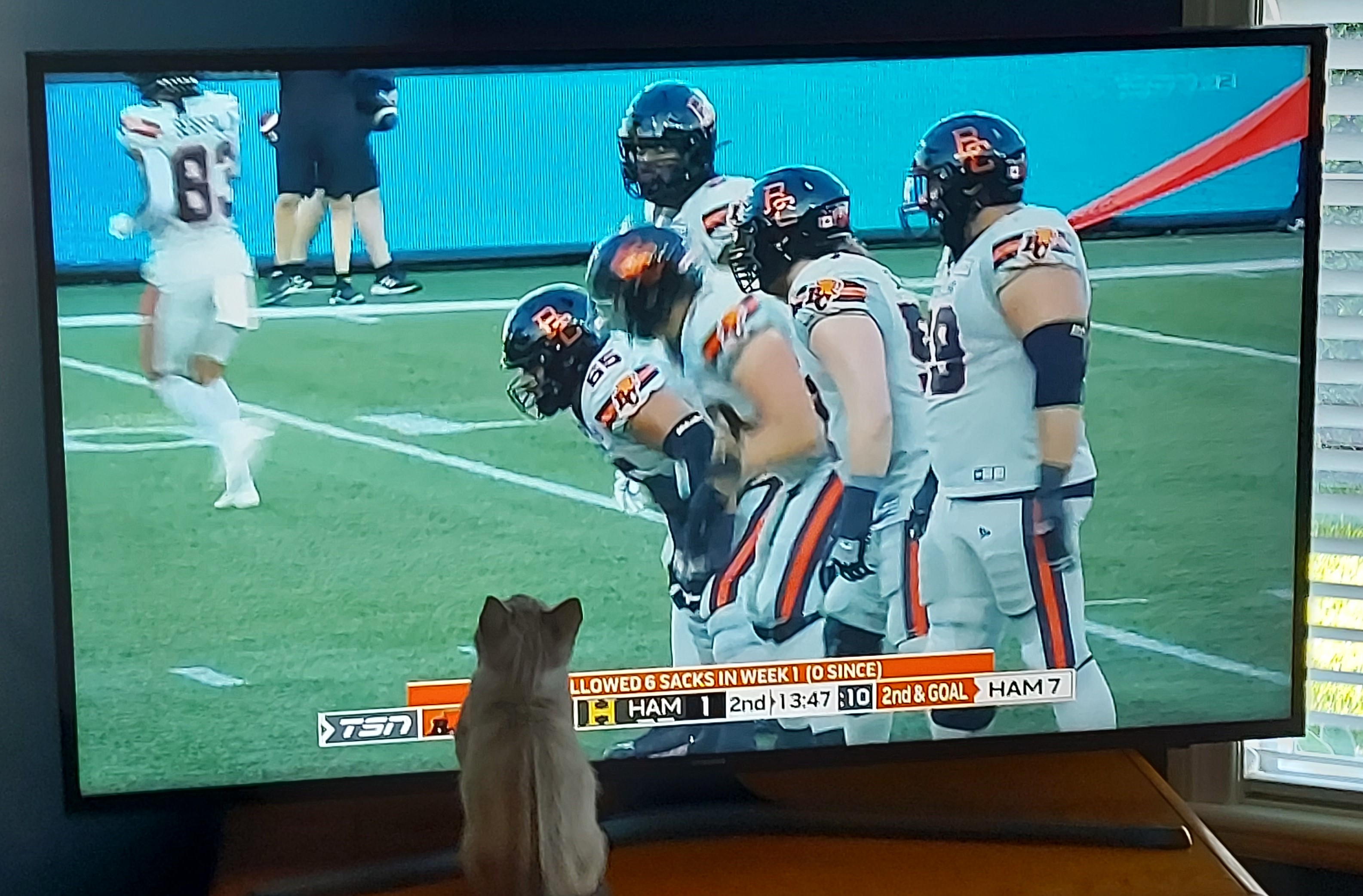
My wife and I bought a kitten.

I am not saying that the world will end tomorrow. (I can’t say for sure. I am not a prophet.) But my wife and I are well into semi-retirement, and the world might well end for us before it does for the kitten.

Don’t worry. I know that the people reading this are now more concerned about the fate of the kitten than you are about the fate of my wife and me. If “something happens to us,” the children have agreed to take over care of the kitten. It is a condition of receiving their inheritance, as small as that is.

The decision to adopt a kitten was a deliberate one. While some seniors have chosen to retreat into quiet and solitude, my wife and I for the most part have chosen to be surrounded by life. We chose to live in a multi-generational townhouse complex. We attend a multi-generational church.

And having a kitten entices the children and grandchildren to visit more. And more.

Pippin is a two-month-old, one-pound ball of fluff—technically a lynx point Siamese kitten. She is tiny, fitting nicely into one hand. We treat her like a baby. We are pleased to report that she is eating well and using the cat box. She has developed a pattern of playing hard for two hours and then then sleeping for two hours. That works well during the day. Not so much at night. It is like having a baby. (I already said that.) We have learned to adjust to a revised sleeping schedule. And I am learning to shuffle my feet like an old man, so as not to step on her. She is fast and silent, creeping up on me like old age.

The kitten gives my wife something to do while I am holed up in my office writing. Each month, I write a variety of blog posts, articles, meditations, and stories, and I offer links to what I have written on social media. Some of the things I write present penetrating insights into the human condition. Some deal with profound theological truths. Some (I hope) have artistic merit. But I have found that the social media links I post about the important things I write receive far less attention and far fewer responses than when I post a photo of a cute kitten.

As a writer, as time goes on, you learn what sells.

Posted in James R. Coggins | Tagged , , , , | 2 Comments

The Joy of Discovery by Nancy J. Farrier

Last week we went to our youngest grandson’s first birthday. The party was held at a park and the kids loved that. There was shade and the weather was perfect. The kids could run and play and they had a great time with new friends.

Our grandson isn’t walking yet, but he enjoyed being set down on the ground. He ran his hands over the blades of grass feeling them tickle his palms. He picked up dirt and sifted it through his fingers. And he loved the inflatable balls his mom had for the kids to play with. His excitement over his gifts made me smile the whole time, especially when he loved his new dinosaur.

Seeing the world through a child’s eyes is fascinating. They are captivated by the simplest of things. Everything in their small world is something new to explore and marvel at. 

In Matthew 18:3,4, Jesus tells his disciples, “…Truly, I say to you, unless you turn and become like children, you will never enter the kingdom of heaven.  Whoever humbles himself like this child is the greatest in the kingdom of heaven.”

I wonder if Jesus admonishment is partly because as adults we’ve lost that sense of wonder in our surroundings or in the small gifts God gives us. We may notice a spectacular sunset, but do we notice the sky when it isn’t unusually pretty? Do we marvel at a line of ants and the way they work in tandem? Do we see everything around in light of being new and something created by God?

Maybe we need to ask God to open our eyes and show us everything anew and then take the time to ponder and glory in His creation. Even just for a few minutes each day can change our attitude and outlook on life.

What about learning as a child? Do we get so focused on life and job and family that we forget to be aware of what God is trying to teach us? 

Deuteronomy 6:6,7 says, “And these words that I command you today shall be on your heart. 7 You shall teach them diligently to your children, and shall talk of them when you sit in your house, and when you walk by the way, and when you lie down, and when you rise.”

I wonder if God instructed the Israelites to teach their young children like this because a child’s mind is so open to learning. They are eager for new concepts and able to retain much more than someone who is older. (Such as this great-grandmother. 🙂 )

It would be beneficial for us, as adults, to set aside some of the responsibilities of life and take time each day to look at what God has done for us. At what He’s given us. 

We need to open our hearts to joy and bask in Him. We should be excited every day to see what God is bringing to us even if it’s something as small as a blade of grass or a handful of dirt. Be joyful in the discovery of every day.

Posted in Nancy J. Farrier | Tagged , , , | Leave a comment

How Did I Get Here & When Can I Leave by Julie Arduini

It wasn’t too long ago I was in the middle of our local township park surrounded by spring flowers, beautiful trees, and small wildlife. Instead of inhaling the fresh air, I wiped a tear off my cheek and headed home.

I used to love nature walks. They brought me peace and were often the place and time God spoke to me. Gave me direction. Encouragement. Conviction.

That recent walk was the latest in a series of misfires where I brought our reactive (barking/high energy) rescue mixed beagle, Milo, and my anxiety escalated with each step.

Here’s what my mind would have on a loop:

Would we have the field to walk in? That was the best option because no one else walked in, giving Milo space to walk without interruption. However, we’ve had a lot of rain so I was usually re-directed to a trail.

Is anyone else on this trail? I tried different times to avoid others. Once Milo barks, he will not stop. I’ve tried it all. It is a physical feat to calm him down, draining me. He’s on the chubby side. I take him because he needs the exercise and most walks, he does well. I feel like a failure when we encounter other people and dogs.

Milo also provides help for me, as I have also found with any walking I do apart from home or church, I am watching my every step for fear of falling. Milo’s leash and his energy give me a grip to hold when he takes on a hill.

Mentally, when I’m fighting the fear I’m going to stumble on a rock (happened), my knee will dislocate (happens easily with me), and I need to leave to assure it won’t happen (that was my last walk), I have to stay for his sake. That last time, I didn’t make the full trail. We’d come across another reactive dog and Milo would not stop barking. I had different shoes on and I tensed with every step.

I used to power walk everywhere.

How did I get to the place of being afraid to take even a step?

Better yet, when can I leave this place of heightened anxiety?

I actually know when it started. It was 2021 and the grief from 2020 and losing my mom left me physically ill because I stuffed all the emotions, something I’m learning I’d been doing most of my life. I went on vacation with my husband and daughter, as well as my sister and nephew. I was convinced I had to make sure they had the best time, and, at our very first pit stop, my ankle slid a little on a slippery WalMart floor. It was all it took for my mind to sound alarms and go on high alert for a knee dislocation.

More than that, all the grief and high expectations layered that panic, and I held up the entire vacation. I could not walk. Everything tensed up. Toes, Ankles. Calves. Thighs. Knees. Back. Arms. It was not a vacation for anyone. I was so obsessed with making sure they would have a great time I created a memory none of us want.

I went to therapy to learn coping skills, and I’m grateful for that. However, the fear came creeping back last year. Milo was a young dog, new to us, and untrained. Additionally I wear progressive glasses that must be perfectly aligned or my vision is all off. It’s only recently I put the two together and realized little by little I let that fear take ownership once again.

So how am I dealing with it?

Sadly, I haven’t been to the park. I’ve instead done stair work and play with him at home while I work on my own exercise program. I’ve added balance to my routine to help me when I’m walking.

I bought better shoes. They are basically hiking shoes so the tread is good. They also protect my ankle. I wear them when I’m in a new terrain. When I feel protected, my confidence grows.

Speaking of protection…I make sure I pray the Armor of God from Ephesians 6. Where am I without the shoes of peace? When I walk on a pebble lot, I whisper one word per step from a verse I find encouraging. My go-to?

I can do all things through Christ who strengthens me. Philippians 4:13, NKJV

I believe sharing with my eye doctor will help as well. But overall, I must hand over every feeling, every scenario to God who knows me best. That’s how I get out. I take every thought to Him. I want off this anxious hamster wheel. I want to enjoy His creation.

And I believe soon I will again.

Posted in Julie Arduini | Tagged , , , , , , , , , | 3 Comments

The Priestly Benediction Prayer

The Priestly Benediction Amulet is another key proof of Israel’s long ownership of the land. Five hundred years older than the Dead Sea Scrolls, it was found in 1979 in the Valley of Hinnom between Old City Jerusalem and the Mount of Olives by a team led by Israeli archaeologist, Gariel Barkay. They had tossed the small item aside thinking it of no consequence when a young boy standing by asked, “Mister, are you sure this isn’t something?”

It resembled the wadded up aluminum foil wrapper holding a piece of gum. Barkay realized the rolled up piece was pure silver. It took special treatment and great care to unroll it, and divine wisdom to decipher the words written in ancient Hebrew, all consonants with no vowels.

One phrase clearly repeated three times. An aged rabbi recognized the sequence as Numbers 6:24-26, the earliest Bible passage found in ancient artifacts—

24 The Lord bless thee, and keep thee: 25 The Lord make his face shine upon thee, and be gracious unto thee: 26 The Lord lift up his countenance upon thee, and give thee peace.

The original is in The Israel Museum, next to the Shrine of the Book holding the Dead Sea Scrolls. It’s possible to buy museum-approved replicas. The photo above shows mine.

In other news, here’s a first. My Minnesota dentist always buys my books. Yesterday, he bought his copy of A Traveling Grandma’s Guide to Israel and showed it to his new partner who is Jewish. That dentist took time to look through it while I was still there. He came and found me and thanked me for writing a book so positive about Israel and its people, though I clearly emphasize the Christian aspects built on Jewish foundations. We had a great conversation. I’ll look for him each time I go. I’m very happy that he was so pleased. May that happen often! If you’ve read it, feel free to show it to Jewish friends. And thanks for posting those important Customer Reviews on Amazon.com.

Posted in Uncategorized | Tagged , , , , , , | Leave a comment

James the Jewish Christian by James R. Coggins

When the apostle Paul was converted, likely only a couple of years after Jesus’ resurrection, he stayed in Damascus for a while. In Galatians 1:18-19, Paul related what happened next: “Then after three years, I went up to Jerusalem to get acquainted with Cephas [that is, Peter] and stayed with him fifteen days. I saw none of the other apostles—only James, the Lord’s brother” (NIV). Already, within perhaps five years of Jesus’ resurrection, James was a leader in the Jerusalem church.

Acts 12 tells the story of Peter being imprisoned and being miraculously released by God’s angels. Peter then left Jerusalem to hide out elsewhere, but, before he left, he gave this message to a group of believers who had been praying for him: “Tell James and the other brothers and sisters about this” (Acts 12:17). This “James” was most likely Jesus’ brother since James, the son of Zebedee, had already been martyred (Acts 12:2). With Peter’s departure, James seems to have assumed Peter’s role as the primary leader in the Jerusalem church.

A few years later, some Jewish Christians from Jerusalem were telling the new gentile Christians in Antioch that they needed to be circumcised. This resulted in church leaders from both places assembling in Jerusalem (Acts 15:1-30). Peter, based on his own experience with gentile Christians, spoke in favor of not forcing gentiles to be circumcised. Paul and Barnabas reported on what had been happening in Antioch. And then James issued his “judgement” (krino in Greek) that the gentiles should be required to only follow a few Jewish laws and not be circumcised. James’s recommendation was accepted by the other leaders and formed the basis for a formal latter that was sent to the gentile churches. This all suggests that James was the primary leader of the Jerusalem church.

This does not mean that James could not be challenged. James was the perceived leader of the church in Jerusalem and of the “Jewish faction” in the Christian church elsewhere. Galatians 2 describes another visit of Paul to Jerusalem, probably about 52 AD, between Paul’s second and third missionary journeys: “Then after fourteen years, I went up again to Jerusalem, this time with Barnabas. I took Titus along also.…Meeting privately with those esteemed as leaders, I presented to them the gospel that I preach among the Gentiles.” Paul wanted these leaders to examine what he was preaching to make sure he was on the right track. However, “not even Titus, who was with me, was compelled to be circumcised, even though he was a Greek.” Paul explained that this issue “arose because some false believers had infiltrated our ranks” demanding that gentile Christians obey all of the Old Testament rules. Paul strongly opposed these requirements. In response, “those who were held in high esteem…recognized that I had been entrusted with the task of preaching the gospel to the uncircumcised, just as Peter had been to the circumcised” and “James, Cephas and John, those esteemed as pillars, gave me and Barnabas the right hand of fellowship.” (In an aside, Paul said that these esteemed leaders had no authority of their own, but that they, Paul, and other Christians were all equal before God.) In this same passage, Paul described another incident: “When Cephas came to Antioch, I opposed him to his face, because he stood condemned. For before certain men came from James, he used to eat with the Gentiles. But when they arrived, he began to draw back and separate himself from the Gentiles because he was afraid of those who belonged to the circumcision group. The other Jews joined him in his hypocrisy, so that by their hypocrisy even Barnabas was led astray.” Paul rebuked these Jewish Christians and church leaders, pointing out that “they were not acting in line with the truth of the gospel” and that “a person is not justified by the works of the law, but by faith in Jesus Christ.”

These issues were apparently sorted out. Acts 21 describes Paul’s final visit to Jerusalem, about 59 AD: “The next day Paul and the rest of us went to see James, and all the elders were present. When we arrived at Jerusalem, the brothers and sisters received us warmly. The next day Paul and the rest of us went to see James, and all the elders were present. Paul greeted them and reported in detail what God had done among the Gentiles through his ministry. When they heard this, they praised God.” However, James and the other leaders told Paul about a problem: “Many thousands of Jews have believed [in Jesus], and all of them are zealous for the law. They have been informed that you teach all the Jews who live among the Gentiles to turn away from Moses, telling them not to circumcise their children or live according to our customs.” The Jewish Christians, following James’s advice, had accepted that gentile Christians did not need to follow the Old Testament law, but they were convinced that Jewish Christians should still obey it. Therefore, they suggested that Paul should participate in some temple rituals to show that he still followed the law. Paul did this, but some Jews (not Christian Jews) misunderstood what Paul was doing and thought he had brought gentiles into the Jewish part of the temple. Paul was arrested and eventually sent as a prisoner to Rome.

What are we to make of all of this? This does not mean that James was wrong. Well, he was clearly wrong in giving some support to the idea that gentile Christians needed to be circumcised. But all of the Christian leaders were still sorting through how Christians should relate to the Old Testament, and James was not alone in making some mistakes on this issue. This does not mean that James was not a Christian. He clearly was. But his mindset was clearly influenced by Jewish tradition, and he emphasized different aspects of Christian theology than Paul and some other early Christian leaders. When we come to James’s letter, which was addressed to “the twelve tribes scattered among the nations” (James 1:1), we should recognize that it seems to be addressed primarily to Jewish Christians, and that will have some bearing on how we understand his message.

Posted in James R. Coggins | Tagged , , | 2 Comments

Why Amazon is a Threat to Human Rights by James R. Coggins

Among the fundamental human rights are freedom of thought and freedom of expression. The first demands the second. There is not much point in having freedom of thought if you can’t express your thoughts.

Thoughts are expressed in many ways. You can speak those thoughts in person, to a single individual or to a large crowd. You can broadcast your thoughts on radio, TV, YouTube, or some other social network. You can portray thoughts in dramatic form through stage plays, movies, and TV shows. You can express your thoughts in print, through letters, newspapers, magazines, blog posts, and books.

And this is where Amazon comes in. Amazon’s clear goal is to dominate online retailing. It has largely succeeded in this and is becoming more dominant all the time. Amazon has 310 million subscribers with $1.4 billion in sales every day.

Amazon began by selling books, and books are where Amazon becomes a threat to human rights. About 50 million books are bought in Canada every year, and over half of those are bought online. And Amazon is by far the largest online retailer in Canada, with over 40% of the total market.

I feel this acutely because I write and publish books, and I live and write in Canada, primarily for a Canadian audience. Amazon is so dominant that many bookstores have gone out of business. If you want to sell books in Canada, you have to be on Amazon. You might be able to sell books through Indigo (formerly Chapters and Coles) or Barnes & Noble (which sells online in Canada through its US website, but has almost no profile in Canada), but they might not stock those books.

Through my Mill Lake Books imprint, I have published over two dozen books, a few of which I have written myself. They are printed through IngramSpark, a print-on-demand publisher in the US, and distributed through Ingram, one of the largest book distributors in the world, particularly of Christian books. One of the great advantages is that all Ingram books are automatically listed with online retailers such as Amazon and are available for order from thousands of bookstores.

Well, maybe not automatically. My latest book, Too Many Deaths, was released last November, and I began promoting it, specifically mentioning that it could be purchased through Amazon. I was therefore puzzled when it was not selling. I checked online and discovered that the book could be purchased from Amazon in the US (but couldn’t be shipped from there to Canada). Amazon.ca, the Canadian branch of Amazon, listed it for sale but said it was “currently unavailable.” The book was available, but some glitch had occurred, and the book’s availability listing was incorrect.

And nothing could be done about it. IngramSpark’s efforts to resolve the situation achieved nothing. I tried in vain to contact Amazon, but Amazon is such a massive beast that it is essentially unresponsive. I was shuffled from one department to another—to customer service, to seller services (I am not the seller; Ingram is), to Kindle Direct Publishing (Amazon’s own print-on-demand publisher, which competes with IngramSpark). Amazon is simply too big to care.

The result is that I had put a great deal of effort into publishing a book that I could not sell. I am not suggesting that Amazon was censoring or blacklisting my book. Amazon does not seem to have any moral sense; it seems willing to sell anything that can return a profit. The problem was simply a glitch in the computer systems. In the end, I was forced to republish the book through Amazon’s Kindle Direct Publishing. The book is now available for sale in Canada, but the customer has to search hard for the correct price ($17.99 in Canada, $12.99 in the US). Amazon.ca is so convoluted that the primary seller listed is often not Amazon itself or IngramSpark but some secondary retailer, in Europe or somewhere else, which offers the book at a very large markup. The customer pays an inflated price, but I, as the author and publisher, receive only the same small royalty.

The reality is ominous. Amazon, like any monopoly, has become so dominant that it has the ability to determine which books are available for purchase. Our freedom of expression exists only to the extent that Amazon allows it.

Posted in James R. Coggins | Tagged , , , , , , , , | Leave a comment

Agents of Light

Recently, I was talking about my latest release, The Last to Know, and the question came up about how I personally dealt with writing dark subjects such as the villain in the book. The Last to Know features a team of Behavioral Analysis Unit agents working with the FBI to take down a serial killer known as the Embalmer.

When I write a thriller such as The Last to Know, the darkness that is featured there is only part of the story. There’s so much more. As Christians, we are called to be the light of the world. And I think our light shines the brightest when we are facing down the darkness.

I love the idea of taking something truly dark and scary like the Embalmer character and pitting him against agents of the light. And I do see the agents of the Behavioral Analysis Unit as agents of light.

After researching the BAU and writing two books that feature the unit, I have a whole new appreciation for those who do this type of work daily. Imagine this is your job; to look into the mind of a killer and try to understand what makes him or her tick? It would be so easy to burn out if not develop a defeatist attitude when it feels like you’re fighting a losing battle. So, my hats off to all those who work tirelessly to push back the darkness. 

As an author, before I even write the first word, I know who is going to win.   

Just like we as Christians know how the story ultimately ends and who wins.

Knowing this helps us follow Matthew 5:14-16 when it says,

Ye are the light of the world. A city that is set on an hill cannot be hid.

Neither do men light a candle, and put it under a bushel, but on a candlestick; and it giveth light unto all that are in the house.

Let your light so shine before men, that they may see your good works, and glorify your Father which is in heaven.

Unlike fiction, we don’t always know how our story ends here on earth, but we do know who holds it in the palm of His hand and will help us face whatever darkness comes our way head on.

So, when you are facing down the darkness of the world, know that The Light of The World stands with you every step along the way. The battle is over. He has defeated death and darkness. We just have to do our part as agents of light and let your lights shine!

Mary

http://www.maryalford.net

Posted in Uncategorized | Leave a comment

Holidays and Jeeps by Tara Randel

Happy Memorial Day. Today we honor those who served our country. Some paid the highest price to keep our country free. We thank them and all those who choose to serve in the US military today.

Long weekends are a great time to get out and have some fun. At our house, we turn to Jeeps. Yes, we load up the Jeep and haul it to the forest where we ride in the dust, mud, and beautiful trails. You might say, I don’t see the fun in that. Let me assure you, it’s an adventure.

While I don’t drive, I am a very enthusiastic passenger. Really, going on a drive through the woods is beautiful. We pass different scenery, all in one trip. There are carve outs for the more daring drivers, and lazy trails that take us through the trees. There’s always something new to view, like driving through a woody area to end up in a meadow.

Here are a few pictures I managed to snap on our journey.

I hope you have a wonderful holiday as we kick off the summer season. There are so many wonderful places to visit, so get out there and explore this summer!

Tara Randel is an award-winning, USA Today bestselling author. Family values, a bit of mystery and of course, love and romance, are her favorite themes, because she believes love is the greatest gift of all. For more information about her books, visit Tara at www.tararandel.com. Like her on Facebook at http://www.facebook.com/TaraRandelBooksSign up for Tara’s Newsletter.

Posted in Tara Randel | Tagged , , , , , | Leave a comment

Maria’s Muses Book Blitz Where Every Post is a Giveaway by Julie Arduini

The author’s life is often a lonely one where victories are few. Books often take hundreds of hours to write, edit, revise, format, publish and market. It’s not for the weak!

When authors can gather around and encourage each other, it’s special. One author who is so good at this is Maria T. Henriksen. She is the author of the Not Again series, an edgy Christian Coming-of-Age story. She created monthly game nights that I have enjoyed participating in and even hosting. She has regular events to join authors and readers together.

Tomorrow is a big event and it’s celebrating Maria’s group, Maria’s Muses 5th anniversary. From 10-10 Eastern every single post is a giveaway.

Did you read that?

Every. Single. Post.

There are softcover book giveaways, Kindle book giveaways, swag, and $10 Amazon gift cards. Many authors are participating from various genres.

I’m really excited to be participating. Look for me at Maria’s Muses under #ArduiniBlitz. I hope to see you there!

The giveaways are in no way sponsored by FB or Maria’s Muses.

Posted in Julie Arduini | Tagged , , , , , | Leave a comment

What Goes Wrong?

I volunteer with Advocates for Freedom, and every morning I receive a text with the names of three missing teenagers to pray for. Some of them have been gone only days, but some have been gone months, even years. The youngest has been eleven, but most are teenagers. And most are girls.

It breaks my heart to read about these teens each morning. Teens with names like Beautiful, Heaven, Miracle, Precious, Ella Celeste…and the names go on. These are names parents prayed over and thought about for a long time–they didn’t just slap a name on their baby. Unfortunately, somewhere along the way, something went wrong. Either a child ran away or the unthinkable happened and human trafficking is involved.

Until 2017, I knew little about human trafficking, but that all changed when a member of Advocates For Freedom spoke at my church in North Mississippi. As I listened to her talk about the horrors of human trafficking, I knew I had to write about it. At the time I had started working on the first book in my Memphis Cold Case Novels, Justice Delayed. In that book, I laid the groundwork for Justice Delivered, the story of a woman who escaped her captors and is working hard on building a new life. It is the most emotionally difficult book I’ve written.

The more I researched, the harder the book was to write. By this time I was receiving the daily list of teens to pray for and learning that many were runaways. Human traffickers often lurk at bus stops, and lure young girls who’ve run away from home. My prayer always is that the teens will find Jesus, and that there will be someone, like the women in Atlanta who offer coffee on cold winter nights to those who are caught up in the web of prostitution. More than one girl has been rescued from the streets by these dedicated women.

What’s so sad is that human trafficking is almost impossible to stamp out–it’s too profitable. In 2004, it was estimated human trafficking generated $150 billion dollars. In 2022, profits from modern slavery generated $245 billion a year.

What’s the answer? The only answer can be God. He’s the only one Who can change hearts, and that’s my prayer each morning for the dealers of human trafficking — that they will come to know Jesus as well and that their hearts are changed.

Please join with me in praying for victims of human trafficking. I can’t help find them, but I can pray for them. And pray for those who perpetrate it as well.

Posted in Uncategorized | 7 Comments

The Book of James by James R. Coggins

The book of James was written by “James, a servant of God and of the Lord Jesus Christ” (James 1:1) This is most likely James, the brother of Jesus. It is remarkable that he describes himself simply as “a servant of God and of the Lord Jesus Christ” (James 1:1), without mentioning the relationship. He could have played up the relationship to bolster his own status, but he did not. By this time, he must have realized that Jesus was not like him—Jesus did not have the same DNA, but was the Son of God.

Matthew 13:55 contains a description of the family offered by some local Jews: “Isn’t this the carpenter’s son? Isn’t his mother’s name Mary, and aren’t his brothers James, Joseph, Simon and Judas?” So, Jesus apparently had at least four brothers and perhaps some sisters. It is likely that Joseph (the father) had died by then and Jesus would have been head of the family.

James had an up and down relationship with his older brother. At first, he and the rest of the family were quite supportive, even proud, of their sibling. They were part of Jesus’ entourage. John 2:12 says, “After this he went down to Capernaum with his mother and brothers and his disciples. There they stayed for a few days.”

Later on, John 7:1-4 says, “After this, Jesus went around in Galilee. He did not want to go about in Judea because the Jewish leaders there were looking for a way to kill him. But when the Jewish Festival of Tabernacles was near, Jesus’ brothers said to him, ‘Leave Galilee and go to Judea, so that your disciples there may see the works you do. No one who wants to become a public figure acts in secret. Since you are doing these things, show yourself to the world.’” This suggests that the brothers were encouraging Jesus in His ministry and perhaps even telling Him how to do it, urging Him to get on with it. But the next verse, John 7:5, suggests that doubts and criticisms were starting to creep in: “For even his own brothers did not believe in him.” They did not believe/trust that Jesus knew what He was doing and wanted Him to do things their way. Perhaps, like many of Jesus’ other followers, they were hoping Jesus would lead an armed rebellion against Rome and restore the Kingdom of Judah—and grant them important posts in the new regime. Jesus told His brothers to go to the festival without Him, saying, “My time has not yet fully come” (John 7:8). Jesus did follow them to the festival but secretly (John 7:10-11).

As time went on, the doubts Jesus’ family had about Him grew. Mark 3:20-21 says, “Then Jesus entered a house, and again a crowd gathered, so that he and his disciples were not even able to eat. When his family heard about this, they went to take charge of him, for they said, ‘He is out of his mind.’” This was only a slightly better assessment than that of the teachers of the law, who were convinced Jesus was possessed by Satan (Mark 3:22). Jesus, however, rejected His family’s intervention: “Then Jesus’ mother and brothers arrived. Standing outside, they sent someone in to call him. A crowd was sitting around him, and they told him, ‘Your mother and brothers are outside looking for you.’ ‘Who are my mother and my brothers?’ he asked. Then he looked at those seated in a circle around him and said, ‘Here are my mother and my brothers! Whoever does God’s will is my brother and sister and mother’” (Mark 3:31-35). After this, Jesus seems to have been estranged from His family, for they are not mentioned. Jesus’ mother Mary was present at His crucifixion, but his brothers apparently were not. Jesus had to pass on responsibility for caring for His mother to John, one of His followers (John 19:26-27).

However, at some point something changed. In describing Jesus’ resurrection, Paul said in 1 Corinthians 15:7, “Then he appeared to James, then to all the apostles.” This suggests that Jesus appeared to His brother James after His resurrection, turning James from a skeptic to a believer. In any case, James was soon a leader in the Jerusalem church.

The death and resurrection of Jesus changes things. It especially changes people.

Posted in James R. Coggins | Tagged , | Leave a comment

Coals of Fire by Nancy J. Farrier

Photo by Andrey Andreyev on Unsplash

I needed new glasses so I went to an optical department—a busy place where I had to scan a QR code to get a place in line. As I waited for my turn, I observed the people who were working and their interactions with the customers. There were eight different customer service people working that counter—a busy place. 

At least one person got tired of waiting, grumbled at me about the time, and left. The workers were doing their best but the wait was long. As I watched the people working, there was one woman who was very brisk and from where I stood, didn’t seem to have a congenial manner. I didn’t say anything but internally thought, Please don’t let me get that woman.

Of course, God in His wisdom had that very person call my number. With no choice, I pasted on a smile and hoped the interaction would be quick anyway. 

I approached the counter and held up my phone to show her my number. This woman I had deemed to be less than congenial, smiled at me and said, “Your earrings are so beautiful. They look great on you.”

She went on to be the nicest person who’d helped me in a long time. I explained I wanted glasses similar to what I was wearing. She took me to the case of glasses, picked out a pair, and they were perfect.

My prior negative thought and judgement against her burned deep within and I prayed for God’s forgiveness. I was reminded of the following advice in Proverbs.

“If your enemy is hungry, give him bread to eat; And if he is thirsty, give him water to drink; For so you will heap coals of fire on his head, And the Lord will reward you.” Proverbs 25: 21-22

In Biblical days, when people traveled, they carried hot coals in a box on their head so they would be able to start a fire for cooking and warmth when they stopped for the night. Heaping coals of fire on someone’s head was a good thing because you were giving them a way to provide for themselves. You were helping them—helping the enemy in this case.

Although the worker didn’t realize it, I was her enemy at this point. My judgmental thought about her character made me that. When she was so kind to me, I realized the disservice I had done for her. As a Christian, I am called to love others, not to look at them critically and harshly. I am called to love as God loves.

I realized I had much to repent. This harried woman, who was dealing with people who had a long wait and possibly were frustrated, showed me nothing but kindness. I don’t know how I saw her otherwise. I was in the wrong and needed this lesson.

When the woman finished my order, she insisted on taking my old glasses and replacing the nose pieces which kept falling out. She put in new pieces and cleaned the lenses for me. I thanked her profusely, leaving with a thankfulness to God for allowing me to learn this painful lesson, and for placing this kind soul in my path.

My prayer for you this week, is that you consider those you come in contact with in light of God’s love. May we all look at others through the filter of God’s love, even when we’re standing in line and frustrated. Maybe we can find an opportunity to “heap coals of fire”  on someone and make their day a little better.

Posted in Nancy J. Farrier | Tagged , , | Leave a comment

Living the Gospel by James R. Coggins

David was one of the most learned theologians I have had the privilege of knowing. He was a seminary professor and a Bible college president. He wrote a number of learned but readable books. He was a member of various denominational faith and life boards. When a particularly difficult theological issue arose, it was fascinating to watch the rest of the board automatically turn and look to David to provide the answer.

David was also a man of great integrity. He did the work to earn a doctorate in Old Testament studies, but when the divinity school insisted he change the contents of his dissertation to suit the school’s more liberal theology, he refused and walked away. He started over and earned a doctorate in New Testament studies from another university. He was once asked to join a group of scholars working on a new translation of the Bible but refused when he found out the translators would be housed in a hotel in Hawaii while they did their work. He did not believe it was possible to properly translate the Bible while living in a luxury hotel.

What was less well known was that David had a keen sense of humor, which only came into view in private settings. One of the stories he told in such settings concerned a famous and highly regarded theologian whom David had studied under. The students one day asked this professor what he did just before he went on stage to preach. They were expecting a devout and profoundly theological answer. His answer was, “I check my fly.” He knew that an open fly would distract attention from whatever theological truths he was about to preach.

I have often thought of that story. Looking over the North American church in the last few decades and considering the many scandals that have marred that history, I wish that, before undertaking public ministry, many more preachers had “checked their fly.” It is far too easy for sinful human beings to focus their attention on lofty theological, ecclesiastical, and philosophical concepts and forget that the gospel needs to be put into practice in everyday human life, with all of its mundane aspects and earthly temptations. The most profound theological constructs will fall on deaf ears if they are not backed up by practical integrity.

Posted in James R. Coggins | Tagged , , , , , | Leave a comment