
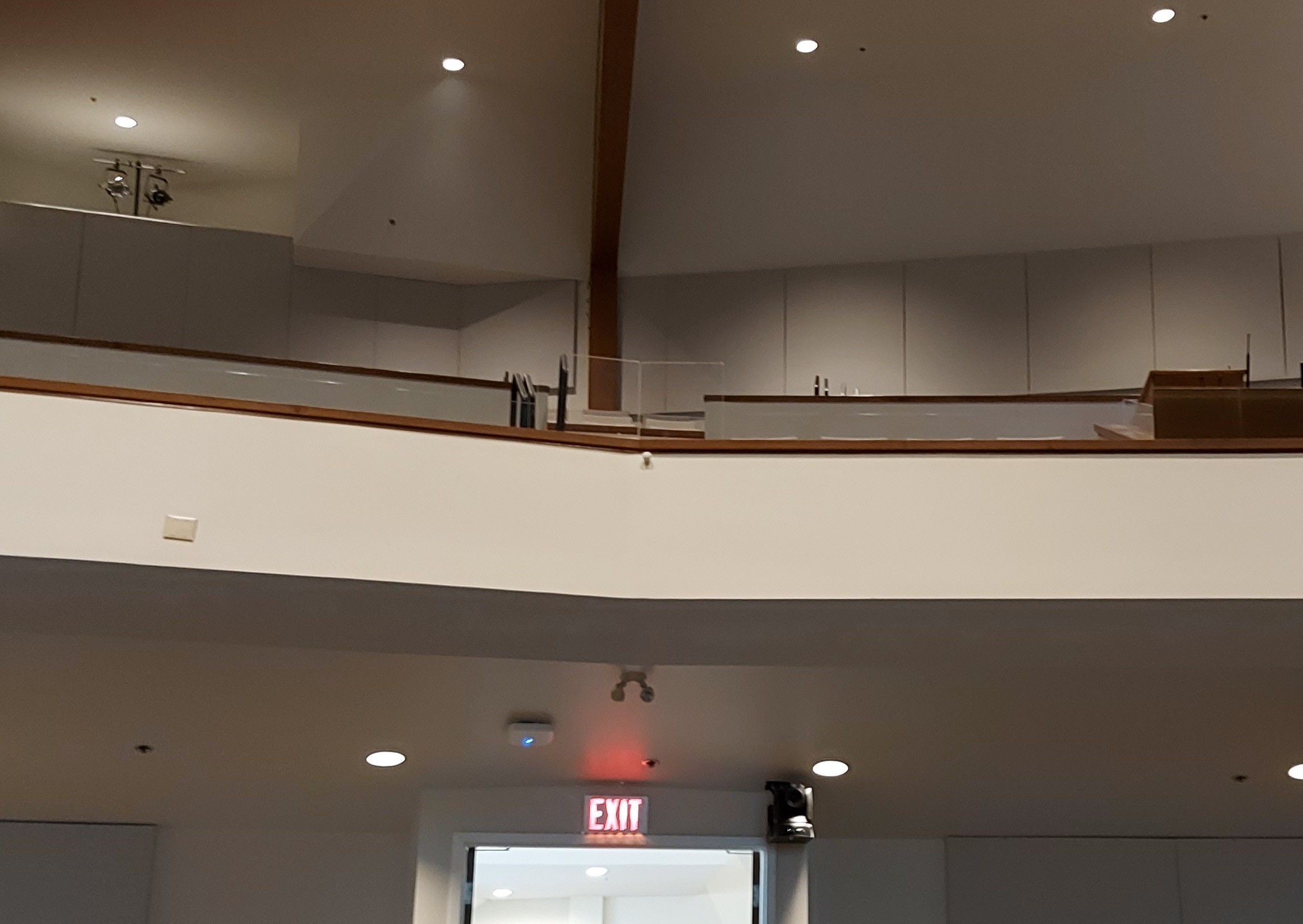
Some years ago, my family and I attended a fairly large church. Sunday attendance ranged from 1,400 to 2,000 people, which necessitated two Sunday morning services. Our family’s practice was to attend the first service and then Sunday school. There was a very vibrant adult Sunday school, where a lot of the fellowship took place. It was impossible to have close fellowship with a thousand people, but much easier to have fellowship with sixty.
The complication was that my wife was in the choir, which sang and led worship during the first half of both Sunday morning services, and this forced an adjustment to our routine. We would go to the first service and Sunday school, and then I would drive the children home, which was just a few blocks away. Then, I would return to church so I could pick up my wife when she was finished singing. I would usually get back about the time the second service started. Rather than sit in the main congregation and be a distraction by leaving in the middle of the service, I would go and sit in the balcony, from which I could exit more unobtrusively.
This is where I came to know about the balcony people. They were quite different from the main congregation. Many of them would come in during the first song and leave during the closing song at the end of the service, leaving little opportunity to talk with anyone else. Many, especially those at the back of the balcony, would not sing at all and would often remain sitting during the entire service.
In time, I came to understand that many of these attenders were troubled people. Some had been hurt by the church or by a death, a failure, or a broken relationship and were deeply grieving. Some were unsure, carefully and anonymously checking out this “church thing.” Some seemed uncertain that they would be welcome in the main body of the church due to their guilt, shame, social status, attire, or lack of social graces.
I am reminded that there were peripheral people in the New Testament too—Zacchaeus, who hid in a tree to watch Jesus pass by; Nicodemus, who came to Jesus by night; the woman who secretly touched Jesus’ clothing in search of healing (Mark 5:25-34); the pagan woman who begged for her daughter’s healing like a dog begging for crumbs under a table (Mark 7:24-30); the centurion who asked for healing for his servant but did not think he deserved to have Jesus come under his roof (Luke 7:1-10); the nameless, sinful woman, not invited to the meal, who quietly washed Jesus’ feet (Luke 7:36-50); the tax collector who stood at a distance and would not even look up to heaven, but beat his breast and cried, “God, have mercy on me, a sinner” (Luke 18:13).
It is difficult to minister to balcony people. If they were approached directly, they would most likely flee in terror. And yet, I saw these same people came week after week. Despite all of their burdens, their insecurities, their doubts, and their fears, they felt irresistibly drawn to Jesus. Somehow, they knew that He had the answers.





























 Christians Read