

In an earlier blog, I wrote about the great movements that shaped Western civilization and thus the modern world—the Renaissance and Enlightenment with their emphasis on reason, science, and the pre-eminence of humanity, on the one hand, and the Romantic movement, with its emphasis on emotion and nature.
In this blog, I will explore some of the parallels and interconnections between these great movements and Christian churches.
In the Middle Ages (400-1500), the Roman Catholic Church dominated the religious life of Western Europe. That church experienced considerable development and considerable diversity throughout that period. It was far different from the early church and even quite different from the Roman Catholic Church today. Like the society around it, the medieval church often abounded in ignorance (even some priests were illiterate) and superstition. There was a great reliance on magic, ritual, relics, and prayers to saints.
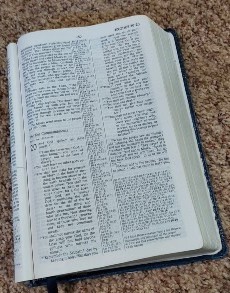
The Protestant Reformation began in 1517 shortly after the Renaissance rediscovery of ancient Greek and Roman culture with its emphasis on reason, science, and human realism. The Reformation was both a child of the Renaissance and sometimes a protest against it. Martin Luther’s emphasis on sola scriptura (the Bible alone) is, after all, an emphasis on a book and the study of that book, which requires education. As Renaissance humanists sought to rediscover the ancient Greek and Roman classics, so Protestant Reformers sought out ancient copies of the Bible to find the most accurate Hebrew and Greek texts (instead of relying on the Latin translation of those texts) and to translate them accurately into modern languages. It is no accident that when Martin Luther famously took his stand against the Roman Catholic Church, he stated that he would not change his mind “unless I am convinced by the testimony of the Scriptures and by clear reason.” Protestant Reformers often used reason to discredit medieval belief in the power of relics to perform miracles and other superstitious beliefs. They stated that the Lord’s Supper was a simple reminder of Jesus’ death on the cross, rather than a supernatural event in which bread and wine transformed into the actual body and blood of Jesus. Protestantism produced notable Bible scholars. It is also no accident that many of the early scientists were devout Protestants. The connections between the Renaissance and the Protestant Reformation are profound.
Many Christians believe that the division between Roman Catholics and Protestants in the Reformation of the 1500s was the last major development in Western church history. But history does not stand still.
The emphasis on reason in Protestant churches continued to grow. Not only did Protestants discredit the power of relics, rituals, and prayers to saints, but many came to believe that miracles, supernatural interventions of God, no longer take place. They began to doubt whether God is active at all in human history. The early Protestants used study and reason to find the most accurate copy of the Bible. Later Protestants in the 1800s used the same approach to analyze the Bible itself. Their “higher criticism” broke the Bible down into fragments until there was nothing left but dust, which quicky blew away. Dispensing with the Bible and God, they clung to reason and its children, psychology and sociology. These “mainstream” Protestant churches (Anglican, Lutheran, United, etc.) are now in great decline, demonstrating that a religion solely based on reason is a dead end.
But that was not the end. The evangelical revivals, occurring about the same time as the rise of the Enlightenment, preserved trust in the Bible. Evangelicals are often considered Protestants (that is, non-Roman Catholics), but the differences between Protestantism and evangelicalism are as great as the differences between Protestantism and Roman Catholicism. (For instance, the difference between infant baptism and believer’s baptism is profound.)
And even that was not the end. There are also parallels and connections between the Romantic movement and church history. The charismatic/Pentecostal movement has echoes of Romanticism with its emphasis on experience and feeling rather than reason. While evangelicals stress, “The Bible says…”, charismatics say, “I think” or “I believe” or “I feel”—often disguised as “God told me…” or “the Holy Spirit says…” or “I dreamed…”
Of course, I have been writing about broad movements, not individuals. The Protestant and evangelical emphasis on the Bible is not solely about reason and the mind. When Martin Luther’s study of the Bible led him to understand that he was sinner saved by faith alone, it brought about a profound and heartfelt transformation of his life. John Wesley launched the evangelical movement when he was listening to the reading of one of Luther’s commentaries and felt his heart “strangely warmed.” Evangelical revivals, with repentant sinners falling on their knees in an alter call, are hardly examples of the triumph of reason. They are a product of both teaching (reason) and conviction/commitment (emotion).
I believe in the Bible. It is the record of God’s interaction with human beings and His revelation of His character and His will. It is to be studied with care and reason, but we must go beyond that. That study must lead to a heartfelt commitment to follow the Jesus of the Bible. Jesus said that the first and greatest commandment is to “Love the Lord your God with all your heart and with all your soul and with all your mind” (Matthew 22:37 NIV).





























 Christians Read