
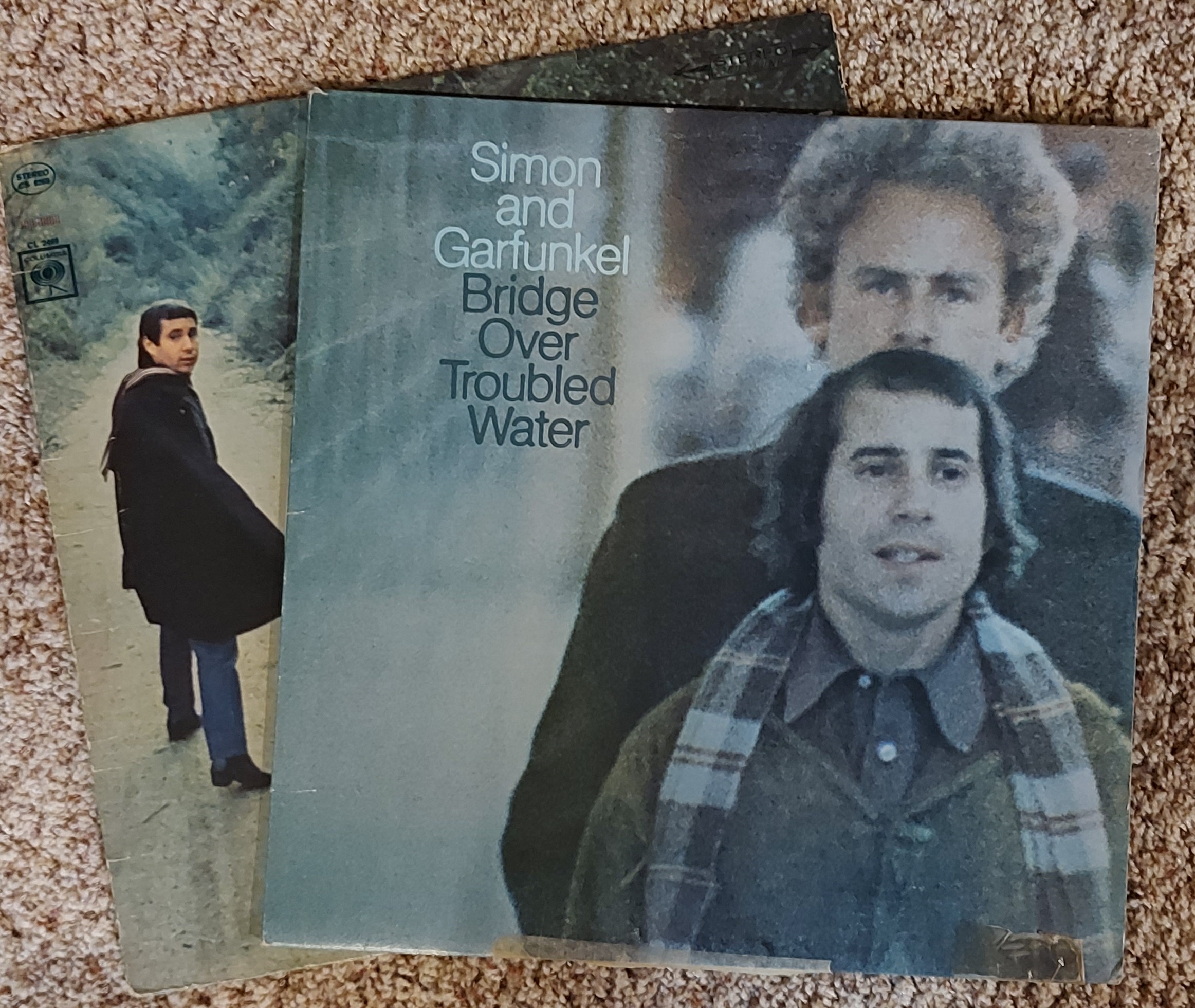
I discovered the music of Paul Simon and Art Garfunkel when I was in university, and I was deeply impressed, particularly by the lyrics, most of which were written by Paul Simon.
As the years have gone on, I have remained impressed. Paul Simon’s songs offer a deep understanding of the brokenness of the world, even if they offer few solutions.
More recently, I noticed how often Simon’s songs mention poetry. This might have been one reason the songs first resonated with me because at the time I was studying English literature and poetry. Here are some examples from Simon’s lyrics:
• “She faded in the night like a poem I meant to write” (“Leaves That Are Green,” 1965).
• “You read your Emily Dickenson and I my Robert Frost” (“The Dangling Conversation”).
• “Every stop is neatly planned for a poet and a one-man band” (“Homeward Bound,” 1966).
• “The poet reads his crooked rhyme” (“Bleecker Street”).
• “I have my books and my poetry to protect me” (“I Am a Rock,” 1965).
• “The crayon on the wall he slashes…a single-worded poem comprised of four letters, and his heart is laughing, screaming, pounding, the poem across the tracks rebounding” (“A Poem on the Underground Wall”).
• A similar idea is presented in “The Sound of Silence” (1964): “And the sign flashed out its warning in the words that it was forming, and the sign said, ‘The words of the prophets are written on subway walls and tenement halls.’”
• The song “Richard Cory” is a rewriting of a poem by Edwin Arlington Robinson.
I doubt that many modern songwriters are as familiar with poetry as Simon is. Why the interest in poetry? I think it is partly because, for Paul Simon the songwriter, the lyrics mattered, the message mattered.
I am a writer, and I agree.
It is significant that Simon earned a university degree in English. With YouTube turning teenagers into celebrities, some modern songwriters are high school dropouts.
In my estimation, too many modern songs are admired because of the instrumental music, the pyrotechnical display (in a live concert), the music video (onscreen), or the gyrations and image of the singer (shirtless men and scantily clad women seem to have become the norm)—everything but the lyrics. The words, all ten of them, are repeated over and over (as well as a lot of “Ahs,” “Ohs,” “Oohs,” and “Yeahs”). The words don’t matter.
Words do matter, and that is why I think Paul Simon’s music will endure long after many other songs have been forgotten.



























 Christians Read