
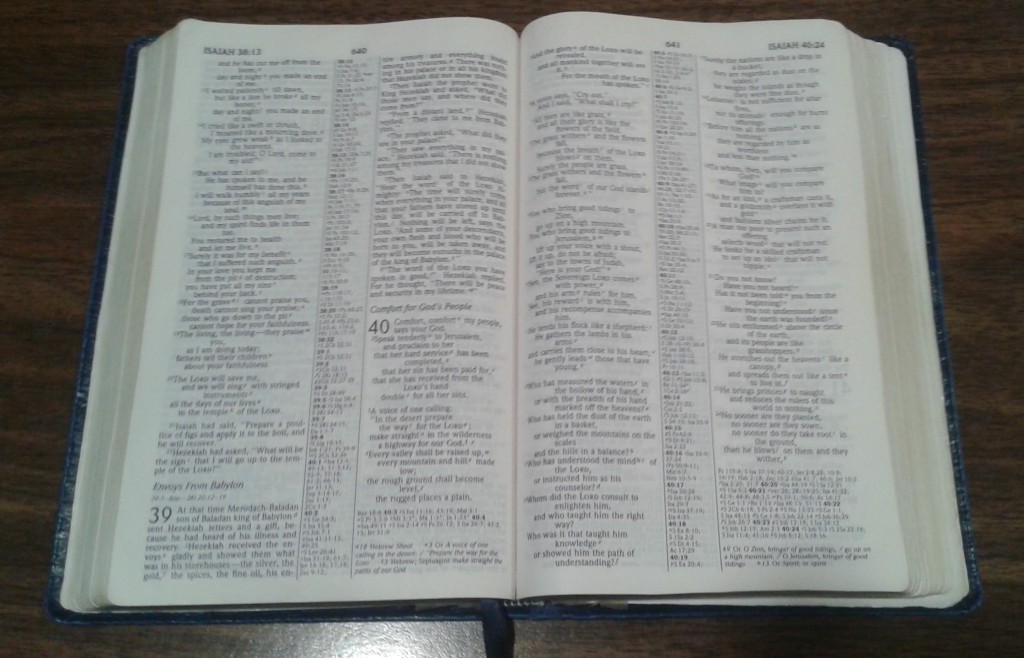
Hebrews 12:16-17 (NIV) warns: “See that no one is sexually immoral, or is godless like Esau, who for a single meal sold his inheritance rights as the oldest son. Afterward, as you know, when he wanted to inherit this blessing, he was rejected. Even though he sought the blessing with tears, he could not change what he had done.”
The story is told in Genesis 25. Esau was tired and hungry and agreed to trade his birthright to his younger brother Jacob in exchange for a bowl of stew. Was Esau’s act in selling his birthright a sin? It was foolish certainly, but was it a sin? It was sinful for Jacob to deceive and take advantage of his brother, but was what Esau did sinful?
Esau’s story in this instance is more of a symbol than an example, more of a parallel story than an exact representation. It is a living parable. Esau traded his inheritance for a bowl of stew—a very bad bargain. Esau’s father Isaac had so many crops, flocks, herds, and servants that the Philistines envied him (Genesis 26:12-15). His wealthy operation was the equivalent to a huge ranch or farm or manufacturing company employing hundreds of workers today. It was worth tens or hundreds of millions of dollars in our money. The contrast between a bowl of stew and this inheritance is ludicrous—and that is the point. Similarly, when we trade the wonderful inheritance God has given us in Jesus—peace, love, joy, and purpose now and an eternal home in heaven with God later on—for the very fleeting pleasures of sin, we also have made a very bad bargain. It is easy for us to recognize Esau’s folly. Why do we not recognize our own? Is it because we overestimate the pleasures of sin and the length of our earthly lives? Or is it because we underestimate the blessings of the Christian life here and the unfathomable and eternal joys of heaven? Paul said elsewhere: “Our light and momentary troubles are achieving for us an eternal glory that far outweighs them all. So we fix our eyes not on what is seen, but on what is unseen, since what is seen is temporary, but what is unseen is eternal” (2 Corinthians 4:17-18).
In only one sense can Esau’s poor choice be said to be sinful. As he was the firstborn son of Isaac and the grandson of Abraham, Esau’s inheritance did not just consist of flocks and herds and material wealth. What he squandered was also God’s promised inheritance of blessing for all nations and a personal covenant relationship with God Himself (Genesis 12:3; 17:1-8). This is the same inheritance that we have in Jesus. Let us not be as foolish as Esau.





























 Christians Read