
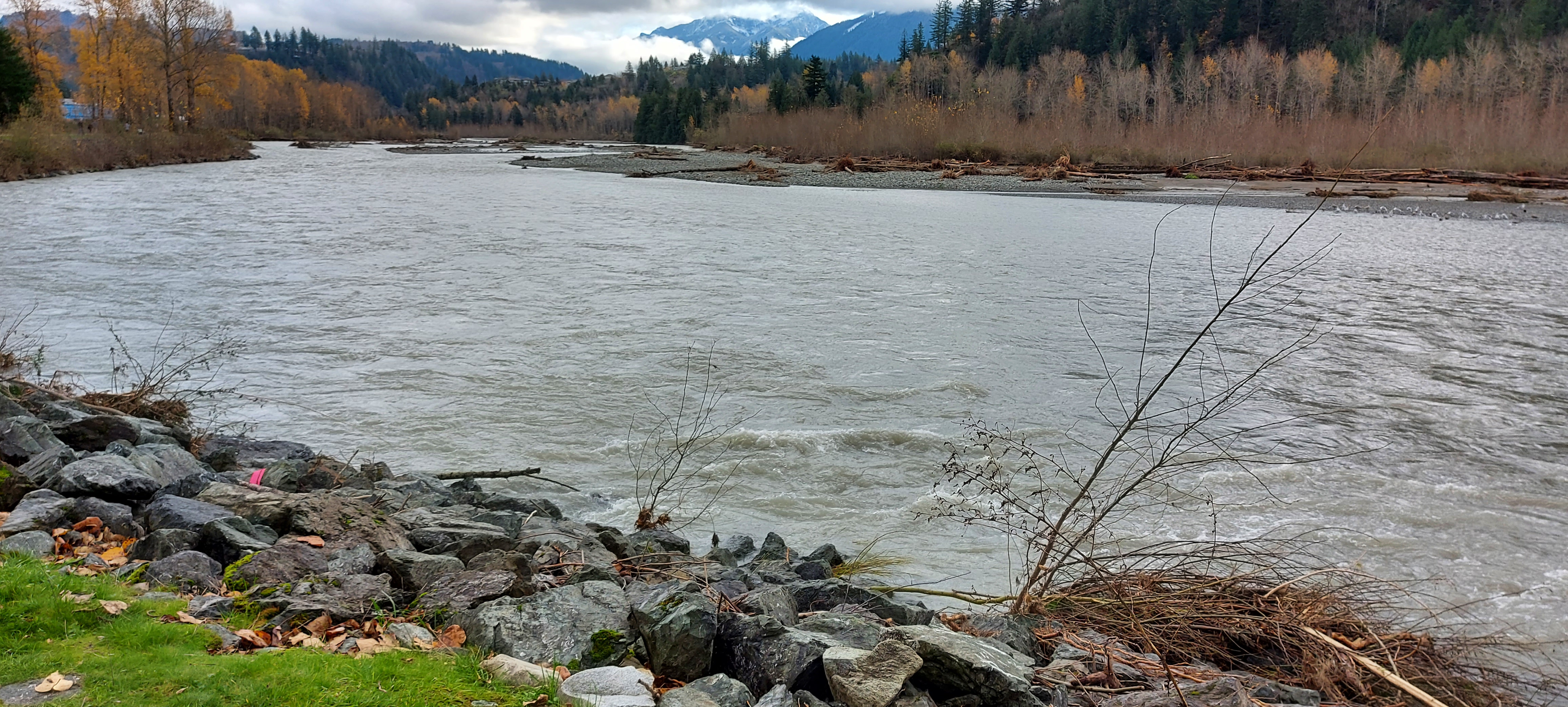
Late last year, southern British Columbia (where I live) experienced a massive rainstorm. We get a lot of rain here on the west coast of North America. Our weather includes onslaughts by “atmospheric rivers,” which used to be called “pineapple expresses,” rainstorms which have traveled northeast across the Pacific Ocean from Hawaii or even the Philippines. They bring warm, wet weather. The one we received last year was record-shattering, dumping nine to twelve inches of rain on us in a couple of days, almost twice anything we have experienced before. Our geography could not handle it. A dike broke, flooding Sumas Prairie, the source of much of our local food production. Over 400 cows, 1200 sheep, 600,000 poultry, and dozens of beehives were drowned. Plants, some of which had taken years to grow, were destroyed. As well, the three highways and the two rail lines that connect southern British Columbia to the rest of Canada (as well as some secondary highways) were shut down due to washouts and landslides. These transportation routes have not yet been completely restored, nor have the devastated farms. In discussions with Christian friends, three prominent responses stood out.
1. Compassion. In addition to prayers, there was an outpouring of practical help to those directly affected by the disaster. Christians and non-Christians, churches and other organizations, as well as governments, provided food, shelter, and clean-up and rebuilding help to the victims.
2. Gratitude. The victims were grateful for the help they received. Those of us who were inconvenienced but not directly impacted were also reminded to be grateful. It was not so much that we were grateful that we had been spared from the disaster that had hurt so many others. It was more that we were reminded of the many blessings that we have enjoyed and that we have far too often taken for granted. We have food, clothing, shelter, health, medical care, government services, jobs, community, and very much more. Disasters remind us that we are not guaranteed any of these things. We should be grateful every day for the many blessings we experience and not take them for granted.
3. Humility. When such disasters happen, we realize how helpless we are to prevent them. God is powerful enough to control the natural world. We are not. When environmentalists insist that we must act now to prevent global warming, I can almost hear God laugh (Psalm 2:4). I am not denying our God-given responsibility to care for His creation and to do what we can to reduce pollution. But any suggestion that human beings on their own can control climate change is sheer hubris. Human beings cannot even control themselves, let alone the forces of nature. The psalmist declares:
“He sends his command to the earth;
his word runs swiftly.
He spreads the snow like wool
and scatters the frost like ashes.
He hurls down his hail like pebbles.
Who can withstand his icy blast?
He sends his word and melts them;
he stirs up his breezes, and the waters flow.” (Psalm 147:15-18)





























 Christians Read